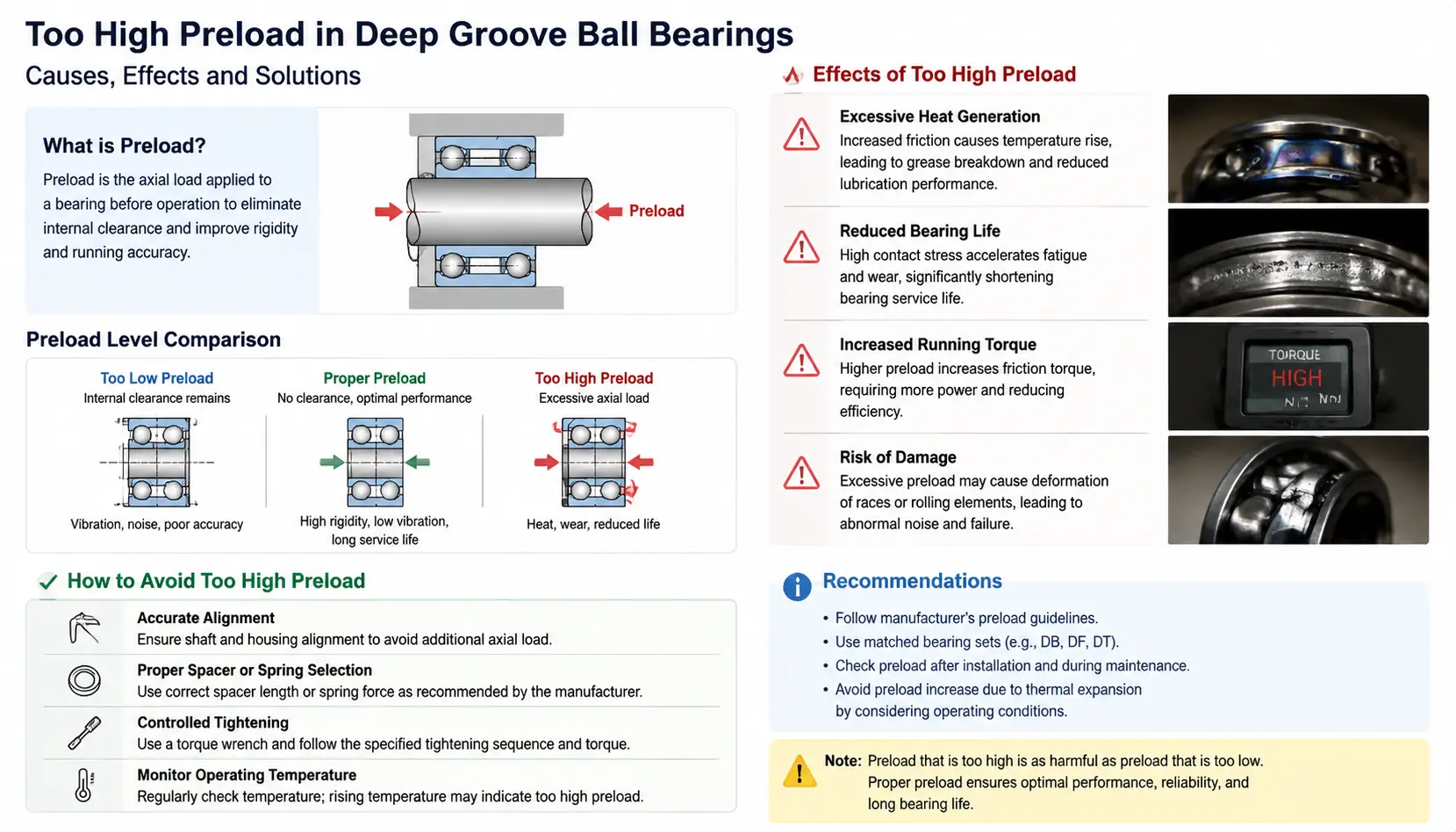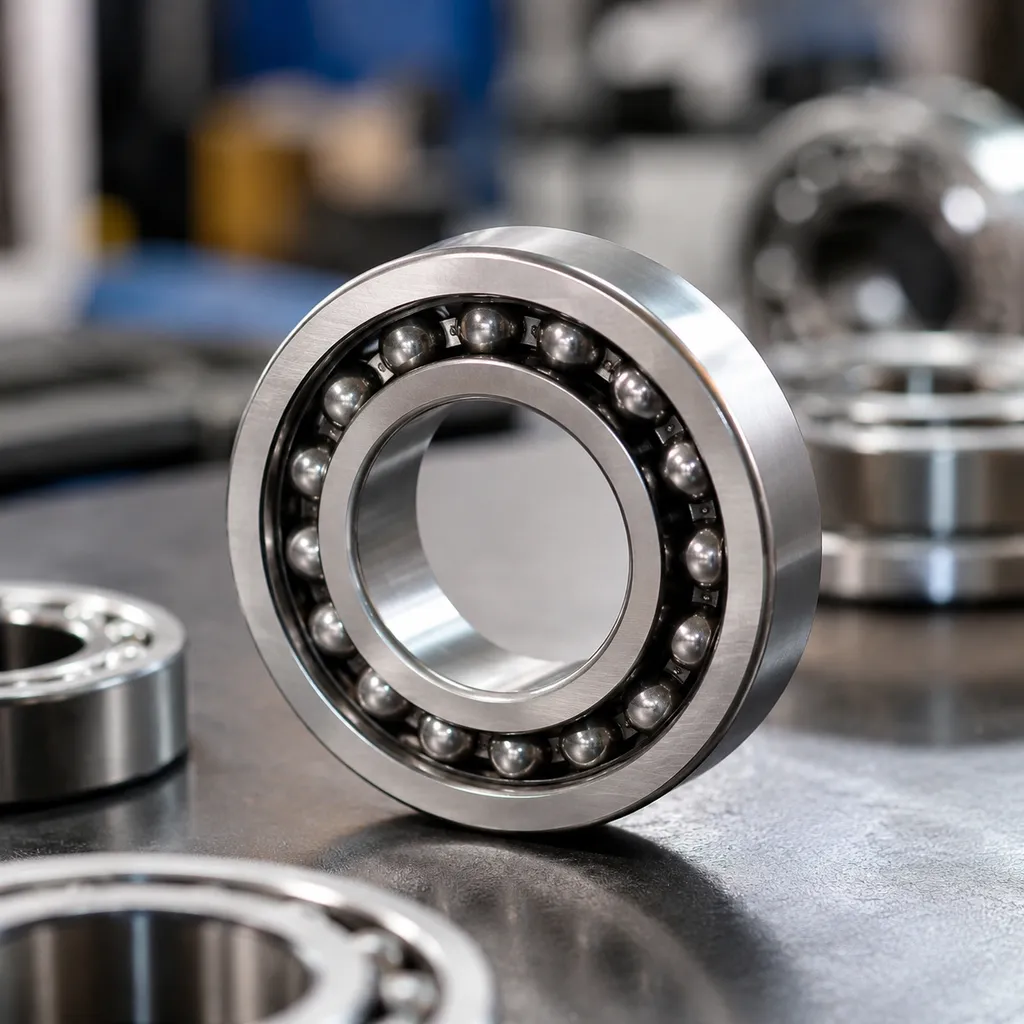
Sealed deep groove ball bearings by dimensions are specified by three boundary values: inner diameter (bore), outer diameter, and width - the same envelope whether you choose a 2RS rubber seal or metal shield closure under DIN 625.
Core formula: Bore (d) × OD (D) × Width (B) in millimeters for metric bearing dimensions; fractional inches for inch size ball bearings. Match bearing codes (6000 / 6200 / 6300 series) to load class after the triplet is confirmed.
Single row radial sealed units share ISO boundary sizes across brands - use a bearing size chart or caliper readings when part numbers are missing.
Inner Diameter (Bore Size) Standards
The inner diameter (d) determines how the bearing mounts onto your shaft.
- Precision Fit: A proper bore match prevents shaft slip, excessive friction, and premature wear.
- Standard Metric Sizing: Metric bore sizes generally follow standard steps (e.g., 10mm, 12mm, 15mm, 17mm).
- Numbering Code Link: For bore sizes 20mm and above (up to 480mm), multiplying the last two digits of the ISO code by 5 gives you the exact inner diameter in millimeters.
Outer Diameter (OD) Measurement Specs
The outer diameter (D) dictates how the bearing seats into your equipment housing or pocket.
- Housing Clearance: Must match housing tolerances precisely to handle radial loads without binding.
- Series Scaling: For any given bore size, the OD increases as you move from extra-light (6000 series) to light (6200 series) and medium (6300 series) duty ratings.
- Ground Finishes: Precise outer ring grinding ensures smooth fitment and minimal operating noise.
Bearing Width and Thickness Dimensions
Bearing width (B) is the total side-to-side thickness across the inner and outer rings.
- Boundary Standard: Width dimensions remain identical whether you select an open bearing, a metal shield, or a 2RS rubber seal.
- Compact Profiling: Keeps axial footprint minimal while offering maximum protection against dirt, dust, and moisture.
- Space Constraints: Essential for tight machinery envelopes where shaft space is limited.
Sealed Deep Groove Ball Bearings by Dimensions: 6000-6300 Series Charts
Matching sealed deep groove ball bearings by dimensions keeps equipment running without unexpected downtime. Factory metric bearing dimensions follow DIN 625 for an exact fit across standard series[1]. Browse sealed deep groove ball bearings by closure type once the triplet is set.
6000 Series: Extra Light Sizes
Ideal for compact setups requiring low friction and reliable operation in tight housing spaces. See 6000 series deep groove ball bearings for full sealed and shielded lines.
- Primary Use: Small electric motors, power tools, home appliances.
- Key Dimensions:
- 6000: 10 mm bore diameter | 26 mm outer diameter | 8 mm width
- 6004: 20 mm bore diameter | 42 mm outer diameter | 12 mm width
- 6008: 40 mm bore diameter | 68 mm outer diameter | 15 mm width
6200 Series: Light Bearing Size Chart
The industry workhorse. This series offers a balanced ratio of radial load capacity and running speed.
| Bearing Number | Inner Diameter (Bore) | Outer Diameter (OD) | Width / Thickness |
|---|---|---|---|
| 6200 | 10 mm | 30 mm | 9 mm |
| 6202 | 15 mm | 35 mm | 11 mm |
| 6203 | 17 mm | 40 mm | 12 mm |
| 6205 | 25 mm | 52 mm | 15 mm |
| 6206 | 30 mm | 62 mm | 16 mm |
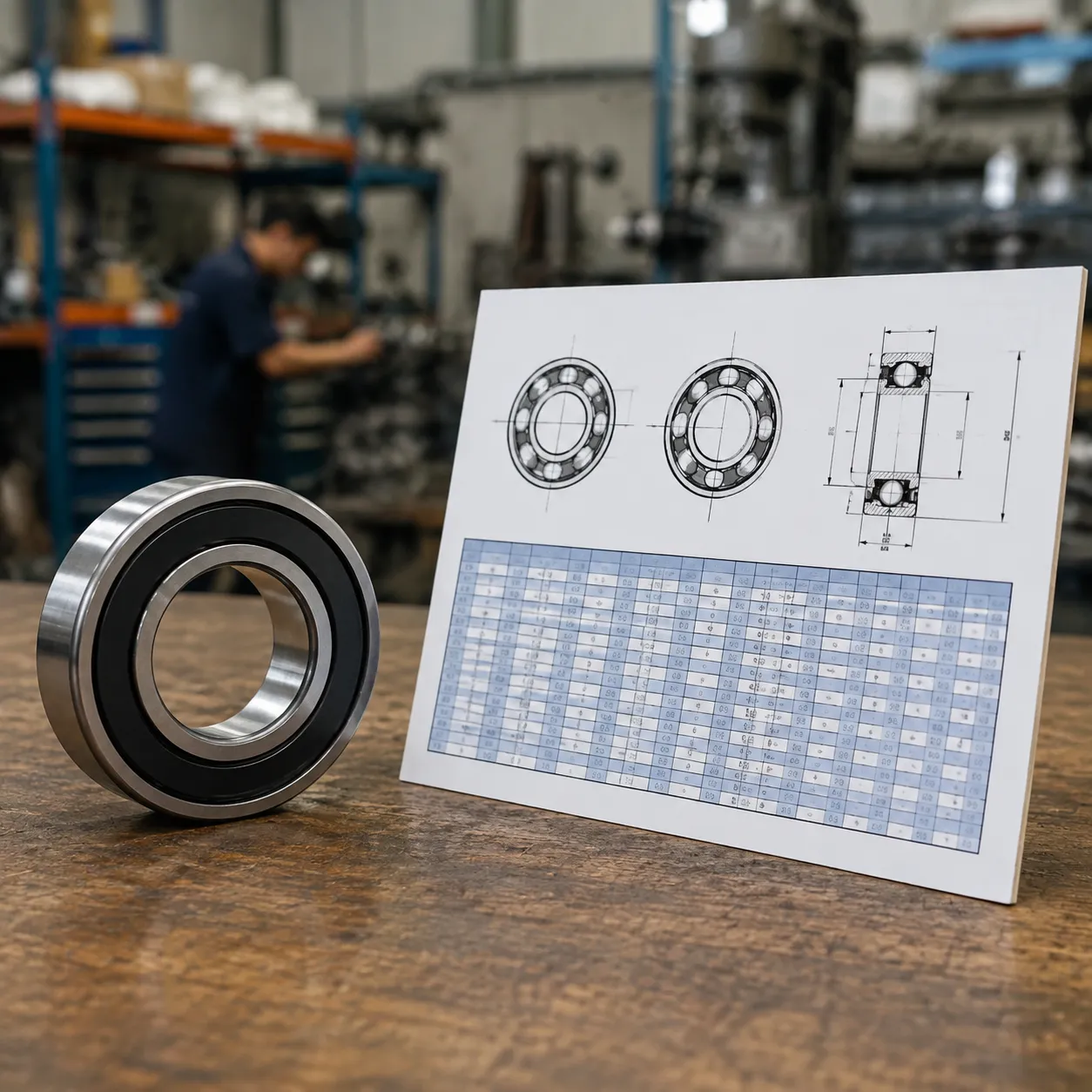
6300 Series: Medium Bearing Dimensions
Engineered with larger ball elements and reinforced ring walls to handle severe radial loads and moderate axial force.
- Primary Use: Industrial gearboxes, pumps, heavy-duty automotive equipment.
- Key Dimensions:
- 6303: 17 mm inner diameter | 47 mm outer diameter | 14 mm width
- 6305: 25 mm inner diameter | 62 mm outer diameter | 17 mm width
- 6308: 40 mm inner diameter | 90 mm outer diameter | 23 mm width
6800 and 6900 Series: Thin Section Specs
Designed for tight spatial constraints where cutting weight is critical without sacrificing shaft support.
- 6800 Series (Extra Thin): Ultra-compact cross-section for ultra-light applications.
- Example (6805): 25 mm bore size | 37 mm OD | 7 mm thickness
- 6900 Series (Thin): Slightly wider than the 6800 series to handle slightly higher loads.
- Example (6905): 25 mm bore size | 42 mm OD | 9 mm thickness
Bearing Codes, Seal Suffixes & DIN 625 Dimensions
Reading bearing codes on a sealed unit tells you exact dimensions without pulling out a caliper. The ISO numbering system uses a standardized sequence to define bearing type, series, bore diameter, and seal specs[3].
How 4-Digit Bearing Numbers Reveal Size
The 4-digit code on single row radial deep groove ball bearings gives away the exact boundary dimensions:
- First Digit (Type): A 6 designates a single row radial deep groove ball bearing.
- Second Digit (Series): Indicates the cross-section series. 0 = Extra Light (6000), 2 = Light (6200), 3 = Medium (6300).
- Last Two Digits (Bore Code): Determines the bearing inner diameter bore size:
- 00 = 10 mm
- 01 = 12 mm
- 02 = 15 mm
- 03 = 17 mm
- 04 and up: Multiply the last two digits by 5 (e.g., 04 = 20 mm bore, 08 = 40 mm bore).
2RS, RSR, and LLU Rubber Seal Suffixes
Suffixes at the end of the base number specify the sealing arrangement:
- 2RS / 2RS1: Dual Nitrile (NBR) rubber seals. Provides complete contact sealing against water and dirt.
- RSR: Standard rubber seal with steel reinforcement, built for tough industrial environments.
- LLU: Premium rubber contact seal with a dual-lip design for extreme dust and fluid washdown defense.
- 2RZ / VV: Non-contact rubber seals designed for high-speed operation with minimal torque drag.
ZZ Shield vs 2RS Seal Dimensions
Switching from a metal shield to a 2RS rubber seal does not change external dimensions. Under DIN 625 standards, the outer envelope remains identical[1].
| Specification | 2RS Rubber Sealed Bearing | ZZ Metal Shielded Bearing |
|---|---|---|
| Inner Diameter (Bore) | Identical ISO Standard | Identical ISO Standard |
| Bearing Outer Diameter OD | Identical ISO Standard | Identical ISO Standard |
| Bearing Width Thickness | Identical ISO Standard | Identical ISO Standard |
| Sealing Mechanism | Full Contact Rubber Lip | Non-Contact Steel Plate |
| Best Environment | Moisture, Dirt, Washdowns | Dry Dust, Clean Environments |
| Speed Limit | Moderate to High Speed | Max RPM Rated |
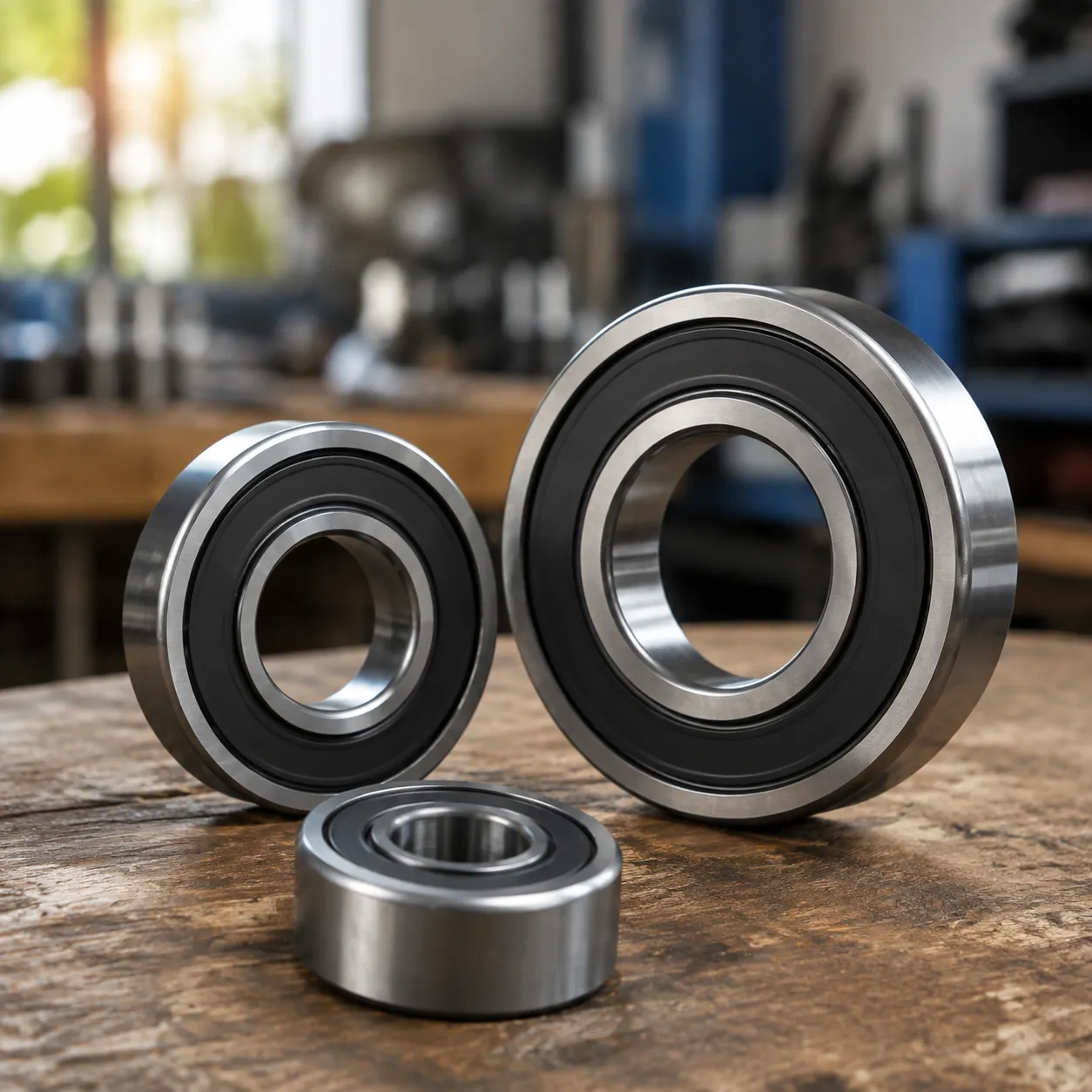
Whether you specify 6205-2RS or 6205-ZZ, the physical envelope fits the exact same shaft and housing.
Measuring Your Sealed Bearing Accurately
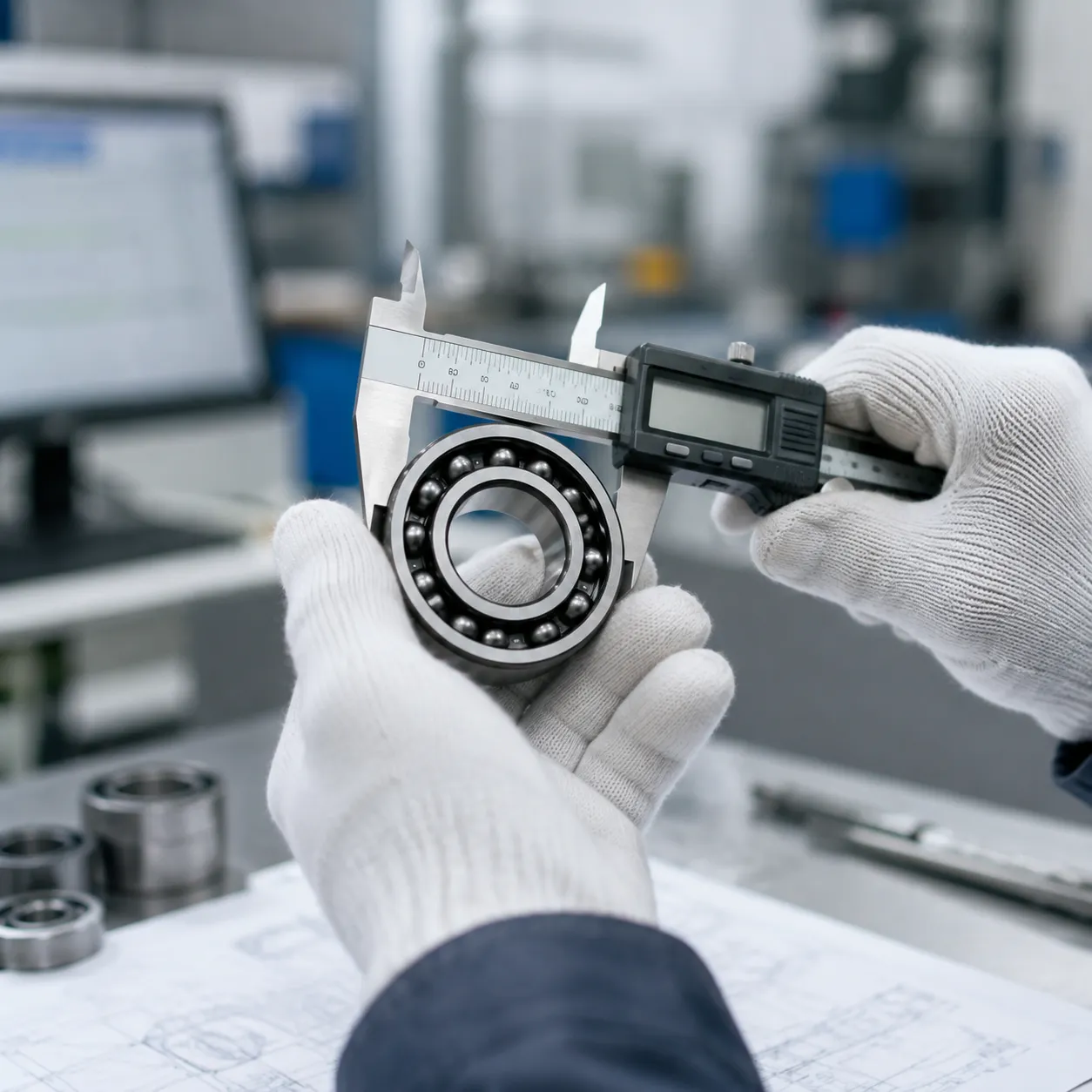
Got a worn-out bearing with no visible part numbers? Finding replacement sealed deep groove ball bearings by dimensions comes down to precise physical measurements. A fraction of a millimeter makes the difference between a snug press-fit and a ruined shaft[2].
Measuring Inner Diameter with Digital Calipers
Getting the correct inner diameter (bore) is your first step. Always use a clean set of digital calipers rather than a tape measure or ruler.
- Zero the caliper: Close the jaws completely and zero out your digital calipers.
- Use the top jaws: Insert the upper inside jaws directly into the bearing bore.
- Measure the widest point: Open the jaws until they touch the inner ring walls firmly, keeping the tool perpendicular to the bearing face.
- Rotate and re-check: Take two or three readings at different angles to ensure the bore is not warped or ovalized.
Checking Outer Diameter and Total Width
Once you have the bore, you need the bearing outer diameter (OD) and total bearing width thickness.
- Outer Diameter (OD): Place the main outside jaws of your caliper across the outer steel ring. Measure across the dead center for maximum width.
- Total Width: Clamp the jaws across the flat outer faces of the bearing rings.
- Ignore seal protrusion: On quality 2RS rubber sealed bearings, the seal sits flush with or slightly below the steel surface. Measure the metal rings directly rather than squeezing the rubber lip.
Accounting for Wear and Surface Damage
Used machinery parts rarely measure like brand-new factory components. Shaft friction, rust, or heavy loads often alter the metal.
- Clean before measuring: Wipe off grease, road grime, or rust spots with a rag so your calipers sit flat against clean steel.
- Spotting shaft wear: If your bore reads slightly smaller or larger than expected (e.g., 14.94 mm instead of 15.00 mm), account for metal wear on the shaft or bearing ring.
- Round to standard ISO metric sizes: Standard single row radial bearings follow strict metric steps. If your caliper reads 24.97 mm outer diameter and 14.98 mm inner diameter, you are looking at a standard 25 mm OD by 15 mm bore diameter. Match readings to the nearest row on a bearing size chart.
Selecting Bearings Based on Dimensions and Application
Picking sealed deep groove ball bearings by dimensions is not just about matching a ruler to a shaft. You also need to align the physical footprint with your actual operating conditions, speed, and loads.
Matching Size Constraints to Load Ratings
Bore size alone does not tell the whole story. Two bearings can fit the exact same shaft bore diameter but carry completely different weight loads depending on their outer diameter and width.
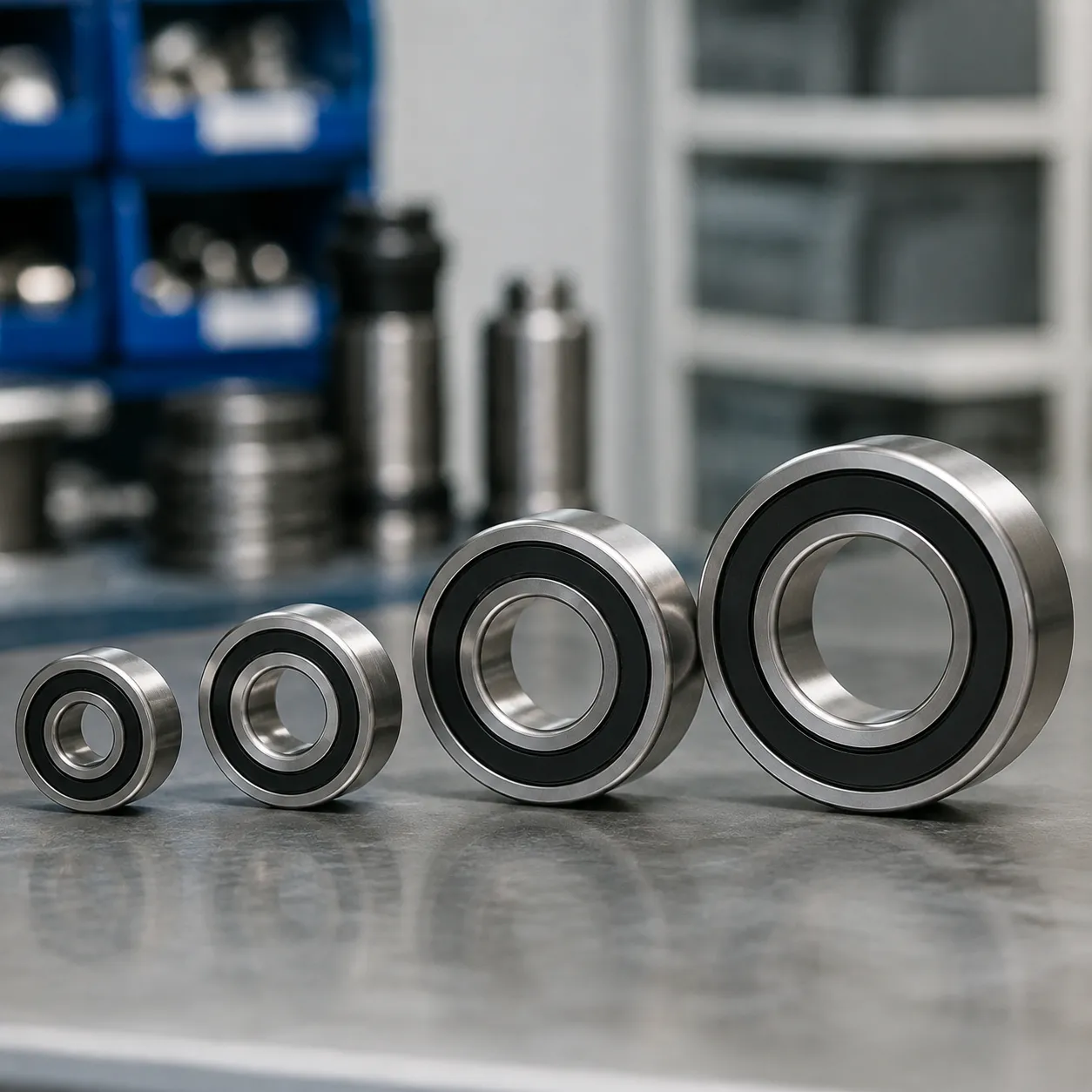
- 6000 Series (Extra Light): Best for tight spaces and light structural loads.
- 6200 Series (Light): The standard balance of compact sizing and solid bearing dynamic load rating.
- 6300 Series (Medium): Features thicker rings and larger steel balls for heavy impact and shock loads.
If your design demands higher load capacity without changing your shaft diameter, step up to a heavier series within the same bore size.
Choosing Seal Materials for Temperature and Chemicals
The right seal keeps grease locked in and debris out. Sealed units use protective barriers matched to job-site conditions:
- 2RS Rubber Seal (NBR): The go-to choice for everyday moisture, dirt, and water splash protection up to 230°F (110°C).
- FKM (Viton) Seal: Built for harsh chemical exposure and extreme operating heat up to 400°F (200°C).
- ZZ Metal Shield: Best for clean environments requiring ultra-low friction and high rotational speeds.
Standard vs C3 Radial Clearance for Dimensional Fit
Internal dimensions are just as critical as external measurements.
- Standard Clearance: Ideal for routine electric motors, ambient temperatures, and standard press fits.
- Bearing Radial Clearance C3: Provides extra internal room between the balls and raceways. Choose C3 clearance when your equipment runs hot, experiences thermal expansion, or requires heavy interference fits that compress the inner ring.
Sealed Deep Groove Ball Bearings FAQ
Finding Bearing Size Without a Part Number
If your part number wore off, you can identify your sealed deep groove ball bearings by dimensions using digital calipers. Measure these three core boundary specs in millimeters:
- Inner Diameter (Bore): Measure across the inside ring opening.
- Outer Diameter (OD): Measure across the widest point of the outer ring.
- Bearing Width: Measure the total thickness across both rings.
Cross-reference your readings (Bore x OD x Width) in a metric bearing dimensions bearing size chart to identify the exact ISO part number. For ring and seal anatomy, see parts deep groove ball bearings.
2RS vs. ZZ Bearing Dimensions
Yes, 2RS rubber seal and ZZ metal shield variants share identical external boundary dimensions. The sealing mechanism sits flush within the ring recesses and does not alter housing or shaft fit.
| Feature | 2RS Rubber Sealed Bearing | ZZ Metal Shielded Bearing |
|---|---|---|
| Dimensions (ID x OD x Width) | Identical ISO/DIN spec | Identical ISO/DIN spec |
| Sealing Element | Contact nitrile rubber seal | Non-contact steel shield |
| Best Environment | Heavy dust, moisture, harsh washdowns | High speed, clean conditions, low torque |
Metric vs. Inch Sealed Bearings
While both accommodate single row radial loads, metric and inch size ball bearings follow different sizing systems and tolerances. For imperial shafts, see custom imperial deep groove ball bearings rather than forcing a metric substitute.
- Metric Bearings: Sized strictly in millimeters under ISO standards (such as standard 6000, 6200, and 6300 series).
- Inch Bearings: Sized in fractional inches based on US standards (such as R-series bearings).
- Interchangeability: They cannot be interchanged. Converting imperial shaft sizes directly to metric without proper machining creates severe slop or shaft binding.