
Premium Miniature Precision Bearings for Compact Devices
JN Bearings manufactures high-precision micro ball bearings with inner diameters as small as 1mm, strictly adhering to stringent global ABEC standards.
Engineered specifically for medical devices, precision instruments, and micro motors, our compact bearing solutions ensure exceptional high-speed performance and ultra-low noise operation. Learn more about us or contact our team for tailored support.
1mm
Minimum Inner Diameter
ABEC 5-9
Precision Tolerances
100%
BVT Noise Tested
What Are Miniature Precision Bearings?
Miniature precision bearings—commonly referred to as micro ball bearings—are highly engineered rolling components designed to provide ultra-smooth, low-friction rotation within severely restricted spaces. These tiny yet robust components are critical to the performance of sophisticated medical devices, UAV motors, high-resolution encoders, and miniature robotics.
Defining Micro Bearings: Size Ranges & Configurations
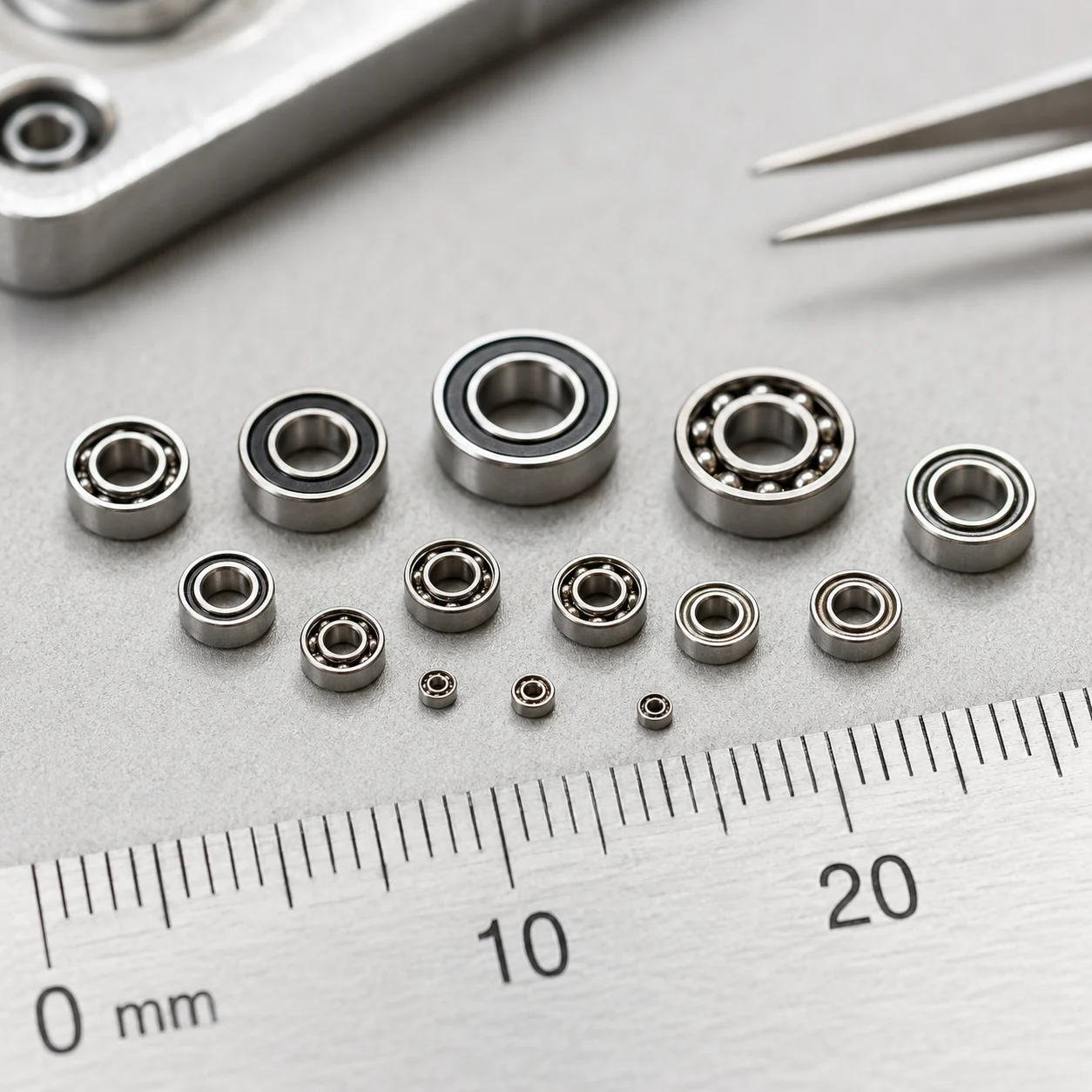
In mechanical engineering, a miniature precision bearing is primarily classified by its outer diameter (OD). Industry standards generally identify bearings with an OD of 30 mm or less as miniature, while components with an OD of 9 mm or smaller are designated as ultra-miniature or micro bearings. Despite bore sizes starting as minute as 1 mm, these bearings deliver exceptional rotational stability and load support.
Manufacturers produce both metric miniature ball bearings and inch size micro bearings to meet diverse global engineering requirements. Metric variants, including the widely specified 68X, 69X, and MR series, are the backbone of most international industrial designs. Conversely, inch-series options (such as the R series) remain crucial for North American OEMs and specialized legacy equipment replacements.
- Outer Diameter (OD): Typically ranges from 1.5 mm up to 30 mm for standard miniature classes.
- Inner Bore Diameter: Starting from 1 mm up to 10 mm for precision micro assemblies.
- Profile Width: Generally between 1 mm and 8 mm, enabling highly compact design profiles.
- Configuration Types: Available in open, shielded (ZZ), rubber-sealed (2RS), and flanged designs.
Understanding ABEC Precision in Small Diameter Ball Bearings
The ABEC (Annular Bearing Engineers' Committee) standard governs the dimensional accuracy and geometric tolerances of ball bearings. The grading scale extends from ABEC-1 (standard industrial tolerance) up to ABEC-9 (extreme precision). As the number increases, the permissible deviations in bore, outer diameter, and radial runout decrease significantly.
In micro-scale applications, precision is non-negotiable. When a small diameter ball bearing operates at speeds exceeding 50,000 RPM—such as in surgical drills or aerospace gyroscopes—even microscopic runout causes severe vibration, acoustic noise, and rapid component failure. For this reason, demanding applications strictly require micro bearings rated at ABEC-5 or higher to minimize friction and maximize lifespan.
| ABEC Tolerance Grade | Max Radial Runout | Primary Applications |
|---|---|---|
| ABEC-1 | ≤ 15 µm | Standard appliances, RC toys |
| ABEC-3 | ≤ 8 µm | Small electric motors, power tools |
| ABEC-5 | ≤ 5 µm | Precision micro motors, robotics |
| ABEC-7 | ≤ 3 µm | Dental handpieces, optical encoders |
| ABEC-9 | ≤ 1 µm | Aerospace instruments, extreme high-speed |
Material Selection: Chrome Steel vs. Stainless Steel
Specifying the correct material is vital for micro bearing performance and longevity. The industry standardizes around two primary alloys: high-carbon chrome steel and specialized stainless steel. Each material offers distinct advantages tailored to specific operating environments.
Chrome Steel (GCr15 / 52100)
- Exceptional hardness and load-bearing capacity
- Superior rolling contact fatigue life
- Optimal for high-speed micro motors
- Susceptible to corrosion; requires proper lubrication
Stainless Steel (440C / AISI 304)
- High corrosion resistance for harsh environments
- Mandatory for medical devices and food processing
- Maintains dimensional stability across temperatures
- 440C martensitic steel used for rings and balls
As an experienced manufacturer, JN Bearings utilizes advanced super-finishing processes on both chrome and stainless steel raceways. This rigorous manufacturing control guarantees exact dimensional tolerances, minimizes internal vibration, and delivers true low friction micro bearing characteristics across all production batches.
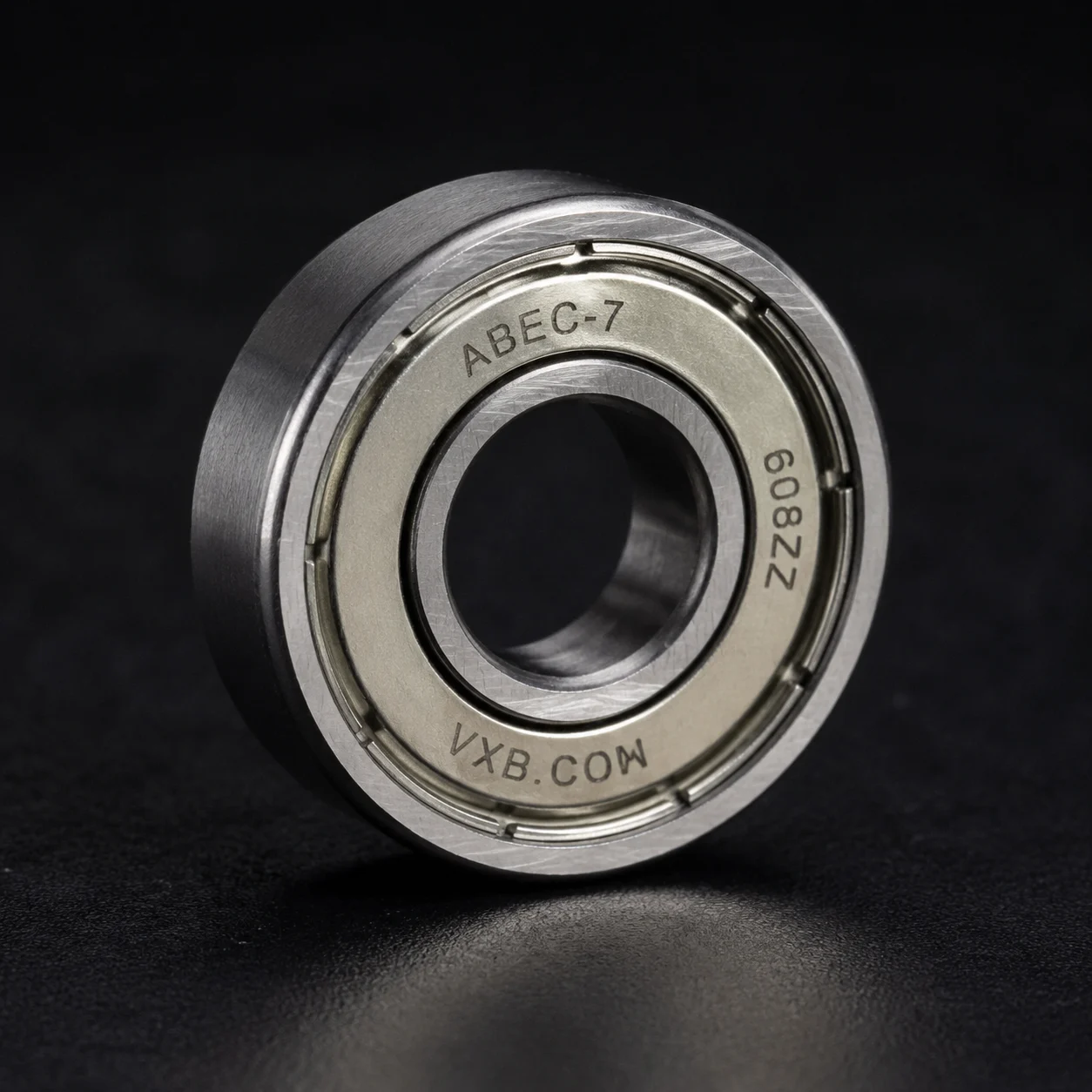
ABEC-7 Shielded MR Series — 2×6×2.5 mm
JN Bearings — Manufacturing Capabilities
1 mm
Minimum bore diameter capacity
ABEC-9
Maximum precision grade available
100K+
RPM rating on specialized series
ISO 9001
Certified manufacturing facility
Core Applications for Precision Micro Bearings
The defining characteristic of a high-speed micro bearing is its capacity to deliver near-zero radial runout and whisper-quiet rotation within remarkably confined spaces. This makes them the critical moving component in several demanding sectors.
Medical & Dental Equipment
High-speed dental turbines and precision surgical tools rely on miniature bearings that can sustain 200,000+ RPM with absolute minimal vibration and full sterilizability.
UAVs & Aerospace Actuators
Modern drone motors, camera gimbals, and aerospace control systems utilize ultra-lightweight miniature bearings for frictionless, stable movement under dynamic loads.
Precision Metrology & Encoders
Rotary encoders, flow meters, and scientific instruments demand ABEC-7 or ABEC-9 micro bearings to guarantee extremely low starting torque and zero-backlash positioning.
Micro Motors & Robotics
Compact stepper motors and robotic joint assemblies integrate low noise miniature bearings to optimize energy efficiency, lower heat generation, and dramatically extend operational life.
Looking for the exact micro bearing specification for your design?
As a dedicated manufacturer, JN Bearings supplies a vast portfolio of metric, inch, flanged, and custom micro bearings—engineered to strict ABEC tolerances with full ISO 9001 quality assurance.
What Are Micro Bearings? Dimensions, Standards, Materials & Design Features Explained
Micro bearings — frequently referred to as miniature precision bearings or small diameter ball bearings — are highly accurate rolling elements designed for compact, space-constrained assemblies. Understanding their strict tolerances, dimensional standards, and material properties is essential for engineers and procurement teams looking to optimize equipment performance and longevity. For related applications, explore our deep-groove ball bearings category.
Defining Micro Bearings: Size Ranges & Industry Boundaries
In industrial terminology, miniature precision bearings denote rolling-element bearings featuring an outer diameter (OD) generally under 30 mm. In the ultra-miniature spectrum, outer diameters can be as minute as 3 mm. The inner bore typically ranges from 1 mm up to approximately 9 or 10 mm, catering to ultra-compact shaft requirements.
Global manufacturing relies on two primary dimensional standards for micro bearings:
- Metric and ISO Miniature Bearings — Encompassing the widely used 68X, 69X, and MR series. Measured strictly in millimeters, these are the global standard for modern OEM designs, robotics, and consumer electronics.
- Inch Size Micro Bearings (ABMA) — Including the popular R-series (e.g., R2, R3, R4). Measured in fractional inches, these remain vital for North American markets, specialized instrumentation, and legacy aerospace equipment.
Regardless of the measurement system, every small diameter ball bearing demands exceptionally tight manufacturing controls. In micro-scale applications, a mere 1-micron deviation in raceway geometry can cause significant vibration, premature wear, or elevated acoustic noise in sensitive devices.
ABEC Precision Micro Bearings: Navigating Tolerances
The ABEC (Annular Bearing Engineers' Committee) scale defines the allowable dimensional and geometric variations in bearing manufacturing. The standard grades — ABEC-1, 3, 5, 7, and 9 — dictate the precision level, with higher numbers representing progressively tighter tolerances and superior rotational accuracy.
For advanced miniature precision bearings, ABEC-5 serves as the standard baseline. However, applications like high-speed dental handpieces, optical encoders, and medical ventilators typically demand ABEC-7 or ABEC-9 precision. At these premium tiers, total radial runout is restricted to just 2 to 4 micrometers, ensuring perfectly concentric rotation.
| ABEC Grade | Typical Runout | Primary Applications |
|---|---|---|
| ABEC-1 | ~25 µm | Basic consumer goods, toys, light hardware |
| ABEC-3 | ~15 µm | Hand tools, standard electric motors |
| ABEC-5 | ~7 µm | Micro motors, drone gimbals, automation components |
| ABEC-7 | ~4 µm | Precision instruments, aerospace actuators |
| ABEC-9 | ~2 µm | Dental drills, advanced medical imaging devices |
Note: Actual tolerance values vary based on the specific bearing bore size in accordance with ISO/ABMA standards.
Material Selection: Chrome Steel vs. Stainless Steel
The raw material of a micro bearing dictates its load capacity, resistance to corrosion, acoustic performance, and overall lifespan. The industry relies heavily on two primary metallurgical options:
High-Carbon Chrome Steel (52100 / GCr15)
- • Exceptional hardness: 60–65 HRC
- • Superior fatigue life and dynamic load capacity
- • Ideal for clean, dry, and well-lubricated environments
- • Highly cost-effective for large-scale OEM production
Stainless Steel (AISI 440C / SUS440C)
- • Excellent corrosion and moisture resistance
- • The standard for medical, food-grade, and marine uses
- • Slightly lower hardness (~58 HRC) compared to chrome steel
- • Capable of withstanding harsh sterilization cycles
For extreme operational environments — such as high-vacuum systems, MRI machines, or extreme temperature fluctuations — ceramic hybrid micro bearings (combining steel rings with silicon nitride balls) provide unmatched speed capabilities, lower friction, and complete electrical insulation.
Core Design Elements of Low Friction Micro Bearings
A true miniature precision bearing is not merely a downsized version of a standard industrial bearing. Every internal component must be meticulously engineered to manage friction and stability at a microscopic level:
- 1Super-Finished Raceways
Through advanced honing processes, raceway surface roughness is refined to Ra 0.01–0.05 µm. This flawless finish is what enables low noise miniature bearings to operate silently while preserving the integrity of the lubricating film at high speeds.
- 2High-Grade Precision Balls
The uniformity of the steel balls dictates vibration levels. Premium ABEC-7 and ABEC-9 micro bearings utilize Grade 5 or Grade 10 balls, guaranteeing diameter variations and roundness deviations remain strictly under 0.13 µm.
- 3Optimized Cage Structures
The cage (retainer) prevents ball-to-ball contact. Crown-type polyamide (nylon) cages are often specified for high-speed micro bearings due to their lightweight and low-friction characteristics, while stainless steel ribbon cages provide rugged durability at higher temperatures.
- 4Miniature Bearing Shield vs. Seal
Metal Shields (ZZ) provide non-contact protection against larger particulates without increasing starting torque, ideal for high-speed instrument applications. Rubber Seals (2RS) create a physical barrier against fine dust and moisture, ensuring superior grease retention at the cost of slightly higher friction.
- 5Radial Internal Clearance (RIC)
Micro bearings utilize precise clearance classes ranging from MC1 to MC6. Choosing the appropriate clearance accommodates thermal expansion and press-fit interference, preventing excessive internal preload that causes premature bearing failure.
As a dedicated manufacturer, JN Bearings implements rigorous metallurgical and geometric controls on every micro bearing component. Every production lot undergoes precision measurement for bore size, width, outer diameter, and radial runout to guarantee uncompromised quality.
The Critical Impact of Precision in Confined Spaces
In large-scale industrial bearings, microscopic geometric flaws are often masked by the sheer mass of the rotating assembly. However, in miniature precision bearings, those same imperfections represent a massive percentage of the component's total size. At the micro scale, every single micron directly impacts system performance.
For example, a dental turbine operating at speeds exceeding 400,000 RPM cannot tolerate the runout of an ABEC-5 bearing, which would generate disruptive heat and vibration. Only an ABEC-9 bearing, paired with highly refined lubrication and matched ball grades, can deliver the perfectly smooth operation required in surgical environments.
Likewise, aerospace encoders and drone gimbals demand low starting torque and minimal axial play to maintain precise positional accuracy. Standard commercial bearings simply fail to provide the sub-micron consistency needed. Purpose-built high-precision micro bearings ensure these critical systems operate flawlessly over millions of cycles.
JN Bearings manufactures an extensive portfolio of miniature precision bearings in ABEC-5, 7, and 9 tolerances. Covering both metric and inch series, we provide full material traceability, cleanroom assembly, and expert technical guidance for OEM and wholesale buyers globally.
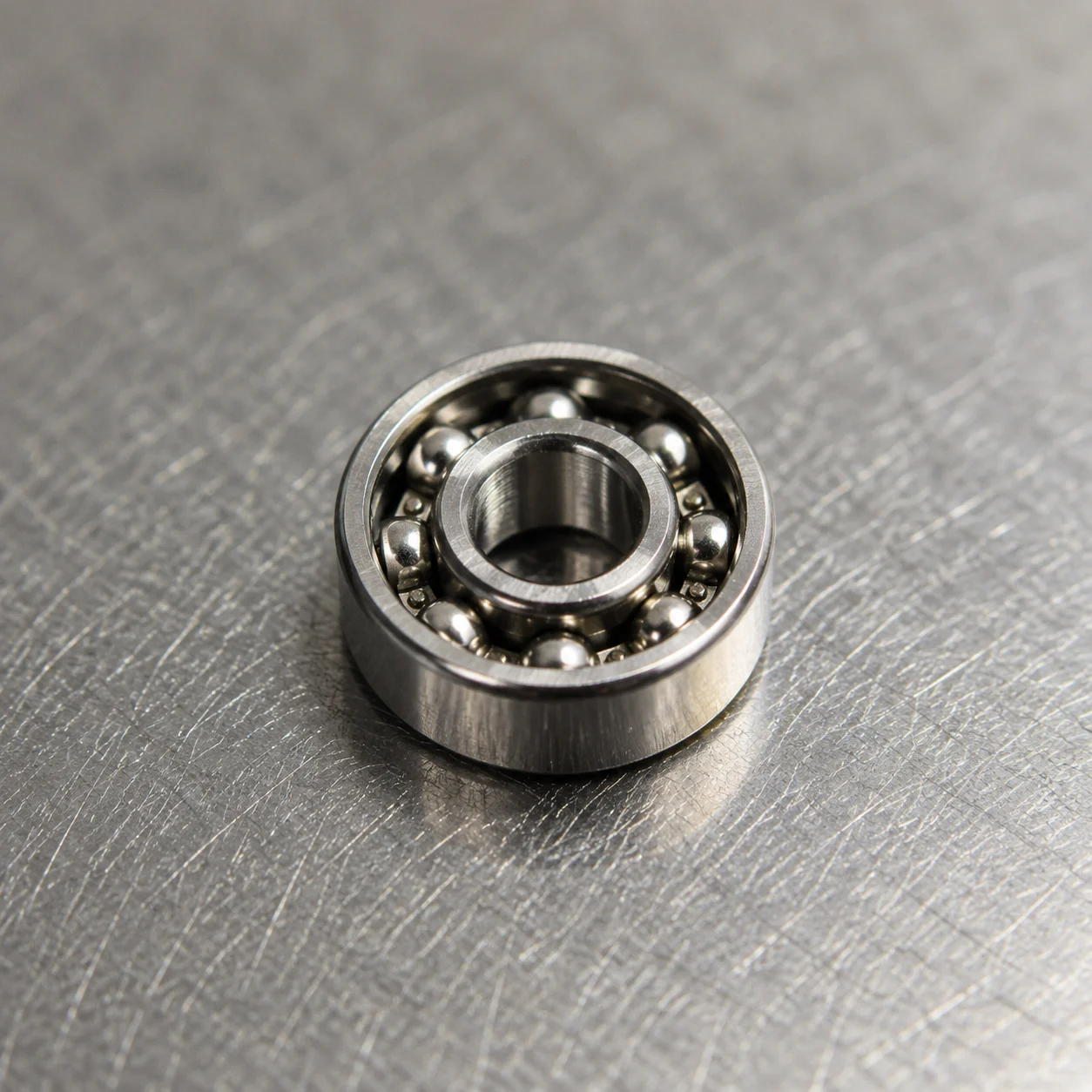
Miniature precision bearings — inner bores starting from 1 mm, meticulously engineered to ABEC-5 through ABEC-9 tolerances.
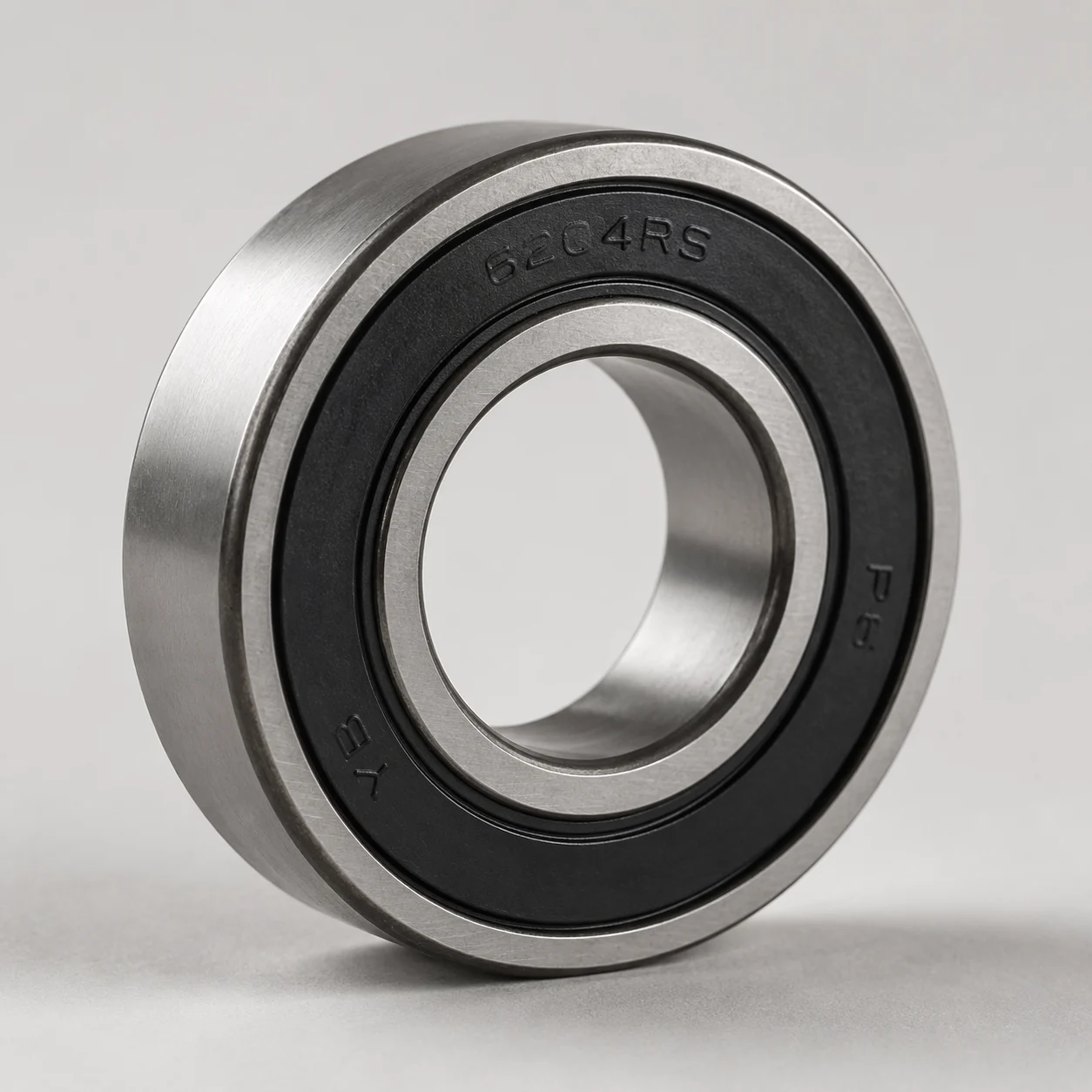
2RS rubber-sealed micro deep groove bearing — ensuring vital contamination protection and long-term lubricant retention.
Quick-Reference: Micro Bearing Specifications
| Specification | Standard Range |
|---|---|
| Bore Diameter (ID) | 1 mm – 10 mm |
| Outer Diameter (OD) | 3 mm – 30 mm |
| Width | 1 mm – 9 mm |
| ABEC Precision | ABEC-1 to ABEC-9 |
| Steel Ball Grade | Grade 5 – Grade 25 |
| Raceway Finish (Ra) | 0.01 – 0.05 µm |
| Max Operating Speed | Up to 400,000 RPM |
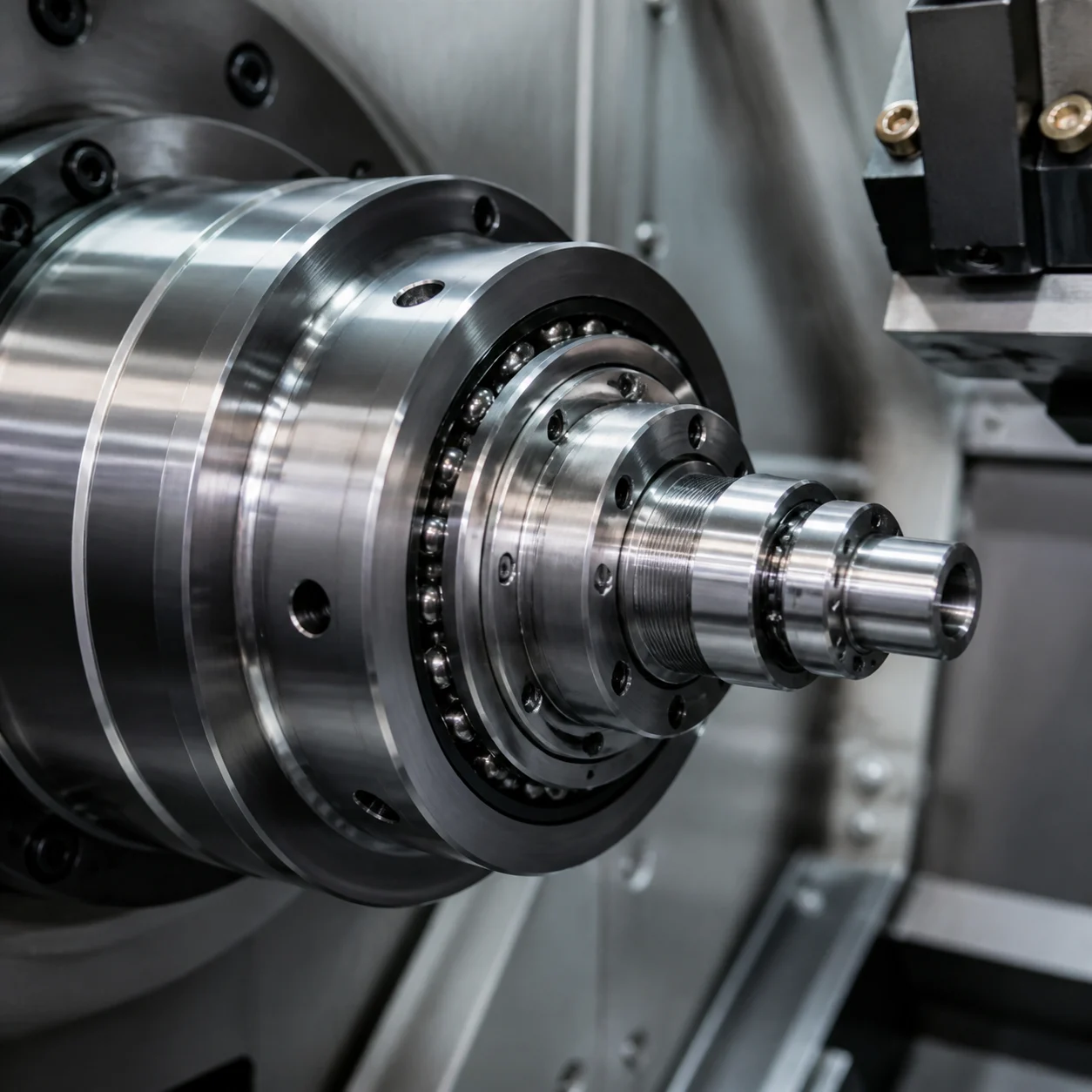
Angular contact miniature bearing — precision-engineered to accommodate combined axial and radial loads in high-speed spindles.
Miniature Precision Bearings: Series & Sourcing Guide
JN Bearings produces a comprehensive range of micro series to guarantee a perfect fit for any highly specialized assembly. Explore our core products below and match your precise operational requirements to the ideal bearing configuration.
Specifying the ideal miniature precision bearing starts with navigating the full spectrum of available configurations. Our manufacturing catalog extensively covers metric miniature ball bearings, inch size micro bearings, flanged micro bearings, and specialized sealed variants. Each category is explicitly engineered to resolve distinct spatial, load, and environmental constraints in demanding B2B and OEM applications.
Whether you are sourcing direct replacements for legacy North American equipment or engineering a cutting-edge medical robotics platform, the parameters detailed below will help you confidently shortlist the correct product. All standard series are available in ABEC-5, ABEC-7, and ABEC-9 tolerance grades, utilizing premium chrome steel (GCr15) or stainless steel (AISI 440C) rings, alongside open, shielded (ZZ), or rubber-sealed (2RS) options.
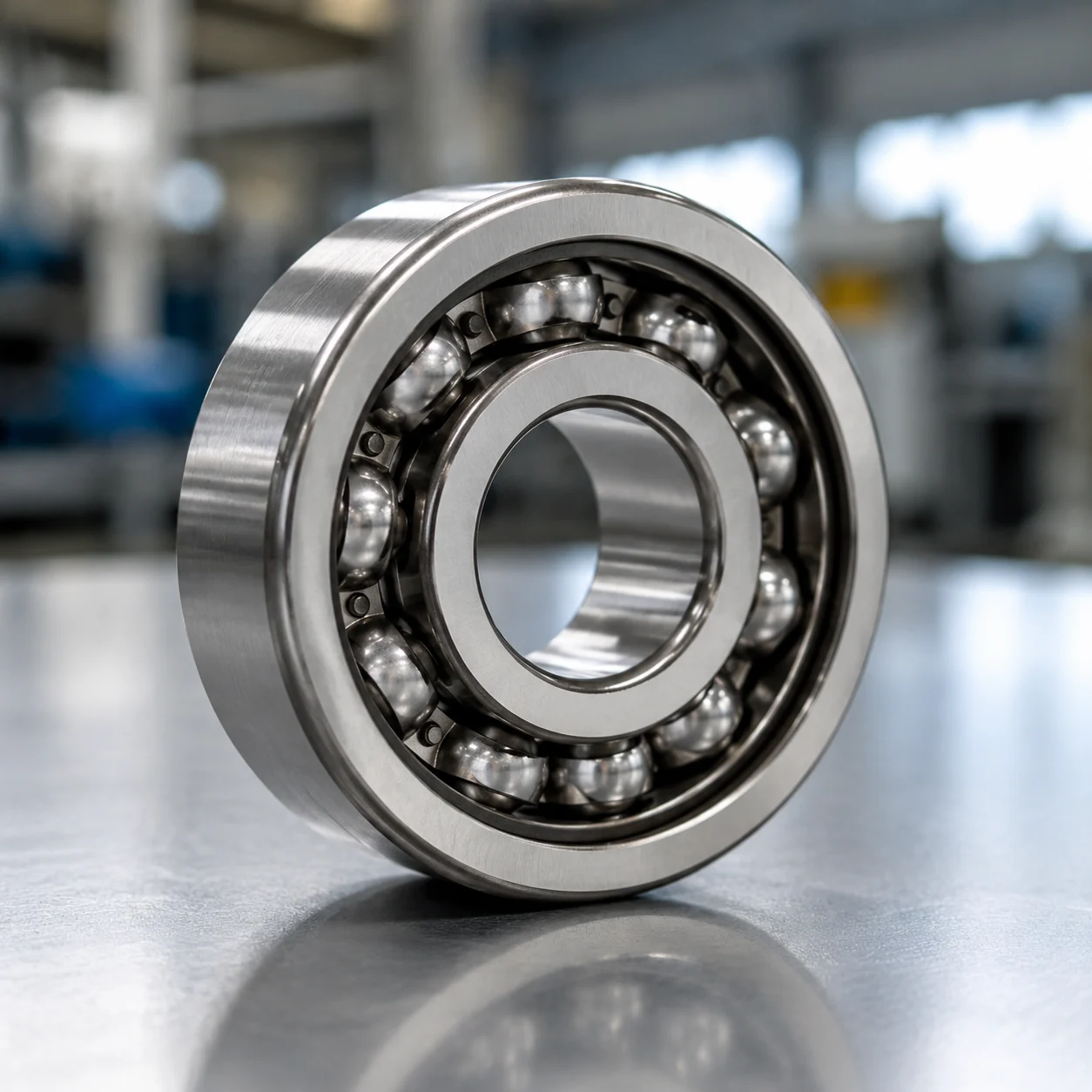
Metric Miniature Ball Bearings
Our metric range—featuring the industry-standard 68X, 69X, and MR series—covers bore dimensions from 1 mm to 10 mm. Following strict ISO sizing, these small diameter ball bearings are the premier choice for globally standardized assemblies in optics, medical handpieces, and miniature gearboxes.
- Bore sizes: 1 mm – 10 mm
- Key Series: MR, 68X, 69X, 60X
- Precision: ABEC-3 to ABEC-9
- Materials: Chrome / Stainless Steel
- Primary Use: Micro-motors, robotics
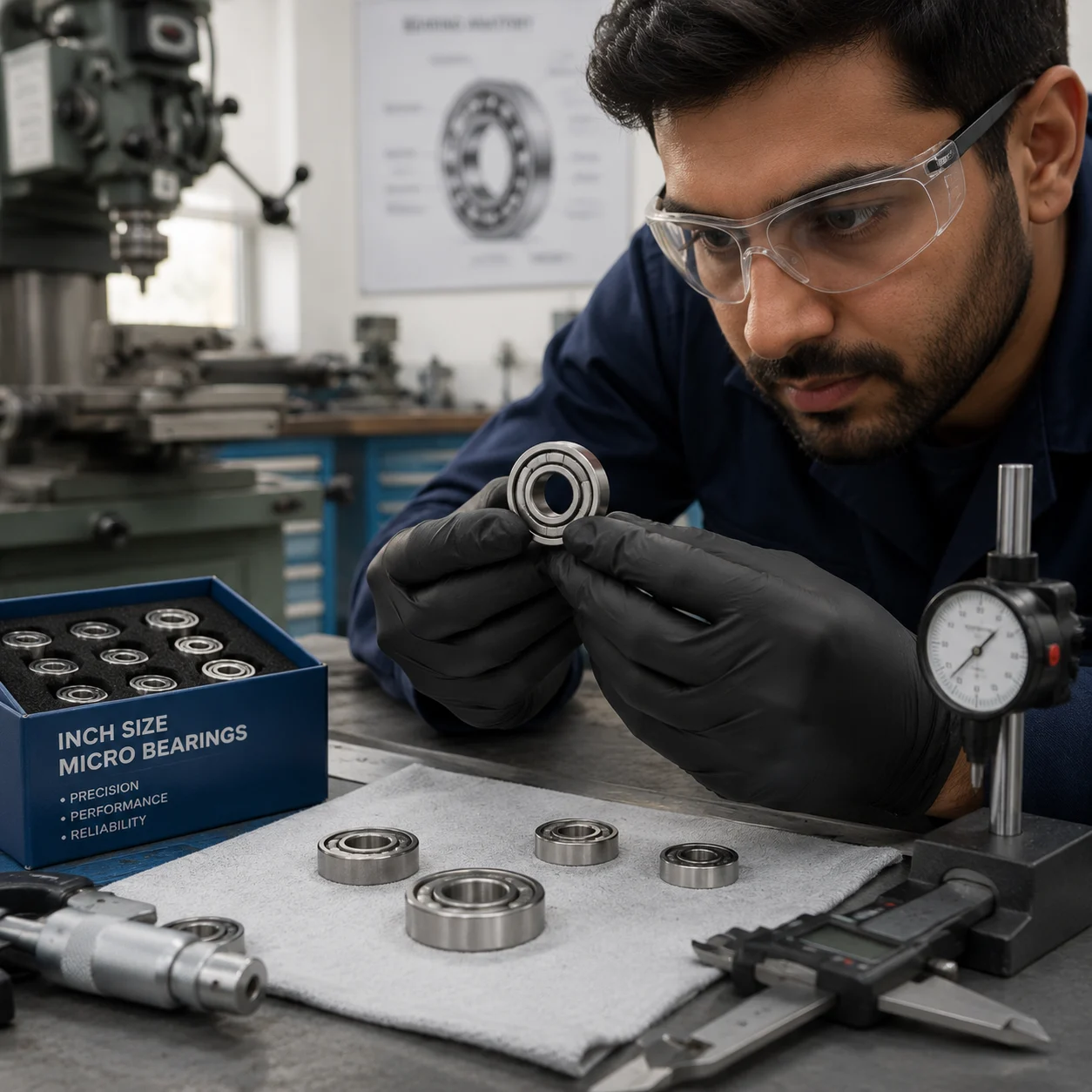
Inch Size Micro Bearings
Engineered precisely for North American OEM specifications, our R series inch miniature bearings comply with stringent ABMA/AFBMA dimensional criteria. They deliver flawless drop-in interchangeability for fractional-inch housings found in US-spec dental tools, actuators, and commercial aerospace systems.
- Bore sizes: 1/16" – 1/2"
- Key Series: R1, R2, R3, R4, R6, R8
- Standard: ABMA / AFBMA
- Sealing: Open / Shielded / Sealed
- Primary Use: US OEM replacements
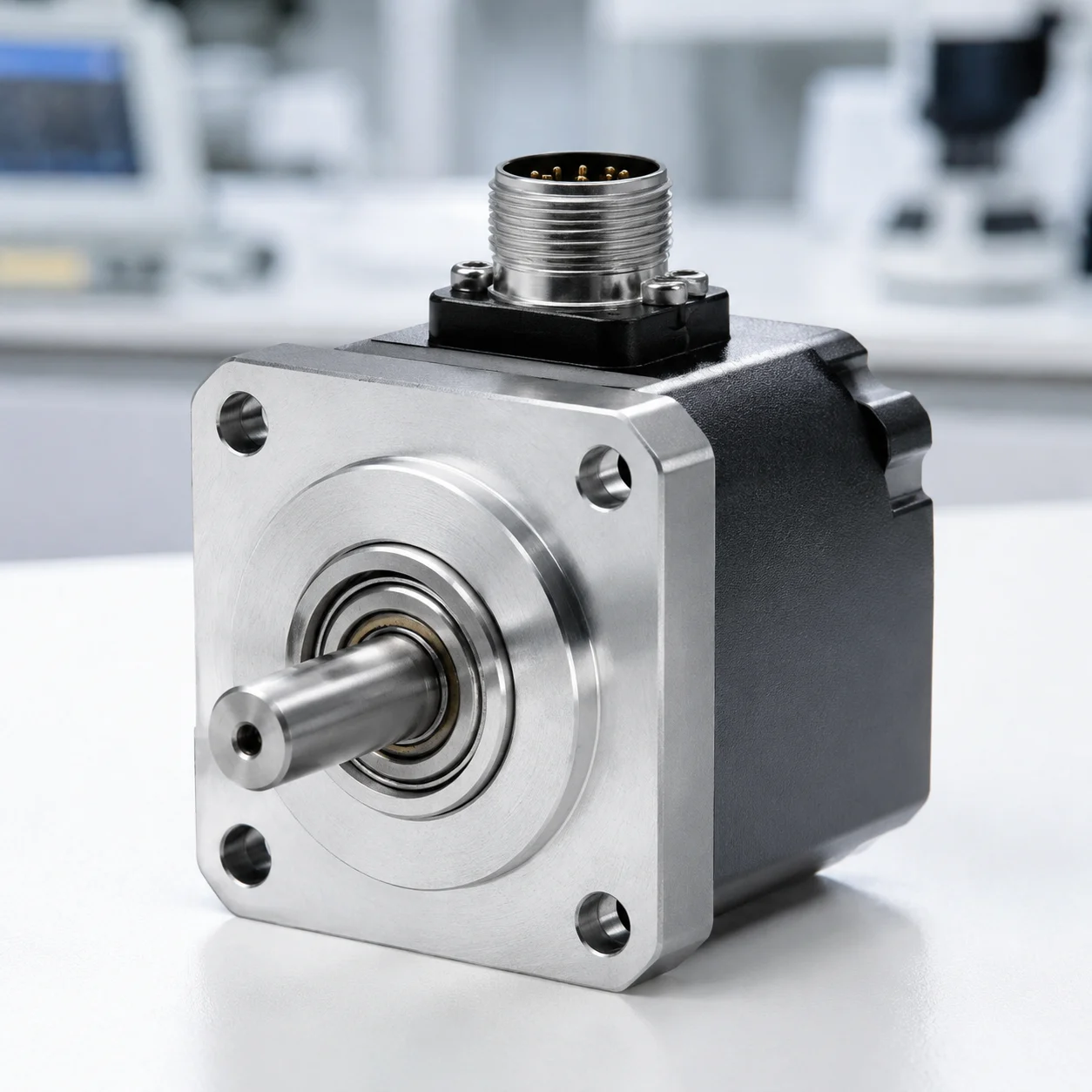
Flanged Micro Bearings
An integral outer-ring flange eradicates the need for separate retaining rings or stepped housing shoulders. By simplifying axial positioning, these bearings save vital space in thin-walled assemblies, reducing machining costs for high-precision encoders and instrumentation.
- Key Series: MF, RF, F6xx, F6xxZZ
- Flange Ext.: 1 – 3 mm over OD
- Primary Benefit: Simplified axial seating
- Variants: Metric and Inch available
- Primary Use: Encoders, tight housings

Shielded vs. Sealed Series
When evaluating a miniature bearing shield vs seal, consider speed and contamination. The non-contact ZZ metal shield creates low friction micro bearings ideal for high RPMs. Conversely, the 2RS rubber contact seal secures lubrication and excludes fine dust in drone or outdoor robotic joints.
- ZZ Shield: Ultra-low friction torque
- 2RS Seal: Maximum grease retention
- Lubrication Fill Rate: 20–35% standard
- Temp Tolerance: -30°C to +120°C
- Primary Use: Drones, medical drills
Technical Overview: Miniature Series Comparison
Utilize this matrix to swiftly determine which JN Bearings micro series matches your dimensional restraints, necessary closure type, and specific application conditions.
| Bearing Series | Dimensional Standard | Bore Range Supported | Available Closures | Precision Ratings | Optimized For |
|---|---|---|---|---|---|
| MR / 68X / 69X | Metric (ISO Standards) | 1.0 mm – 10.0 mm | Open / ZZ Shield / 2RS Seal | ABEC-3 to ABEC-9 | Precision optics, global micro-motors |
| R Series | Inch (ABMA Standards) | 1/16" – 1/2" | Open / ZZ Shield / 2RS Seal | ABEC-1 to ABEC-7 | US OEM systems, aerospace, dental |
| MF / RF (Flanged) | Metric & Inch Frameworks | 1.0 mm – 8.0 mm | Open / ZZ Shield / 2RS Seal | ABEC-5 to ABEC-9 | Thin-walled instrument housings |
| ZZ Variants | Available on All Series | Full Catalog Range | Non-Contact Metal Shield | ABEC-3 to ABEC-9 | High-speed, low-friction operations |
| 2RS Variants | Available on All Series | Full Catalog Range | Rubber Contact Lip Seal | ABEC-3 to ABEC-7 | Dusty environments, robotics |
Engineering Guidelines for Micro Bearing Selection
Pinpointing the appropriate miniature precision bearing involves assessing structural loads, ambient conditions, and speed targets. For B2B engineering teams specifying ABEC precision micro bearings, this step-by-step framework ensures robust performance and lifecycle reliability.
Step 1 — Verify Your Dimensional Standards
If your mechanical housing relies on ISO dimensions, prioritize metric miniature ball bearings like the 68X or MR series. Conversely, if servicing existing North American machinery or fractional-inch tooling, the inch size micro bearings (R series) provide direct, hassle-free OEM integration without redesigning housing tolerances.
Step 2 — Assess Axial Positioning Space
In ultra-compact applications where machining a retaining ring groove is structurally impossible, flanged micro bearings (MF or RF series) offer an elegant solution. The flange inherently sets the axial position against the housing face, significantly streamlining assembly for densely packed electrical motors or precision encoders.
Step 3 — Shielding vs. Sealing Requirements
The debate of a miniature bearing shield vs seal hinges on operational RPMs and environmental exposure. For speeds exceeding 30,000 RPM, metallic ZZ shields create low friction micro bearings that prevent heat accumulation. However, for unmanned aerial vehicles (drones) or outdoor gimbal pivots facing particulate contamination, 2RS contact seals offer unmatched protective integrity.
Step 4 — Mandate the Precision Grade (ABEC)
While ABEC-3 fulfills the demands of conventional small mechanisms, advanced medical devices and laser scanners dictate ABEC precision micro bearings (ABEC-5 or ABEC-7) to restrict radial runout below 3 µm. For hyper-sensitive gyroscopic instrumentation, our ABEC-9 bearings constrain runout to ≤ 1 µm, delivering flawless rotational symmetry.
Critical Ordering Parameters for Manufacturers
- Bore Diameter (d) — Clarify metric (mm) or fractional inch.
- Outer Diameter (D) — Governs housing cross-section limits.
- Width (B) — Essential metric for thin-profile assemblies.
- Tolerance Class — ABEC-3, 5, 7, or 9 per global standards.
- Radial Internal Clearance — MC1 (tight fit), MC3 (standard), MC5 (loose).
- Closures — Open, ZZ (Shields), or 2RS (Rubber Seals).
- Ring Material — High-carbon chrome steel or 440C stainless.
- Retainer Type — Stamped stainless steel ribbon or polyamide crown.
- Lubrication Specs — Oil vs. grease type, plus custom fill percentages.
- Packaging Demand — Bulk industrial tubes or individual OEM boxes.
Metallurgy Selection: Chrome vs. Stainless
Optimizing Supply Chains with a Comprehensive Miniature Bearing Manufacturer
For enterprise procurement teams, consolidating the supply of miniature precision bearings substantially decreases vendor management friction and logistical overhead. By partnering with JN Bearings, OEMs gain seamless access to metric, inch, flanged, and specialized micro bearings through a unified quality control infrastructure. This means identical inspection protocols and documentation across every bearing variant your bill of materials demands.
This single-source capability proves vital for multinational equipment manufacturers. A unified partnership ensures the inch size micro bearings required by your North American assembly facilities maintain the exact same quality pedigree as the metric miniature ball bearings specified by your European engineering hubs—all produced and validated under one consistent ISO-certified roof.
Furthermore, our advanced production lines seamlessly accommodate custom micro bearing requests. If a standard catalog size falls short of your specialized housing dimensions, or if you require highly specific low-outgassing lubricants for aerospace applications, JN Bearings engineers can swiftly prototype and scale bespoke configurations with full metallurgical and dimensional reporting.
We understand that traceability is paramount. Every batch of our ABEC precision micro bearings is backed by comprehensive material certificates, strict dimensional inspection data, and noise/vibration testing outputs. This exhaustive documentation supports rigorous supplier audits and compliance submissions for strictly regulated sectors, including medical device manufacturing and advanced automation.
Streamline Your Sourcing
Consult JN Bearings for Custom Micro Bearing Solutions
Provide your target dimensions, speed ratings, and operating environment. Our technical team will supply precise series recommendations and competitive wholesale pricing.
Performance You Can Measure — Precision You Can Trust
JN Bearings engineers every miniature precision bearing to perform at the absolute limits of speed, noise, and longevity. Here is exactly how we do it.
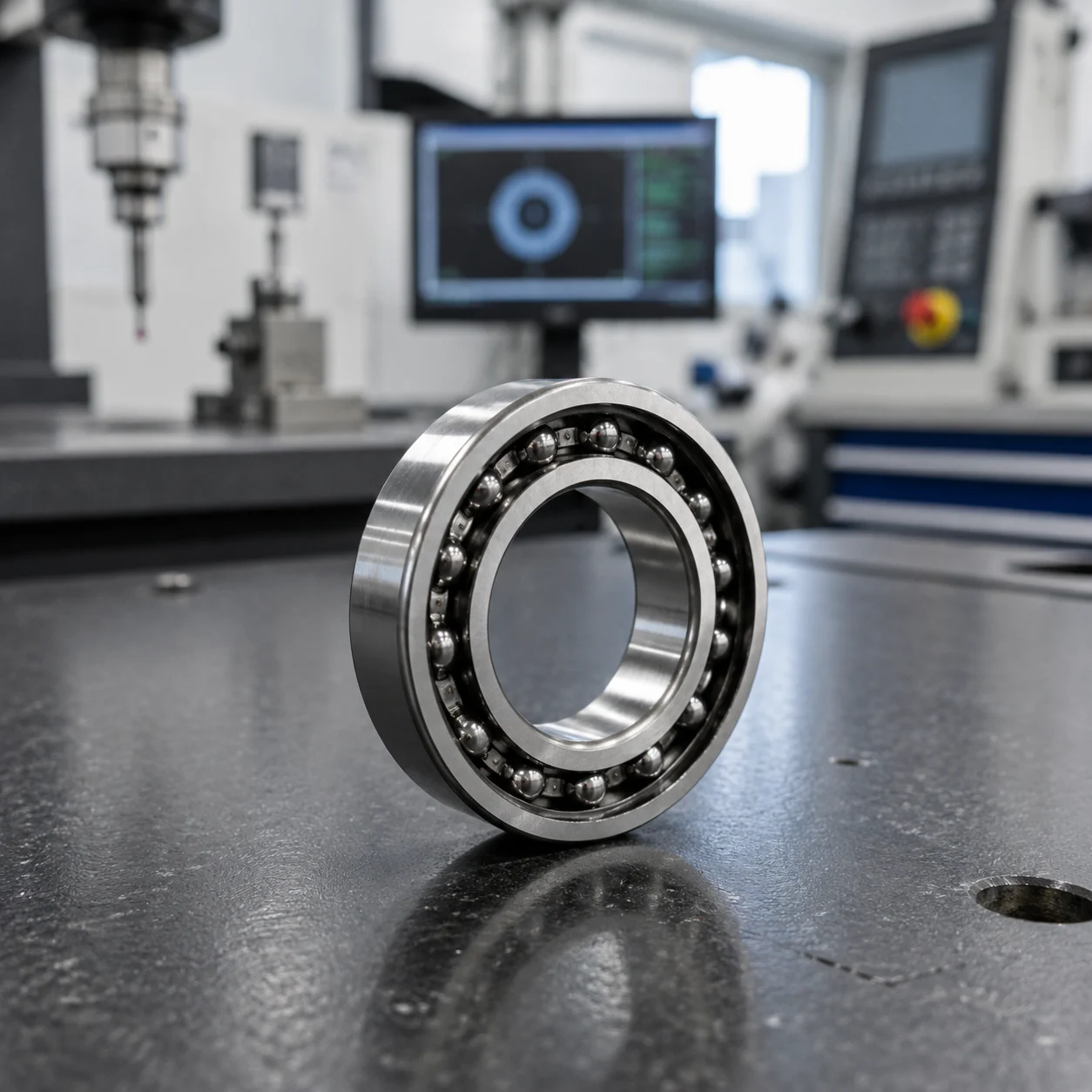
Ultra-Low Noise and Vibration Control
In compact devices — medical instruments, dental drills, and audio equipment — noise is not merely a comfort issue. It is a quality signal. Excessive vibration in a miniature precision bearing causes premature fatigue, measurement drift, and patient-safety concerns.
JN Bearings addresses this challenge through two interlocking process controls:
- Super-finished raceways — inner and outer rings are ground and lapped to a surface roughness of Ra ≤ 0.05 µm. This mirror-grade finish eliminates micro-asperities that generate noise and heat.
- Grade 10–25 precision steel balls — tightly sorted for diameter consistency within ±0.13 µm. Uniform ball size keeps load distribution even and vibration imperceptible.
- 100% BVT (Bearing Vibration Testing) — every finished bearing is spun on a calibrated vibration tester before shipment. Bearings exceeding our noise threshold are automatically rejected.
The result is a class of low noise miniature bearings that meets or exceeds ABEC-5 and ABEC-7 vibration specifications — critical for medical-grade and precision instrument applications.
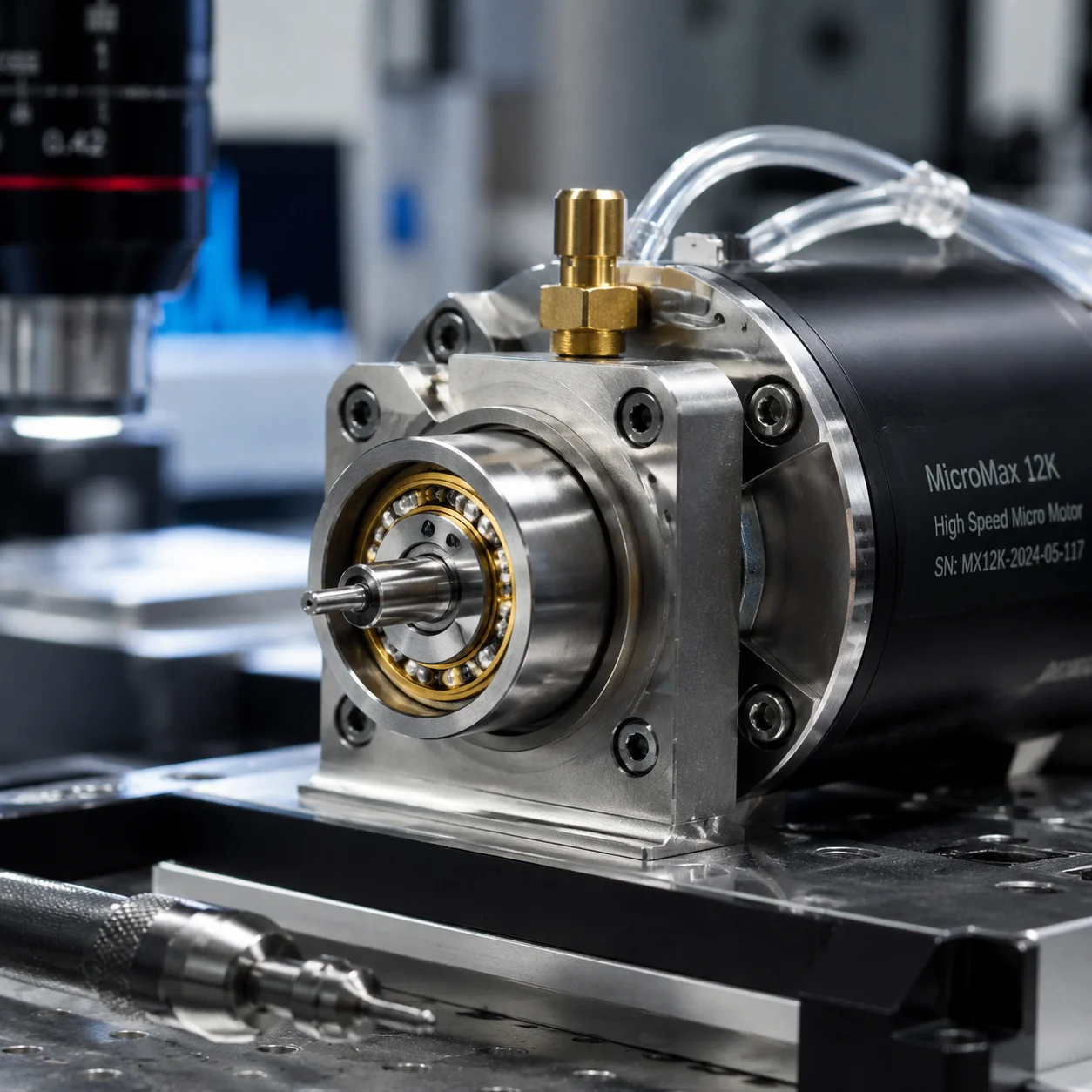
High-Speed Performance for Demanding Micro Applications
Micro motors, dental handpieces, and drone gimbal motors routinely operate between 30,000 and 120,000 RPM. At these speeds, the bearing cage design and lubrication selection become as critical as the steel itself.
JN Bearings engineers high speed micro bearings with two proven design strategies:
Crown Cage Design
The polyamide (PA66) crown cage reduces cage mass and centrifugal stress at extreme RPM. Lower mass means less heat generation and extended bearing service life — ideal for miniature motors above 50,000 RPM.
High-Speed Micro Grease
We pre-fill with low-viscosity, thermally stable grease formulated specifically for miniature bearings. Fill rate is precisely controlled — typically 15–25% of free volume — to minimize churning torque while ensuring adequate lubrication.
The combination of precision geometry and optimized lubrication allows our miniature precision bearings to sustain rated speed continuously without overheating or premature grease breakdown.
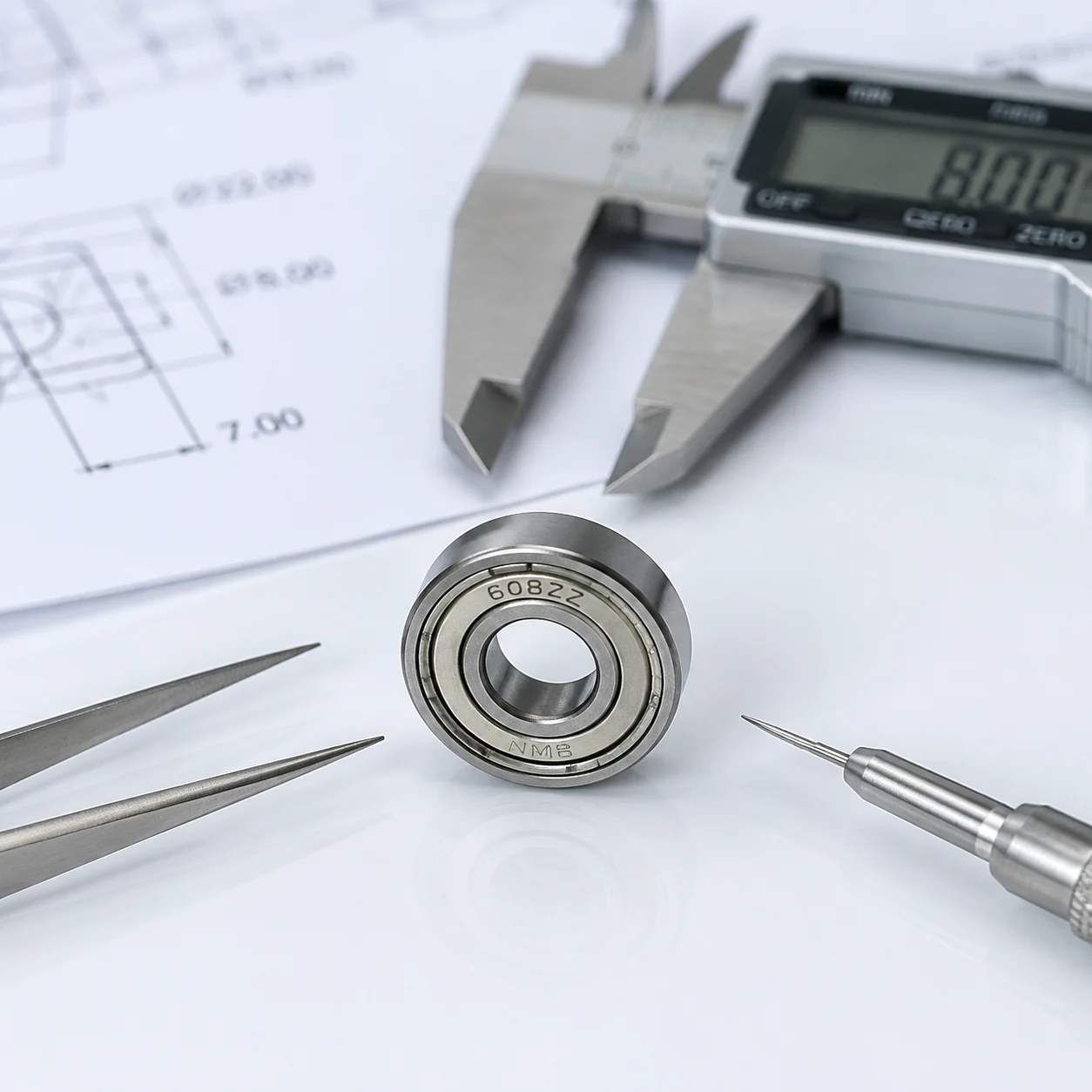
Low Starting Torque for Precision Instruments
In encoders, flow meters, and laboratory analytical instruments, the bearing must respond to extremely small actuation forces. Low starting torque is not a luxury — it is a functional requirement that directly affects measurement accuracy.
We optimize starting torque through three tightly controlled variables:
- 01Radial Clearance SelectionMC3 and MC5 clearance grades minimize preload while maintaining shaft rigidity. We select clearance grade to match your housing tolerances and operating temperature range.
- 02Instrument Oil LubricationFor the lowest possible torque, we offer instrument-grade oil fill instead of grease. Oil reduces viscous drag to near-zero at startup — the preferred choice for sensitive scientific equipment.
- 03Cleanroom AssemblyContaminant particles trapped between the raceway and balls are a leading cause of elevated torque and early failure. All low friction micro bearings are assembled in a controlled cleanroom environment to guarantee cleanliness at the particle level.
Our Raceway Finish and Quality Control Process
Every miniature precision bearing produced at JN Bearings passes through a structured, multi-stage quality control protocol before it leaves our facility.
Raw Material Inspection
High-carbon chrome steel (GCr15) and 440C stainless steel are certified and verified for hardness and chemical composition before any machining begins.
Dimensional & Roundness Check
Bore diameter, OD, and raceway roundness are measured on coordinate measuring machines (CMM) to ABEC tolerance benchmarks — verified at multiple production stages.
100% BVT Noise Testing
Every finished bearing is subjected to bearing vibration testing (BVT) at rated speed. Units that exceed our maximum noise floor are quarantined and rejected — no exceptions.
Final Documentation & Traceability
Each batch ships with a full inspection report. Lot traceability is maintained from raw material to finished shipment, supporting ISO 9001 audit requirements and RoHS compliance.
Key Performance Specifications at a Glance
Representative values for JN Bearings miniature precision bearing series (actual specs vary by model).
| Performance Parameter | Standard Grade | ABEC-5 Grade | ABEC-7 Grade |
|---|---|---|---|
| Inner Ring Runout (ABEC Radial) | ≤ 10 µm | ≤ 5 µm | ≤ 2.5 µm |
| Raceway Surface Finish (Ra) | ≤ 0.10 µm | ≤ 0.063 µm | ≤ 0.05 µm |
| Max Operating Speed (typical 7mm OD) | 40,000 RPM | 70,000 RPM | 100,000+ RPM |
| BVT Noise Level (Z-value) | Z2–Z3 | Z2 | Z1 |
| Starting Torque (typical) | 0.5–1.2 N·mm | 0.3–0.8 N·mm |
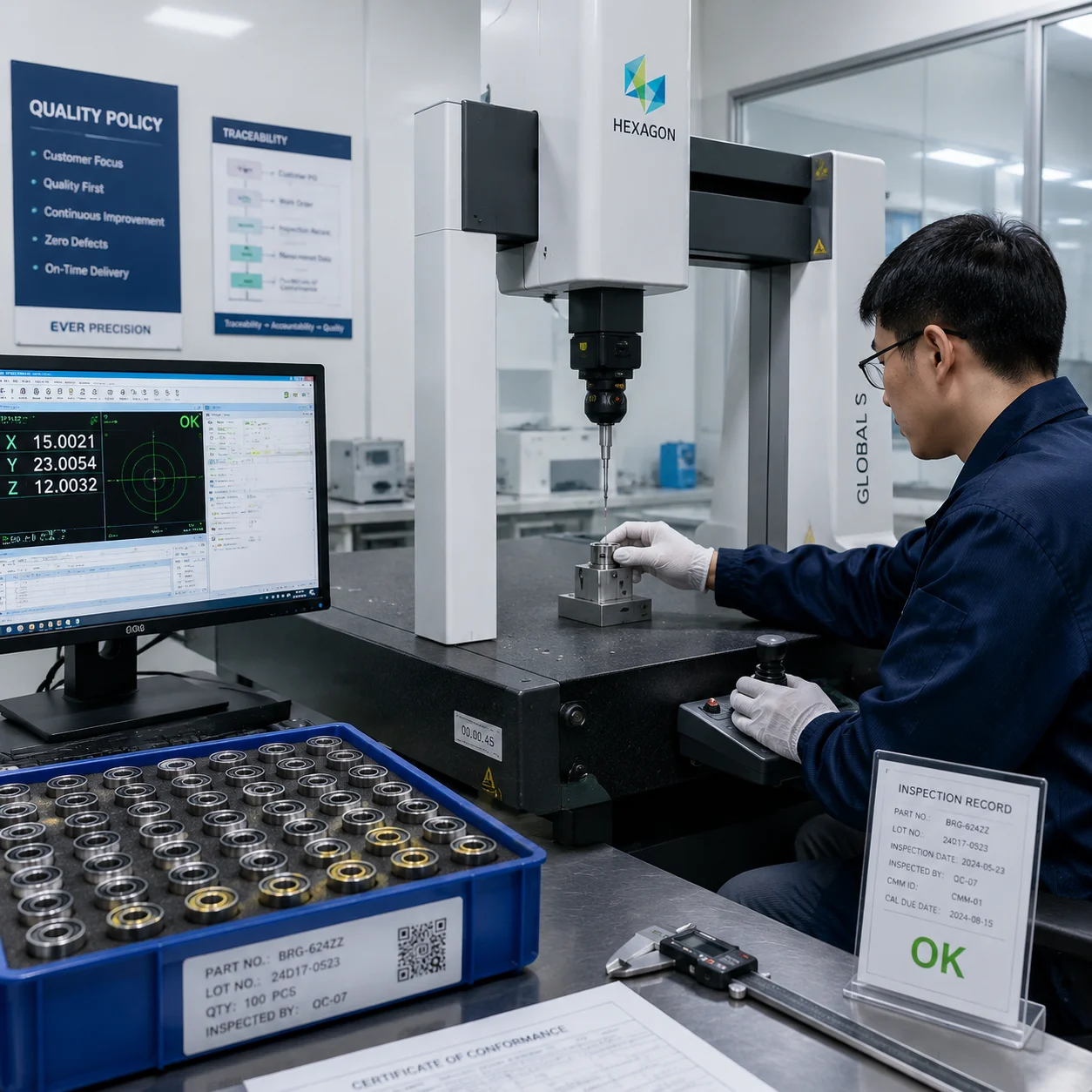
Why JN Bearings Manufacturing Standards Matter
It is easy to claim precision. It is much harder to prove it consistently across thousands of units per lot. JN Bearings has built its manufacturing infrastructure specifically around miniature precision bearings — not as a side product, but as a core specialization.
Our dedicated production lines, trained quality technicians, and non-negotiable BVT testing protocol mean that when you specify a JN bearing at ABEC-5 or ABEC-7, you receive exactly that — every time. We maintain process capability indices (Cpk) above 1.67 on all critical bearing dimensions to ensure consistent output across high-volume OEM orders.
For global procurement teams, this consistency translates directly into lower field failure rates, predictable assembly yields, and a supply chain you can depend on — whether you are ordering 500 or 500,000 units.
High-Performance Miniature Precision Bearings for Advanced Industries
From critical medical tools to advanced robotics, JN Bearings provides reliable motion control solutions globally. Our miniature precision bearings are engineered to meet the extreme speed, load, and spatial demands of highly specialized sectors.
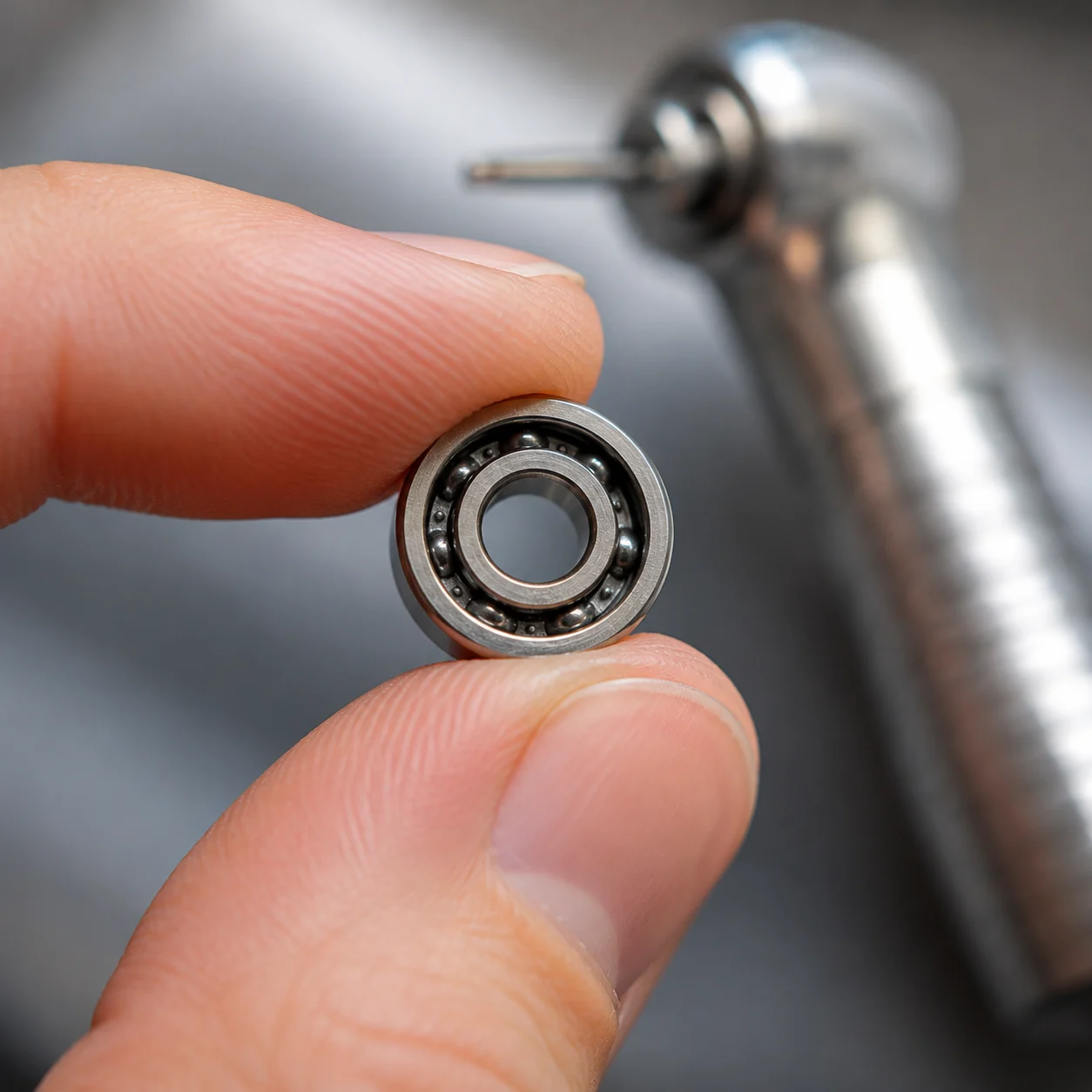
Miniature Bearings for Medical Devices
Dental drills and surgical instruments operate at extreme speeds, often exceeding 400,000 RPM. Our miniature bearings for medical devices withstand rigorous rotational demands while maintaining near-silent operation—a strict requirement for clinical environments. For more details, explore our medical devices solutions.
- Ultra-high speed capabilities exceeding 400,000 RPM for precision dental turbines
- 440C stainless steel construction to resist corrosion during autoclave sterilization
- Cleanroom-assembled components to eliminate stringent contamination risks
- ABEC-7 / P4 precision grade ensuring a vibration-free experience for patients
Trusted globally in surgical robotics, infusion pumps, and lab centrifuges.

Drone Ball Bearings for UAVs & Gimbals
Every gram matters in aerospace design. Our lightweight drone ball bearings reduce overall payload while delivering the smooth, low-vibration rotation necessary to stabilize high-resolution cameras, gimbal motors, and control surfaces during agile flights.
- Low mass micro bearings starting from 3mm OD for compact brushless motors
- Low vibration operation to preserve critical gimbal and camera stability
- ZZ shielded designs protecting internal rolling elements against dust at altitude
- High-speed grease formulations sustaining peak motor RPM across varying climates
Adopted by leading commercial drone and industrial UAV manufacturers worldwide.
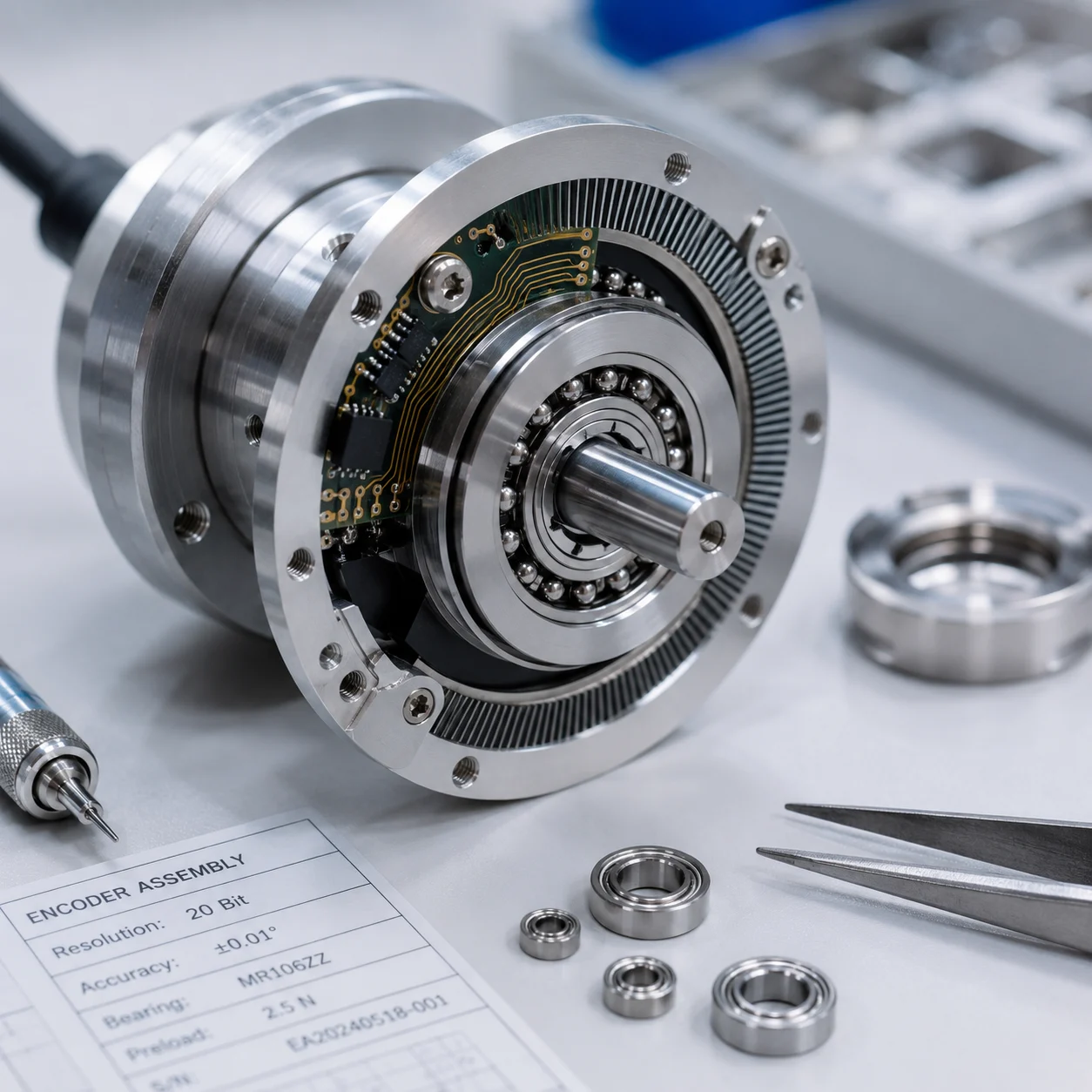
Micro Bearings for Precision Instruments
In collaborative robots and optical measurement tools, positioning repeatability relies on strict runout control and minimal starting torque. Our ABEC-7 miniature precision bearings deliver sub-micron geometric accuracy for tight-tolerance robotic joints and precision encoders.
- Ultra-low starting torque ensuring highly accurate encoder signal outputs
- ABEC-5 to ABEC-9 radial runout kept below 2.5 µm for flawless joint precision
- Instrument-grade oil lubrication minimizing frictional drag in sensitive assemblies
- Flanged micro bearings simplifying axial positioning within compact robotic links
Specified in modern cobot joints, optical scanners, and automated semiconductor handlers.
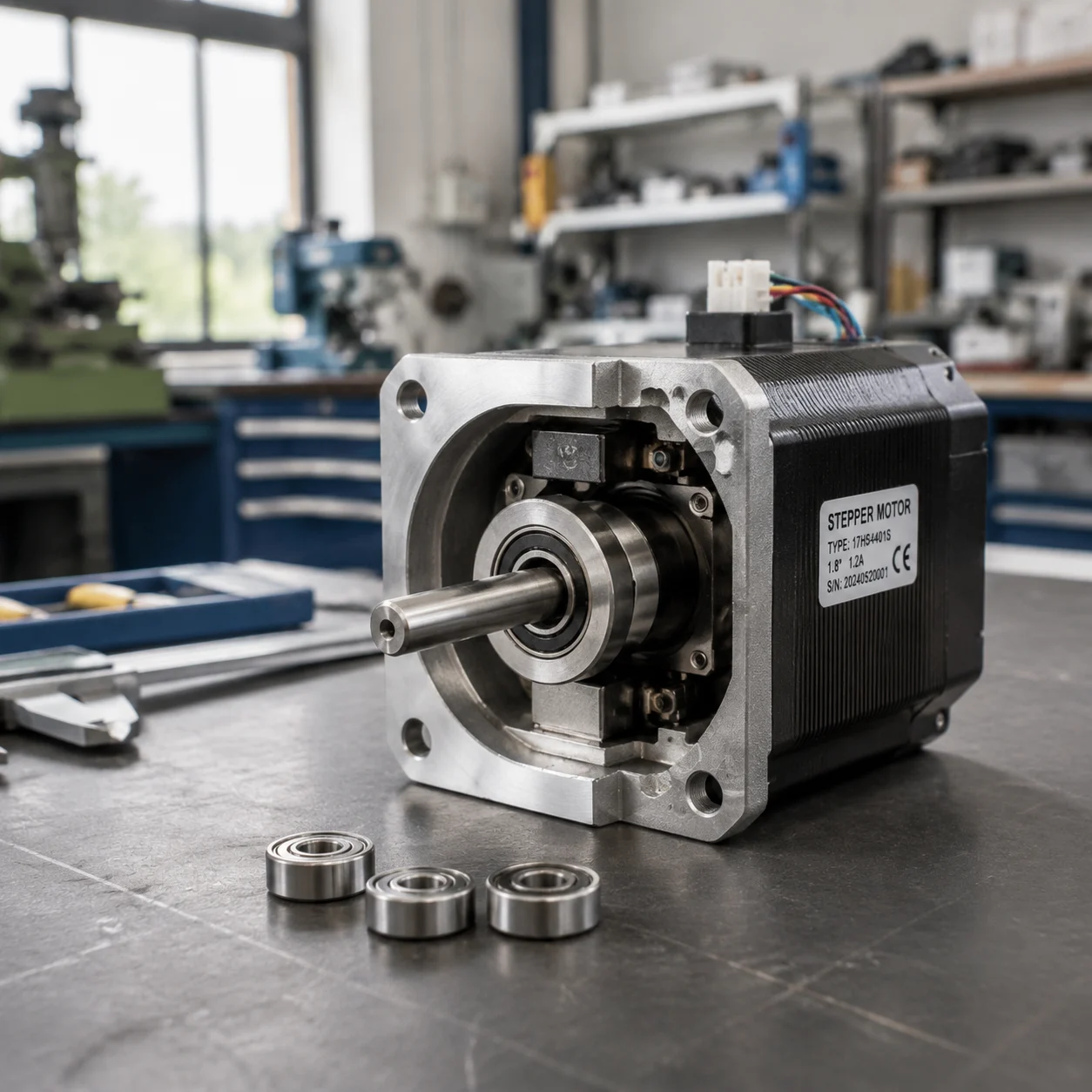
Micro Motor Bearings for Steppers & Spindles
Miniature DC motors, steppers, and spindles require components that outlast the device itself. Our micro motor bearings reduce electromagnetic interference, extend maintenance intervals, and maintain consistent low-noise performance from startup to maximum velocity.
- Extended fatigue life via super-finished raceways and premium grade steel balls
- Comprehensive MR series (MR52 to MR2010) fitting standard DC and stepper motor bores
- Polyamide crown cages selected to reduce audible noise in high-cycle motor duties
- 100% BVT tested (Vibration Velocity Testing) to V3 / Z3 class before shipment
The standard for electric motors in compact automation systems.
Micro Bearing Selection Guide
Sourcing the ideal miniature precision bearings for tight-tolerance applications requires meticulous attention to detail. This technical guide explores boundary dimensions, radial clearances, lubrication strategies, and cage variations to assist your engineering team in specifying the optimal component.
Boundary Dimensions & Radial Internal Clearance
The foundation of specifying miniature precision bearings is verifying the exact bore size (ID), outer diameter (OD), and width. Common metric formats include the highly versatile MR, 68X, and 69X series, serving assemblies with bore dimensions as small as 1mm. For North American legacy hardware and specific aerospace applications, the R-series (R1 to R10) provides equivalent precision in inch sizes.
Beyond basic dimensions, defining the correct Radial Internal Clearance (RIC) is paramount for extending service life, managing thermal expansion, and controlling acoustic emissions. In micro sizes, these are categorized by MC classes (MC1 through MC6). Deciding on a radial clearance MC3 MC4 rating, for instance, offers the ideal compromise between rotational freedom and vibration resistance in standard micro motors.
Application Mapping for MC Clearances
- MC1 (Tightest): Critical for precision optical encoders, gyroscopes, and mechanisms requiring near-zero radial runout.
- MC2 / MC3: The standard selection for micro motors, dental handpieces, and stepping motors. Yields the best balance of speed, low noise, and longevity.
- MC4 / MC5: Essential for high-temperature environments or applications featuring an interference fit, proactively compensating for metal expansion.
Accounting for Housing & Shaft Fit Tolerances
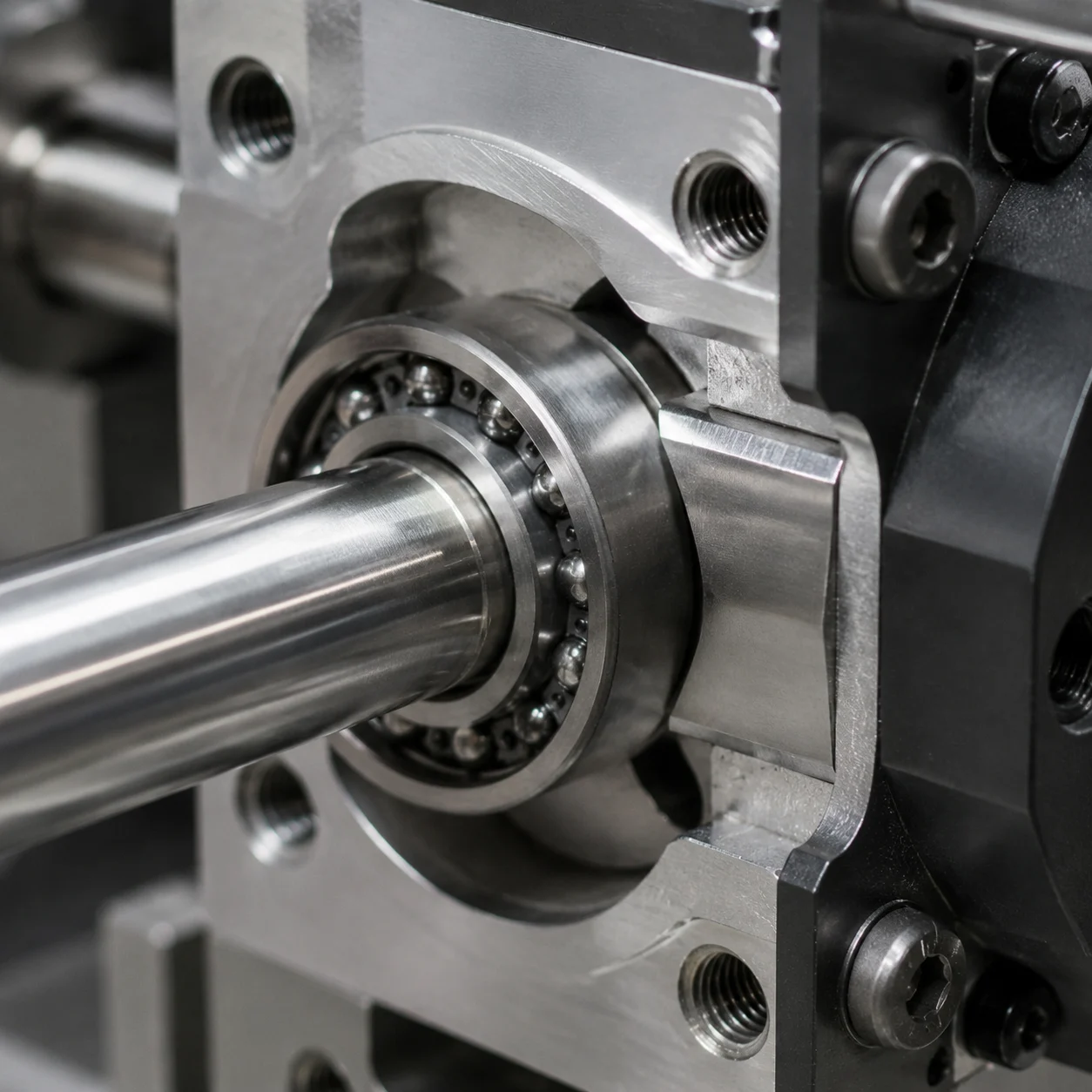
In ultra-small bearings, an excessive interference fit on the shaft or housing can rapidly consume the internal clearance, inducing detrimental preload. Most high-performance miniature assemblies perform best with a slip fit on the outer ring and a localized transition fit on the inner bore. JN Bearings routinely assists engineers in calculating these exact interference limits.
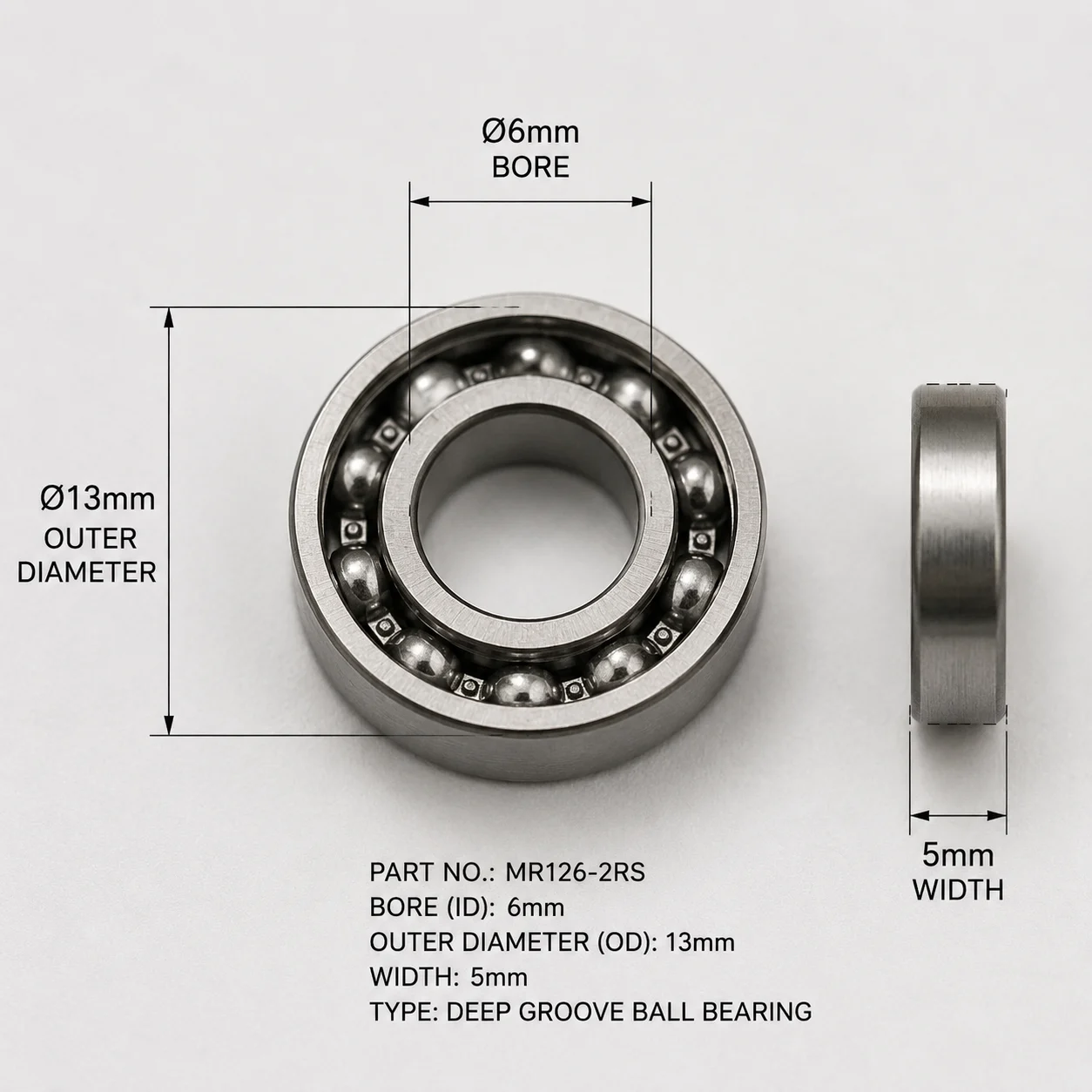
Standard Radial Clearance Classes (MC Standard)
| MC Class | Clearance (µm) | Optimal Use Case |
|---|---|---|
| MC1 | 0 – 6 µm | Optical encoders, sensors |
| MC2 | 3 – 10 µm | High-precision instrumentation |
| MC3 | 5 – 15 µm | Standard micro motors, robotics |
| MC4 | 8 – 23 µm | Elevated temperature motors |
| MC5 | 13 – 33 µm | Heavy interference fit assemblies |
Navigating Miniature Bearing Lubrication: Grease vs. Oil
Understanding the nuances of miniature bearing lubrication grease vs oil can dictate the ultimate success or failure of your moving parts. Selecting an incorrect viscosity or fill volume directly leads to excessive starting torque, thermal buildup, and premature raceway fatigue. Depending on speed and operational drag requirements, engineers must choose between low-viscosity instrument oils and advanced synthetic greases.
Instrument Oils for Ultra-Low Torque
Premium instrument-grade oil is deployed when achieving the absolute lowest starting and running torque is mandatory. Because oil creates minimal viscous drag, it is the standard lubrication choice for highly sensitive measuring tools, surgical robotics, and anemometers. However, due to its low viscosity, it demands strict housing sealing to prevent migration and may require more frequent maintenance cycles.
- Delivers frictionless startup—vital for precision gyroscopes and metrology.
- Maintains flowability across vast environmental temperature swings.
- Requires precise micro-dosing (typically 1–3% of free space) to avoid fluid friction.
High-Speed, Low-Noise Synthetic Greases
For the vast majority of continuous-duty applications—such as UAV gimbals, dental drills, and RC motors—a high-performance synthetic grease is specified. Formulations based on PFPE (perfluoropolyether) or advanced esters provide robust film strength capable of protecting rolling elements at speeds surging past 100,000 RPM while dramatically dampening acoustic vibrations.
- Controlled Fill Volumes: JN Bearings meticulously applies a 15–30% fill rate to prevent heat generation caused by grease churning.
- Extreme Temperature Stability: High-grade PFPE greases operate reliably from –40 °C to well over +200 °C.
- Cleanroom & Vacuum Safe: Specialized low-outgassing variants protect sensitive semiconductor and aerospace components from contamination.
At JN Bearings, we collaborate with leading lubricant brands to match your speed, load, and thermal profiles perfectly, ensuring maintenance-free, long-lifecycle operation.
Grease vs. Instrument Oil Selection Matrix
| Parameter | Instrument Oil | Synthetic Grease |
|---|---|---|
| Starting Torque | Ultra-Low | Low to Moderate |
| Maximum RPM | Exceptional | Very High (with PFPE) |
| Maintenance | Periodic Relubrication | Sealed for Life (Typical) |
| Vibration Dampening | Minimal | Excellent |
| Fluid Migration | High Risk | Low Risk (Stays localized) |
| Ideal Application | Optical tools, metrology | Drones, medical handpieces |
Expert Insight from JN Bearings
Lubricant incompatibility is a primary cause of micro bearing failure. Never mix synthetic esters with mineral oils or PFPEs, as this degrades the thickener structure. Always communicate your target operating temperature so our factory can specify the optimal OEM grease fill.
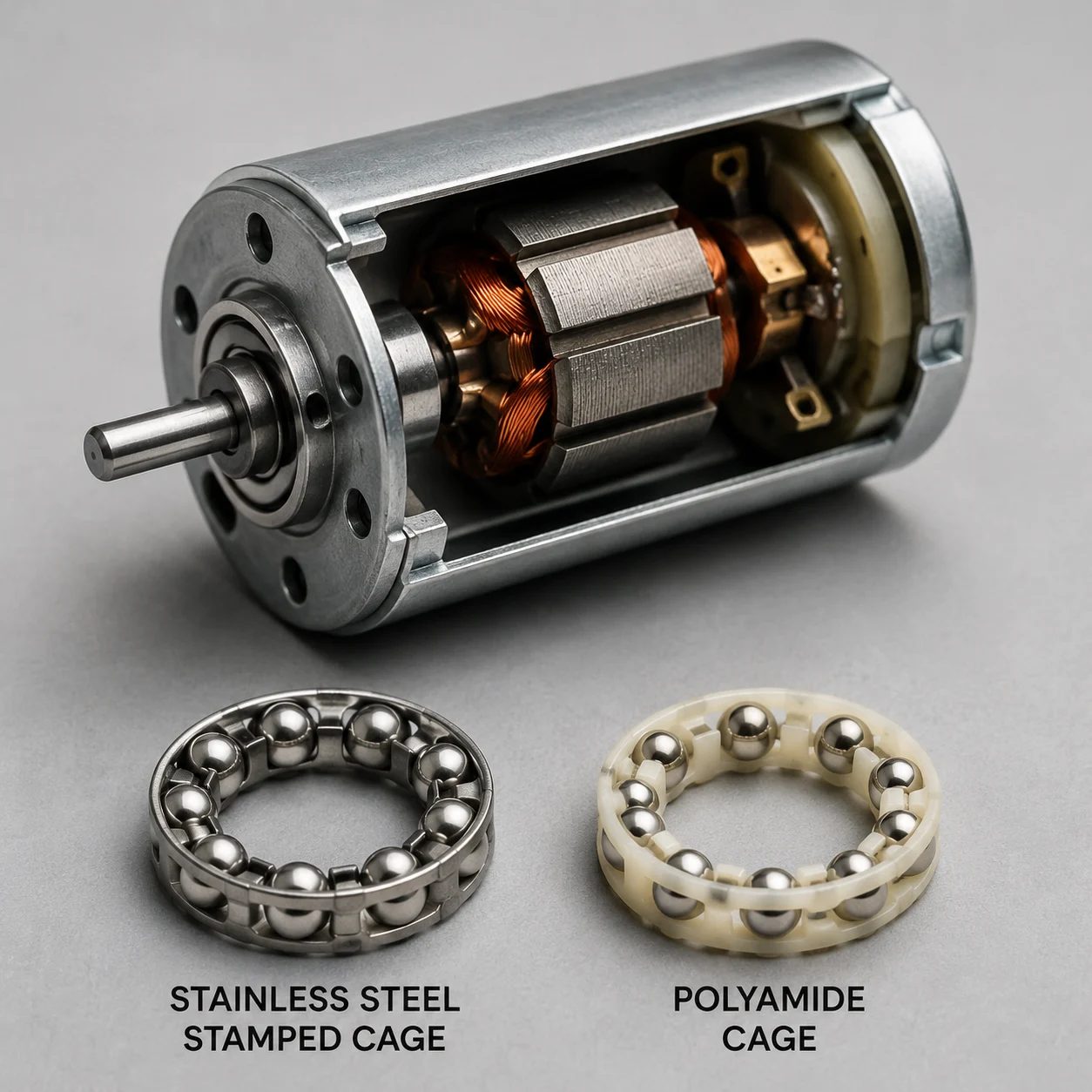
Optimizing Retainers: Micro Bearing Cage Types
The retainer, or cage, functions to evenly distribute and guide the steel or ceramic balls during rapid rotation. In miniature precision dimensions, the cage configuration significantly alters the bearing's maximum speed capability, friction coefficient, and acoustic profile. Factoring in centrifugal forces at extreme RPMs makes cage selection a high-priority engineering decision.
Stainless Steel Stamped Cages
Renowned for their rugged reliability, stainless steel stamped ribbon or crown cages are standard in the majority of shielded (ZZ) and sealed (2RS) micro bearings. They offer exceptional dimensional stability under varied loads and boast broad chemical compatibility with most industrial lubricants.
- Delivers superior thermal resilience, safely operating up to 150 °C.
- The highly durable standard for metric 68X/69X and inch R-series components.
- Economical to produce without sacrificing general-purpose precision.
Polyamide (Nylon) Crown Cages
Integrating a polyamide cage micro bearing into your design unlocks next-level high-speed performance. Usually molded from glass-fiber reinforced Nylon (PA66), these lightweight crown-type retainers drastically reduce centrifugal mass, pushing safe operating limits beyond 50,000 RPM. The polymer's inherent lubricity also ensures quieter running and reduced steel-on-steel friction.
- Velocity Advantage: Ultra-lightweight mass prevents cage deformation under intense centrifugal stress.
- Acoustic Superiority: Polymer-to-metal contact absorbs micro-vibrations, yielding whisper-quiet rotation.
- Thermal Restraints: Limited to continuous operating temperatures of around 120 °C.
Full-Complement Configurations
Engineered without a cage, a full-complement bearing packs the maximum volume of balls into the raceway. While this design is capable of supporting massive radial loads within a tiny footprint, the friction generated by ball-to-ball contact restricts it to low-speed, highly loaded oscillating applications.
JN Bearings manufactures micro solutions utilizing all three retainer types. Let our technical team evaluate your application's load vectors and speed requirements to prescribe the perfect cage format.
Cage Material Performance Matrix
| Attribute | Steel Stamped | Polyamide (Nylon) |
|---|---|---|
| Rotational Speed Limit | High | Ultra-High |
| Acoustic Output | Low | Exceptionally Low |
| Heat Tolerance | Excellent (150 °C+) | Moderate (120 °C) |
| Component Mass | Standard | Extremely Light |
| Manufacturing Cost | Highly Economical | Slightly Premium |
| Primary Use Cases | Broad general industry | Dental, high-speed spindles |
Enclosures: Shield (ZZ) vs. Seal (2RS)
Non-contact metal shields (ZZ) provide robust particulate defense with zero added friction, solidifying them as the premier choice for speed-intensive micro motors. Conversely, rubber contact seals (2RS) guarantee absolute defense against washdown fluids and fine dust, though they inherently increase starting drag.
- ZZ Shields: Optimized for high-RPM, low-torque demands.
- 2RS Seals: Essential for harsh, contaminant-heavy environments.
- Open Bearings: Best suited for internally lubricated, fully enclosed gearboxes.
Metallurgy: Chrome vs. Stainless
High-carbon chrome steel (52100/GCr15) serves as the industry gold standard, yielding maximum raceway hardness, dynamic load capacity, and long-term fatigue life. When moisture resistance is indispensable, such as in dental tooling or robotics, 440C stainless steel provides crucial corrosion protection.
- Chrome Steel: Maximum load threshold and deep surface finish.
- 440C Stainless: Fends off oxidation; marginally lower load rating.
- Ceramic Hybrids: Si3N4 balls available for extreme thermal and electrical isolation.
Targeting the Right ABEC Tolerance
The internationally recognized ABEC precision rating heavily dictates bore tolerances, geometric runout, and overall rotational accuracy. Elevating the ABEC grade tightens machining deviations, directly translating to smoother performance and fewer harmonic vibrations at peak velocity.
- ABEC-1 / ABEC-3: Reliable economy for standard micro mechanisms and consumer electronics.
- ABEC-5 / ABEC-7: The stringent standard for premium UAV motors, surgical tools, and encoders.
- ABEC-9: Reserved for master-level metrology, aerospace navigation, and ultra-high-speed spindles.
Engineering Inquiry Checklist
To ensure JN Bearings provides you with the most precise technical recommendations and competitive wholesale quotes, please review this engineering checklist before submitting your RFQ.
- 1Verify physical boundaries: Exact bore ID, OD, and width in either metric (mm) or imperial (inch) standards.
- 2Determine dynamic speed (RPM): Defines the necessity for a polyamide cage, specialized grease, and exact clearance profiles.
- 3Analyze load capacity: Detail the presence of strictly radial, strictly axial, or complex combined loads.
- 4Confirm ambient and operating temperatures: Crucial for finalizing steel metallurgy and synthetic grease selection.
- 5Note environmental hazards: Anticipate exposure to dust, moisture, corrosive agents, or ISO cleanroom protocols.
- 6Outline acoustic & vibration limits: High-sensitivity applications mandate elevated ABEC grades and precise internal clearances.
- 7Designate supply chain needs: Specify estimated annual volumes and preferred OEM assembly packaging (e.g., automated tube packing).
Download Complete Technical PDF
Secure our exhaustive engineering reference guide. Includes comprehensive micro series dimension tables, load ratings, clearance charts, and precise ABEC tolerance breakdowns.
Partner with JN Bearings: Our seasoned manufacturing specialists have empowered global OEM teams to navigate highly specific requirements. Whether you are balancing the friction variables of miniature bearing lubrication grease vs oil, determining the optimal radial clearance MC3 MC4 profile, or integrating a robust polyamide cage micro bearing to hit new speed milestones, our experts provide actionable data. Reach out for 3D CAD files, dynamic testing data, and complimentary pre-production samples for qualified wholesale projects.
Miniature Bearing Quality Assurance
Every precision micro bearing that leaves our facility undergoes rigorous, multi-stage inspection. JN Bearings is an ISO 9001 certified and RoHS compliant manufacturer, ensuring your critical assemblies operate smoothly and reliably.
- 1
Material Certification
Raw chrome steel and stainless steel are verified for purity and hardness before precision machining starts.
- 2
Dimensional & Roundness Testing
Raceways are inspected using high-resolution air gauges to ensure ABEC-compliant dimensional accuracy.
- 3
Cleanroom Bearing Assembly
All miniature bearings are assembled in dust-free cleanrooms, preventing particle contamination that degrades performance.
- 4
100% BVT Noise & Vibration Testing
Each completed unit is subjected to vibration testing. We ensure strict low-noise thresholds for optimal high-speed running.
- 5
Final Outgoing Audit
Batches undergo AQL-based inspection before shipping, guaranteeing every order meets our exact quality specifications.

JN Bearings — Verified Precision at Every Stage
ISO 9001 Certified · RoHS Compliant · 100% Noise Tested
Why Superior Quality Control is Vital for Micro Bearings
When sourcing miniature precision bearings for demanding applications like medical handpieces, micro-motors, and drone gimbals, consistency is critical. A single microscopic flaw or dust particle can drastically increase starting torque, cause premature wear, and lead to catastrophic system failure. JN Bearings has engineered a quality management system specifically focused on identifying and eliminating these minute defects.
Operating under an ISO 9001 certified framework, our inspection protocols cover the entire production cycle. From evaluating the metallurgical integrity of incoming steel to fine-tuning the exact grease fill amount, our objective is simple: ensure that every micro bearing functions perfectly under extreme operating speeds and compact space constraints.
The Advantage of Cleanroom Assembly
For small diameter ball bearings, environmental contamination is a primary cause of reduced life spans. Standard factory environments contain airborne particulate matter that easily interferes with precision raceway geometries. We perform all final assembly of our miniature ball bearings within designated cleanroom facilities. This controlled environment severely limits airborne particles, humidity, and temperature variations, ensuring our products deliver consistently low friction and extended fatigue life.
100% Noise & Vibration Testing (BVT)
Many manufacturers rely on random batch sampling, but JN Bearings conducts 100% individual testing. Using specialized Bearing Vibration Testers (BVT), we measure the low (L), medium (M), and high (H) frequency vibration bands on every bearing. This strict 100% validation process guarantees that only low noise miniature bearings pass into the final packaging phase, which is a critical requirement for precision instruments, audio-visual devices, and medical applications.
Precision Tolerances and Clearances
Achieving ABEC-5 or ABEC-7 ratings requires exceptional dimensional stability. We utilize coordinate measuring machines (CMM) and air-gauge systems to measure bore size, outer diameter, and radial runout down to a single micron. We carefully match rolling elements to raceways to achieve exact radial internal clearances (MC1 through MC6), preventing shaft misalignment and controlling heat generation.
- High precision dimensions: Continuous measurement verifying compliance with standard ABEC tolerances.
- Super-finished raceways: Enhancing surface smoothness to dramatically reduce rotational friction.
- Micro clearance control: Sorted into MC grades to match the exact thermal and load characteristics of the application.
- Custom lubrication inspection: Strict checks on grease fill rate and oil distribution for high-speed capabilities.
- Traceable documentation: Full quality reports are maintained to ensure consistency across multiple production batches.
Frequently Asked Questions
Find expert answers to common technical specifications, customization options, and procurement details regarding our miniature precision bearings.
Source High-Precision Miniature bearings Directly from the Manufacturer
Get expert advice, free samples, and competitive wholesale pricing for your next project. Partner with JN Bearings for a highly reliable and cost-effective supply chain globally.
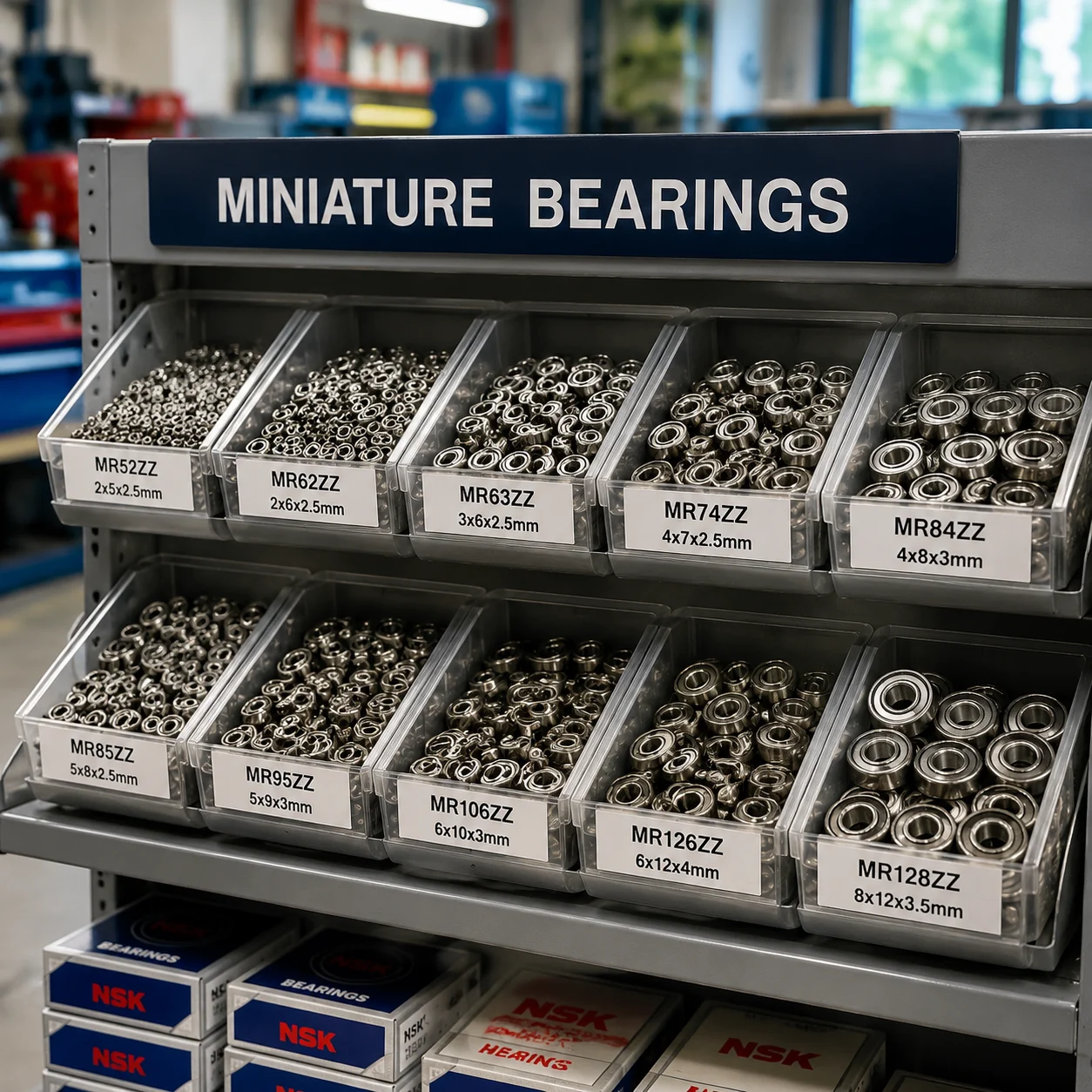
Direct Wholesale Miniature Bearings
Secure volume-tiered pricing directly from our manufacturing facility, bypassing intermediary markups for your ABEC standard bearings.
Free Sample Evaluation
Test our micro ball bearings in your actual applications before committing to bulk orders, ensuring perfect fit and performance.
Custom Micro Bearings OEM
Require specific clearances, specialized greases, or private labeling? We customize everything from dimensions to industrial tube packaging.
Dedicated Engineering Support
Our technical team provides expert guidance on material selection, lubrication, and seal configurations for extreme high-speed or low-torque requirements.
100%
BVT Noise Tested
ABEC-5+
High Precision
24h
Inquiry Response
ISO
Certified Cleanroom
Contact Your Miniature Bearing Supplier
Choose your preferred channel below. Our engineering and sales teams are ready to provide technical advice and competitive quotes.
Email Inquiry
Send us your technical drawings or part numbers for a prompt wholesale quote.
sales@jnbearings.comWhatsApp & Direct Line
Message us instantly for rapid responses to your engineering or sourcing questions.
+86 13954091520Free Samples
Submit your application details to receive sample micro bearings for validation.
Evaluate Before You BuyReady to Optimize Your Compact Devices?
Partner with JN Bearings to secure a consistent supply of ABEC precision micro bearings. Let us help you achieve higher speeds and lower friction.