
Ball Bearings for High-Accuracy Transmission & Stability
Designed for instruments, robotics, and high-accuracy assemblies. JN Bearings provides low-noise, low-runout, and long-life solutions.
Our precision bearings ensure stable motion and consistent quality, solving critical positioning and repeatability challenges in demanding equipment.
Key Bearing Requirements for Precision Equipment
Precision equipment demands more than simple rotation. Position accuracy, high repeatability components, and consistent motion stability define whether a system performs flawlessly or fails to meet rigorous application standards.
Why Bearing Accuracy Directly Impacts System Performance
In instruments, robotics, and high-accuracy assemblies, bearings are not passive support elements. They are active precision motion control components that dictate the repeatability and positional fidelity of every operating cycle. A bearing with marginal accuracy introduces mechanical error at the source, and in precision systems, that error rapidly compounds downstream.
JN Bearings enforces tight manufacturing tolerances and rigorous quality control to deliver low runout ball bearings suited for the most demanding applications. Our objective is to eliminate unexpected deviations, ensuring reliable performance batch after batch.
5 Core Bearing Requirements in Precision Equipment
- 1Low Radial and Axial Runout Runout directly affects positional accuracy. Even micron-level deviations cause measurable errors in optical, measurement, or automated assembly systems. Low runout bearings are strictly non-negotiable for precision tasks.
- 2Low Vibration and Quiet Operation Vibration from rolling elements introduces mechanical noise into signal chains and imaging systems. Low noise bearings reduce baseline interference, protecting data integrity in highly sensitive environments.
- 3Low Friction and Controlled Temperature Rise Excessive friction generates heat, which degrades dimensional stability and shortens lubricant life. Low friction components maintain consistent drag torque, protecting system calibration during continuous operation.
- 4High Repeatability and Positional Consistency High repeatability components are critical wherever robotic joints or automation modules must return to an exact known position. Inconsistent bearing geometry translates directly into failed assembly tolerances.
- 5Dimensional Uniformity Across Batches Precision equipment is frequently produced in volume. If bearing dimensions shift between production lots, assembly precision drifts. Consistent bore and OD tolerances are essential for scalable manufacturing.
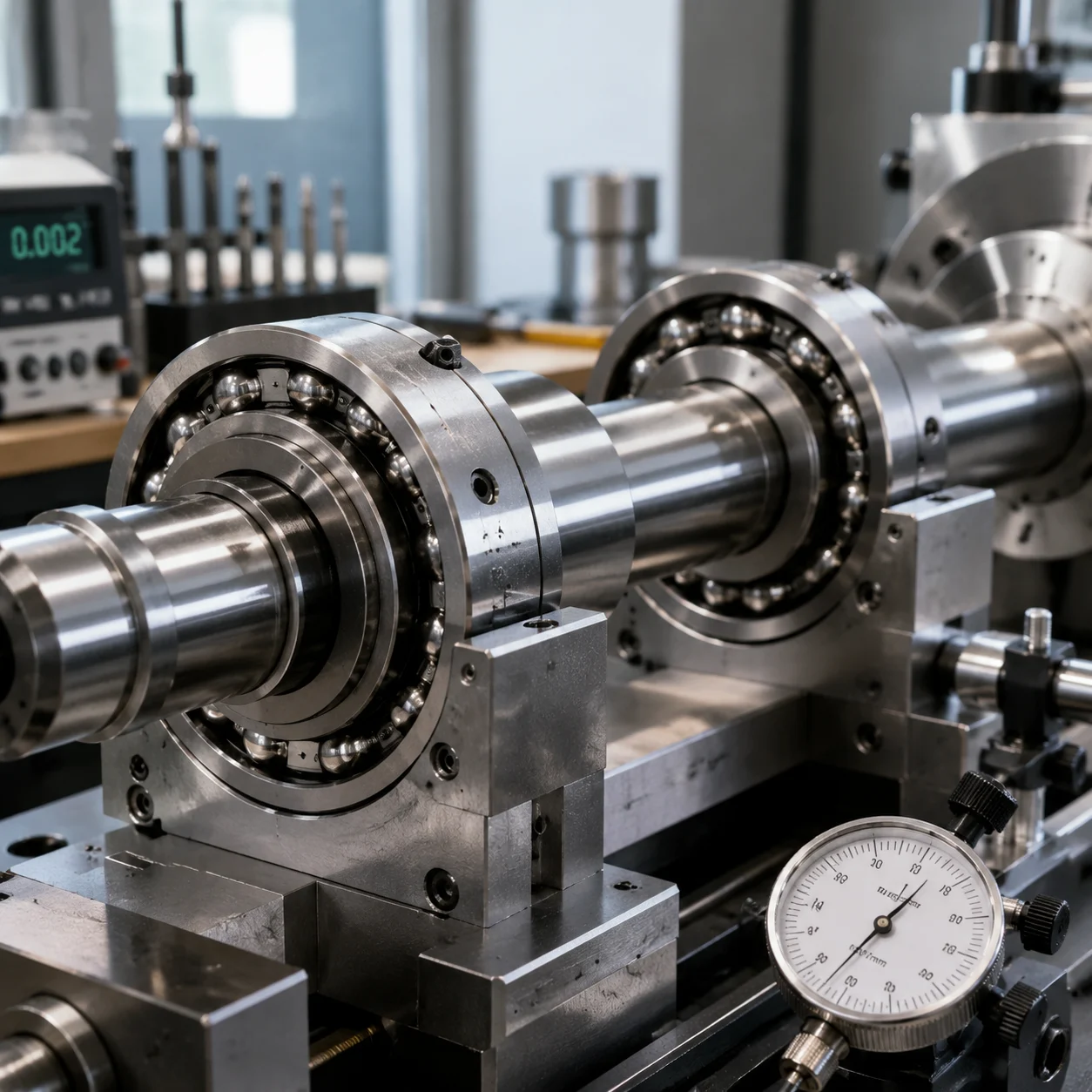
JN Bearings — Specialized Focus
JN Bearings specializes exclusively in ball bearings. This singular focus ensures tighter process controls, consistent tolerance management, and application-matched accuracy grades tailored specifically for precision equipment.
What Happens When Bearing Accuracy Is Insufficient?
Selecting an under-spec bearing for a precision application is never a minor compromise. The downstream effects are highly measurable and often costly. Understanding these failure risks is crucial before finalizing your bearing selection.
Positioning Errors
High runout shifts the shaft centerline, causing positional deviations that exceed acceptable measurement or assembly tolerances, even at low operating speeds.
Image & Measurement Deviation
In optical and analytical equipment, poor runout control introduces artifact noise, fundamentally degrading measurement repeatability across the scanning range.
Inconsistent Repetitive Motion
Robotic joints and critical automation modules demand minimal clearance. Excess play translates into positioning scatter, leading to process rejects.
Assembly Distortion
Inconsistent bore and OD dimensions across batches create varying press-fit forces, distorting precision housings and compromising overall assembly integrity.
Thermal Instability
High-friction bearings generate uncontrolled heat, causing thermal expansion that shifts material dimensions and alters critical preload settings.
Shortened Service Life
Bearings operating outside their designated precision class degrade rapidly under cyclic loads, increasing maintenance frequency and system downtime.
Selection Standards: How to Evaluate Bearing Accuracy
Not all bearings offer true precision performance. For high-accuracy applications, engineers must specify precision equipment bearings manufactured to recognized accuracy grades—such as ABEC 5, ABEC 7, or ISO P5/P4. These classifications govern maximum allowable runout, internal clearance, and race geometry limits essential for protecting system stability.
When qualifying suppliers, it is vital to review documented runout tolerances, noise test data, and batch-level dimensional consistency. A credible precision bearing partner provides transparent quality control data, ensuring every component aligns with your design specifications.
For highly compact assemblies, dimensional tolerances become even more crucial. Minor variations in small bores profoundly impact fit and preload, making supplier consistency a critical factor in mitigating risk.
Key Parameters to Specify Before Ordering
- Operating Speed (RPM): Determines the appropriate cage material, lubrication type, and required precision class.
- Radial and Axial Loads: Dictates whether deep groove or angular contact configurations are best suited for the application.
- Spatial Constraints: Defines the need for compact, thin-section, or miniature designs without sacrificing accuracy.
- Preload Requirements: Proper internal clearance adjustment eliminates play, optimizing stiffness for precision positioning tasks.
- Lubrication Strategy: Grease selection, fill rates, and seal choices must match environmental and operational speed demands.
- Assembly Tolerances: Shaft and housing fits must align perfectly with bearing tolerances to prevent negating precision gains.
Quick Selection Checklist
- Define the accuracy grade required—ABEC 5 minimum for high-accuracy assemblies.
- Specify maximum allowable TIR for both radial and axial runout.
- Verify bore, OD, and width tolerances against precision housing designs.
- Evaluate noise and vibration levels according to recognized testing standards.
- Request traceable batch consistency data from your bearing manufacturer.
- Confirm that lubrication and seal types fit both speed profiles and cleanliness needs.
Practical Note from JN Bearings
Most precision equipment failures are not caused by catastrophic component breakdown, but by cumulative dimensional inconsistencies across manufacturing batches. Sourcing from a specialized ball bearing manufacturer limits this variance at the root, securing reliability before parts ever reach your assembly floor.
Equipment That Demands Precision Bearings
Discover how JN Bearings supports high-accuracy assemblies, robotics, and instruments with consistent, low-runout ball bearings designed for precision motion.
 Instruments
Measurement & Analytical
Stable rotation and light-load precision are essential for testing devices, optical systems, and analytical instruments.
- Focus: High repeatability
- Focus: Smooth motion
- Focus: Low friction torque
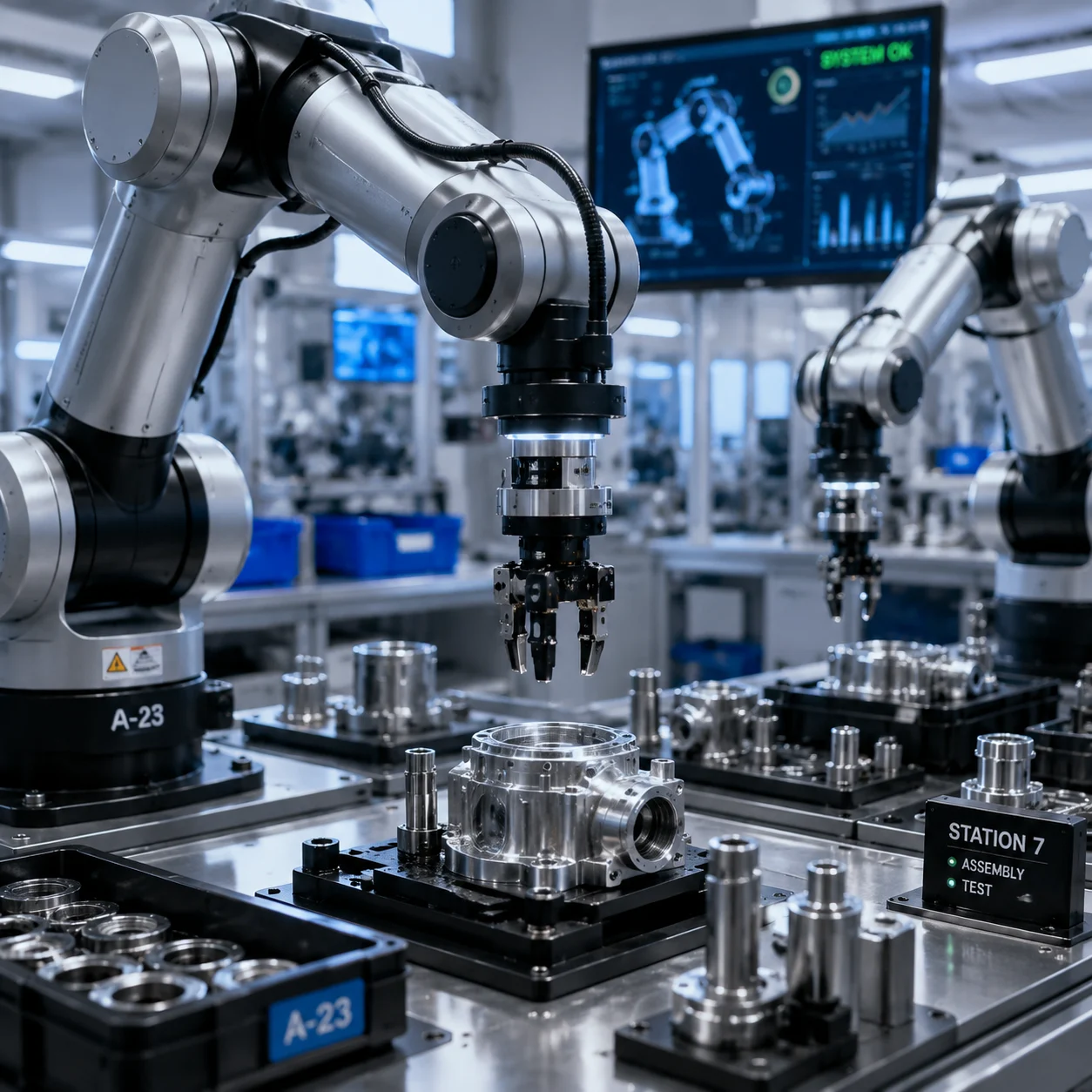 Robotics
Joints & Actuators
Robotic joints, rotary tables, and end-effectors require predictable positioning and vibration-free continuous movement.
- Focus: High repeatability
- Focus: Compact size
- Focus: Consistent quality
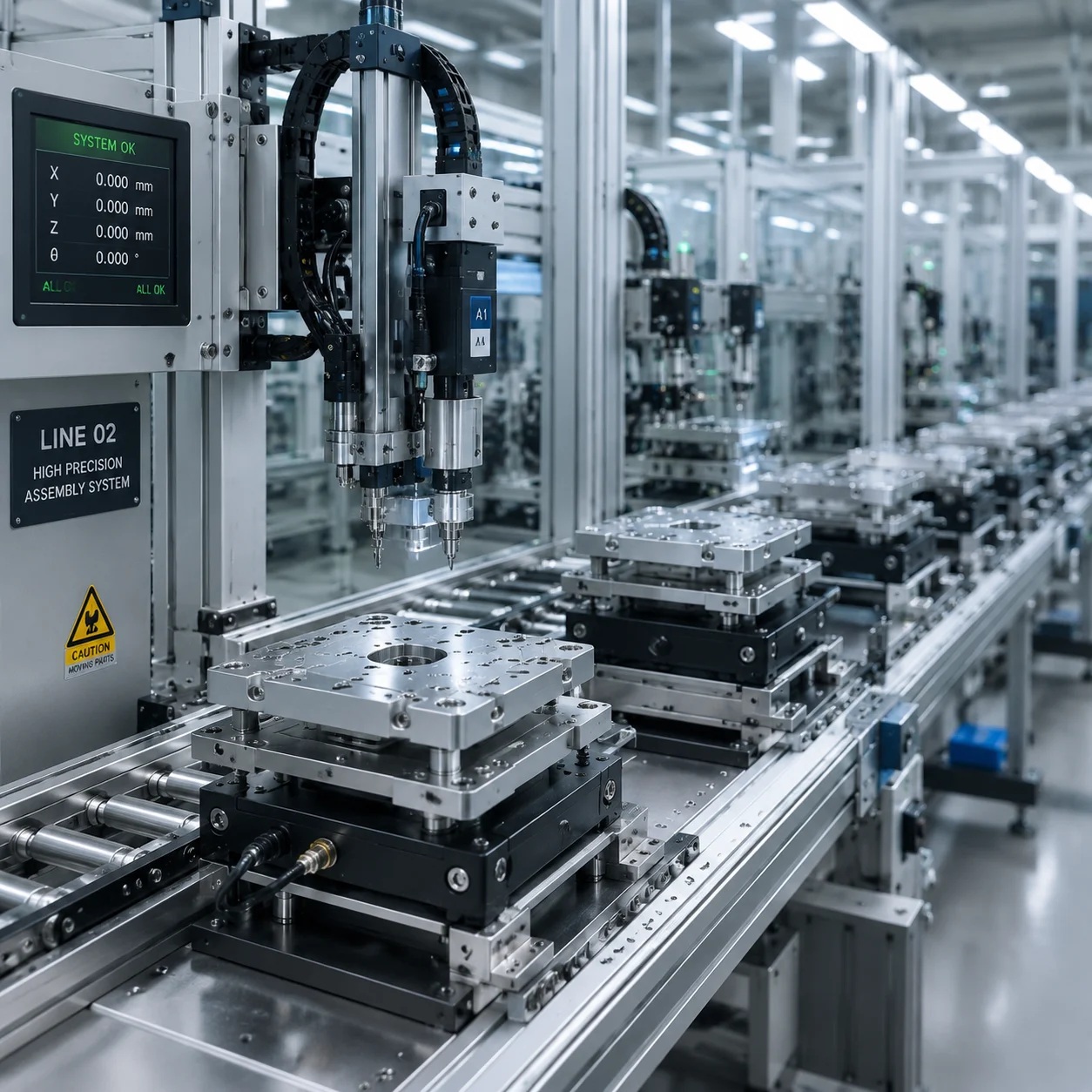 Assemblies
High-Accuracy Assemblies
Automated assembly lines, precision modules, and positioning stages depend on bearings that maintain strict spatial tolerances.
- Focus: Low runout
- Focus: Smooth motion
- Focus: Dimensional stability
 Medical Devices
Surgical & Imaging Systems
Diagnostic scanners and precision surgical tools require ultra-quiet operation and zero tolerance for motion irregularity.
- Focus: Low noise
- Focus: Smooth motion
- Focus: Long service life
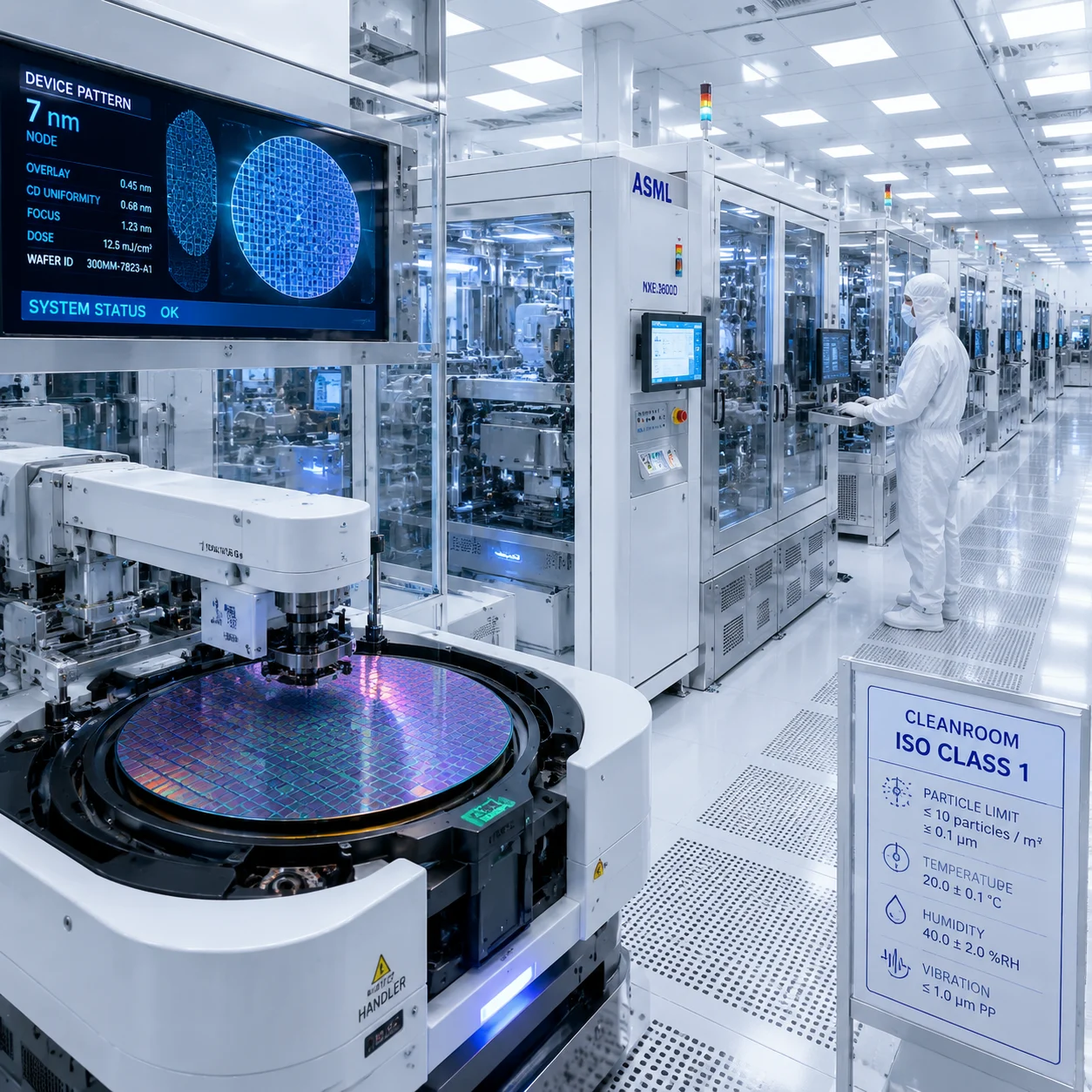 Semiconductor
Wafer Handling Systems
Nanometer positioning in cleanroom environments demands contamination-free and vibration-controlled bearings.
- Focus: Clean environment ready
- Focus: Low runout
- Focus: Consistent quality
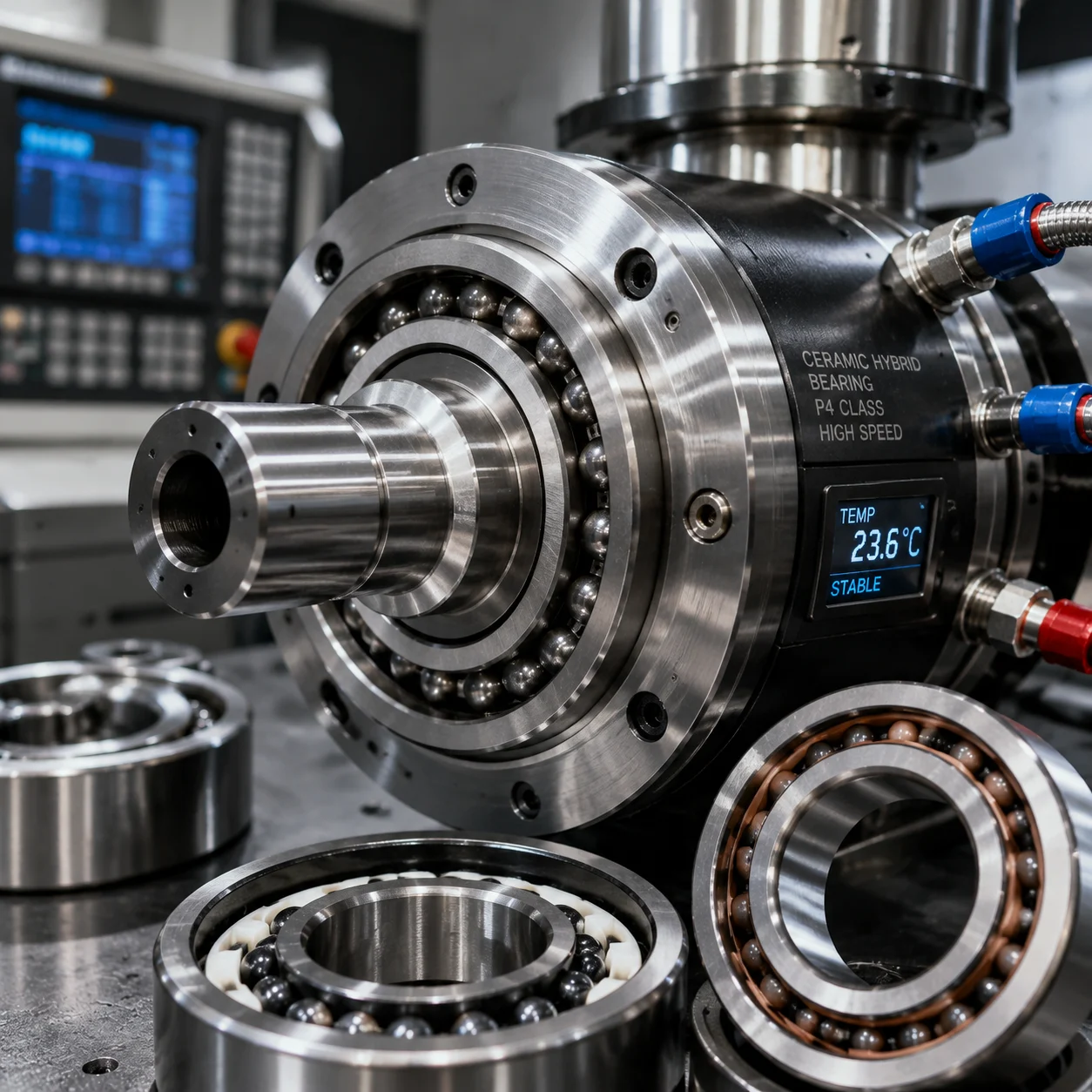 Machining
Precision Spindles & Motors
High-speed rotation modules require specialized bearings to minimize heat generation and eliminate shaft deviation.
- Focus: High repeatability
- Focus: Low vibration
- Focus: Temperature control
Need a Custom Bearing Recommendation?
JN Bearings specializes in ball bearings for critical environments. Let us evaluate your assembly space and motion profiles to recommend the optimal fit. See our case-studies showcase for real-world application examples, or learn more about-us and how we support every user.
Recommended Bearing Types and Selection Logic for Precision Equipment
Selecting the right ball bearing for high-accuracy assemblies is rarely straightforward. To engineer high repeatability components, your bearing choice must align with speed limits, mounting space, load directions, and stiffness demands. Below, we break down the most effective bearing types for precision motion and the exact logic needed to choose them.
Deep Groove Ball Bearings
The deep groove ball bearing is the core rotational component in many precision setups. Thanks to its balanced raceway design, it manages radial loads alongside moderate axial forces in both directions, making it ideal for standard measuring instruments, automated stages, and continuous rotary modules.
- Ideal applications: Light to medium radial loads operating at medium to high speeds.
- Tolerance control: Precision grades like ABEC-5, ABEC-7, and ABEC-9 ensure minimal radial runout and tight fitment.
- Key advantages: Delivers exceptionally smooth motion, low operational noise, and low friction under continuous cycling.
Angular Contact Ball Bearings
When combined radial and high axial loads are present—or when zero internal clearance is mandatory to achieve structural rigidity—an angular contact ball bearing becomes necessary. By utilizing specific contact angles (typically 15°, 25°, or 40°), engineers can balance axial stiffness against high-speed rotational capability.
- Ideal applications: High-speed spindles, robotic joint actuators, optical turning axes, and ultra-precise positioning platforms.
- Preload mechanics: Proper preloading eliminates internal play, maximizing system rigidity and stabilizing load distribution.
- Mounting arrangements: Configured back-to-back (DB), face-to-face (DF), or tandem (DT) to support complex directional forces.
Miniature Precision Bearings
In severely space-constrained assemblies such as medical handheld devices, high-end optical scanners, and micro-robotics, miniature precision bearings (typically 1mm to 10mm inner diameter) are crucial. Despite their tiny footprint, they meet strict tolerances for vibration reduction and consistent rotational torque.
- Design factors: Bore roundness, raceway super-finishing, and precise ball grading dictate the component's final repeatability.
- Lubrication control: Micro-dosed grease or specialized oil prevents fluid drag while maintaining low friction at high RPMs.
- Environment adaptability: Frequently assembled with low-outgassing lubricants suited for sensitive vacuum or cleanroom settings.
Flanged Bearings
A flanged bearing simplifies housing complexity by providing an integrated axial stop, removing the need for internal snap rings or retaining shoulders. In high-accuracy assemblies where stacking tolerances must be kept to an absolute minimum, the flanged design guarantees precise axial positioning.
- Ideal applications: Thin-walled housings, compact encoder assemblies, and tightly packaged linear-rotary modules.
- Batch reliability: Simplifies automated mounting and ensures repeatable axial alignment across high-volume production runs.
How to Choose: Practical Bearing Selection Logic
Selecting a bearing for precision equipment involves weighing multiple conflicting demands. Use the matrix below to identify the most likely bearing type based on your primary application requirement.
| Application Requirement | Primary Engineering Focus | Recommended Bearing Type |
|---|---|---|
| High Speed Rotation | Low starting torque, minimal friction | Deep Groove / Miniature Precision |
| Complex Load Paths | Simultaneous axial and radial forces | Angular Contact Ball Bearing |
| Limited Installation Space | Thin housing walls, tight packaging | Miniature / Flanged Bearing |
| Maximum Structural Rigidity | Zero clearance, high system stiffness | Preloaded Angular Contact |
| Sensitive Environments | Cleanroom, moisture, or extreme temp | Stainless Steel / Ceramic Bearing |
| Assembly Scalability | Strict tolerance control across batches | Precision Grade Flanged Bearings |
Because JN Bearings focuses strictly on ball bearings, our technical advice cuts through general catalogs. We match the exact type, tolerance class, and material composition to the reality of your assembly space and operational load.
Stainless Steel and Ceramic Bearing Options
Standard high-carbon chrome steel provides excellent fatigue life in standard environments. However, precision equipment often operates in specific conditions requiring advanced material solutions.
Stainless Steel (440C)
Essential for medical and analytical instruments facing moisture, mild corrosives, or strict sanitization protocols. Delivers reliable rust resistance while matching the dimensional precision of chrome steel.
Hybrid Ceramic (Si₃N₄)
Featuring silicon nitride balls, these bearings are lighter, harder, and non-magnetic. They excel in ultra-high-speed spindles, reducing centrifugal forces and friction heat, ideal for clean environment operations.
JN Bearings supplies both stainless steel and hybrid ceramic variations. Our engineers evaluate your RPM, exposure risks, and service life expectations before recommending a specialized material.
Why Consistent Bearings Drive Machine Repeatability
In robotics and precision measuring tools, a bearing is not evaluated in isolation. A high repeatability component must perform identically whether it is the first assembly or the thousandth. Minor fluctuations in bearing bore size, race geometry, or cage friction will alter preload tension and shift positional accuracy in the final machine.
To prevent this, JN Bearings strictly regulates steel sourcing, raceway finishing, and assembly lubrication. By maintaining rigorous batch consistency, we ensure every precision bearing you install delivers the exact same low runout and smooth motion, drastically reducing adjustment time during your final equipment assembly.
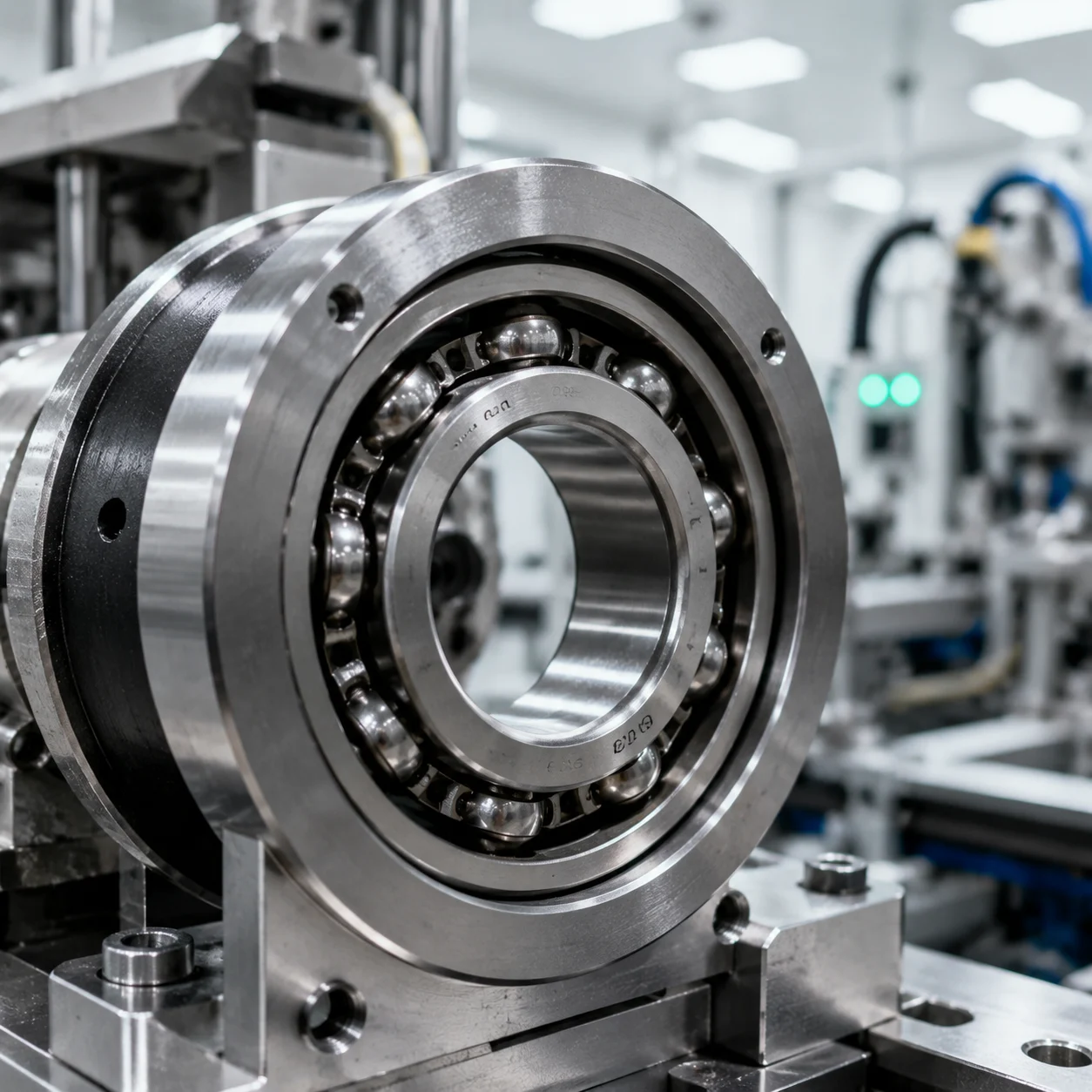
Quick Reference — Bearing Types
Deep Groove Ball Bearing
Radial loads · High speeds · Excellent noise control · ABEC-5 to ABEC-9 grades · Ideal for testing instruments and sensors.
Angular Contact Ball Bearing
Combined radial/axial loads · Zero clearance preloading · Maximum rigidity for robotic arms and precision machine spindles.
Miniature Precision Bearing
Bore sizes 1–10mm · Low runout control · Specialty lubricants available · Critical for medical handpieces and micro-actuators.
Flanged Bearing
Integrated axial stop · Eliminates snap rings · Reliable axial positioning for high-accuracy assemblies and linear guides.
Need Help Specifying the Right Bearing?
Provide details about your precision equipment, including target RPM, load direction, and space limitations. Our engineers will offer a targeted recommendation on bearing type, material, and precision grade.
Why Accurate Type Selection Outperforms Brand Reliance
Optimized Load Management
Selecting the correct contact angle prevents uneven raceway stress, ensuring stable operation under combined forces.
Assured Preload Consistency
Matching exact clearance codes protects dynamic stability, vital for systems needing high structural stiffness.
Superior Noise Reduction
Specifying a proper low noise bearing design inherently reduces micro-vibrations better than mismatched high-cost alternatives.
Extended Reliable Lifespan
Accurate sizing and material choice minimize excessive heat and wear, keeping maintenance cycles predictably low.
Core Performance Advantages
Achieve high repeatability and consistent quality in your instruments and robotics. JN Bearings ensures measurable gains in accuracy and stability.
≤2µm
Low Runout
Maintains strict rotational consistency
100%
Reliable Quality
Ensures consistent batch assemblies
Max
Smooth Motion
Minimizes mechanical jitter
+Life
Long Service Life
Reduces maintenance and downtime
Engineered for High Repeatability and Stability
JN Bearings guarantees strict consistency control, helping your precision equipment maintain stable performance across batch deliveries. Our low runout bearings are optimized for sensitive measurement, automated assembly, and robotic applications. To learn more about about-us and our engineering approach, explore our company background.
-
Low Runout Precision
Advanced raceway grinding ensures exceptional rotational positioning accuracy.
-
Smooth Motion Delivery
Optimized internal geometries reduce jitter for flawless continuous movement.
-
Low Noise Operation
Ideal for quiet, clean, or observation-sensitive environments.
-
Reliable Quality Assurance
Strict batch testing secures uniform assembly for every delivered unit.
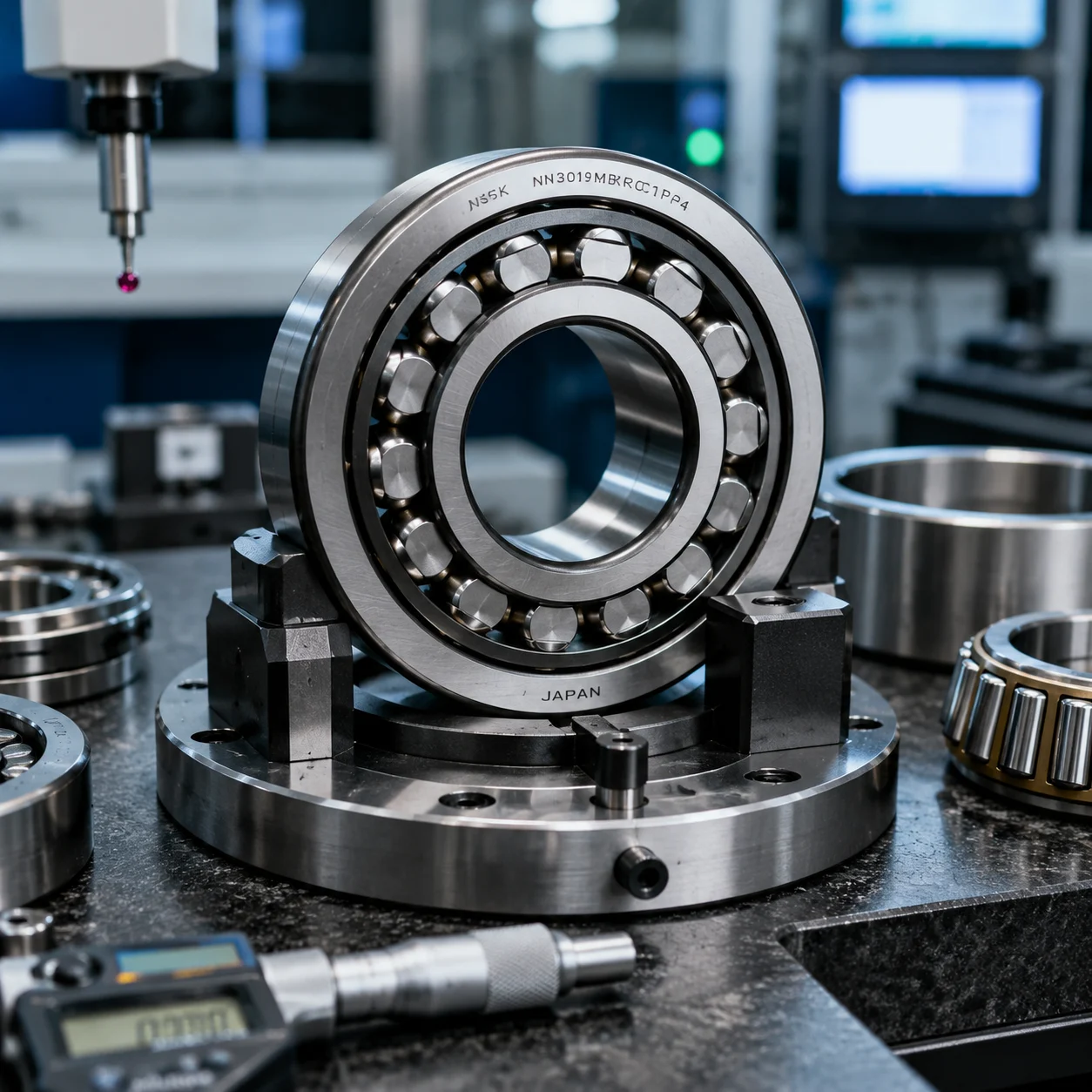
Ultra-Low Noise Operation
Precision ground surfaces and premium lubrication deliver whisper-quiet performance for sensitive analytical instruments and clean-room equipment.
Continuous Smooth Motion
By minimizing mechanical jitter and rotational vibration, our bearings elevate the continuous path accuracy of robotics and fine assemblies.
High Repeatability
Tight dimensional tolerances prevent positioning errors, guaranteeing that automated actuators return to the exact coordinates every time.
Long Service Life
Wear-resistant materials and optimized load distribution reduce fatigue, ensuring longer uptime and minimizing costly maintenance stops.
Consistent Batch Quality
JN Bearings implements rigorous quality control to ensure that every bearing matches your required specifications for seamless batch manufacturing.
Optimized Friction Control
Lower rolling resistance prevents excessive heat generation, keeping thermal expansion in check for high-accuracy measurement tools.
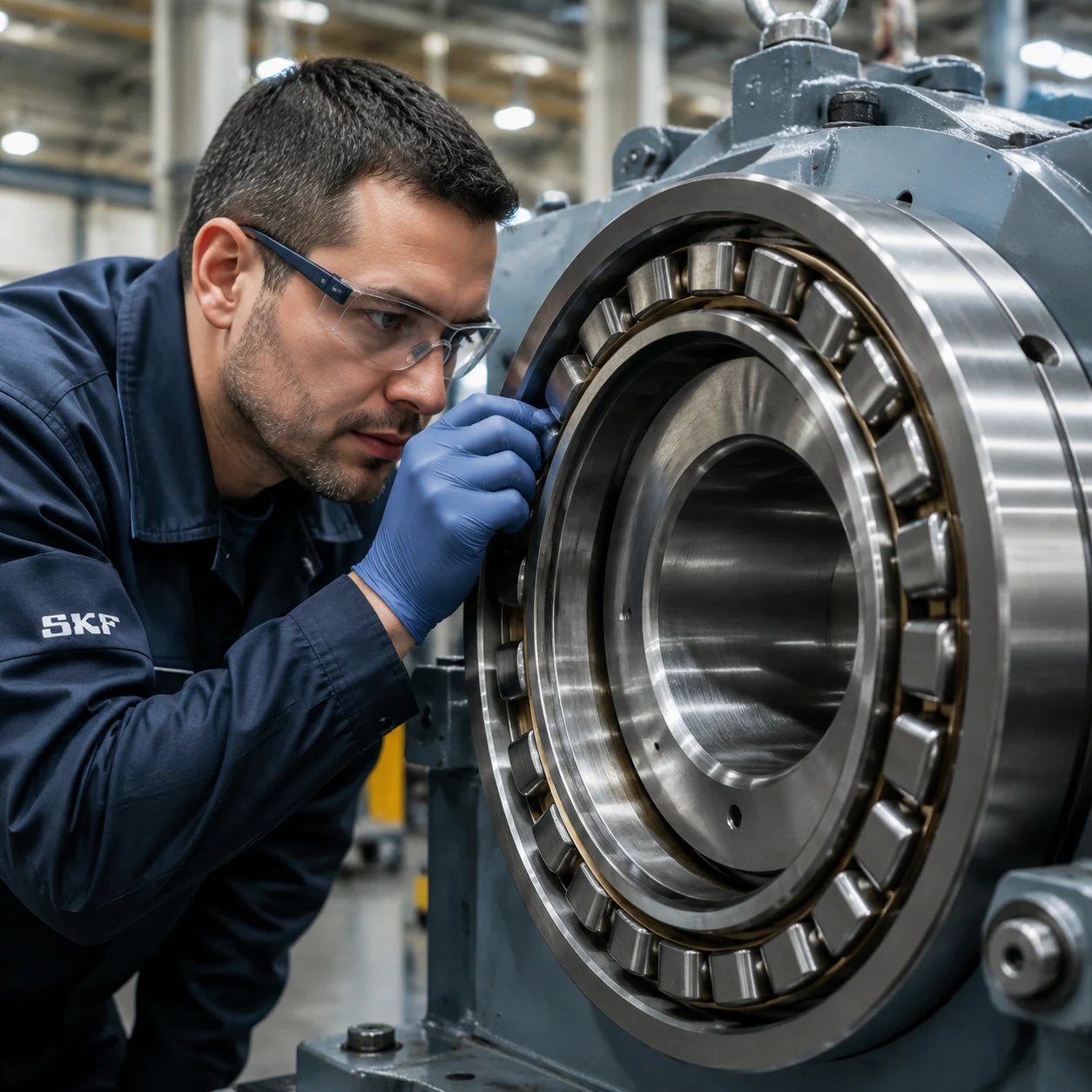
Empowering high-accuracy assemblies and precision motion systems with uncompromising reliability.
Need High Repeatability for Your Equipment?
Partner with JN Bearings for consistent quality and expert precision bearing recommendations.
Adapting Precision Bearings to Complex Operating Environments
High-accuracy assemblies and precision equipment operate across vastly different conditions—from sterile cleanrooms and vacuum chambers to humid industrial manufacturing floors. Choosing the right bearing material and sealing configuration is just as critical as specifying the dimensional tolerances. A mismatch in environmental adaptability leads to premature wear, contamination risks, and unacceptable drops in repeatability.
JN Bearings provides targeted material, lubrication, and sealing solutions matched directly to your actual operating conditions, ensuring consistent motion control in any setting.
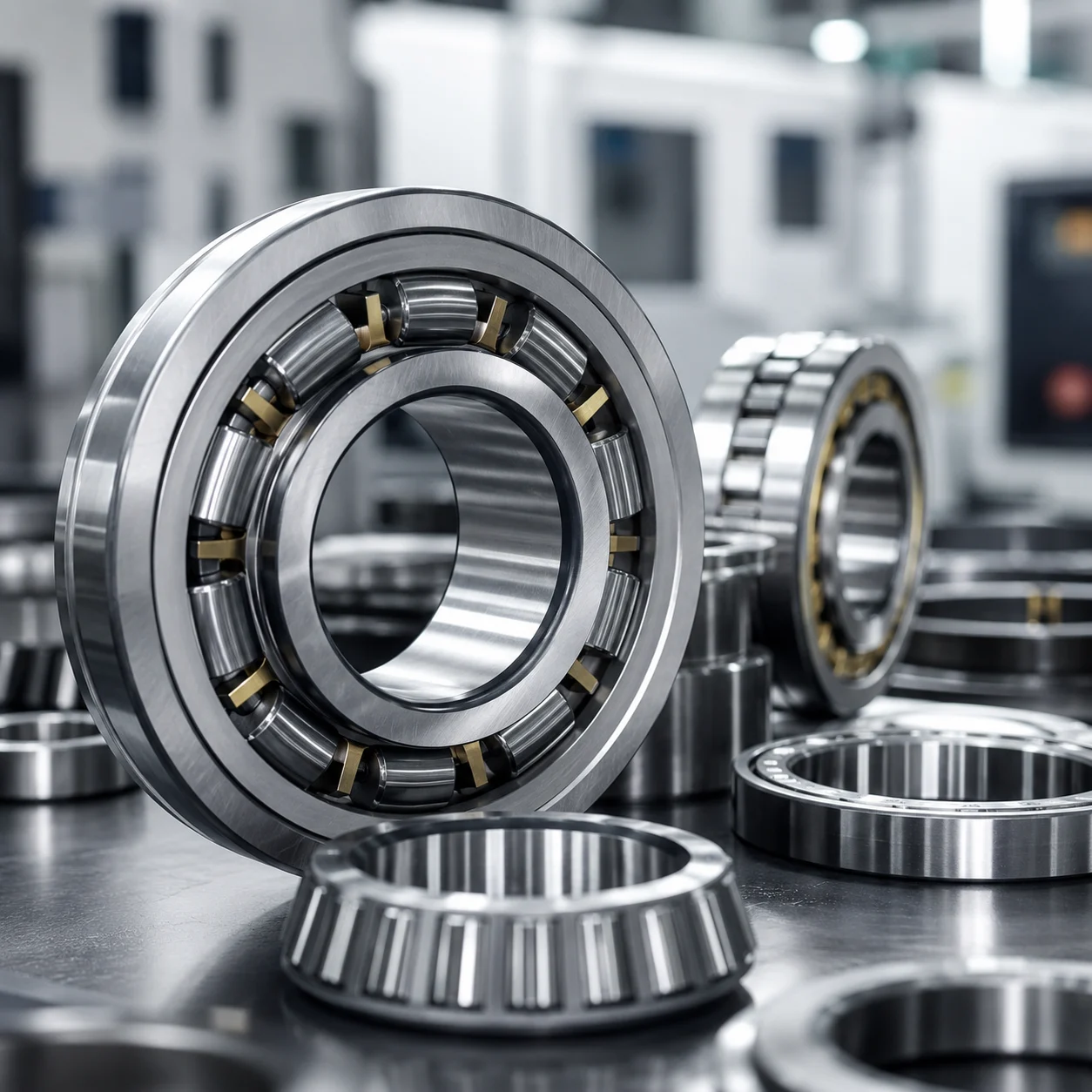
Why Material and Seal Specifications Matter
Standard chrome steel bearings perform exceptionally well in dry, strictly temperature-controlled settings. However, advanced robotics and analytical instruments frequently face challenges outside those optimal baselines. Moisture, particulate ingress, chemical exposure, or strict outgassing limits demand a highly engineered approach to bearing construction.
Three primary variables dictate the selection of your precision bearing components:
- Clean Environment Standards — Must the bearing prevent internal lubricants from contaminating surrounding optics, semiconductors, or sterile fields?
- Corrosion and Moisture — Will the assembly endure wash-down protocols, condensation, or mildly aggressive chemical vapors?
- Maintenance Accessibility — Does the equipment design require sealed bearings for a maintenance-free lifecycle, or allows for active re-lubrication?
High-Performance Materials for Precision Bearings
Deploying the optimal metallurgical or ceramic composition safeguards against early mechanical degradation, preserving the ultra-low runout characteristics of your equipment.
High-Purity Chrome Steel (GCr15)
The industry standard for achieving tight tolerances and low noise in clean, climate-controlled environments. Offers superior load capacity and high fatigue resistance.
- Best for: standard indoor precision machinery
- Exceptional hardness and long fatigue life
- Requires strict protection against moisture
Stainless Steel Bearing (440C)
A dedicated stainless steel bearing solution is indispensable when moisture, light chemical exposure, or frequent cleaning protocols threaten standard materials with rust.
- Best for: damp environments, frequent wash-downs
- Maintains high accuracy without rust degradation
- Excellent for medical and food-adjacent devices
Hybrid Ceramic Bearing (Si₃N₄)
Combining steel rings with silicon nitride ceramic balls significantly lowers friction, extends high-speed limits, and provides vital electrical insulation for sensitive electronics.
- Best for: ultra-high speeds, vacuum, non-magnetic needs
- Resists electrical arcing and micro-welding
- Lower thermal expansion preserves preload at speed
Sealed Bearing Configurations: Isolating the Raceways
Superior materials mean little if external particulates breach the bearing raceways. In high-accuracy assemblies, even microscopic contamination causes micro-spalling, vibration spikes, and loss of repeatability. Specifying a properly sealed bearing effectively mitigates these risks.
Choosing between open, shielded, or contact seal designs involves balancing the necessary ingress protection against the acceptable limits for rotational drag and heat generation.
| Seal Type | Ingress Defense | Friction Profile | Optimal Setting |
|---|---|---|---|
| Open (No Seal) | None | Lowest possible torque | Enclosed housings with active oil/grease supply |
| Metal Shields (ZZ) | Deflects larger debris | Negligible drag increase | High-speed, low-contamination environments |
| Rubber Contact (2RS) | Seals moisture & fine dust | Higher friction & heat | Exposed industrial use or wash-down settings |
| Non-Contact Seals | Strong particulate barrier | Low torque comparable to ZZ | Clean environments demanding ultra-smooth motion |
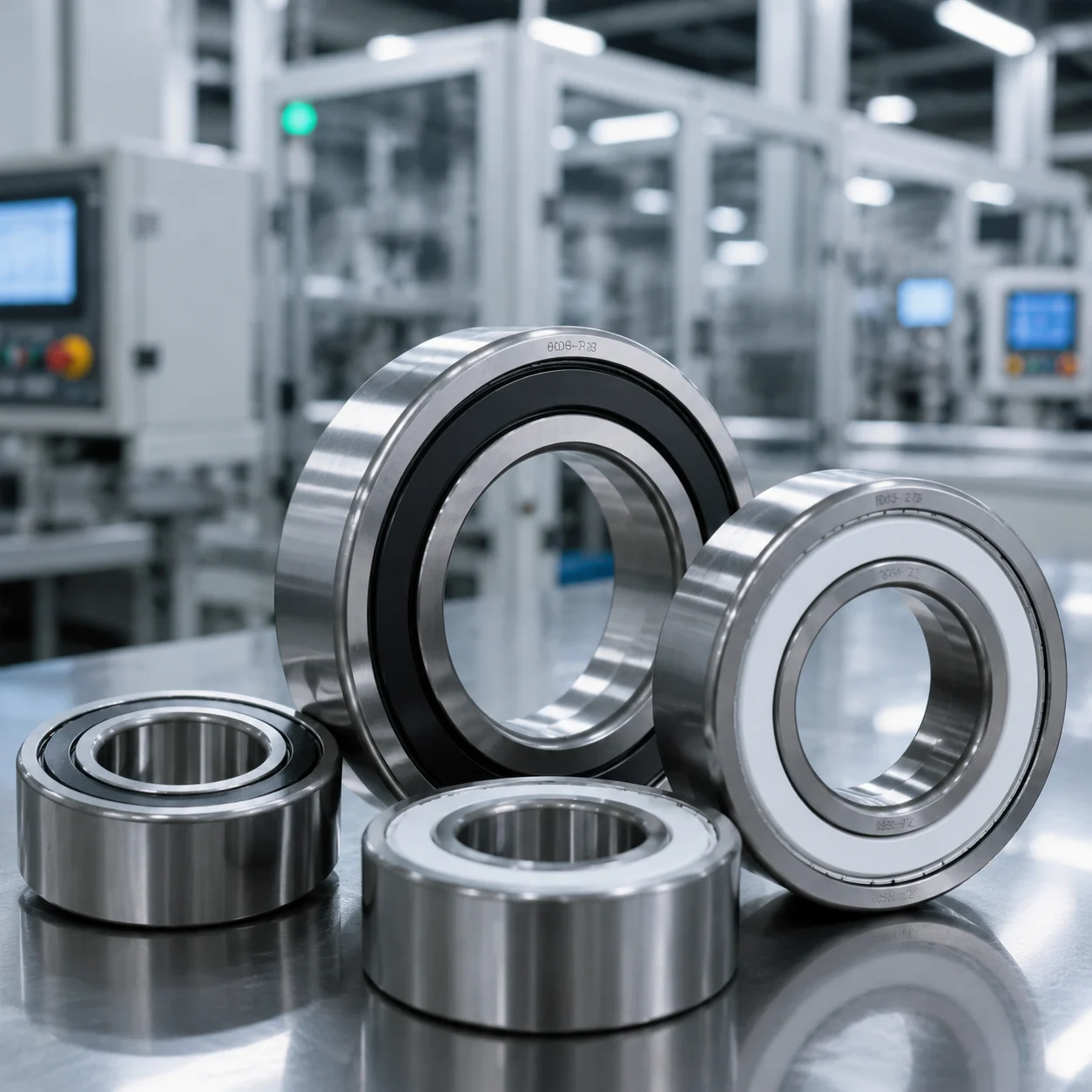
Designing for a Clean Environment
In a certified clean environment (ISO 5 or stricter), standard lubricants outgas, and contact seals shed microscopic wear particles. Specifying a specialized non-contact sealed bearing with low-volatility PFPE grease ensures regulatory compliance while maintaining frictionless positioning.
Handling Corrosive Agents
A stainless steel bearing combined with heavy-duty nitrile (NBR) or Viton (FKM) contact seals delivers exceptional longevity in mildly corrosive environments. JN Bearings ensures seal compound compatibility with your specific cleaning agents.
Precision Lubrication: Enhancing Smooth Motion
Lubrication significantly impacts the friction dynamics of precision equipment. The precise fill rate and base oil viscosity dictate temperature rises and starting torque, factors that critically govern the accuracy of micro-positioning adjustments.
Lifetime Grease Packs
Factory-sealed bearings packed with precision-grade grease. Eliminates the risk of over-lubrication by end-users and provides reliable, maintenance-free performance.
Oil Lubrication
Ideal for extreme speeds or heavy continuous loads. A recirculating oil setup rapidly dissipates heat, sustaining uniform temperatures across precision spindle bearings.
Low-Outgassing Formulas
Synthetic PFPE/PTFE-based greases optimized for a clean environment. They prevent optical clouding and semiconductor wafer contamination caused by vaporized oils.
Solid Film / Dry Lubes
For high-vacuum systems, space tech, or extreme cryogenic temperatures where traditional liquids freeze or evaporate. Includes specialized coatings applied directly to raceways.
Scenario Selection Guide for Reliable Consistency
Streamline your engineering process by matching your core operational challenges to our proven component configurations before requesting a detailed quote.
High Humidity & Automated Wash-Down
Recommended: A full stainless steel bearing equipped with 2RS contact rubber seals and water-resistant grease. Ensures long-term dimensional stability despite heavy moisture exposure.
Semiconductor & Sterile Workspaces
Recommended: A hybrid ceramic bearing featuring non-contact shields and ultra-low outgassing PFPE grease. Protects the clean environment while sustaining flawless, frictionless articulation.
Ultra-High-Speed Precision Spindles
Recommended: Hybrid ceramic balls with metallic ZZ shields and channeled low-viscosity oil or grease. Prevents catastrophic thermal expansion and maintains rigid spindle geometries.
Particulate-Heavy Automation Floors
Recommended: Chrome steel with dual contact rubber seals (2RS) and high-load grease. Accepts slightly more drag torque to aggressively seal out airborne metal flakes or debris.
Deep Vacuum or Cryogenic Uses
Recommended: Full ceramic or specialized hybrid options using dry solid film lubricants. Prevents off-gassing while resisting the micro-welding phenomena frequent in hard vacuums.
Vibration-Sensitive Lab Instruments
Recommended: Stainless steel or chrome variants paired with non-contact shields and tightly controlled low-noise greases. Eradicates internal resonance that disrupts high-resolution sensor outputs.
Minimizing Maintenance Without Losing Precision
Precision rotary stages and intricate robotic joints are rarely easy to access once assembled. Engineers frequently specify a sealed bearing strategy to eliminate the need for costly field teardowns just for re-lubrication.
To achieve truly maintenance-free operation across years of service, the grease type, fill percentage, and sealing friction must be meticulously balanced. Over-specifying a contact seal on a high-speed assembly, for example, generates excess heat that rapidly degrades the lubricant, defeating the purpose of the seal.
Parameters that govern reliable longevity:
- 1 Operating Temperatures: Every continuous increase above a grease’s rated baseline accelerates oxidation. Specifying a ceramic bearing configuration runs cooler naturally, extending intervals.
- 2 High-Speed Drag (DN Value): Rapid rotation creates immense fluid friction inside dense greases. Precision applications rely on calculated low-fill volumes of specialized low-viscosity formulas.
- 3 Contaminant Abrasiveness: Fine abrasive dust destroys standard raceways in hours. Robust 2RS seals combined with high-hardness materials prevent catastrophic scoring.
- 4 Bearing Preload Dynamics: Over-preloading guarantees stiffness but dramatically shortens fatigue life. Our engineering team helps calculate the optimal balance for rigid but cool operation.
Consult JN Bearings for Component Matching
As a specialized manufacturer, JN Bearings deeply understands the intersection of material science and motion control. We don't just supply catalog parts; we help you navigate complex trade-offs to deliver consistent, high-repeatability performance across serial production runs.
- Rigorous guidance on stainless steel vs. ceramic materials
- Optimized grease fill rates and seal specification
- Certified validation for stringent clean environments
- Strict batch consistency preventing assembly line delays
Finalizing Your Material and Sealing Strategy
Treating a precision bearing's environmental resilience as an afterthought threatens the entire integrity of a high-value assembly. Selecting a highly engineered stainless steel bearing or an advanced ceramic bearing ensures that the mechanical precision you paid for survives real-world operation.
For highly controlled instrumentation, shielded chrome steel remains an efficient, capable choice. However, whenever humidity, frequent sanitation, strict clean environments, or extreme speeds are part of the design mandate, properly sealed bearing upgrades become a critical investment rather than an optional feature.
Provide JN Bearings with your exact speed profiles, load directions, and atmospheric conditions. Our application engineers will swiftly outline the most dependable, cost-effective configuration to support your next generation of precision equipment.
Precision Manufacturing & Quality You Can Trust
As a dedicated bearing supplier, JN Bearings implements rigorous quality control at every stage of precision manufacturing. Our standardized processes ensure exceptional batch consistency, protecting your high-accuracy equipment assemblies from performance variations.
99.7%
On-Time Delivery Rate
ISO 9001
Certified Manufacturing
100%
Noise & Vibration Checked
20+
Years of Industry Trust
Strict Quality Control for Batch Consistency
Because precision equipment relies on predictable performance, our quality control bearing protocols leave no room for error. We focus solely on ball bearings to eliminate quality fluctuations across production runs.
-
Premium Raw Material Sourcing
All steel and ceramic components undergo metallurgical testing to guarantee foundation stability for high repeatability components.
-
Strict Dimensional Precision
Advanced metrology verifies micron-level tolerances during precision manufacturing, ensuring low runout and accurate fitment.
-
Rotation & Vibration Testing
Every completed bearing passes dynamic noise, vibration, and friction tests to guarantee smooth motion in delicate instruments.
-
Clean Packaging & Traceability
Bearings are sealed in contamination-free environments and shipped with full lot traceability for your compliance records.
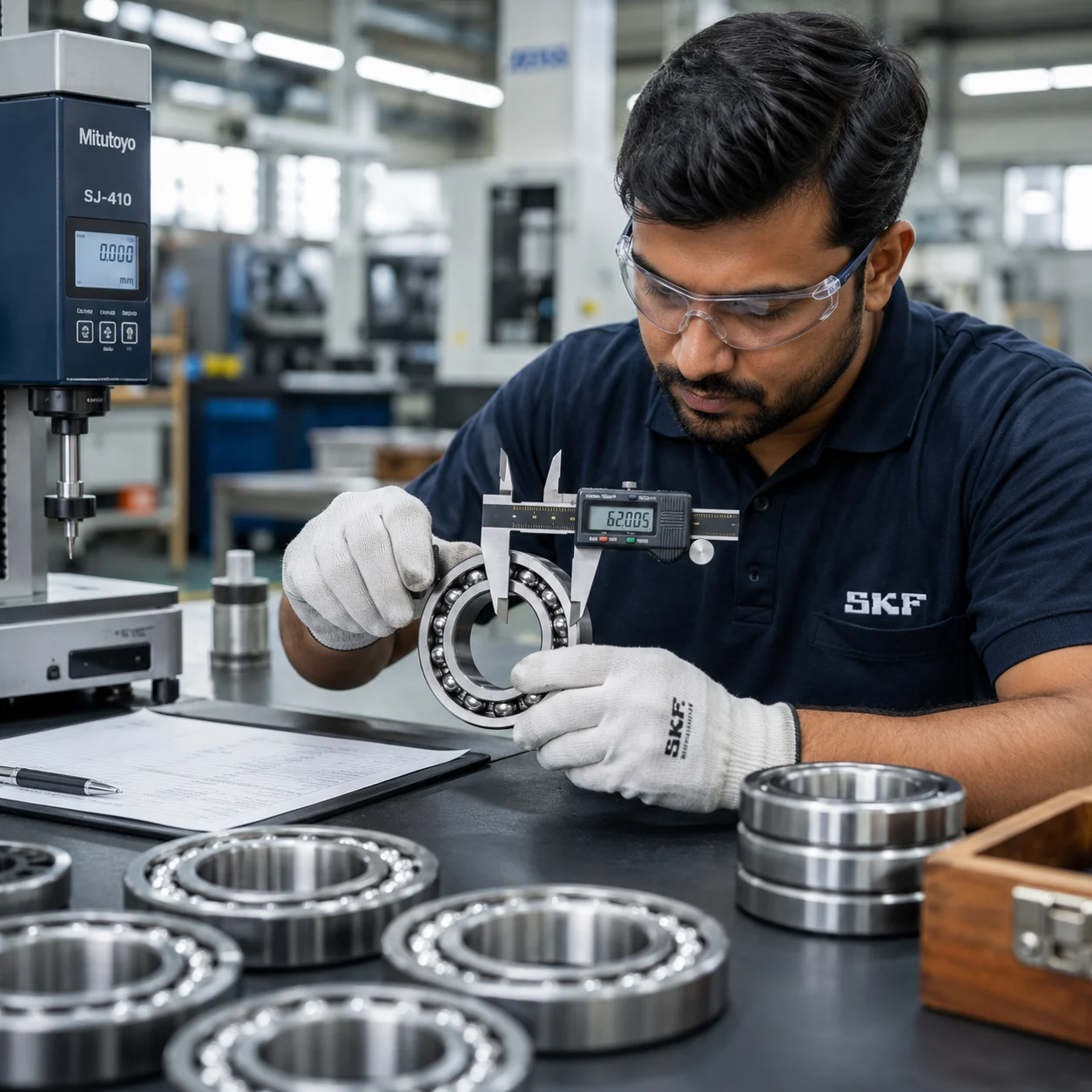
Why Precision Equipment Builders Choose Us
Dedicated Bearing Supplier
By specializing exclusively in ball bearings, we streamline our precision manufacturing to deliver unparalleled batch-to-batch consistency.
Stable Global Supply Chain
With robust production capacity and a 99.7% on-time delivery rate, we keep your automated assembly lines running without interruption.
Expert Application Support
Beyond manufacturing, our engineering team provides tailored material and clearance recommendations for your specific robotics or instrumentation needs.
Our Precision Bearing Quality Standards vs. Standard Suppliers
| Quality Factor | JN Bearings | Standard Supplier |
|---|---|---|
| Manufacturing Focus | Dedicated strictly to ball bearings | Scattered across bearing types |
| Vibration & Noise Control | 100% dynamic testing | Basic random sampling |
| Batch Consistency | Guaranteed uniform tolerances | High variability between lots |
| Supply Chain Reliability | 99.7% on-time global delivery | Unpredictable lead times |
| Compliance Documentation | Full lot traceability & reports | Limited or unavailable data |
Secure a Reliable Supply of High-Accuracy Bearings
Partner with JN Bearings for consistent quality control and predictable deliveries. Tell us your precision equipment requirements, and we will provide optimized solutions.
Tell Us Your Equipment, Speed, Load, and Space Limits
JN Bearings provides fast, targeted ball bearing recommendations for precision equipment. Share your operating parameters to receive clear guidance on bearing type, material, sealing, and supply logistics.
Why Precise Parameter Inputs Matter for Bearing Selection
In high-end applications, a bearing that simply fits the shaft is not enough. Choosing a component without assessing runout tolerance, radial clearance, and vibration levels can lead to positioning errors, assembly distortion, and premature failure. Submitting a detailed bearing inquiry helps JN Bearings’ engineers accurately match a precision bearing supplier solution to your exact mechanical reality.
Whether you are developing medical instruments requiring high repeatability components, outfitting robotic arms that demand smooth motion, or building automated assembly platforms, a custom recommendation prevents costly redesigns. Because JN Bearings focuses exclusively on ball bearings, we eliminate the guesswork and variable quality often found with multi-category distributors.
By aligning our manufacturing capabilities with your operational needs, we ensure that every batch of bearings delivers consistent dimensional accuracy and rotational stability, safeguarding the long-term performance of your precision equipment.
Key Details for a Custom Recommendation
To provide the most accurate quote request and technical advice, please include the following parameters in your inquiry:
- Equipment Type — Optical instruments, robotics, automated assemblies, or specific machinery.
- Speed & Load Data — Maximum RPM, continuous speeds, and expected radial/axial forces.
- Spatial Constraints — Target bore diameter, outer diameter, width, and tolerance limits.
- Operating Environment — Temperature extremes, humidity, cleanroom class, or chemical exposure.
- Sealing & Lubrication — Open, shielded, or sealed designs, plus specific grease preferences.
- Project Scope — Estimated annual volume, prototype quantities, and desired lead times.
Feel free to attach technical drawings, DXF files, or existing part numbers. For a clearer selection path, our bearing guides can also help you prepare the right details before submission. Our team will evaluate your requirements and respond promptly with a comprehensive proposal tailored to your precision manufacturing needs.
What You Will Receive
When you submit a bearing inquiry to JN Bearings, you get actionable engineering feedback, including:
- → Optimal bearing type selection (e.g., deep groove, angular contact, or miniature precision).
- → Material recommendations like chrome steel, stainless steel, or ceramic for harsh environments.
- → Customized sealing and lubrication strategies to protect against contamination.
- → Assurance of batch consistency and relevant quality control documentation.
- → Clear pricing and delivery schedules matched to your production rhythm.
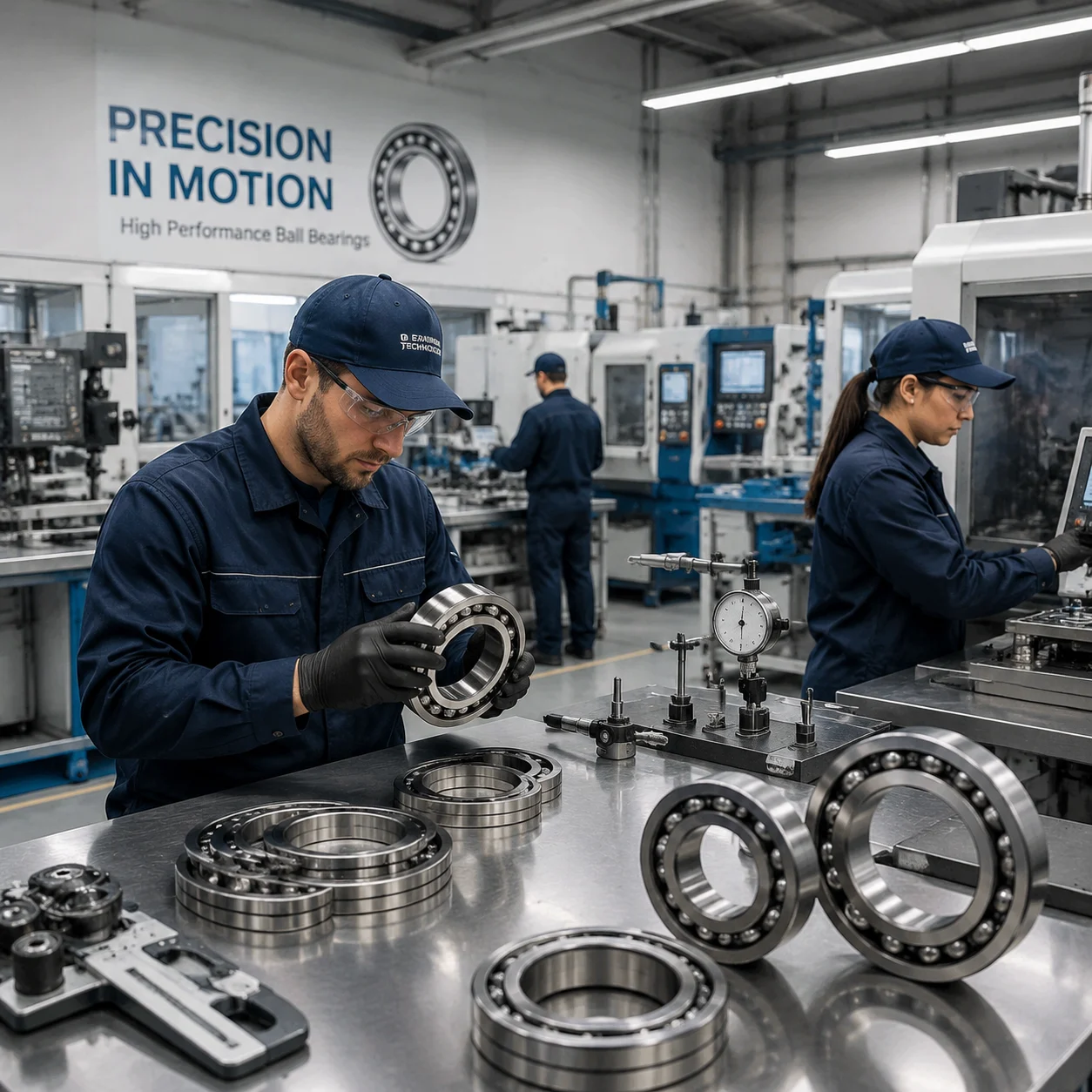
Contact JN Bearings Directly
WhatsApp / WeChat
+86 139 5409 1520Factory Address
Factory Building A5, Lixia District Industrial Park,Jinan City, Shandong Province, China
1 Day
Typical Response Time
100%
Ball Bearing Focus
Global
Customer Support
Your Reliable Precision Equipment Supplier
Because JN Bearings specializes entirely in ball bearings, we maintain strict control over manufacturing tolerances and rotational performance. This focus provides OEM customers with components that ensure consistent quality across large-scale production runs.
Our multi-stage quality control checks raw materials, verifies dimensional accuracy, and tests for noise and vibration limits prior to shipment. When you require dependable bearings for sensitive instrumentation or automated robotics, batch consistency is our top priority.
Ready to secure a stable supply chain for your precision mechanisms? Contact JN Bearings today with your quote request or technical requirements, and let us engineer the right solution for your application.