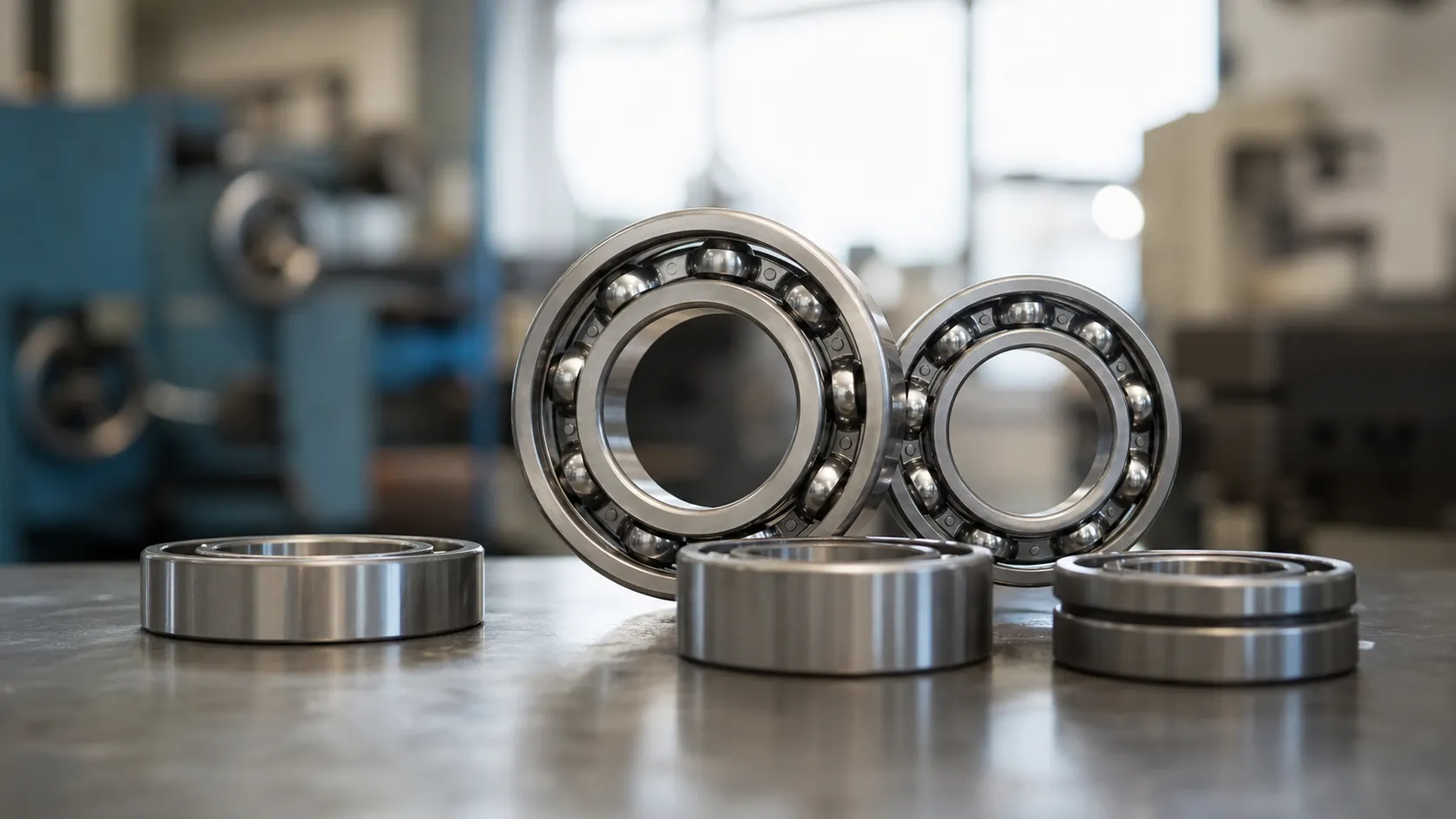
Mapping parts deep groove ball bearings starts with the four major assemblies—not the housing alone.
| Part | Function |
|---|---|
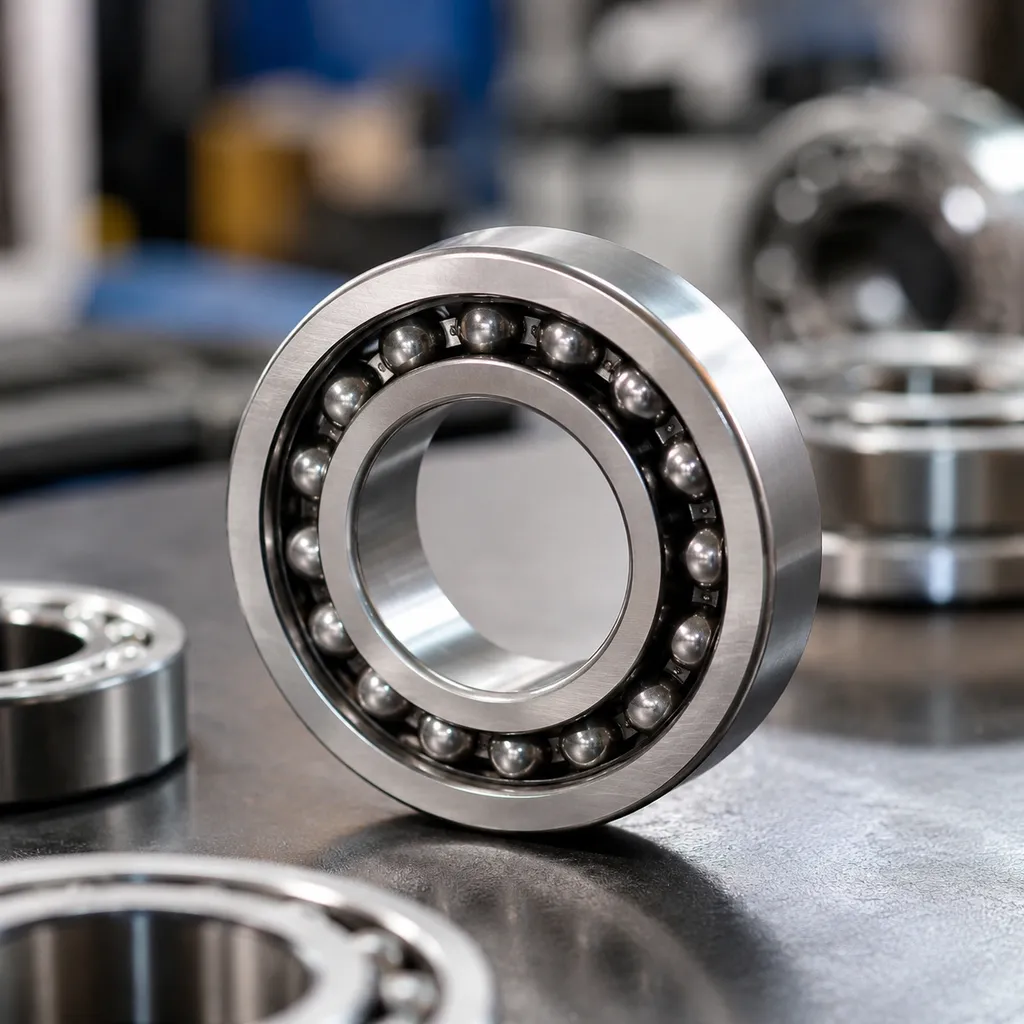
| Outer ring + inner ring | Form the radial raceway pair; carry radial loads and moderate axial forces |
| Steel balls / rolling elements | Transfer load between rings with low friction |
| Cage retainer | Spaces balls; prevents ball-to-ball contact |
| Seals / shields | Retain factory greases; block contamination |
Deep-groove designs handle single direction and double direction thrust in gearboxes, transmissions, and general machinery when rings, balls, cage, and closures are matched as a set.
Parts Deep Groove Ball Bearings: Anatomy & Core Components
Understanding essential parts deep groove ball bearings assemblies is critical when selecting hardware for machine uptime and smooth operation. Each layer—from rings through closures—controls friction, noise, and structural integrity under load.
Core deep groove ball bearing components work together as a matched set:
Bearing Outer Ring and Raceway Groove
The outer ring forms the external housing fitted into the machine bore. A deep radial raceway groove holds rolling elements securely, supporting radial loads and light-to-moderate axial forces in single direction or double direction duty[1].
Bearing Inner Ring and Shaft Fitting
The inner ring mounts directly onto the rotating shaft. Engineered with strict bore tolerances, this component ensures a tight, vibration-free shaft fitting that maintains perfect axial alignment during high-speed rotation.
Precision Rolling Elements
High-precision Steel balls serve as the rolling elements These ultra-smooth spheres roll within the raceways, transferring mechanical loads between the inner and outer rings with minimal friction and heat generation.
Bearing Cage Retainer
The cage retainer keeps rolling elements separated at equal distances around the circular track. By preventing the balls from rubbing against one another, the cage reduces wear, lowers noise, and optimizes load distribution.
Bearing Seals and Shields
Positioned on the outer edges, Seals and shields safeguard internal raceways, retaining factory greases while blocking dirt and moisture from the working surfaces.
Inner Ring & Outer Ring: Deep Groove Ball Bearing Parts
Outer ring and inner ring pairs form the foundation for reliable machine performance. Overall bearing life depends on how these rings handle stress, alignment, and movement under operating conditions.
High-Carbon Chromium Steel Construction
Inner and outer rings use premium high-carbon chrome steel alloys (52100 grade). This material delivers:
- Maximum Wear Resistance: Holds up against severe friction and heat without deforming.
- Superior Structural Toughness: Prevents surface fatigue under high-stress demands.
- Long-Term Reliability: Minimizes unexpected downtime and cuts replacement costs across demanding industrial applications.
Deep Raceway Geometry for Radial and Axial Loads
The continuous radial raceway geometry makes these parts deep groove ball bearings versatile for mixed loads—see axial load vs radial load in deep groove ball bearings for load-direction limits.
| Ring Design Feature | Performance Advantage |
|---|---|
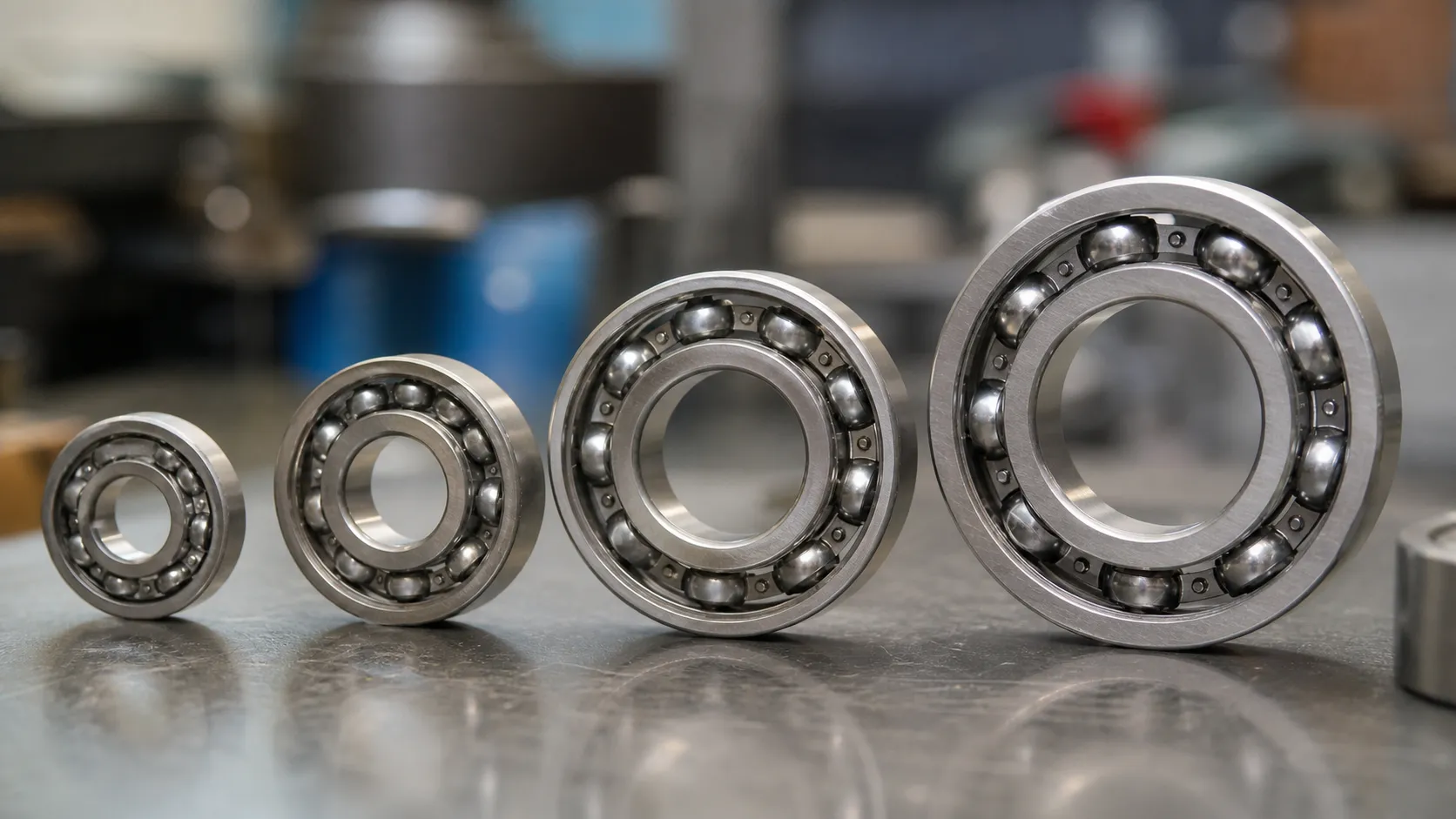
| Deep Raceway Groove | Delivers strong radial capacity while handling substantial axial forces in double direction layouts. |
| Precision Radius | Closely matches ball curvature to distribute weight evenly across the entire contact zone. |
Precision Tolerances and Surface Finish
Smooth surfaces mean quieter running and less energy waste. Precision-grinding and superfinishing hold ring dimensions to tight tolerances aligned with international metrology practice[2]. This ultra-smooth finish ensures optimal lubrication retention, reduces running vibration, and supports high-speed rotation in electric motors and precision drives.
Rolling Elements and Ball Precision
Performance of parts deep groove ball bearings relies on rolling elements quality—material, grade, and count of steel balls set speed limits, heat generation, and bearing life.
Chrome Steel vs. Ceramic Silicon Nitride Balls
Material selection follows application demands:
- Chrome Steel Balls: The go-to choice for standard performance. A chrome steel ball bearing delivers high hardness, wear resistance, and solid radial load capacity at a cost-effective price point.
- Ceramic Silicon Nitride Balls: Designed for extreme environments. Ceramic balls are lightweight, non-conductive, and handle higher RPMs with less heat build-up, making them ideal for high-speed electric motors and transmissions.
Ball Grade Ratings and Surface Finish
Ball grades measure roundness and surface smoothness, directly impacting noise levels and service life:
| Grade Rating | Precision Level | Typical Application |
|---|---|---|
| Grade 10 | Ultra-high precision, mirror surface finish | Low-noise, high-precision equipment |
| Grade 25 | High precision, smooth finish | Standard industrial machinery and gearboxes |
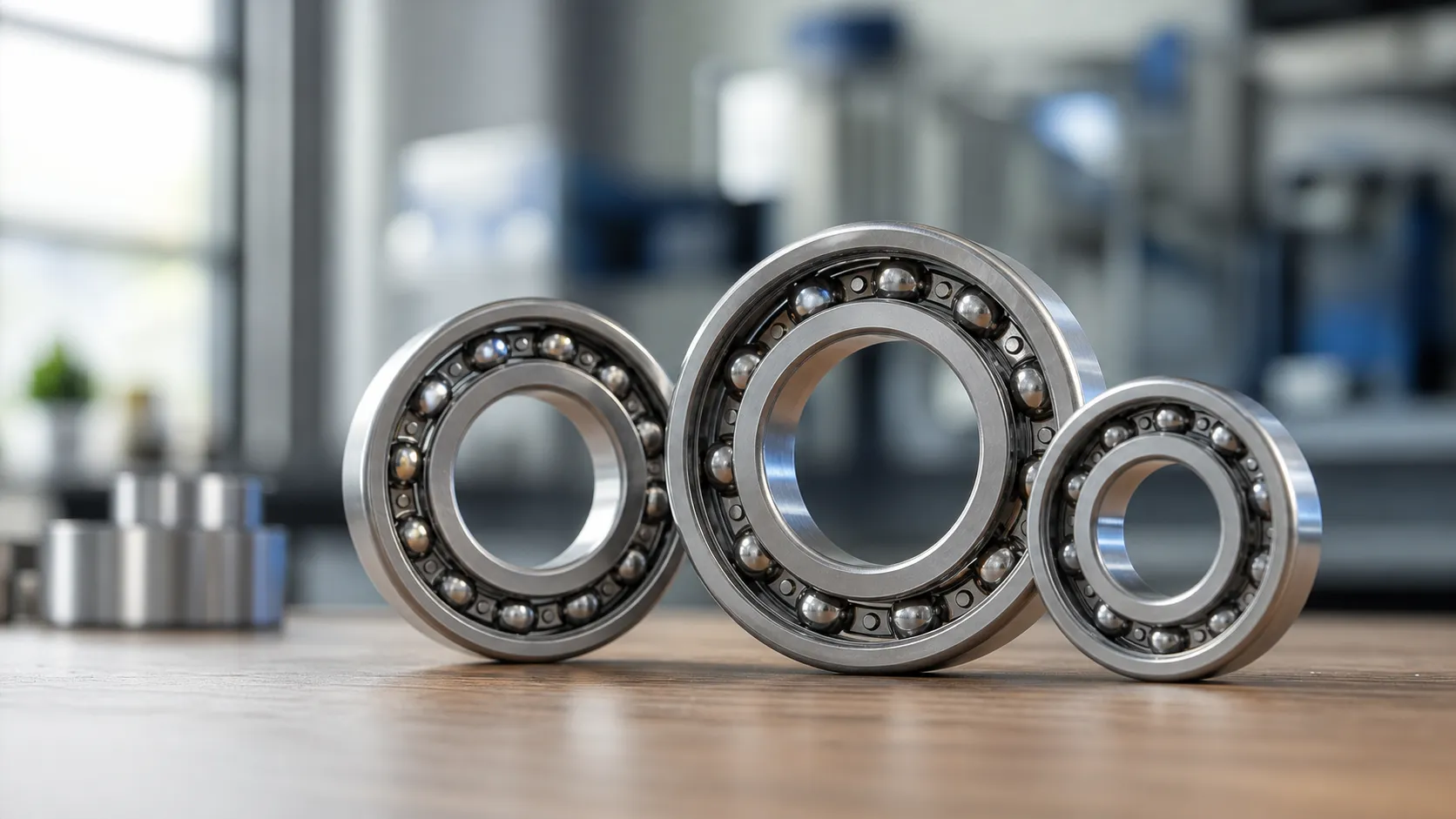
Lower grade numbers mean tighter tolerances, less friction, and smoother rolling action under controlled mass and roundness limits[3].
Ball Size and Count Impact on Load Capacity
Ball size and count inside the radial raceway change how the bearing manages stress:
- Ball Size: Larger balls handle heavier weight, but they slightly lower maximum speed capabilities.
- Ball Count: Adding more balls increases the contact area, which significantly boosts both radial load capacity and secondary axial thrust load resistance.
Bearing Cage Retainer Options
Selecting the right cage retainer is critical for maximizing performance. The cage keeps rolling elements evenly spaced, prevents ball-on-ball friction, and guides balls along the radial raceway.
Three primary cage materials cover typical operational needs:
- Pressed Steel Ribbon Cages: The go-to standard for everyday performance. They provide excellent mechanical strength, handle moderate temperatures, and deliver budget-friendly reliability across general industrial equipment.
- Machined Brass Cages: Built for high vibration, severe shock loads, and high-speed conditions. Their robust construction prevents cage fatigue in heavy-duty machinery like transmissions and gearboxes.
- Polyamide Plastic Cages: Engineered for low noise and low friction. These light polymer cages lower running temperatures, boost speed limits, and extend bearing lubrication grease life in precision electric motors.
Quick Selection Guide for Bearing Cage Retainers
| Cage Material | Ideal Application | Core Advantage |
|---|---|---|
| Pressed Steel | General machinery & everyday use | High strength & cost-effective durability |
| Machined Brass | Heavy vibration & high shock loads | Superior structural integrity & heat tolerance |
| Polyamide (Nylon) | High-speed & noise-sensitive units | Ultra-low friction & quiet operation |
Matching the right cage material to your operating environment ensures your parts deep groove ball bearings run smoother, last longer, and prevent costly downtime.
Seals and Shields Selection
Closure selection for parts deep groove ball bearings directly impacts bearing life, speed limits, and maintenance cycles. Three enclosure styles cover contamination level and lubrication method.
2RS Rubber Seals for Dust and Moisture
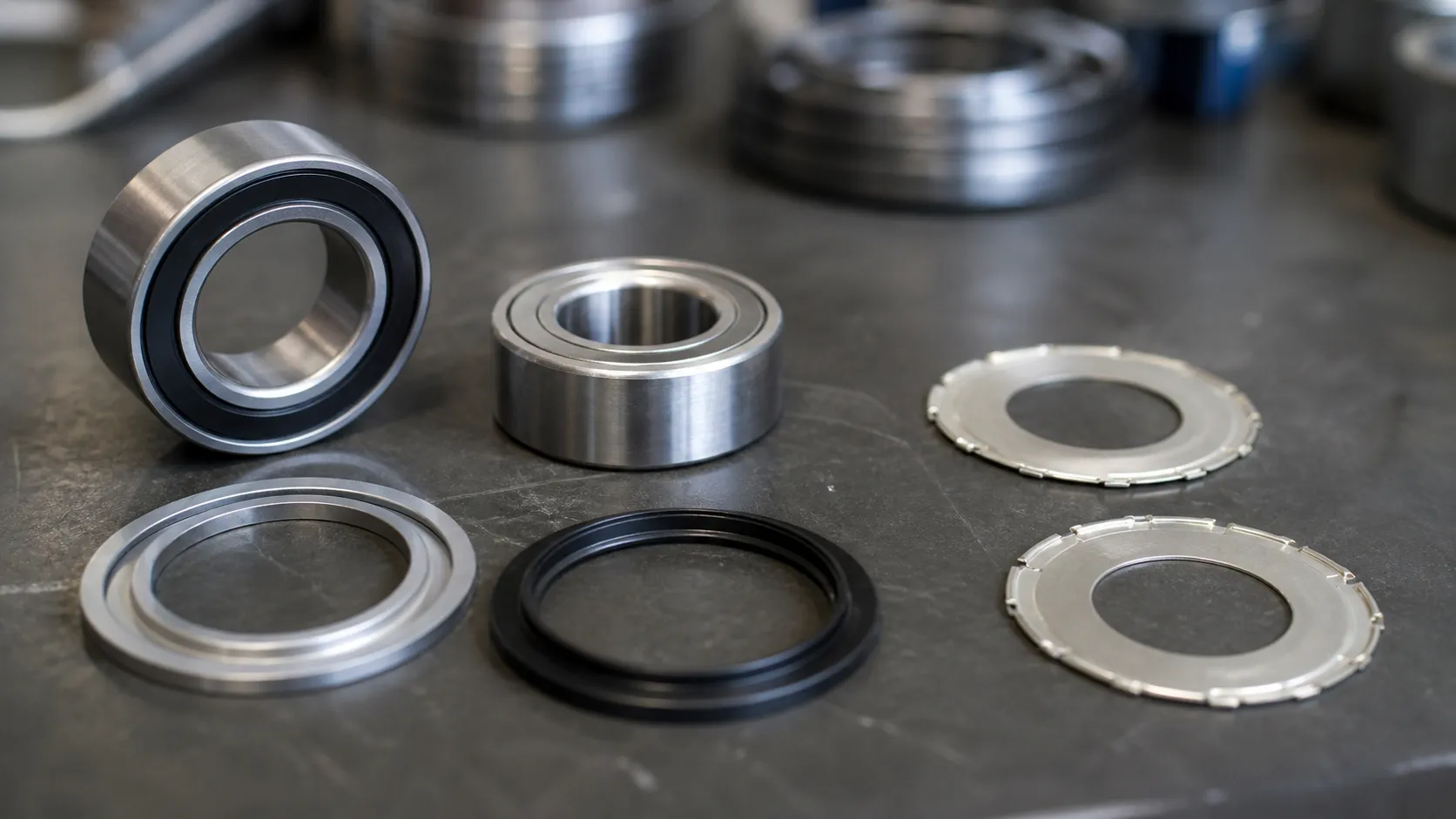
- Maximum Ingress Protection: Seals (2RS rubber) use nitrile rubber molded to a steel insert, creating a contact seal against the inner ring. Compare full sealed deep groove ball bearings catalog lines for dust-heavy duty.
- Best Uses: High-dust, wet, or severe contamination environments like agricultural equipment, conveyors, and outdoor machinery.
- Performance Trade-off: The contact lip effectively locks out grime and retains bearing lubrication grease, though it creates slight friction that lowers top-end speed limits.
ZZ Metal Shields for High Speed Operations
- Zero-Contact Design: Shields (ZZ metal) use non-contact steel plates in the outer ring recess, leaving a microscopic clearance gap at the inner ring. Pair with high-speed deep groove ball bearings for electric motors when RPM is the limiting factor.
- Best Uses: High-RPM applications needing low torque, such as electric motors, power tools, and high-speed drives.
- Performance Trade-off: Generates zero frictional drag or heat buildup for maximum speed capability, though it offers less protection against fine liquid ingress than rubber seals.
Open Bearing Designs for Oil Lubrication
- Unrestricted Flow: Open bearings feature no built-in seals or shields, leaving the raceway exposed.
- Best Uses: Fully enclosed systems like automotive gearboxes, pumps, and transmissions with integrated oil bath systems.
- Performance Trade-off: Relies entirely on external oil bath or oil mist systems, delivering superior heat dissipation and the highest achievable operating speeds.
Deep Groove Ball Bearing Parts FAQs
Core Deep Groove Ball Bearing Components
The four essential deep groove ball bearing components work together as a precision system:
- Outer Ring: Mounts into the machine housing and provides the outer raceway groove.
- Inner Ring: Fits directly onto the rotating shaft.
- Rolling Elements: Precision steel balls that roll smoothly between the rings to minimize friction.
- Bearing Cage Retainer: Holds the balls in place and prevents them from touching.
Role of the Bearing Cage Retainer
The bearing cage retainer serves three critical functions during operation:
- Prevents Friction: Keeps the rolling elements separated so they do not rub together and generate excessive heat.
- Maintains Balance: Spacing the balls evenly ensures balanced load distribution across the radial raceway.
- Guides Lubrication: Helps hold bearing lubrication grease right where the balls contact the raceways.
Rubber Seals vs. Metal Shields
Selecting the right protection depends on operating speeds and environmental conditions:
| Feature | 2RS Rubber Seal | ZZ Metal Shield |
|---|---|---|
| Contact Style | Contact (rubs against the inner ring) | Non-contact (small gap near the inner ring) |
| Protection | High; blocks fine dust, moisture, and dirt | Moderate; keeps out large debris |
| Speed Capacity | Standard speeds | Maximum high-speed capability |
| Best Used For | Harsh, dirty, or wet environments | Clean, high-rpm electric motors and gearboxes |
Replacing Parts of Deep Groove Ball Bearings
Individual parts of a deep groove ball bearing cannot be replaced separately.
Factory-matched inner ring, outer ring, and rolling elements sets are ground to matched tolerances. Swapping out a single worn part destroys this factory alignment, causes rapid vibration, and shortens overall bearing life. Replacing the entire assembly is the only reliable solution.