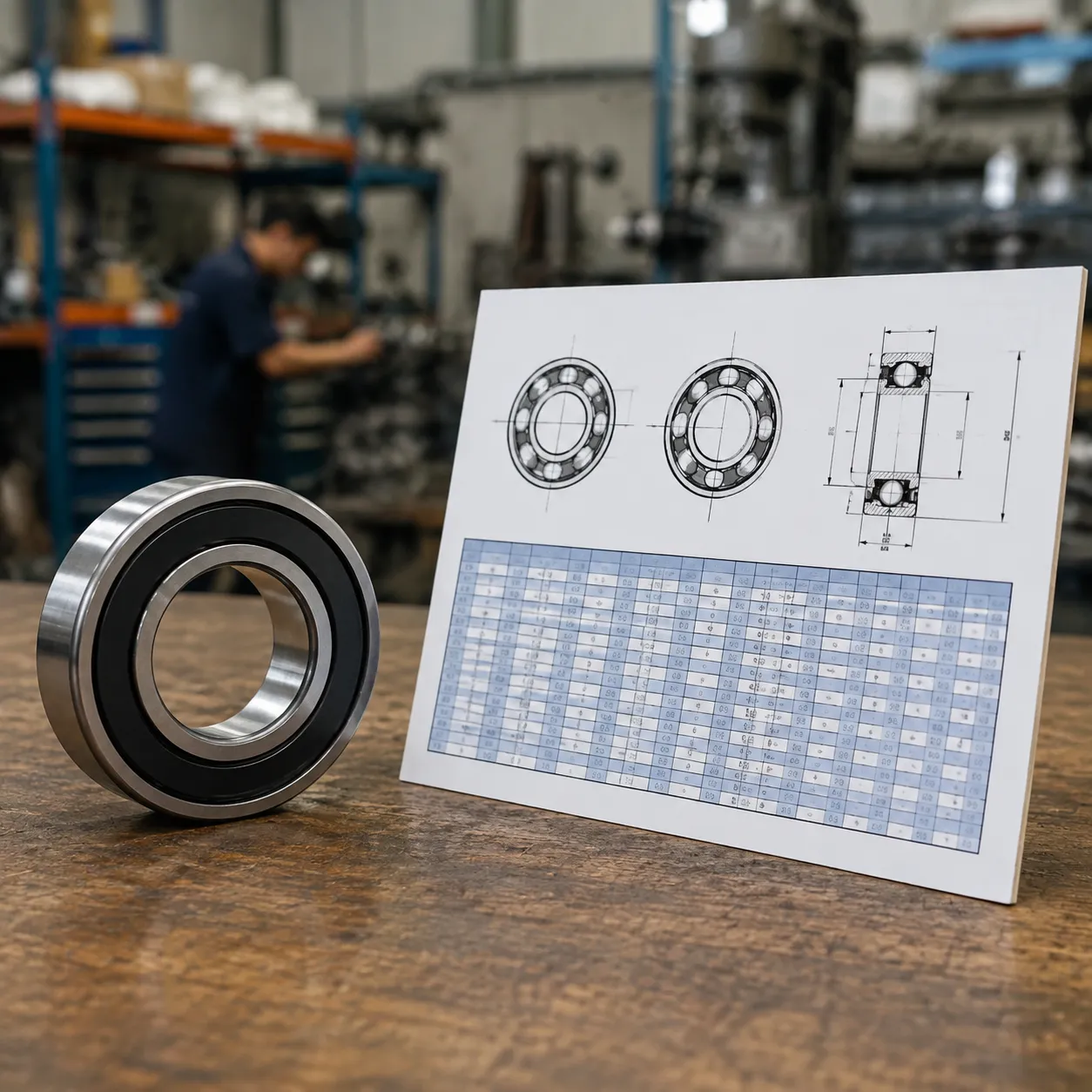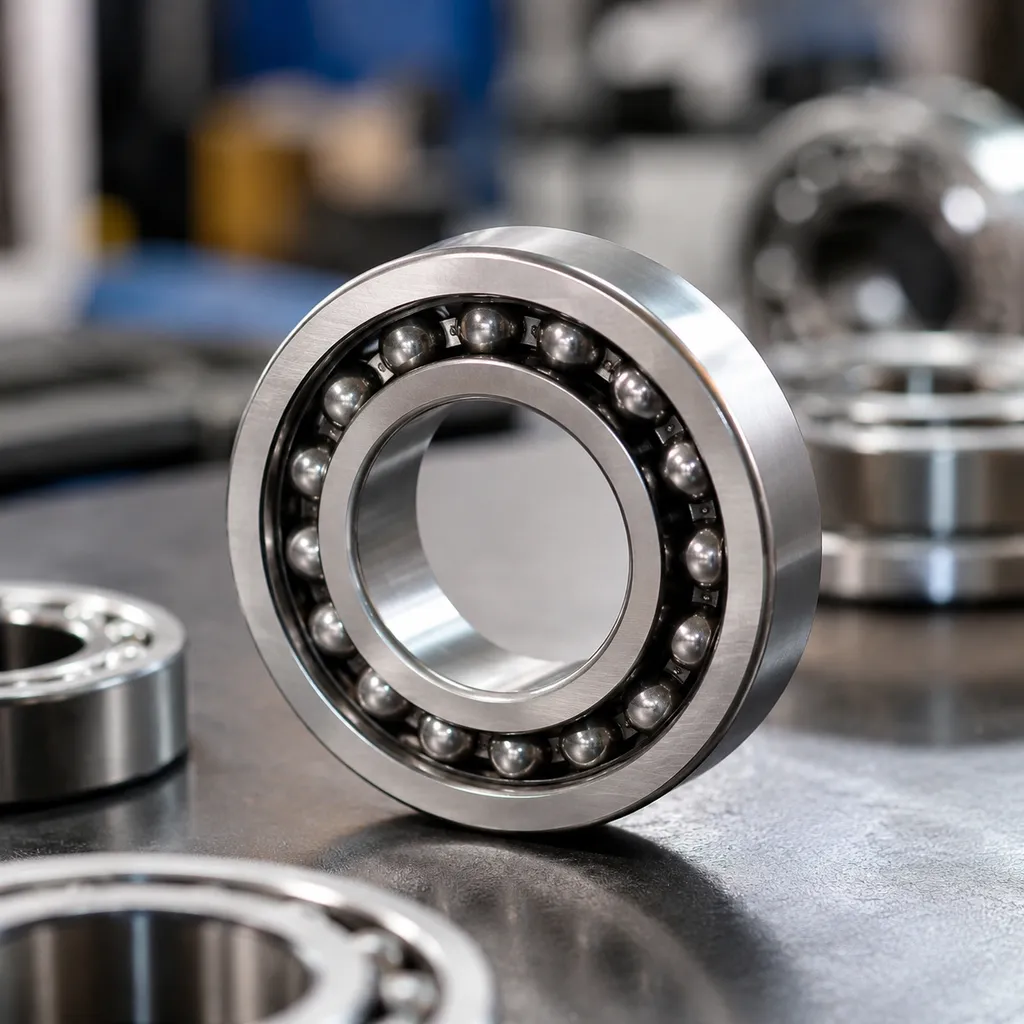
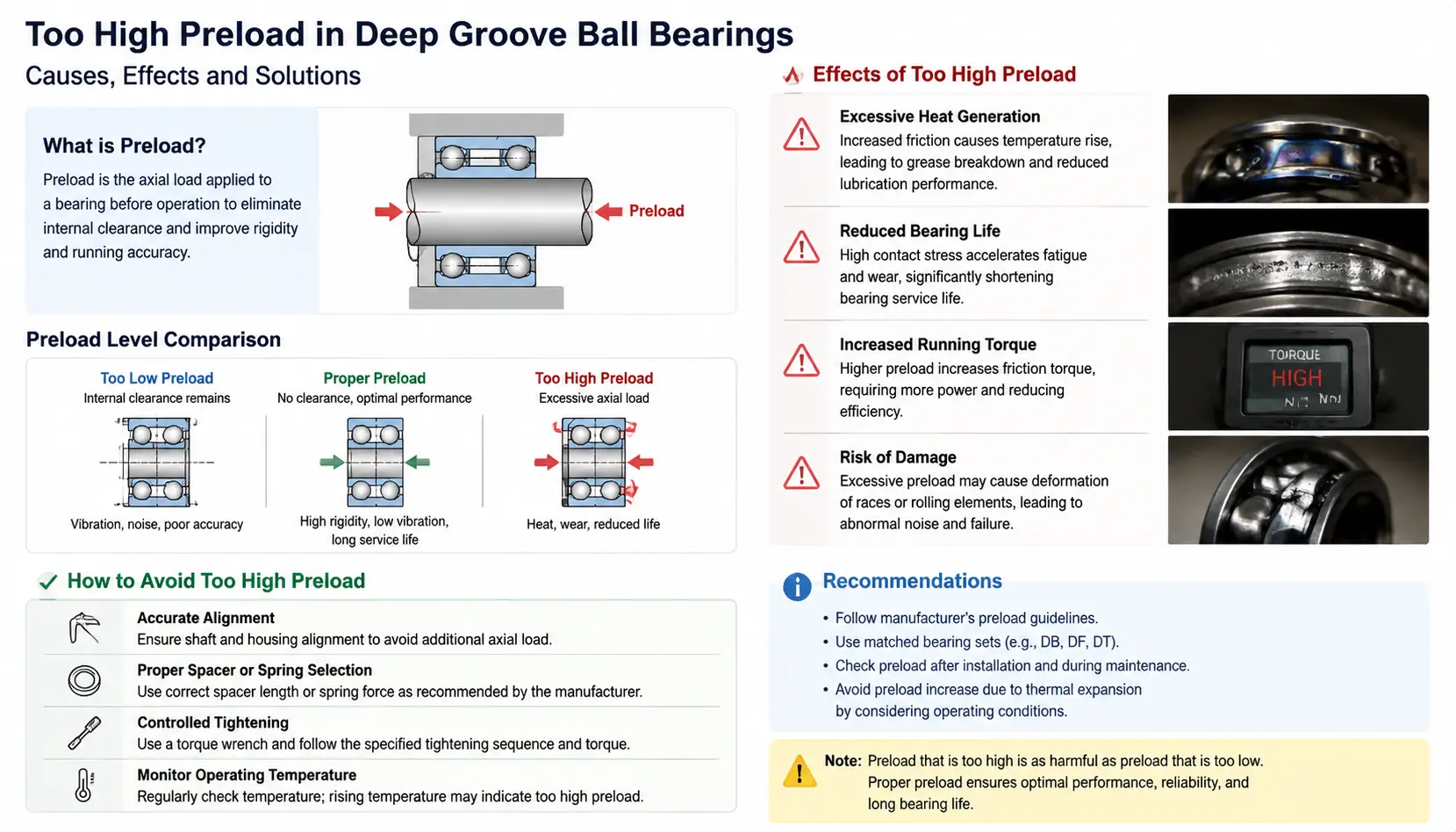
Too high preload deep groove ball bearings generate excessive friction, spike operating temperature, and shorten service life long before rated load limits are reached. Controlled axial force removes play; over-tightening crushes internal clearance and triggers thermal expansion lock-up.
This guide maps warning signs, failure modes, root causes, and correction steps - from wave spring / adjusting spring options to rigid preload pitfalls - so assemblies stay below the safe thrust load envelope.
Too High Preload Deep Groove Ball Bearings: Axial Force Basics
Bearing preload is the constant axial force applied to a bearing to remove internal play, control ball motion, and boost rotational accuracy. Setting too high preload deep groove ball bearings creates severe mechanical strain, leading to high operating temperature and early bearing failure.
Radial Clearance vs Axial Preload
Understanding how internal dimensions interact helps prevent excessive friction and premature wear.
| Parameter | Radial Internal Clearance | Axial Preload |
|---|---|---|
| Force Vector | Perpendicular to the shaft | Parallel to the shaft |
| Core Purpose | Absorbs thermal expansion and shaft alignment variance | Removes internal play to prevent ball skidding |
| Control Method | Set at the factory (e.g., radial internal clearance C3)[1] | Set during assembly using rigid preload or springs (see preloading deep groove ball bearings for method comparison) |
| Over-Tightening Impact | Loose fits cause noise and shaft wobble | Excessive preload crushes rolling elements and damages raceways |
Why Deep Groove Ball Bearings Are Sensitive to Over-Preloading
Standard deep groove bearings naturally support radial loads with light thrust load capacity - see axial load vs radial load in deep groove ball bearings for mixed-load limits. Subjecting them to excessive axial pressure dramatically reduces their service life:
- Steep Contact Stress: High axial pressure forces balls up the raceway wall, generating heavy contact friction.
- Rapid Thermal Expansion: Friction rapidly generates heat, causing balls to expand faster than the housing and destroying remaining internal clearance.
- Film Breakdown: Extreme pressure squeezes out rolling lubricant, causing metal-to-metal contact and permanent raceway scoring.
Immediate Signs and Symptoms of Too High Preload
When you run too high preload in deep groove ball bearings, the system gives clear warning signs long before catastrophic failure occurs.
Bearing Operating Temperature Spike
Excessive axial tension forces the rolling elements tightly into the raceways, generating severe friction that rapidly drives up temperature.
- Rapid Heat Buildup: Operating temperatures spike past standard threshold limits, often exceeding 180°F (82°C) within minutes of initial startup[2].
- Thermal Runaway Cycle: Heat expands the shaft faster than the bearing housing can dissipate it. This differential thermal expansion reduces remaining internal clearance, creating even more friction and pushing temperatures higher.
Excessive Bearing Frictional Torque
Setting too high preload on deep groove ball bearings creates heavy resistance during rotation.
- High Breakaway Torque: The shaft requires significantly more force to start moving from a standstill.
- Rotational Drag: The assembly feels stiff, "notchy," or resistant to smooth manual turning.
- Motor Overamp: Electric motors draw higher baseline current just to overcome initial starting torque and maintain operating speed.
Abnormal Noise and Vibration
| Acoustic / Vibration Signal | Underlying Root Cause |
|---|---|
| High-pitched whining or humming | Rolling elements pinched tight against raceway shoulders under heavy thrust force |
| Grinding or harsh buzzing | Metal-to-metal contact caused by severe film breakdown |
| High-frequency vibration spikes | Internal ring distortion and ball deformation |
Lubricant Breakdown Friction and Damage
Over-preloading squeezes the oil film directly out of the contact zone, accelerating grease oxidation and causing premature wear.
- Grease Discoloration: High localized contact temperatures turn grease dark brown or black as the thickener burns.
- Oil Separation and Baking: Heat bakes base oils into hard carbon deposits, robbing the bearing of lubrication and drastically shortening lubricant service life.
- Visible Leakage: Liquefied grease thins out and bypasses bearing seals, leaving the internal components completely unprotected.
Failure Modes Caused by Excessive Bearing Preload
When running too high preload deep groove ball bearings, internal stresses ramp up exponentially. Over-preloading creates extreme contact stresses that rapidly destroy internal components long before their rated service life.
Accelerated Fatigue Spalling Along Raceways
Excessive axial force creates continuous heavy contact between the balls and raceway walls. This relentless pressure accelerates subsurface fatigue.
- Raceway Flaking: High contact stress causes micro-cracks beneath the surface, peeling off metal flakes along the ball path.
- Premature Fatigue: Bearing raceway fatigue spalling appears thousands of operating hours ahead of schedule.
- Asymmetrical Wear Tracks: Heavy, offset track marks reveal uneven load distribution across the inner and outer rings.
Thermal Expansion and Clearance Locking
Running excessive preload generates continuous friction, causing a rapid bearing operating temperature spike.
| Condition | Thermal Impact | Machine Outcome |
|---|---|---|
| High Friction Torque | Heat builds faster than the housing dissipates it | Rapid grease breakdown and loss of film lubrication |
| Differential Expansion | Inner ring expands faster than outer ring | Loss of remaining radial internal clearance |
| Clearance Reduction | Balls clamp tight between raceways | Sudden thermal expansion bearing seizure |
Ball Skidding, Plastic Deformation, and Cage Wear
- Plastic Deformation: Extreme loads cause permanent micro-dents along raceways, leading to constant vibration.
- Ball Skidding: Dragged rolling elements lose pure rolling motion, causing surface smearing and deep scoring.
- Severe Cage Damage: Frictional heat distorts cage pockets, causing pocket cracking, binding, and complete cage breakdown.
Complete Bearing Seizure and Shaft Damage
Unchecked excessive preload always leads to catastrophic mechanical failure.
- Ring Fracturing: Extreme hoop stresses combined with thermal shock split inner or outer rings.
- Shaft and Housing Scoring: Once the bearing locks up, the shaft spins inside the inner ring bore, galling precision mounting surfaces.
- Catastrophic Equipment Downtime: Seized bearings frequently snap drive shafts and damage surrounding housing components.
Selecting the right fit and utilizing radial internal clearance C3 options prevents preload buildup and reduces risk of premature bearing failure under thermal expansion.
Root Causes of Too High Preload in Deep Groove Bearings
When we analyze failed machinery assemblies, we usually trace too high preload deep groove ball bearings back to four primary engineering and installation mistakes.
| Root Cause | Mechanical Impact | Corrective Strategy |
|---|---|---|
| Incorrect Locknut Torque & Shim Thickness | Over-tightening locknuts or choosing thick shims applies unexpected axial forces directly to raceways. | Follow precise locknut torque setting bearing guidelines and measure shim stacks with precision feelers. |
| Thermal Expansion Differentials | Operating heat expands the shaft faster than the housing, crushing internal clearances. | Calculate growth rates accurately to prevent thermal expansion bearing seizure. |
| Wrong Clearance Selection | Installing tight-fit bearings (like C2) leaves zero room for operational thermal growth. | Upgrade to radial internal clearance C3 for standard electric motor and drive applications. |
| Rigid Mounting Misalignment | Locking bearings in fixed back-to-back or face-to-face arrangements eliminates mechanical play. | Avoid extreme rigid preload setups without compliant elements like wave springs or a wave washer. |
Improper Locknut Torque and Shim Errors
- Over-torquing locknuts during shaft mounting crushes the bearing races together.
- Stacking unmeasured or uneven shims applies heavy, localized axial forces.
- Use calibrated torque wrenches to maintain proper clamp load without causing excessive preload.
Thermal Expansion Differentials
- Shafts naturally run hotter than outer housings during continuous operation.
- Rapid shaft expansion reduces internal space, driving up excessive bearing frictional torque.
- Without room to float axially, thermal expansion quickly over-preloads the entire assembly.
Incorrect Radial Internal Clearance
- Selecting a C2 clearance bearing in a tight housing interference fit squeezes internal gaps shut.
- Specifying radial internal clearance C3 ensures sufficient operational space as temperatures rise.
Rigid Mounting Setup Pitfalls
- Pairing bearings in rigid back-to-back (DB) or face-to-face (DF) arrangements leaves zero room for manufacturing tolerances.
- Minor machining errors on shafts or housings drastically multiply preload forces, causing premature fatigue and heat spikes.
How to Correct and Prevent Excessive Preload
Correcting improper preload prevents total assembly failure and protects overall service life. When dealing with too high preload deep groove ball bearings, immediate adjustments avoid severe heat damage and shaft friction. Four proven methods establish optimal operating conditions and control axial force.
| Correction Method | Key Advantage | Best Application |
|---|---|---|
| Precision Shims & Locknuts | Direct axial control | Rigid mounting setups |
| Spring-Loaded Preload | Dynamic thermal compensation | High-speed applications (e.g. high-speed deep groove ball bearings for electric motors) |
| Increased Radial Clearance | Handles extreme heat expansion | High-temperature equipment |
| Test Run Monitoring | Catches assembly errors early | Quality assurance & setup |
Adjust Locknut Torque and Use Precision Shims
Rigid preloading relies on precise mechanical tolerances. Over-tightening leads to an improper locknut torque setting bearing assembly, raising excessive bearing frictional torque.
- Calibrate Torque: Tighten locknuts to exact specification to avoid crushing raceways under excessive thrust load.
- Measure Shim Thickness: Use precision shims to adjust axial position precisely and maintain proper alignment[3].
Switch to Spring-Loaded Constant Pressure Preloading
Replacing rigid spacers with a wave washer or wave spring shifts your setup from rigid to constant-pressure preloading.
- Absorb Expansion: Springs compress dynamically as components heat up, keeping operating load within the safe bearing preload limit.
- Reduce Friction: In a spring preload vs rigid preload comparison, spring preloading provides significantly higher tolerance against dimensional changes, preventing excessive friction.
Select Radial Internal Clearance C3 or C4
Using standard clearance in high-heat environments causes thermal growth to lock internal components, leading to thermal expansion bearing seizure.
- Upgrade Internal Clearance: Upgrading to radial internal clearance C3 or C4 provides necessary internal play before installation.
- Compensate for Heat: Extra internal clearance absorbs the expansion of the inner ring, keeping operating temperature stable under continuous load.
Measure Breakaway Torque and Track Temperature Spikes
- Check Breakaway Torque: Measure starting rotational resistance to ensure the bearing moves smoothly without binding.
- Monitor Initial Run-In: Watch for an unexpected operating temperature spike during test runs, which signals the need for immediate preload reduction to avoid lubricant damage and premature wear[2].
Frequently Asked Questions (FAQs)
Can you preload a standard deep groove ball bearing?
Yes, you can apply an axial force to standard deep groove ball bearings, but only within strict limits. These bearings are built primarily for radial loads, though they handle moderate thrust load applications when set up properly.
- Spring preload: Using a wave washer or adjusting spring delivers constant, controlled pressure that tolerates thermal expansion.
- Rigid preload: Precision clamping with a locknut torque setting demands exact tolerances to avoid setting too high preload deep groove ball bearings.
- Clearance selection: Always verify internal clearance. Choosing a radial internal clearance C3 prevents thermal locking under axial load.
How do I know if my bearing preload is set too high?
Detecting excessive preload early prevents catastrophic bearing failure during initial test runs. Watch for these immediate physical red flags:
- Bearing operating temperature spike: The housing rapidly overheats due to excessive friction within minutes of startup.
- High breakaway torque: The shaft feels stiff or difficult to turn manually before motor engagement.
- Acoustic noise: A high-pitched whining or humming sound signals intense raceway pressure.
- Grease discoloration: Darkened or scorched grease indicates severe lubricant breakdown friction.
Will increasing preload always improve bearing stiffness?
No. While controlled axial preloading removes internal play and increases shaft rigidity, exceeding the bearing preload limit causes severe operational issues.
| Preload Level | System Stiffness | Operating Temperature | Bearing Service Life |
|---|---|---|---|
| Optimal Preload | Maximum targeted rigidity | Stable / Normal | Full service life |
| Excessive Preload | Negligible increase | Rapid thermal spikes | Early fatigue spalling |
Beyond the optimal threshold, excessive bearing frictional torque generates extreme heat. This heat triggers thermal expansion, removes remaining internal clearance, and causes thermal expansion bearing seizure.
How does high preload affect grease service life?
Excessive preload dramatically reduces grease service life by destroying its chemical structure through intense friction and heat.
- Thermal oxidation: Elevated temperatures degrade base oils, leading to rapid lubricant damage and dried-out thickeners.
- Mechanical shearing: Heavy contact stress squeezes grease away from ball contact zones, causing metal-to-metal contact.
- Premature wear: Depleted lubrication accelerates bearing raceway fatigue spalling and causes total bearing failure.