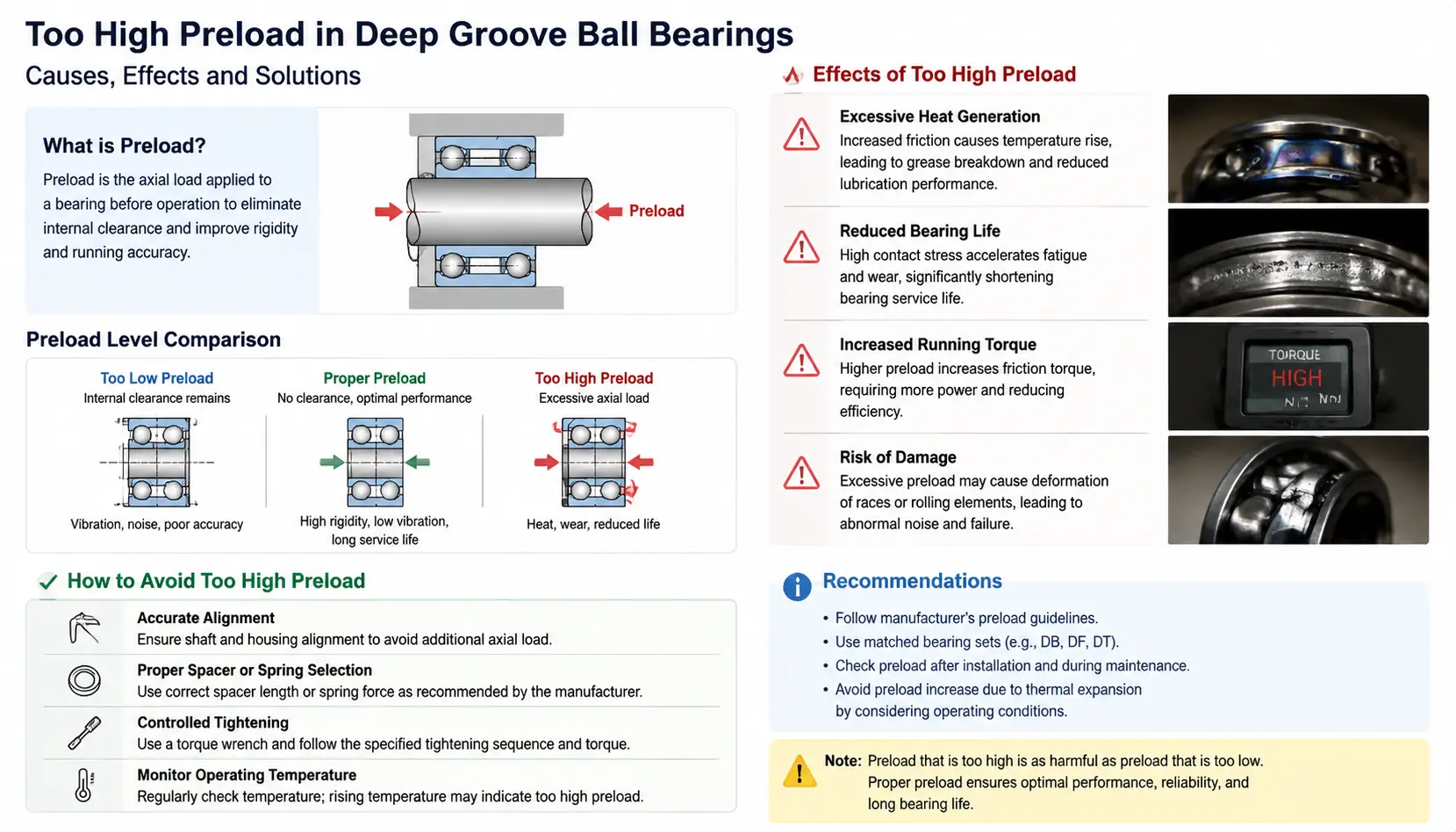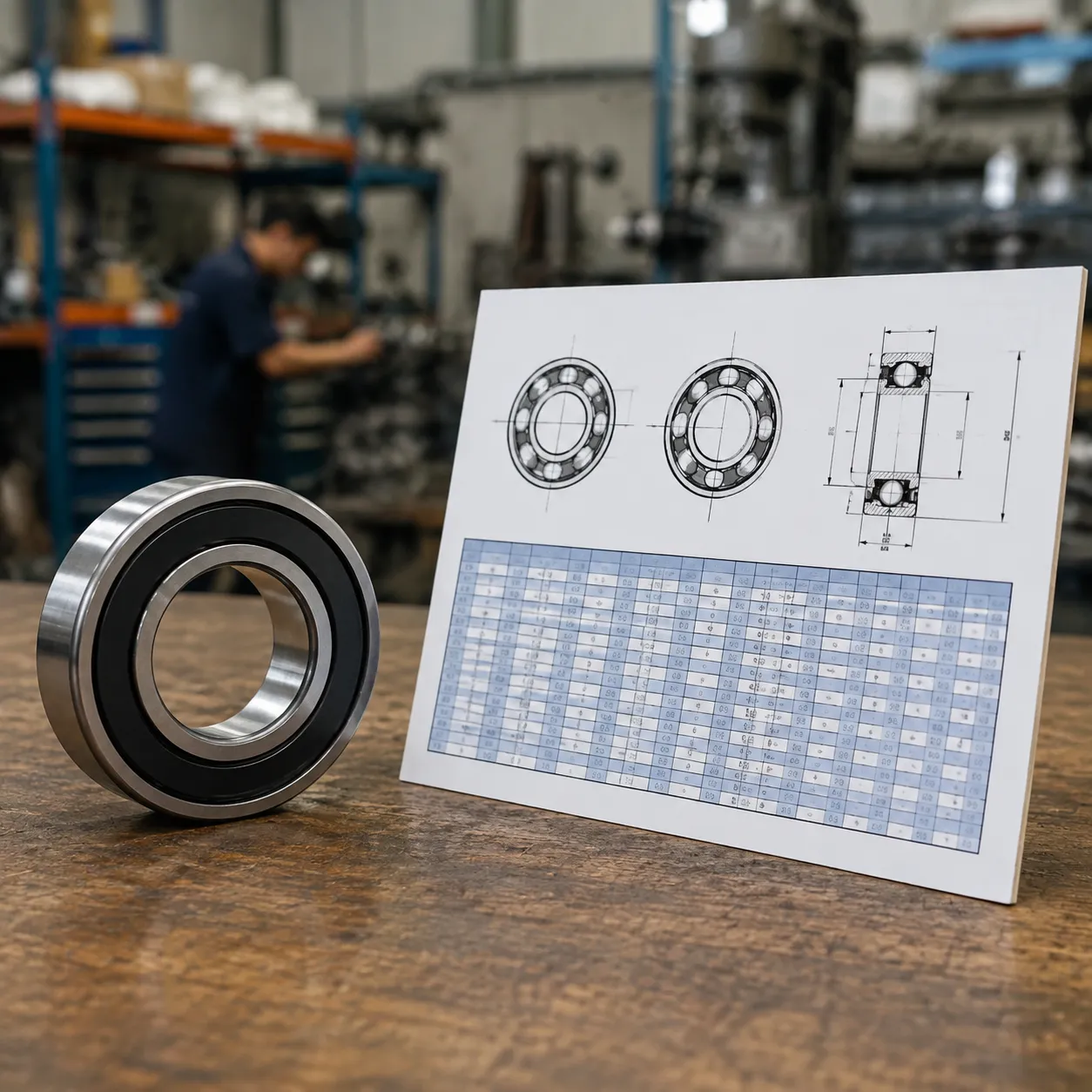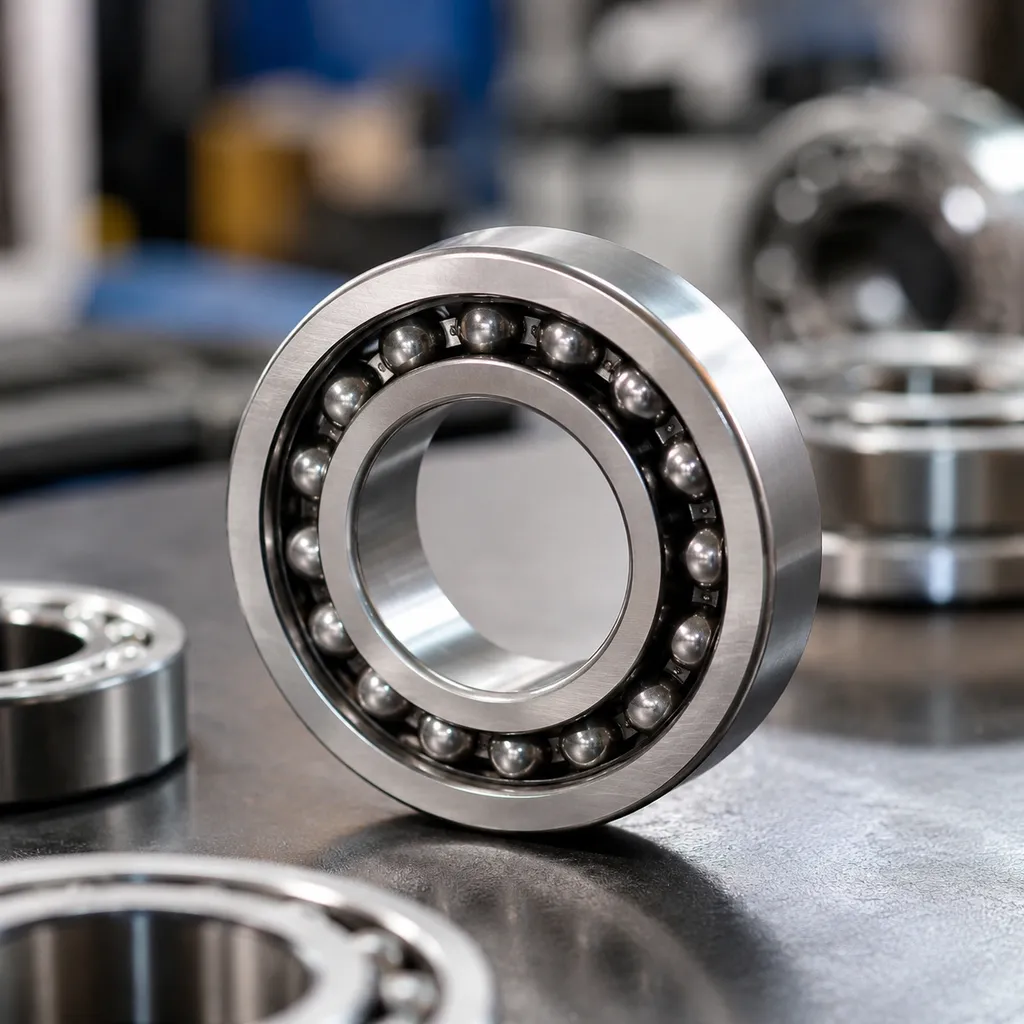
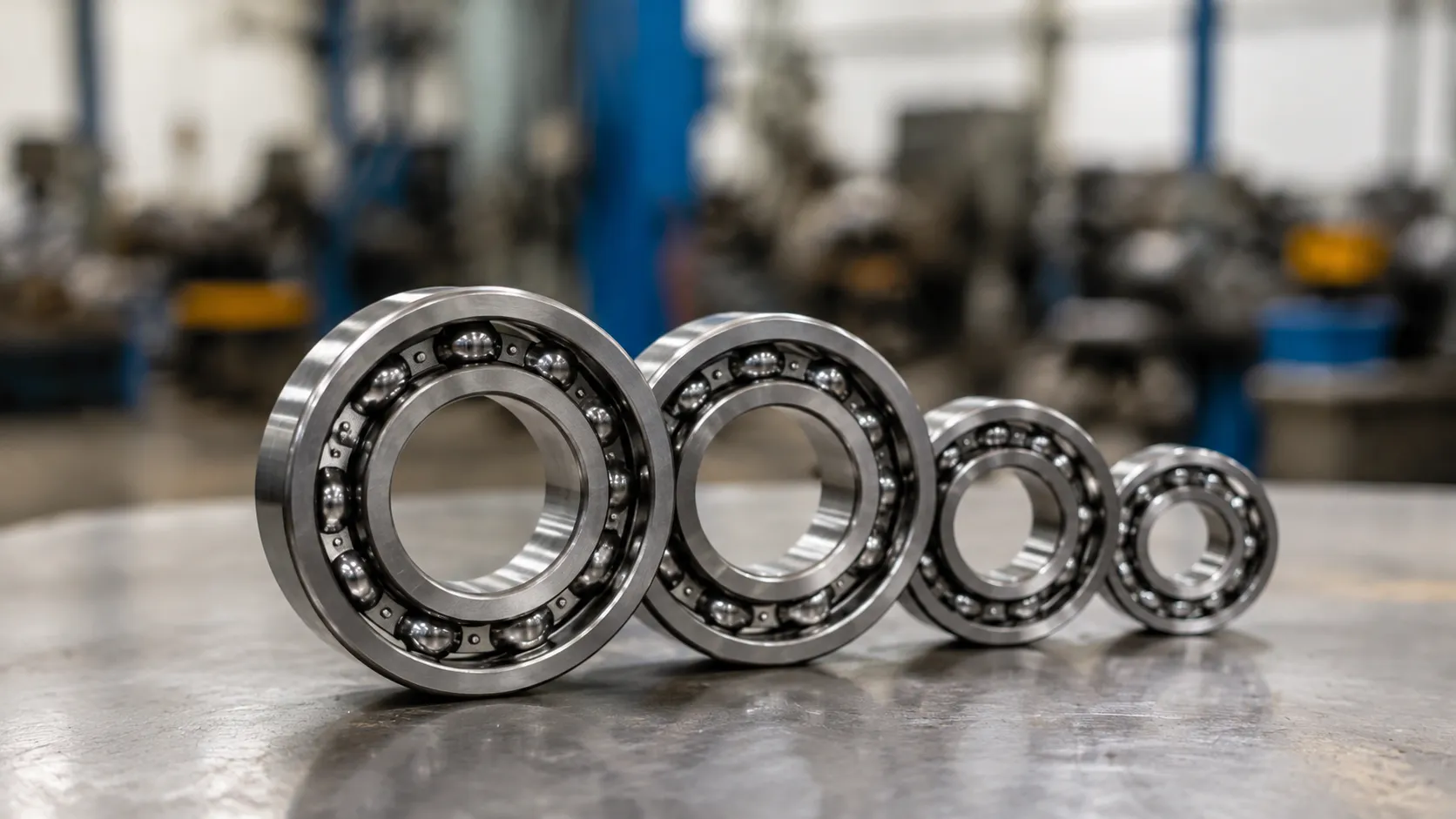
Deep groove ball bearings load types span radial loads, axial loads, and combined loads on the same shaft—forces perpendicular to the shaft, parallel along it, or both at once. Deep raceways in the inner ring and outer ring guide rolling elements so a single row design can cover radial duty plus moderate thrust without a second bearing. Below: radial-only duty, thrust limits, static load and dynamic load load ratings, equivalent load math, and when angular contact upgrades beat standard deep groove parts.
Deep Groove Ball Bearings Load Types
In everyday machinery, bearings face two primary forces: radial loads (pushing perpendicular to the shaft) and axial loads (pushing parallel along the shaft). Understanding how your hardware handles these machinery shaft forces is the single most important factor for maximizing bearing lifespan.
Managing Multi-Directional Stress
While a standard radial contact ball bearing is engineered primarily for radial duty, its deep raceway grooves allow it to handle combined loads simultaneously.[1]
- Radial Support: Excellent for heavy perpendicular forces.
- Thrust Support: Capable of managing light-to-moderate axial stress.
- Versatility: Eliminates the need for separate thrust bearings in well-balanced systems.
As a manufacturer, we design our single row deep groove ball bearings to balance these multi-directional stresses seamlessly, ensuring your equipment runs smoothly without unexpected structural failure.
Radial Loads in Deep Groove Ball Bearings
When we talk about radial loads, we are dealing with forces that push perpendicular to the shaft.
Our deep groove designs excel here because of their deep raceway grooves. These close-conforming grooves perfectly cradle the rolling elements between the inner ring and outer ring. This design maximizes radial load capacity by distributing high perpendicular forces evenly across the structure.
Here is where you will typically see high radial duty forces at play:
Electric motors: Standard industrial motors running belts or pulleys.
Conveyor rollers: Handling heavy material weight directly over the moving shaft.
Household appliances: High-speed washing machine drums and everyday power tools.
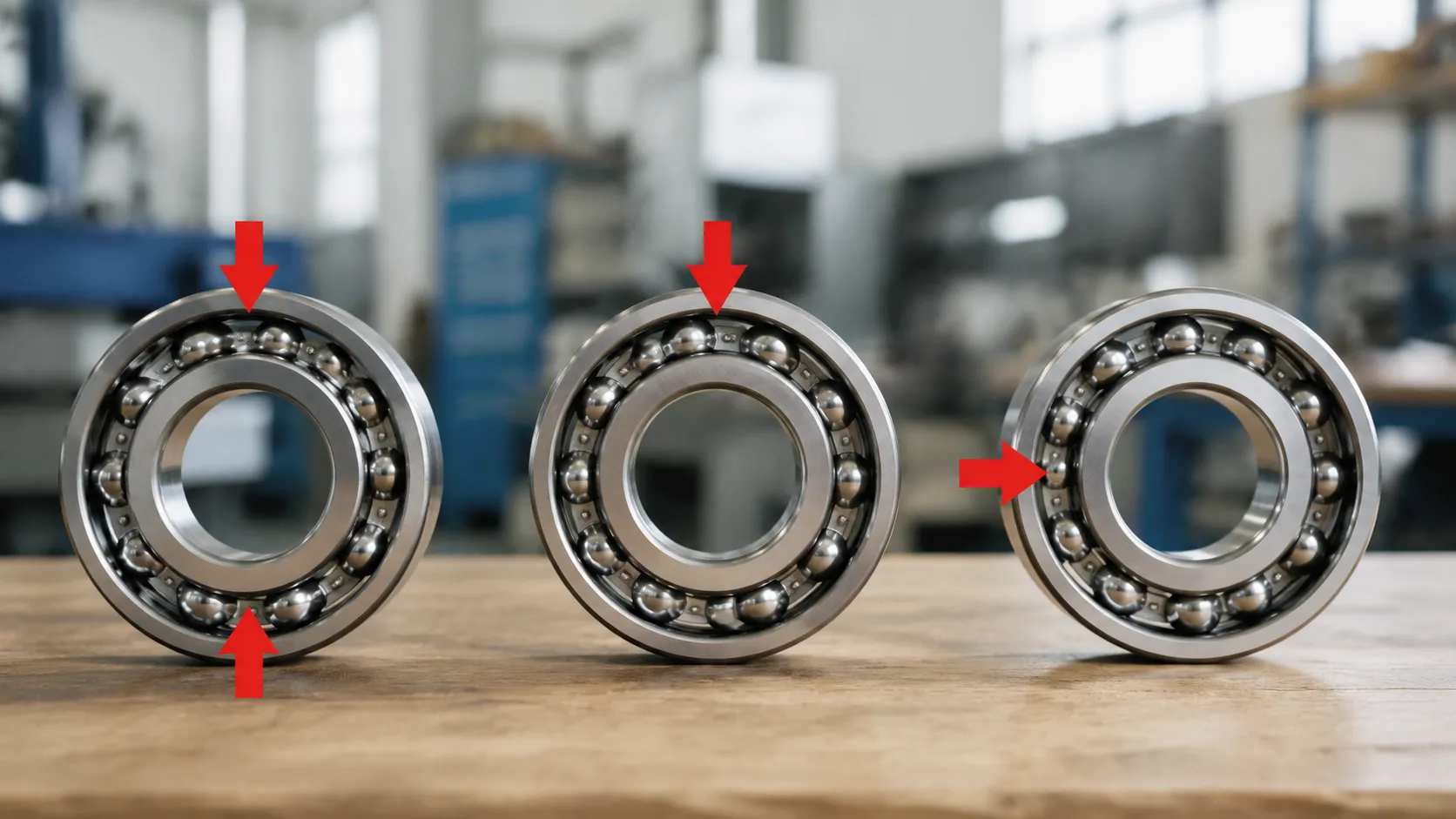
If your application is mainly focused on handling these perpendicular machinery shaft forces, our single row radial contact options deliver the ultimate balance of high speed and long bearing lifespan.
Axial Loads and Thrust Limits in Deep Groove Ball Bearings
While deep groove ball bearings are famous for handling radial forces, they can also manage axial loads (or thrust force). An axial load is a force that pushes parallel to the shaft, trying to slide the inner ring right out of the outer ring.
As a manufacturer, we often get asked about the exact axial load limits for a standard single row radial contact ball bearing. Here is the direct truth: while they aren't dedicated thrust bearings, they can handle a surprising amount of thrust duty if configured correctly.
Thrust Load Capacity Limits
In a standard setup, a deep groove bearing can safely handle light to moderate combined loads where thrust is present. However, if your machinery shaft forces are purely axial and heavy, a standard design will hit its limits quickly.
Exceeding these limits causes the rolling elements to ride up on the edge of the raceway groove, leading to rapid wear and a drastically shortened bearing lifespan.
Factors That Increase Axial Load Limits
If your application pushes the limits of standard load capacities, you don't always have to switch immediately to specialized angular contact bearings. We can optimize several design factors to boost thrust performance:
- Radial Internal Clearance: Increasing the bearing internal clearance (moving from a standard C2 or CN to a C3 or C4 clearance) changes the contact angle under load. This allows the bearing to withstand a significantly higher axial load capacity.
- Groove Depth: Deeper raceway grooves provide a higher shoulder for the balls to roll against, preventing them from climbing the edge under heavy thrust.
- Ball Complement: Adjusting the size and number of the balls inside the rings directly alters both the static load capacity and dynamic load rating.
| Adjustment Type | Effect on Axial Capacity | Best Used For |
|---|---|---|
| Increased Internal Clearance (C3/C4) | High Increase | High-speed, moderate thrust applications |
| Deeper Raceway Grooves | Moderate Increase | Heavy-duty, multi-directional stress |
| Optimized Ball Size | High Increase | Maximizing overall static load limits |
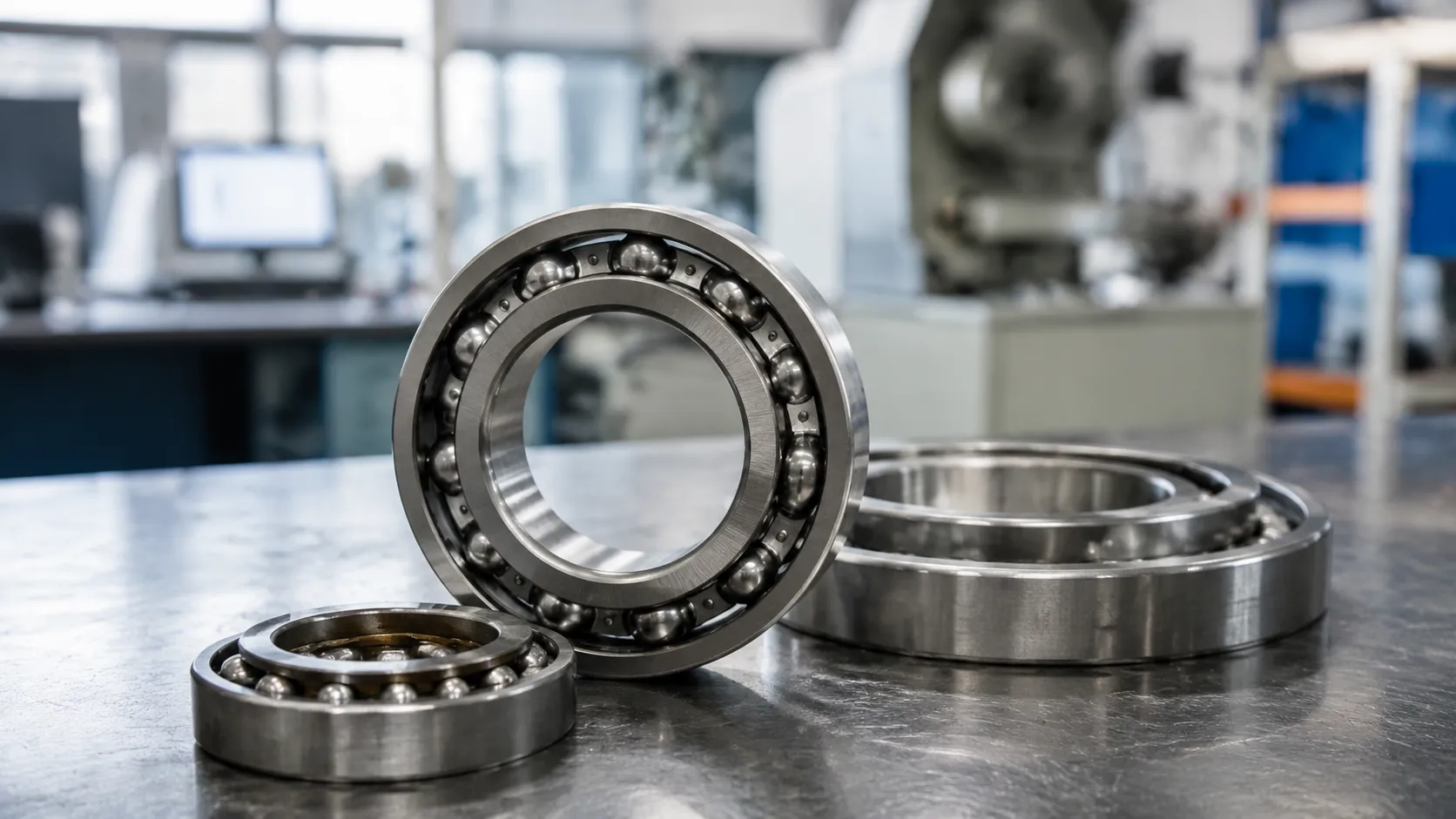
Combined Radial and Axial Loads
In real-world machinery, shafts rarely experience forces from just one direction. Most of your applications hit bearings with combined loads—meaning radial and axial forces happen at the exact same time.
Managing Multi-Directional Stress
As a manufacturer, we design our single row deep groove ball bearings with deep, uninterrupted raceway grooves. This specific geometry allows the rolling elements to smoothly transition and distribute forces when a machine experiences simultaneous side thrust and perpendicular weight.
Calculating Equivalent Dynamic Load
To figure out how your bearing will hold up under combined forces, you can't just look at the individual loads. You need to calculate the equivalent dynamic load (P). This formula converts the combined radial (Fr) and axial (Fa) forces into a single theoretical load that matches the actual bearing lifespan:
P = X · Fr + Y · Fa[2]
Where:
P: Equivalent dynamic load
Fr: Actual radial load
Fa: Actual axial load
X: Radial factor (depends on the bearing geometry)
Y: Thrust factor (changes based on the load ratio and internal clearance)
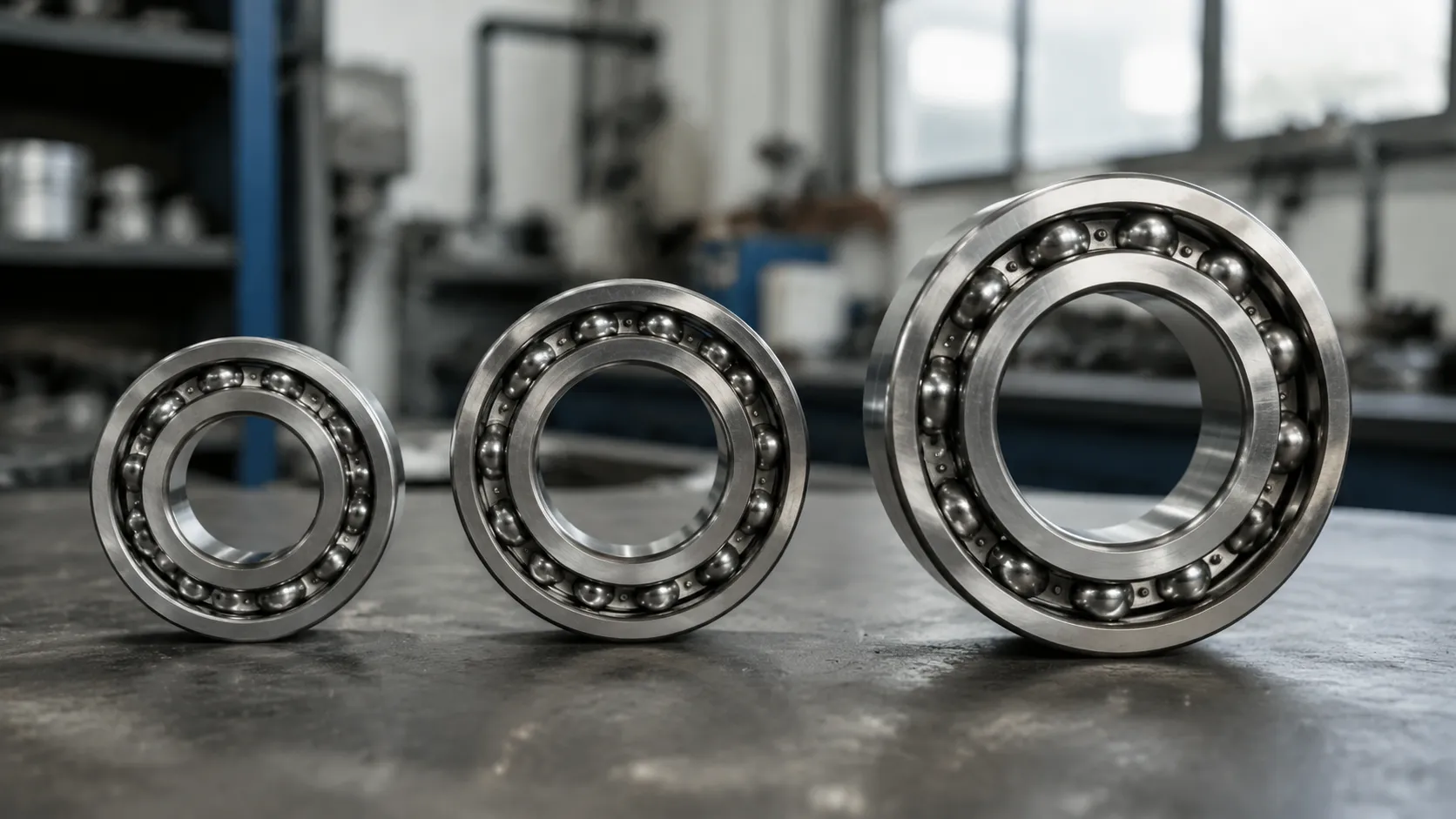
Performance Limits: When to Switch
While deep groove ball bearings load types cover a wide range of everyday uses, they aren't built for heavy, dominant thrust forces.
| Load Condition | Best Bearing Choice | Why? |
|---|---|---|
| High Radial + Light Axial | Deep Groove Ball Bearing | Most cost-effective, low friction, handles light combined stress well. |
| Heavy Axial + High Radial | Angular Contact Bearings | Designed with contact angles specifically to handle massive, simultaneous multi-directional forces. |
If you over-allocate thrust force to a standard radial duty bearing, you risk rapid tracking wear, overheating, and premature failure. When your axial load limits start creeping closer to or exceeding your radial forces, switching to angular contact bearings will save your machinery shaft from unexpected downtime.
Deep Groove Ball Bearings Load Ratings and Performance Factors
Getting the most out of your deep groove ball bearings load types comes down to a few critical operating variables. Even the best-engineered single row or double row bearing will underperform if these real-world factors aren't dialed in.
Bearing Size and Ball Complement
The physical dimensions of the inner ring and outer ring directly dictate your static load capacity and dynamic load rating.
Ball Size and Count: Larger rolling elements (balls) or a higher ball count (complement) increase the contact area, allowing the bearing to support a higher radial load capacity.
Internal Clearance: The amount of bearing internal clearance affects how loads are distributed among the balls. Incorrect clearance can cause uneven wear and drastically shorten your bearing lifespan.
The Critical Role of Lubrication
Under heavy combined loads, proper lubrication is your primary defense against premature failure.
Friction Reduction: Oil or grease creates a microscopic film between the balls and the raceway, preventing metal-on-metal contact.
Heat Dissipation: Heavy radial duty generates intense thermal energy. Good lubrication carries heat away, maintaining the structural integrity of the steel components under high thrust force.
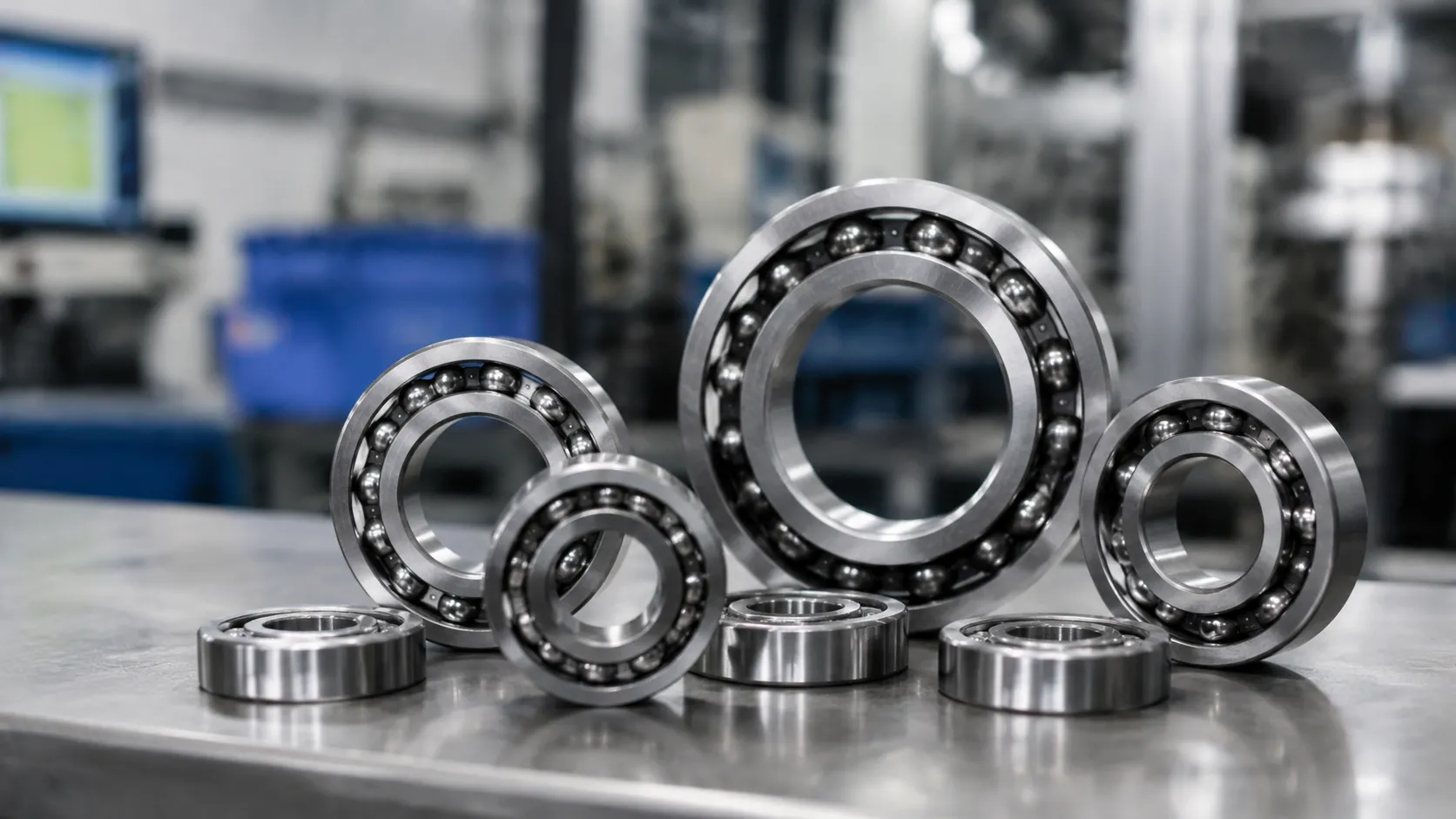
How Operating Speed Alters Load Limits
High speeds change the rules for both radial loads and axial loads. As the machinery shaft forces spin faster, centrifugal forces act on the internal components.
| Operating Speed | Effect on Load Capacity | Recommended Action |
|---|---|---|
| Low Speed | High static load tolerance; less heat generation. | Focus on grease retention and heavy-duty sealing. |
| High Speed | Reduced effective dynamic load rating due to dynamic stresses. | Shift to precision tolerances or consider angular contact bearings for high-speed multi-directional forces. |
FAQs About Deep Groove Ball Bearing Loads
Can deep groove ball bearings take thrust load?
Yes. While they are designed as a radial contact ball bearing, their deep raceway grooves allow them to handle light to moderate thrust force (axial load) in both directions alongside radial loads.
What happens if you overload a deep groove ball bearing?
Overloading shortens the bearing lifespan drastically. It causes excessive heat, breakdowns in lubrication, and premature fatigue (spalling) on the inner ring and outer ring raceways.[3]
How do I choose between radial and axial bearings?
Look at the primary direction of your machinery shaft forces:
| Load Requirement | Best Bearing Choice |
|---|---|
| Primarily perpendicular to the shaft (radial duty) | Single row deep groove ball bearing |
| High simultaneous radial and axial loads | Angular contact bearings |
| Purely parallel to the shaft (thrust force only) | Thrust ball bearing |
What is the difference between dynamic and static load ratings?
- Dynamic Load Rating: The maximum continuous load a bearing can handle while the rolling elements are rotating before fatigue sets in.[2]
- Static Load Capacity: The maximum load a bearing can withstand when stationary or moving at extremely slow speeds without causing permanent deformation to the balls or raceways.
References
- MDPI Applied Sciences — Analysis of deep groove ball bearing performance under combined loading
- ISO 281:2007 — Rolling bearings — Dynamic load ratings and rating life
- PMC — Rolling-element bearing fatigue and overload failure mechanisms
- MDPI Applied Sciences — Dynamic behavior of ball bearings under variable load conditions
- SoftInWay — Ball bearing dynamic stiffness prediction (PDF)