Deep groove ball bearings most common status across rolling bearings comes from one layout: single row geometry, low friction, low noise, and simultaneous radial load plus moderate axial load capacities in a versatile, mass-produced package. This guide explains why DGBBs outrank other radial balls and roller bearings in a wide variety of industries, how deep raceways deliver high speed capabilities, and when double row designs or sealed builds beat the popular open sizes on your BOM.
Deep Groove Ball Bearings Most Common Type
Deep groove ball bearings are the most common rolling-element choice because they combine simple geometry, high-volume economics, and reliable performance without exotic maintenance. The deep groove ball bearings most common type in distributor catalogs is a single row assembly — the layout listed first for general machinery in ISO dimension tables [1].
Versatility Across Different Industries
DGBBs adapt across electric motors, automotive accessories, conveyors, and consumer appliances. They handle heavy radial load with moderate thrust from both directions — the pairing engineers expect when forces shift during operation.
| Industry | Common Applications | Key Requirement Met |
|---|---|---|
| Automotive | Alternators, wheels, starters | High speed capabilities & durability |
| Industrial Automation | Conveyors, robotics, gearboxes | Low noise & low friction |
| Consumer Electronics | Fans, washing machines, power tools | Low investment & simple maintenance |
High-Speed Performance with Low Friction
Optimized raceway geometry keeps contact between radial balls and grooves minimal during rotation [2].
- Low friction: Less drag lowers heat and energy loss.
- High speed capabilities: Smooth rotation supports high RPM limits on motors and spindles.
- Low noise: Precision ball-to-groove conformity quiets appliances and HVAC drives.
Compared with cylindrical roller bearings, deep groove ball bearings trade some peak radial capacity for lower torque and simpler mounting — the reason they remain the default rolling bearings in mixed-load general machinery [3].
How Deep Groove Ball Bearings Work
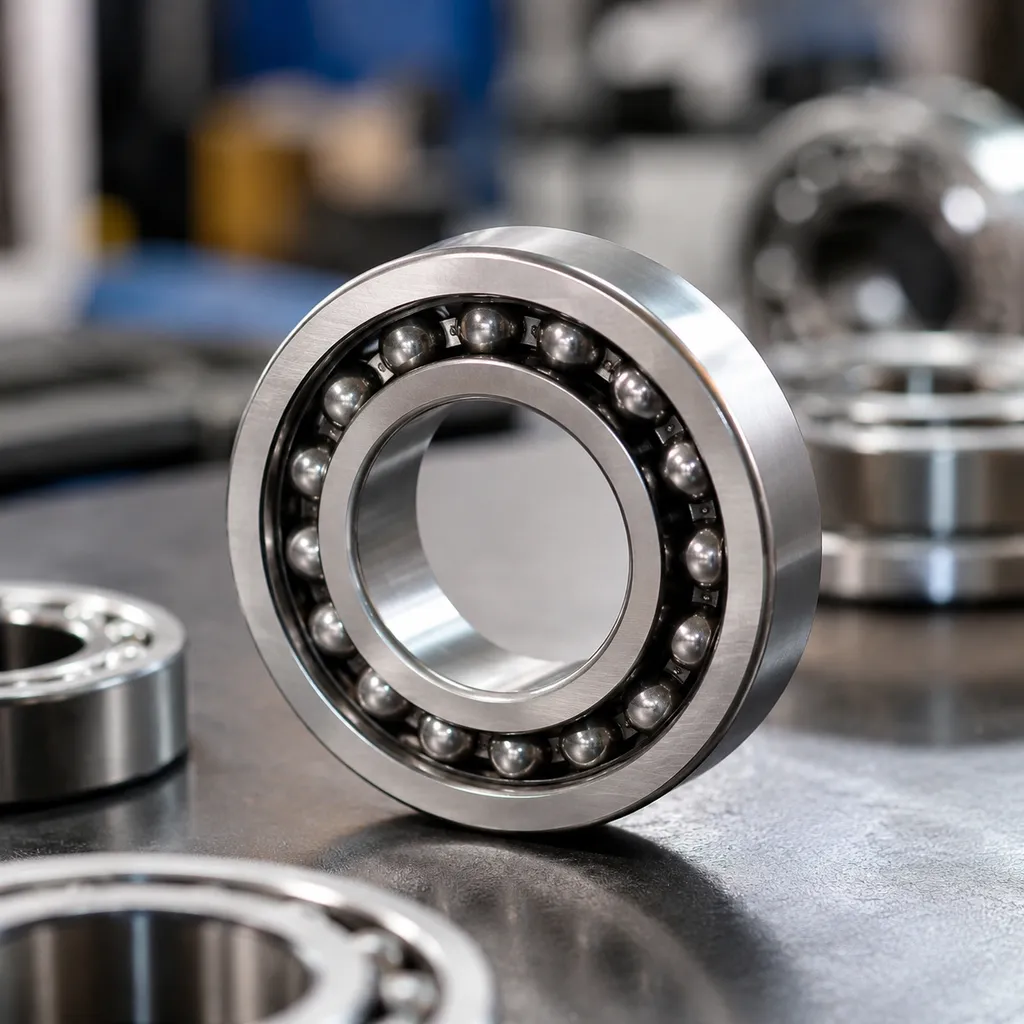
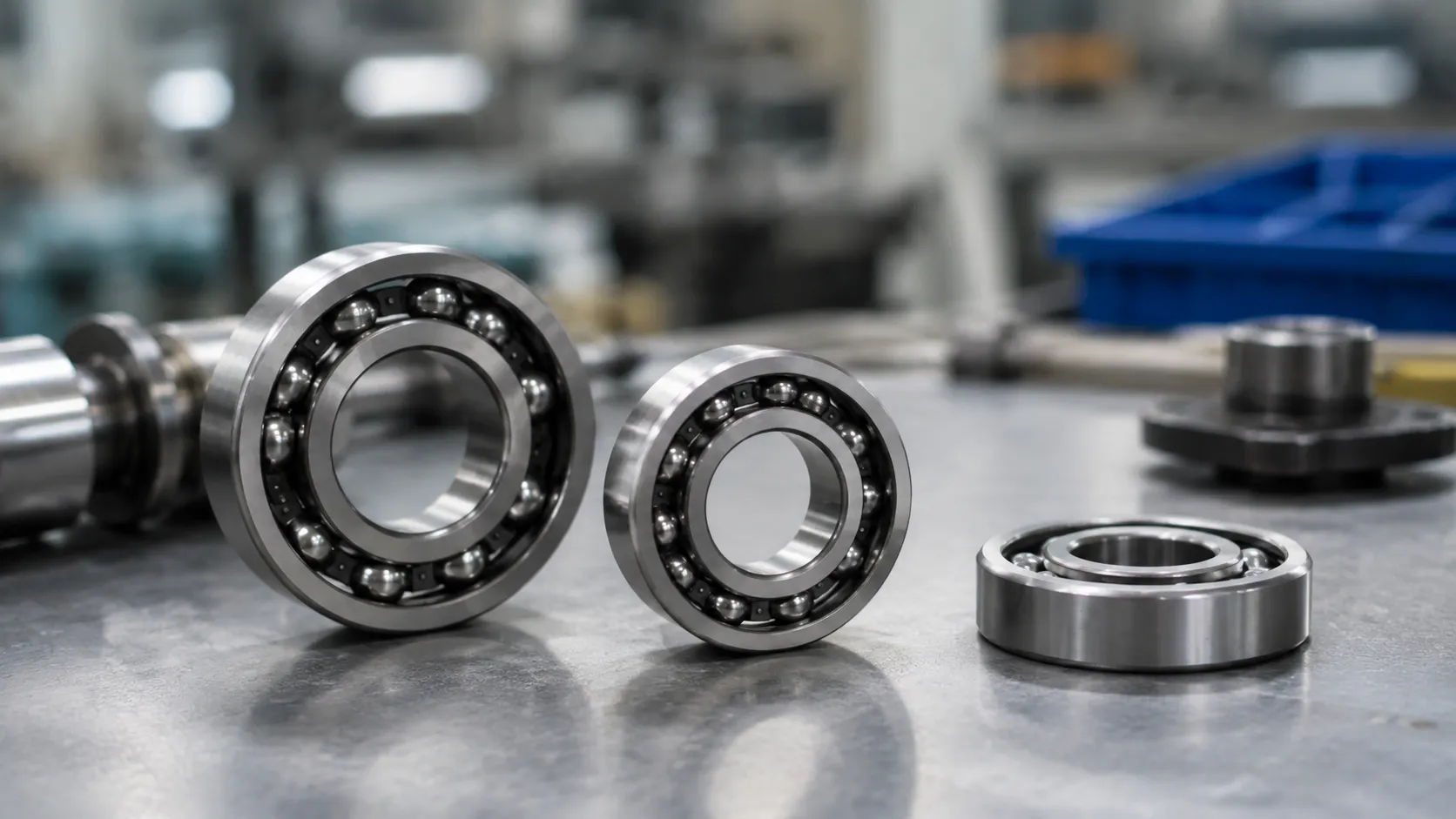
Standard DGBBs use four core parts: outer ring, inner ring, rolling balls, and cage. The cage spaces balls evenly so they do not collide at speed.
- Outer ring: Mounts in the housing bore.
- Inner ring: Fits the rotating shaft.
- Rolling elements: Balls carry combined loads through the grooves.
- Cage: Guides balls and retains grease distribution.
Managing Radial and Axial Loads
Primary duty is radial load perpendicular to the shaft. Deep grooves also support light-to-moderate axial load capacities in both directions — a key reason deep groove ball bearings most common listings appear in pumps, fans, and gearbox shafts where thrust varies. For rated static and dynamic limits by series, see deep groove ball bearings load types.
The Role of the Deep Raceway Grooves
| Feature | Industrial Benefit |
|---|---|
| Deep raceway trenches | High-conformity ball seating limits skidding. |
| Increased contact area | Spreads stress under combined loads. |
| Friction and heat reduction | Cooler running at high speed capabilities. |
Key Types of Deep Groove Ball Bearings
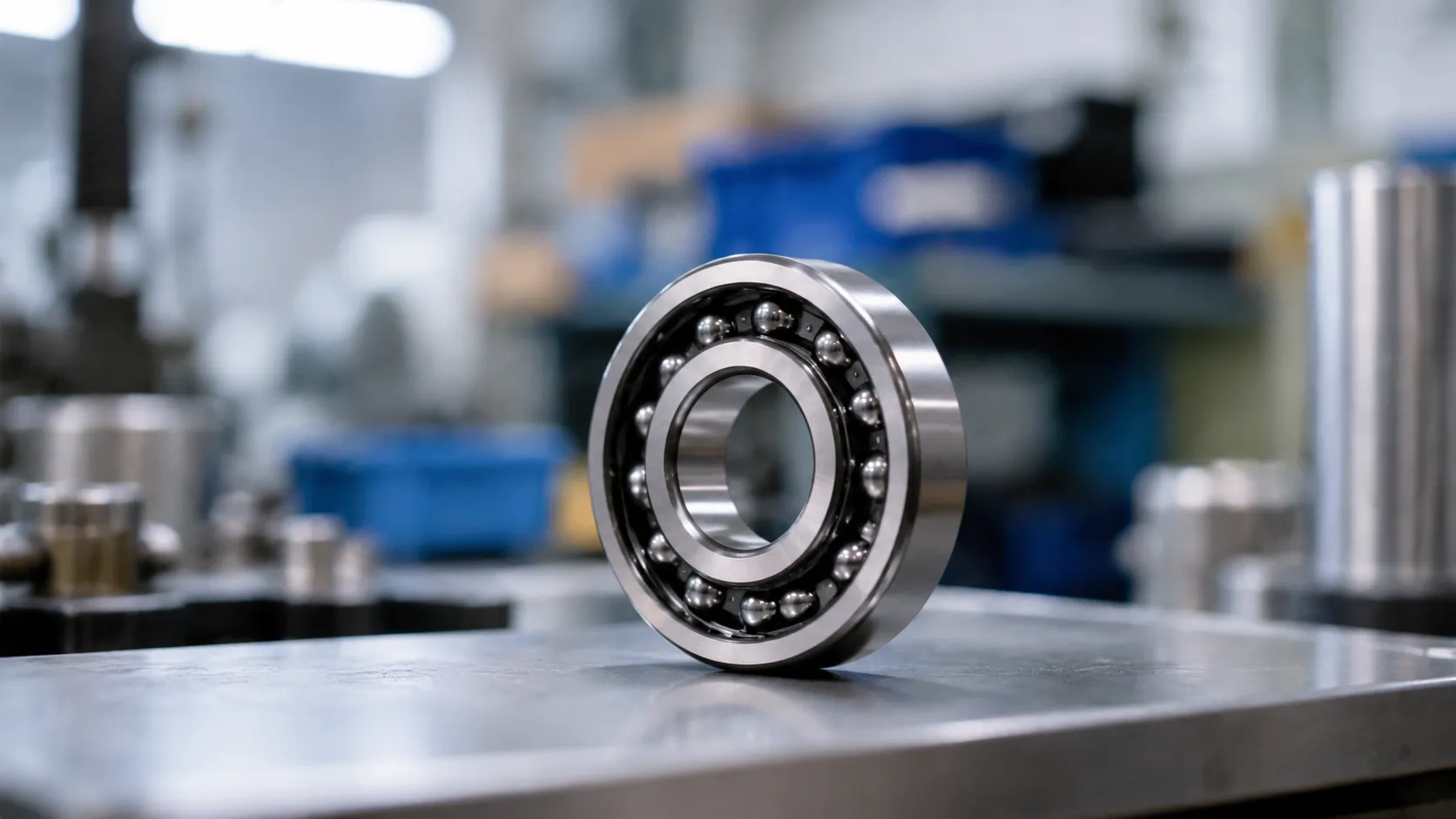
The single row deep groove ball bearing is the most common type stocked in popular sizes (6000, 6200, 6300 series). Specialized builds add rows, seals, or materials when duty cycles demand more.
Single-Row vs. Double-Row Designs
- Single row: Default for high speed capabilities, low friction, and standard radial load duty.
- Double row: Higher radial capacity in limited axial space — specify double row deep groove ball bearings when load tables exceed single-row ratings.
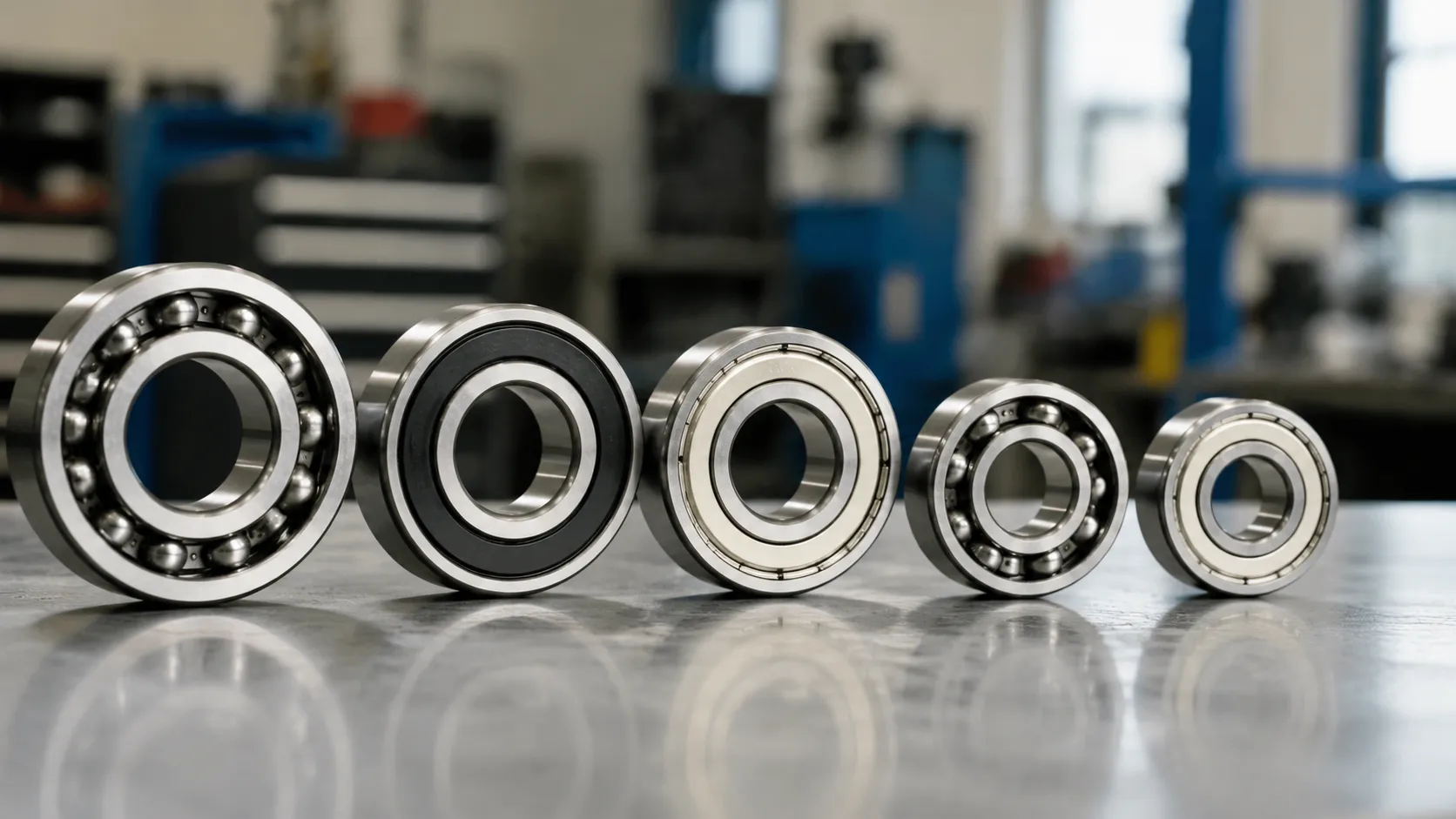
Shielded vs. Sealed Bearings (ZZ vs. 2RS)
| Type | Code | Mechanism | Best For |
|---|---|---|---|
| Shielded | ZZ | Non-contact metal shields | Clean rooms, maximum RPM |
| Sealed | 2RS | Contact rubber seals | Dust, moisture, grease retention — browse sealed deep groove ball bearings for 2RS part numbers |
Material Options for Extreme Conditions
- Chrome steel (52100): Baseline for most rolling bearings in factory automation.
- Stainless steel: Food, marine, and washdown zones.
- Ceramic hybrid: Electrical insulation and extreme RPM — pair with hybrid deep groove ball bearings when arcing or heat limits steel balls.
Deep Groove Ball Bearings Most Common Applications
Deep groove ball bearings—the most common rolling stock on OEM BOMs — appear anywhere a shaft must spin quietly under mixed loads.
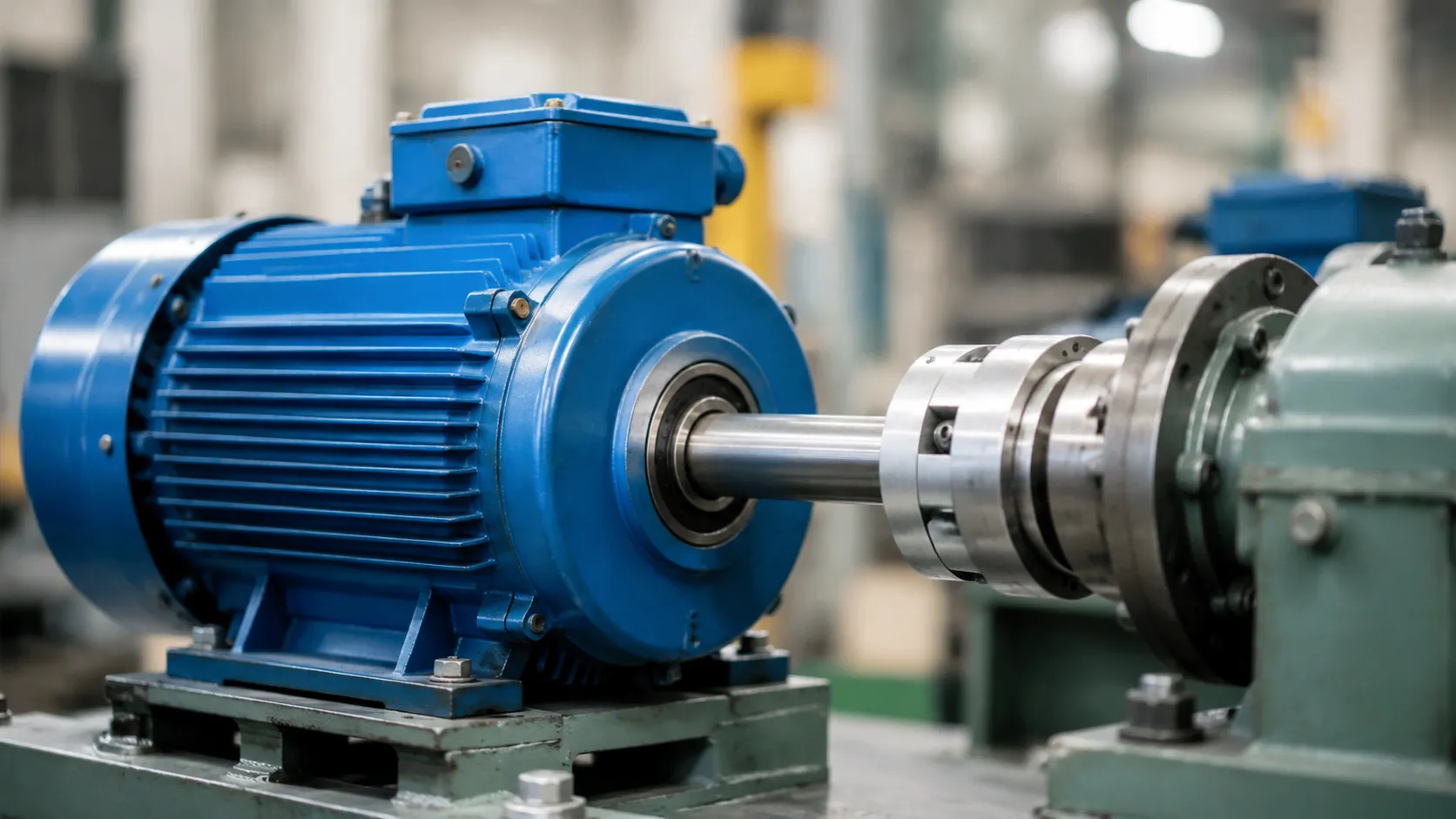
Electric Motors and Home Appliances
Largest volume use: electric motor bearings in washers, fans, and compressors where low noise and low friction matter.
Automotive Components
DGBBs support alternators, water pumps, A/C compressors, and wheel hubs — each needs reliable radial load support with moderate thrust.
Industrial Machinery and Automation Gear
| Application | Primary Requirement | Why DGBBs Are Used |
|---|---|---|
| Conveyor Systems | Continuous runtime | Low maintenance & high reliability |
| Robotic Arms | Precision movement | Smooth rotation with minimal play |
| Power Tools | High RPMs | High speed capabilities in compact bores |
Office Equipment and Power Tools
Printers, copiers, and handheld tools use small-bore radial balls with shielded ball bearings (ZZ) to block debris while preserving RPM headroom — a segment merged from high-volume consumer SKUs often omitted in heavy-industry catalogs alone.
Pros and Cons of Deep Groove Ball Bearings
Market share follows a clear trade-off matrix. Deep groove ball bearings are the most common where moderate loads and high RPM beat peak thrust capacity.
Why They Dominate the Market
- Low maintenance: Shielded or sealed-for-life options reduce relubrication schedules.
- Highly cost-effective: Mass production across popular sizes keeps unit cost low.
- Extreme durability: Premium bearing steel survives continuous duty when aligned.
- Low friction & high speed: Geometry minimizes heat at rated RPM.
The Limitations to Keep in Mind
- Axial load limits: Not a substitute for dedicated thrust bearings under heavy unidirectional thrust.
- Misalignment sensitivity: Shaft deflection accelerates wear and raises noise.
How to Choose the Right Deep Groove Ball Bearing
Specifying the deep groove ball bearings most common part number still requires matching clearance, lube, and load ratings to the duty cycle [3].
Internal Clearance and Tolerance Ratings
| Clearance/Tolerance | Best Used For | Key Benefit |
|---|---|---|
| Standard clearance | General machinery, low heat | Reliable everyday performance |
| C3 clearance | Electric motors, high-speed rotation | Room for heat expansion |
| P6 tolerance | Precision automation | Reduced vibration and low noise |
Selecting the Right Bearing Lubrication
- Grease: Default for sealed or shielded units — minimal maintenance.
- Oil: High-speed spindles where grease churn losses dominate.
Sizing and Load Capacity Considerations
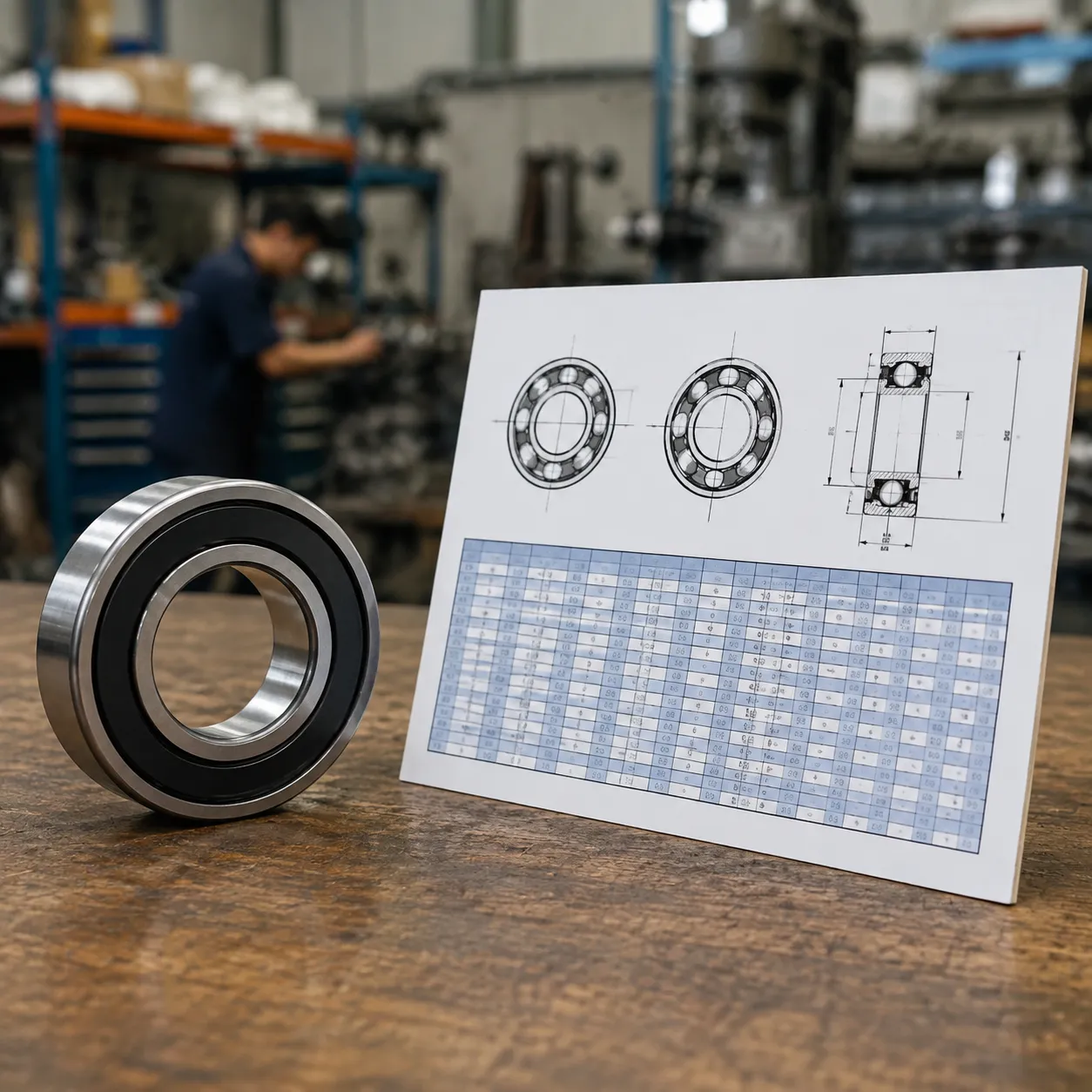
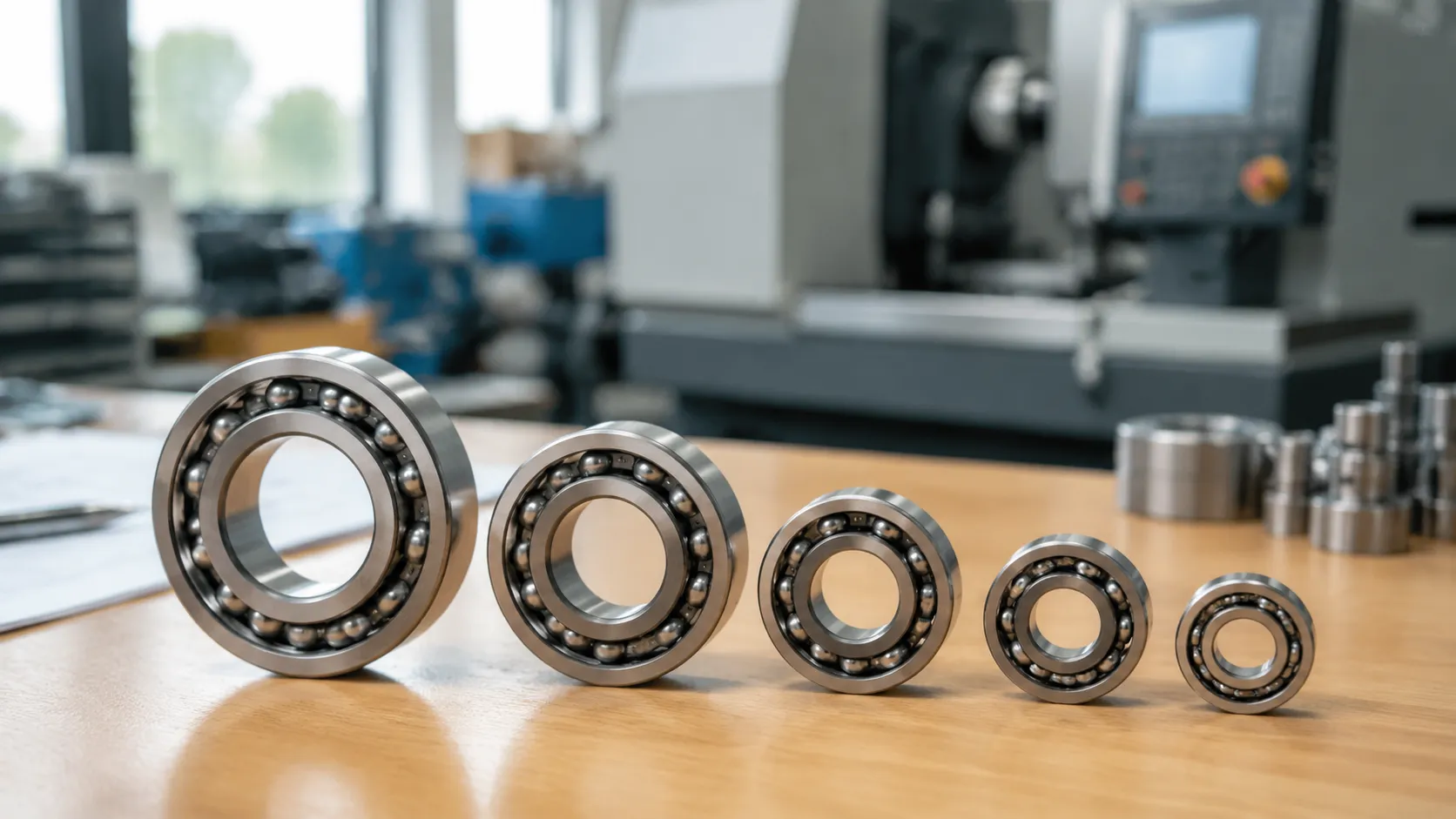
Match bore, OD, and width to ISO dimension tables, then verify dynamic and static ratings against combined radial load and axial load capacities. When applications need maximum configuration flexibility rather than lowest catalog ubiquity, compare deep groove ball bearings most versatile build options (material, seal, hybrid balls) against this most common type baseline.
FAQs About Deep Groove Ball Bearings
Why are they called deep groove ball bearings?
Deep, uninterrupted raceway grooves let balls run in a closely fitted channel — the geometry behind low friction and why deep groove ball bearings most common listings lead bearing distributor stock.
Why are deep groove ball bearings cheaper than other types?
Global demand drives high-volume production of single row sizes. Simpler machining versus tapered or spherical roller bearings keeps low investment programs on DGBBs for general-duty shafts.
Can deep groove ball bearings handle axial loads?
Yes — moderate axial load capacities in both directions alongside primary radial load. Heavy pure thrust still belongs on angular-contact or thrust bearings.
How long do deep groove ball bearings usually last?
With correct grease, alignment, and loads within catalog ratings, service life often reaches 5–10+ years in industrial motors and conveyors.
What is the difference between a sealed and shielded bearing?
| Feature | Shielded Bearings (ZZ) | Sealed Bearings (2RS) |
|---|---|---|
| Material | Non-contact metal shields | Contact rubber seals |
| Protection | Coarse dust exclusion | Fine dust and moisture block |
| High speed rotation | Highest RPM headroom | Slightly lower limit from seal drag |
| Grease retention | Good | Best |