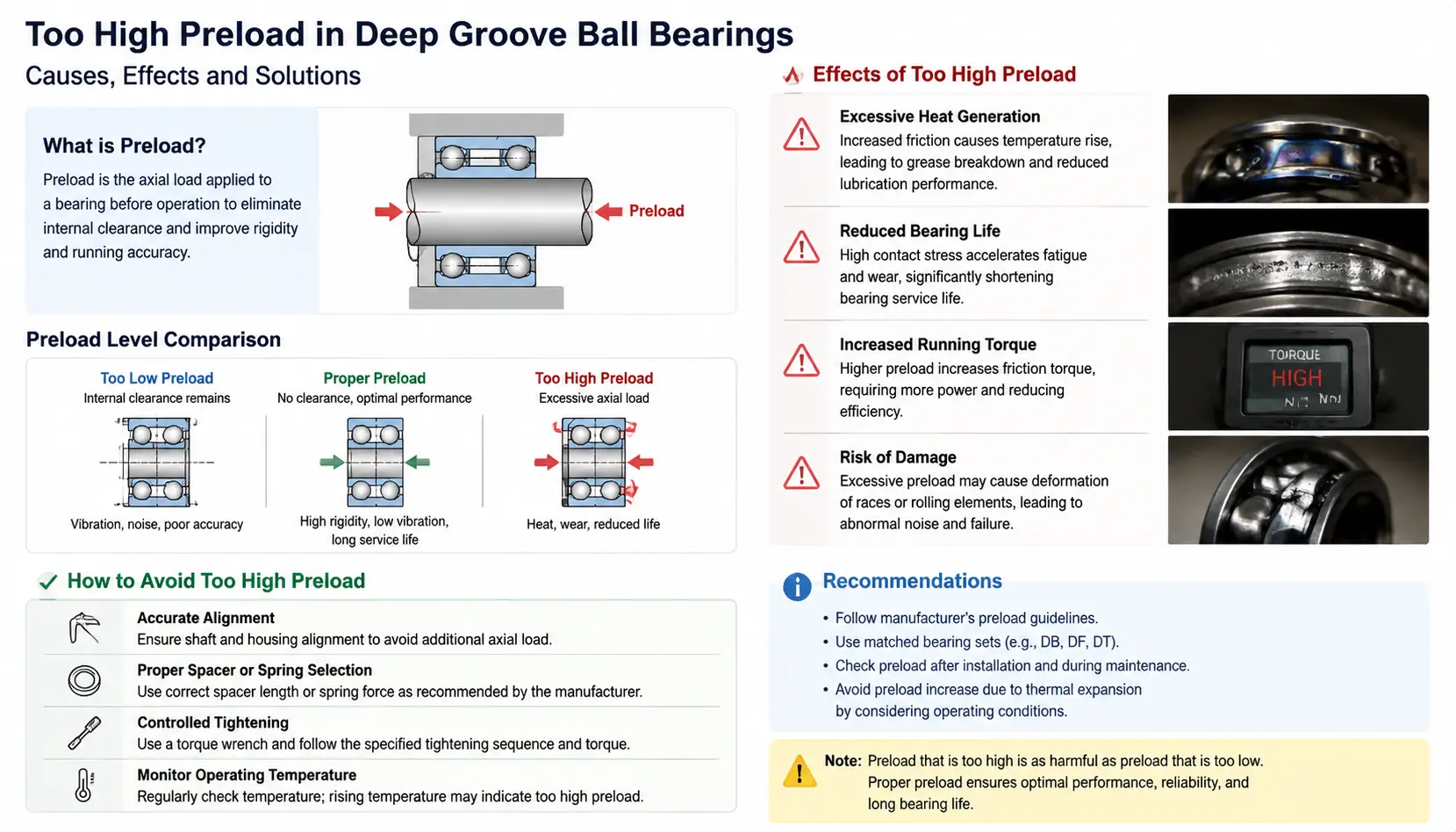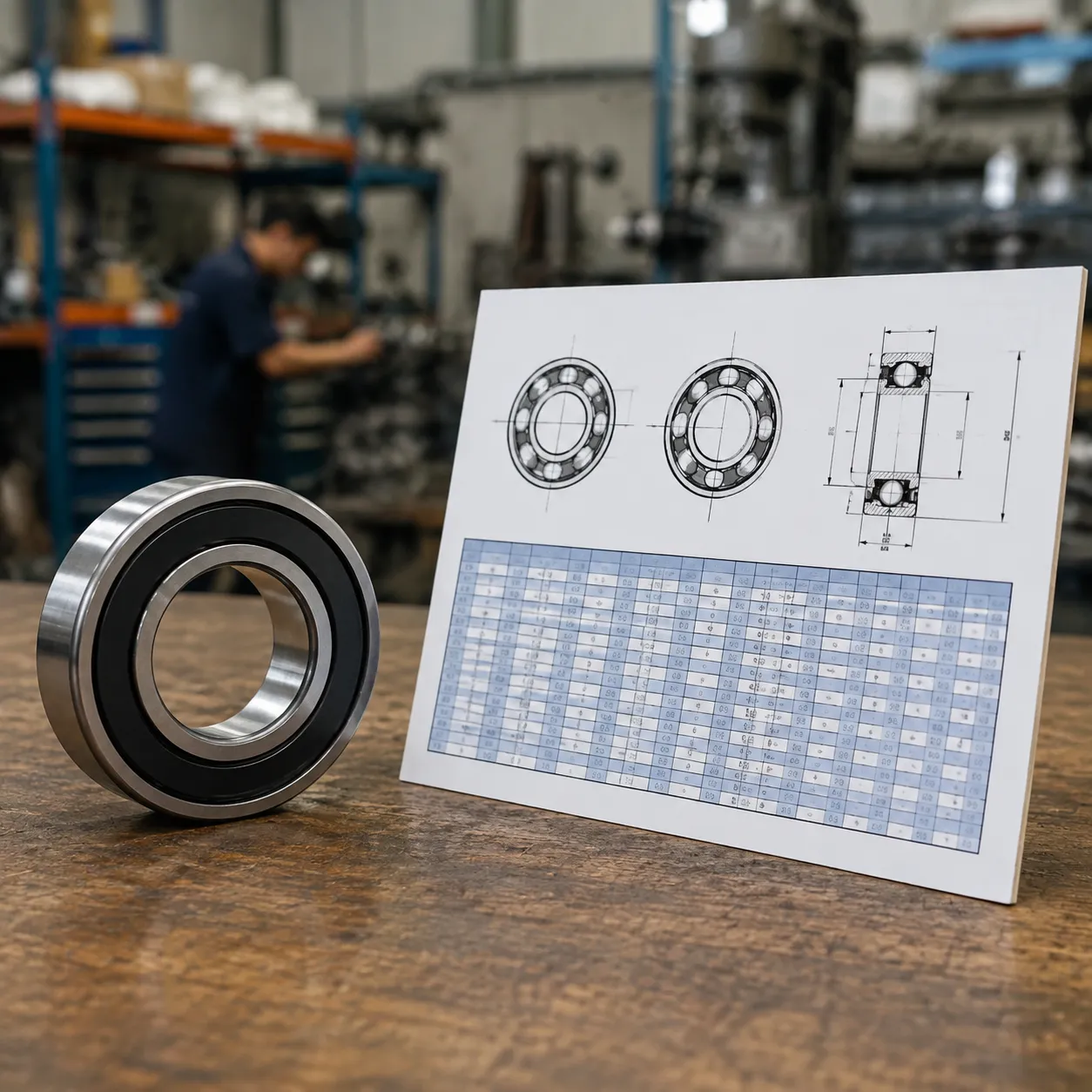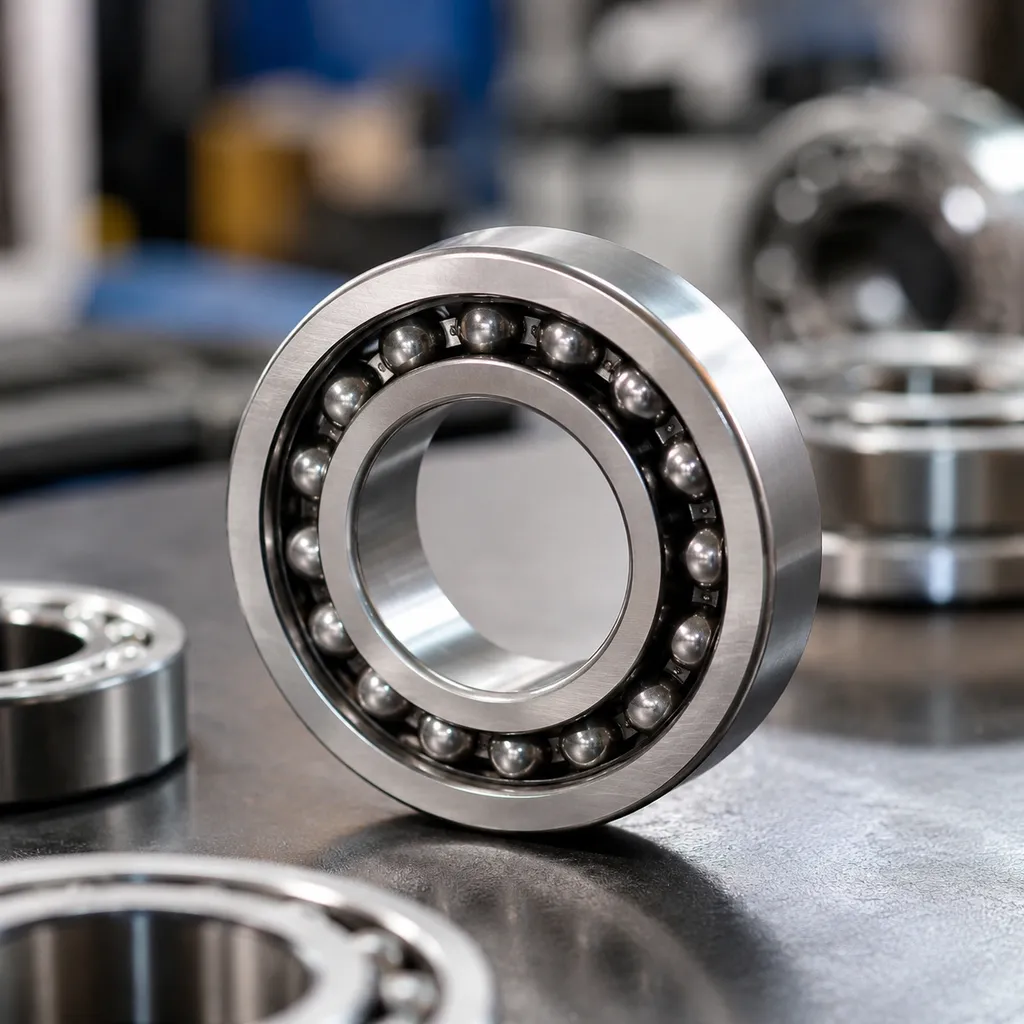
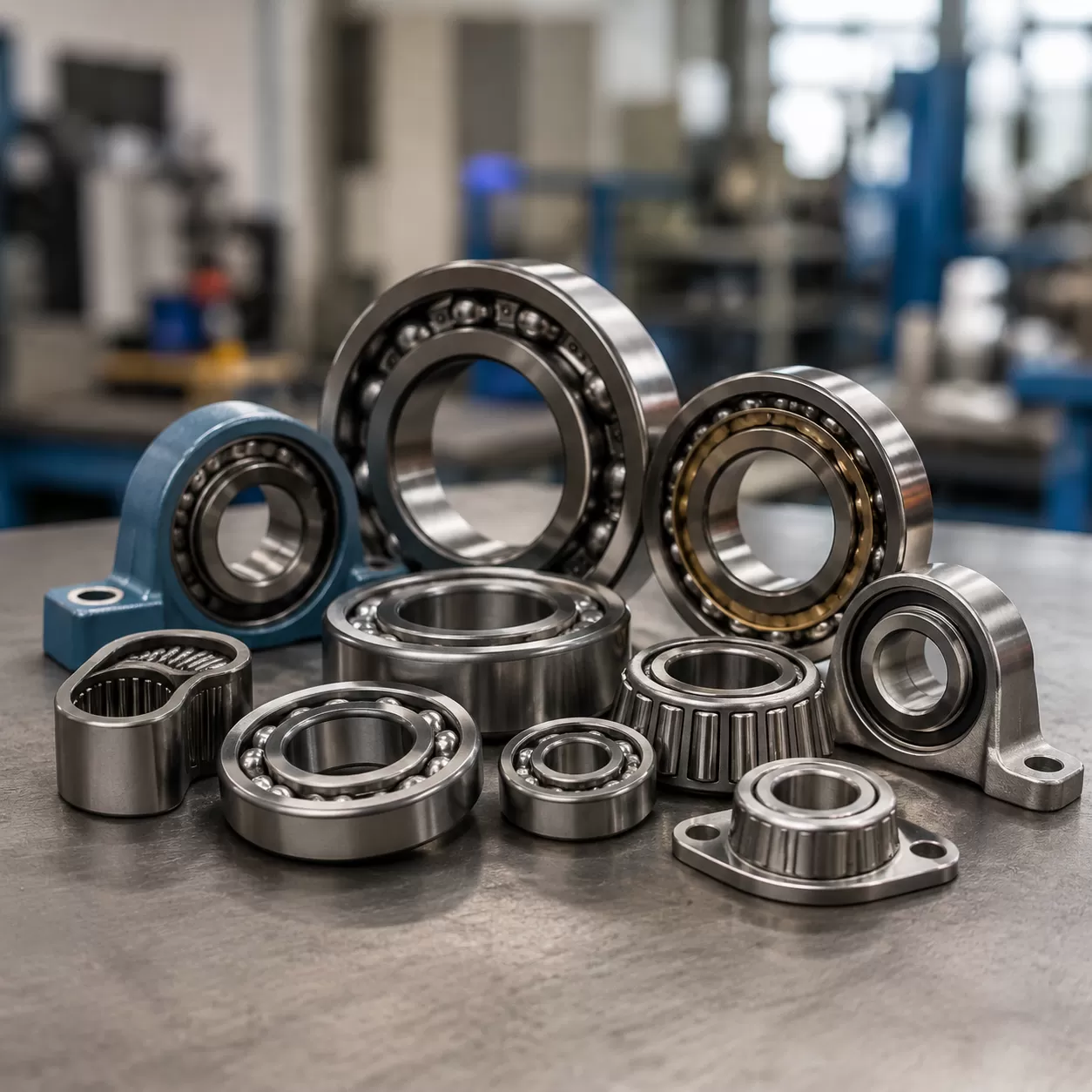
Whether you are navigating high-speed rotations or massive structural loads, understanding the six common types of bearings is the difference between seamless operation and costly emergency maintenance. This technical guide breaks down the essential performance metrics you need to optimize your power transmission systems.
What You Will Learn in This Guide:
Load Dynamics: Which bearings dominate in Radial vs. Axial (Thrust) environments.
Speed Optimization: Identifying the RPM limits of ball vs. roller designs.
Misalignment Solutions: How to neutralize shaft deflection with Self-Aligning technology.
Application Precision: Selecting the right geometry for Automotive, Mining, and Precision Tooling.
Longevity Strategy: Pro-tips on lubrication regimes and extending L10 service life.
Technical Comparison of the Six Common Types of Bearings in Industry
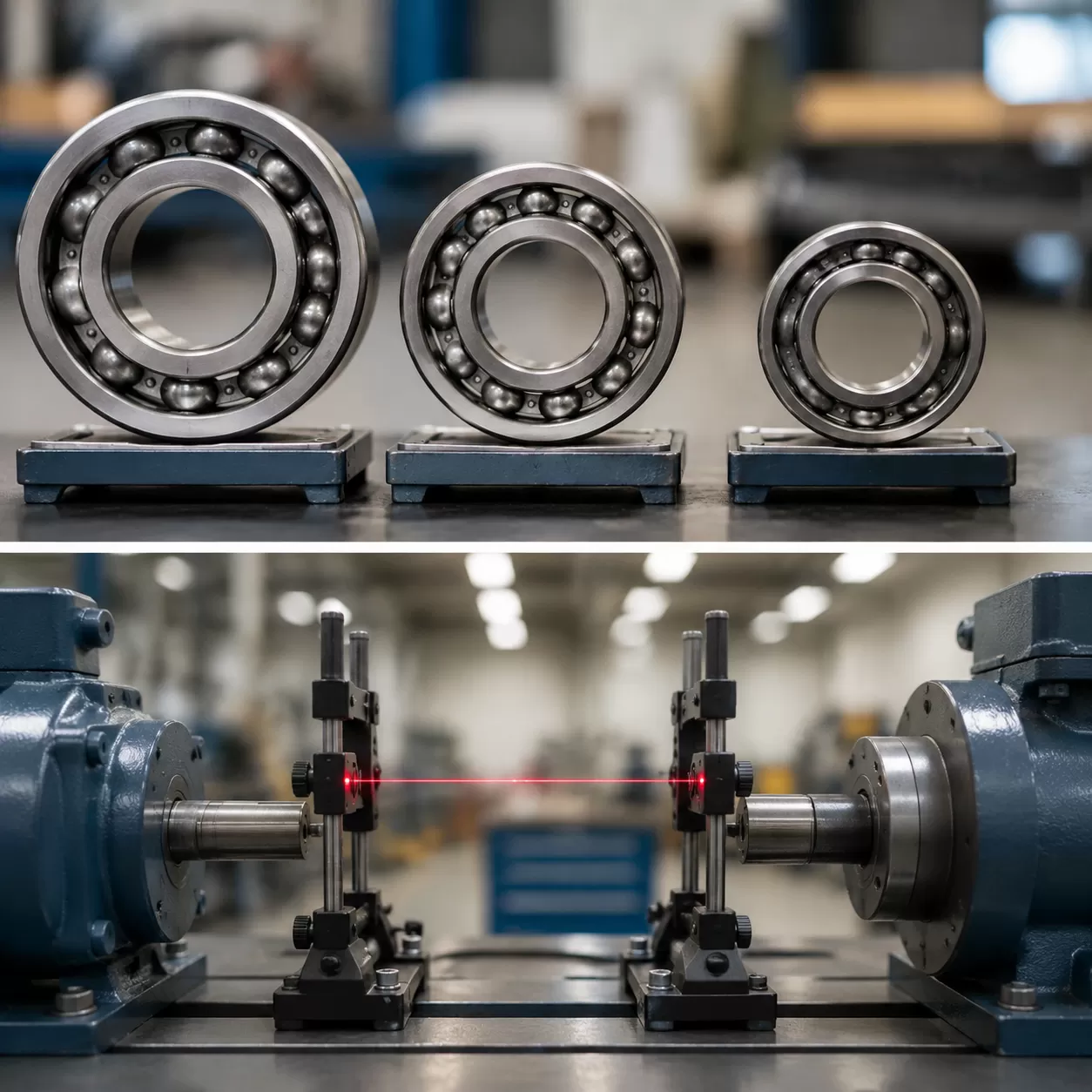
Choosing the right component requires a clear understanding of how different industry bearing types handle mechanical stress. We focus on four critical performance metrics: Radial Load, Axial (Thrust) Load, Rotational Speed (RPM), and Shaft Misalignment tolerance.
Load and Speed Performance Reference Table
| Bearing Type | Radial Load Capacity | Axial Load Capacity | Speed Limit (RPM) | Misalignment Tolerance |
|---|---|---|---|---|
| Deep Groove Ball | Moderate | Moderate | Highest | Low |
| Tapered Roller | High | High | Moderate | Low |
| Spherical Roller | Very High | Moderate/High | Moderate | Highest |
| Cylindrical Roller | Very High | Low/None | High | Low |
| Needle Roller | High | Low/None | Moderate | Low |
| Thrust (Ball/Roller) | None/Low | Very High | Low | Low |
Radial vs. Axial Load Capacity
The direction of force determines the internal geometry needed for your application.
- Radial Load Dominant: If your application involves heavy weight pressing perpendicular to the shaft, we recommend Cylindrical or Needle Roller bearings for their superior line contact.
- Axial Load Dominant: For forces acting parallel to the shaft, Thrust bearings are the specialist choice.
- Combined Loads: When you face both forces simultaneously, our high-performance bearing products like Tapered Roller or Deep Groove Ball bearings provide the necessary versatile support.
Speed Limit and RPM Metrics
Speed capability is largely dictated by friction and heat generation.
- Ball Bearings: Feature point contact, which minimizes friction and allows for the highest Rotational Speed (RPM).
- Roller Bearings: Feature line contact; while they support more weight, the increased surface area generates more heat, generally capping their top speeds lower than ball versions.
Misalignment Tolerance Assessment
Shaft Misalignment is a leading cause of premature failure in heavy machinery.
- Rigid Designs: Cylindrical and Tapered rollers require near-perfect alignment to prevent edge loading.
- Self-Aligning Designs: Spherical Roller bearings are the industry standard for applications where the shaft might flex or the housing is difficult to align perfectly.
By matching these technical specs to your operational needs, we help you implement tailored industrial solutions that maximize machine uptime and reduce maintenance costs.
1. Deep Groove Ball Bearings: The Versatile Workhorse
As a premier global ball bearing manufacturer, we recognize the deep groove ball bearing as the industry's most indispensable component. Its popularity stems from a design that balances technical simplicity with extreme durability across various lubrication regimes.
Engineering and Design Overview
Our deep groove bearings feature a straightforward, non-separable design with deep, uninterrupted raceway grooves. This geometry ensures low friction and high-speed capability, making them the premier industry bearing choice for global operations.
- Simple Construction: Requires minimal maintenance while offering an extended service life.
- Low Friction: Optimized for high rotational speed (RPM) and maximum energy efficiency.
- Precision Components: Manufactured with high-grade inner and outer rings to ensure stability.
- Rolling Elements: High-precision balls that minimize friction reduction losses.
Load Capabilities and Performance
These types of ball bearing are engineered for high performance under heavy radial load. Because of the depth of the raceways, they also support moderate axial (thrust) load in both directions simultaneously. This dual-load capacity makes them the most adaptable anti-friction bearings in our catalog.
| Feature | Performance Metric |
|---|---|
| Radial Load Capacity | High |
| Axial Load Capacity | Moderate (Both Directions) |
| Speed Limit | Very High |
| Maintenance | Low |
Strategic Industrial Applications
We supply these versatile units for a wide range of critical high-speed applications where mechanical power transmission must remain consistent:
- Electric Motors: Reducing noise and vibration while maintaining high-speed efficiency.
- Household Appliances: Providing long-term reliability in washing machines and HVAC units.
- High-Speed Office Equipment: Essential for the precision required in modern imaging and data drives.
- Automotive Alternators: Managing varying speeds and thermal expansion with ease.
2. Tapered Roller Bearings: Mastering Combined Loads
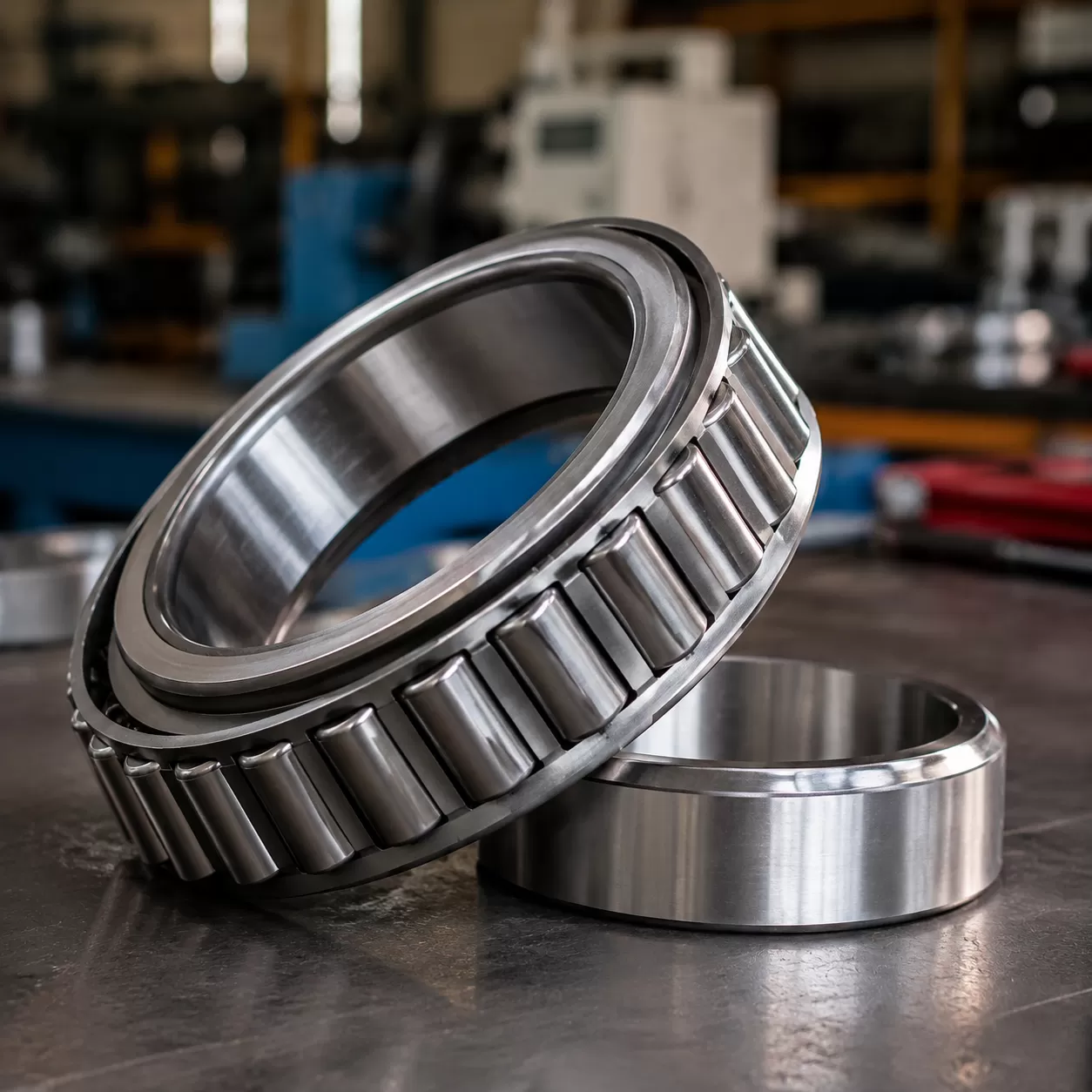
When looking at the six common types of bearings in industry, tapered roller bearings are the go-to for heavy-duty applications. We design these with conical rollers and raceways arranged to meet at a common apex point on the bearing axis. This unique geometry ensures a true rolling motion, significantly reducing heat and friction during high-speed operations.
High Performance Under Combined Stress
The primary strength of this design is its ability to handle massive simultaneous radial and axial (thrust) loads. While some components struggle when force comes from multiple directions, our tapered rollers thrive. They provide the rigid support needed for precision equipment, much like how high-performance angular contact ball bearings manage complex load paths in lighter applications.
Key Industrial Applications
We see these bearings as the backbone of several critical sectors due to their durability and high dynamic load rating:
- Automotive Industry: Essential for wheel hubs, differentials, and transmissions.
- Heavy Machinery: Widely used in agricultural machinery and construction equipment.
- Gearboxes: Perfect for maintaining alignment between the inner and outer rings under high torque.
Technical Advantages at a Glance
| Feature | Industrial Benefit |
|---|---|
| Conical Geometry | Optimizes contact area for better load distribution. |
| High Load Capacity | Supports both radial load and axial (thrust) load. |
| Adjustability | Allows for precise setting of bearing clearance during installation. |
By focusing on high-grade chrome steel (SAE 52100) and robust bearing cages, we ensure these rollers provide long-term reliability in your mechanical power transmission systems, even in the harshest environments.
3. Spherical Roller Bearings: Solving Shaft Misalignment
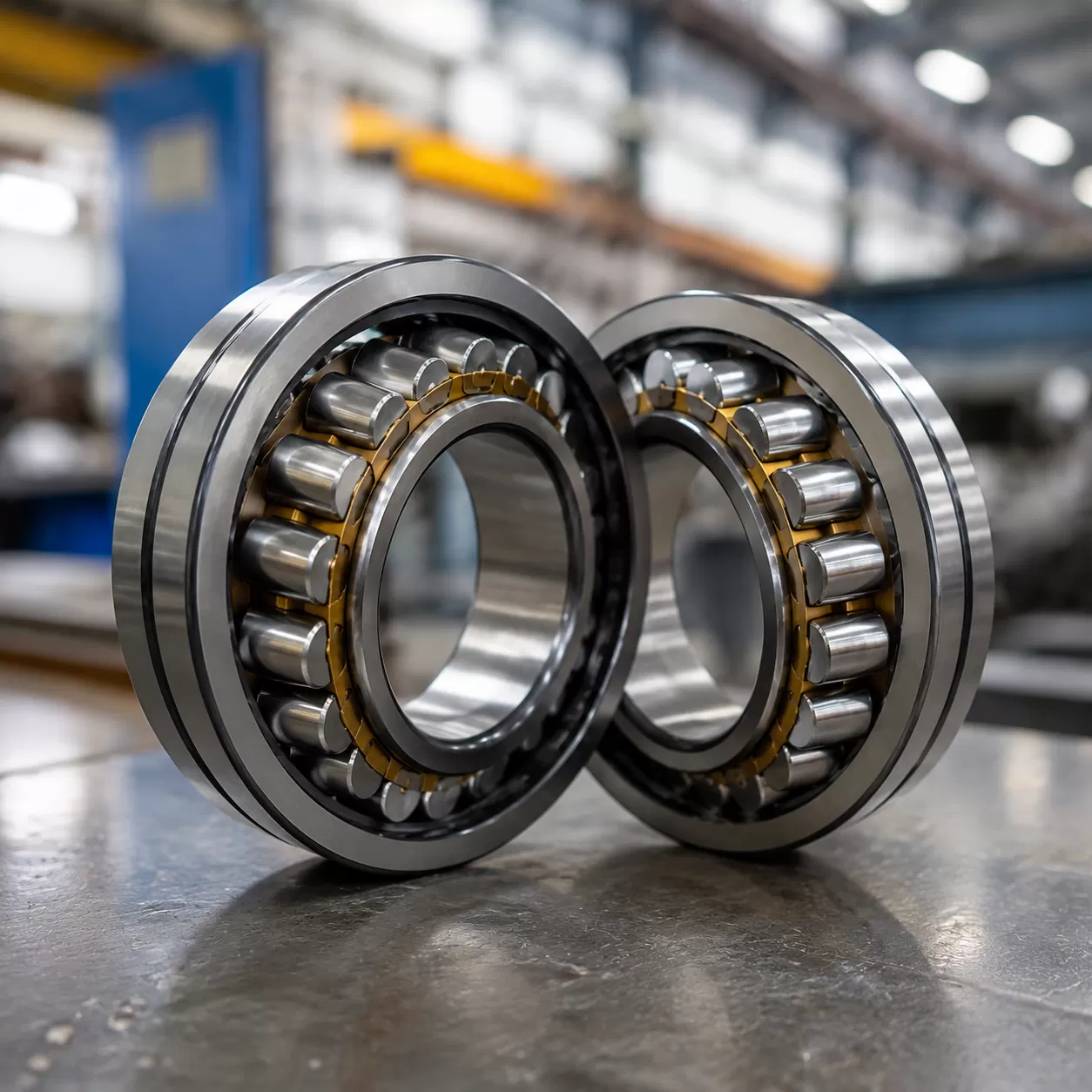
When your equipment operates under heavy stress, Spherical Roller Bearings are the ultimate problem-solvers. We provide these to clients who need a bearing that doesn't quit when things get out of line. Among the six common types of bearings in industry, these are the champions of durability in harsh environments.
Design and Self-Alignment
These bearings feature two rows of barrel-shaped rollers sitting in a spherical outer ring. This unique geometry allows the inner ring and rollers to tilt, making them self-aligning. They easily compensate for shaft deflection or assembly errors that would destroy standard bearings.
- High Load Capacity: Designed to carry heavy radial loads and moderate axial loads.
- Reduced Friction: Even when misaligned, they maintain smooth mechanical power transmission.
- Robust Build: Typically manufactured from high-grade Chrome Steel for maximum service life.
Heavy Industry Performance
We supply these specifically for environments where precision meets brute force. They are the backbone of industrial machinery maintenance in sectors where downtime is not an option:
- Mining & Construction: Essential for crushing and screening equipment.
- Paper & Pulp: Supporting long, heavy rollers that naturally flex during operation.
- Vibratory Machinery: Engineered to handle the extreme forces and shocks in industrial shakers.
4. Cylindrical Roller Bearings: Maximum Radial Capacity
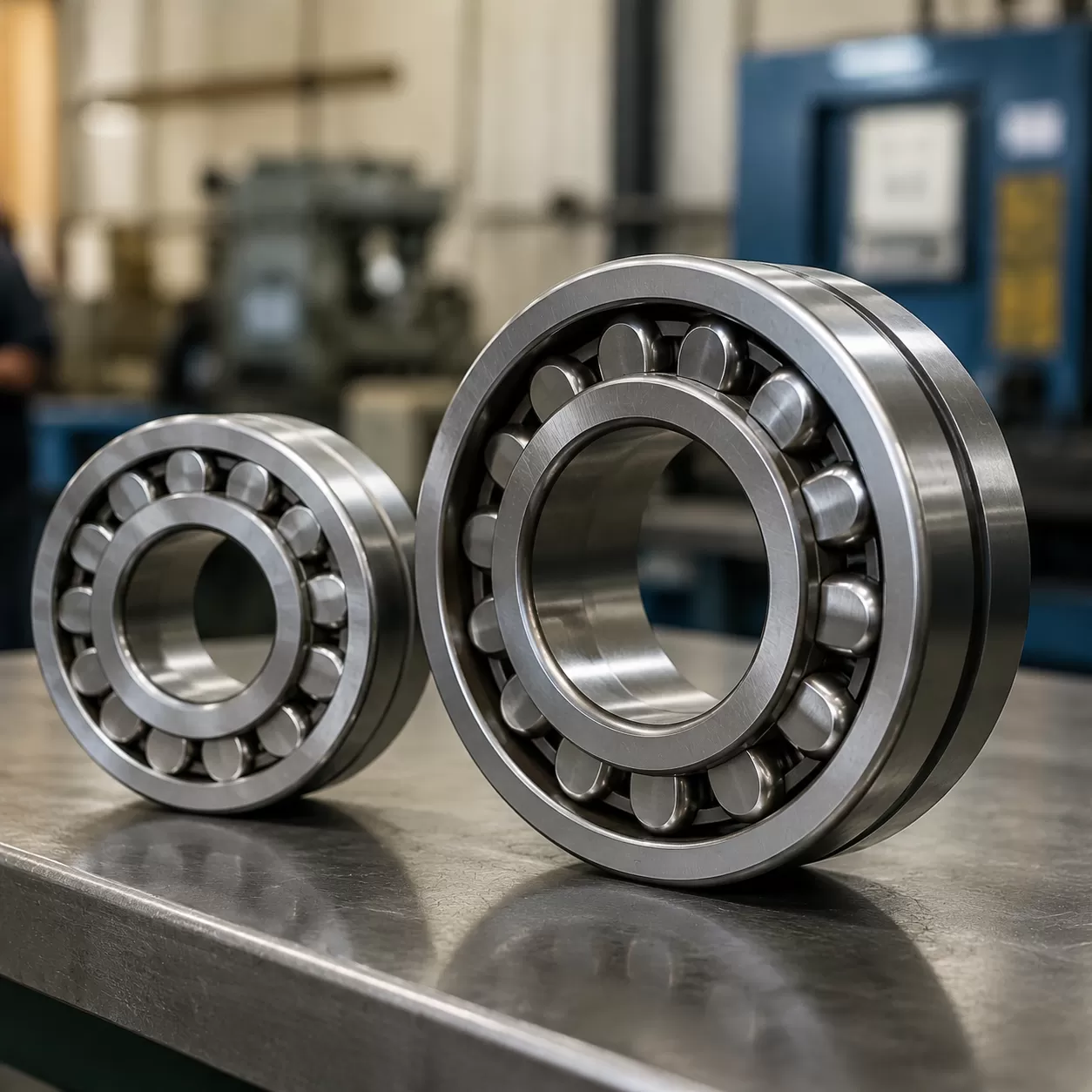
In the lineup of the six common types of bearings in industry, cylindrical roller bearings are the go-to for heavy-duty radial loads. We design these with line contact between the rollers and the raceways. Unlike the point contact found in ball bearings, this line contact allows the bearing to distribute weight over a larger surface area, significantly increasing its load-carrying capacity.
High-Speed Performance
These are engineered for high-speed applications where a heavy radial load is the primary concern. They offer:
- Low Friction: Optimized for high rotational speed (RPM) without excessive heat.
- Rigidity: Provides exceptional shaft support and stability.
- Precision: Common in mechanical power transmission where accuracy is non-negotiable.
Application Spotlight
We supply these for environments that demand both strength and speed. You will find them in:
- Machine tool spindles that require high precision.
- Heavy-duty transmissions and industrial gearboxes.
- Large industrial pumps and pumps and compressors where radial stability is critical for long-term operation.
| Feature | Performance Level |
|---|---|
| Radial Load Capacity | Maximum |
| Axial Load Capacity | Very Low |
| Speed Rating | High |
| Durability | Heavy-Duty |
5. Needle Roller Bearings: High Load in Compact Spaces
When we talk about the six common types of bearings in industry, the needle roller bearing stands out for its incredible spatial efficiency. These bearings utilize long, thin rolling elements with a diameter that is very small relative to their length. This unique design allows us to achieve a high radial load capacity while maintaining a very low sectional height, making them the go-to choice for tight engineering envelopes.
Performance at a Glance
| Feature | Technical Advantage |
|---|---|
| Sectional Height | Extremely low; saves significant radial space |
| Load Capacity | High radial support relative to size |
| Rolling Elements | Thin, needle-like rollers for maximum contact |
| Rigidity | High stiffness despite the compact footprint |
Why We Use Needle Bearings
We prioritize needle rollers in applications where a standard ball or roller bearing simply won't fit. By reducing the overall size of the housing, we can build lighter, more efficient machinery without sacrificing the dynamic load rating.
- Automotive Transmissions: Critical for gear shafts where space is restricted.
- Rocker Arm Pivots: Handles oscillating loads in high-performance engines.
- Compressors: Manages high-pressure loads in compact pump designs.
- Power Tools: Provides durability in handheld, small-form-factor devices.
Our specialized automotive systems solutions often rely on these bearings to ensure smooth power transmission in cramped environments. Whether you are dealing with planetary gears or specialized pump shafts, needle rollers provide the "heavy lift" in the smallest possible package.
6. Thrust Bearings: One of the Six Common Types of Bearings in Industry
When your equipment generates force parallel to the shaft, thrust bearings provide the necessary specialized support. As a leading manufacturer, we categorize these among the most essential industry bearing solutions for managing axial (thrust) load without compromising on mechanical power transmission efficiency.
Engineering for Axial Force
These bearings are unique because their rolling elements are arranged to handle pressure pushing along the axis rather than against it.
- Thrust Ball Bearings: Designed for lighter loads and higher speeds.
- Thrust Roller Bearings: Built for heavy-duty applications requiring maximum axial rigidity.
Where They Excel
You will find our thrust bearings integrated into critical systems such as:
- Vertical Shafts: Essential for industrial mixers and large pumps.
- Steering Gear: Providing smooth rotation in automotive assemblies.
- Fluid Control: Managing the high-pressure movement in industrial valves.
To ensure long-term reliability, we maintain strict quality control on all our bearing kinds, from material selection to final precision testing. Check our latest guides for more technical specifications on axial support.
Choosing the Best of the Six Common Types of Bearings in Industry
Picking the right bearing isn't just about matching the size. As a supplier, I’ve seen that the environment and maintenance plan dictate whether a bearing lasts for years or fails in weeks. To get the best performance out of anti-friction bearings, you need to weigh these three critical factors:
Operational Environment and Contamination
The "where" matters as much as the "what." Before installation, we always look at:
- Temperature: Standard Chrome Steel (SAE 52100) works for most, but high-heat zones require specialized heat stabilization or ceramic elements.
- Sealing: If your site is dusty or wet, bearing clearance and high-quality seals are mandatory to prevent grit from destroying the inner and outer rings.
Lubrication Regimes: Grease vs. Oil
Your rotational speed (RPM) usually decides your lubrication strategy:
- Grease: The standard for most mechanical power transmission. It stays in place and simplifies maintenance.
- Oil: Necessary for high-speed applications or extreme heat where the oil acts as a coolant to ensure friction reduction.
Maintenance and L10 Service Life
We use the dynamic load rating to calculate the L10 service life—essentially a statistical estimate of how long a group of identical bearings will last under specific loads.
| Factor | Impact on Selection |
|---|---|
| Load Type | Choosing between radial load or axial (thrust) load capacity. |
| Accessibility | If the bearing is hard to reach, opt for sealed-for-life units. |
| Alignment | Use spherical types if the shaft is prone to shaft misalignment. |
In industrial machinery maintenance, the goal is to minimize downtime. Selecting a bearing with a higher load capacity than strictly necessary often pays for itself by extending the replacement cycle and protecting the bearing cage.
FAQ: Common Industrial Bearing Questions
As a manufacturer, I see the same challenges across different sectors. Understanding the nuances of the six common types of bearings in industry helps you avoid costly downtime and extend equipment life.
How do I choose between ball and roller bearings?
The choice usually comes down to load magnitude and rotational speed (RPM).
- Ball bearings use point contact, which minimizes friction, making them the go-to for high-speed, lighter-load applications.
- Roller bearings utilize line contact, offering significantly higher radial load capacity, which is essential for heavy-duty industrial machinery.
Can one bearing type handle both radial and thrust loads?
Yes. While some bearings are specialized, others are masters of "combined loads." Tapered roller bearings are specifically designed to handle heavy simultaneous radial and axial (thrust) loads. Even standard deep groove ball bearings can manage moderate axial forces in both directions. You can find more specific technical details in our comprehensive industrial bearing FAQ.
What causes premature bearing failure in heavy machinery?
In my experience, most failures are preventable and typically stem from four main issues:
- Inadequate Lubrication: Either using the wrong lubrication regimes or facing lubricant starvation.
- Contamination: Dirt or moisture penetrating the seals and damaging the rolling elements.
- Improper Mounting: Using excessive force during installation, which damages the inner and outer rings.
- Overloading: Exceeding the calculated dynamic load rating for the specific application.
How does shaft misalignment affect bearing longevity?
Shaft misalignment is a silent killer. It forces the bearing to operate at angles it wasn't designed for, leading to uneven stress, increased heat, and rapid wear of the bearing cage. If your application involves unavoidable misalignment or shaft deflection, we always recommend using spherical roller bearings. These are engineered to self-align, ensuring the load remains evenly distributed across the rollers.
As a trusted global bearing manufacturer, I always emphasize that selecting the right bearing based on your specific environment is the most effective way to maximize your ROI.