
Ball Bearing Guides & Technical Resource Hub
Access practical, engineering-focused guides on ball bearing selection, installation, lubrication, and troubleshooting to make faster, more accurate decisions.
Dedicated exclusively to ball bearing expertise. JN Bearings helps procurement and maintenance teams understand application requirements, material differences, and precision standards to reduce downtime and ensure reliability.
Ball Bearing Expertise
Focused and practical insights
Engineering Driven
For accurate bearing selection
Actionable Maintenance
Guidelines to extend bearing life
Why Rely on This Ball Bearing Guide?
JN Bearings transforms decades of ball bearing expertise into actionable insights, helping you minimize trial and error, optimize machine performance, and streamline procurement.
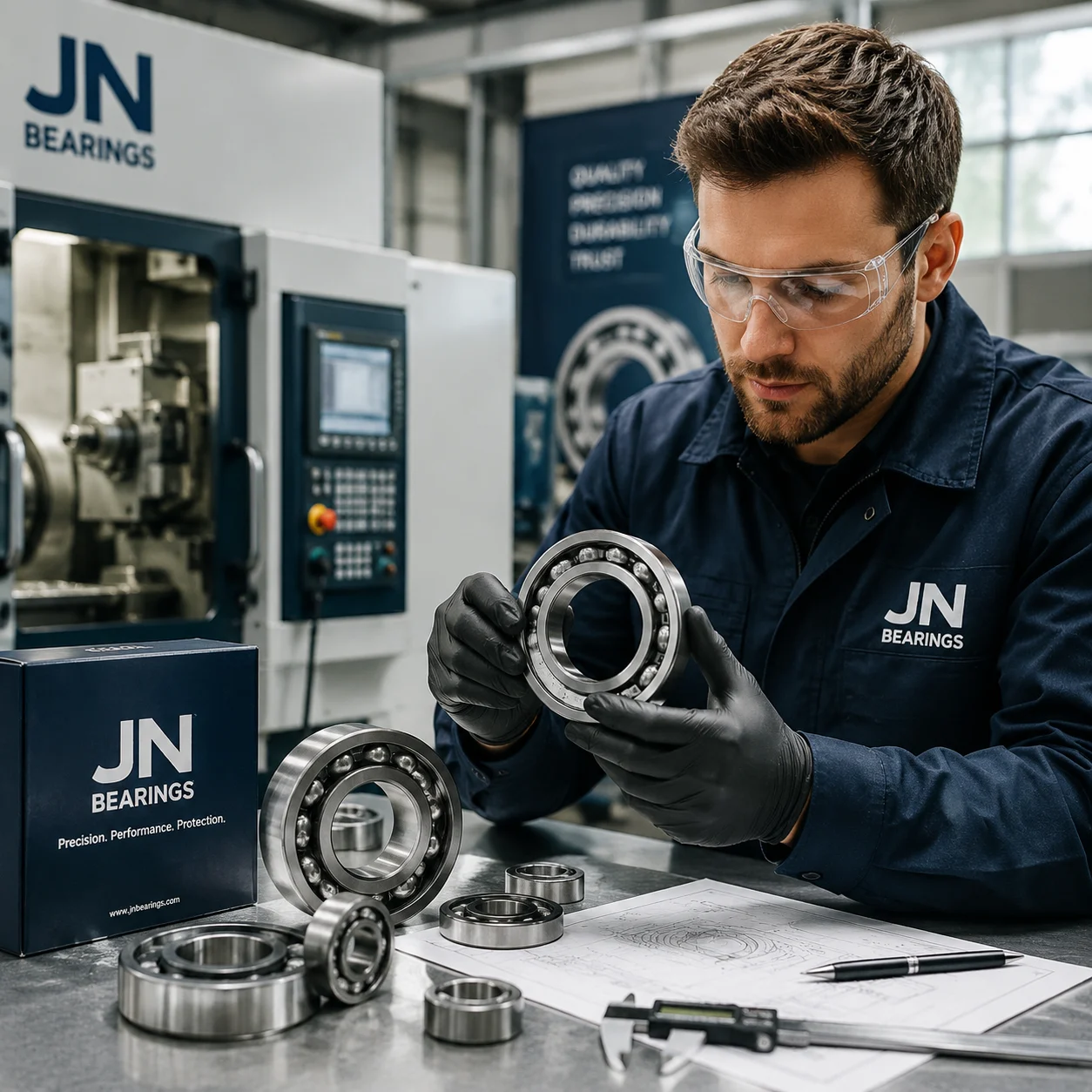
Focused on Real-World Execution
Unlike broad theoretical manuals, our technical knowledge center focuses exclusively on ball bearings and their industrial applications. We provide concrete advice to support your daily operations, and if you'd like to learn more about our about-us story, you can visit our company page.
- 01
Dedicated Ball Bearing Expertise
Highly focused content without distraction, offering deeper insights into ball bearing selection and maintenance.
- 02
Pre-Decision Engineering Support
Identify the right precision classes, materials, and internal clearances before finalizing your purchase.
- 03
Industrial Application Oriented
Advice tailored for realistic working conditions, including high speeds, heavy loads, and harsh environments.
- 04
Actionable Maintenance Practices
Clear instructions on installation, proper lubrication, and diagnosing common bearing failures.
Who Benefits Most from Our Resources?
Design & Engineering Teams
Determine the exact ball bearing structure, load capacity, and precision required to optimize your mechanical designs.
Procurement & Sourcing
Understand material differences, part equivalents, and quality indicators to make smarter, risk-free purchasing decisions.
Maintenance & Facility Managers
Gain quick access to diagnostic charts, relubrication guidelines, and corrective actions to reduce unplanned downtime.
Selection Logic Matrix
Easily map radial and axial loads to the correct ball bearing design.
Diagnostic Checklists
Identify root causes of noise, heat, and vibration for faster repairs.
100%
Ball Bearing Focused
24/7
Accessible Knowledge
0
Cost to Access
1
Direct Support Team
All Blogs
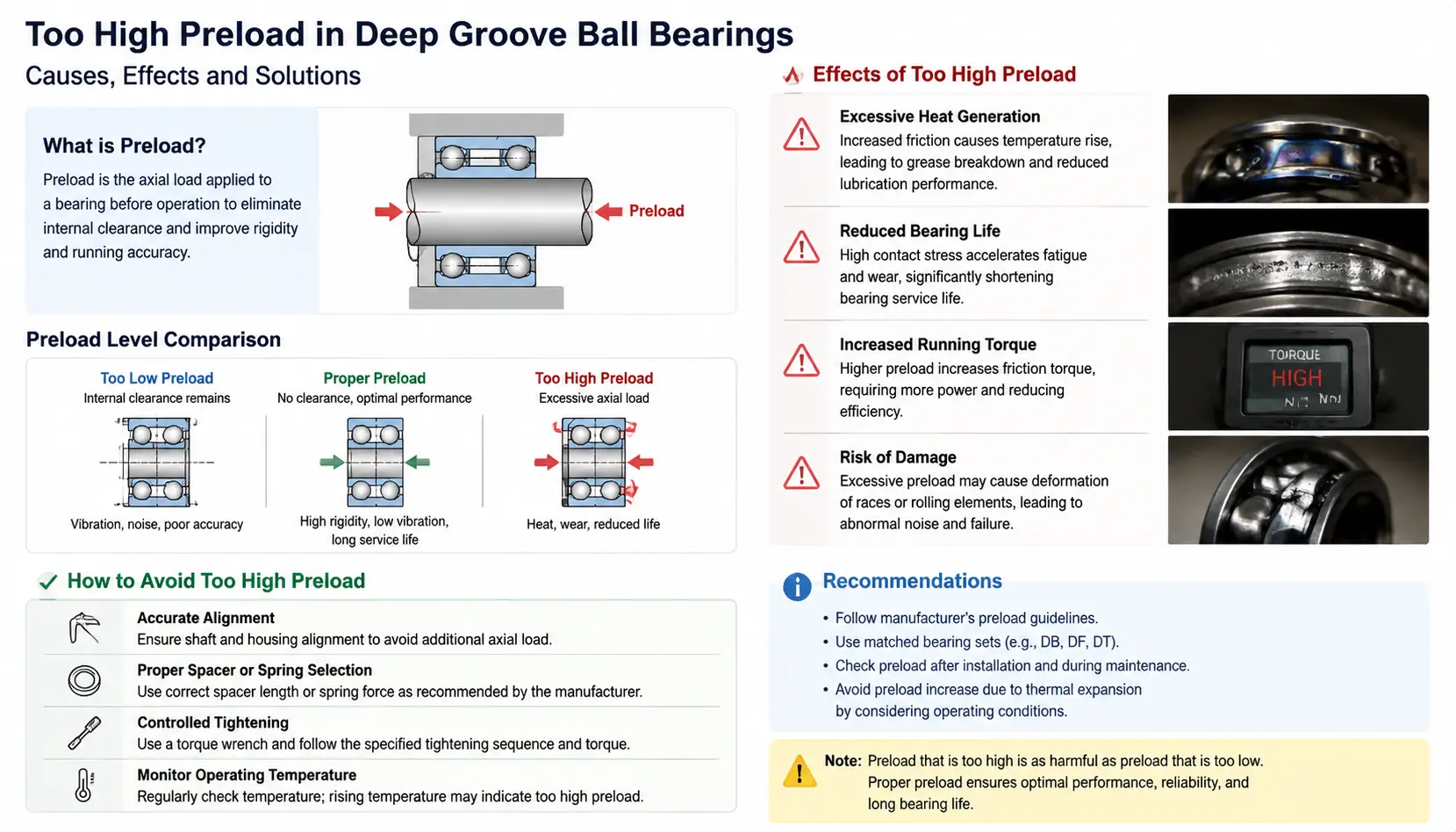
Too High Preload Deep Groove Ball Bearings – Symptoms, Causes & Fixes
Learn how too high preload deep groove ball bearings causes overheating torque and failure plus safer C3 C4 clearance and wave spring methods
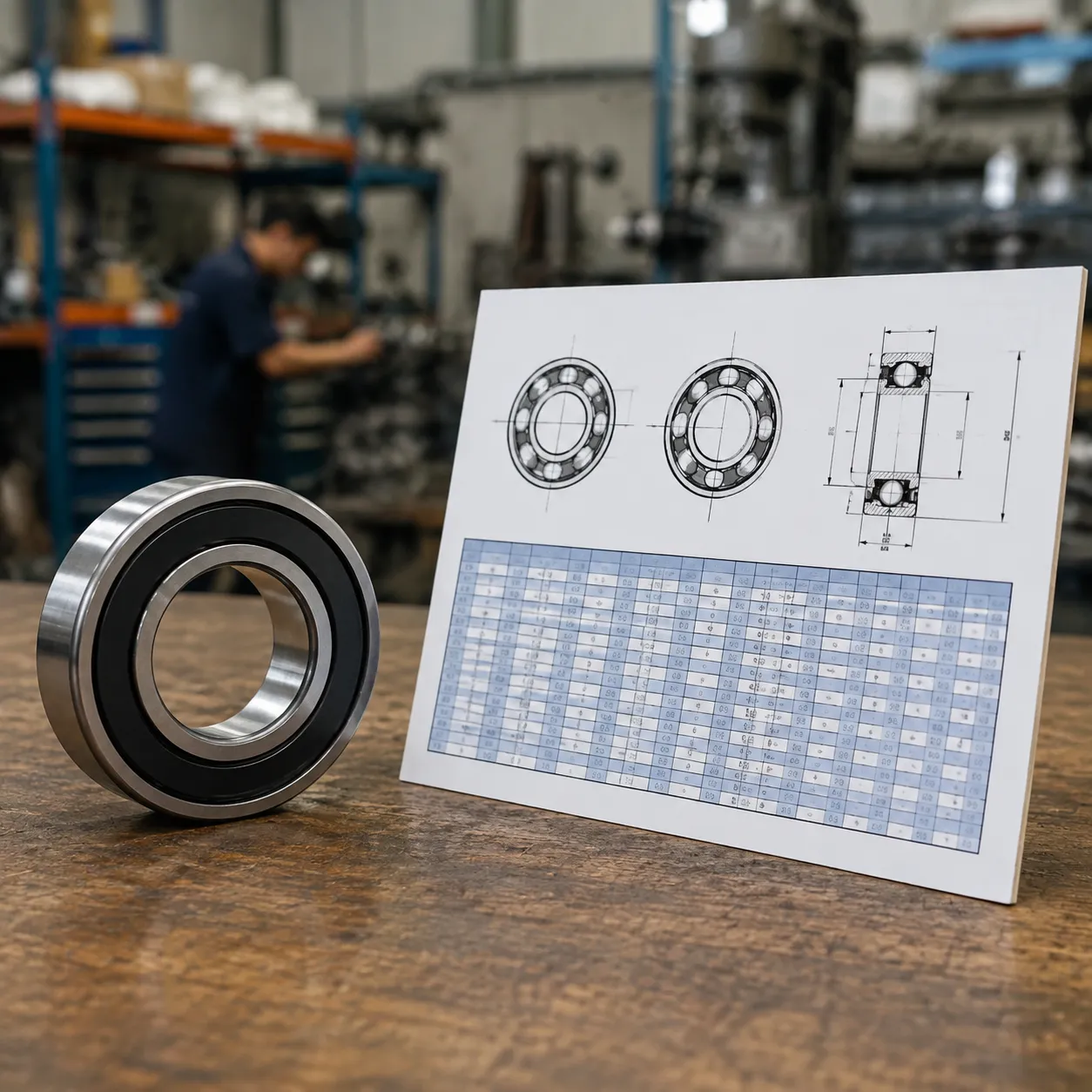
Sealed Deep Groove Ball Bearings by Dimensions and Size
Find sealed deep groove ball bearings by dimensions with precise bore outer diameter width seal types load ratings and speed data
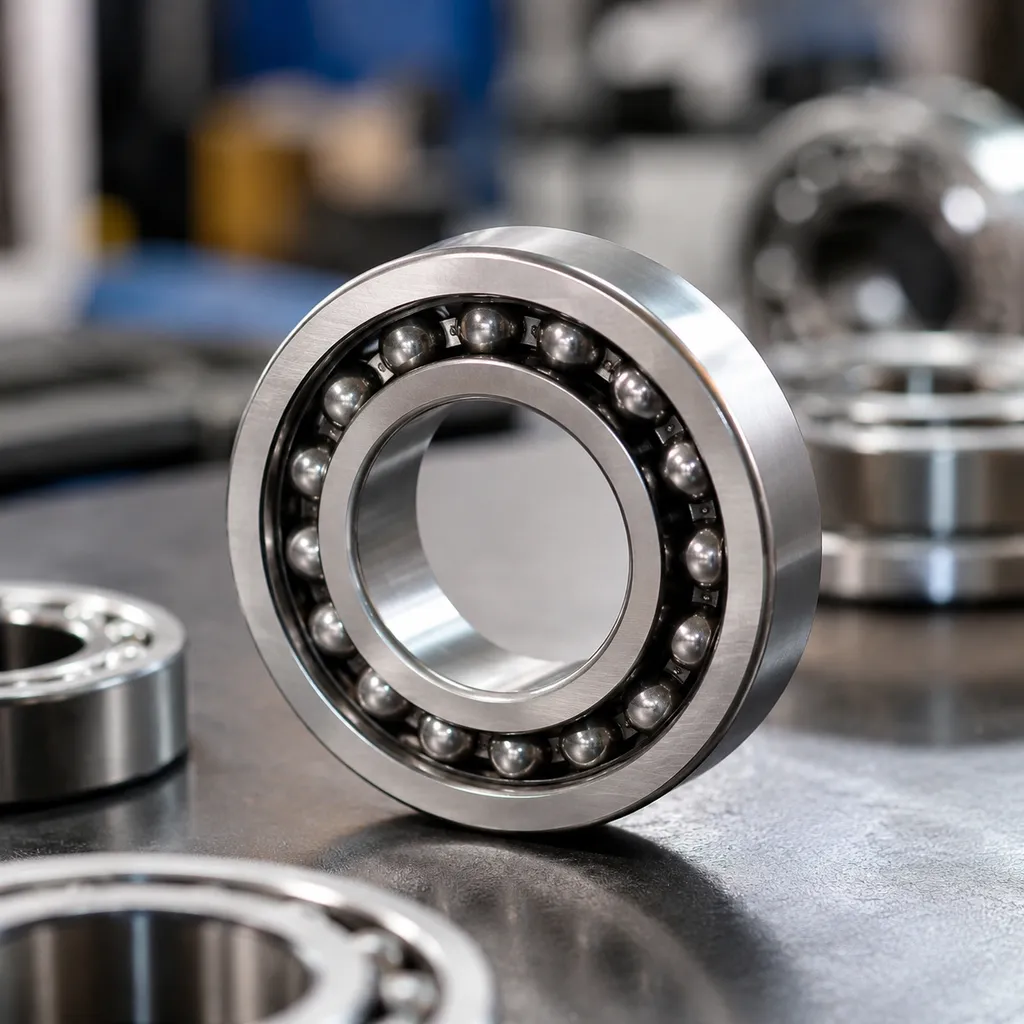
Preloading Deep Groove Ball Bearings — Methods, Force & Setup
Learn preloading deep groove ball bearings with spring or fixed methods to improve rigidity reduce noise and prevent overheating
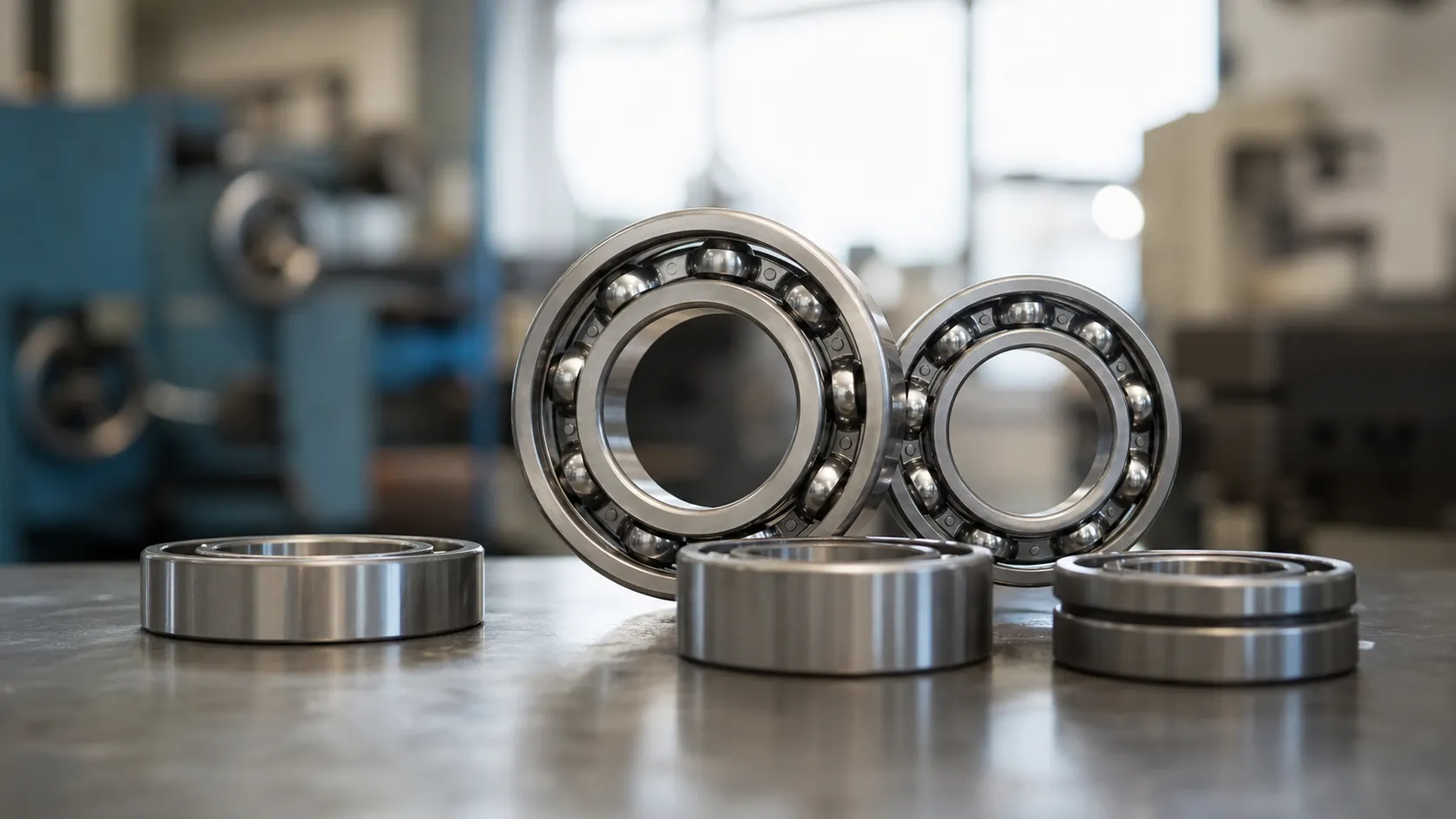
Deep Groove Ball Bearing Parts — Rings, Balls, Cage & Seals
Shop parts for deep groove ball bearings including races balls cages seals and snap rings with exact sizes load ratings and material options
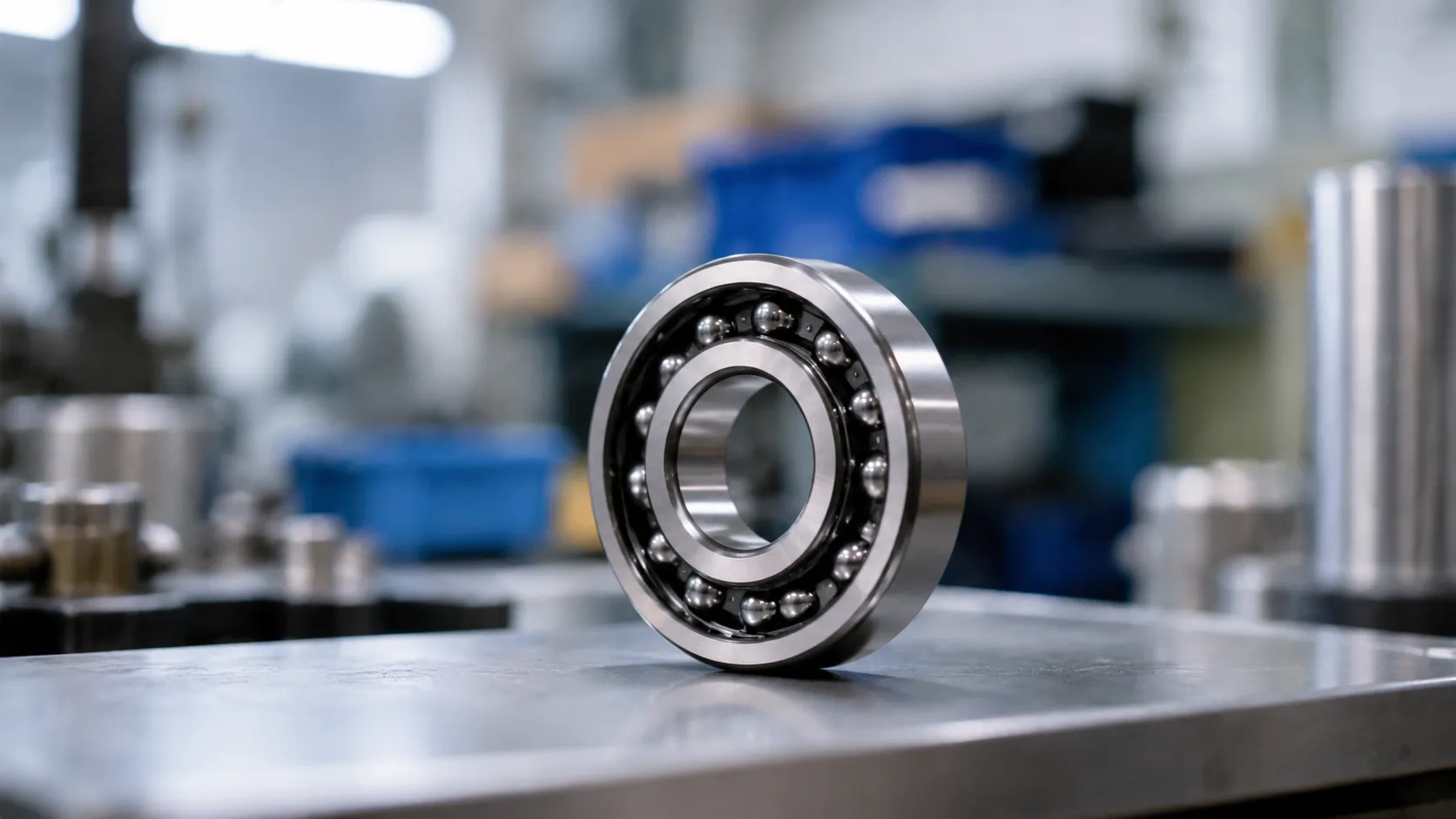
Deep Groove Ball Bearings Most Common — Types, Applications & Selection
Why deep groove ball bearings are the most common rolling bearing—single row DGBBs, low friction, radial and axial loads, and how to pick shielded vs sealed sizes for motors and industry.
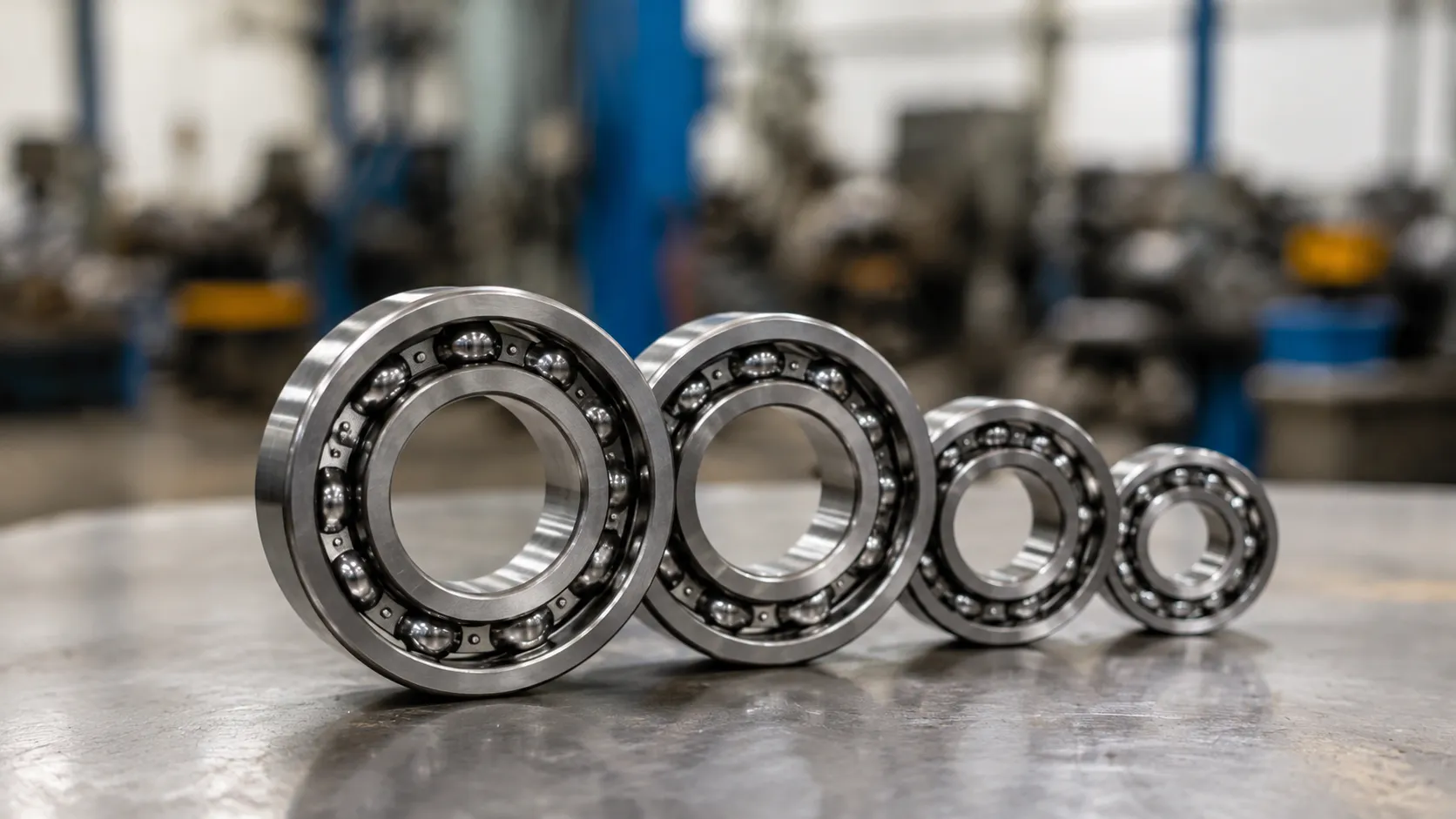
Deep Groove Ball Bearings Load Types — Radial, Axial and Combined Loads
Compare deep groove ball bearings load types—radial loads, axial loads, combined loads, and static vs dynamic load ratings for motors, conveyors, and industrial shafts.
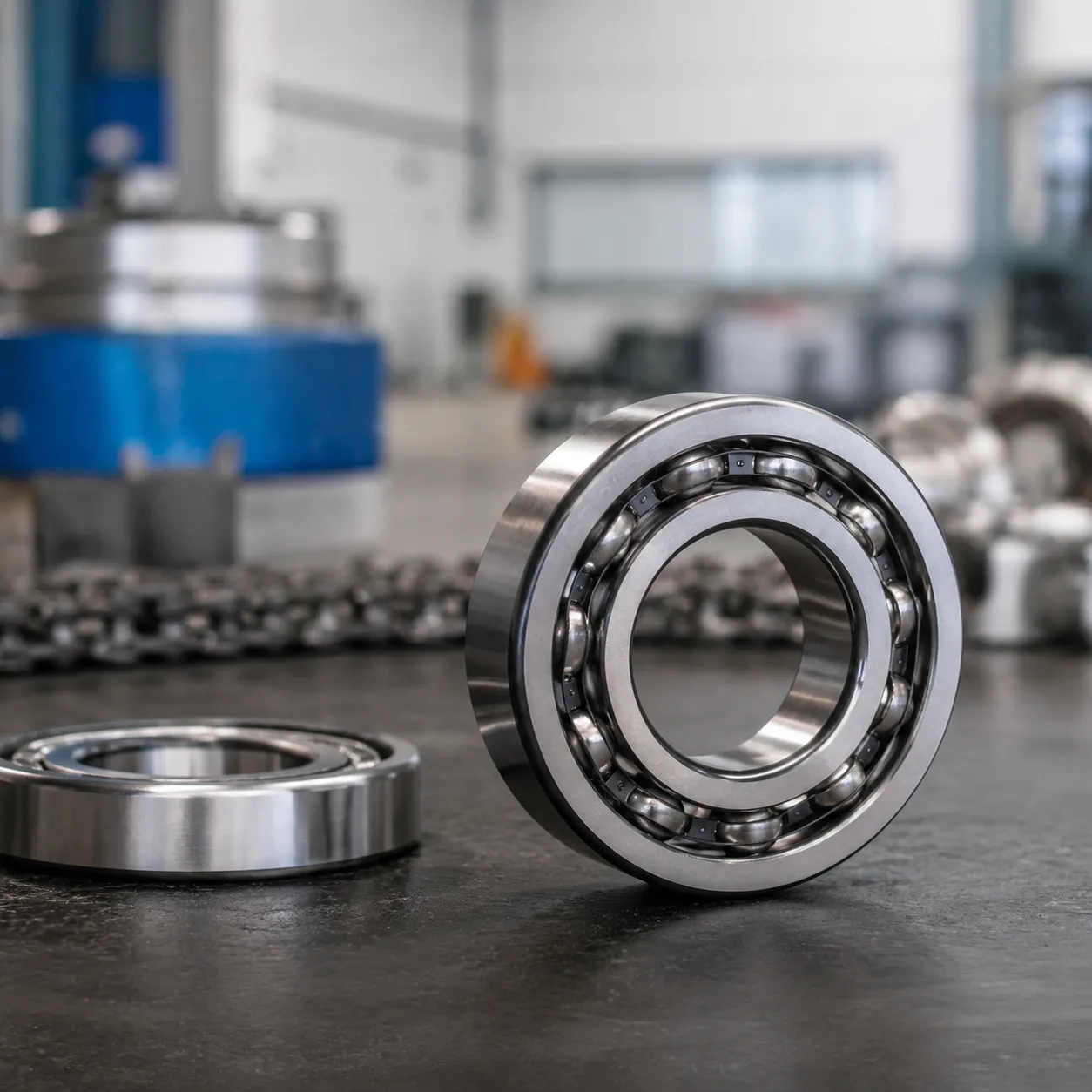
Deep Groove Ball Bearings Axial Load — Single Row Thrust & Radial Capacity
Deep groove ball bearings axial load guide with limits formulas and selection tips for radial and thrust applications
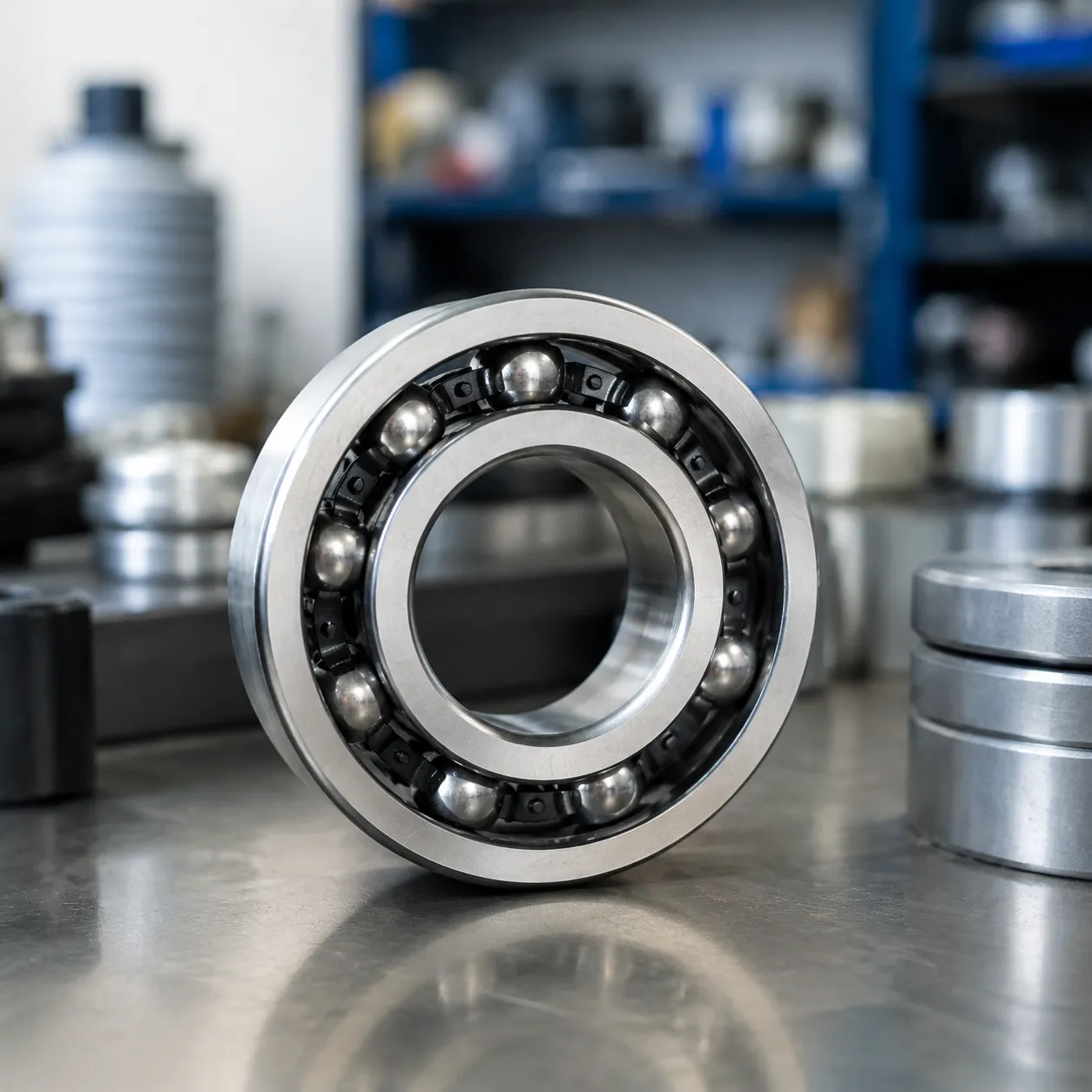
Deep Groove Ball Bearings Most Versatile — Types, Applications & Selection
Why deep groove ball bearings are the most versatile choice—radial and axial loads, low friction, single-row simplicity, and sealed vs shielded selection for motors and industry.
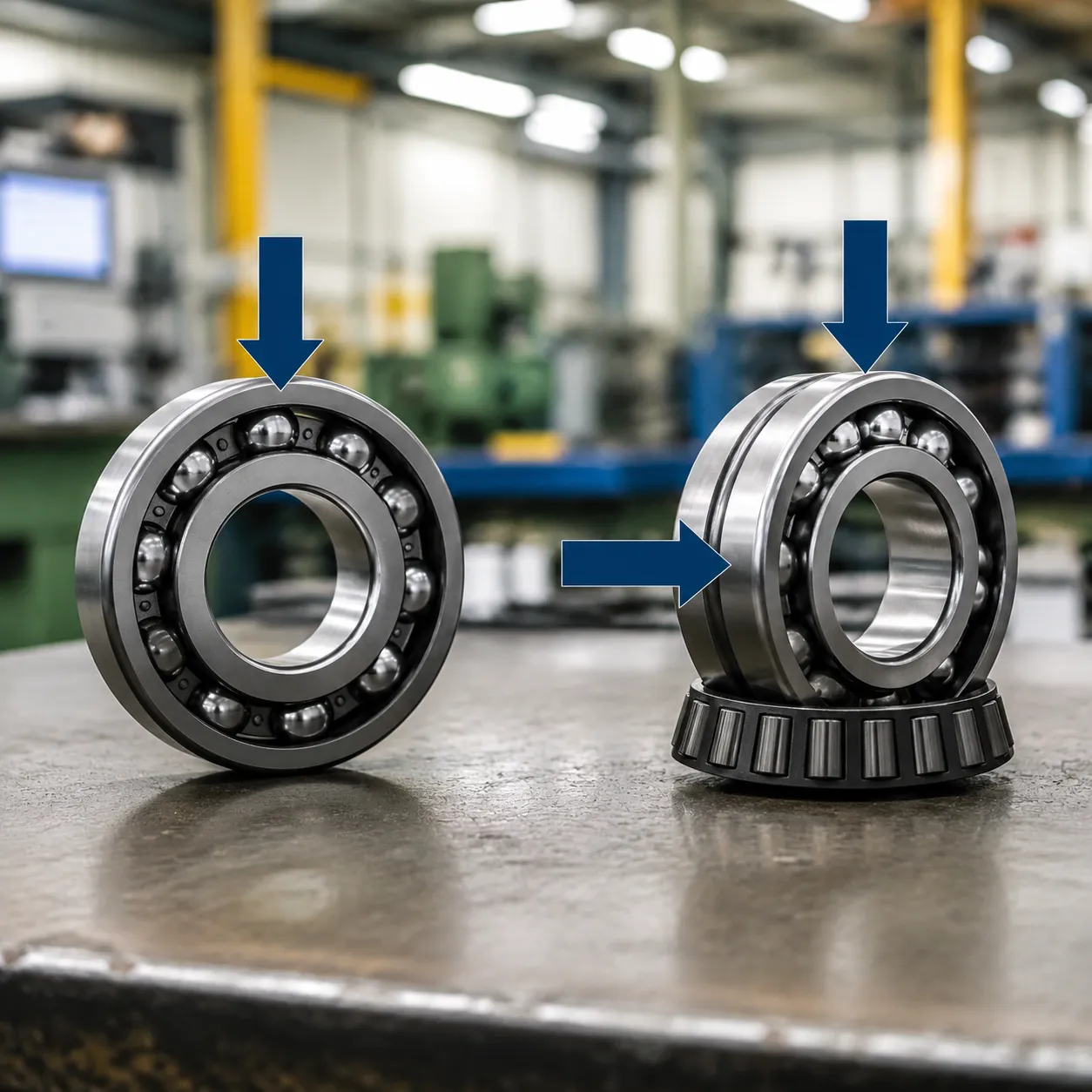
Axial Load vs Radial Load in Deep Groove Ball Bearings
Axial load vs radial load in deep groove ball bearings explained with limits selection tips and failure prevention for engineering design
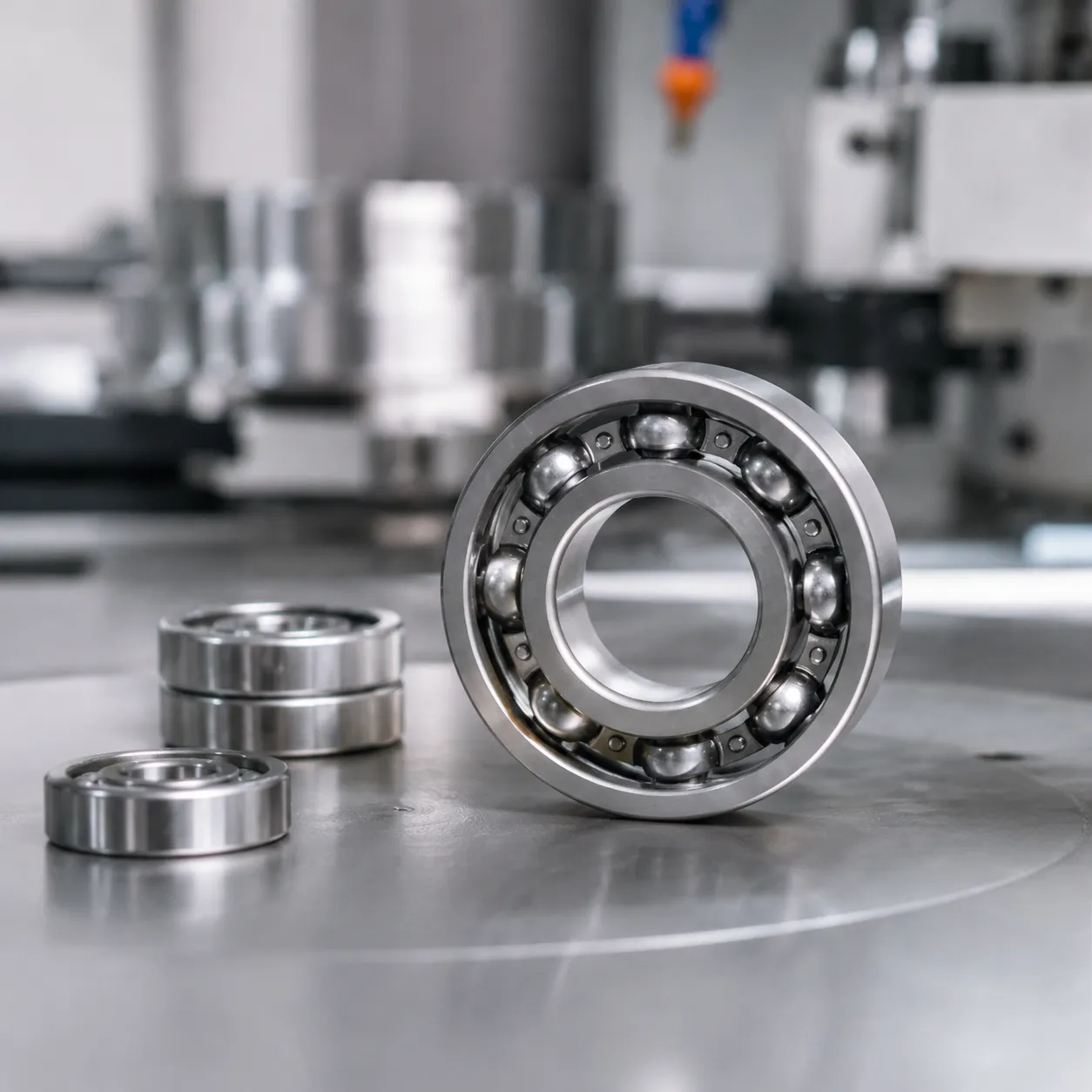
Advantages of Deep Groove Ball Bearings: Key Benefits & Applications
Discover the advantages of deep groove ball bearings: low friction, high-speed operation, bidirectional axial loads, lower noise, and reduced maintenance. OEM specs and quotes.
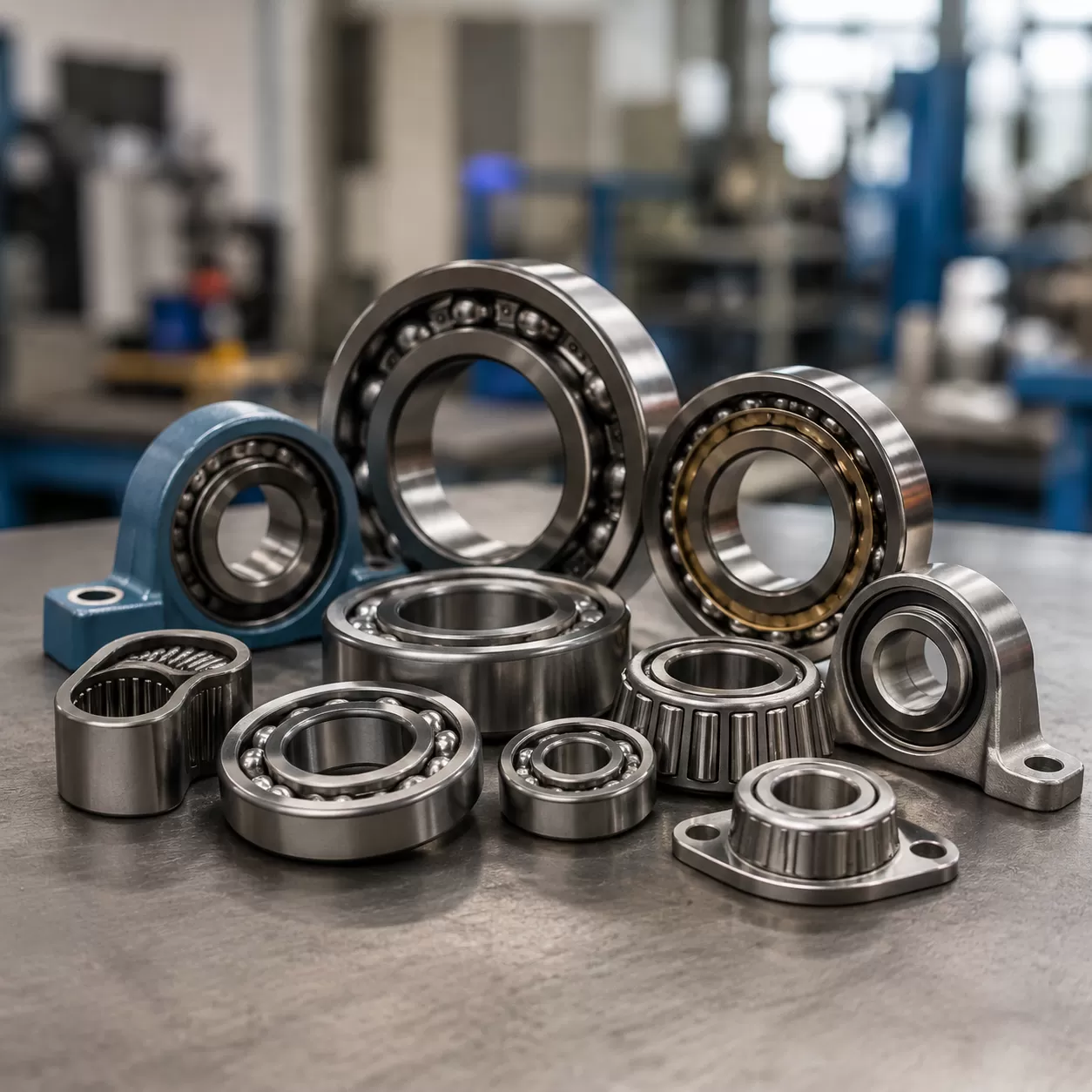
Six Common Types of Bearings in Industry
Explore six common types of bearings in industry with load capacity speed misalignment and selection tips from JN Bearings
Why These Guides Are Valuable for Your Projects
Stop relying on guesswork for bearing selection and maintenance. JN Bearings' technical guides provide actionable, field-proven expertise to help you make faster, more accurate decisions.
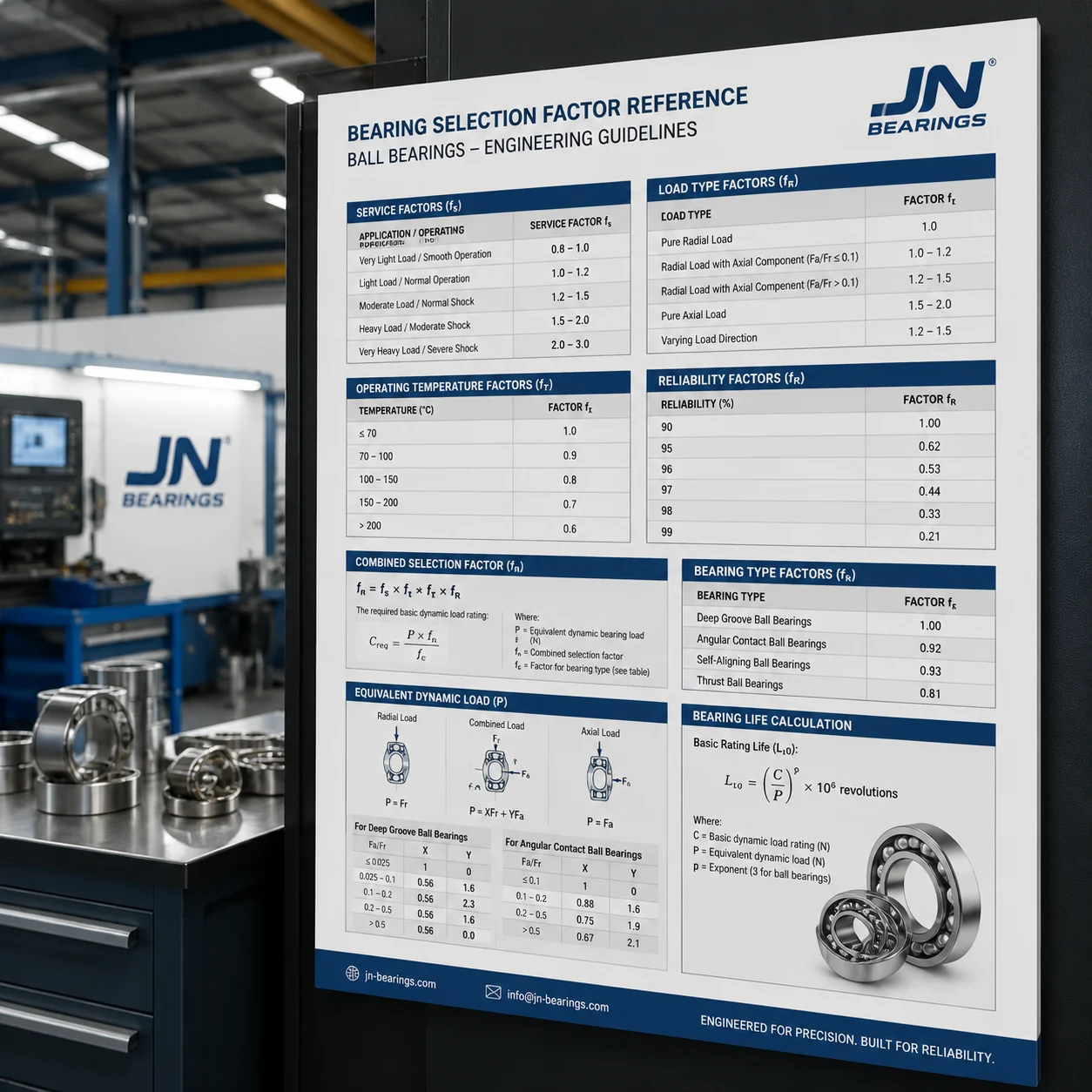
Clear bearing selection criteria—designed to reduce trial and error in equipment design.
Core Value for Engineering & Maintenance
Focused Exclusively on Ball Bearings
We don't dilute our expertise. Get deep, specific insights into deep groove, angular contact, and thrust ball bearings.
Industrial Application Oriented
Learn how to match bearings to real-world conditions like high speeds, heavy loads, and contaminated environments.
Support Better Purchasing Decisions
Equip your procurement team with the technical knowledge to avoid over-specifying or buying sub-optimal components.
Practical Execution for Maintenance
Clear guidelines on installation tolerances, lubrication intervals, and troubleshooting to maximize bearing life.
Actionable Expertise
Move beyond vague theory. Our guides provide concrete numbers, fit tolerances, and material recommendations for real engineering use.
Reduce Equipment Risk
Understanding proper ball bearing maintenance prevents sudden failures, protecting your production lines from costly unplanned downtime.
Improve System Efficiency
Selecting the right clearance and lubrication strategy directly impacts rotational friction, energy consumption, and operating temperatures.
Simplify Fault Diagnosis
When bearing noise or vibration increases, our troubleshooting guides help you identify root causes quickly—saving hours of inspection time.
Maximize Operating Life
Discover how correct mounting procedures and timely grease replenishment can drastically extend the service life of standard ball bearings.
Trusted Manufacturer Insights
Created by JN Bearings experts who understand daily manufacturing challenges, ensuring the knowledge is highly relevant to your workflow.
Comprehensive Coverage from Selection to Service
Whether you are engineering a new motor or performing routine plant maintenance, our ball bearing knowledge base covers every critical phase of component management.
- Precise ball bearing type comparisons and load handling
- Installation procedures to prevent early damage
- Bearing lubrication guidelines and maintenance schedules
- Troubleshooting for noise, vibration, and overheating
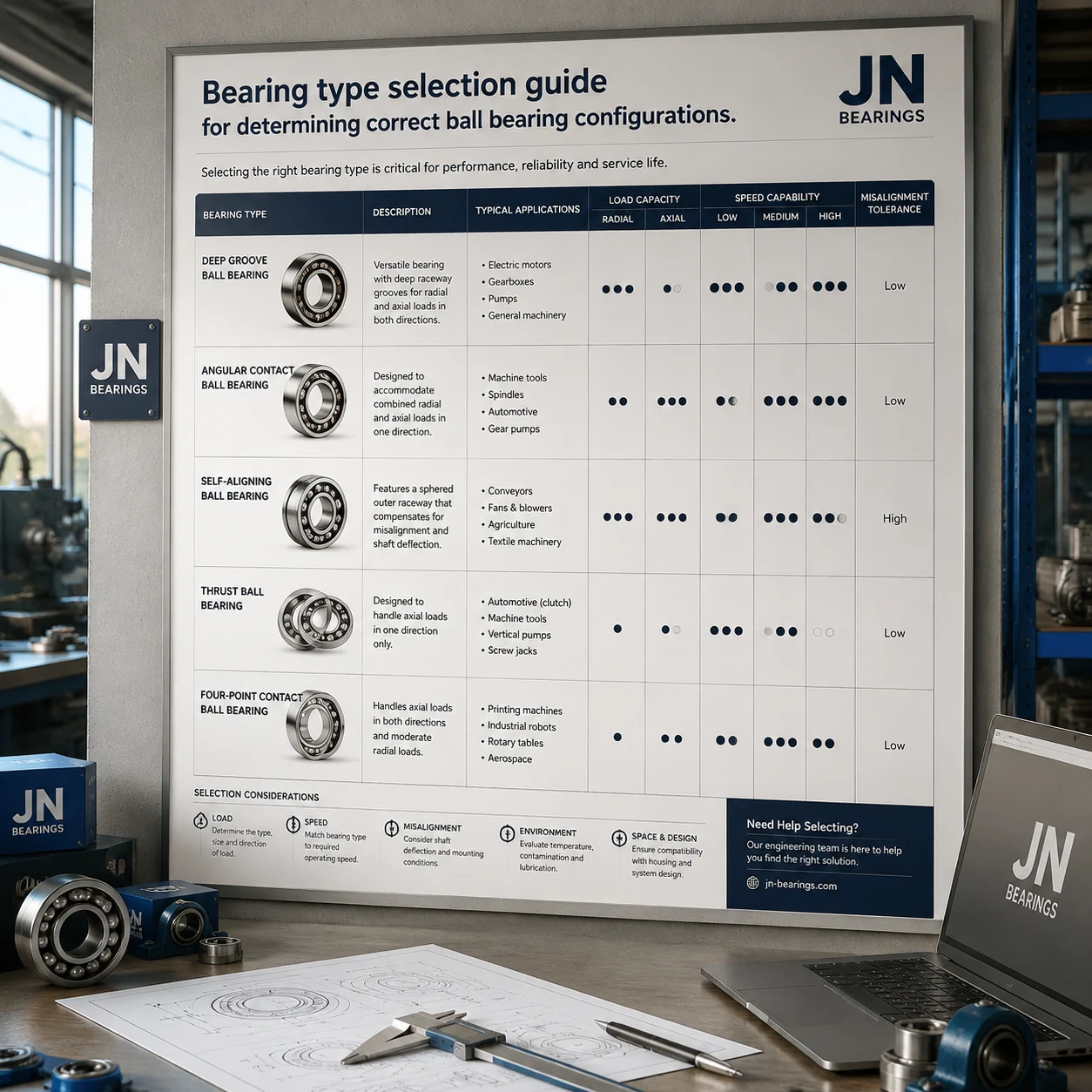
How to Select the Right Ball Bearing: From Conditions to Structure
Navigate your bearing selection process with a clear logic framework. Evaluate load, speed, space, environment, and precision requirements before comparing specific bearing types.
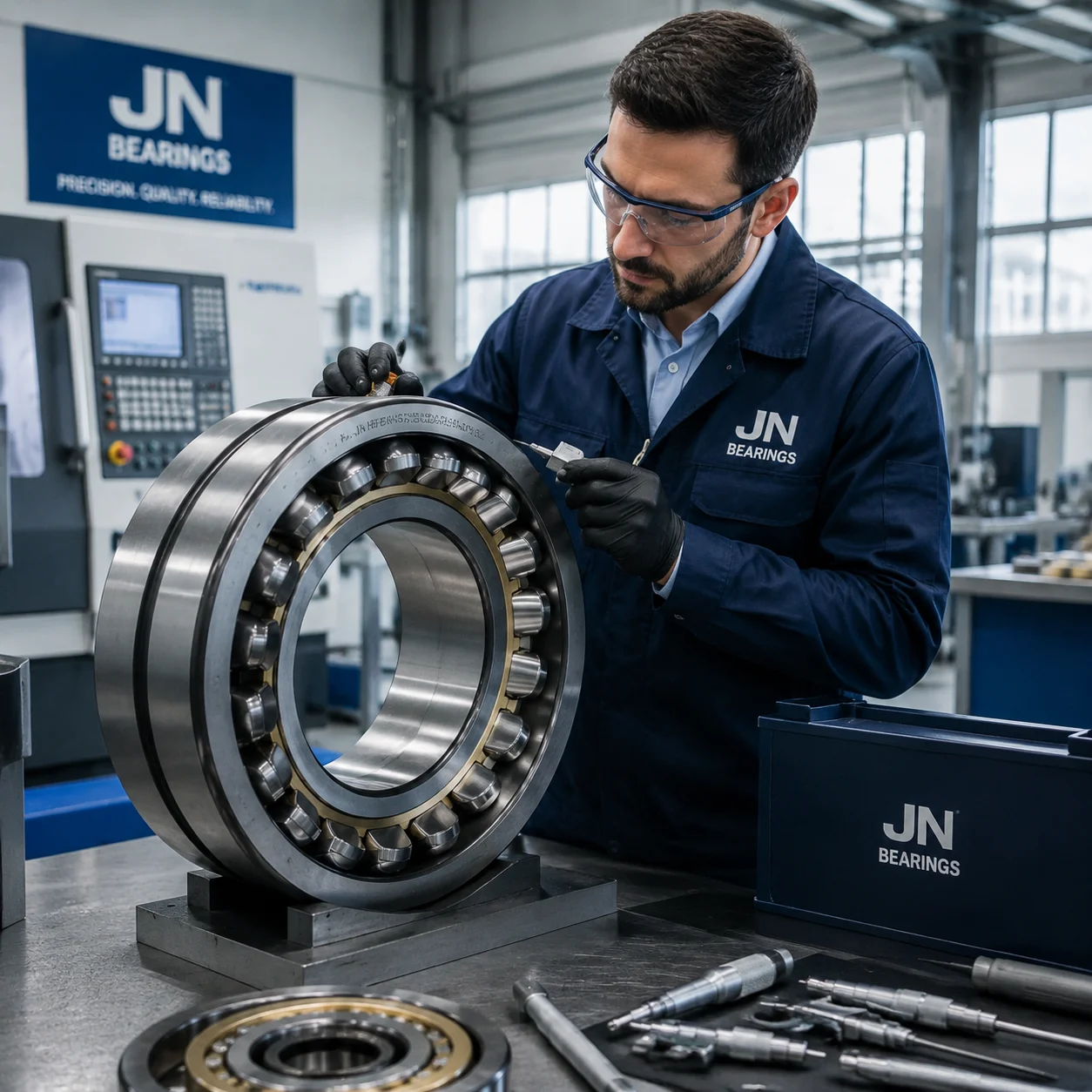
Identify Load Types & Capacity
Determine if your application involves radial, axial, or combined loads. This is the primary filter between deep groove and angular contact structures.
Evaluate Speed Requirements
Assess whether operations are high-speed, low-speed, or intermittent. High RPMs often require specific cage designs or precision bearing selections.
Assess Environmental Conditions
High temperatures, moisture, corrosive media, or cleanroom standards dictate whether standard steel, stainless steel, or ceramic bearings are necessary.
Check Installation Space Constraints
Review housing and shaft dimensions to determine if you need compact, standard, ultra-thin section, or miniature precision bearings.
Define Precision & Noise Levels
Determine if standard tolerances suffice, or if your sensitive equipment demands ABEC high-precision and low-noise operational characteristics.
Ball Bearing Structural Comparison at a Glance
Reference chart: Understand the fundamental differences between deep groove, angular contact, and thrust bearing structures.
Comparing Key Ball Bearing Types
Deep Groove Ball Bearings
Highly versatile and reliable. Ideal for most general industrial applications requiring primarily radial load support and moderate axial capacity.
Angular Contact Bearings
Engineered with an internal contact angle to accommodate significant combined radial and uni-directional axial loads at higher speeds.
Thrust Ball Bearings
Designed specifically to handle heavy axial loads in one or both directions. Note that these are not suitable for supporting radial loads.
Precision & Specialty
Miniature, stainless steel, or ceramic hybrid options tailored for high-accuracy, highly corrosive, or extremely restrictive spatial environments.
Prioritize Key Application Parameters First
When unsure of the exact bearing model, start by defining your primary operating conditions. Only move to specification and structural matching once your core application parameters are clear.
- Identify the dominant load direction (radial vs. axial) to quickly narrow down the basic structure.
- Check maximum operating RPMs to see if specialized cages or higher precision classes are required.
- Confirm temperatures and chemical exposure to select appropriate seal types and materials.
- Rely on JN Bearings' expertise if your system involves complex combined loads or excessive vibration.
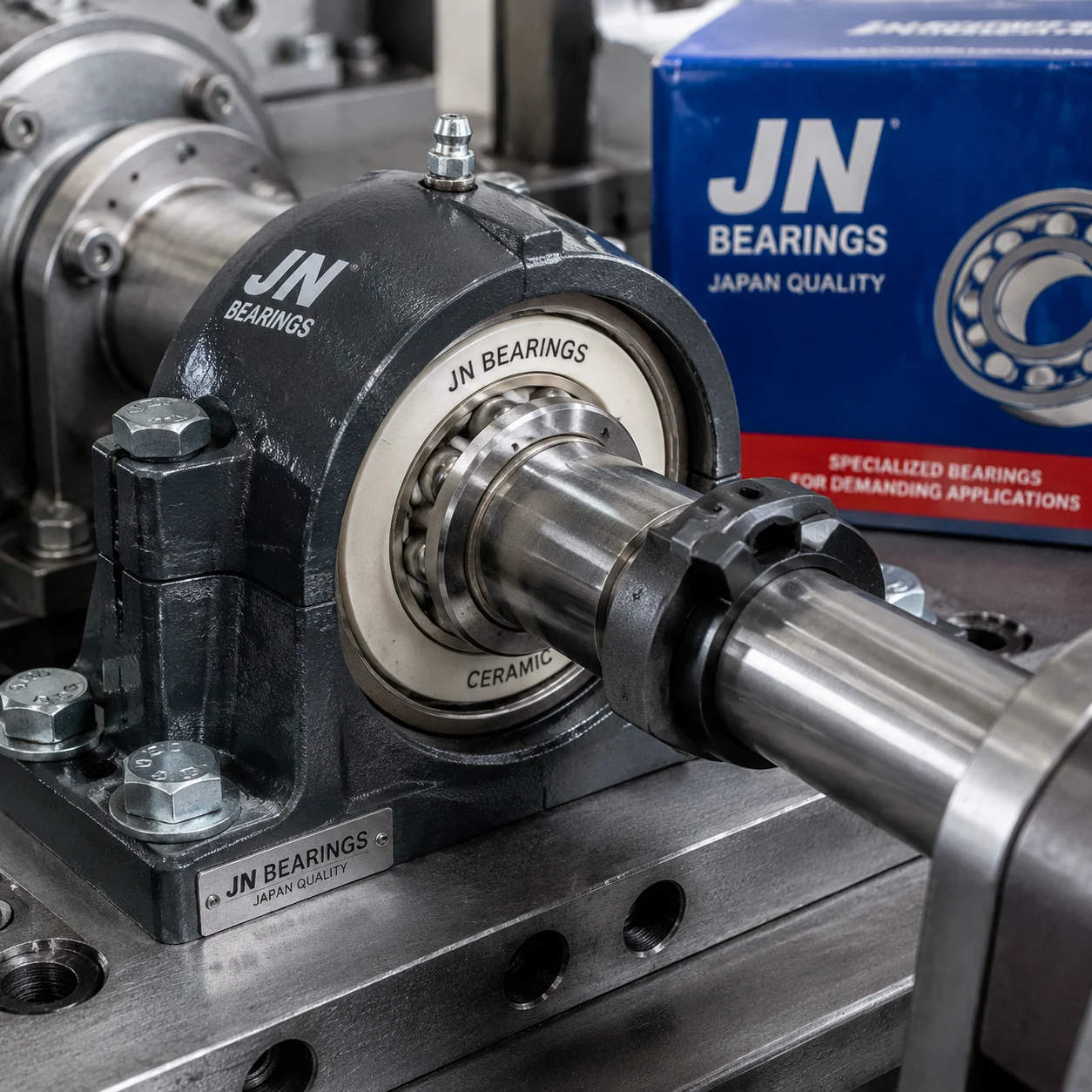
Installation, Lubrication & Maintenance
Guidelines
Protect your ball bearings and extend equipment life with proven handling, lubrication, and inspection methods designed for industrial stability.
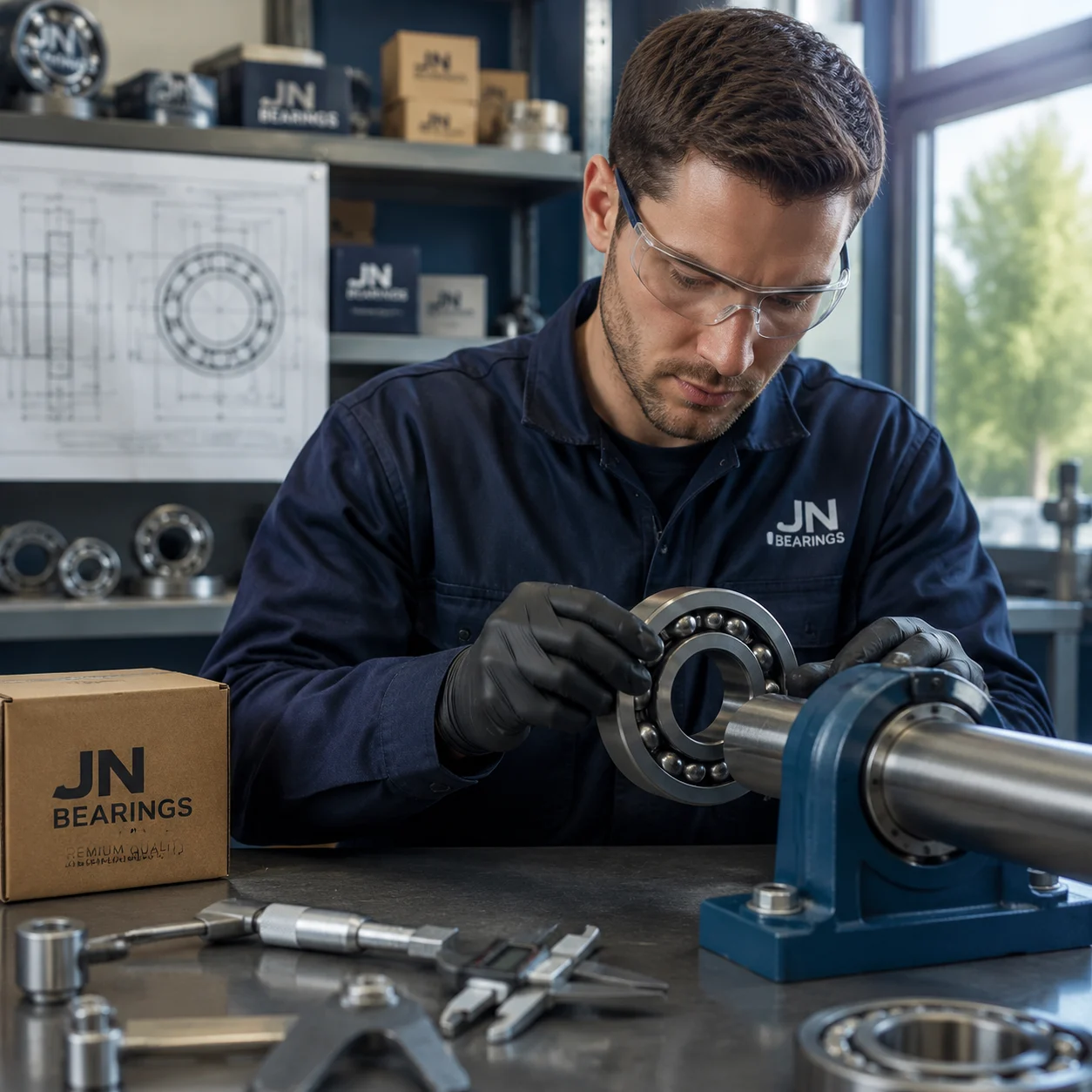
1 Proper Bearing Installation Methods
Maintain Clean Workspaces
Always unpack ball bearings just before installation. Use clean tools and dry environments to prevent premature contamination.
Apply Correct Press Force
Ensure force is applied directly to the tight-fitting ring. Never transmit impact force through the steel balls to avoid denting raceways.
Thermal Mounting for Tight Fits
Use induction heaters to expand bearings evenly (usually 80°C–100°C). Open flames can distort ring dimensions and destroy seals.
Verify Alignment & Tolerance
Check shaft and housing alignment to prevent excessive edge loading. Strict adherence to dimensional tolerances is crucial for reliable operation.
2 Bearing Lubrication Strategy
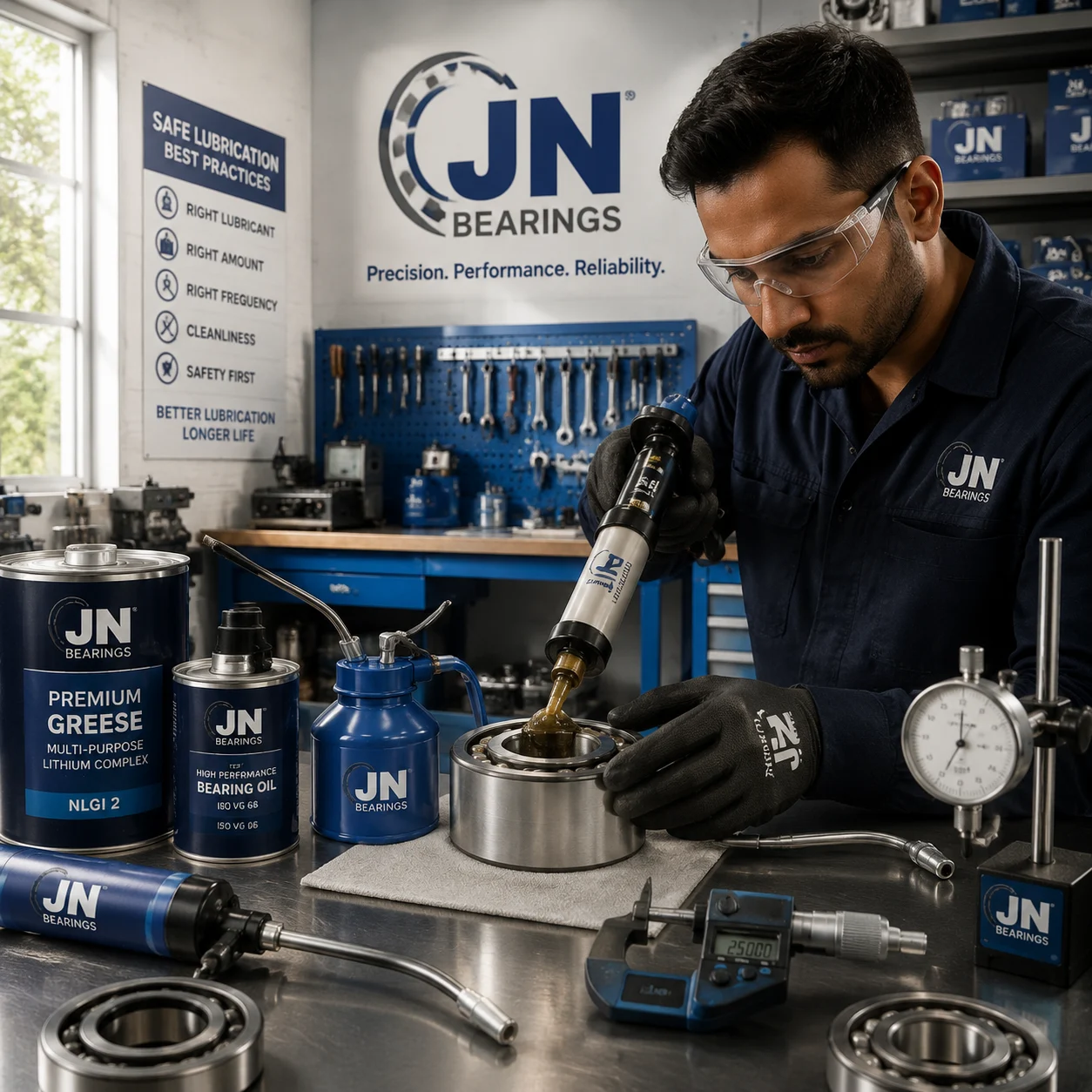
Lubrication issues account for nearly 50% of premature ball bearing failures. Implementing correct lubrication reduces friction, heat, and wear significantly.
Choose the Right Lubricant
Select grease or oil based on operating speed, temperature extremes, and environmental conditions.
Strict Re-greasing Intervals
Establish reliable maintenance schedules. High-speed or heavy-load bearings require more frequent replenishment.
Prevent Over-Lubrication
Too much grease causes churning, leading to rapid temperature spikes. Typically, fill only 30% to 50% of the bearing cavity.
Monitor Lubricant Quality
Regularly check for discoloration, hardened grease, or oil contamination, which signals an urgent need for replacement.
3 Routine Inspection & Maintenance
Proactive monitoring of bearing condition allows for scheduled replacements, avoiding sudden equipment failure.
Catching abnormal vibrations or sudden temperature rises early prevents catastrophic secondary damage to shafts.
Investing time in regular maintenance checks significantly reduces long-term purchasing and repair costs.
Ball Bearing Routine Inspection Checklist
| Inspection Item | Frequency | Warning Signs | Corrective Action |
|---|---|---|---|
| Operating Temperature | Continuous / Daily | Unusual heat spikes or steady rising temps | Check grease levels and verify alignment |
| Acoustics & Noise | Daily / Weekly | Grinding, squeaking, or irregular metallic sounds | Re-lubricate or inspect for internal damage |
| Vibration Levels | Weekly / Monthly | Increased amplitude or new frequency patterns | Perform alignment check; prepare for replacement |
| Seal Condition | Monthly | Visible grease leakage, cracked or worn seals | Replace seals, clean housing, and replenish grease |
| Lubricant Condition | Quarterly | Darkened color, metallic flakes, or hardened texture | Flush old grease and repack with fresh lubricant |
| Mounting Security | Quarterly | Loose locking collars or housing bolts | Retighten to specified torque standards |
4 Diagnosing Common Bearing Failures
Contamination (Spalling)
Dirt or moisture entering the bearing causes surface indentations and early fatigue.
✔ Upgrade sealing options and improve operating environment cleanliness.
Poor Lubrication
Inadequate film thickness leads to metal-to-metal contact, scoring, and overheating.
✔ Verify grease compatibility and adjust re-lubrication intervals based on speed.
Misalignment Marks
Skewed wear paths on raceways indicate the shaft or housing is not properly aligned.
✔ Re-machine housing seats or use self-aligning ball bearings if needed.
Excessive Preload
Fits that are too tight eliminate internal clearance, causing heavy wear and extreme heat.
✔ Review tolerance classes and consider bearings with larger internal clearance (e.g., C3).
Electrical Pitting
Current arcing through the bearing creates fluting marks, typical in electric motors.
✔ Implement proper grounding or use ceramic-coated insulated bearings.
Overloading
Heavy flaking and deep raceway spalling occur when loads exceed dynamic ratings.
✔ Re-evaluate load calculations and select a bearing with a higher capacity rating.
Unsure About Your Bearing Condition?
JN Bearings offers expert troubleshooting and maintenance advice to help you diagnose noise, heat, or vibration issues quickly and accurately.
Diagnose & Resolve Ball Bearing Issues Fast
Identify bearing failure causes early to prevent costly downtime. Follow our diagnostic framework to troubleshoot noise, heat, and vibration.
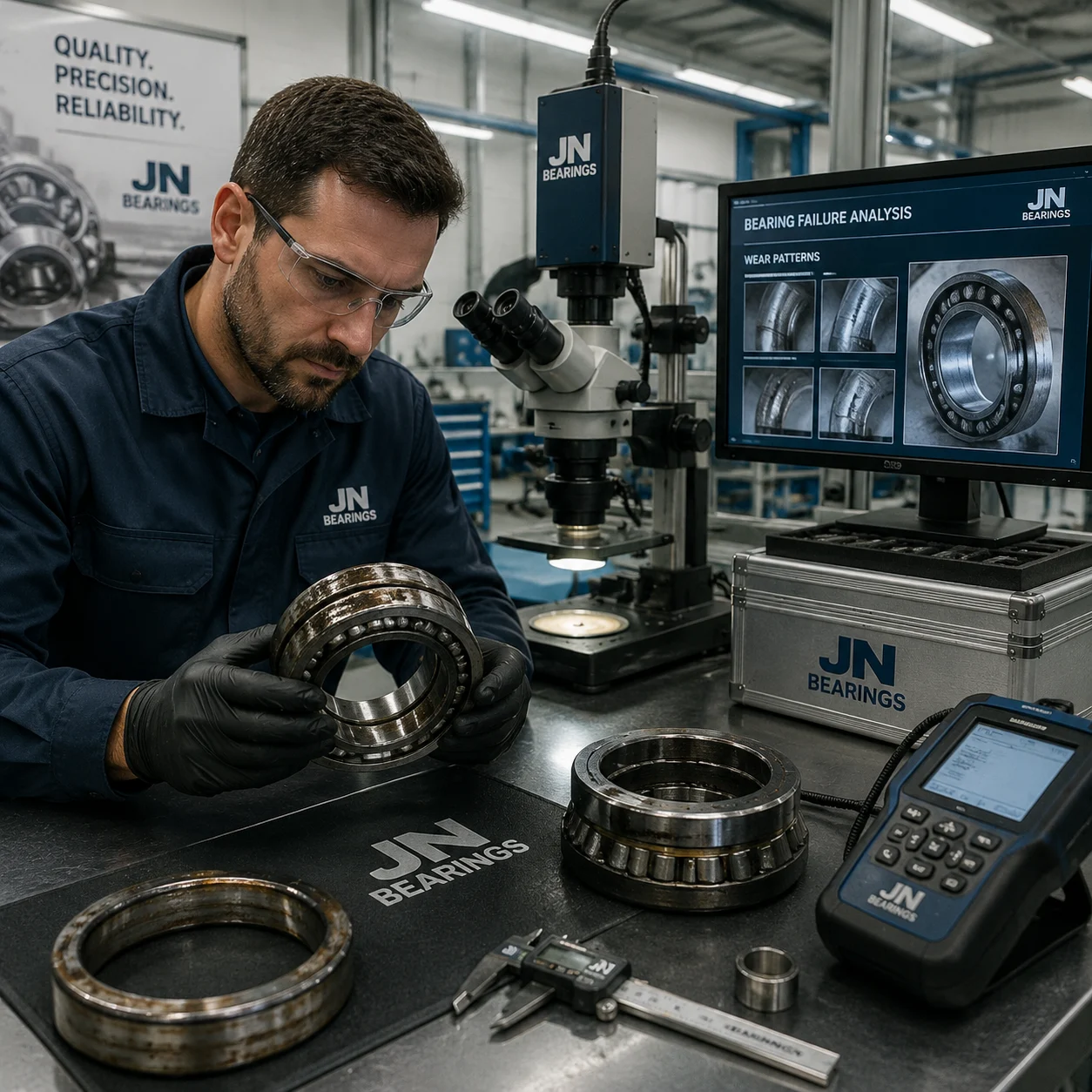
Why Ball Bearings Fail & How to Spot It
Most premature ball bearing failures are caused by improper lubrication, contamination, installation errors, or overloading. Spotting the symptoms early helps you minimize equipment damage and avoid unplanned maintenance.
- Identify root causes through noise, heat, and vibration tracking
- Analyze visual wear patterns like spalling or discoloration
- Determine clear next steps: adjust maintenance or replace components
Fast Problem Diagnosis Framework
Increased Operating Noise
Changes in sound are often the first sign of trouble. A high-pitched squeal usually points to poor lubrication, while a grinding sound often indicates contamination or severe raceway damage.
Common Bearing Noise Causes
- Harsh grinding: Debris ingress or spalling
- Metallic squealing: Lack of lubrication or clearance issues
- Irregular clicking: Cage damage or flat spots on balls
Excessive Temperature Rise
When a ball bearing runs hotter than usual, it signals increased friction. This is frequently caused by over-lubrication, under-lubrication, overloading, or severe misalignment during installation.
Checklist for Overheating
- Verify grease quantity (too much grease traps heat)
- Check for misalignment or overtightened fits
- Confirm actual loads haven't exceeded design limits
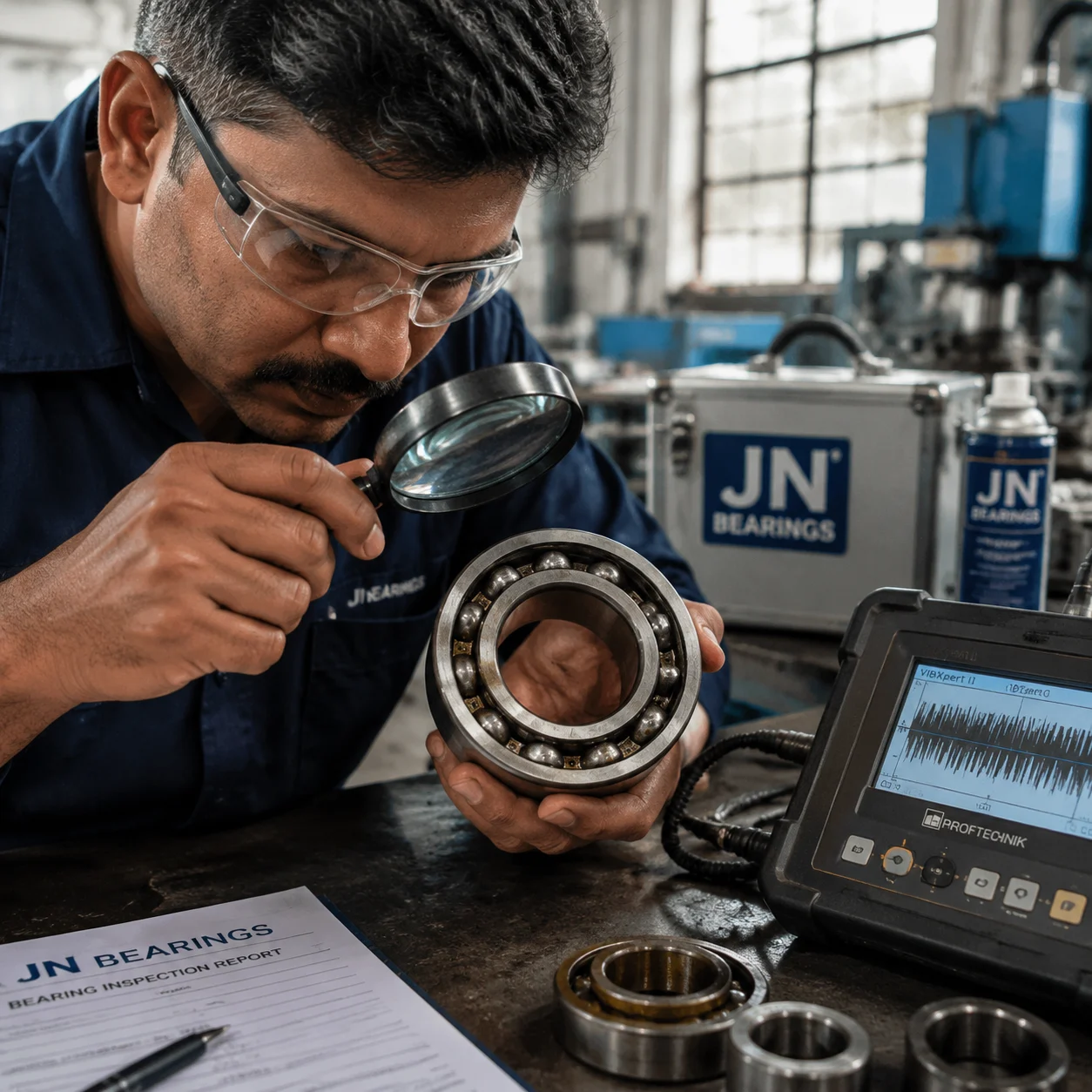
Abnormal Vibration Levels
Vibration analysis helps catch bearing fatigue before catastrophic failure. Unusual vibration spikes typically point to internal wear, housing distortion, or shaft imbalance.
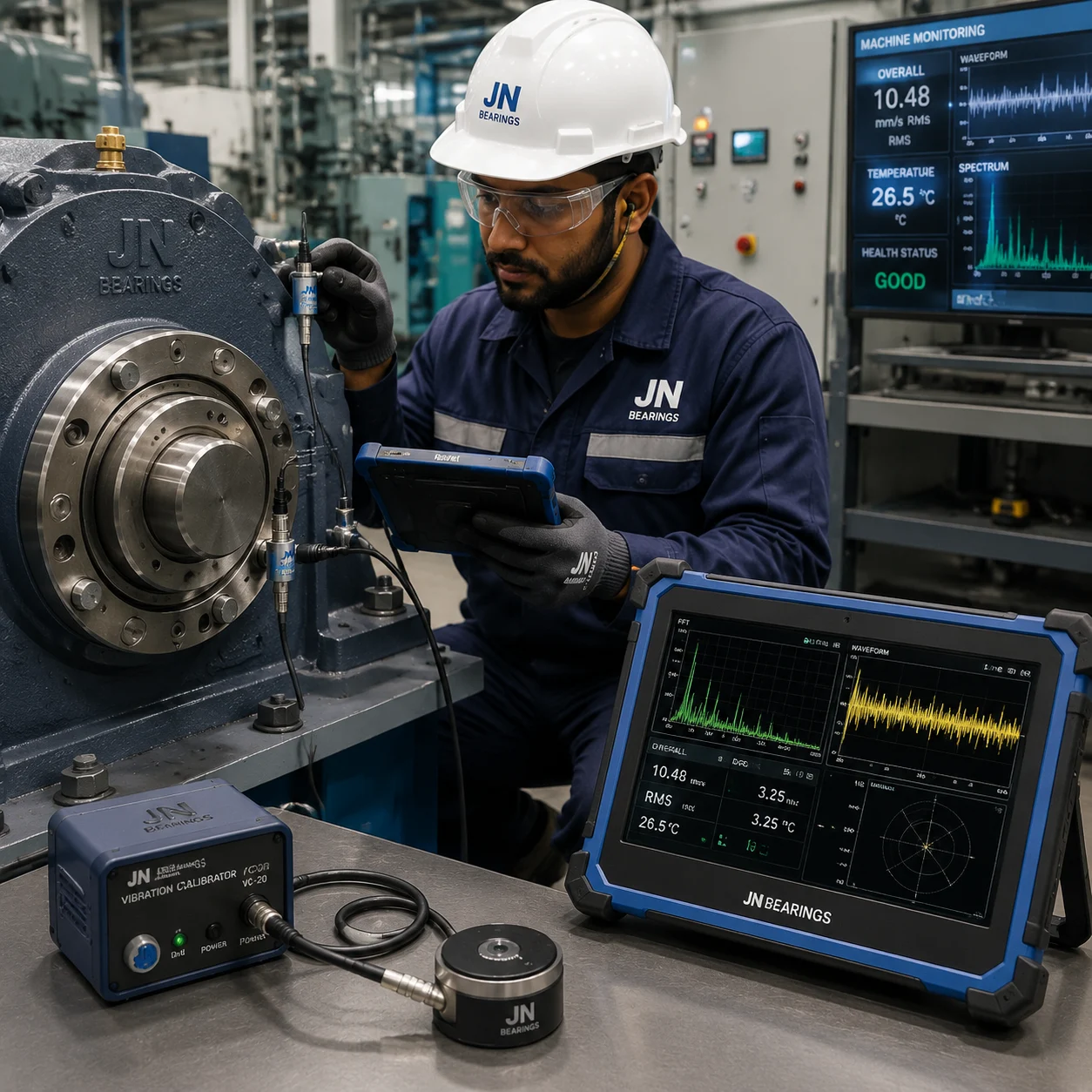
Visual Inspection After Removal
Once removed, inspecting the bearing provides final confirmation. Look for signs of corrosion, discoloration from heat, wear paths, or indentations (brinelling) on the raceways.
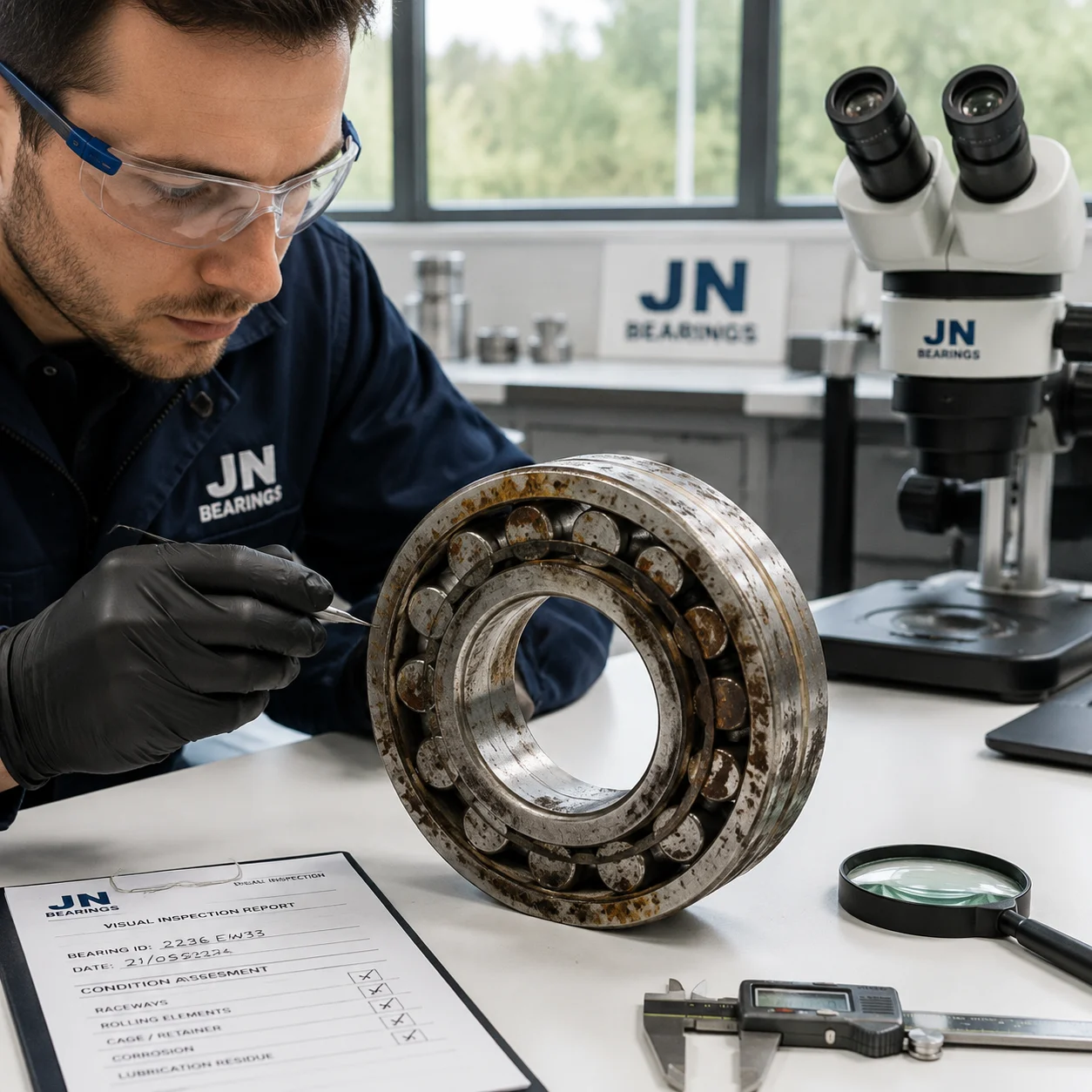
Take Corrective Action
Before installing a new bearing, correct the root cause. Adjust lubrication protocols, improve housing seals, or consult JN Bearings for a more suitable deep-groove ball bearing type if conditions have changed.
Common Ball Bearing Failure Modes
Understanding these failure patterns helps you improve bearing selection and maintenance practices.
Flaking & Spalling
Material peeling off the raceway or balls due to material fatigue from excessive loading or end-of-life wear.
Review Load Limits
Contamination Scoring
Abrasive wear caused by dust, dirt, or metal particles entering the bearing, leading to rough operation.
Enhance Sealing Options
Smearing & Discoloration
Surface damage and blue/brown discoloration indicating severe metal-to-metal contact and overheating.
Check Lubrication Routine
Brinelling (Indentations)
Dents on the raceway caused by harsh impact during installation or severe static overloading.
Improve Installation Methods
Focus
Specialized ball bearing expertise
Practical
Engineering-driven guidance
Support
Help in troubleshooting issues
Reliable
Minimize unplanned downtime
Frequently Asked Troubleshooting Questions
Why did my bearing fail so quickly after installation?
How can I tell if bearing noise is from lack of grease or damage?
Should a ball bearing get hot during normal operation?
When should I contact technical support for bearing issues?
Still Unsure About the Fault Cause?
Let our engineers help you analyze the symptoms and recommend the right ball bearing solution to keep your application running smoothly.
How Ball Bearing Selection Changes by Industry
The same ball bearing won't perform equally in every environment. Understand how industry-specific demands shape your bearing choices and maintenance strategies.
Prioritizing Low Noise & Stability
Motor applications require continuous operation with minimal friction. Selecting the right deep groove ball bearings with optimal internal clearance prevents overheating and reduces energy loss.
- Low-vibration and acoustic requirements
- Specialized grease for high RPM stability
- Insulated coatings to prevent electrical arcing
Managing High Speeds & Temperatures
From alternators to transmission systems, automotive ball bearings must withstand rapid acceleration, thermal expansion, and strict reliability standards over thousands of miles.
- Advanced sealing against road contaminants
- High-temperature lubricant formulations
- Compact designs for weight reduction
Focusing on Load Capacity & Durability
Manufacturing equipment and conveyors often face heavy radial loads and harsh operating environments. Proper sealing and load rating are critical to minimizing costly downtime.
- Robust shields for dust and debris protection
- Higher dynamic load ratings for durability
- Accessible designs for easier maintenance
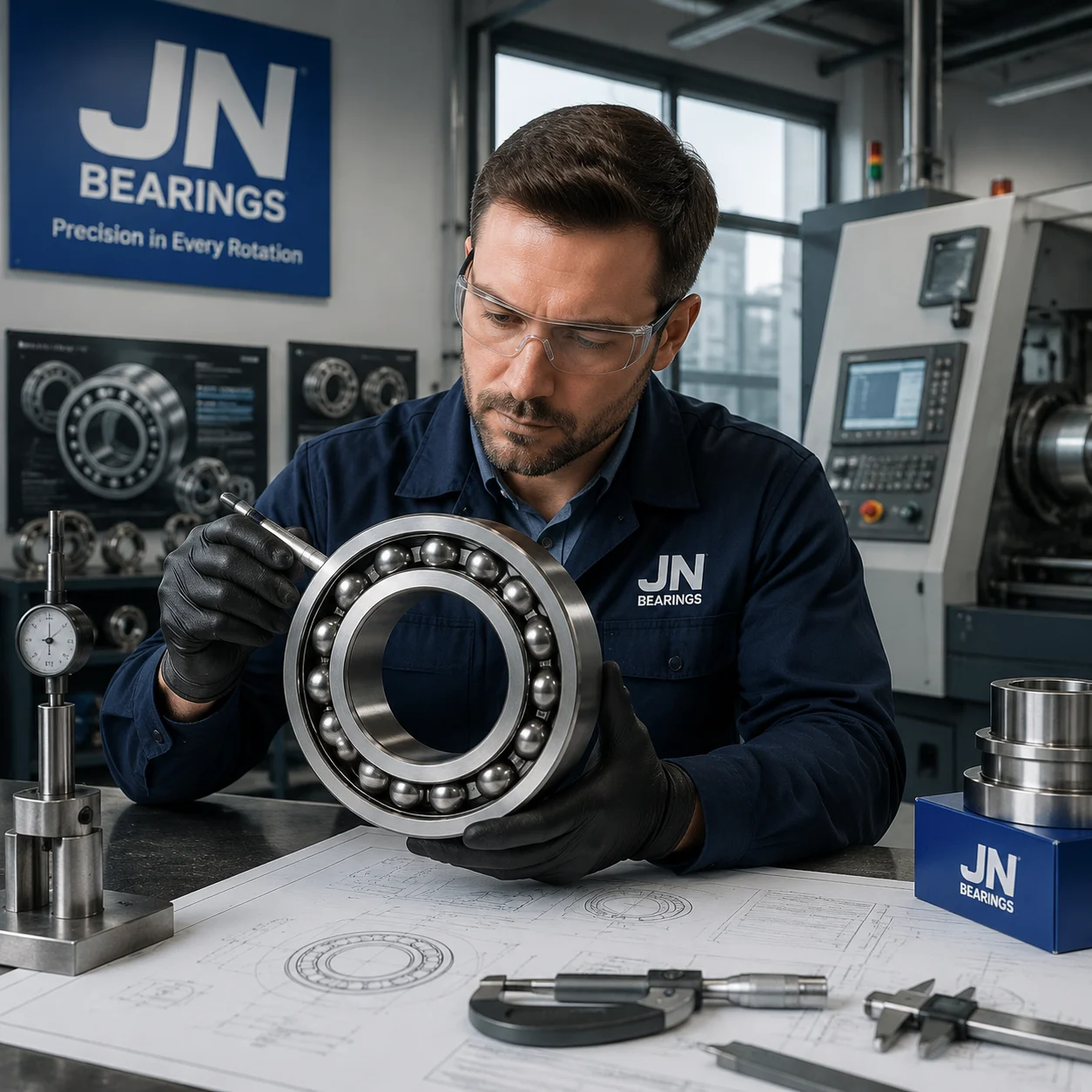
How to Choose the Right Ball Bearing Type
Before comparing specific dimensions, it's essential to define your operating conditions. Evaluating these four parameters will guide you whether to use deep groove, angular contact, or thrust ball bearings.
Determine Load Direction
Is it radial, axial, or combined? Deep groove handles mostly radial; angular contact excels in combined loads.
Analyze Operating Speeds
High-speed applications dictate specific cage materials, internal clearances, and precision tolerances.
Assess Environmental Factors
High temperatures, moisture, or chemical exposure require stainless steel, ceramics, or special sealing configurations.
Define Precision Requirements
Standard ABEC grades suit general industrial use, while higher ABEC ratings are crucial for low-noise, precise equipment.
10+
Key Industry Sectors Covered
100%
Ball Bearing Focus
24/7
Engineering Support Availability
Zero
Guesswork in Bearing Selection
Still Unsure? Get Professional Engineering Advice
When the guide isn’t enough to finalize your decision, our team steps in. We help you translate technical bearing knowledge into the right product choice for your exact application.
Bearing Selection Consultation
Share your load, speed, and environment parameters. We'll recommend the optimal ball bearing type and precision grade to prevent early failure.
Application Matching
Designing a new motor or repairing an industrial gearbox? Get specific arrangement and tolerance advice tailored to your industry requirements.
Installation Guidance
Avoid common assembly errors. We provide clear instructions on proper fits, alignment, and handling to maximize the operational lifespan of your bearings.
Troubleshooting Assistance
Experiencing abnormal noise, high temperatures, or rapid wear? Let our experts help you diagnose the root cause and recommend the right corrective actions.
Customized Lubrication Plans
Get specific advice on grease selection, fill rates, and relubrication intervals based on your operating speeds and ambient temperatures.
Direct Technical Contact
Email: sales@jnbearings.com
WhatsApp: +86 13954091520
Address: Factory Building A5, Lixia District Industrial Park, Jinan City
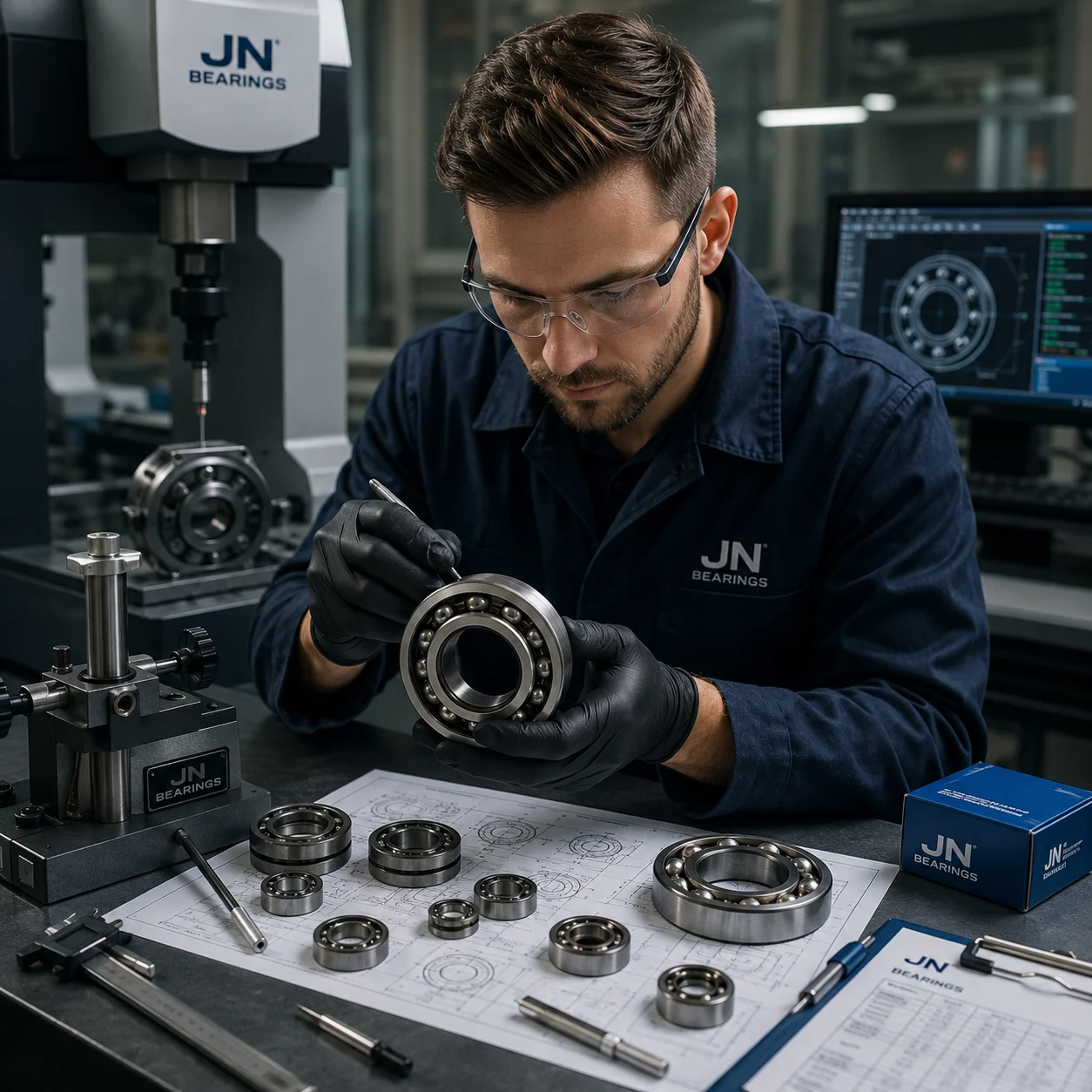
Optimizing Bearing Arrangements for Your Equipment
How you position and secure a bearing is just as important as the bearing itself. JN Bearings helps engineers verify their designs for maximum reliability.
- Locating and non-locating bearing setups for thermal expansion
- Preload calculations for angular contact ball bearings
- Proper shaft and housing tolerance recommendations
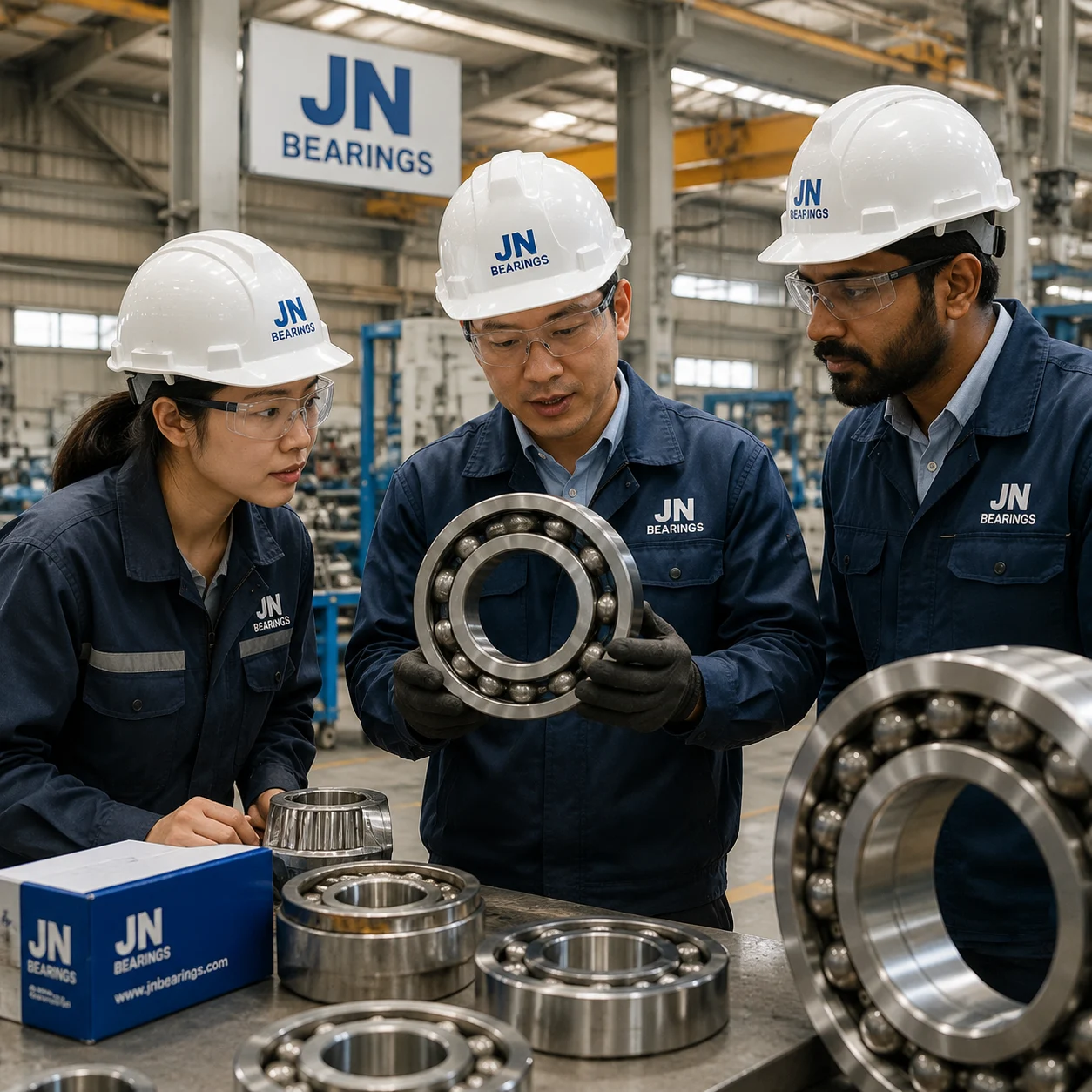
Verify Load Capacities & Speed Ratings
Don't guess when it comes to load calculations. Our technical team can assist you in evaluating static and dynamic load ratings to ensure your chosen bearing won't fail under pressure.
- Equivalent dynamic bearing load evaluations
- Adjustments for high temperatures and harsh conditions
- L10 life expectancy calculations based on real operating cycles
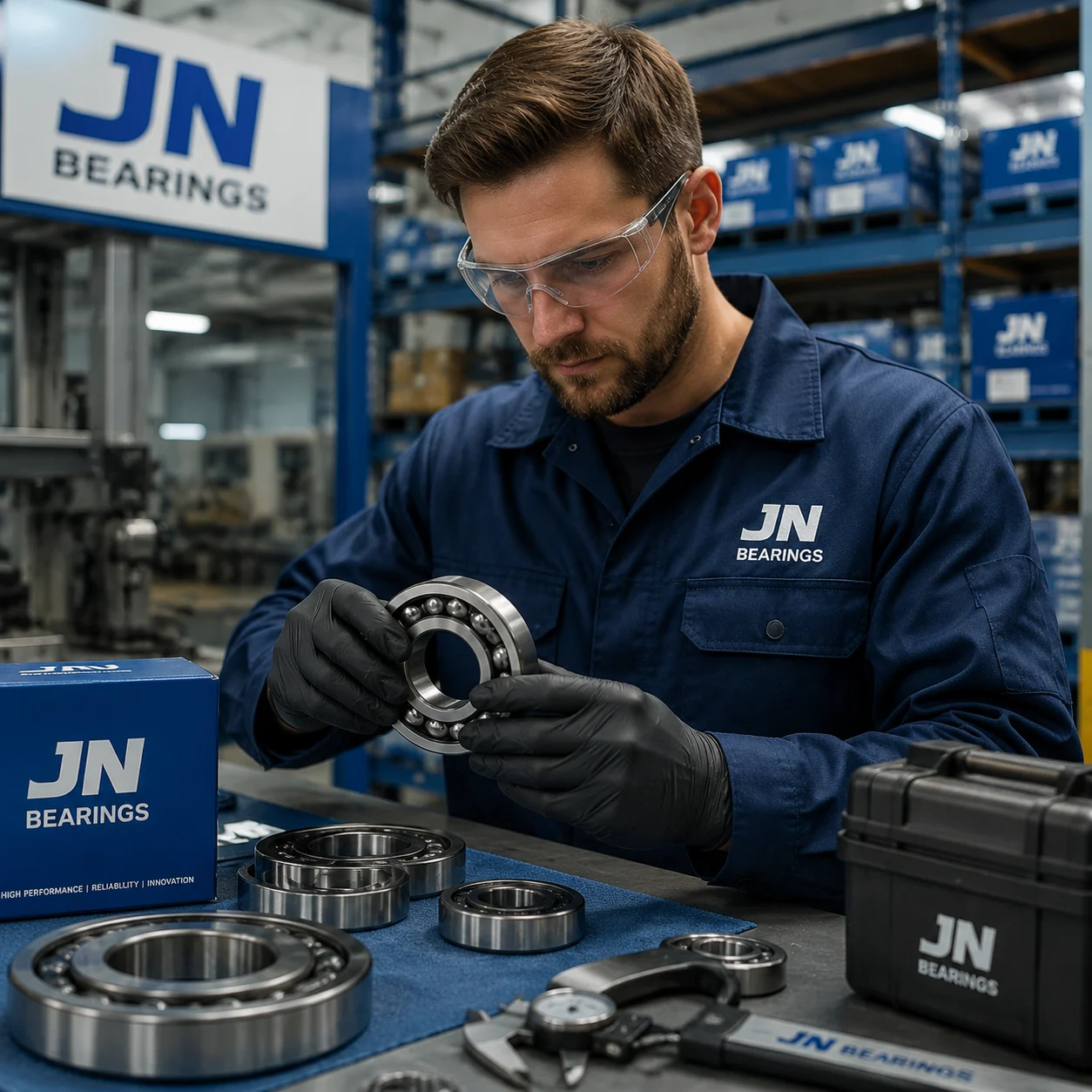
Turn Technical Knowledge into Smart Sourcing
Reading guides is the first step. The next is securing reliable ball bearings that match your maintenance schedules and project budgets. JN Bearings bridges the gap between engineering theory and practical supply.
- Request cross-reference data for replacing existing bearings
- Discuss bulk pricing for ongoing maintenance operations
- Consult on custom bearing solutions for unique operating environments
- Global Support
- Fast
- Application Focus
- Practical
- Ball Bearings
- Expertise
- Engineering Help
- Ready