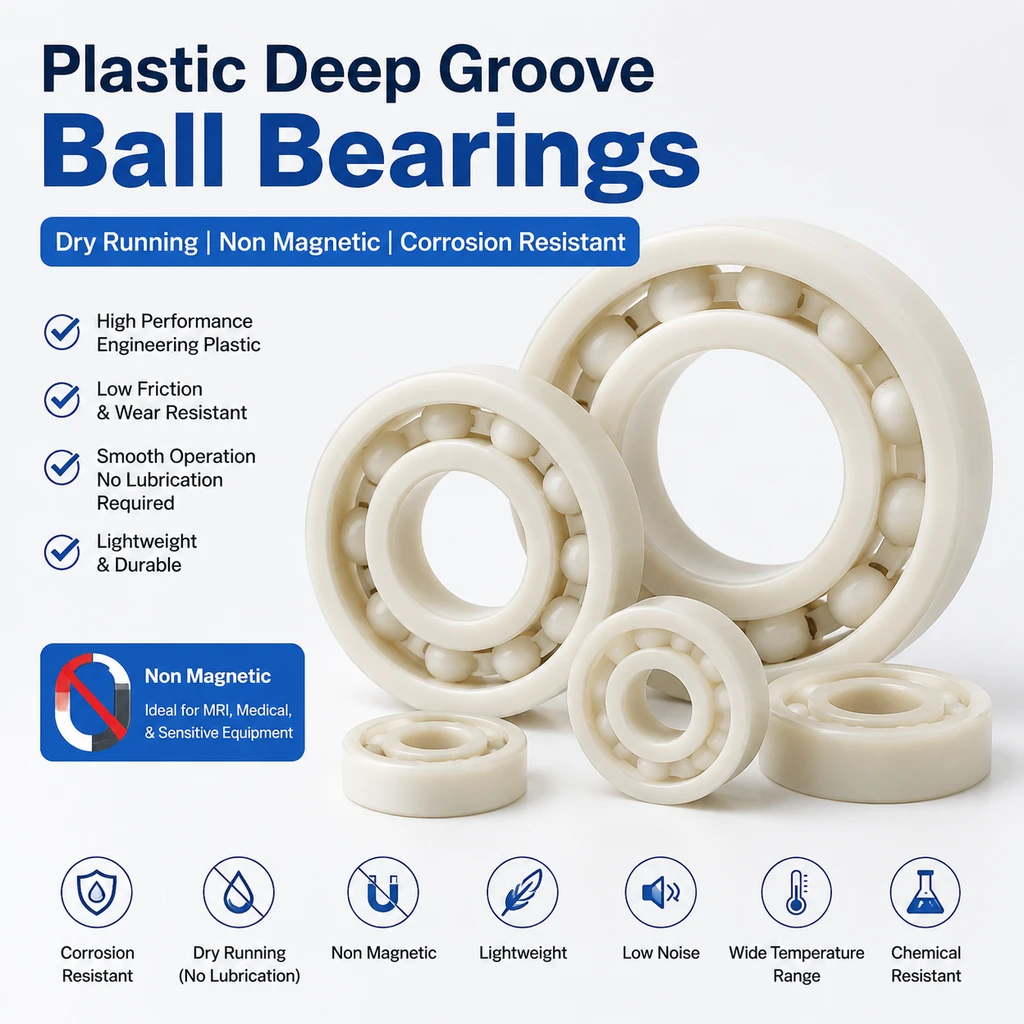
Overview
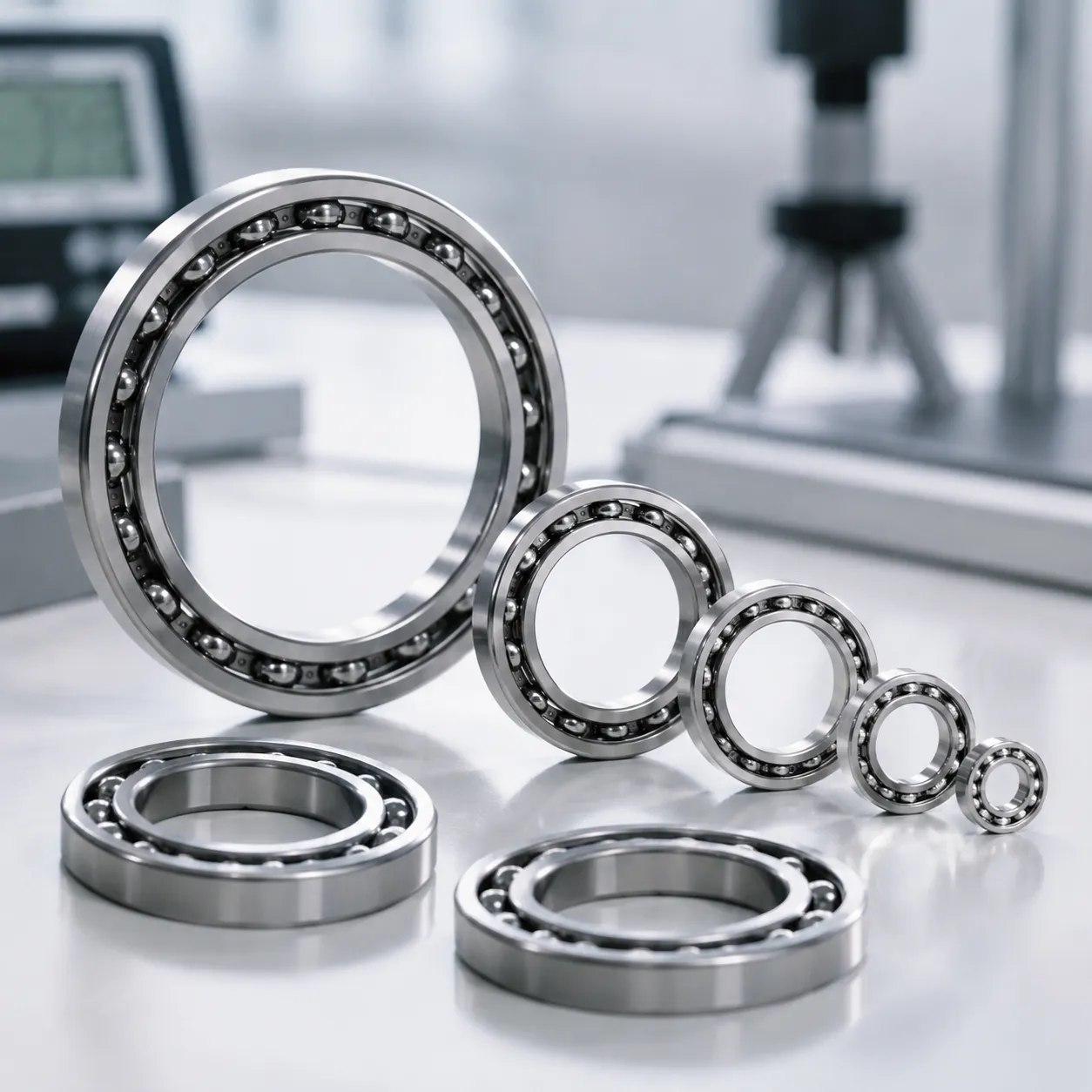
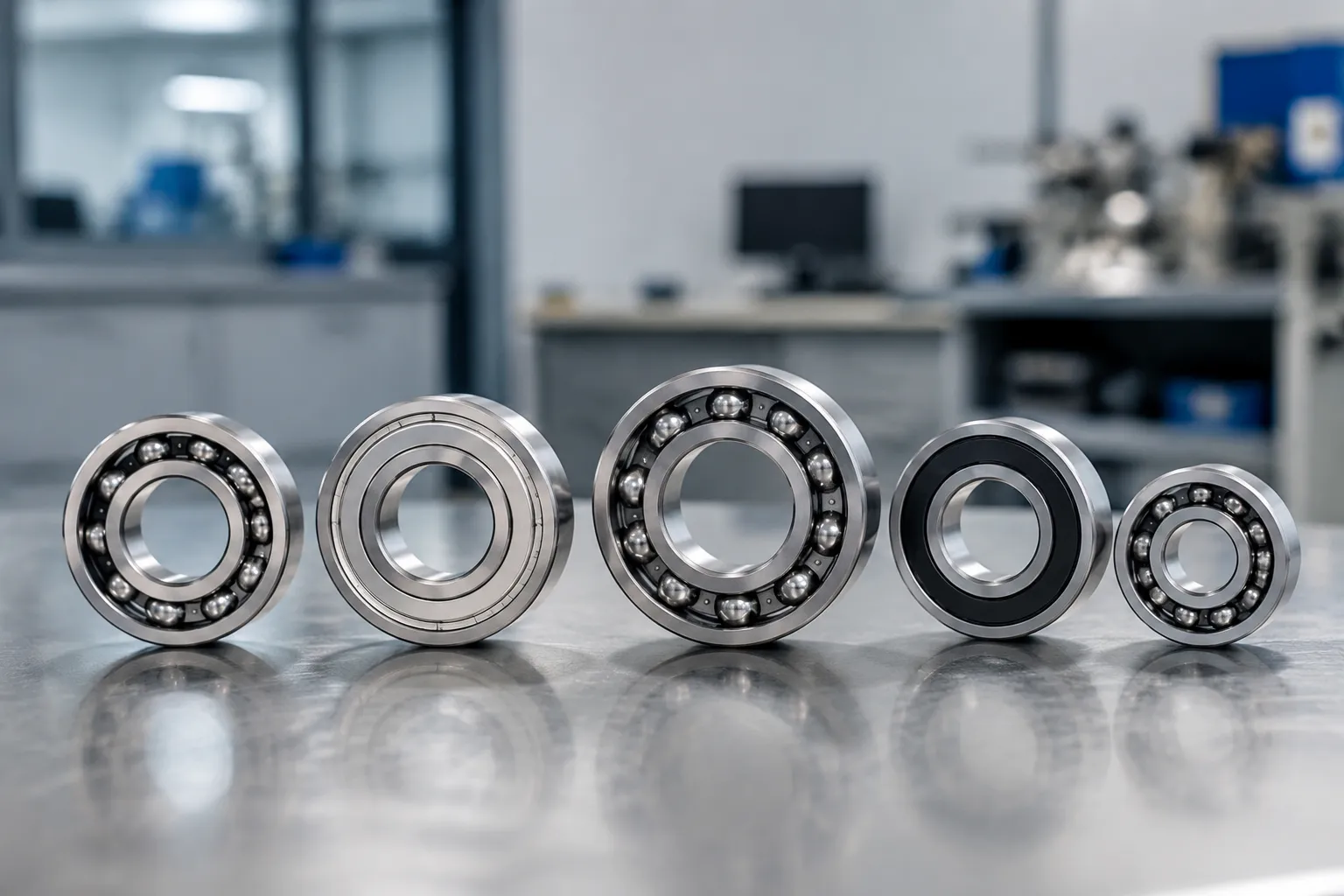
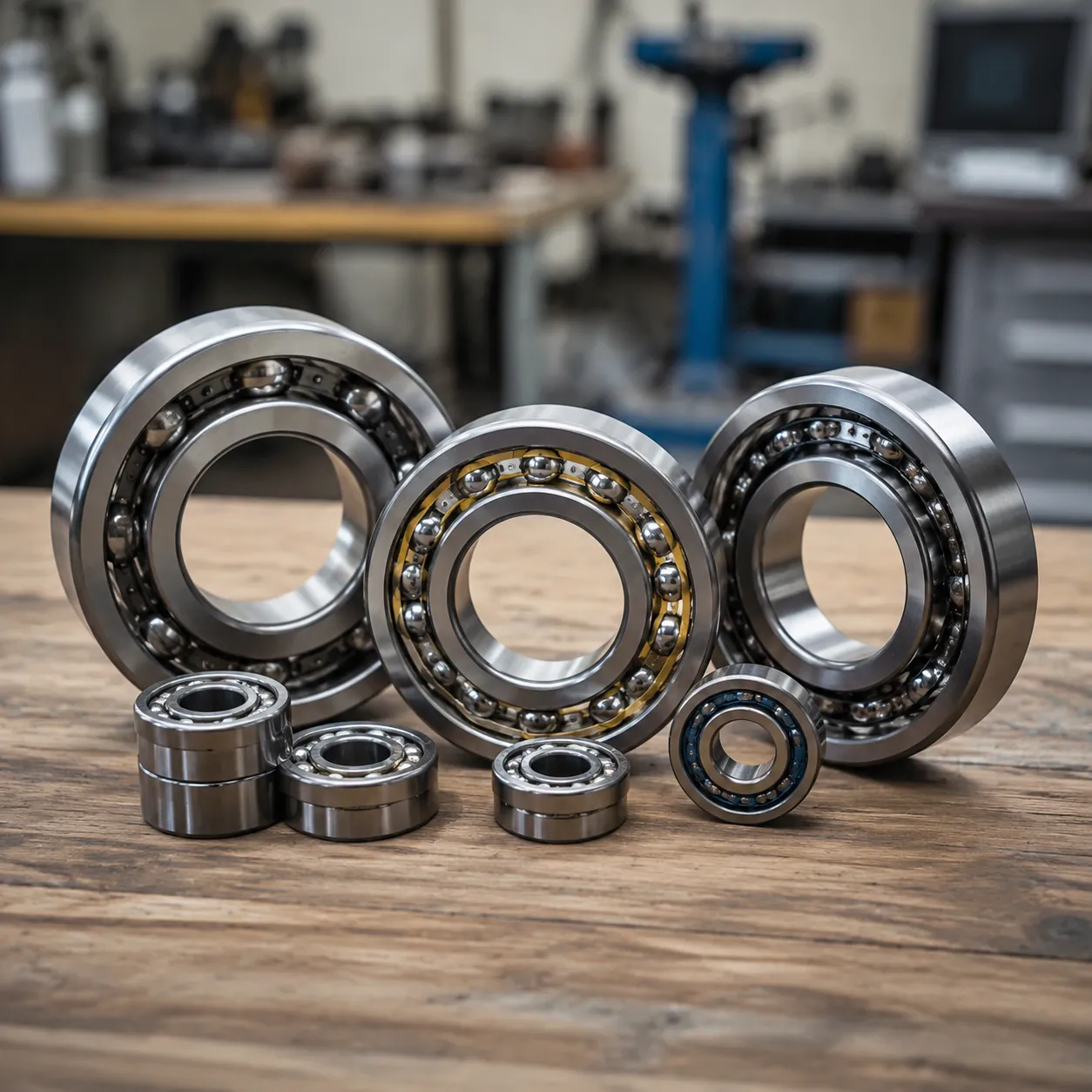
Resin rings: POM plastic, PEEK, and PTFE polymer bearings with engineered raceway design.
Dry running: Self lubricating, corrosion resistant plastic deep groove ball bearings for washdown and chemical duty.
Loads: Moderate radial load, axial load, and static load on rotating shafts with low friction and low maintenance.
Plastic Deep Groove Ball Bearings — Polymer Rings & Dry-Running Design
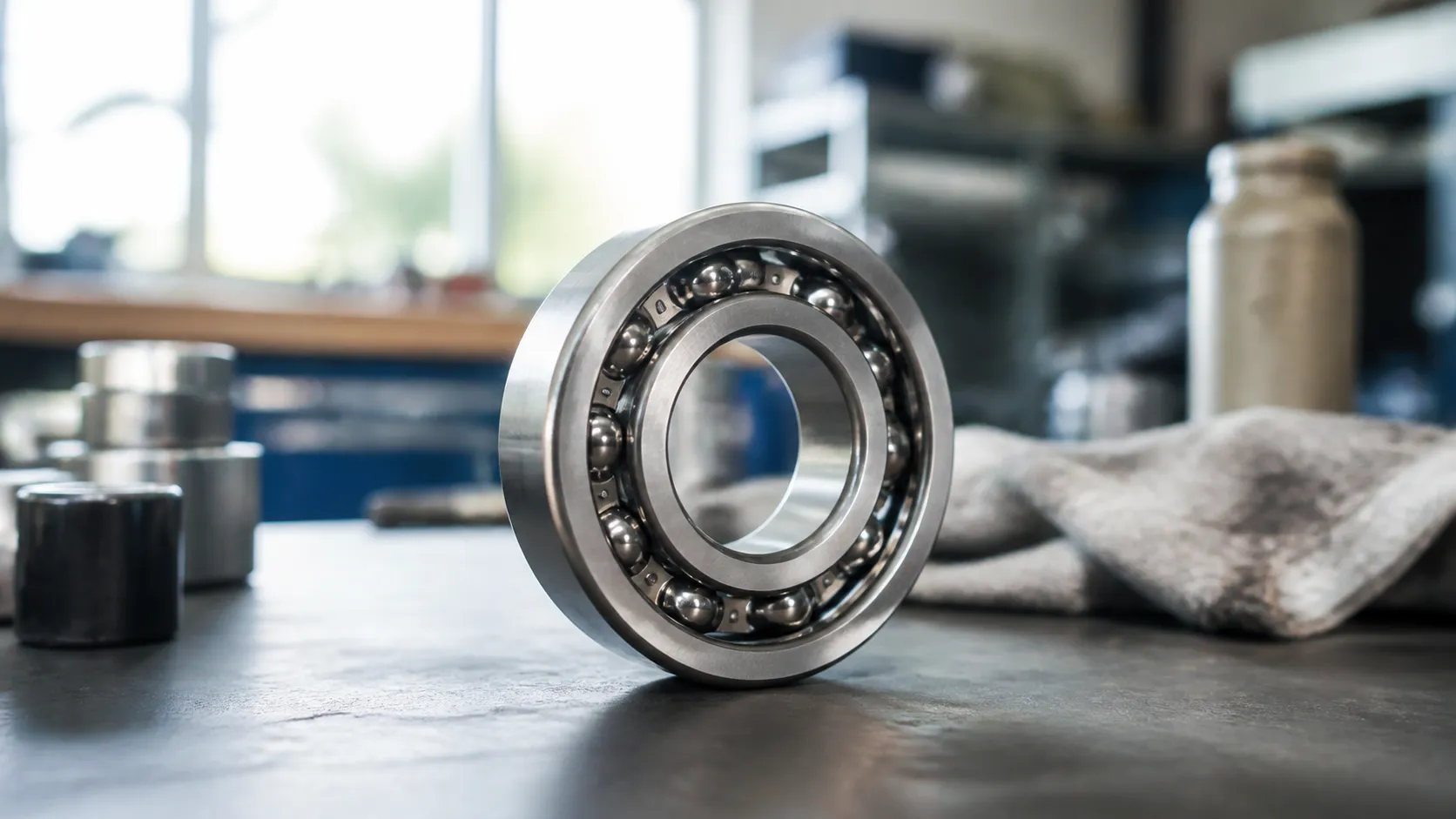
Plastic deep groove ball bearings replace steel where moisture, chemicals, or hygiene rules defeat grease and rust. Polymer bearings use precision bearing cages and raceway design for quiet duty on deep groove ball bearing parts (rings, balls, cage, closures).
| Load Type | Load Behavior | Operational Capability |
|---|---|---|
| Radial Load | Perpendicular to the shaft | Excellent primary load capacity; holds structural integrity under continuous rotation. |
| Axial Load | Parallel to the shaft | Moderate bi-directional thrust capacity due to deep, uninterrupted raceway grooves. |
Key Components of Polymer Ball Bearings
These plastic deep groove ball bearings rely on precision-molded components that work together seamlessly to ensure smooth motion:
- Inner and Outer Rings: Precision-machined from high-grade engineering polymers, featuring an optimized raceway design that securely guides ball movement and distributes operating stress evenly.
- Bearing Cages: High-strength polymer retainers that separate the rolling elements, preventing ball-to-ball contact, minimizing friction, and dampening operational noise.
- Precision Balls: Depending on target application requirements, we fit our bearings with 316 stainless steel, glass, or polymer balls.
Handling Radial and Axial Loads
Despite their lightweight build, plastic deep groove ball bearings are engineered to manage multi-directional forces on rotating shafts effectively:
The continuous, deep-groove geometry locks the balls into position, ensuring high operational stability under dynamic loads without risking premature cage wear or performance loss.
Types of Materials Used in Plastic Deep Groove Ball Bearings
Production covers these polymer deep groove ball bearings using high-performance engineering resins tailored to target operating conditions. Choosing the right material combination ensures maximum service life and prevents premature wear in demanding setups.
POM (Acetal) Plastic Bearings
POM acetal ball bearings serve as our reliable, standard choice for general industrial applications.
High mechanical strength: Offers great stiffness and excellent dimensional stability.
Low friction: Provides smooth rotation without extra grease or oil.
Best use: Standard conveyor lines, packaging machinery, and general mechanical drives.
PEEK Plastic Bearings
When the application involves high heat or aggressive chemicals, PEEK plastic bearings are built to take the punishment.
Extreme heat resistance: Operates continuously at temperatures up to 480°F (250°C).
Harsh chemical defense: Resists acids, solvents, and steam washdowns.
Best use: Semiconductor manufacturing, medical devices, and chemical processing.
PTFE (Teflon) Bearings
For maximum chemical resistance and ultra-low friction, PTFE bearings deliver superior performance.
Self-lubricating: Near-zero starting torque with zero risk of seizing.
Complete inertness: Unaffected by almost all industrial chemicals and acids.
Best use: Laboratory equipment, submerged chemical tanks, and ultra-clean environments.
Ball Material Options: Glass, Steel, and Plastic
The internal rolling elements dictate your bearing's load capacity, weight, and magnetic properties. Configurations use these corrosion resistant plastic bearings with three distinct ball options:
| Ball Option | Key Benefits | Ideal Applications |
|---|---|---|
| Glass Balls | 100% non-magnetic, non-conductive, rustproof | MRI equipment, marine sensors, cleanrooms |
| 316 Stainless Steel | Higher radial load capacity, excellent corrosion resistance | Food processing, washdown conveyors |
| Polymer / Plastic | Ultra-lightweight, maximum chemical immunity | Low-load liquid tanks, submerged machinery |
Key Performance Benefits of Plastic Deep Groove Ball Bearings
Plastic deep groove ball bearings trade peak static load for chemical resistance, self lubricating dry running, and low maintenance uptime.
| Key Feature | Technical Advantage | Core Customer Benefit |
|---|---|---|
| Corrosion Resistance | Total resistance to water, acids, and solvents | Eliminates rust downtime in wet processing environments |
| Self-Lubricating | Operates dry with low friction polymers | Cuts maintenance costs and prevents oil contamination |
| Lightweight Build | ~80% weight reduction compared to steel | Lowers startup torque and boosts drive system efficiency |
| Electrical Insulation | High dielectric strength; non-magnetic | Protects sensitive electronics and MRI diagnostic systems |
Corrosion and Rust Resistance
- 100% Rust-Proof: Our corrosion resistant plastic bearings will never rust when exposed to fresh water, salt water, harsh cleaning chemicals, or acids.
- Extended Equipment Life: Eliminates premature failures caused by oxidation in washdown or high-humidity environments.
Self-Lubricating Design
- Clean & Maintenance-Free: These self lubricating ball bearings operate completely dry without external grease or oil.
- Zero Contamination: Eliminates grease leaks on production lines, making them perfect for strict hygienic standards.
Lightweight Construction
- Reduced Mass: Plastic materials weigh up to 80% less than steel, drastically cutting overall component weight.
- Energy Savings: Lower mass means reduced rotational inertia, lower startup torque, and improved energy efficiency for drive motors.
Non-Magnetic and Electrical Insulation
- Electrical Resistance: Polymer materials naturally insulate against electric currents, preventing arching damage to raceways.
- Zero Magnetic Pull: Our non magnetic ball bearings cause no interference in sensitive electronic, semiconductor, or medical imaging equipment.
Performance Summary
Plastic vs. Steel Deep Groove Ball Bearings
Choosing between polymer deep groove ball bearings and traditional steel bearings comes down to target operating environment. While radial deep groove ball bearings in steel handle heavy-duty mechanical loads, these plastic deep groove ball bearings eliminate the rust, weight, and constant maintenance headaches that wear out steel options.
Performance Comparison
| Performance Metric | Plastic Deep Groove Bearings | Standard Steel Bearings |
|---|---|---|
| Weight & Density | 80% lighter (Reduces system inertia) | High density (Requires more drive energy) |
| Corrosion Resistance | 100% Rust-proof (Chemical & water safe) | Prone to corrosion without continuous grease |
| Load Capacity | Moderate radial load & axial load | Heavy-duty load support |
| Lubrication Needs | Self-lubricating (Zero grease needed) | Requires regular relubrication |
| Noise & Damping | Quiet operation (Absorbs shock naturally) | Higher noise at elevated speeds |
Weight and Density Advantage
- Energy efficiency: Weighing about 20% of standard steel, lightweight plastic bearings drop rotational inertia on rotating shafts.
- Lighter drive assemblies: Lower overall equipment weight reduces total energy draw across automated machinery.
Corrosion Resistance vs. Load Capacity
- The load trade-off: Steel provides higher static load capacity, but degrades fast in washdown or chemical environments.
- Built for harsh conditions: Corrosion resistant plastic bearings handle acids, moisture, and liquids where steel rusts and fails.
Noise Reduction and Shock Damping
- Silent running: Polymer materials naturally absorb shock, running significantly quieter than metal-on-metal friction.
- Vibration control: Damps system vibration to protect sensitive equipment setups.
Long-Term Cost Efficiency
- Zero lubrication costs: No ongoing grease purchases or manual lubrication schedules.
- Maximum uptime: Low maintenance design eliminates unscheduled shutdowns caused by rusted steel bearings, driving down long-term operating costs.
Common Applications Across Key Industries
Production covers plastic deep groove ball bearings to solve harsh operating challenges where standard steel bearings quickly fail. Here is where our polymer deep groove ball bearings deliver maximum uptime across key industrial sectors.
Food and Beverage Processing Equipment
Frequent washdowns, strict hygiene rules, and caustic cleaning chemicals quickly strip grease and rust steel components on processing lines.
- Zero Contamination: Food-grade plastic bearings run dry without grease, removing the risk of lubricant dripping into food products.
- Washdown Ready: Corrosion resistant plastic bearings withstand direct exposure to steam, hot water, and harsh sanitizing chemicals without seizing.
- Hygienic Operation: Built with FDA-compliant materials like POM acetal to ensure compliance on sorting conveyors, slicers, and bottling machinery.
Medical Devices and Pharmaceutical Machinery
Medical hardware and drug manufacturing demand extreme cleanliness, non-magnetic components, and whisper-quiet performance.
- MRI & Imaging Safe: Completely non magnetic ball bearings prevent interference in imaging machines, scanners, and surgical tools.
- Cleanroom Approved: Running dry means zero outgassing or particle shedding, protecting cleanroom integrity in automated lab equipment and pill fillers.
- Vibration Damping: Absorbs micro-vibrations for smooth, precise motion along delicate rotating shafts.
Chemical Processing and Semiconductor Manufacturing
Aggressive acids, solvents, and extreme temperatures destroy standard metal bearing raceways in days.
- Chemical Resistance: Programs use chemical resistant polymer bearings using PTFE and PEEK to survive full submersion in acid baths and solvent tanks.
- High-Purity Standards: Prevents metal ion contamination in semiconductor wet-bench processing and chemical metering pumps.
- Thermal Stability: Maintains dimensional stability under high temperatures without cracking or swelling.
Marine and Underwater Environments
Saltwater accelerates rust, locks up steel bearings, and washes grease directly into open water.
- 100% Rust-Proof: Our corrosion resistant plastic bearings operate indefinitely in marine environments without pitting.
- Submerged Performance: Paired with a 316 stainless steel ball option (compare nylon small deep groove ball bearings for hybrid polymer lines) or glass balls, these units provide reliable rotation in pool pumps, steering systems, and subsea ROVs.
- Eco-Friendly: Self lubricating ball bearings eliminate grease wash-out, keeping marine environments clean and lowering maintenance costs.
Industry Application Summary
| Industry | Main Challenge Solved | Ideal Bearing Configuration |
|---|---|---|
| Food & Beverage | Washdown corrosion & lubricant drips | POM acetal ball bearings with glass balls |
| Medical / Pharma | Magnetic interference & contamination | POM or PEEK plastic bearings with polymer balls |
| Chemical / Semiconductor | Acid exposure & extreme heat | PTFE bearings or PEEK with ceramic balls |
| Marine & Subsea | Saltwater rust & grease wash-out | Corrosion resistant plastic bearings with 316 stainless balls |
Selecting Plastic Deep Groove Ball Bearings by Load, Resin & Ball Material
Match resin grade, ball material, and closure style to temperature, chemistry, and load on rotating shafts. Resin bearings in POM, PEEK, and PTFE pair with optional bearing seals (2RS) on sealed deep groove ball bearings steel lines; polymer rings often run open or shielded for low friction.
| Ball Material | Ideal Application | Key Performance Advantages |
|---|---|---|
| Glass Balls | Non-magnetic & highly corrosive environments | 100% non-conductive, rustproof, light weight |
| 316 Stainless Steel Balls | Higher load requirements & washdowns | Maximum radial load capacity, superior impact resistance |
| Plastic Balls (POM/PEEK) | Ultra-lightweight & quiet operation | Zero metal contamination, lowest weight, silent running |
Matching Polymer Materials with Operating Temperatures
Temperature directly impacts the dimensional stability and load strength of polymer bearings. Datasheets recommend matching the environment with the appropriate base resin:
- POM (Acetal): Best for standard operating conditions up to 180°F (82°C). Ideal for everyday washdown and light-duty industrial applications.
- PTFE (Teflon): Handles continuous exposure up to 350°F (176°C) with ultra-low friction, though at slightly reduced load capacity.
- PEEK: The ultimate choice for extreme thermal environments, maintaining structural integrity up to 480°F (250°C).
Evaluating Chemical Exposure and Washdown Conditions
Chemical compatibility dictates how long your bearings will last under aggressive washdowns or solvent contact.
- Mild Moisture & Detergents: Standard POM acetal bearings easily resist rust, moisture, and mild alkaline cleaners.
- Concentrated Acids & Solvents: PEEK and PTFE chemical resistant polymer bearings withstand harsh acids, chlorine bleach, and aggressive pharmaceutical sterilization without degrading or swelling.
Calculating Speed, Radial Load, and Axial Load Requirements
Plastic deep groove ball bearings perform exceptionally well under light-to-medium mechanical demands. When sizing your bearing, keep these factors in mind:
- Radial Load: Polymer raceway design handles moderate forces perpendicular to the shaft. Keep working loads within specified plastic yield limits to prevent race deformation.
- Axial Load: The deep groove raceway supports moderate thrust loads parallel to the shaft.
- Speed Limits (RPM): Because plastics insulate heat rather than dissipate it, operating speeds must remain within rated limits to prevent thermal buildup in the bearing cage and raceway.
Selecting Ball Materials: Glass vs. 316 Stainless vs. Plastic
The ball material you choose inside the bearing cage dramatically changes performance under load and chemical contact:
Share bore/OD/width, resin grade (POM/PEEK/PTFE), ball material (glass, 316, polymer), and annual volume for itemized plastic deep groove ball bearings pricing—Contact JN Bearings with application notes or CAD drawings for OEM/ODM quotes.
Installation and Maintenance Best Practices
Proper handling and routine care keep plastic deep groove ball bearings running smoothly over long operational lifecycles. Load-direction limits for mixed duty are summarized in axial load vs radial load in deep groove ball bearings. Because polymers react differently to installation stresses than steel, following key mounting and maintenance steps prevents early wear and casing damage.
Proper Mounting Techniques
- Apply force evenly: Always press directly on the ring taking the fit—the inner ring for rotating shafts or the outer ring for housings. Never push against the balls or cages.
- Avoid direct impact: Never hammer polymer deep groove ball bearings into place. Sudden shocks crack or deform plastic housings.
- Control press-fit tolerances: Keep shaft and housing fits precise. Over-tightening causes binding and distortion along the inner and outer raceways.
Cleaning Protocols for Hygienic Environments
- Hassle-free washdowns: Because our self lubricating bearings operate grease-free, cleaning in food or medical environments is straightforward.
- Chemical rinses: Use warm water, mild detergents, or standard sanitizing solvents without risking rust or lubricant contamination.
- Clear debris early: Flush out abrasive dust or grit regularly to protect the precision raceway design from scratch damage.
Troubleshooting Wear Patterns and Failure Signs
| Wear Pattern | Primary Cause | Solution |
|---|---|---|
| Cracked outer ring | Excessive mounting force or over-tight press fit | Adjust shaft tolerances and use correct press tools |
| Uneven raceway wear | Shaft misalignment or housing distortion | Check shaft alignment and verify mounting squareness |
| Melted or warped plastic | Operating beyond material temperature or speed limits | Reduce speed or upgrade to high-temp materials like PEEK |
| Surface flaking or gouging | Exceeding maximum radial load capacity | Recalculate working loads or select a larger bearing size |
Frequently Asked Questions About Plastic Deep Groove Ball Bearings
Procurement and design FAQs for plastic deep groove ball bearings.
| Question | Answer | ||||||||||||
|---|---|---|---|---|---|---|---|---|---|---|---|---|---|
| Do plastic deep groove ball bearings require lubrication? | No. These polymer deep groove ball bearings are completely self-lubricating. Engineered resins like POM, PEEK, and PTFE feature inherently low friction coefficients. They do not require grease or oil to run smoothly. Operating without added lubricants prevents dirt accumulation and eliminates contamination risks in sensitive, hygienic environments. | ||||||||||||
| How much load can plastic ball bearings carry compared to steel? | Plastic bearings are designed for speed, chemical resistance, and weight reduction rather than heavy structural support.
While polymer bearings carry lower radial load and axial load limits than hardened steel, they excel in low-to-moderate weight applications where steel fails due to rust or chemical exposure. | ||||||||||||
| Can plastic ball bearings operate completely underwater? | Yes. Polymer deep groove ball bearings operate continuously while fully submerged in fresh water, salt water, or aggressive liquids. Because polymers like PEEK and POM do not rust, water actually acts as a natural coolant and rinse agent. For subsea or marine setups, pairing plastic rings with glass ball or 316 stainless steel ball options ensures maximum corrosion resistance and smooth rotation. | ||||||||||||
| Are plastic ball bearings safe for direct food contact? | Yes. Catalog lines supply food grade plastic bearings molded from FDA-compliant materials like virgin POM acetal and PEEK. Since these bearings run completely dry without grease, they remove the risk of lubricant leaking into production lines during high-pressure washdowns or continuous food processing operations. Send STEP, DWG, or PDF files to Contact JN Bearings for material compatibility review within 24 hours. |