Overview
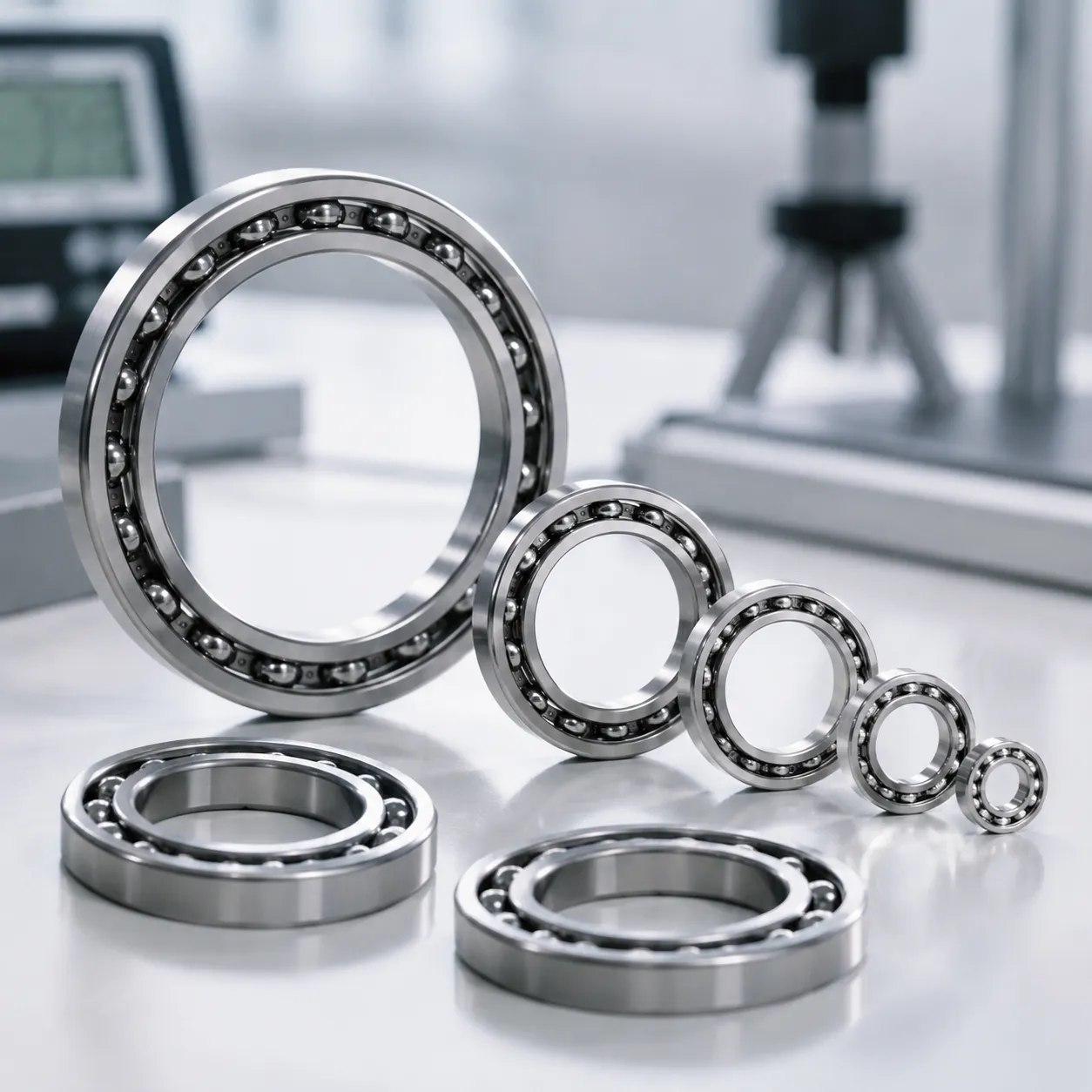
standard deep groove ball bearings in 6000/6200/6300 metric catalog lines: bore diameter and outside diameter per DIN 625 standard; open, ZZ, and 2RS builds for low friction duty.
What Are Standard Deep Groove Ball Bearings?
Engineering teams build standard deep groove ball bearings for versatile rolling bearing duty: low friction, low noise, and stable radial load support at high speed operation.
Core Components of a Rolling Bearing
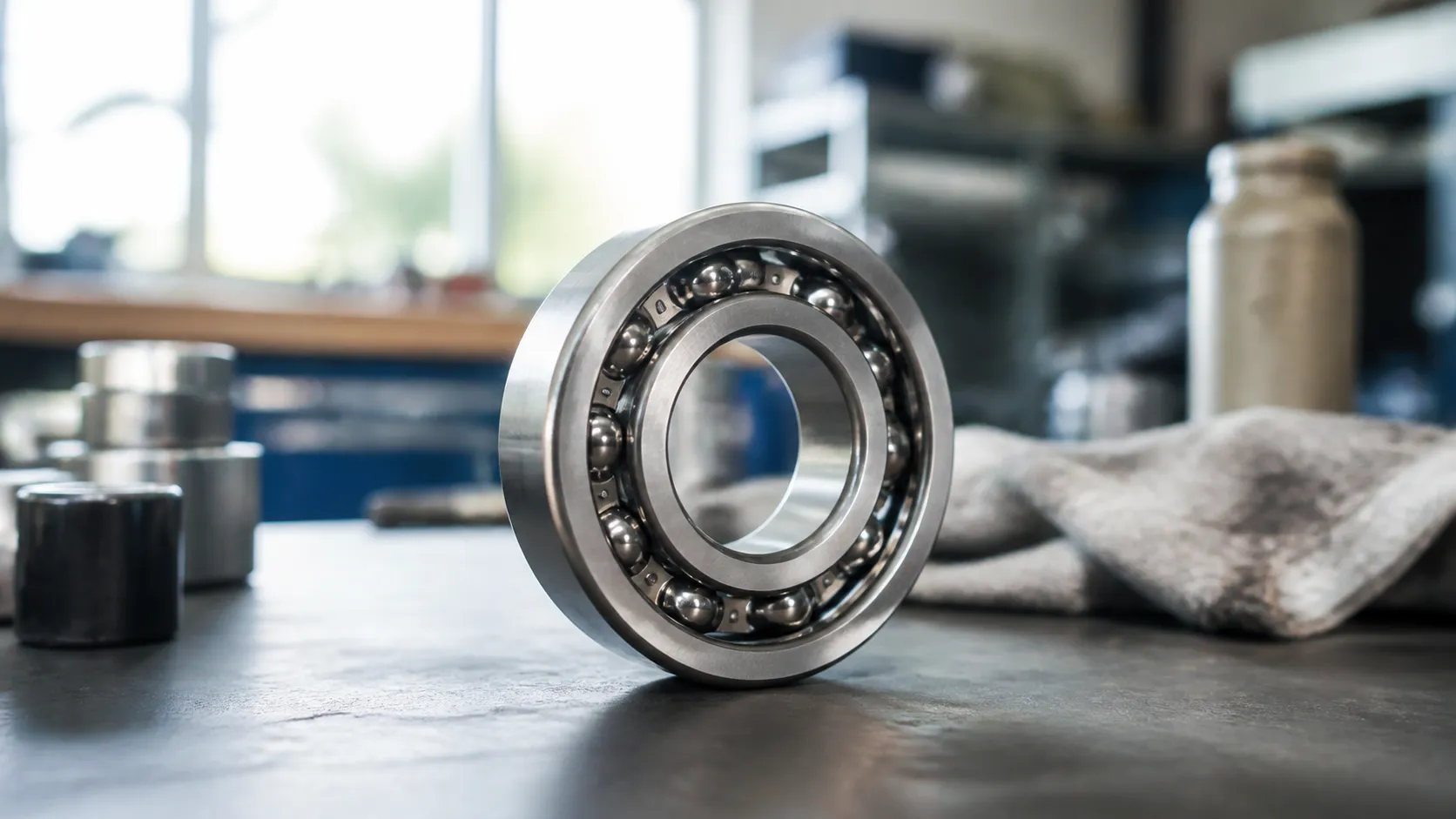
Every standard deep groove unit relies on four precision-machined elements to ensure smooth power transmission:
- Inner Ring: Secures directly to the rotating shaft, featuring a precision-ground raceway.
- Outer Ring: Fits into the stationary housing to support the primary structural load.
- Steel Balls: High-precision rolling elements that carry the load and minimize surface friction.
- Cage (Retainer): Separates the rolling elements, maintaining uniform spacing to prevent ball-to-ball contact during high speed operation.
How Deep Groove Raceways Handle Radial and Axial Loads
The performance advantage of a radial ball bearing lies in its continuous, deep raceway profile. The close osculation between the deep groove raceway and the precision steel balls creates a stable contact area.
This design enables the bearing to manage heavy radial load demands while simultaneously accommodating moderate axial (thrust) loads in either direction—even at elevated rotational speeds.
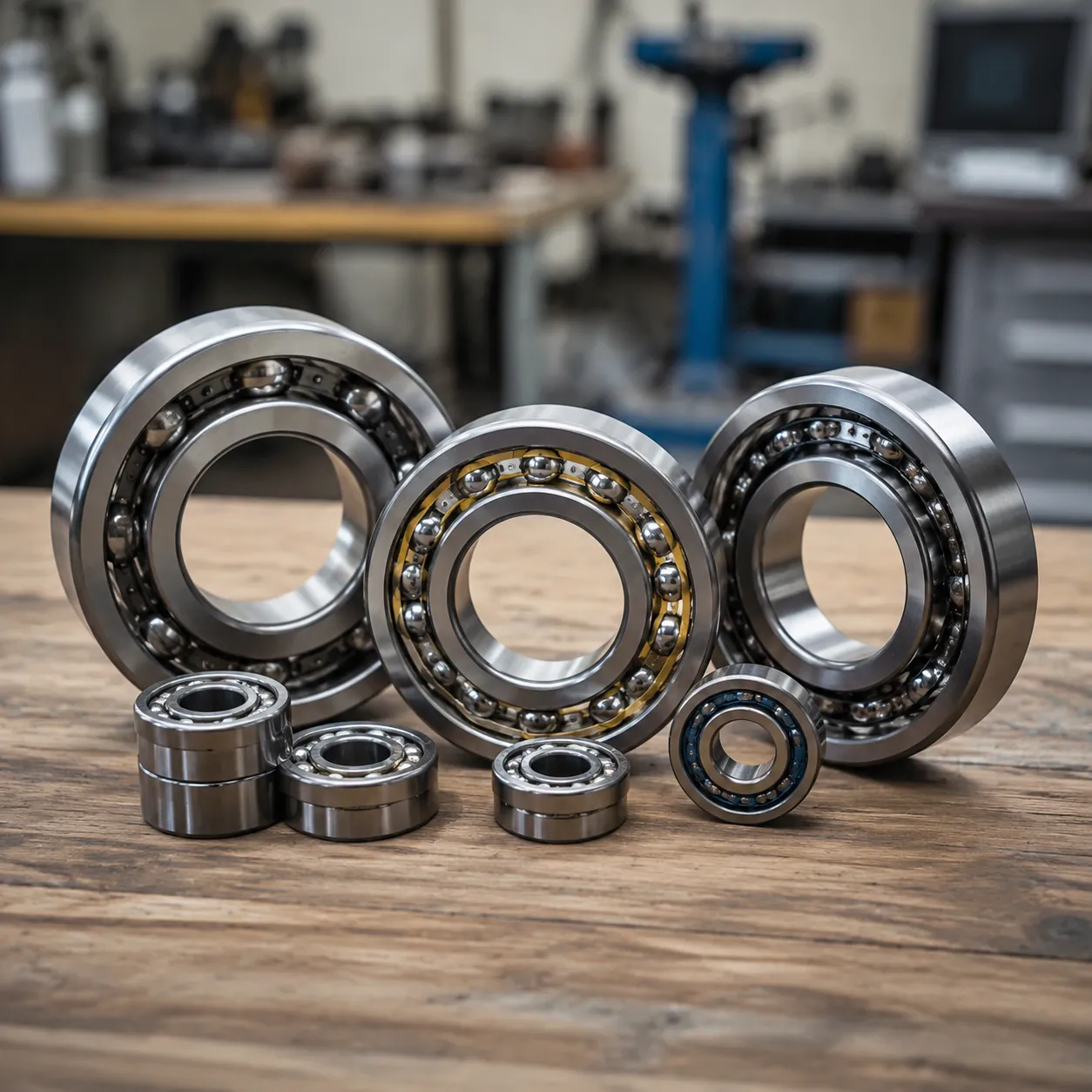
Single Row vs Double Row Standard Designs
Selecting the right configuration depends on your spatial envelope and load requirements:
| Design Type | Load Characteristics | Primary Applications | Key Benefit |
|---|---|---|---|
| Single Row Deep Groove Ball Bearings | High speed, moderate radial and axial loads | Electric motors, pumps, power tools | Versatile, low friction, compact footprint |
| Double Row Deep Groove Ball Bearings (see double row deep groove ball bearings) | Significantly higher bearing load capacity | Heavy gearboxes, industrial drives, heavy-duty shafts | Maximum load capacity in a single assembly |
Standard Deep Groove Ball Bearing Types and Dimensions
Open, Shielded (ZZ), and Sealed (2RS) Variants
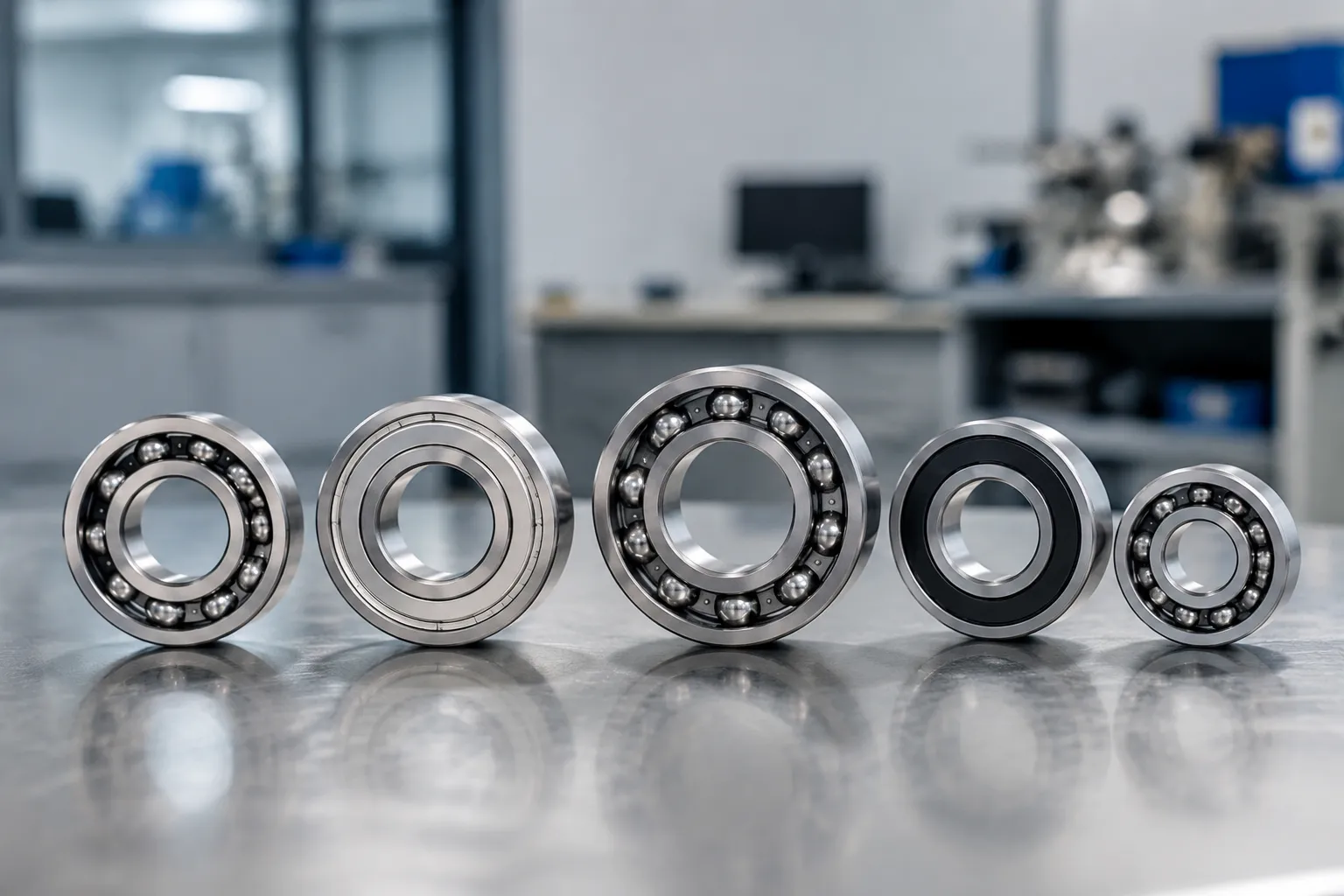
Catalog lines for standard deep groove ball bearings ship in open, ZZ, and 2RS configurations—including double rubber sealed builds detailed on sealed deep groove ball bearings.
- Open Bearings: Designed for clean setups with existing oil lubrication systems. They generate the lowest friction and handle the highest speed limits.
- Metal Shielded Ball Bearings (ZZ): Feature dual steel shields that block large debris while holding in grease. Non-contact shields ensure low operating torque for high-speed runs.
- Rubber Sealed Ball Bearings (2RS): Utilize double rubber seals in direct contact with the inner ring. These deliver maximum sealing against dust, dirt, and moisture, serving as permanently lubricated, maintenance-free units.
ISO Boundary Dimensions and Metric Sizing
ISO metric lines adhere to the international DIN 625 standard; companion inch sizes and R-series options appear on custom imperial deep groove ball bearings inch size options. Metric interchange covers three primary parameters: This guarantees direct interchangeability for global machinery platforms across three primary parameters:
- Bore diameter (inner diameter): Matches standardized shaft sizes.
- Outside Diameter: Fits precisely into metric housing bores.
- Width: Standardized dimensions across common series like 6000, 6200, and 6300.
Internal Clearance Ratings (C2, CN, C3, C4)
Internal clearance is the physical play between the rolling elements and raceways. Selecting the proper rating prevents premature failure caused by thermal expansion or shaft press-fits.
| Clearance Rating | Operational Fit | Ideal Application |
|---|---|---|
| C2 | Less play than Normal | Precision gearboxes and high-rigidity spindles |
| CN (Normal) | Standard factory clearance | General electric motors and light machinery |
| Bearing Clearance C3 | Greater play than Normal | High-speed electric motor bearings with high heat |
| C4 | Extra large internal play | Heavy industrial gear sets running under extreme thermal expansion |
Bearing Steel, Cage & Material Options
Chrome Steel 52100 Bearing Construction
Builds use standard deep groove ball bearings using 52100 high-carbon chromium steel as the baseline bearing steel grade. This premium alloy gives the inner and outer ring, along with the balls, maximum hardness, wear resistance, and fatigue strength under continuous radial loads.
- High Hardness: Heat-treated to 60–64 HRC for extreme durability.
- Low Noise & Vibration: Precision-ground deep groove raceway surfaces ensure smooth, quiet operation.
- Cost Efficiency: The go-to industrial choice for electric motors, gearboxes, and general machinery.
Stainless Steel vs Ceramic Hybrid Bearings
For washdown zones, chemical exposure, or extreme thermal environments, standard chrome steel isn't enough. Catalog lines include specialized builds designed to prevent premature failure.
| Feature | Stainless Steel (AISI 440C) | Ceramic Hybrid (Silicon Nitride Si3N4) |
|---|---|---|
| Best For | Moisture, food processing, mild chemicals | High speeds, extreme heat, electrical currents |
| Corrosion Resistance | High | Superior (Completely rustproof) |
| Speed & Friction | Standard | Low friction, up to 30% higher speeds |
| Electrical Insulation | Conductive | 100% Non-conductive (Stops arc pitting) |
Steel, Brass, and Polyamide Cage Designs
The cage keeps the rolling bearing elements spaced evenly to minimize friction and heat. We match cage materials directly to your operational demands:
- Pressed Steel Cages: The standard, versatile choice for general industrial uses and high-temperature tolerance.
- Machined Brass Cages: Built for heavy shock loads, high speeds, and severe vibration environments.
- Polyamide (Nylon) Cages: Lightweight and flexible, offering low noise and high speed operation with minimal lubrication needs.
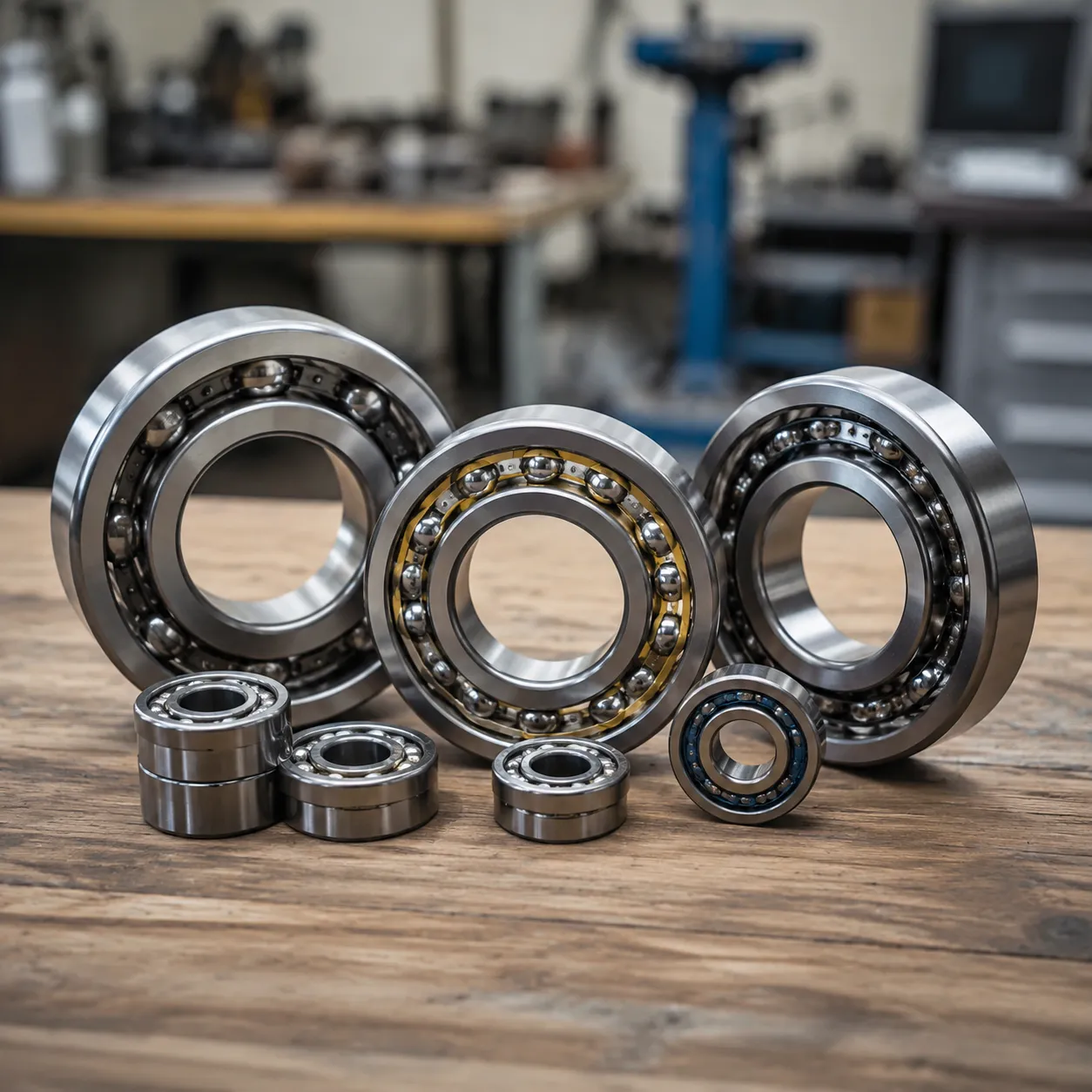
Selection Guide and Technical Applications for Standard Deep Groove Ball Bearings
Built for standard deep groove ball bearings to deliver low friction, low noise, and reliable radial load support across demanding industrial setups. Selecting the right bearing comes down to matching your equipment's operating speeds, dynamic load capacity, and thermal limits.
Electric Motor Bearings and Everyday Machinery
Single row deep groove ball bearings power daily equipment where quiet, smooth rotation matters most:
- Electric Motors: Provides low-torque, high speed operation to minimize energy loss.
- Industrial Pumps: Supports steady radial loads and light thrust loads under continuous duty.
- Gearboxes & Drives: Maintains precise shaft alignment under variable torque conditions.
- Home Appliances: Offers long-term service in HVAC units, washers, and power tools.
Key Performance Thresholds
| Technical Parameter | Primary Consideration | Practical Requirement |
|---|---|---|
| Load Capacity | Dynamic load rating C vs. static load rating C0 | Calculate working forces to ensure long fatigue life. |
| Operating Speed | Max RPM limits | Use grease for normal speeds; oil for ultra-high RPMs. |
| Temperature Range | Material and seal heat resistance | Standard chrome steel 52100 operates from -20°F to 230°F. |
Bearing Lubrication Grease vs Oil Maintenance
Selecting the right lubricant keeps your rolling bearing running cool and prevents premature wear:
- Grease Lubrication: Best for moderate-to-high speeds. Sealed variants ship permanently lubricated with factory grease for maintenance-free duty.
- Oil Lubrication: Ideal for maximum high speed operation or extreme heat. Uses circulating oil systems to carry heat away from the inner and outer ring raceways.
Installation, Maintenance & Troubleshooting
Mounting and Dismounting Techniques
Improper installation causes over 16% of premature bearing failures. Builds use standard deep groove ball bearings to exact tolerances, making correct installation vital for long-term reliability.
- Apply Force Correctly: Always press against the ring taking the tight fit. Apply force directly to the inner ring for shaft fits, or the outer ring for housing fits. Never apply force through the balls, which dents the deep groove raceway.
- Thermal Mounting: For tight shaft fits, heat the bearing using an induction heater to roughly 230°F (110°C) to expand the inner ring. Never hit a cold bearing with a hammer or use an open flame.
- Safe Dismounting: Use hydraulic or mechanical pullers that grip the inner ring directly to pull the bearing off without damaging the shaft shoulder.
Grease Replenishment and Contamination Control
Solid particles and moisture destroy smooth rolling surfaces fast. Protecting the bearing interior and using the right lube schedule maximizes operating life.
| Bearing Type | Lubrication Setup | Maintenance Approach |
|---|---|---|
| Rubber Sealed (2RS) | Factory-filled grease | Zero maintenance: Double rubber sealed for life to block dust and water. |
| Metal Shielded (ZZ) | Factory-filled grease | Low maintenance: Retains grease and blocks larger debris in clean environments. |
| Open Bearings | Grease or oil bath | Scheduled maintenance: Requires regular re-greasing tailored to run time and speed. |
Note: Never over-pack open bearings. Fill the housing cavity only 30% to 50% full. Excess grease creates churning friction, driving up operating temperatures.
Early Failure Signs
Spotting trouble before complete lockup saves expensive motor and equipment shafts. Watch for these three warnings during routine inspections:
- Noise: A high-pitched whine means poor lubrication. A harsh clicking or grinding sound signals grit contamination or chipped balls.
- Vibration: Increased vibration distorts low-noise performance and points to shaft misalignment, improper preloading, or surface fatigue on the inner ring.
- Overheating: Running unusually hot (spikes above 200°F / 93°C) typically stems from too much grease, tight clearance, or excessive radial load.
Share bore × OD × width, seal code (open / ZZ / 2RS), clearance (C2/CN/C3), and quantity for standard deep groove ball bearings pricing—Contact JN Bearings with shaft/housing fits and cross-reference part numbers.
Standard Deep Groove Ball Bearings FAQ
Open vs Shielded ZZ vs Sealed 2RS Bearings
Catalog lines include three standard enclosure options for standard deep groove ball bearings to match your operating environment:
| Bearing Type | Closure Type | Protection Level | Primary Advantage |
|---|---|---|---|
| Open | None | Minimal | Lowest friction, oil bath setup |
| Metal Shielded (ZZ) | Non-contact steel | Medium | Retains grease, high speed operation |
| Rubber Sealed (2RS) | Contact synthetic rubber | Maximum | Dual protection against dust and moisture |
- Open: Best for clean applications with external lubrication.
- Metal Shielded Ball Bearing ZZ: Ideal for dry environments where low drag matters.
- Rubber Sealed Ball Bearing 2RS: Factory pre-filled with bearing lubrication grease for long-term, zero-maintenance service.
Bearing Lifespan and Service Life
The working life of standard deep groove ball bearings depends on proper mounting, alignment, and load conditions. Built from high-grade chrome steel 52100 bearing material, our units offer exceptional fatigue resistance. Under normal loads and clean operating conditions, they regularly run for tens of thousands of continuous service hours.
Handling Radial Load and Thrust Load
Yes. While engineered primarily as radial ball bearings, the precise deep groove raceway geometry allows them to handle moderate axial (thrust) loads in both directions. In general, they manage an axial force of 20% to 50% of their basic dynamic radial load rating.
Understanding Bearing Clearance C3
Bearing clearance C3 means the internal radial space between the balls and rings is larger than normal standard clearance. Recommended practice: C3 clearance for:
- High Speed Operation: Offsets friction heat and thermal expansion.
- Electric Motor Bearings: Prevents binding when temperature differences occur between the shaft and housing.
- Heavy Interference Fits: Accommodates ring expansion during tight shaft mounting.
Need stamped equivalents or inch sizes cross-checks? Contact JN Bearings with duty RPM, load band, and enclosure preference.