Overview
Radial & Deep Groove Ball Bearings — Product Overview
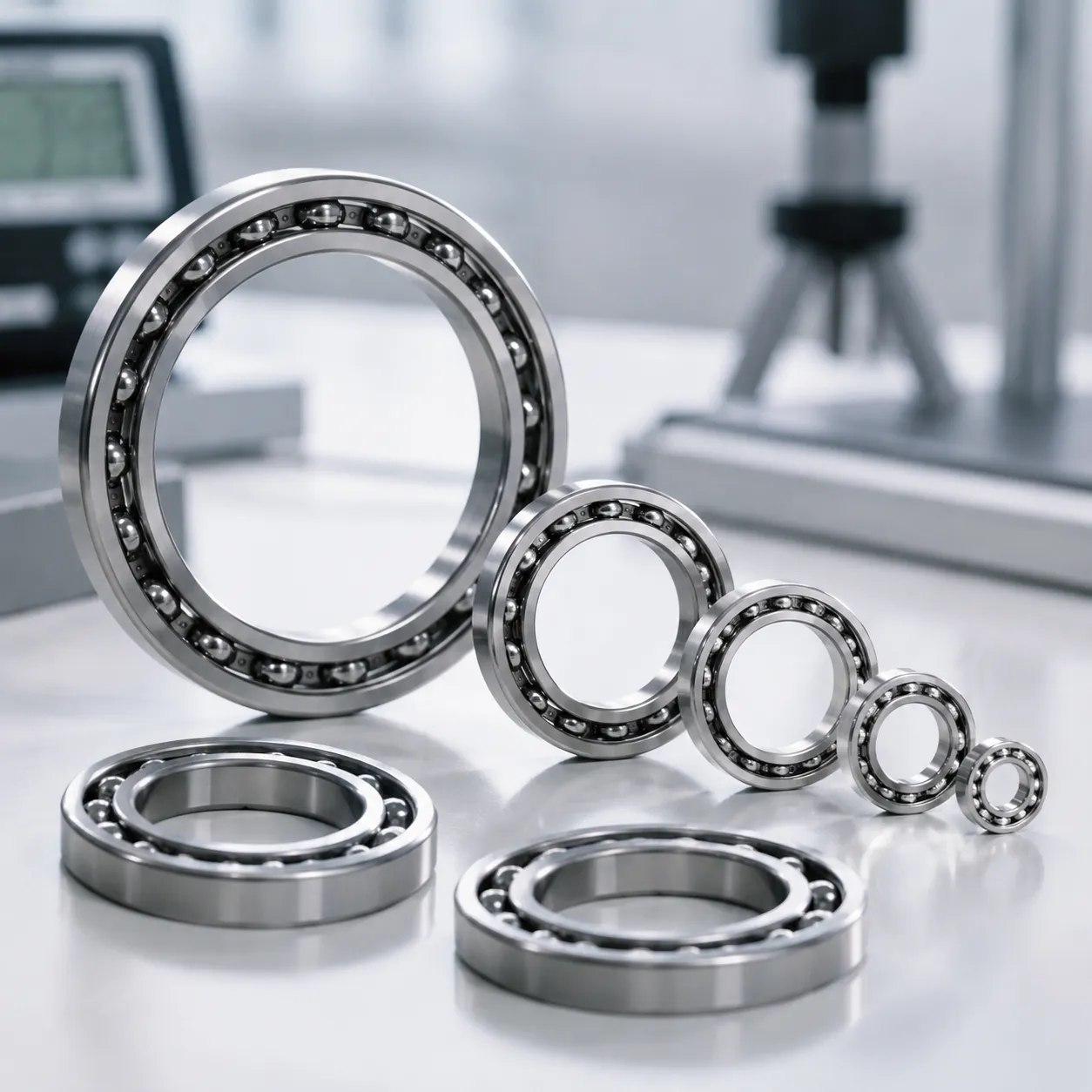
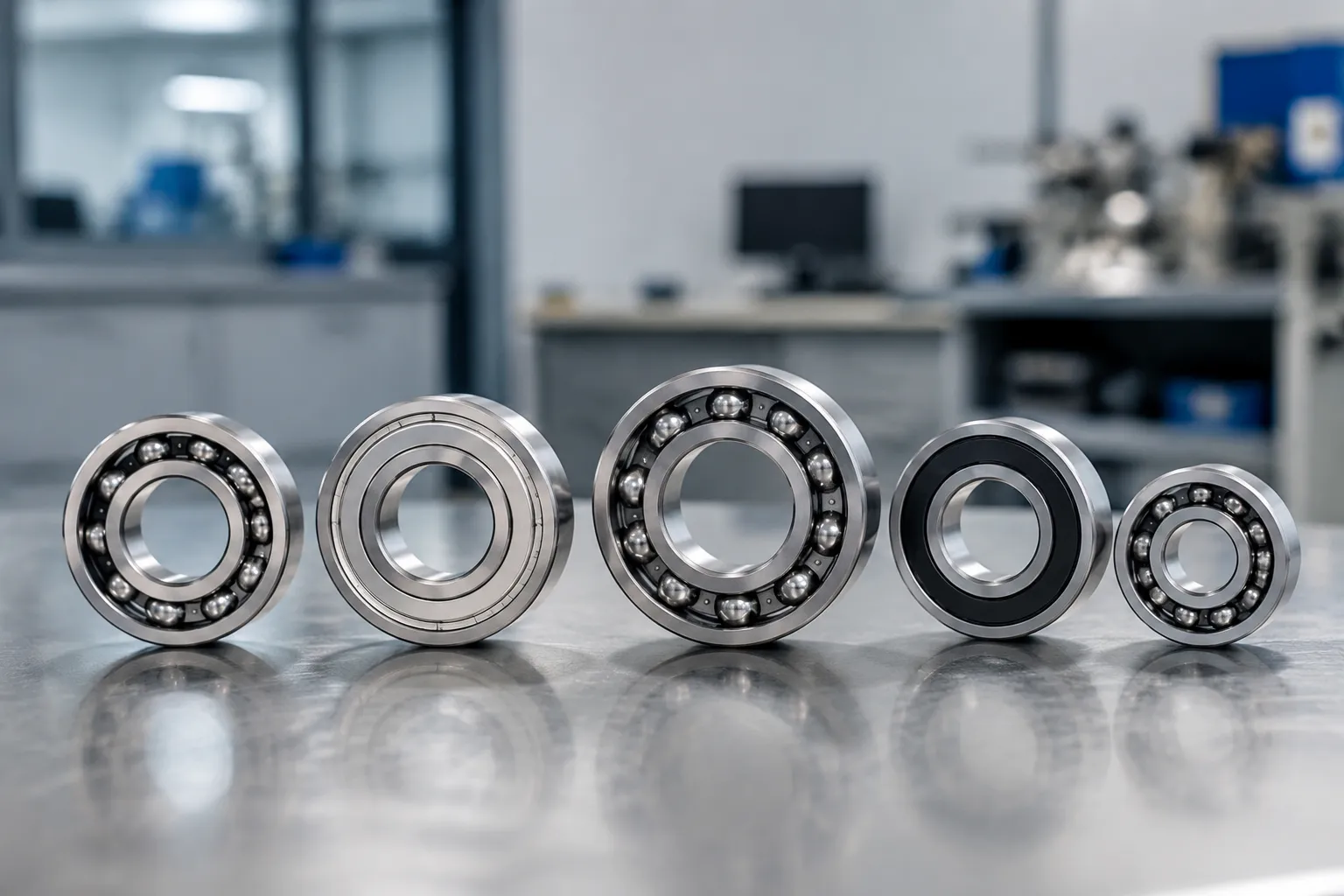
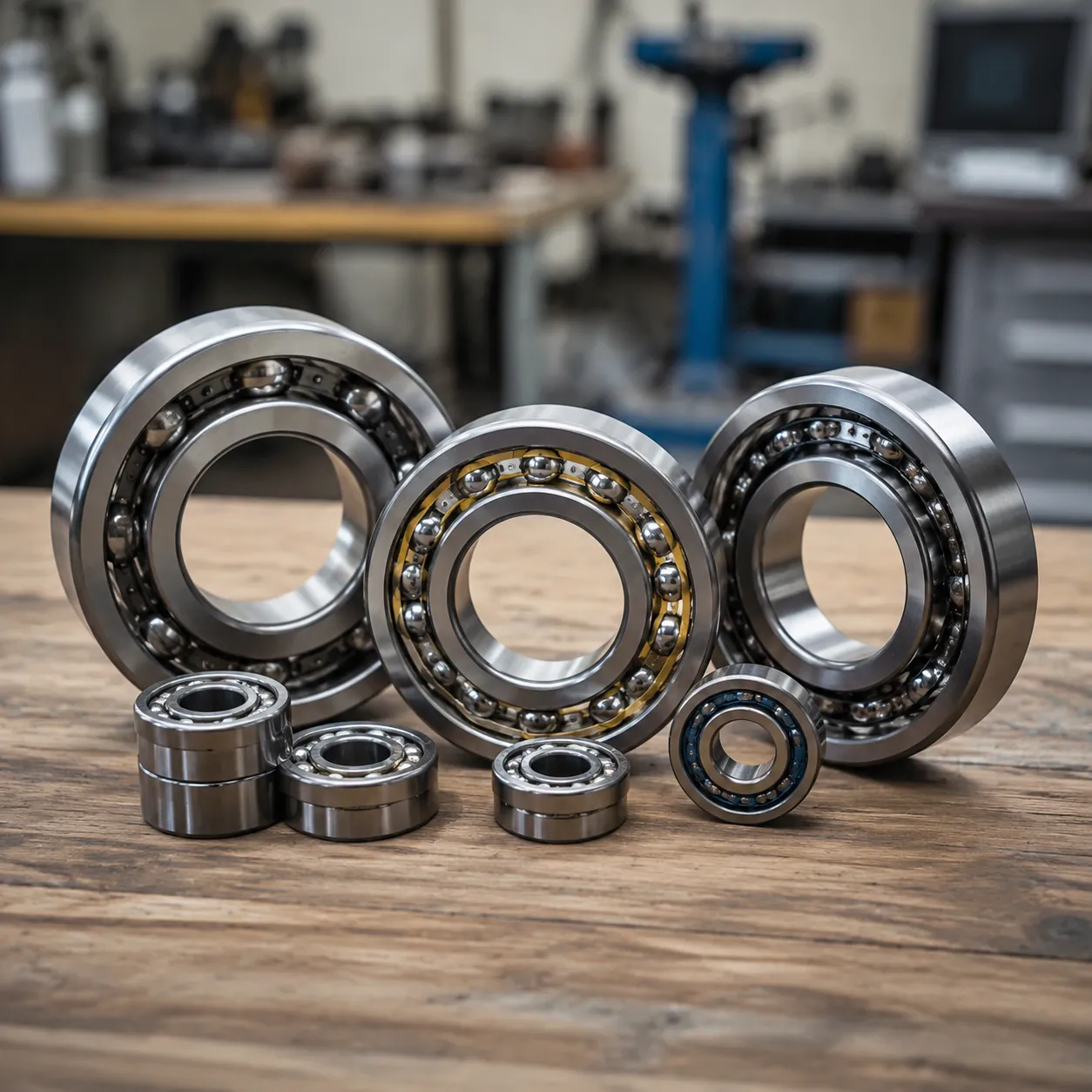
These radial & deep groove ball bearings are single row rolling bearings with a deep radial raceway, non-separable design, and grease-enclosed shield bearings or sealed (2RS) options for high-speed operation in industrial equipment and mechanical engineering applications. Standard bore 3 mm–400 mm; OEM programs from 500 pcs with custom clearance, material, and seal type.
Engineered primarily for radial load capacity—forces perpendicular to the shaft—while handling moderate axial loads in both directions through deep-groove geometry.
Understanding the Basic Design
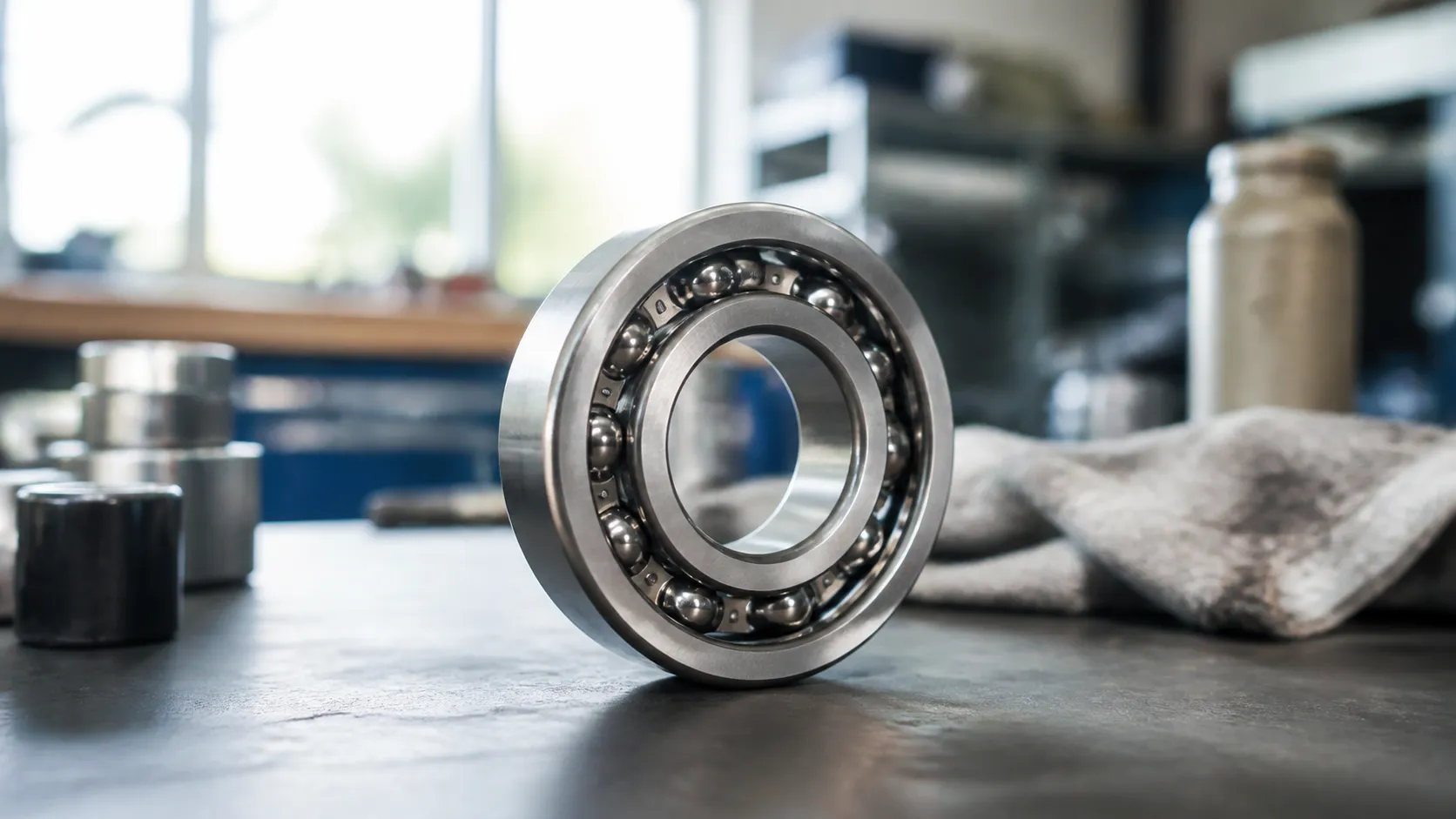
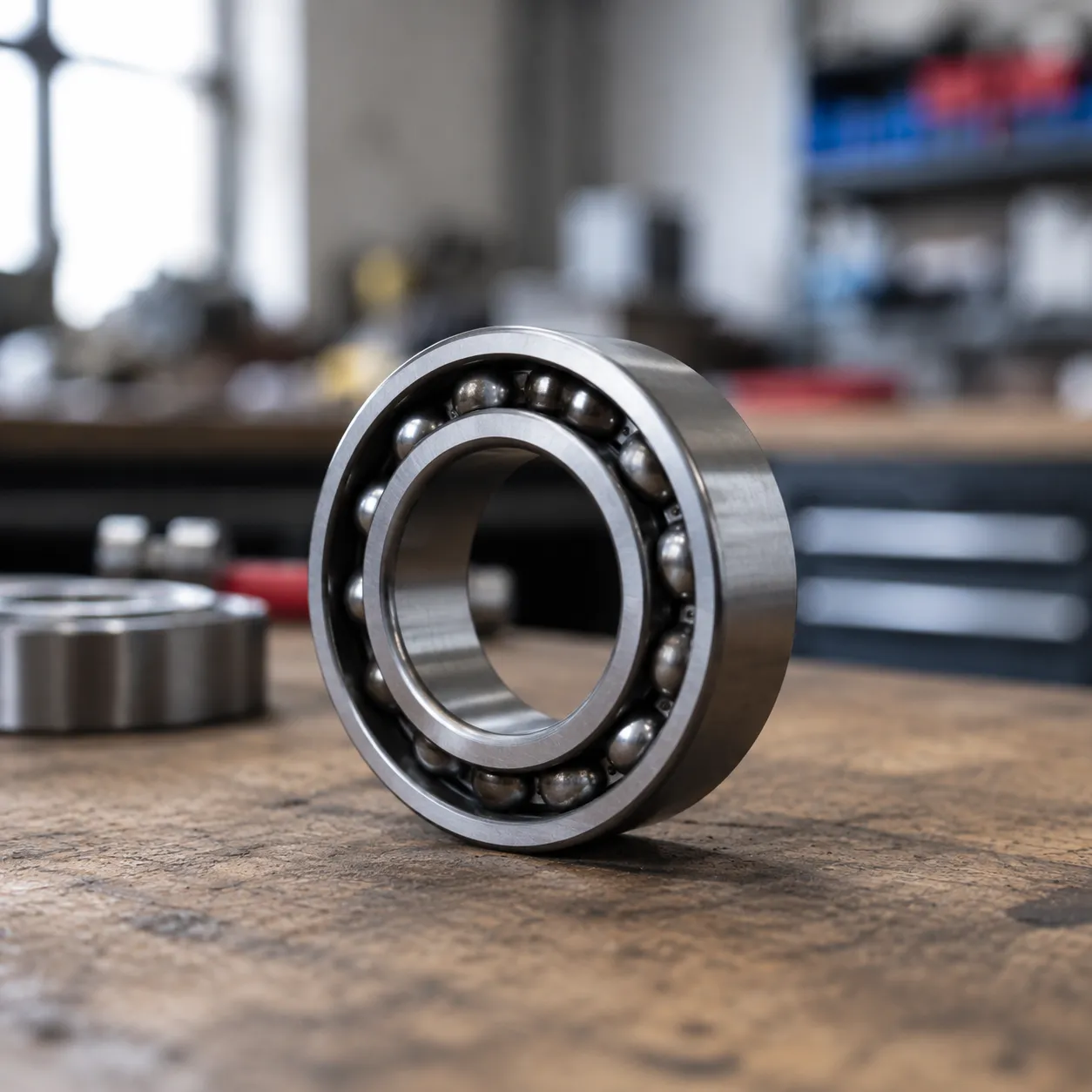
A radial deep groove ball bearing uses a non-separable design for ease of use as one solid unit:
- Outer Ring: The exterior collar that mounts fixed inside your housing.
- Inner Ring: The interior collar that clamps directly onto your rotating shaft.
- Radial Raceway: Deep, curved grooves carved into both the inner ring and outer ring.
- The Balls and Cage: High-precision steel spheres rolled inside the raceways, held apart evenly by a tracking cage to prevent friction during high-speed operation.
How They Handle Radial vs Axial Loads
While optimized for heavy radial load capacity, deep-groove geometry also supports moderate axial loads (forces parallel to the shaft).
| Load Type | Performance Level | How the Bearing Reacts |
|---|---|---|
| Radial Loads | Excellent | The weight presses straight down onto the deep radial raceway, distributing force evenly across the balls. |
| Axial Loads | Moderate / Low | The deep walls allow the bearing to sustain low axial forces or light thrust loads from both directions alongside the main radial weight. |
Common Everyday Uses
Highly versatile single row deep groove ball bearings serve as a cost-effective alternative to more complex bearing types across industries:
- Electric Motors & Pumps: Powering smooth, low-vibration rotational speeds.
- Automotive Alternators & Drivetrains: Handling constant shifts in speed and high radial stress.
- Household Appliances: Keeping washing machine drums and ceiling fans balanced and silent.
- Factory Automation: Driving conveyor systems and robotic arms that require low maintenance and absolute precision.
Key Differences: Radial vs Deep Groove Bearings
While all deep groove options fall under the category of radial bearings, the specific design of single row deep groove ball bearings sets them apart. Standard radial bearings are built primarily to handle weight perpendicular to the shaft. However, the deep radial raceway in deep groove models changes the performance dynamic entirely, making them far more versatile for everyday industrial equipment.
Load Capacity and Speed Ratings
The structural differences between generic radial bearings and radial & deep groove ball bearings directly impact how they perform under different stresses.
| Performance Factor | Standard Radial Bearings | Radial & Deep Groove Ball Bearings |
|---|---|---|
| Radial Load Capacity | High capability for perpendicular weight. | Exceptional capacity for heavy radial loads. |
| Axial Loads | Extremely limited or none. | Easily handles low axial forces in both directions. |
| Rotational Speed Limits | Standard operating speeds. | Optimized for continuous, high-speed operation. |
| Friction Levels | Moderate friction during startup. | Exceptionally low friction and smooth rotation. |
Lifespan and Durability Comparison
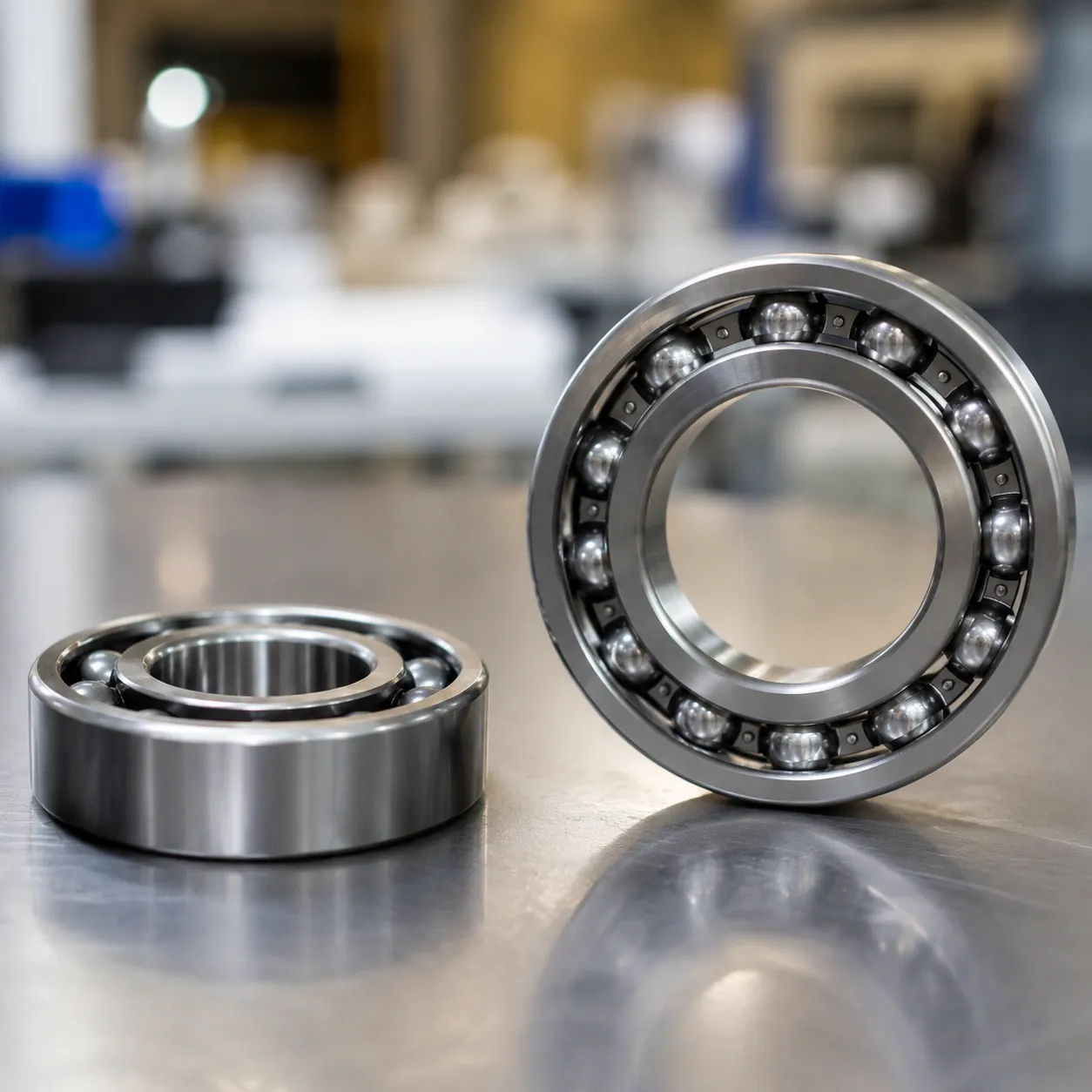
The specialized architecture of deep groove options gives them a distinct edge in long-term durability:
- Reduced Heat Generation: Low friction levels prevent the bearing from overheating, which is the number one cause of premature lubricant breakdown.
- Structural Integrity: The non-separable design ensures that the inner ring and outer ring stay perfectly aligned, even during rapid speed shifts.
- Longer Service Intervals: Because they handle combined loads so well without wearing down, they serve as a highly cost-effective alternative that reduces downtime for US maintenance teams.
Selecting the Best Radial & Deep Groove Ball Bearings for Your Machine
Choosing the right radial & deep groove ball bearings determines your machine's performance, lifespan, and maintenance intervals. For catalog shield bearings and sealed lines, see sealed deep groove ball bearings; for volume supply, compare deep groove ball bearings factory programs.
Matching Boundary Dimensions and Shaft Sizes
A precise fit is non-negotiable. You must match the bearing's inner ring bore exactly to your shaft size. Standardized boundary dimensions ensure compatibility, but you must account for ball bearing clearance (like C3 clearance for high-heat or high-speed setups) to prevent binding as parts expand during high-speed operation.
Choosing Shielded (ZZ) vs. Sealed (2RS) Options
The right enclosure protects the radial raceway from contaminants and retains the lubrication.
| Feature | Shielded Bearings (ZZ) | Sealed Bearings (2RS) |
|---|---|---|
| Design | Non-contact metal shields | Contact rubber seals |
| Friction & Speed | Minimal friction, higher rotational speed limits | Higher friction, lower speed limits |
| Protection | Keeps out large dust particles | Waterproof and dust-tight |
| Lubrication | Grease-enclosed, might leak over time | Factory-greased, zero leakage |
Material Selection: Chrome Steel vs. Stainless Steel vs. Ceramic
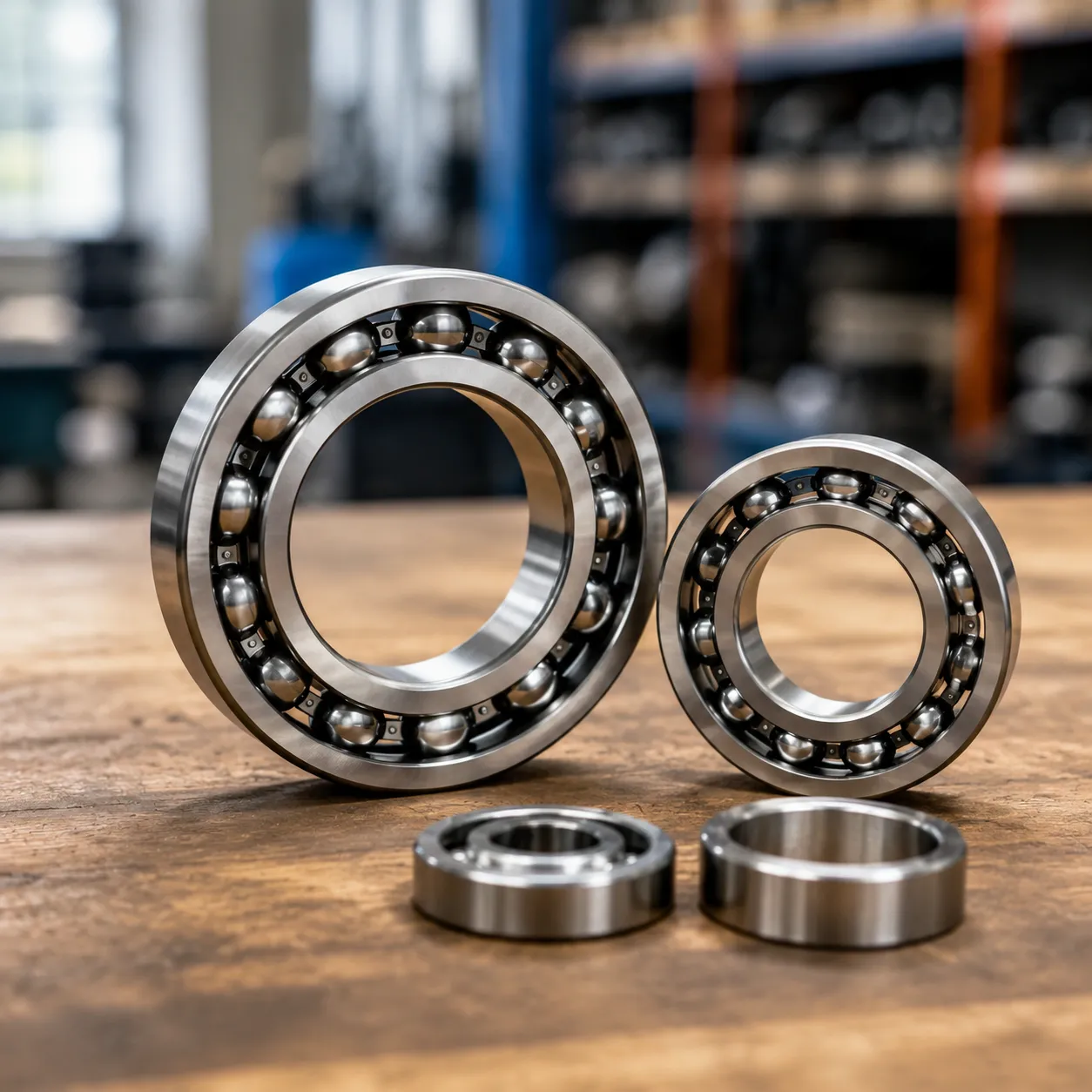
The choice of bearing steel grades dictates how your rolling bearings handle environmental stress and load capacity.
- Chrome Steel (52100): Our standard, most cost-effective alternative for everyday industrial equipment. It offers the highest radial load capacity and excellent wear resistance but will rust if exposed to moisture.
- Stainless Steel (440C): Ideal for food processing, medical gear, or marine environments. It resists corrosion perfectly while still maintaining reliable load limits.
- Ceramic (Silicon Nitride): Built for extreme environments. Ceramic balls are lighter, non-conductive, handle massive speeds, and require less lubrication, making them a premium choice for high-end mechanical engineering projects.
Radial & Deep Groove Ball Bearings Specification Summary
| Parameter | Typical Range / Options | Notes |
|---|---|---|
| Bore diameter | 3 mm – 400 mm | 6000/6200/6300 series and inch equivalents |
| Design | Non-separable design · single row | Ease of use for drop-in OEM replacement |
| Enclosure | Shield bearings (ZZ) · sealed (2RS) | Grease-enclosed factory fill standard |
| Load types | Primary radial · moderate axial loads | See axial load vs radial load in deep groove ball bearings for paired duty |
| Speed | High-speed operation rated | ZZ preferred for maximum RPM; 2RS for contamination control |
OEM Customization, MOQ & Lead Times
OEM programs for radial & deep groove ball bearings cover custom bore/OD/width, clearance groups (C2–C5), shield bearings or 2RS seals, and branded packaging for industrial equipment distributors.
- MOQ: Standard catalog lines typically from 500 pcs; fully custom tooled orders from 3,000–5,000 pcs depending on size.
- Sampling: Prototype batches usually ship within 7–15 business days after drawing approval.
- Volume production: 4–6 weeks for custom radial deep groove ball bearing programs; repeat OEM SKUs can enter stock programs.
- Materials: GCr15 chrome steel standard; 440C stainless or hybrid ceramic on request for specialized mechanical engineering duty.
Radial & Deep Groove Ball Bearings Installation & Maintenance
Proper handling and upkeep dramatically extend equipment uptime for radial & deep groove ball bearings.
How to mount bearings without damaging them
Never strike the inner ring or outer ring directly. Heavy impacts cause brinelling—tiny dents in the radial raceway that lead to early failure.
- Use the right tools: Use a press sleeve or impact ring that matches the face of the ring being installed.
- Apply force correctly: When pressing onto a shaft, apply force to the inner ring. When installing into a housing, press on the outer ring.
- Temperature mounting: For tight fits, heat the bearing uniformly using an induction heater before slipping it onto the shaft. Never use an open flame.
Lubrication guide: Grease vs oil
Choosing the right lubrication keeps your rolling bearings running cool and smooth during high-speed operation.
| Lubrication Type | Best For | Key Advantages |
|---|---|---|
| Grease | Most everyday industrial equipment | Factory grease-enclosed options offer a cost-effective alternative with zero maintenance. Great for sealing out dust. |
| Oil | Extremely high speeds or high temperatures | Provides superior cooling and flushes out wear particles, but requires a sealed oil bath or mist system. |
How to spot early bearing failure
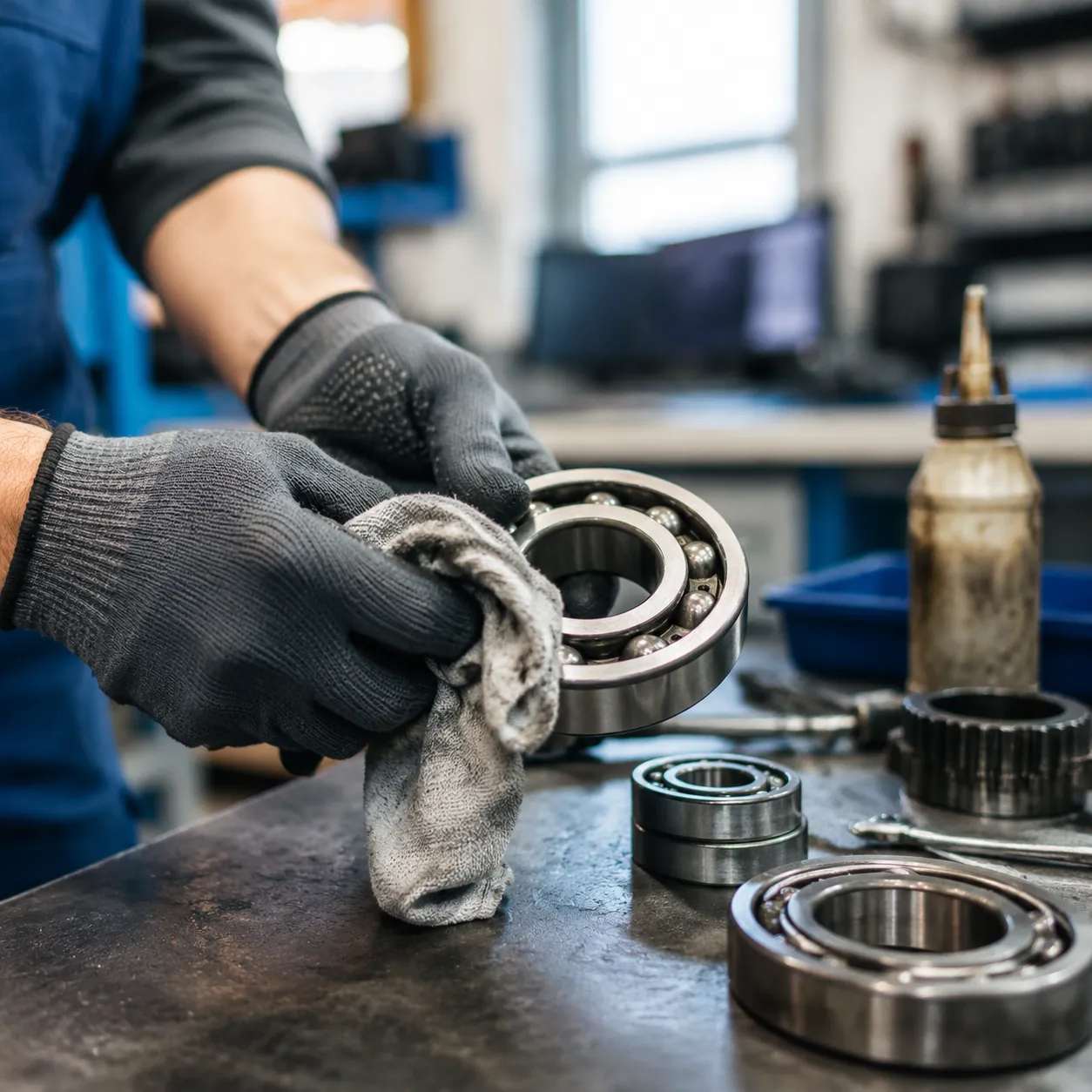
Catching issues early prevents catastrophic damage to your machinery and mechanical engineering setups. Watch for these three red flags:
- Excessive noise: A harsh grinding or squealing sound means the radial deep groove ball bearings are running dry or already have raceway damage.
- Increased vibration: Use a handheld vibration pen. Sudden spikes indicate flaking on the balls or tracks.
- Rising temperatures: Check housing temperatures regularly. A sudden jump in heat usually points to failing grease, over-lubrication, or heavy axial loads overloading the unit.
FAQs About Radial & Deep Groove Ball Bearings
Can deep groove bearings take axial loads?
Yes. While single row deep groove ball bearings are primarily engineered to maximize radial load capacity, their deep radial raceway geometry allows them to handle light-to-moderate axial loads in both directions. The deep grooves on the inner ring and outer ring guide the balls securely under combined load conditions, though heavy axial forces will reduce the bearing's overall lifespan.
What is the difference between ZZ and 2RS seals?
The choice between shielded vs sealed bearings depends on your operating environment and rotational speed limits. ZZ configurations use non-contact metal shields, whereas 2RS configurations use contact rubber seals.
| Feature | ZZ (Metal Shielded) | 2RS (Rubber Sealed) |
|---|---|---|
| Contact Type | Non-contact | Contact |
| Friction & Speed | Low friction, supports higher RPM | Moderate friction, lower speed limits |
| Protection Level | Deflects dust and larger debris | IP65 protection against dust, dirt, and moisture |
| Sealing Material | Steel shields | Synthetic rubber (or high-temp FKM) |
| Lubrication | Factory grease-enclosed | Factory grease-enclosed (better retention) |
Why is my bearing getting hot?
Overheating in radial deep groove ball bearings is typically caused by one of the following factors:
Lubrication Issues: Too much grease increases churning friction, while too little grease leads to metal-on-metal contact.
Overloading: Operating beyond the rated radial load capacity or applying excessive axial forces.
Misalignment: Improper mounting that forces the inner ring and outer ring out of alignment, causing uneven wear.
Extreme Environments: Operating above standard temperature limits. We manufacture specialized configurations using premium GCr15 steel and high-temperature FKM seals to withstand continuous operation up to 150°C.
What MOQ Applies to Radial & Deep Groove Ball Bearings?
Standard radial & deep groove ball bearings in common 6000/6200 series with ZZ shield bearings or 2RS seals typically start from 500 pcs. Fully custom clearance or material programs usually require 3,000–5,000 pcs depending on tooling. Sample orders of 10–50 pcs are available for OEM validation before volume release.
Request a Quote
Send bore, OD, width, enclosure type (ZZ/2RS), clearance group, and annual volume to receive pricing and lead time for radial & deep groove ball bearings with grease-enclosed fill and high-speed operation ratings. Submit drawings or target part numbers through our contact page.