Overview
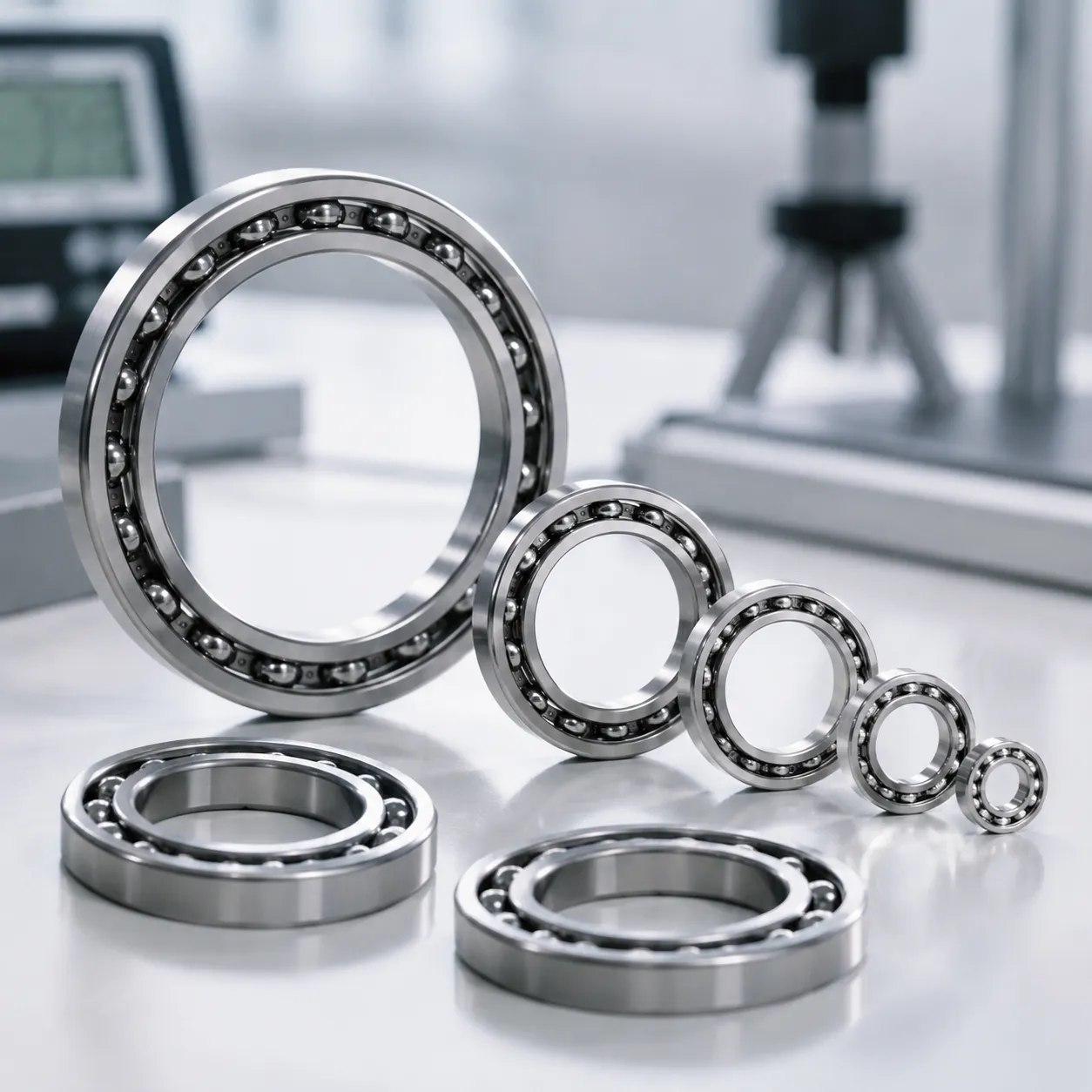
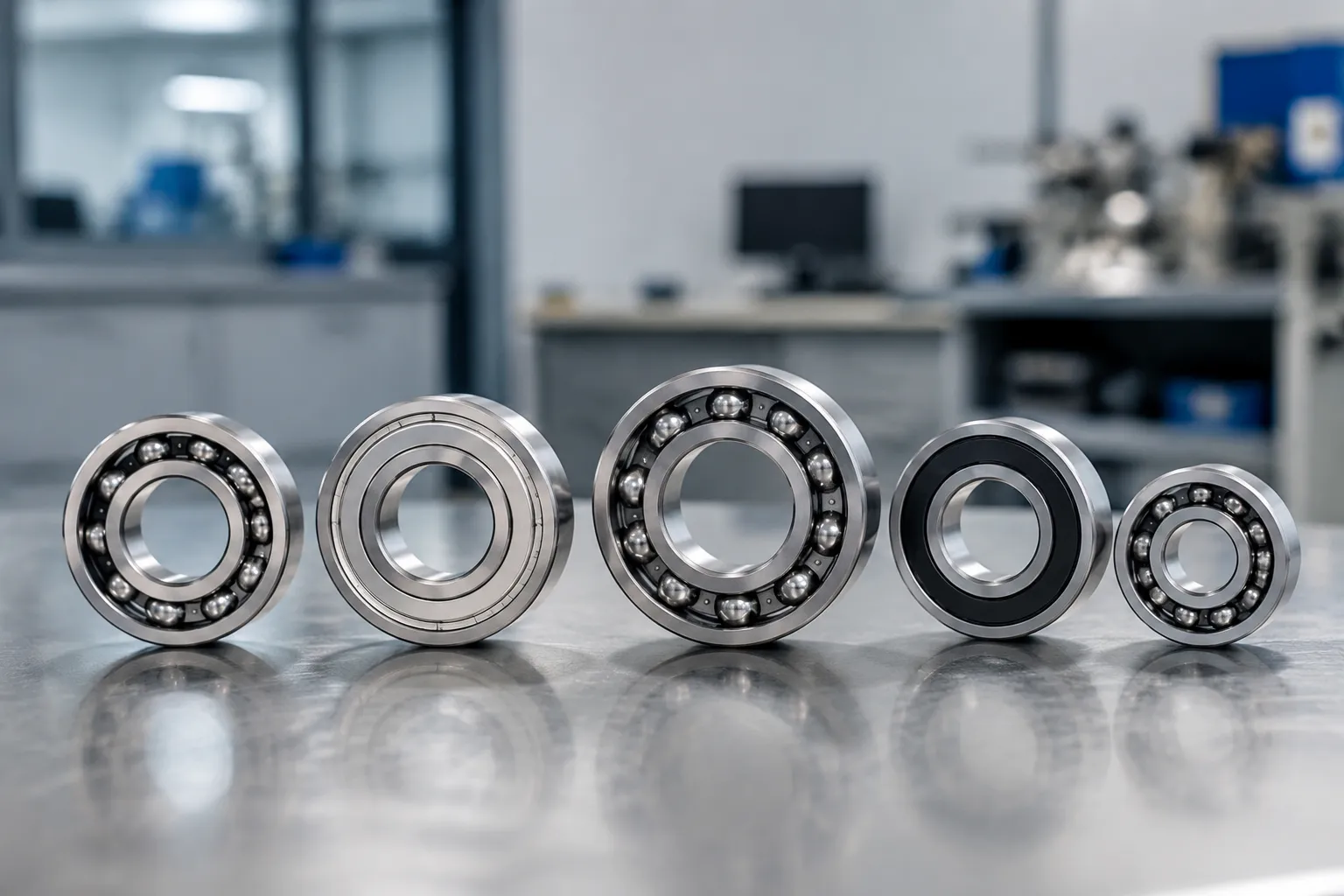
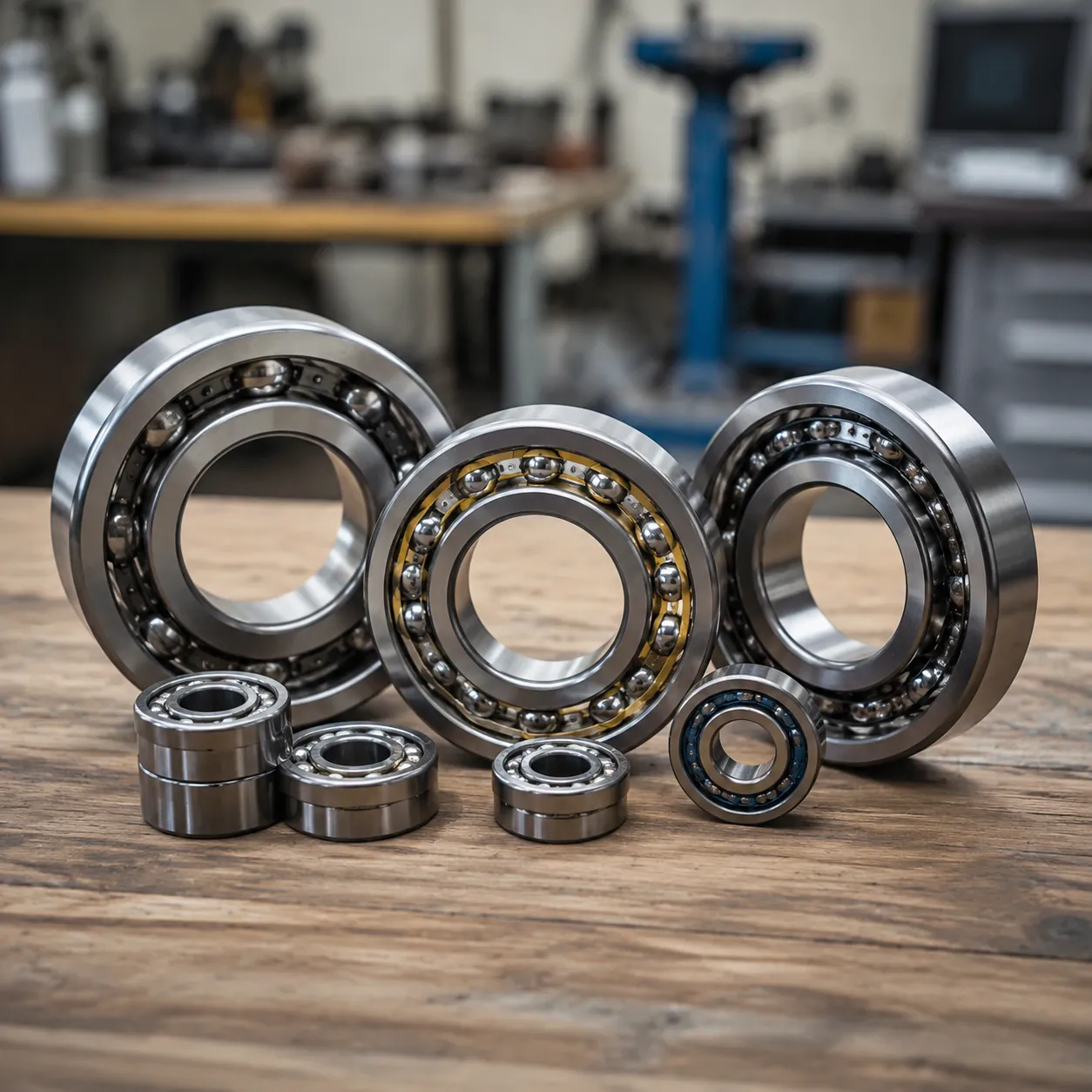
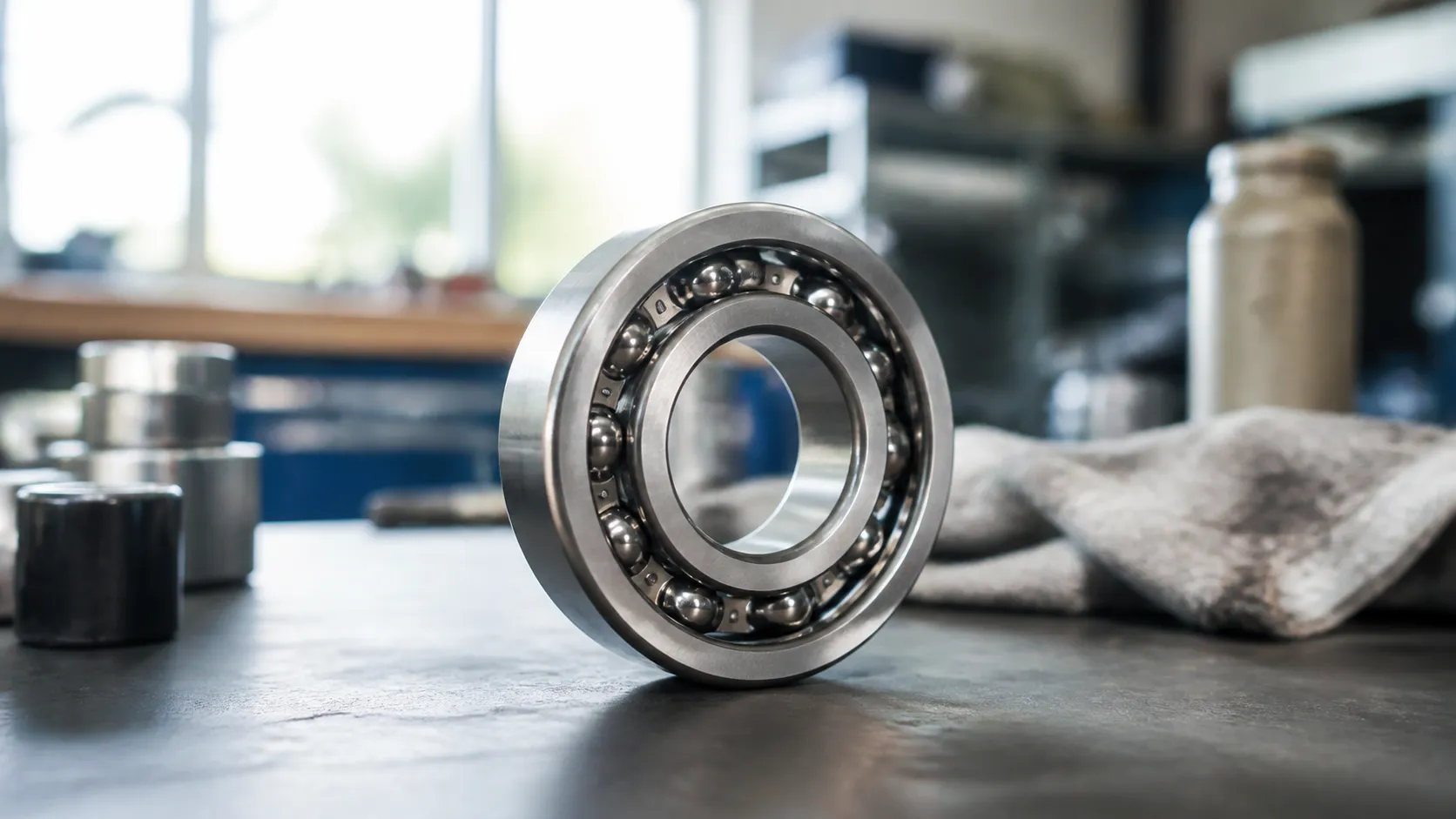
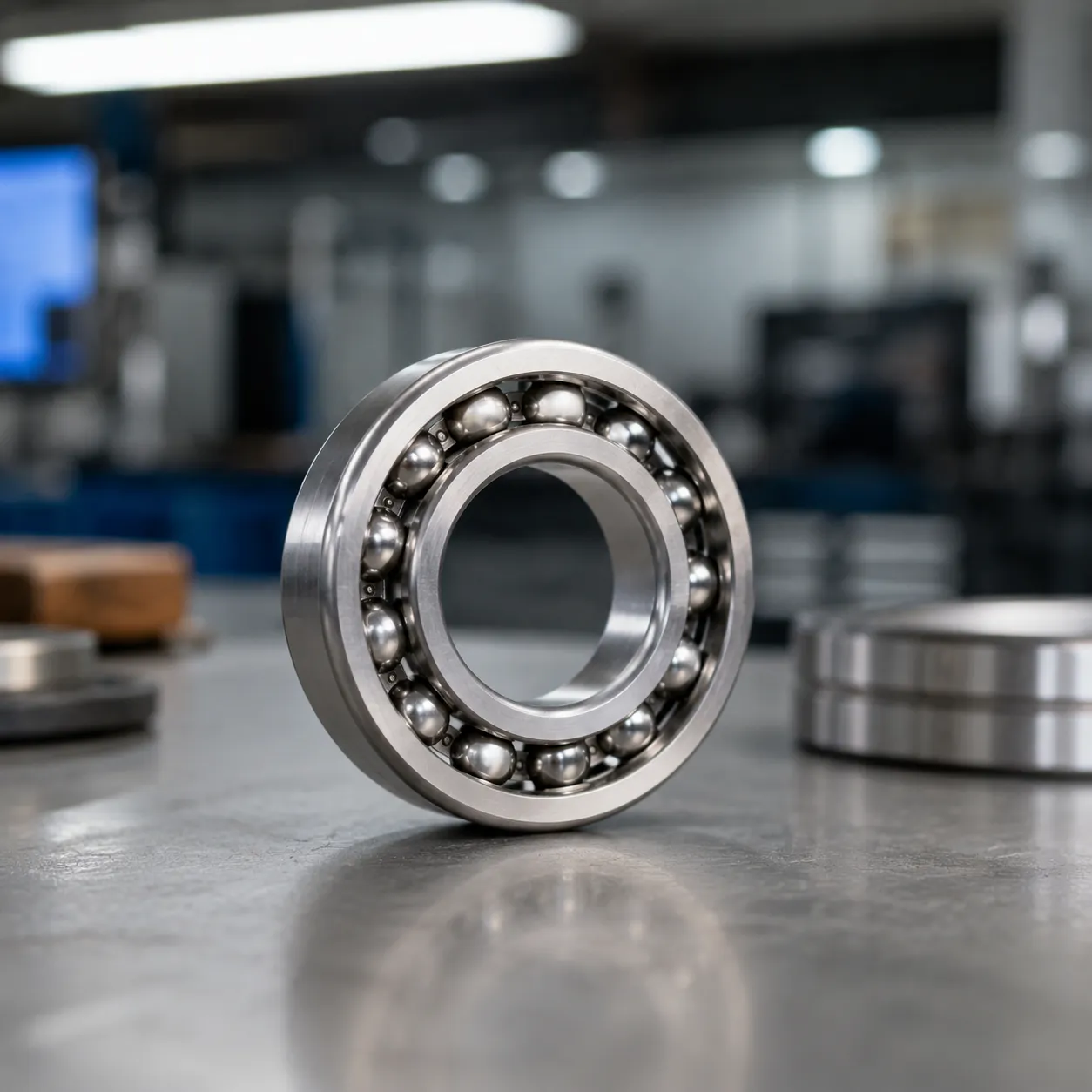
Quiet running deep groove ball bearings are single row radial units tuned for noise reduction and vibration performance on high speeds drivetrain and motor shafts.
Superfinished raceways, precision balls, noise-rated seals, and light grease help prevent resonance between rotor stator assemblies in wind turbine generators and electric drive modules.
Quiet Running Deep Groove Ball Bearings — Low-Noise Design & Vibration Control
Quiet running deep groove ball bearings are specialized single row radial units for noise reduction and low friction operation. Hyper-precise geometry, controlled standard clearance, and filtered grease protect motor drivetrain shafts from acoustic spikes.
| Feature | Standard Ball Bearings | Quiet Running Ball Bearings |
|---|---|---|
| Raceway Surface | Standard ground finish | Superfinished raceways (Ra ≤ 0.02 µm) |
| Ball Sphericity | Grade 10 to 25 steel balls | Grade 3 to 5 ultra-precision balls |
| Lubrication | Standard commercial grease | Filtered low noise bearing grease |
| Cage Design | Standard riveted steel | Acoustic-damping polyamide or guided steel |
| Vibration Control | Unrated or basic Z1V1 | Z2V2 up to Z4V4 certified |
Quiet Running vs. Standard Deep Groove Ball Bearings
While standard radial bearings focus primarily on carrying basic load capacities, our quiet running series targets microscopic surface perfection to eliminate the root causes of vibration.
Understanding Noise and Vibration Ratings (Z/V Standards)
Evaluating low vibration ball bearings requires strict quantitative testing. QC measures bearing performance using combined Z-ratings (vibration velocity measured via Anderometer) and V-ratings (vibration acceleration across low, medium, and high frequency bands):
- Z1 / V1: Standard baseline grade for general industrial gearboxes and basic machinery where sound levels are secondary.
- Z2 / V2: Standard industrial grade offering enhanced vibration control for general pumps and power tools.
- Z3 / V3: Electric motor quality bearings (EMQ) engineered for quiet household appliances, HVAC ventilation, and office devices. The bearing vibration rating Z3V3 represents the gold standard for high-volume quiet motor production.
- Z4 / V4: Premium ultra-silent running radial ball bearings tailored for critical medical equipment, automotive EV power modules, and noise-sensitive laboratory environments.
Key Components That Enable Low-Noise Bearing Performance
Low-noise builds depend on strict controls across four internal components.
Superfinished Bearing Raceways
Microscopic peaks on a raceway wall create operational chatter. Precision superfinished bearing raceway honing techniques to lower surface roughness to sub-micron levels.
- Ultra-Smooth Contact: Eliminates microscopic friction points.
- Vibration Control: Prevents structural resonance during low friction operation.
- Extended Life: Reduces localized stress points on the tracks.
High-Precision Steel Balls
A single out-of-round ball creates dynamic imbalance and noise. Grades use high-grade chrome steel balls manufactured to strict sphericity and diameter tolerances. Perfectly uniform balls distribute loads evenly across the inner and outer rings, keeping running noise at a minimum.
Noise-Damping Cages: Polyamide vs. Pressed Steel
The cage guides the rolling elements, making its material a big factor in total noise output.
| Cage Type | Material | Noise Dampening | Best Used For |
|---|---|---|---|
| Polyamide Cage | Glass-fiber reinforced nylon | Maximum | Electric motors, fans, quiet home appliances |
| Pressed Steel Cage | Stamped carbon steel | Standard | High-temperature or heavy industrial settings |
Catalog lines typically use our polyamide cage low noise bearing line with synthetic cages because they absorb internal impact sound better than metal.
Low Noise Synthetic Grease & Exact Fill Ratios
Grease isn't just lubrication—it acts as an acoustic cushion inside the bearing cavity.
- Filtered Synthetic Formulas: Assembly uses specialized low noise bearing grease filtered to remove micro-particulates that cause scratching sounds.
- Controlled Fill Volume: Too much grease causes churning heat and fluid drag; too little causes metal-to-metal noise. Factory meters a 20% to 30% grease fill ratio for maximum noise dampening and smooth performance right out of the box.
Quiet Running DGBB Applications — Motors, Wind & Noise-Critical Drives
Quiet running deep groove ball bearings serve machinery where vibration performance and acoustic control are essential—including high speed deep groove ball bearings for electric motors and wind turbine generators generator shafts.
Electric Motors, Pumps, and HVAC Units
Electric motors and air-handling equipment rely on electric motor quality bearings to maintain low acoustic footprints under continuous duty.
- HVAC Blowers: Ensures smooth airflow in residential and commercial units without setting off ductwork resonance.
- Centrifugal Pumps: Handles constant radial load demands while suppressing hydraulic motor chatter.
- Industrial Electric Motors: Keeps rotor stator alignment exact to prevent high-frequency electrical hum.
Household Appliances
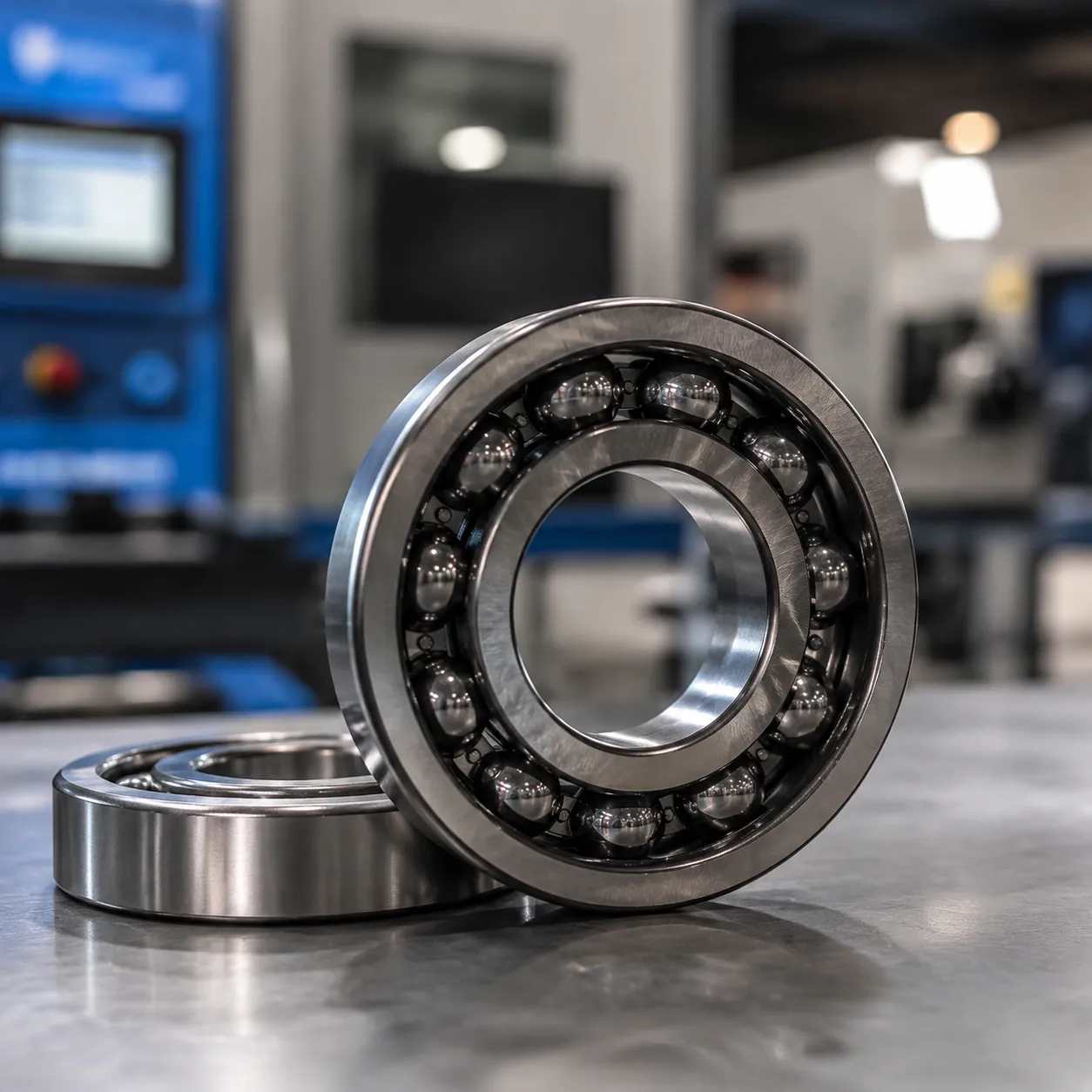
Modern residential appliances depend on silent running radial ball bearings to meet strict noise standards in living spaces.
- Washing Machines: Smoothly absorbs heavy drum rotation and shifting axial load forces during high-speed spin cycles.
- Ceiling Fans: Eliminates motor ticking and micro-vibrations during continuous low-speed operation.
- Vacuum Cleaners: Maintains quiet, reliable performance under high motor speeds.
Precision Medical Equipment and Office Devices
Sound-sensitive environments demand low noise deep groove ball bearings built with lightweight polyamide cage low noise bearing components for friction-free movement.
- Medical Diagnostic Scanners: Guarantees silent, steady rotation during sensitive imaging procedures.
- Surgical Power Tools: Provides smooth control and low vibration at high operating speeds.
- Printers and Copiers: Keeps paper-feed drives operating smoothly without gear noise.
Automotive Electric Drives and Auxiliary Systems
With electric vehicles eliminating engine noise, background mechanical sounds become noticeable. Lines supply bearing vibration rating Z3V3 components to keep EV cabins quiet.
| Vehicle System | Operational Requirement | Key Bearing Benefit |
|---|---|---|
| Electric Drive Modules | High RPMs and instant torque | Low-vibration stability at high speeds |
| Cabin HVAC Compressors | Variable speed and thermal shifts | Low-noise synthetic grease performance |
| Cooling & Steering Pumps | Fluctuating directional loads | Suppressed radial chatter and resonance |
How to Select the Right Quiet Running Deep Groove Ball Bearing
Selection matches vibration class, seal type, and load to the operating environment.
Match Vibration Classes to Application Noise Needs
Vibration ratings (Z and V grades) define a bearing's structural refinement. Higher ratings indicate tighter manufacturing tolerances and lower operational noise.
| Rating Class | Noise & Vibration Level | Typical Target Applications |
|---|---|---|
| Z1 / V1 | Standard Baseline | General industrial drives, standard gearboxes |
| Z2 / V2 | Reduced Noise | Standard electric motors, industrial pumps, power tools |
| Z3 / V3 | Low Noise & Vibration | Electric motor quality bearings, HVAC units, household appliances |
| Z4 / V4 | Ultra-Quiet | Precision medical devices, office automation systems |
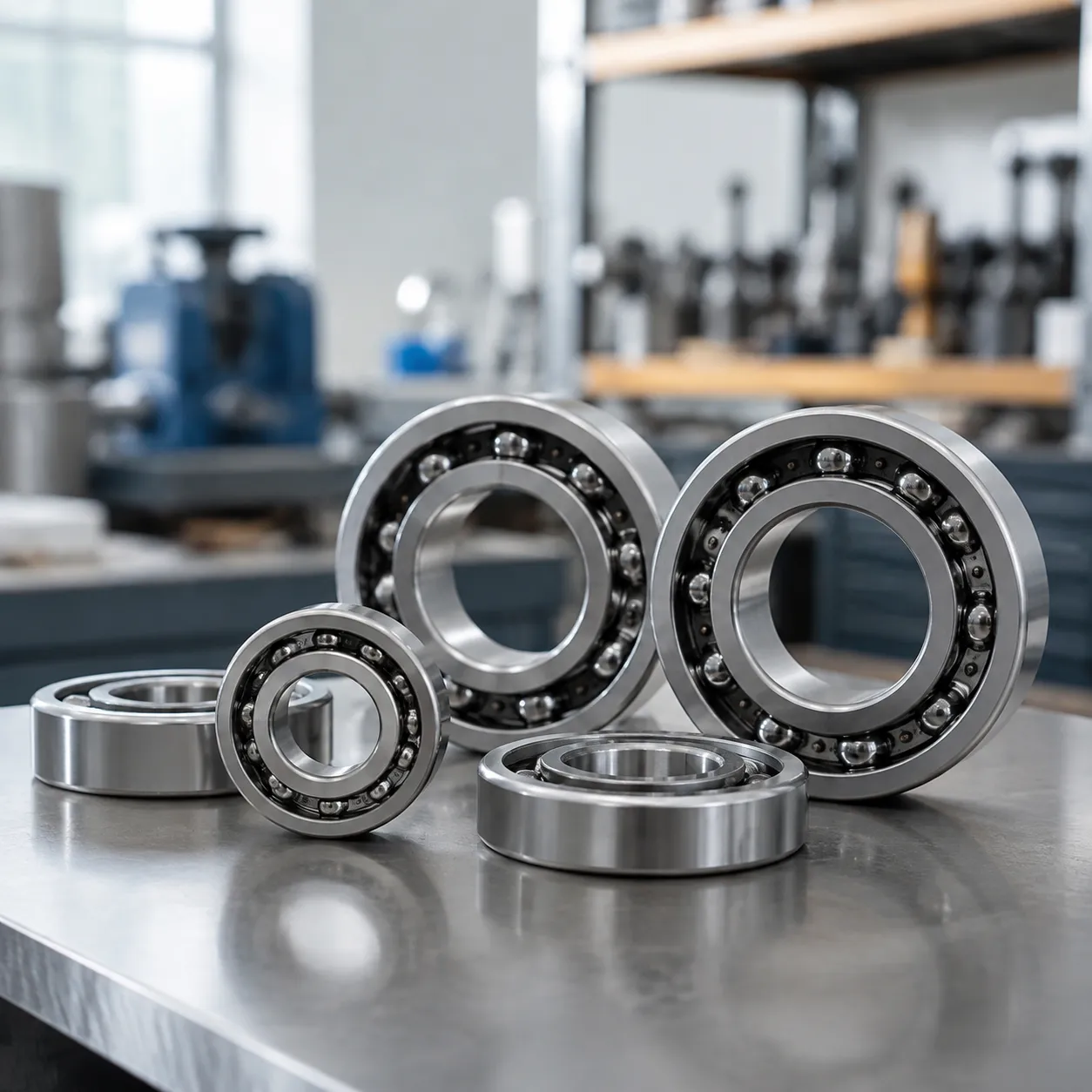
For electric drives and household appliances, datasheets recommend specifying at least a bearing vibration rating Z3V3 to prevent structural resonance.
2RS Rubber Seals vs. ZZ Metal Shields
Your choice of enclosure directly impacts acoustic dampening, speed capabilities, and contamination protection.
- 2RS noise-rated seals (contact rubber seals): Delivers superior acoustic isolation and protects against dust and moisture. Best for low-to-medium speeds where sound reduction is paramount.
- ZZ single shield quiet running bearings (non-contact metal shields): Generates zero frictional drag for higher rotational speeds and higher temperature limits while shielding against larger particulates.
Evaluate Load Capacities and Speed Limits
Compare closure options on sealed deep groove ball bearings when noise-rated seals are required. Deep groove ball bearings primarily support radial load, but they also accept moderate axial load in either direction.
- Load Verification: Keep operating radial load and axial load within continuous dynamic limits to avoid microscopic raceway deformation.
- Clearance Control: Opt for standard clearance (C0) for typical operating conditions, or C3 internal clearance if thermal expansion occurs across the rotor stator setup.
- Speed & Temperature: Verify that factory-filled light grease and cage material match maximum RPM and operating temperature limits to prevent lubricant breakdown.
Share bore/OD/width, Z/V grade, seal suffix (2RS or ZZ single shield), and annual volume for itemized quiet running deep groove ball bearings pricing—Contact JN Bearings with application notes or CAD drawings for OEM/ODM quotes.
Installation and Maintenance for Quiet Running Deep Groove Ball Bearings
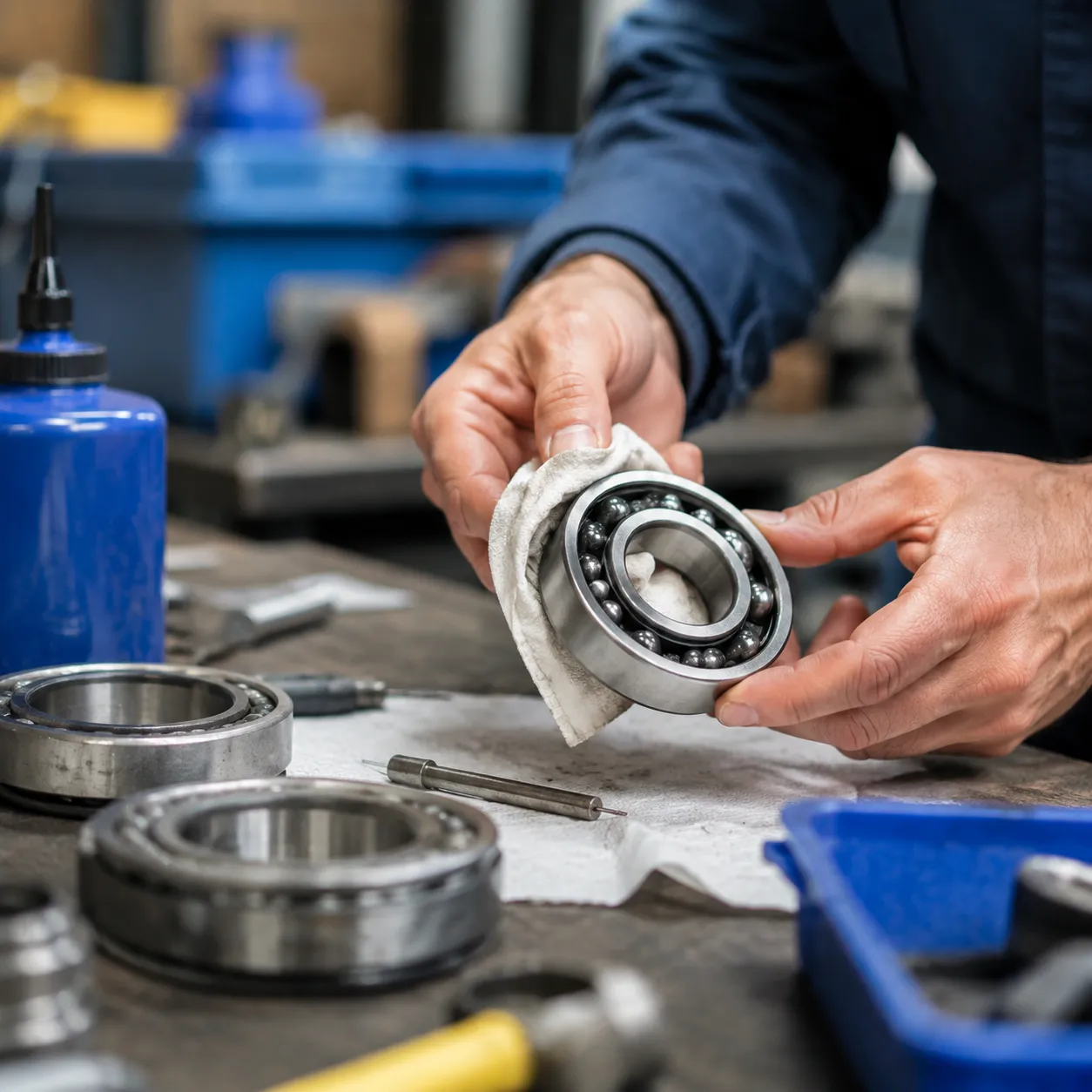
Even premium quiet running deep groove ball bearings amplify noise when fits, mounting force, or lubricant volume are wrong. Load-direction limits are summarized in axial load vs radial load in deep groove ball bearings.
Proper Shaft and Housing Tolerances
Incorrect fits distort the bearing rings, ruin internal clearance, and create acoustic resonance.
- Overly Tight Fits: Squeeze the standard clearance, forcing the balls against the superfinished bearing raceway and creating a continuous high-pitched whine.
- Loose Fits: Allow micro-slippage between the shaft and inner ring, causing low-frequency rattling and premature wear.
- Target Precision: Match shaft and housing seats strictly to ISO IT6/IT7 tolerance classes to maintain optimal radial clearance under normal operating temperatures.
Safe Mounting to Prevent Raceway Brinelling
Physical impact during assembly is a top cause of early bearing noise. Brinelling occurs when mounting force passes through the rolling elements, leaving permanent micro-dents on the raceway.
- Press-Fitting Rules: Always apply mounting force directly to the ring being fitted (inner ring for shafts, outer ring for housings).
- Thermal Mounting: Use induction heaters for tight shaft fits instead of hammers or drift punch tools to protect delicate internal geometry.
- Alignment Checks: Keep shaft-to-housing misalignments within 2 to 10 arcminutes to prevent resonance and edge loading.
Avoiding Over-Greasing and Contamination
Excessive lubricant and particulate contamination quickly degrade vibration performance and low-noise operation.
| Issue | Cause | Solution |
|---|---|---|
| Over-Greasing | Exceeding 30%–40% grease fill ratio | Use factory-prefilled 2RS low noise sealed bearings with optimal fill rates. |
| Particle Pollution | Dust or metal grit entering open raceways | Maintain clean assembly areas and keep shield/seal caps intact until final installation. |
| Degraded Grease | High heat breaking down oil base | Select specialized low noise bearing grease rated for your operational speed and temperature limits. |
Diagnosing Bearing Noise and Vibration
Catching mechanical noise early prevents catastrophic machine downtime. Use this quick guide to diagnose operational sounds on the equipment line:
- Continuous High Hum: Indicates improper housing tolerances, loss of radial clearance, or inadequate lubrication.
- Rhythmic Clicks or Pop Sounds: Points to localized raceway dents, ball damage from mounting impact, or contamination grains.
- Irregular Grinding Noises: Signals heavy contamination or severe cage wear inside the assembly.
- High-Frequency Screeching: Caused by skidding balls during sudden speed changes or insufficient radial load.
Frequently Asked Questions About Quiet Running Ball Bearings
Procurement FAQs for quiet running deep groove ball bearings.
| Question | Answer |
|---|---|
| Why Bearings Generate Noise During Operation | Standard deep groove ball bearings usually produce unwanted noise and vibration due to specific operational factors:
Quiet-running builds address these factors through superfinishing, clean steel balls, and filtered synthetic grease. |
| Z-Grade vs. V-Grade Vibration Ratings | QC tests our low noise deep groove ball bearings using strict vibration and sound measurement standards. The difference between Z-grade and V-grade ratings comes down to what is being measured:
Higher numbers represent tighter tolerances and quieter operation. For premium electric motor quality standards, datasheets recommend bearing vibration rating Z3V3 or higher to prevent resonance in sensitive drivetrain modules. |
| Role of Low Noise Bearing Grease | Lubrication choice directly impacts acoustic control. Using the wrong grease can turn a precision bearing into a noisy one.
|
| Lifespan of Low Noise Performance | Quiet running bearings are engineered to maintain silent operation throughout their full service life when operated within specified load, speed, and temperature limits. By using noise-rated rubber seals (2RS) or metal shields (ZZ), seals prevent external dust and dirt from compromising the raceway finish. Proper mounting during installation protects the superfinished raceways, supporting quiet, low-vibration performance for tens of thousands of operating hours. Send part numbers or drawings to Contact JN Bearings for vibration-class review within 24 hours. |