Overview
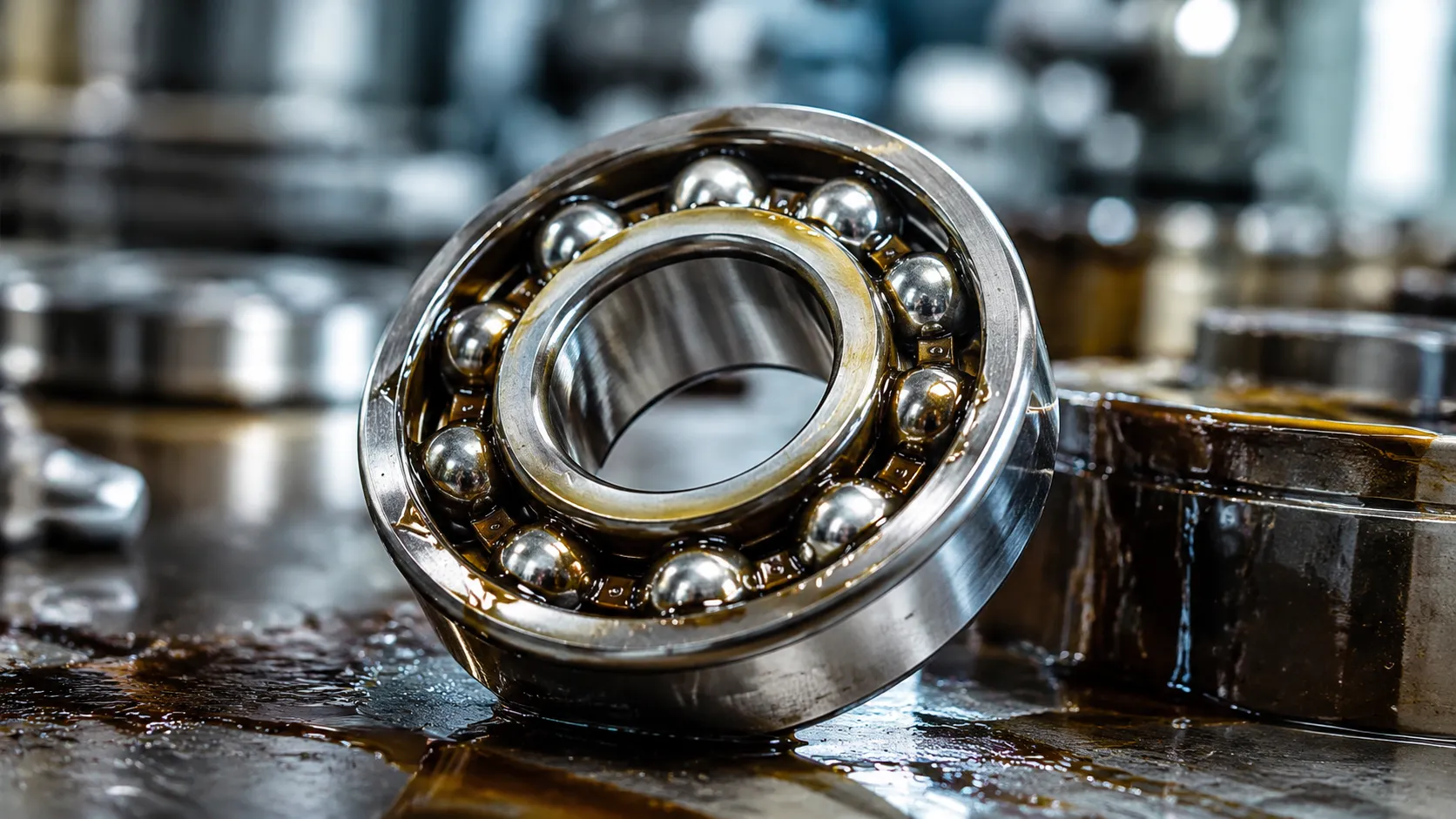
Oil deep groove ball bearings need liquid-film lubrication when grease hits dn limits—pick bath, circulating, or mist delivery before locking bore diameter, seal style, and ISO VG grade.
- Speed & heat: Oil lubrication suits high speeds with active heat pull-off versus packed grease.
- Seal path: Open or ZZ for external oil sumps; factory-sealed 2RS stays grease-packed.
- Film grade: ISO VG and synthetics set load capacity and extended service at temperature.
Lock bore, seal style, and ISO VG first—then align bath, circulation, or mist hardware and change intervals to your actual RPM and temperature band.
Oil Deep Groove Ball Bearings — Load, Speed & Seal Specs
Designing oil deep groove ball bearings requires matching how oil film dynamics shift load, speed, and seal limits. Correct specs keep machinery running cool without premature failure.
Radial Load Ball Bearings & Axial Limits
Under oil lubrication, radial units reach rated dynamic load capacity because the oil film continuously flushes the rolling elements. Compare radial deep groove ball bearings for baseline C/P ratings by bore diameter.
- Radial Loads: Oil creates a highly reliable hydrodynamic film that keeps the balls from touching the raceways, even under heavy continuous loads.
- Axial Loads: While single row deep groove ball bearings primarily handle radial forces, they can manage light-to-medium axial loads. Oil lubrication keeps friction low during thrust loads, preventing the shoulder wear common in grease-lubricated setups.
High Speed Ball Bearings: Oil vs. Grease Limits
If duty cycles demand high speeds, oil is non-negotiable—see high speed deep groove ball bearings for electric motors for motor-grade limits. Grease has a lower speed limit (measured in RPM) because it shears and builds up heat at high velocities. Oil, on the other hand, actively carries heat away.
| Specification | Grease Lubrication | Oil Lubrication (Bath/Mist) |
|---|---|---|
| Max Speed Limit (RPM) | Base Rated (100%) | Up to 130% to 150% of Grease Limit |
| Heat Dissipation | Poor (insulates heat) | Excellent (recirculates and cools) |
| Friction Torque | Higher at startup | Extremely low |
Open vs. Shielded Configurations for Oil Flow
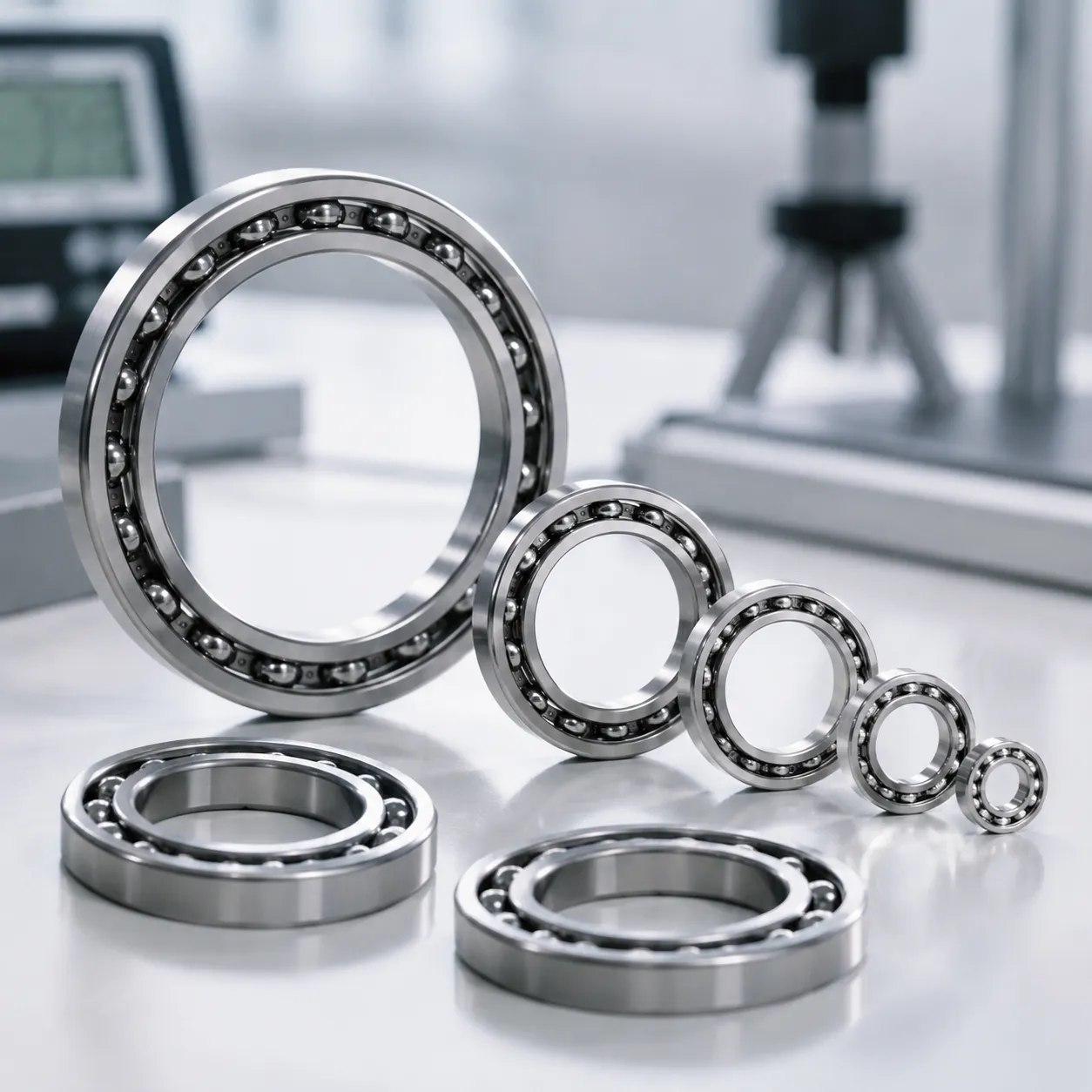
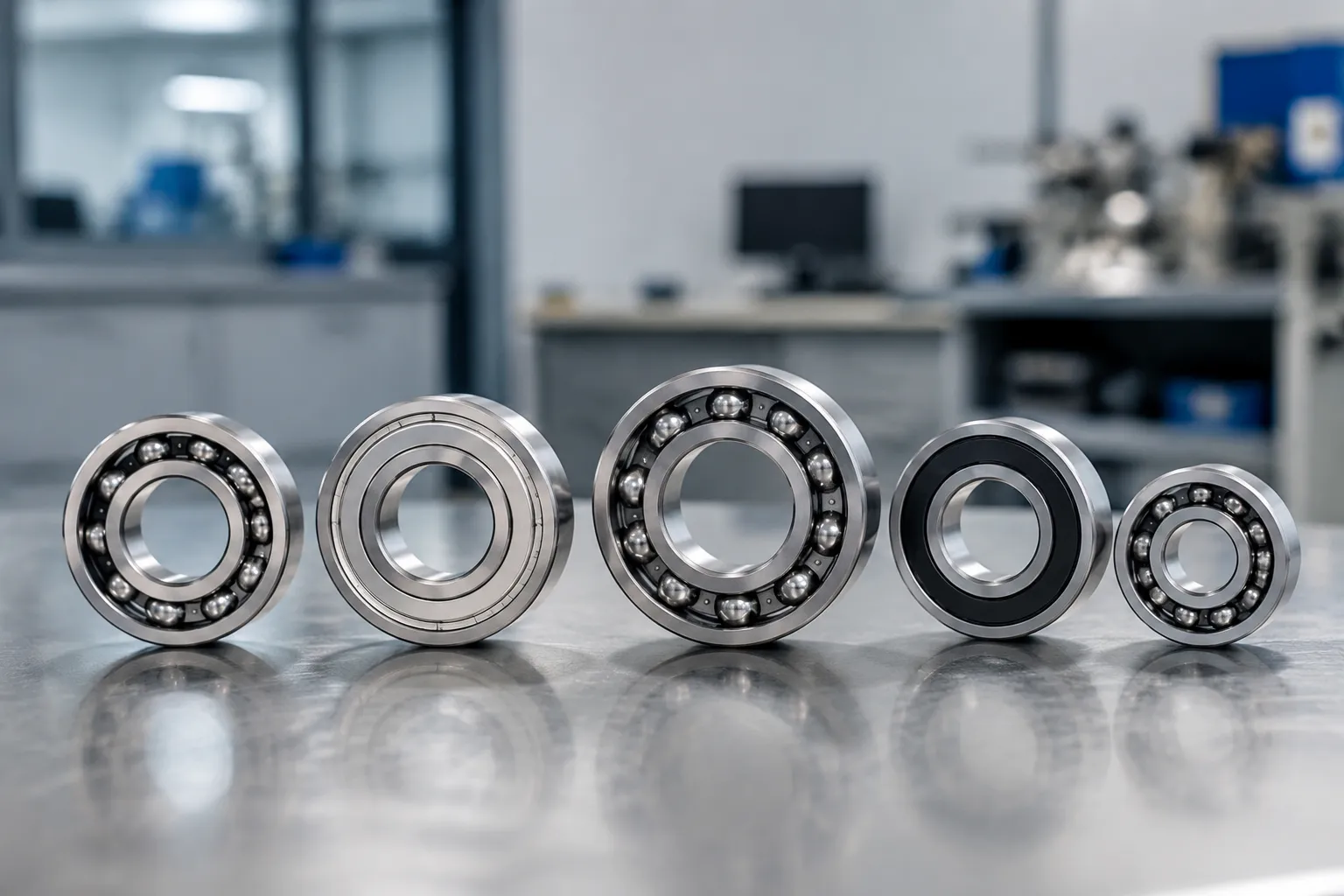
The physical build of the bearing dictates how easily oil can enter and exit the rolling zones. Three primary configurations match common lubrication delivery systems:
- Open Bearings: This is the absolute best configuration for oil deep groove ball bearings running in an oil bath, splash, or circulating system. It allows completely free flow of oil to carry away heat and contaminants.
- Shielded Bearings (ZZ): Metal shields can protect against large debris, but they restrict oil flow. Use shielded builds in oil setups only when oil viscosity is very low (light oil) and can easily penetrate the shield gaps.
- Sealed Bearings (2RS): Not recommended for external oil sumps—sealed deep groove ball bearings rely on factory-packed grease, not circulating oil.
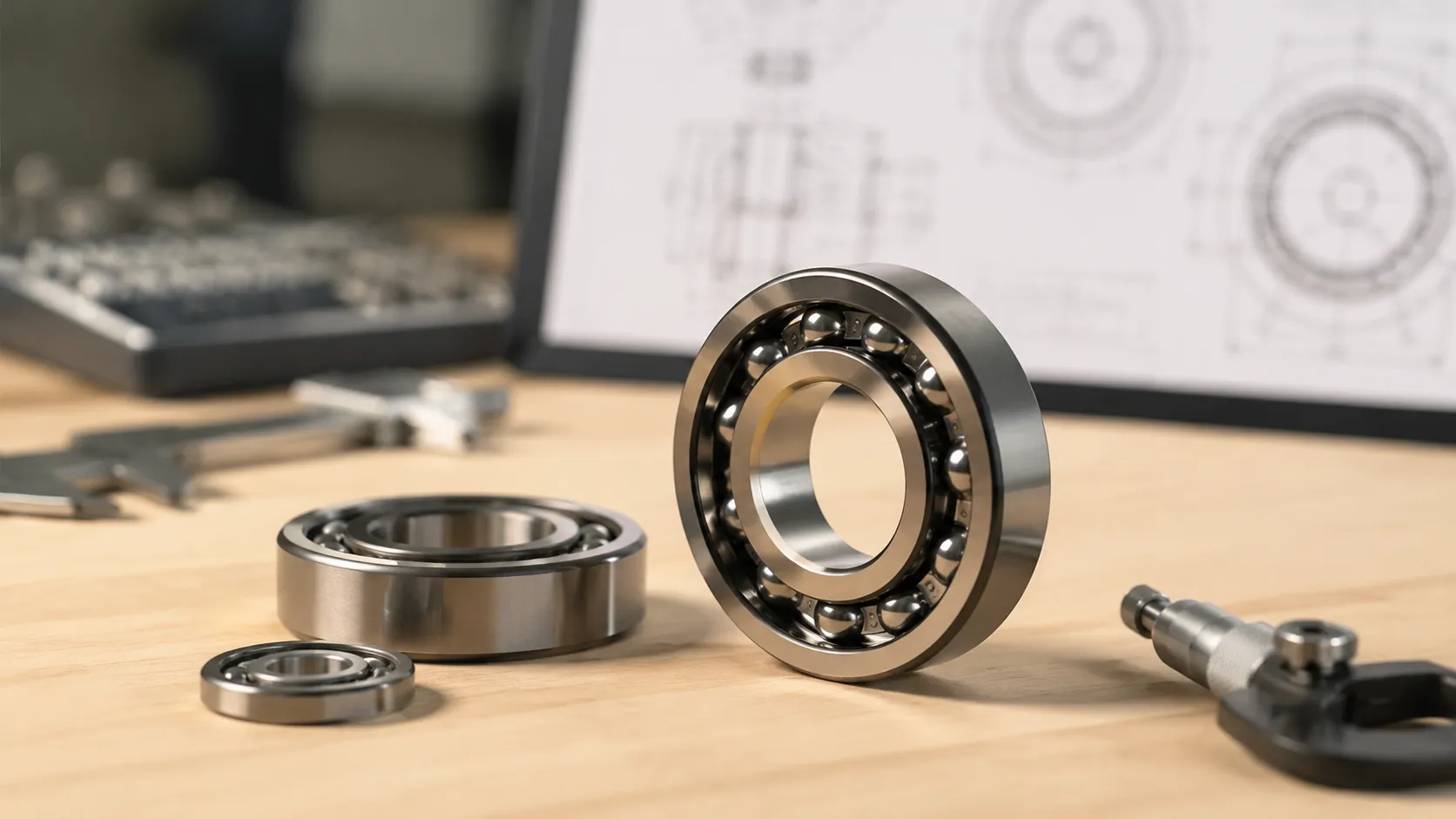
Load, speed, and open-versus-shielded limits set the mechanical envelope; the next section explains why liquid oil outperforms grease once RPM and thermal load climb.
Why Oil Lubrication Beats Grease at High Speed
When you are running deep groove ball bearings at extreme limits, lubrication isn't just a maintenance afterthought—it is the lifeblood of your entire system. The right lubrication strategy directly dictates the lifespan, noise levels, and efficiency of your machinery. While grease is the standard go-to for general applications, liquid oil is the undisputed champion when you need to push your equipment to its absolute peak performance.
How Oil Minimizes Friction and Heat Buildup
At high rotational speeds, heat is the ultimate enemy of rolling bearings. Oil lubrication works by constantly maintaining a microscopic, high-strength fluid film between the balls and the raceway.
- Active Heat Dissipation: Unlike grease, which stays trapped in the bearing cavity, oil flows. This continuous movement carries heat away from the contact zones, acting as an active cooling agent.
- Low Friction Coefficient: Oil offers significantly lower viscous drag than grease. This directly translates to low friction, low noise, and low vibration during operation.
- Flushing Contaminants: Running oil sweeps away wear particles and microscopic debris from the rolling elements, preventing premature abrasive wear.
Comparing Oil vs Grease for High-Speed Performance
Choosing between bearing oil vs grease comes down to your operating limits. For standard applications, grease is simple and self-contained. However, when your engineering demands high speeds, grease reaches its physical limits.
| Performance Metric | Grease Lubrication | Oil Lubrication |
|---|---|---|
| Speed Capability (RPM) | Moderate to High | Ultimate High Speeds |
| Heat Dissipation | Poor (insulates heat) | Excellent (circulates heat out) |
| Friction Torque | Higher viscous drag | Minimal drag (low friction) |
| Maintenance Interval | Longer (pack and forget) | Requires monitoring/recirculation |
| Sealing Complexity | Simple shielding | Demands robust oil seals |
Key Indicators You Need Oil-Lubricated Ball Bearings
How do you know it is time to transition from grease to a dedicated deep groove ball bearing lubrication system? Look for these critical system indicators:
- High RPMs: Your operating speed exceeds the limiting speed rating (dn factor) of grease.
- Extreme Thermal Loads: The ambient or operating temperature is too high for grease thickeners to remain stable without bleeding.
- Continuous Duty Cycles: 24/7 machinery where manual regreasing is costly needs continuous lubrication via circulation or shared sumps.
- Integration with Common Sumps: The bearings operate inside a gearbox or engine block where they can share the existing SAE 30 oil or synthetic oil reservoir.
Once oil is the right medium, the delivery method—bath, circulation, or mist—determines how cleanly heat and debris leave the rolling bearings.
Oil Lubrication Methods for Deep Groove Ball Bearings
How you deliver oil to your oil deep groove ball bearings directly impacts how long they survive in the field. Match equipment speed and heat generation to one of these industry-standard deep groove ball bearing lubrication methods to ensure low friction and smooth rotation.
Oil Bath Lubrication
This is the most straightforward, reliable setup for low to moderate speeds. The bearing sits directly in a static oil pool, self-lubricating as it spins.
- The Setup: The static oil level should precisely reach the center of the lowest rolling element.
- Best Practice: Avoid overfilling. Excess oil causes churning, which spikes temperatures and wastes energy.
- Tip: Install a clear sight glass on the housing to make daily level checks instant and foolproof.
Circulating Oil Systems
For high speeds and heavy loads, stationary oil cannot dissipate heat fast enough. You need active cooling.
- How it Works: An external pump continuously forces cool, filtered oil directly through the bearing housing.
- The Benefit: It flushes out wear debris and carries away frictional heat, ensuring your rolling bearings run cool and clean.
- Best For: High-performance gearboxes, turbines, and heavy industrial machinery.
Oil Mist and Splash Lubrication
When conventional liquid oil delivery creates too much drag, atomized or indirect delivery methods to keep friction at an absolute minimum.
| Method | How it Works | Best Used For |
|---|---|---|
| Oil Mist | Compressed air atomizes oil into a fine mist, blowing it directly into the bearing. | Ultra-high-speed spindles where low vibration and positive housing pressure (to block dust) are required. |
| Splash Lubrication | Rotating components (like gears) dip into an oil pool and splash droplets onto nearby bearings. | Enclosed systems where a dedicated pump or separate oil bath is unnecessary. |
Delivery hardware fixed, ISO VG, mineral versus synthetic bases, and additives define film strength for your operating temperature band.
Choosing Bearing Oil Viscosity & Additives
Getting the right oil for your oil deep groove ball bearings isn't just a maintenance task—it's what keeps your machinery running without costly downtime. The wrong lubricant can destroy a perfectly good single row deep groove ball bearing.
Understanding Bearing Oil Viscosity
Viscosity is the most critical factor when selecting deep groove ball bearing lubrication. If the oil is too thin, metal-to-metal contact occurs; if it is too thick, you get excess fluid friction, heat buildup, and energy loss.
We measure this using the ISO viscosity grade (VG) at 40°C. The right choice depends on your operating speed and load.
| Operating Temperature | Low Speeds (< 3,000 RPM) | High Speeds (> 10,000 RPM) |
|---|---|---|
| Low Temp (-20°F to 100°F) | ISO VG 32 | ISO VG 10 |
| Normal Temp (100°F to 180°F) | ISO VG 68 | ISO VG 22 / ISO VG 32 |
| High Temp (> 180°F) | ISO VG 100 to 150 | ISO VG 46 |
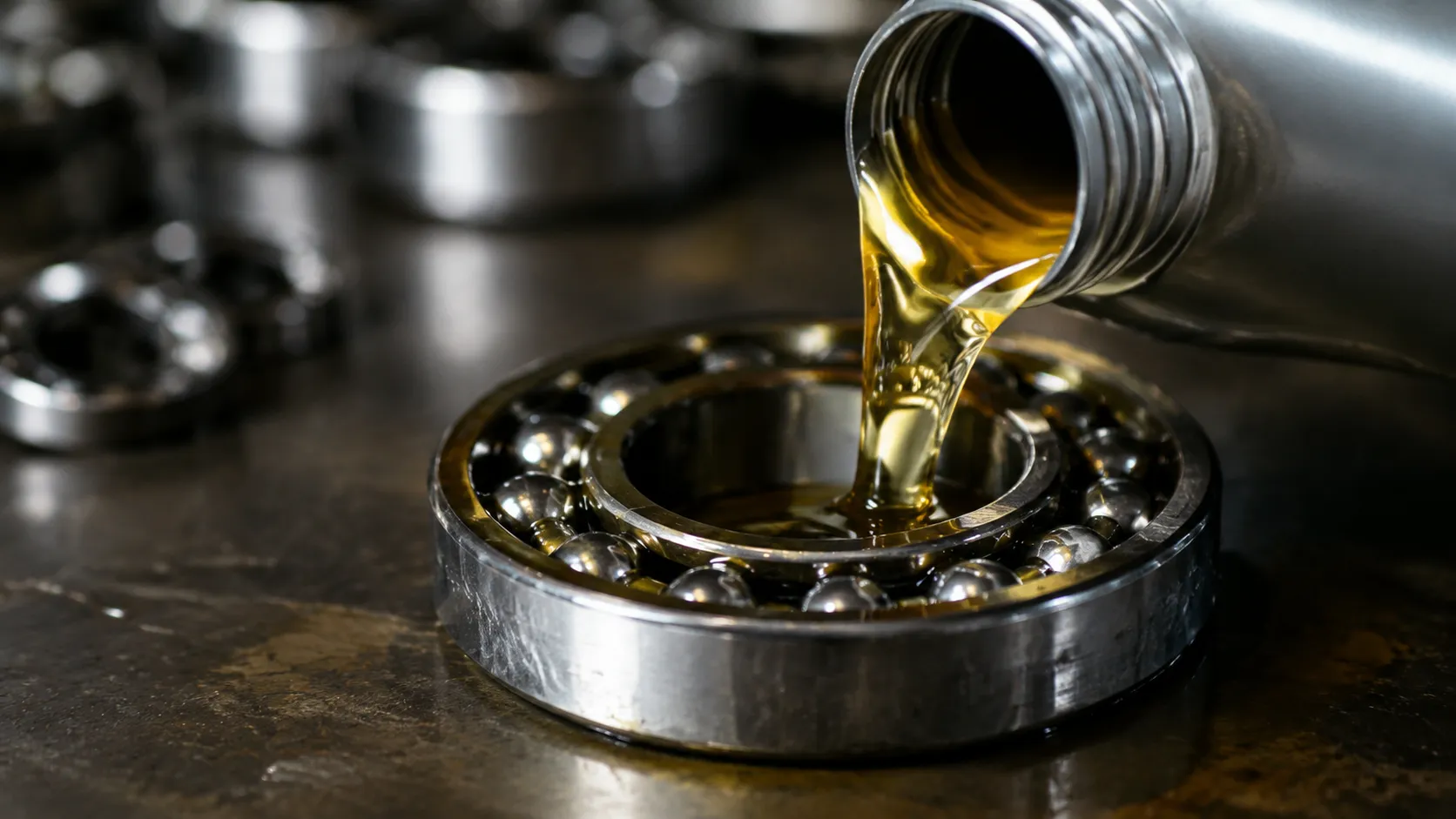
Mineral Oil vs. Synthetic Bearing Oil
The debate between mineral and synthetic bearing oil comes down to your operating environment and performance goals.
- Mineral Oils: Excellent for standard operations, moderate loads, and cost-effective everyday use. They offer great natural lubricity and compatibility with seals.
- Synthetic Oils (PAO / Ester): Essential for high-temperature environments and high speeds. They offer superior oxidation resistance, a wider operating temperature range, and longer service intervals.
Essential Additives for Extended Service Life
Base oil alone is not enough to protect rolling bearings under heavy workloads. For washdown or sealed-for-life duty without external sumps, factory molded oil cartridges offer continuous lubrication without bath plumbing—complementary to open oil-lubricated builds. Look for circulating oils with these additives:
- Anti-Wear (AW) Additives: Form a protective barrier to prevent metal contact under heavy radial load.
- Rust and Oxidation Inhibitors (ROX): Prevent moisture damage and stop the oil from breaking down into sludge.
- Extreme Pressure (EP) Additives: Critical for high-load applications, though they should be used cautiously with yellow metal cages.
- Defoamers: Prevent air bubbles from reducing the oil film strength during high-speed rotation.
Correct oil grade selected, level monitoring and change intervals protect low friction, low noise, and low vibration over the full duty cycle.
Maintenance for Oil-Lubricated Deep Groove Bearings
Proper maintenance is the key to extended service life from oil deep groove ball bearings. Even precision rolling bearings fail without proper oil management.
Field teams keep oil-lubricated assemblies running with low friction, low noise, and low vibration.
Monitoring Bearing Oil Levels
Keeping the right amount of oil in your housing is a balancing act. Too little oil leads to metal-on-metal contact and rapid failure. Too much oil causes fluid churning, which generates extreme heat.
- Use Sight Glasses: Always check levels when the machine is idle. The oil level should sit exactly at the middle of the lowest ball in the bearing.
- Constant Level Oilers: Use these automatic dispensers to maintain a steady volume without manual guesswork.
- Watch the Temp: A sudden spike in operating temperature is your first warning sign of incorrect oil levels or fluid breakdown.
Preventing Leaks and Contamination
Contaminants like dust and moisture are the ultimate enemies of high speed ball bearings. Once grit enters the oil, it turns into a grinding paste that destroys the raceways.
- Inspect Seals Regularly: Ensure lip seals and labyrinth seals are intact to prevent oil migration.
- Upgrade to Shielded Configurations: For harsh environments, use shielded bearings to block larger particles from reaching the active rolling elements.
- Maintain Breather Caps: Clean or replace breather filters to prevent dirty air from being sucked into the housing during thermal cycling.
Timing Your Bearing Oil Change
How often you change your bearing oil depends heavily on your operating conditions and temperatures.
| Operating Condition | Temperature Range | Change Frequency |
|---|---|---|
| Standard Clean Run | Below 120°F (50°C) | Once a year |
| Heavy Load / Continuous | 120°F to 180°F (50°C to 82°C) | Every 3 to 6 months |
| High-Temperature Environments | Above 180°F (82°C) | Every 1 to 3 months |
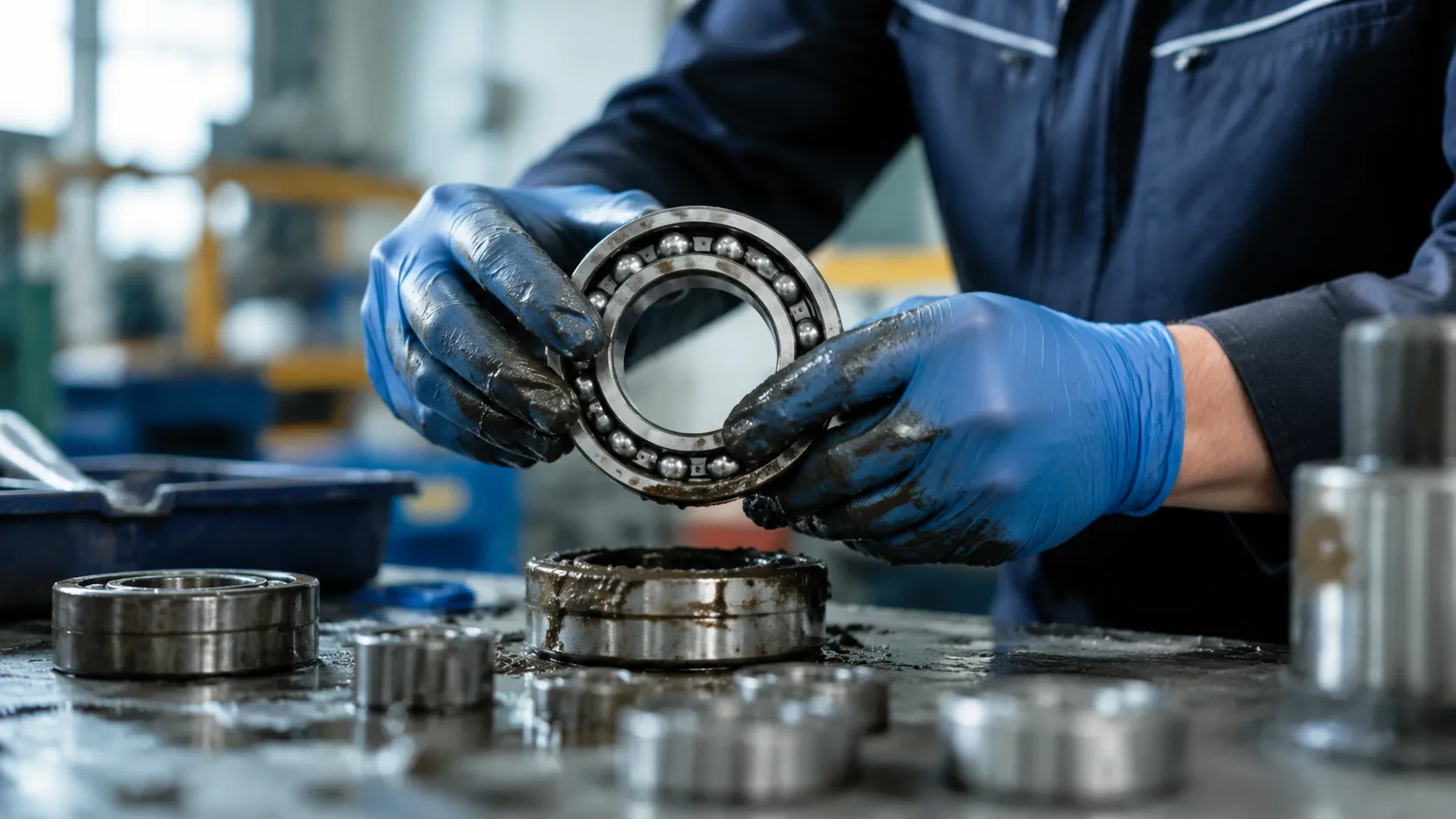
How to Perform a Quick Oil Change:
- Drain: Open the drain plug while the system is still warm so the oil flows out easily and carries suspended contaminants with it.
- Flush: Flush the bearing housing with a light, clean oil to remove residual sludge. Do not use solvents that can degrade the new oil.
- Refill: Replace the plug and refill with fresh oil (such as a high-quality synthetic bearing oil or standard SAE 30 oil, depending on your system specs) up to the designated mark.
Maintenance covers field upkeep; the FAQ block answers grease-to-oil conversion, overfill risks, and synthetic grades for high-temperature environments.
FAQs About Oil Deep Groove Ball Bearings
Plant managers and maintenance teams often ask these questions about oil deep groove ball bearings:
Converting Grease to Oil Lubrication
Can I convert a grease-lubricated bearing to oil?
Yes, you can transition from bearing oil vs grease, but you cannot just pour oil into a greased bearing. Recommended conversion steps:
- Complete Flush: You must thoroughly wash out every trace of the original grease using a clean solvent. Mixing grease and oil thickens the lubricant and causes premature failure.
- Housing Check: Make sure your bearing housing or gearbox is fully sealed and designed to hold liquid oil without leaking.
- Bearing Style: We recommend using open single row deep groove ball bearings for this conversion to ensure the oil can flow freely through the rolling elements.
Having Too Much Bearing Oil
What happens if there is too much oil in the bearing?
When it comes to oil lubrication, more is definitely not better. Overfilling your bearing housing leads to immediate performance issues:
- Oil Churning: The balls have to plow through excess fluid, which dramatically increases friction and drags down efficiency.
- Heat Buildup: This churning action generates intense heat, defeating the primary cooling benefit of oil.
- Foaming and Leaks: High speeds whip air into the excess oil, causing it to foam, degrade quickly, and blow past your seals.
- The Golden Rule: For static oil baths, keep the oil level right at the center of the lowest rolling element.
Best Synthetic Oil for Extreme Temperatures
Which synthetic oil works best for extreme temperatures?
For high-temperature environments or extreme cold, petroleum-based oils thin out or break down too fast. You need high-performance synthetic bearing oil:
- PAO (Polyalphaolefins): This is a common recommendation for industrial machinery. PAOs offer incredible shear stability and handle both freezing starts and high running heats.
- Esters: Excellent for extremely hot setups because of their high film strength and low volatility, though they can be sensitive to moisture.
- Viscosity Matching: Always choose your bearing oil viscosity based on your peak running temperature, ensuring the oil maintains a strong film to support the radial load at high speeds.
For ISO VG matching, open versus shielded builds, and stamp cross-checks on oil-lubricated lines, Contact JN Bearings with RPM, sump oil type, and housing seal drawings.