Overview
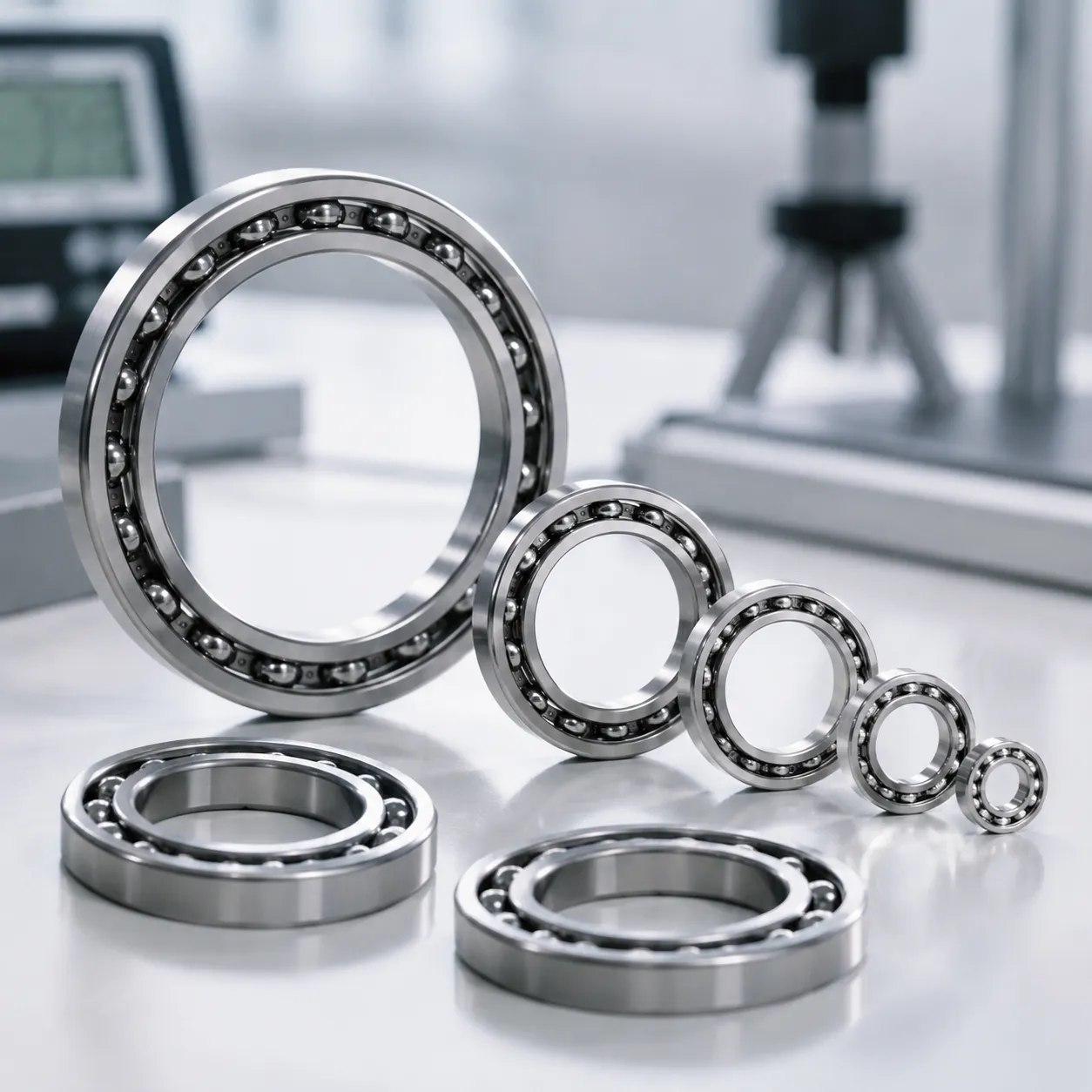
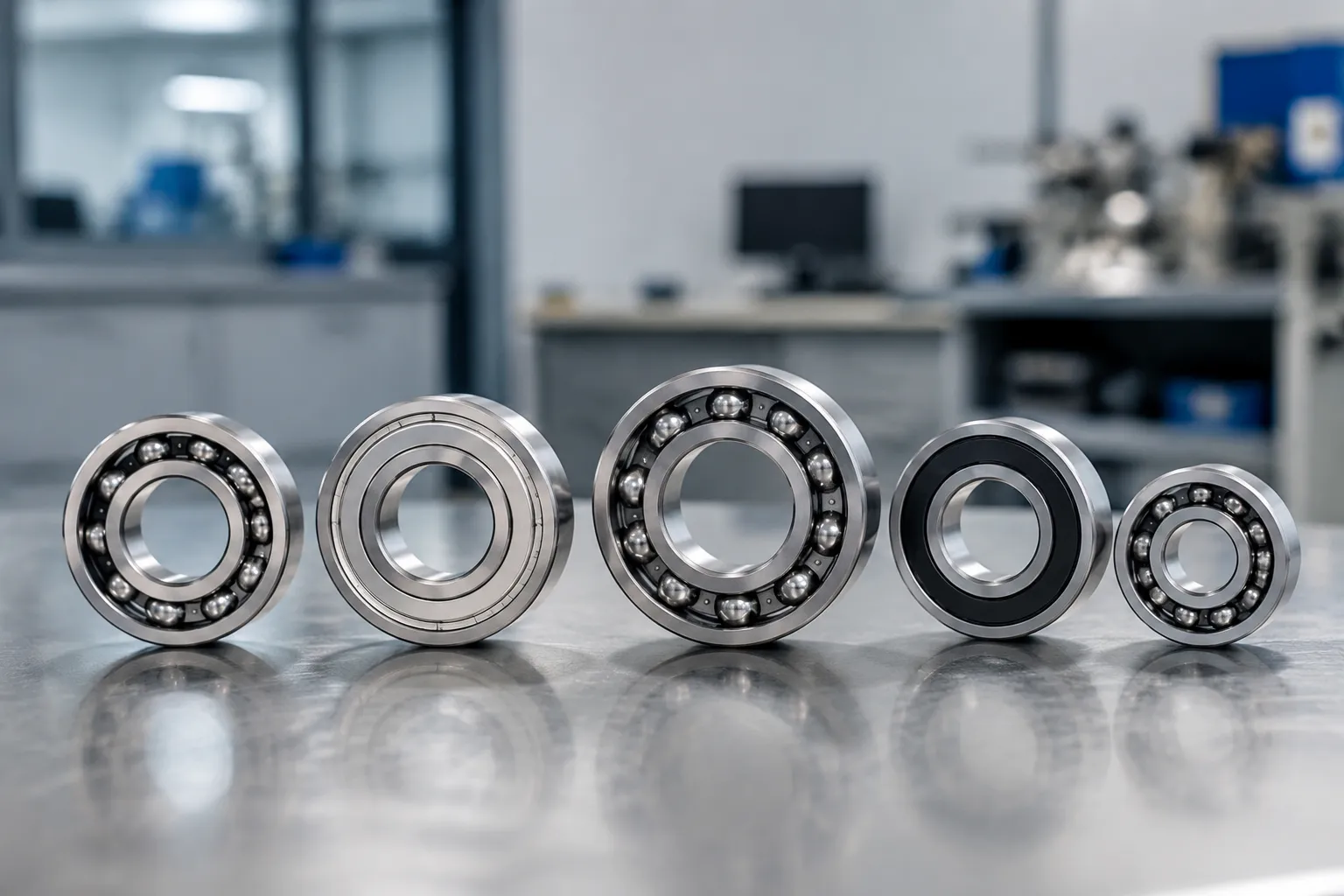
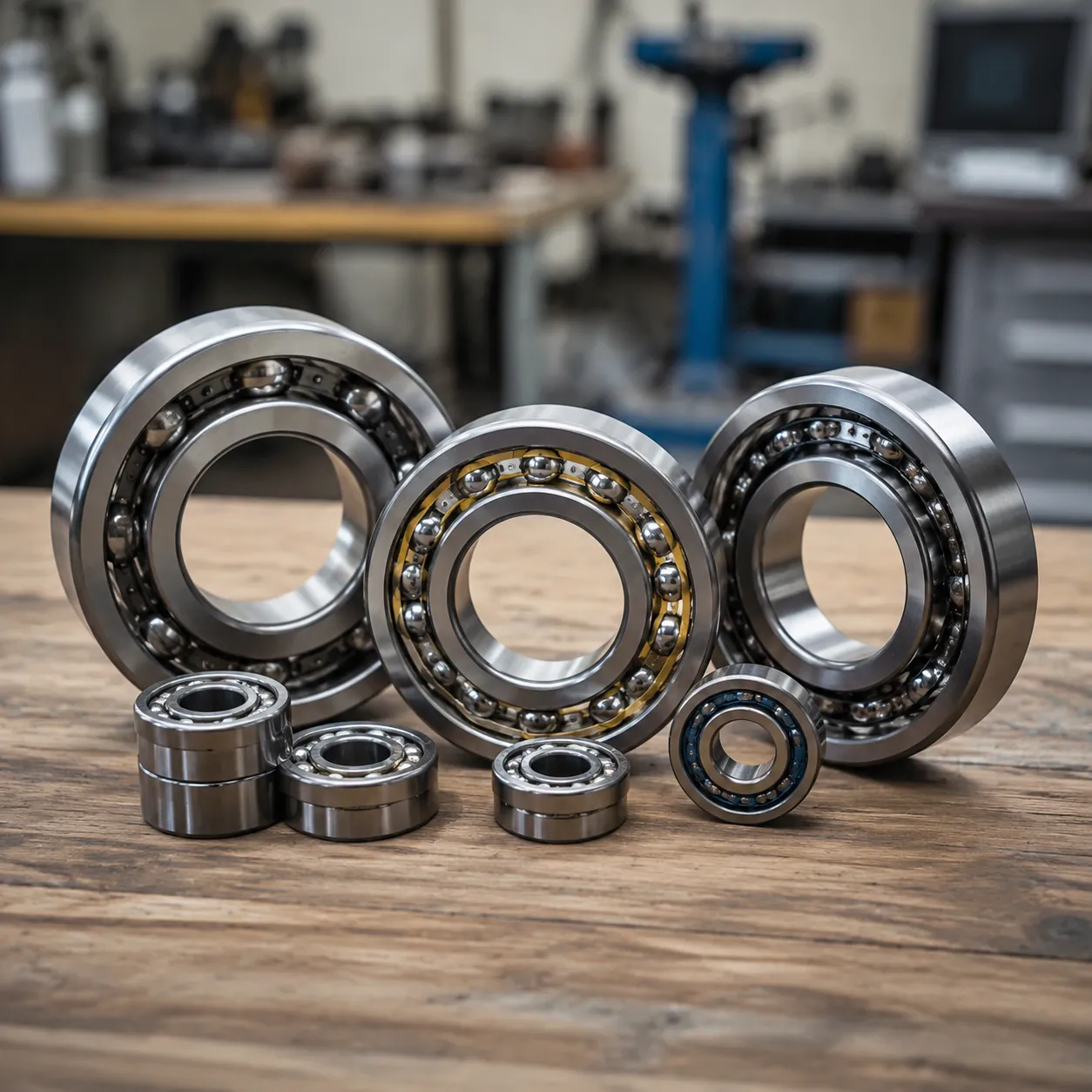
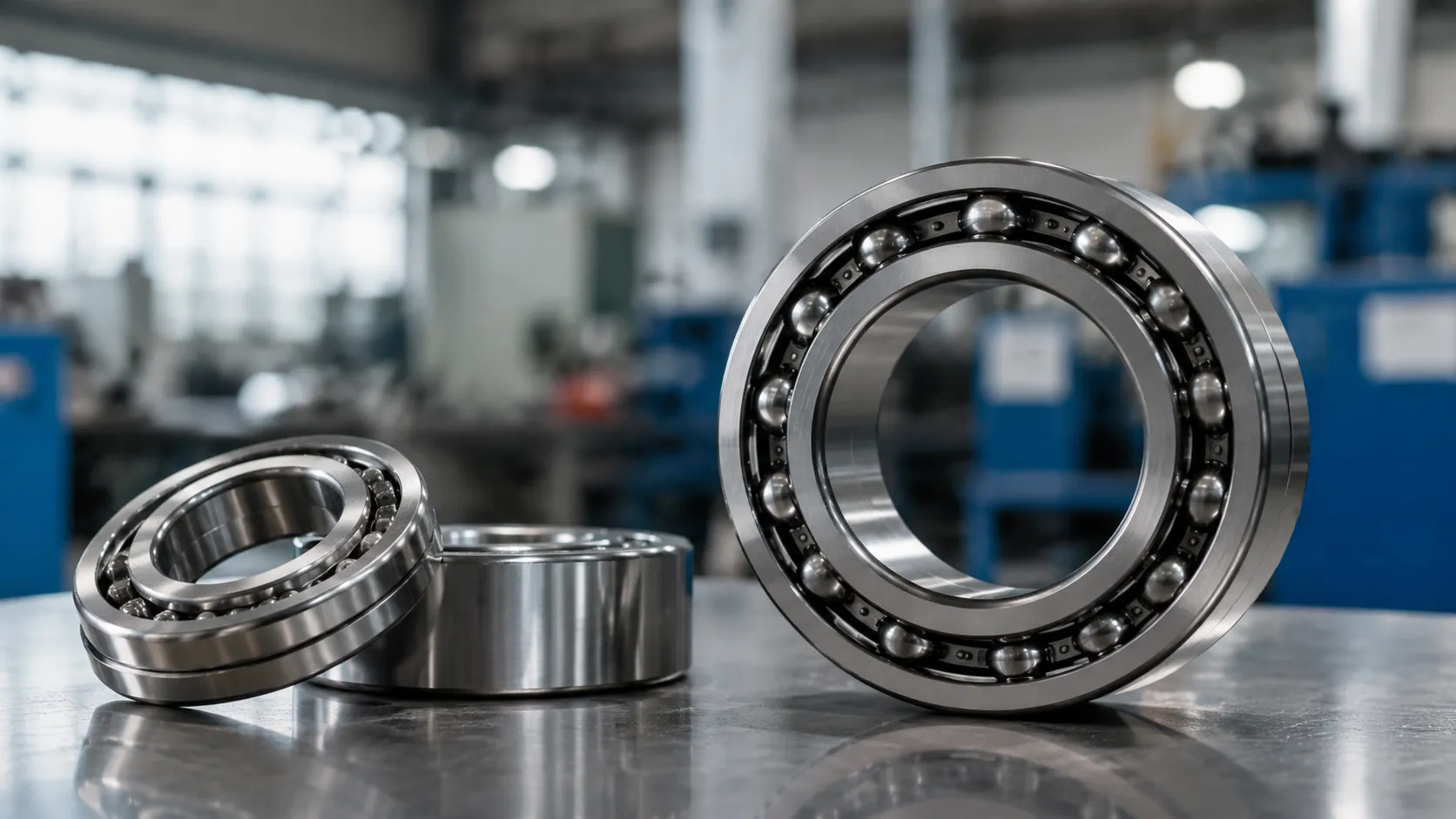
Non standard deep groove ball bearings break ISO boundary charts when bore, OD, or width must match a fixed shaft, housing, or envelope—custom-made single row units for OEM lines that cannot retool around catalog sizes.
Small machinery & consumer drives: Skateboard wheels, inline skates, and compact electric motors often need odd size bearings with low friction and low noise in tight radial pockets.
Legacy rebuilds: Out-of-production housings call for special size rings rather than machining oversized bores around standard catalog parts.
High-speed automation: Hybrid ceramics, custom seals, and stabilized steels target low vibration duty where off-the-shelf rolling bearings overheat or fatigue early.
Machinery Applications for Non-Standard Deep Groove Ball Bearings
Standard catalog bearings work for everyday machinery, but they often fall short when pushed past their limits in specialized machinery applications. When standard parts fail under extreme stress, non-standard deep groove ball bearings are the only reliable way to keep your equipment running.
Why Standard Bearings Fail in High-Speed or High-Load Setups
Standard rolling bearings are built for predictable, middle-of-the-road operating conditions. They frequently fail in specialized applications due to:
- Excessive Radial and Axial Loads: Standard radial deep groove ball bearings cannot handle combined radial load and axial load forces without rapid wear.
- Extreme Rotational Speeds: High RPMs generate intense heat, causing standard steel cages to expand, seize, or deform.
- Micro-Vibrations: Off-the-shelf options lack the ultra-precise tolerances required to prevent premature fatigue in high-vibration environments.
Key Industries Relying on Custom Dimensions
When standard sizes do not fit the envelope or performance requirements, custom size ball bearings serve highly specific industrial sectors:
- Robotics & Automation: Requires compact, custom-made joints and low friction, low noise operation for precise fluid movements.
- Skateboard & Sports Equipment: Skateboard wheels and inline skates use miniature odd size bearings where ISO steps do not match axle or wheel cores.
- Medical Technology: Imaging equipment and surgical tools rely on special size bearings built for high-speed reliability and absolute sterilization compatibility.
- Vintage Automotive Rebuilds: Restoring classic muscle cars or vintage machinery often requires sourcing odd size bearings that have been out of production for decades.
How Non-Standard Designs Handle Extreme Environments
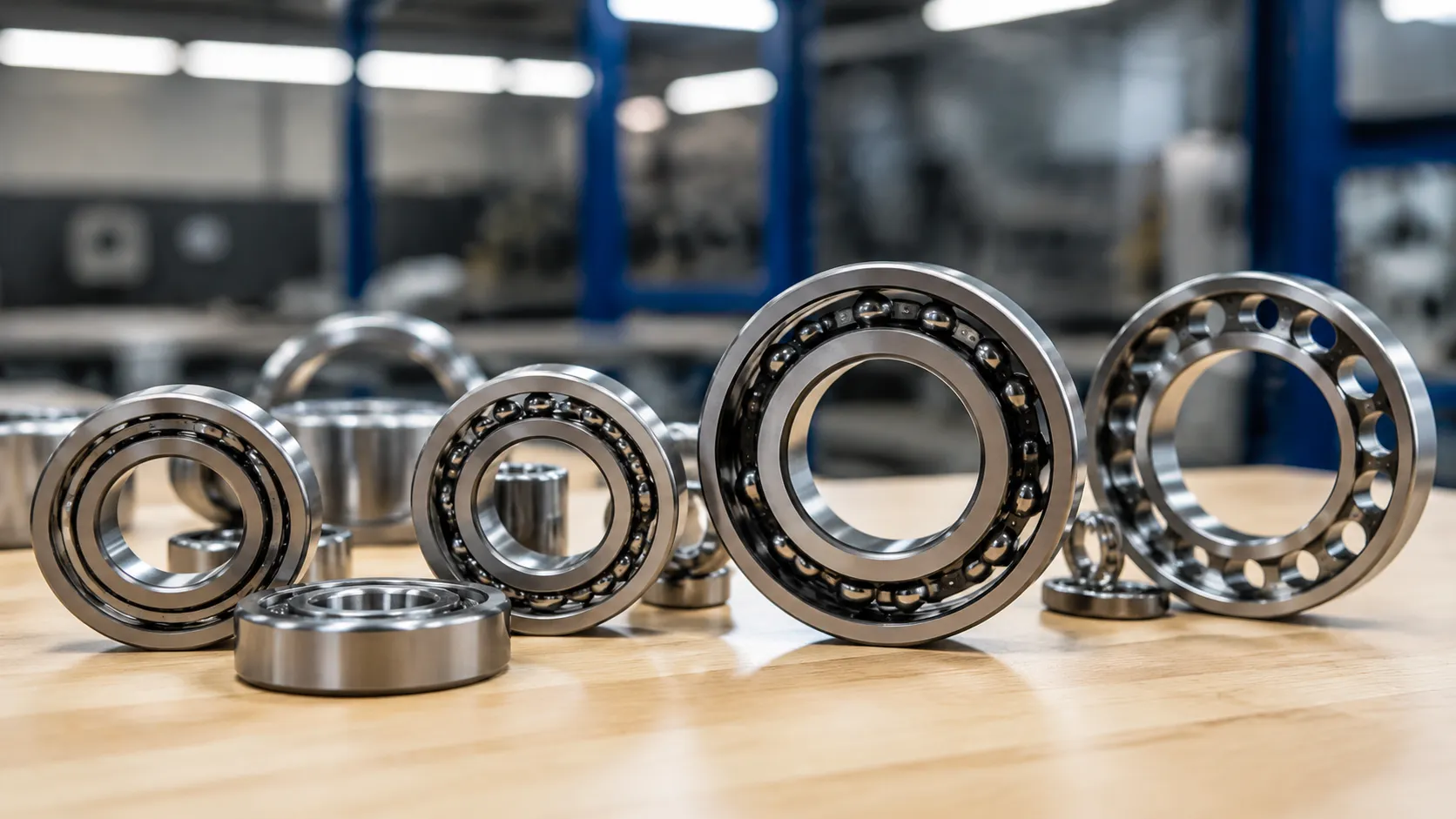
Special size deep groove bearings are engineered to thrive where standard steel components fail.
| Environmental Challenge | Non-Standard Solution | Performance Benefit |
|---|---|---|
| Corrosive Chemicals & Washdowns | Stainless steel or high temperature custom bearings | Prevents rust, corrosion, and chemical degradation |
| Extreme Heat / Vacuum | Hybrid ceramic balls or specialized dry-film lubrication | Eliminates thermal expansion and lubrication boil-off |
| High Contamination | Custom-designed tight-clearance seals | Keeps dirt, dust, and moisture completely out of the raceway |
When catalog envelopes fail in these duty cycles, the dimensional and material deviations below define what makes a bearing genuinely non-standard versus a lightly modified standard line.
What Makes a Deep Groove Ball Bearing Non-Standard?
While standard rolling bearings strictly follow international boundary dimension plans, non-standard deep groove ball bearings are engineered to break those rules. These custom-made solutions fit unique envelopes, handle extreme limits, and solve specific spatial constraints.
Standard ISO vs. Custom Configurations
Unlike heavier roller bearings used for extreme line contact, standard single row radial ball bearings conform to rigid ISO/DIN charts that define specific steps for the bore, outer diameter, and width. When your application demands a specialized fit, production teams manufacture special size discount imperial deep groove ball bearings and metric odd sizes tailored to precise operating conditions.
Common Dimensional Tweaks
To achieve the perfect fit, the three primary dimensions of a radial bearing are commonly modified:
| Dimension | Standard Configuration | Non-Standard Modification |
|---|---|---|
| Bore Size (d) | Standard metric or inch steps | Custom inner ring diameter for exact shaft fits |
| Outer Diameter (D) | Fixed ISO envelope diameters | Modified outer ring to fit specialized housings |
| Width (B) | Standardized thickness | Thinned profiles for tight spaces or widened rings for extra stability |
Material and Component Deviations
A modified deep groove ball bearing is not just defined by its physical size. We also alter the material composition to achieve low friction, low vibration, and high-speed capabilities in demanding environments:
- Stainless Steel: Selected for superior rust and corrosion resistance in marine or medical applications.
- Hybrid Ceramics: Utilizing silicon nitride ($Si_3N_4$) ceramic balls with steel rings to maximize speed and electrical insulation.
- High-Temperature Alloys: Engineered with specialized tool steels and stabilization heat treatments to withstand extreme operating temperatures.
Custom bore, OD, and alloy choices set the mechanical baseline; seal geometry and lubrication determine how long those custom-made rings survive contamination and heat in the field.
Seal & Lubrication Choices for Non-Standard Deep Groove Ball Bearings
When designing non-standard deep groove ball bearings, choosing the right enclosure and lubrication is just as critical as getting the dimensions right. The right combination keeps contaminants out, retains grease, and directly dictates how long your custom radial ball bearings will survive in the field.
Rubber Seals (RS/2RS) vs. Metal Shields (Z/ZZ)
The battle between seals and shields comes down to your operating environment and speed requirements. Weigh the trade-offs between contact seals and metal shields:
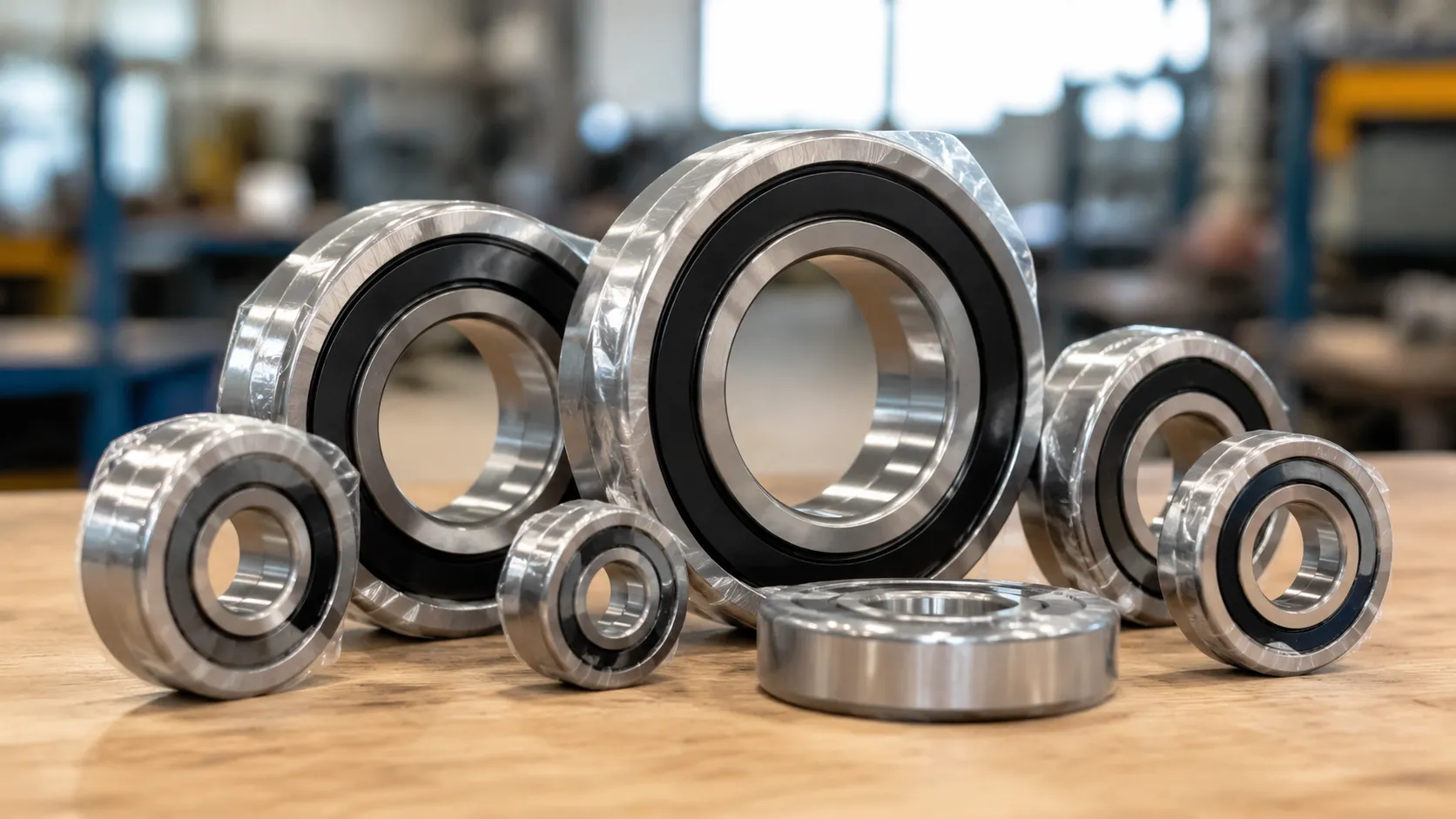
- Rubber Seals (RS/2RS): These contact seals offer the best protection against dust, dirt, and moisture. Because they make physical contact with the inner ring, they create a tight barrier but add a small amount of drag.
- Metal Shields (Z/ZZ): These non-contact shields excel in high-speed, clean environments. They offer low friction and low noise but cannot completely block fine dust or liquids.
| Feature | Rubber Seals (RS/2RS) | Metal Shields (Z/ZZ) |
|---|---|---|
| Contact Type | Contact (Friction) | Non-Contact (Gap) |
| Sealing Protection | High (Dust & Water) | Moderate (Coarse Dust) |
| Speed Limit | Moderate | High |
| Friction & Torque | Slightly Higher | Extremely Low |
| Best Used For | Outdoor gear, dirty machinery | Clean indoor electric motors and precision drives |
High-Performance Lubrication for Extreme Speeds
Standard grease won't cut it when your application runs hot or spins at extreme RPMs. Lubrication for special size deep groove bearings should match exact operating conditions:
- High-Speed Greases: Synthetic-based greases reduce startup torque and prevent heat buildup in high-speed applications.
- High Temperature Options: For extreme environments, we utilize specialized fluorinated lubricants (PFPE) or solid/dry lubricants that won't degrade, run, or burn off.
- Food-Grade & Cleanroom Lube: Non-toxic, H1-certified greases keep your custom setups compliant without sacrificing mechanical performance.
How Sealing Choices Impact Bearing Lifetime
Selecting the wrong enclosure or lubricant is a leading cause of premature failure in 2RS sealed deep groove ball bearings and other modified deep groove ball bearings.
- Under-protection leads to particulate contamination, causing abrasive wear on the rolling bearings and inner raceways.
- Over-protection (using heavy contact seals where a light shield is needed) causes unnecessary friction, leading to overheating and lubricant breakdown.
- Lubricant starvation caused by washed-out grease directly increases radial load wear and shortens operational life.
Matching sealing pressure and grease fill to torque, temperature, and speed requirements keeps custom bearings running with low vibration and peak reliability.
Once RS/ZZ and grease grade are locked, caliper readings and load notes below are what manufacturing teams need to quote odd size bearings correctly the first time.
How to Measure and Order Non-Standard Deep Groove Ball Bearings
When you are dealing with non-standard deep groove ball bearings, guessing is not an option. Because these odd size bearings do not follow standard ISO charts, getting exact physical dimensions is the only way to ensure a perfect fit for your machinery applications.
Step-by-Step Measurement Guide with Calipers
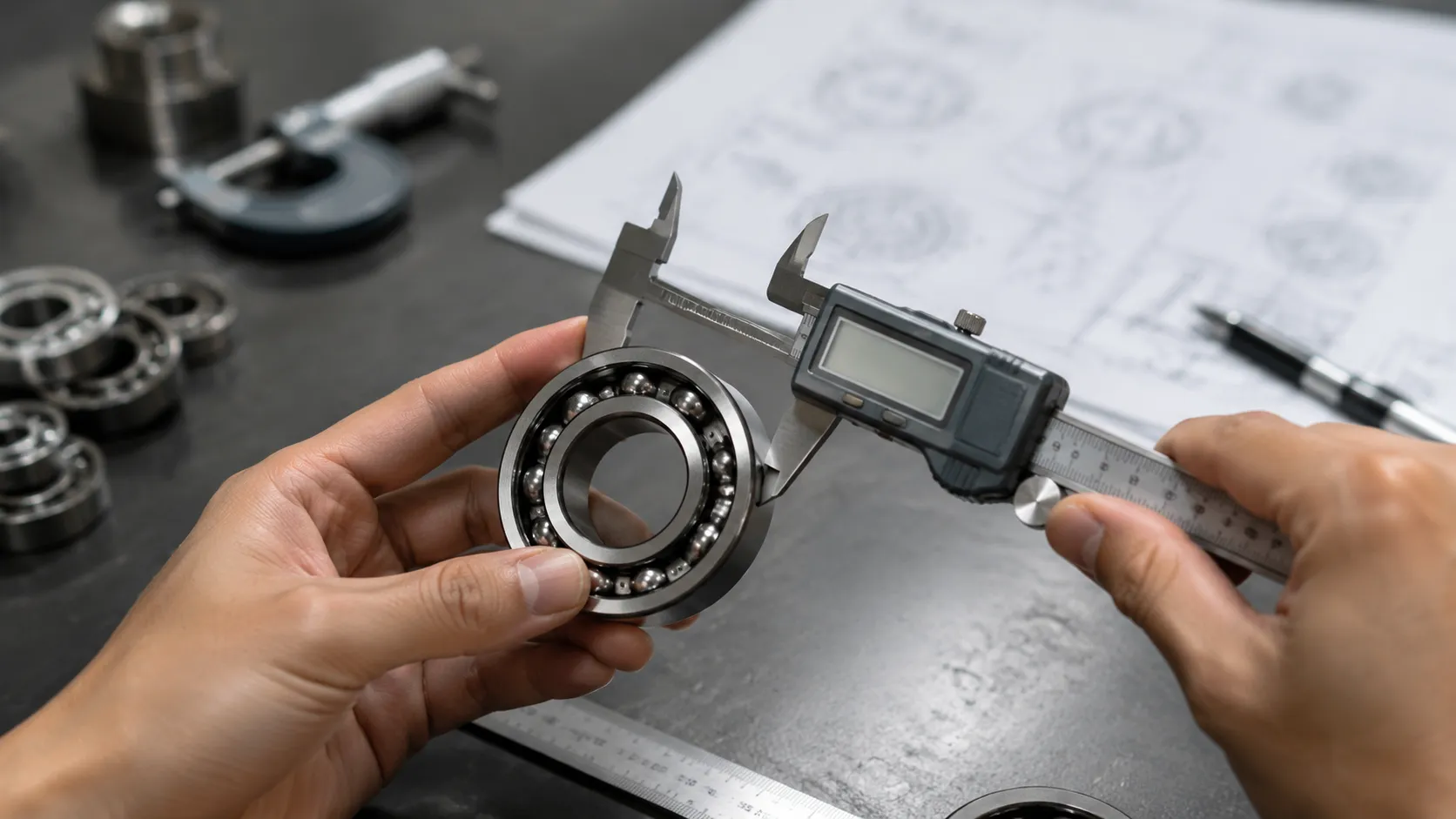
To get accurate non-standard bearing dimensions, always use a digital caliper. Avoid tape measures or standard rulers. Take all measurements in millimeters (mm), as this is the global industry standard for rolling bearings.
- Bore Diameter (d): Measure the inside circle of the inner ring. Place the caliper's upper jaws inside the hole and expand them flat against the walls. This determines your custom bore bearings sizing.
- Outer Diameter (D): Measure the total width of the outside ring. Place the caliper’s main jaws flat across the widest external point of the bearing.
- Width (B): Measure the thickness of the bearing from one flat side to the other.
Pro Tip: Take measurements at two or three different angles and average them out. Worn bearings can sometimes warp, especially in high-stress setups.
Deciphering Custom Bearing Part Numbers and Suffixes
Standard deep groove ball bearings use predictable 4-digit or 5-digit numbers (like 6204). With modified deep groove ball bearings, the rules change.
Manufacturers often add specific prefixes or suffixes to indicate special size dimensions or custom features:
Prefixes (e.g., AC, non-standard letters): Often point to proprietary or non-standard inner ring designs.
Suffixes (e.g., X, or custom digit strings): Frequently indicate non-standard width or outer diameters.
Sealing Suffixes: Keep an eye out for standard suffix markers like RS, 2RS, Z, or ZZ, which might be paired with custom dimensions.
If your current bearing has a strange part number stamped on the face, snap a clear photo of it. We can usually decode these custom manufacturer markings instantly.
Key Details to Share with Your Custom Bearing Manufacturer
To help us manufacture the perfect single row radial ball bearings for your project, we need more than just raw dimensions. Provide the following with your inquiry:
- The Operating Environment: Let us know if the bearing will face high temperatures, water washdowns, or corrosive chemicals.
- Load Requirements: Define whether the application places a primary radial load, axial load, or a combination of both on the bearing.
- Speed and Precision: Specify the target RPMs. This tells us if we need to design for low friction, low noise, or low vibration tolerances.
- Quantities: Whether you need a single prototype or a production run, letting us know the volume helps us optimize the manufacturing process for you.
Measurement and ordering data cover production; the FAQ block answers lead time, MOQ, and housing-versus-custom trade-offs.
FAQs About Non-Standard Deep Groove Ball Bearings
Can I buy non-standard bearings in small quantities?
Yes, you can. Many industrial suppliers only deal in massive bulk runs, but smaller batches for custom size ball bearings are available for prototype testing, specialized machinery runs, or single units for vintage rebuilds—without forcing excessive minimum order quantities.
How much more expensive are custom bearings than standard ones?
Custom designs do carry a premium, but the exact cost depends on your specifications. Standard rolling bearings are mass-produced by the millions, keeping their unit cost incredibly low. Odd size bearings with a custom bore or specialized high-temperature materials carry a premium due to unique tooling, machine setup times, and smaller production runs. However, using a modified deep groove ball bearing is often far cheaper than redesigned equipment or dealing with repeated failures of ill-fitting off-the-shelf parts.
What is the average lead time for a non-standard bearing?
Lead times typically range from 3 to 8 weeks, depending on the complexity of the design and the materials required.
- Simple dimensional tweaks (like a slightly modified bore or width) can often be turned around quickly.
- Complex modifications (such as hybrid ceramic configurations, specialized seals, or custom high-temperature alloys) require extra production and testing time.
Request a clear, realistic timeline upfront when planning project downtime or production schedules.
Should I buy a custom bearing or modify a standard housing?
It depends on your machining capabilities and the structural integrity of your equipment.
| Option | Pros | Cons | Best For |
|---|---|---|---|
| Modifying the Housing | • One-time machining cost • Can use cheap, standard bearings in the future | • Risks weakening the housing structure • Hard to reverse if mistakes are made | Robust machinery with plenty of extra metal around the bearing pocket. |
| Ordering Custom Bearings | • No risk of damaging expensive equipment • Guaranteed precision fit • Drops right into place | • Higher unit cost • Requires waiting on manufacturing lead times | Precision applications like electric motors, robotics, and high-stress components. |
Ordering Information — Non Standard Deep Groove Ball Bearings
Prototype and production quotes for non standard deep groove ball bearings typically start from
50–200 pcs for simple dimensional tweaks and 500–1,000 pcs for hybrid ceramic,
high-temperature alloy, or dual-seal builds. Share caliper d/D/B readings, seal suffix (RS/2RS/Z/ZZ), and target RPM so
MOQ and lead time can be itemized within 24–48 hours.
| Program | MOQ (typical) | Lead time |
|---|---|---|
| Dimensional-only custom (metric/inch) | 50–200 pcs | 3–5 weeks |
| Material / seal deviation | 200–500 pcs | 5–8 weeks |
| Hybrid ceramic / high-temp alloy | 500–1,000 pcs | 6–10 weeks |
Request a Quote — Non Standard Deep Groove Ball Bearings
Send caliper d/D/B (mm), stamped part markings, seal suffix, and combined radial load /
axial load notes for itemized non standard deep groove ball bearings pricing—
Contact JN Bearings with photos of the face stamp or a sketch of the
target envelope when no catalog cross exists.