If you’re designing around deep groove ball bearings, you can’t afford to guess how much axial load vs radial load they can really handle.
Choose wrong, and you’ll see overheating, premature failure, and projects that mysteriously “don’t hit life.”
Choose right, and a simple deep groove bearing can reliably carry combined loads without jumping to expensive angular contact or thrust designs.
In this guide, you’ll quickly learn how radial loads and axial loads act inside a deep groove ball bearing, how much thrust they can realistically take, and when you must step up to a different bearing type.
Let’s get straight into the engineering that actually matters for your design.
Axial Load vs Radial Load in Deep Groove Ball Bearings
Choosing the wrong bearing load capacity is one of the leading causes of premature bearing failure in industrial applications. To optimize equipment performance and extend operating life, you must understand how different forces impact your components. As a leading ball bearings manufacturer and supplier, we engineer our single row deep groove ball bearings to handle multi-directional stress efficiently, ensuring your machinery runs without unexpected downtime.
Understanding the Fundamental Differences in Forces
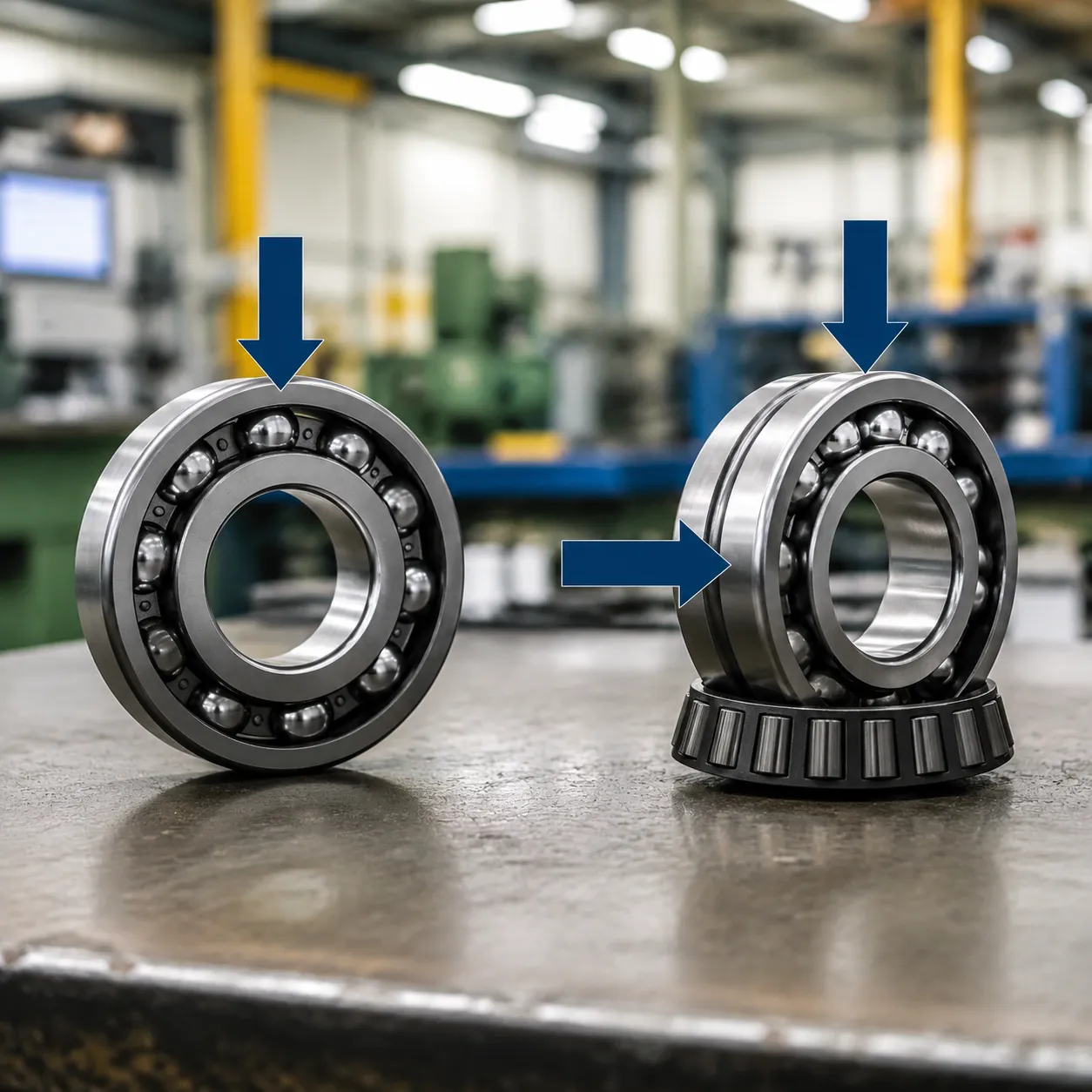
Mechanical systems subject internal bearings to two primary types of force: radial load and axial load (also known as thrust load). The direction of the applied force relative to the shaft determines how the bearing distributes stress across its raceway and steel balls.
- Radial Load: Applies force perpendicular to the shaft.
- Axial Load: Applies force parallel to the shaft axis.
Load Distribution and Multi-Directional Stress
Deep groove ball bearings characteristics make them exceptionally versatile. While designed primarily to maximize static radial load rating performance, their deep raceway grooves allow them to support an incidental load or light maximum axial thrust simultaneously.
When multi-directional stress occurs, the contact angle shifts, distributing the weight across the high-quality steel balls. Balancing these combined radial and axial loads correctly prevents geometric misalignment and premature wear.
| Force Type | Direction to Shaft | Primary Bearing Component Stressed | Deep Groove Ball Bearing Capability |
|---|---|---|---|
| Radial Load | Perpendicular (90 °) | Inner and outer raceway bottoms | Excellent (Primary design function) |
| Axial (Thrust) Load | Parallel (0 °) | Side walls of the deep grooves | Good (For light to moderate loads) |
| Combined Load | Angular / Diagonal | Dynamic distribution across balls | Moderate (Requires precise rating calculation) |
Prevent Premature Bearing Failure with Proper Selection
Selecting the precise bearing load rating for your specific application safeguards your machinery against early breakdown. Exceeding the calculated deep groove ball bearing load capacity triggers specific bearing failure modes, including overheating, spalling, and cage destruction.
By analyzing the operational speed, temperature, and exact force directions during the mechanical engineering phase, we help you secure the ideal bearing selection—keeping your maintenance costs low and your productivity high.
What is Radial Load in Deep Groove Ball Bearings?
A radial load is any force that pushes perpendicular to the shaft. Think of it as a downward or sideway pressure pushing directly against the bearing's outer ring.
[Image of radial load on deep groove ball bearing]
As a leading ball bearings manufacturer, we design our single row deep groove ball bearing units with deep, precisely engineered raceway grooves. These deep grooves allow the steel balls to sit firmly inside the raceway, maximizing contact and distributing heavy radial forces evenly across the structure. This high static radial load rating is exactly what makes these bearings the ultimate go-to choice for high-speed, everyday applications.
Real-World Examples of Radial Load Applications
In most standard machinery, radial forces dominate the operating environment. Here is where our deep groove ball bearings handle the brunt of that pressure:
- Electric Motors: Supporting the weight of the rotor and resisting the magnetic pull during operation.
- Conveyor Systems: Carrying the continuous weight of heavy materials moving across rollers.
- Automotive Alternators: Withstanding the constant belt tension pulling sideways on the shaft.
What is Axial Load (Thrust Load) in Ball Bearings?
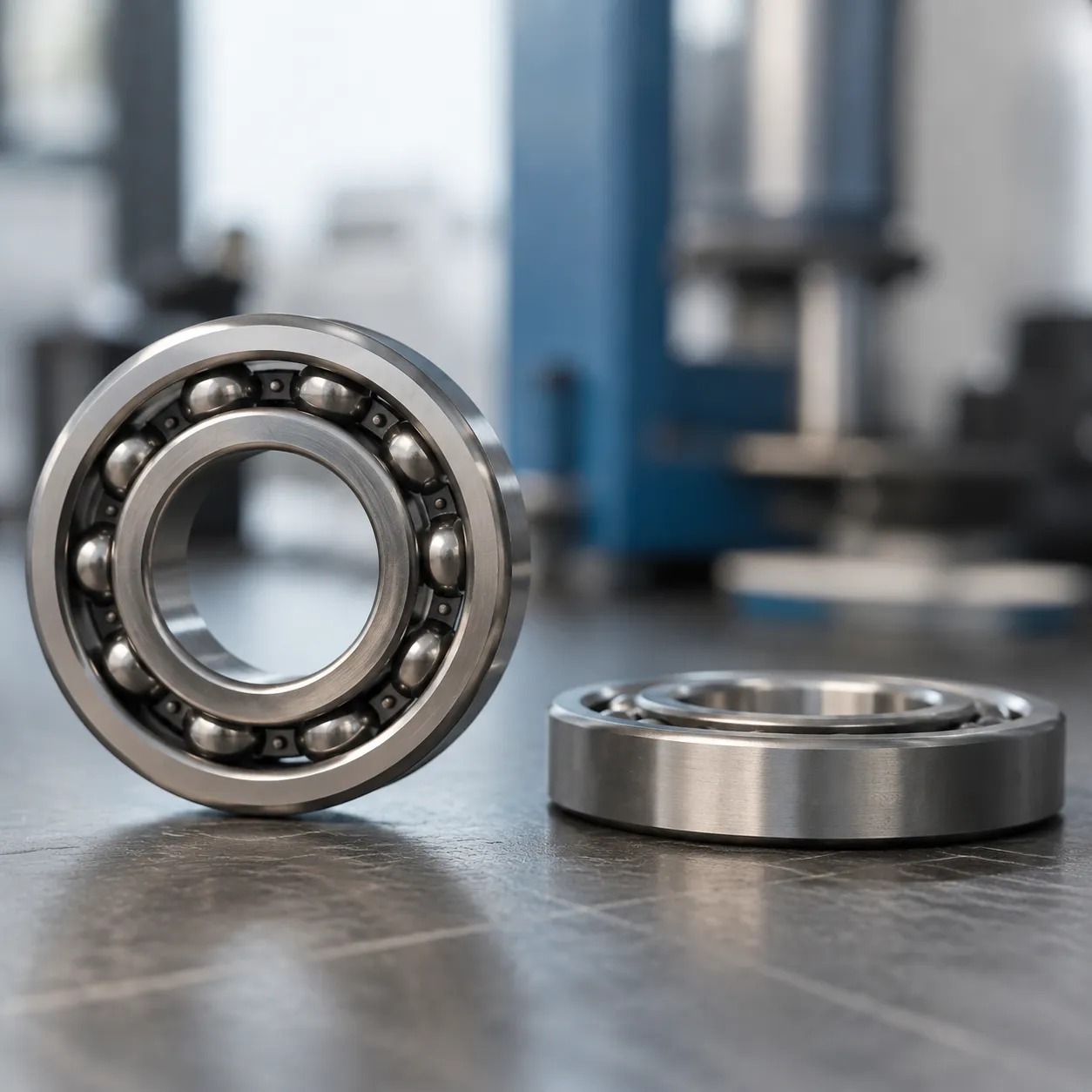
Definition of forces acting parallel to the shaft axis
Axial load, often called thrust load, refers to forces that push along the length of the shaft rather than against it. Unlike radial forces that press perpendicular to the assembly, axial thrust acts parallel to the shaft axis. In real-world applications, this occurs when components push or pull along the centerline, putting direct pressure on the side walls of the bearing raceway.
Limits of deep groove ball bearings under pure thrust loads
While single row deep groove ball bearings are the go-to choice for radial forces, their axial load limit is restricted. Under pure thrust loads, the balls ride up on the edges of the deep raceway grooves.
- Incidental Load: We design our deep groove bearings to handle light to moderate incidental axial loads.
- Maximum Axial Thrust: Excessive pure thrust causes rapid friction buildup, tracking deformation, and premature bearing failure.
- Best Practice: If your equipment subjects the shaft to continuous, heavy bidirectional thrust, relying solely on standard deep groove geometry will shorten your component lifespan.
How contact angles impact axial load capability
The ability to manage thrust forces comes down to the contact angle—the angle between the line joining the ball contact points and the radial plane.
| Bearing Type | Contact Angle | Axial Load Capability |
|---|---|---|
| Deep Groove Ball Bearing | Initially 0° (shifts slightly under load) | Moderate; limited by groove depth |
| Angular Contact Ball Bearing | Greater than 0° (typically 15° to 40°) | High; optimized for heavy one-direction thrust |
| Thrust Ball Bearing | 90° | Maximum; designed strictly for pure axial loads |
Standard deep groove ball bearings start with a zero-degree contact angle. When a thrust load is applied, this angle shifts slightly, allowing the bearing to absorb some axial force. However, for severe or high-speed thrust requirements, upgrading to angular contact bearings or dedicated thrust ball bearings ensures the load distribution remains stable without sacrificing mechanical efficiency.
Comparing Radial and Axial Load Capacities
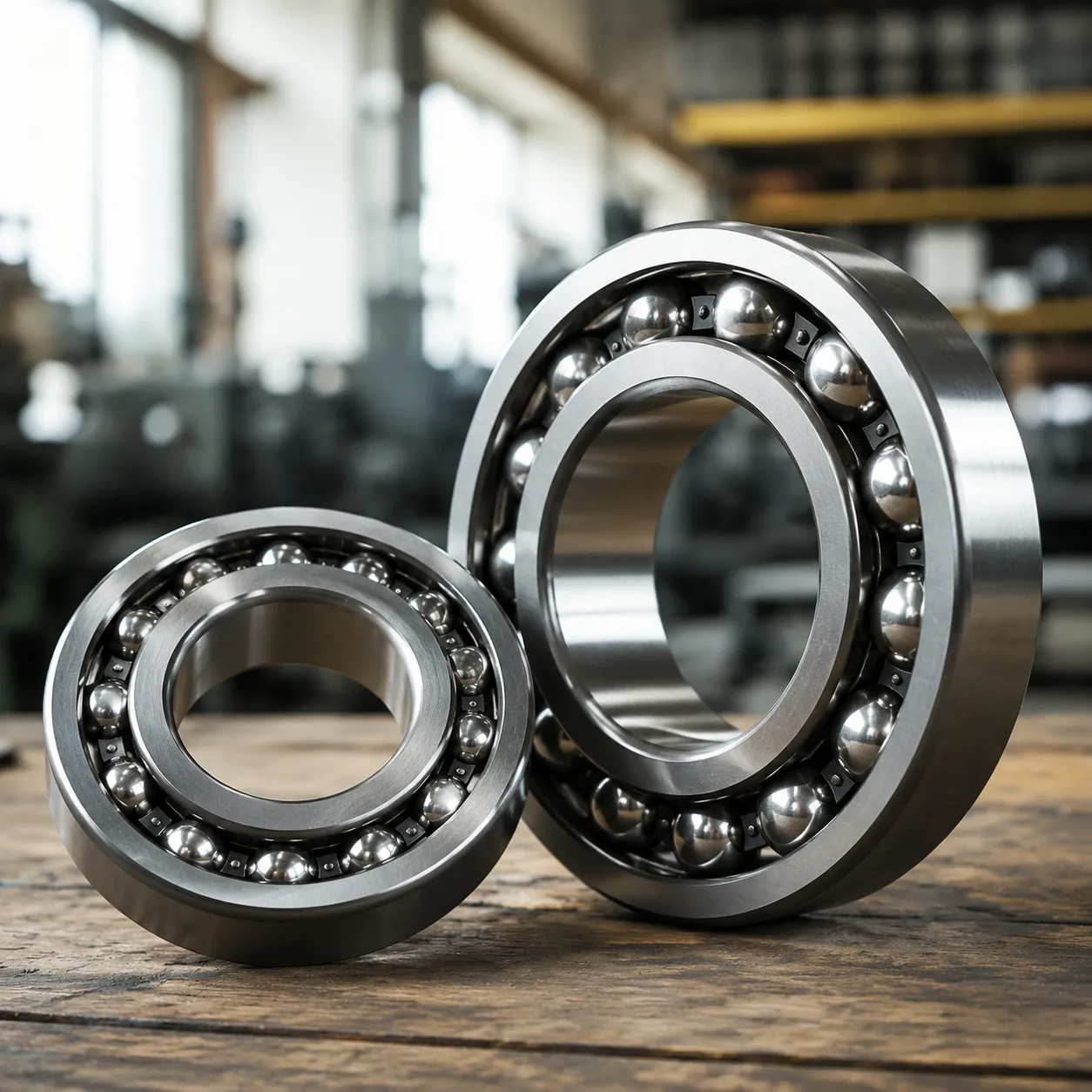
While our single row deep groove ball bearings are the ultimate all-rounders, comparing their structural layout to dedicated thrust bearings shows exactly how load distribution changes based on the direction of the force.
Structural Differences and Load Distribution
The main difference lies in the raceway alignment. In a standard deep groove ball bearing, the inner and outer rings feature deep, symmetrical grooves. When a radial load hits the bearing, the force pushes perpendicular to the shaft, distributing the weight evenly across the steel balls at the bottom of the arc.
When an axial load (thrust load) is applied, the rings shift slightly in opposite directions. This forces the balls to ride up on the side walls of the raceway. Because the contact angle is relatively low compared to an angular contact ball bearing vs deep groove setup, a standard ball bearing has a much lower axial load limit than its static radial load rating. Dedicated thrust ball bearings, on the other hand, have washers aligned parallel to the ground, meaning they lock into pure axial forces but fail completely if subjected to radial stress.
Side-by-Side Load Capacity Comparison Matrix
Here is how these designs stack up when managing different mechanical stresses in applications like electric motors and conveyor systems:
| Bearing Type | Radial Load Capacity | Axial Load Capacity | Best Used For |
|---|---|---|---|
| Deep Groove Ball Bearing | Excellent (Handles heavy perpendicular forces) | Moderate (Good for incidental load or light thrust) | Electric motors, gearboxes, appliances |
| Thrust Ball Bearing | Poor (Cannot support radial forces) | Excellent (Handles high maximum axial thrust) | Steering columns, heavy jacks, mill spindles |
| Angular Contact Bearing | Good to Excellent | High (One direction only) | Pumps, clutches, high-speed spindles |
Understanding this bearing load rating balance prevents premature bearing failure modes like misalignment and excessive heat buildup, ensuring you get the maximum possible lifespan out of your equipment.
Combined Loads
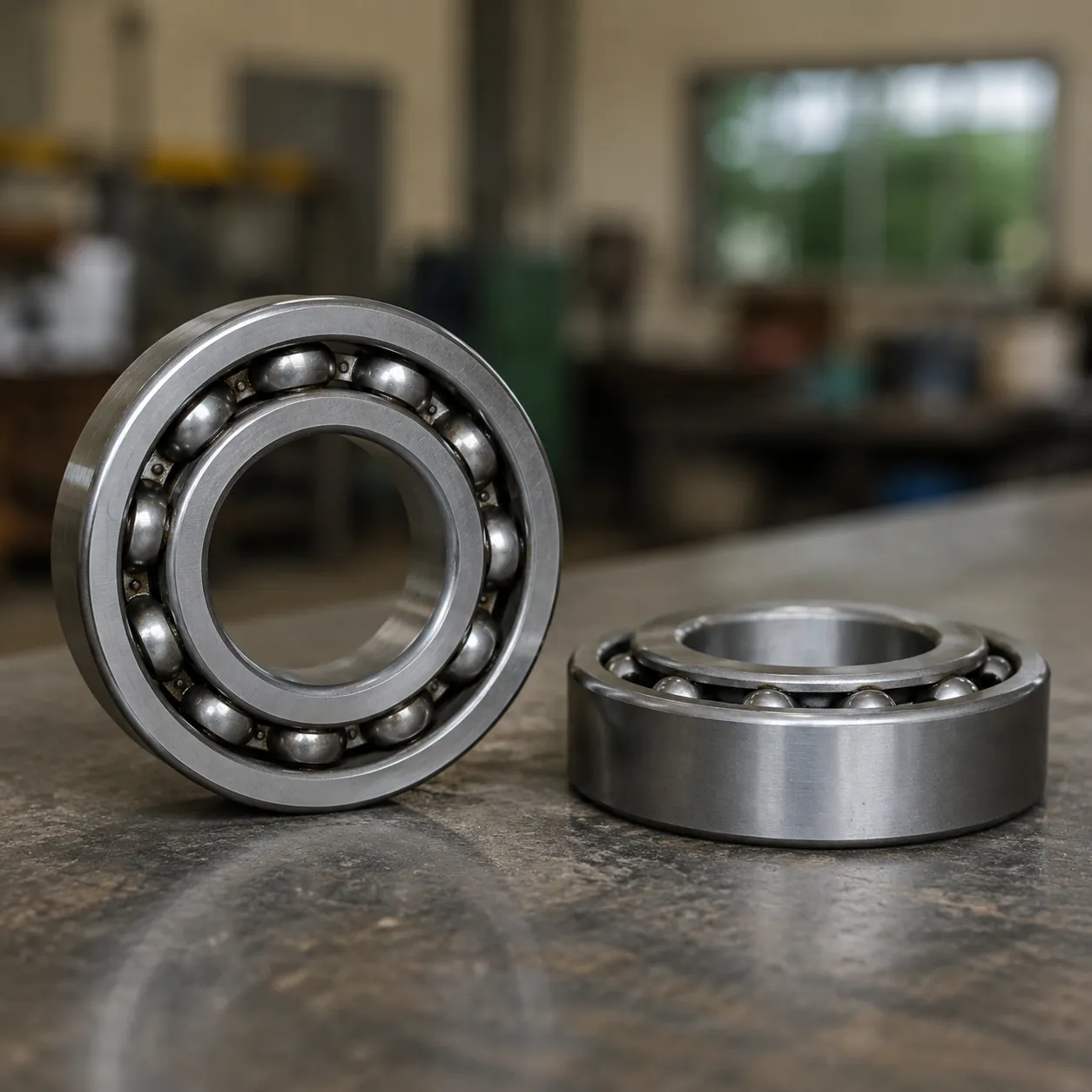
In real-world applications like electric motors and conveyor systems, bearings rarely face just one type of force. They regularly handle combined radial and axial loads at the same time. While a single row deep groove ball bearing is primarily designed for radial weight, its deep raceway geometry allows it to take an incidental load from the side without breaking a sweat.
Calculating the Equivalent Dynamic Bearing Load
When forces hit from multiple directions, we have to calculate the equivalent dynamic bearing load to determine actual bearing life. This formula blends both the radial and axial forces into a single number to show the true stress on the internal bearings.
Here is how the load distribution stacks up:
- Pure Radial Force: Distributed evenly across the bottom steel balls.
- Combined Force: Shifts the contact angle, pushing the balls against the side of the raceway.
- Heavy Thrust: Concentrates stress on a narrow zone, which can lower the static radial load rating if exceeded.
| Load Scenario | Deep Groove Ball Bearing Performance | Recommended Action |
|---|---|---|
| High Radial + Low Axial | Excellent. Standard deep groove ball bearing load capacity handles this easily. | Use standard CN or C3 clearance. |
| Equal Radial and Axial | Moderate. Increased friction will generate more operating heat. | Monitor operating speed and lubrication. |
| Low Radial + High Axial | Limit reached. Risks premature bearing failure modes like spalling. | Upgrade the bearing type. |
When to Upgrade to Angular Contact Bearings
If your equipment pushes past the maximum axial thrust limits of a standard deep groove ball bearing, it is time to pivot.
We recommend upgrading to angular contact bearings when axial forces become the dominant load. Angular contact designs feature a specific contact angle built to handle high-speed, heavy one-directional thrust alongside radial loads, ensuring your machinery keeps running without unexpected downtime.
Factors Affecting Deep Groove Ball Bearing Load Capacity
In real-world US manufacturing and industrial applications, several critical operating conditions directly dictate how much weight your bearings can actually handle before failing.
Internal Clearance (CN, C3, C4)
Bearing internal clearance is the amount of play between the rings and the steel balls. Choosing the right clearance prevents premature bearing failure modes like binding and overheating.
- CN (Normal): Ideal for standard electric motors and pumps with minimal thermal expansion.
- C3: Features extra room; the go-to choice for high-speed equipment where heat expands the internal bearings.
- C4: Reserved for severe heat environments or heavy interference fits on the shaft.
High-Quality Lubrication
Lubrication is the lifeblood of bearing load rating longevity. Without a robust oil or grease film, metal-on-metal contact creates massive frictional heat, destroying the raceway and dropping your effective axial load limit ball bearings can handle to near zero. Proper lubrication cushions the rolling elements, distributes the load, and flushes out contaminants.
Operating Speed and Temperature
As operating speeds climb, the maximum axial thrust and radial capacity drop. High temperatures thin out your grease, alter the steel's hardness, and change the radial clearance and bearing life expectations.
| Operating Condition | Impact on Load Capacity | Mitigation Strategy |
|---|---|---|
| High Temperature | Lowers steel hardness, thins lubricant | Switch to C3/C4 clearance & synthetic grease |
| Extreme Speeds | Increases friction and centrifugal force | Optimize oil delivery, review static radial load rating |
| Shaft Misalignment | Concentrates forces unevenly | Utilize bearings with strict misalignment tolerance |
FAQs About Axial and Radial Bearing Loads
Can a deep groove ball bearing take pure axial load?
Yes, a single row deep groove ball bearing can handle a pure axial load, but it has strict limits. While its deep raceway grooves are optimized for radial forces, they can support a maximum axial thrust of about 50% of the static radial load rating. Exceeding this threshold causes the steel balls to ride up on the shoulder of the groove, leading to rapid wear and premature bearing failure.
What happens if you exceed the radial load limit?
Exceeding the static radial load rating or dynamic limits triggers a chain reaction of mechanical failures. The intense pressure crushes the oil film, causing metal-on-metal friction and massive heat buildup. This accelerates specific bearing failure modes like spalling, pitting, and severe misalignment, which ultimately locks up your electric motors or conveyor systems.
How do I know if my application requires a thrust bearing?
You need to switch to thrust ball bearings when your system deals exclusively with high axial forces and zero radial load. If your shaft experiences heavy, continuous one-directional pushing forces—and very little side-to-side force—a standard deep groove ball bearing load capacity will be overwhelmed.
Which bearing type is best for high combined loads?
When your application faces heavy combined radial and axial loads, an angular contact ball bearing vs deep groove comparison highlights the best choice. Angular contact bearings are specifically designed with asymmetrical housing rings to handle severe multi-directional stress simultaneously. For lighter, incidental load combinations, deep groove options work perfectly, but heavy-duty multi-axis forces demand an angular contact upgrade.