Overview
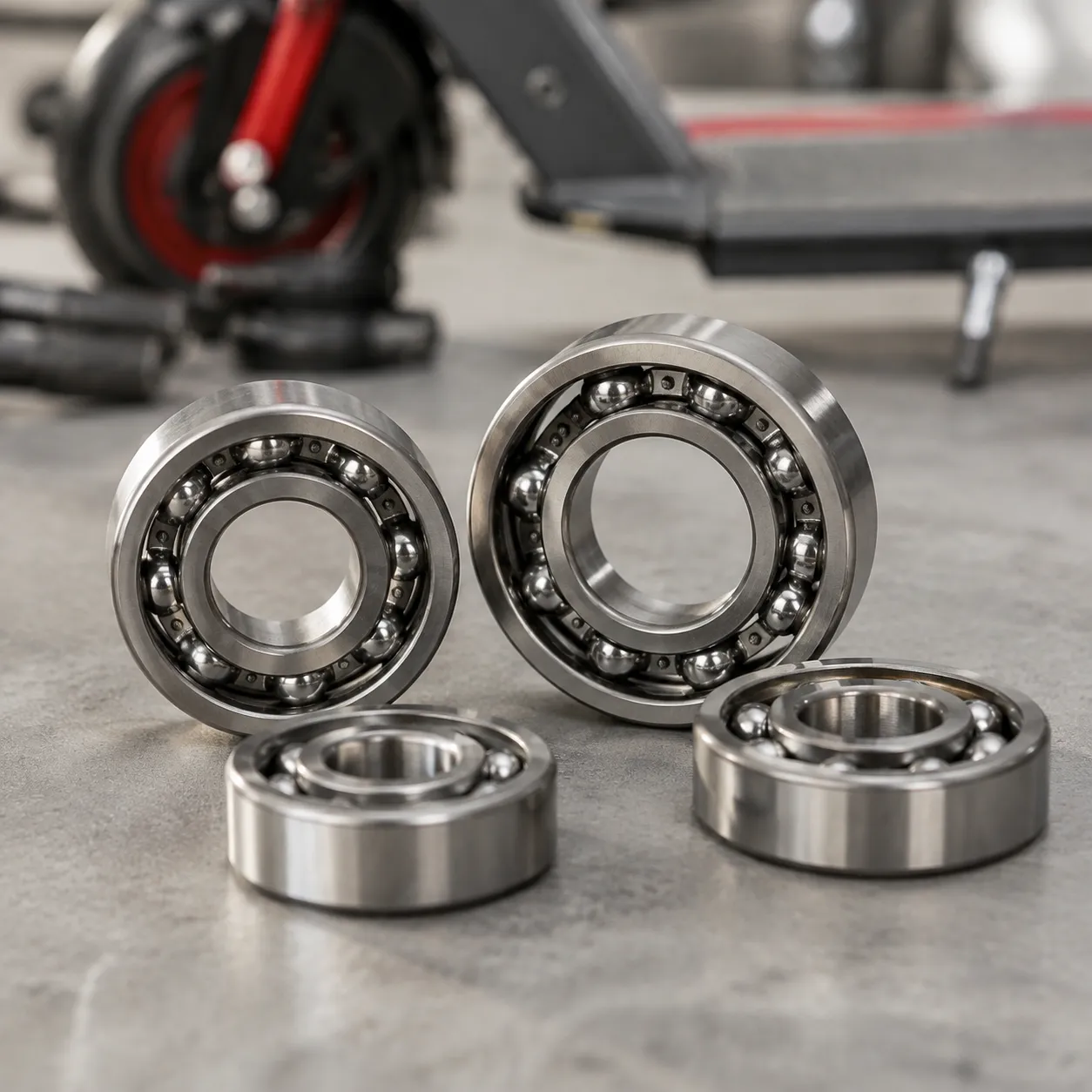
Scooter deep groove ball bearings for kick scooter and electric scooter wheels: 608zz and 608 2rs single row deep groove units; chrome steel or ceramic bearings; pre lubricated with rubber seals for wet-road wheel axle duty.
What Are Scooter Deep Groove Ball Bearings?
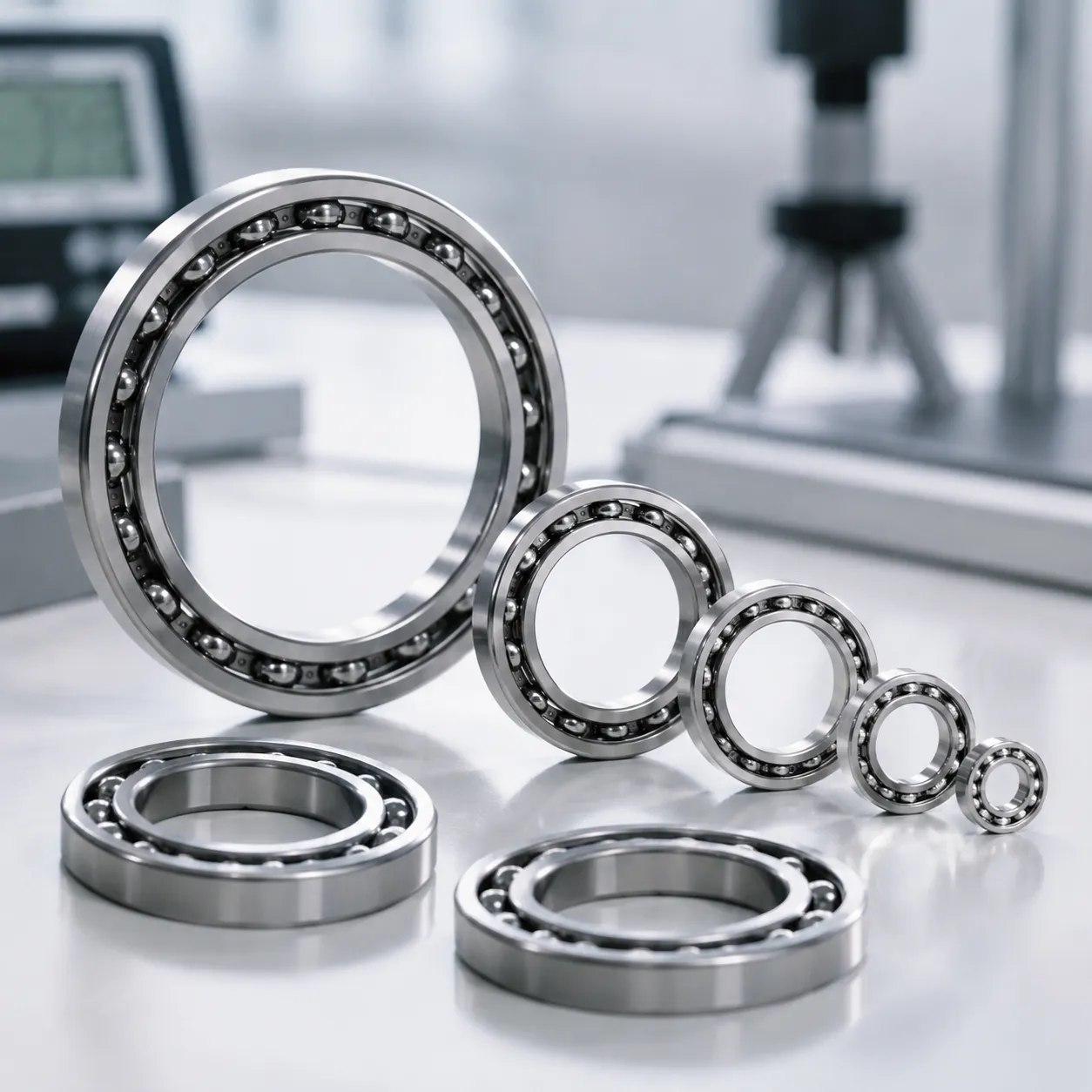
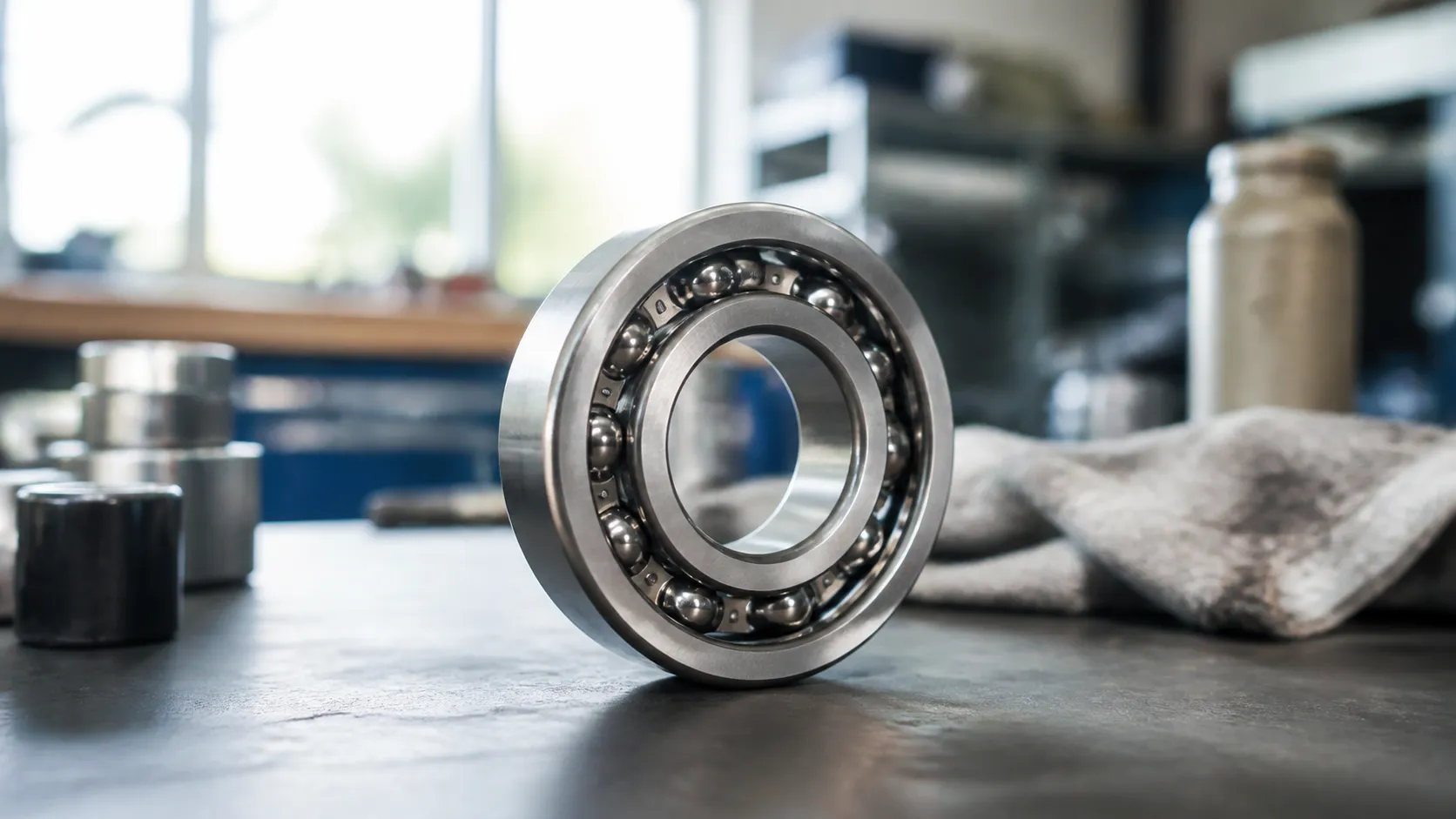
Scooter deep groove ball bearings are single row radial units built for daily urban riding. Deep raceways absorb impacts while keeping low friction on kick scooter and electric scooter wheel axle hubs.
| Component | Function in Scooter Applications |
|---|---|
| Inner & Outer Rings | Crafted from high-carbon chrome steel to resist surface wear and heavy stress |
| Deep Raceway | Securely holds precision balls under shock loads to ensure smooth rotation |
| Precision Balls | Ground to ultra-tight tolerances for low friction and maximum speed |
| Retainer / Cage | Keeps balls evenly spaced to eliminate binding and prevent heat buildup |
Core Anatomy and Radial Load Capacity
A deep groove ball bearing features deep, continuous raceway grooves where precision steel balls sit. Load limits for radial load and axial force are summarized in axial load vs radial load in deep groove ball bearings. This specific geometry allows the bearing to support heavy radial load (the vertical weight of the rider and scooter) while easily managing moderate axial force (side-to-side thrust during sharp turns).
Why Deep Groove Designs Dominate Scooter Wheels
Whether you are pushing a lightweight kick scooter or commuting on a high-powered electric scooter, deep groove ball bearings dominate scooter wheel bearings for several practical reasons:
- Superior Friction Reduction: Minimal contact area between the balls and raceways delivers an effortless glide and extends battery range on motor hubs.
- High RPM Stability: Handles fast rotation effortlessly without overheating, even during long, high-speed commutes.
- All-Direction Load Handling: Effortlessly balances top-down payload weight with lateral forces during aggressive cornering.
- Set-and-Forget Reliability: Highly durable structure provides long service life with minimal maintenance required.
Deep Groove Bearings vs. Standard Bearings
Not all bearings are created equal. Standard shallow-groove or plain bearings simply cannot withstand the harsh dynamic forces of pavement cracks, curb jumps, and hard cornering.
- Raceway Depth: Deep groove bearings feature deep arc grooves matched to the ball radius. Standard bearings often feature shallow channels that wear out fast under lateral stress.
- Load Distribution: Deep groove geometry distributes stress across a broader surface area, preventing metal fatigue. Standard radial bearings concentrate loads on tight points, leading to premature pitting.
- Side-Load Performance: Deep groove designs safely absorb high axial force when carving corners, whereas standard options loosen up and develop dangerous wheel wobble.
Scooter Bearing Types and Technical Specifications
Rubber Seals (2RS) vs. Metal Shields (ZZ)
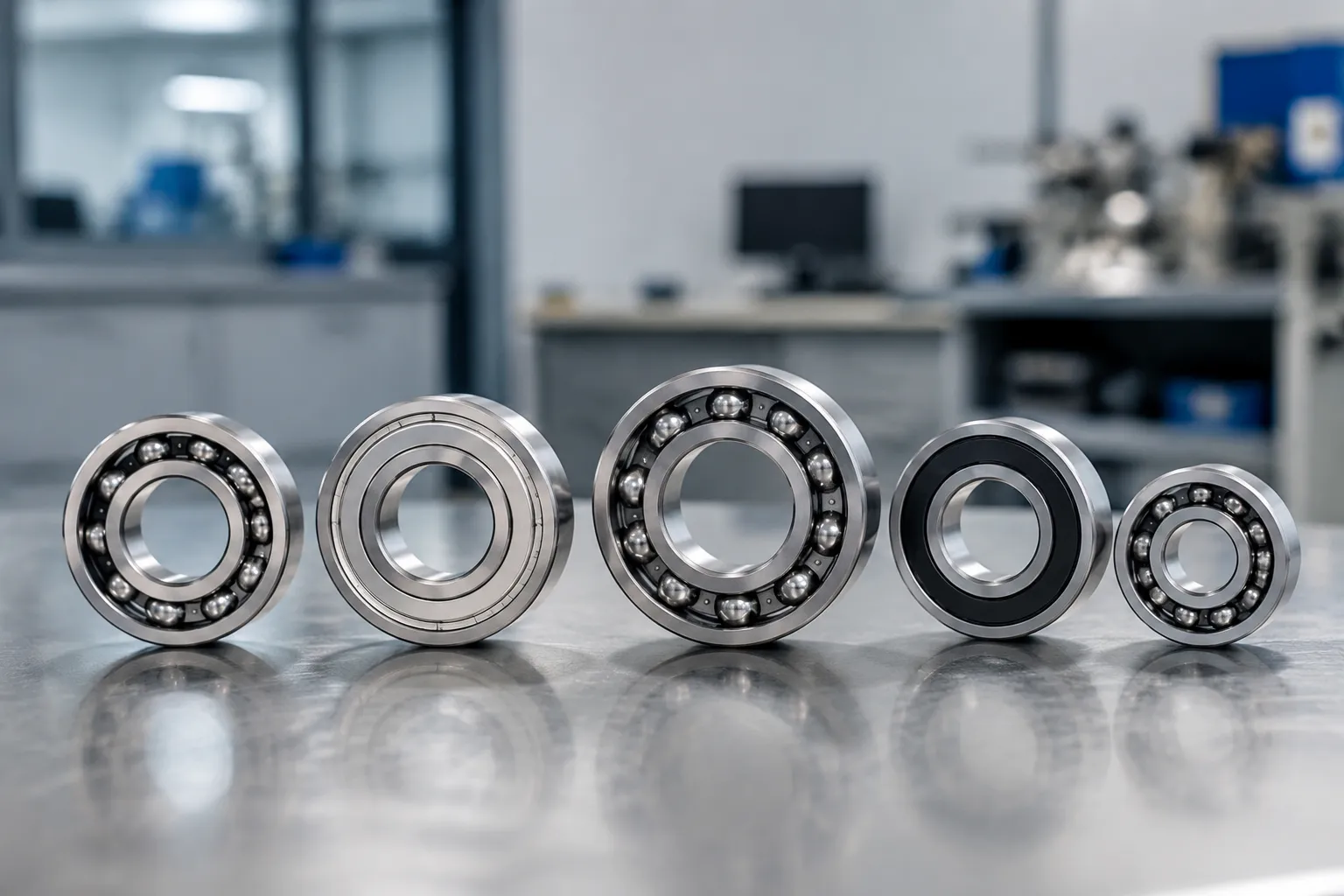
Choosing the right enclosure determines how well your scooter deep groove ball bearings handle dirt, water, and road debris. Two primary enclosure styles for scooter wheel and motor applications:
| Specification | 2RS Rubber Seals | ZZ Metal Shields |
|---|---|---|
| Protection Level | Superior (Water, dust, and mud proof) | Moderate (Dust resistant only) |
| Friction | Slightly higher contact drag | Ultra-low friction |
| Best Used For | Daily all-weather e-scooter commuting | Dry track, indoor, or high-speed racing |
| Maintenance | Pre-lubricated for life; zero maintenance | Requires clean, dry riding conditions |
For wet-weather duty, compare sealed deep groove ball bearings (2RS). For most riders, 608 2rs deep groove ball bearing models are the ideal choice. Their tight rubber seals keep grease locked in and water out, extending bearing life on wet city streets.
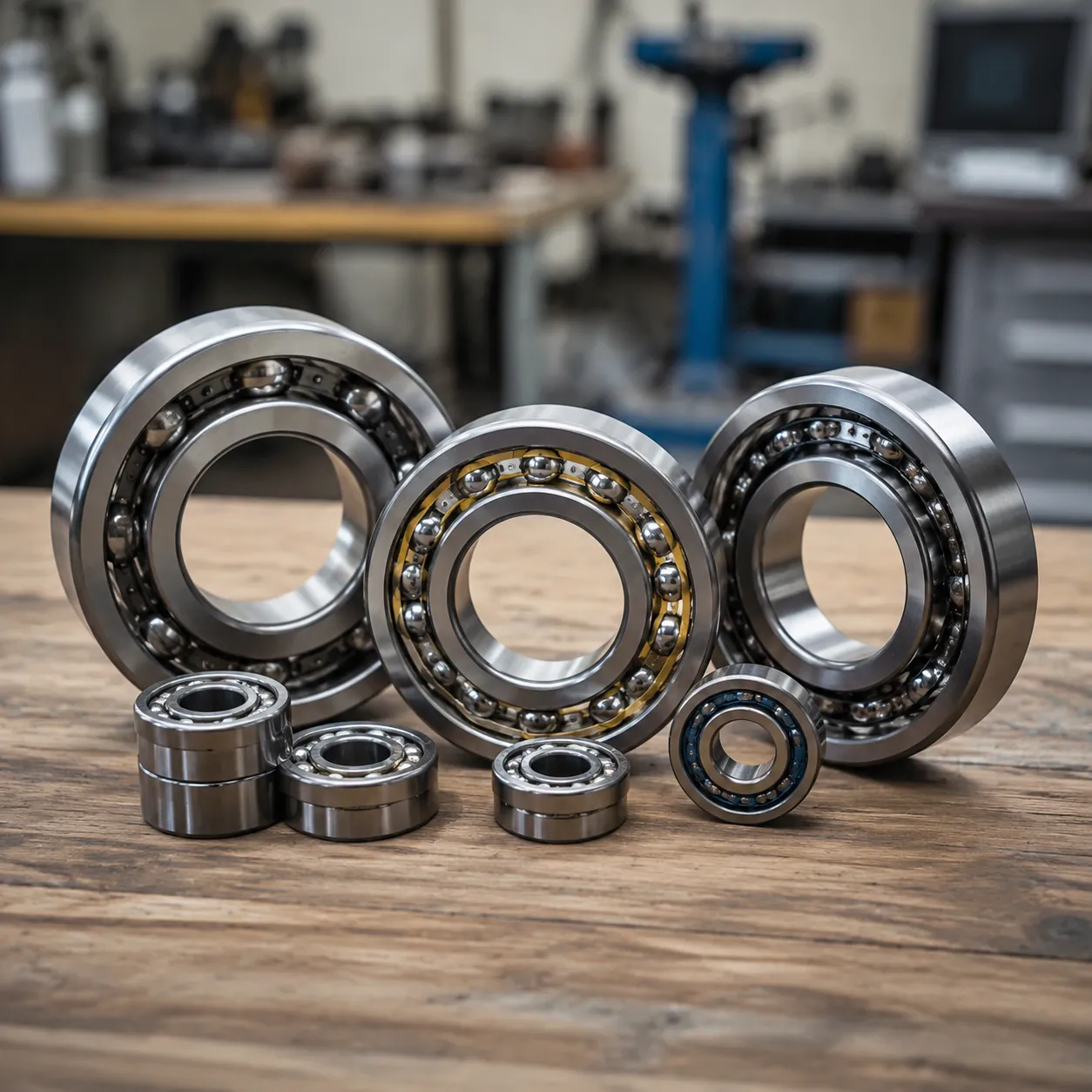
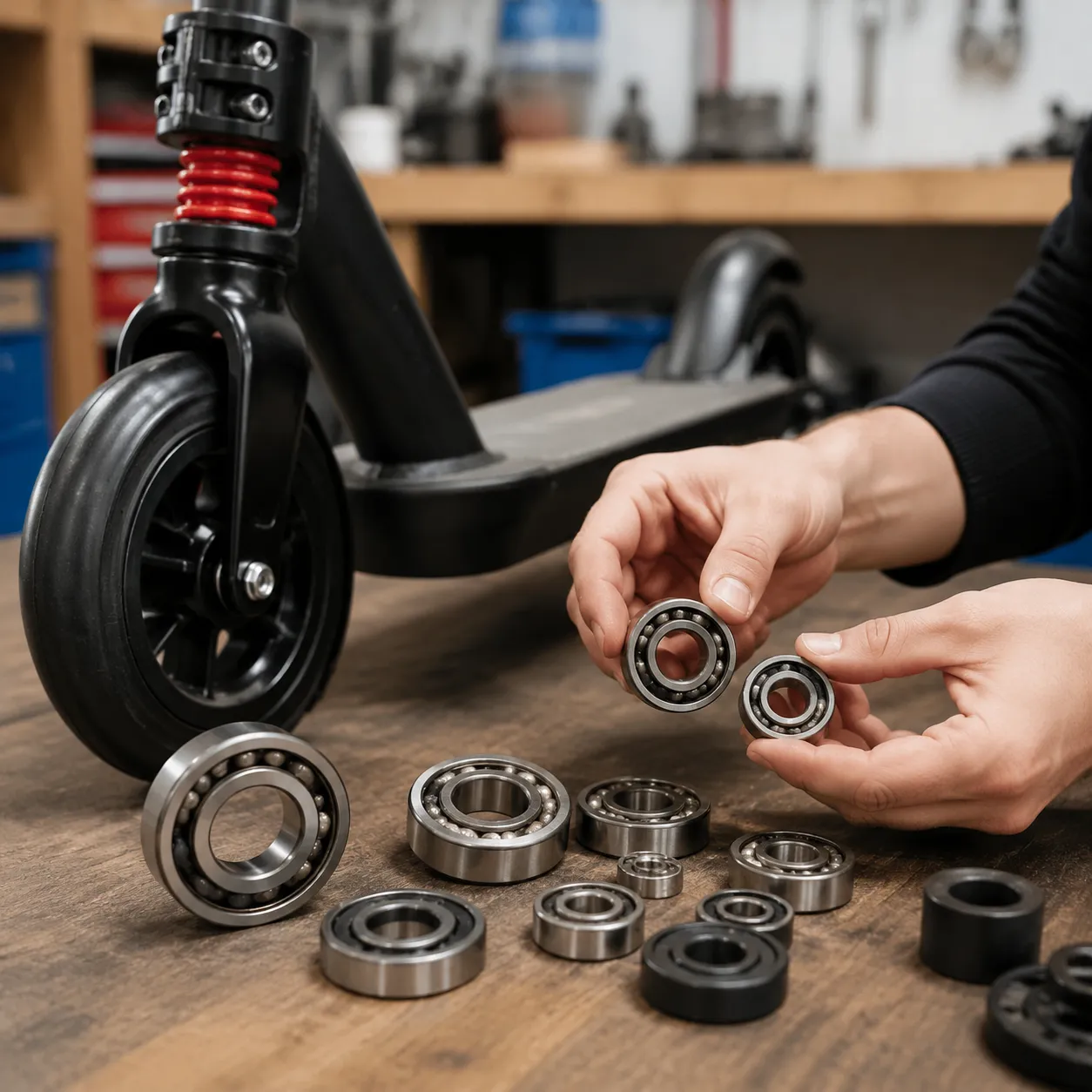
Scooter Bearing Size Guide: 608, 6000, and 6200 Series
Not all scooter wheels take the same bearing. Matches must fit your wheel axle and hub setup:
- 608 Series (8mm x 22mm x 7mm): The universal standard for standard kick scooters, standard front wheels, and lightweight e-scooter setups.
- 6000 Series (10mm x 26mm x 8mm): Heavy-duty option widely used in scooter motor hub bearings and high-torque electric models (like 608zz and 6000zz ball bearings or 6000-2RS).
- 6200 Series (10mm x 30mm x 9mm): Built for high-speed, heavy-payload commercial or off-road e-scooters requiring superior radial load tolerance.
ABEC Precision Ratings for Speed and Smoothness
The ABEC precision rating system measures manufacturing tolerance and rotational accuracy.
- ABEC 1 - ABEC 3: Standard entry-level tolerances, sufficient for basic kick scooters.
- ABEC 5 - ABEC 7: Excellent balance of smooth rolling, durability, and reduced friction for daily commuting.
- ABEC 9: High-precision manufacturing for ultra-low friction, high RPM motor shafts, and maximum top speeds with tight C3 clearance.
Material Comparison: Steel vs. Ceramic Hybrids
Scooter bearings ship in three primary material configurations to suit different riding demands:
- Chrome Steel: Classic chrome steel deep groove bearing option delivers maximum load capacity and impact resistance at a budget-friendly price.
- Stainless Steel: Provides superior corrosion protection against saltwater and winter road salt, keeping your rolling gear rust-free.
- Ceramic Hybrids: Feature silicon nitride ceramic balls paired with steel races. These ceramic bearings (hybrid silicon nitride balls) are ultra-lightweight, non-corrosive, run cooler at high speeds, and offer the lowest friction possible.
How to Spot Failing Scooter Deep Groove Ball Bearings
Riding on worn scooter wheel bearings degrades ride quality and poses safety risks. Spot early warning signs before a bearing seizes mid-ride.
Red Flags: Grinding, Wobble, and Drag
Listen and feel for these common indicators of failing scooter deep groove ball bearings:
- Grinding or Crunching Sounds: Grit and water have penetrated the seals, grinding down the internal balls and races.
- Wheel Wobble: Excessive side-to-side play on the wheel axle indicates severe internal wear.
- Unusual Friction: The wheel resists spinning freely or stops quickly after a push.
- Reduced Battery Range: On electric scooters, failing motor hub bearings create extra drag, forcing the motor to pull more current and draining your battery faster.
Checking Races for Rust, Pitting, and Play
Routine maintenance includes conducting a quick physical check during routine scooter bearing maintenance:
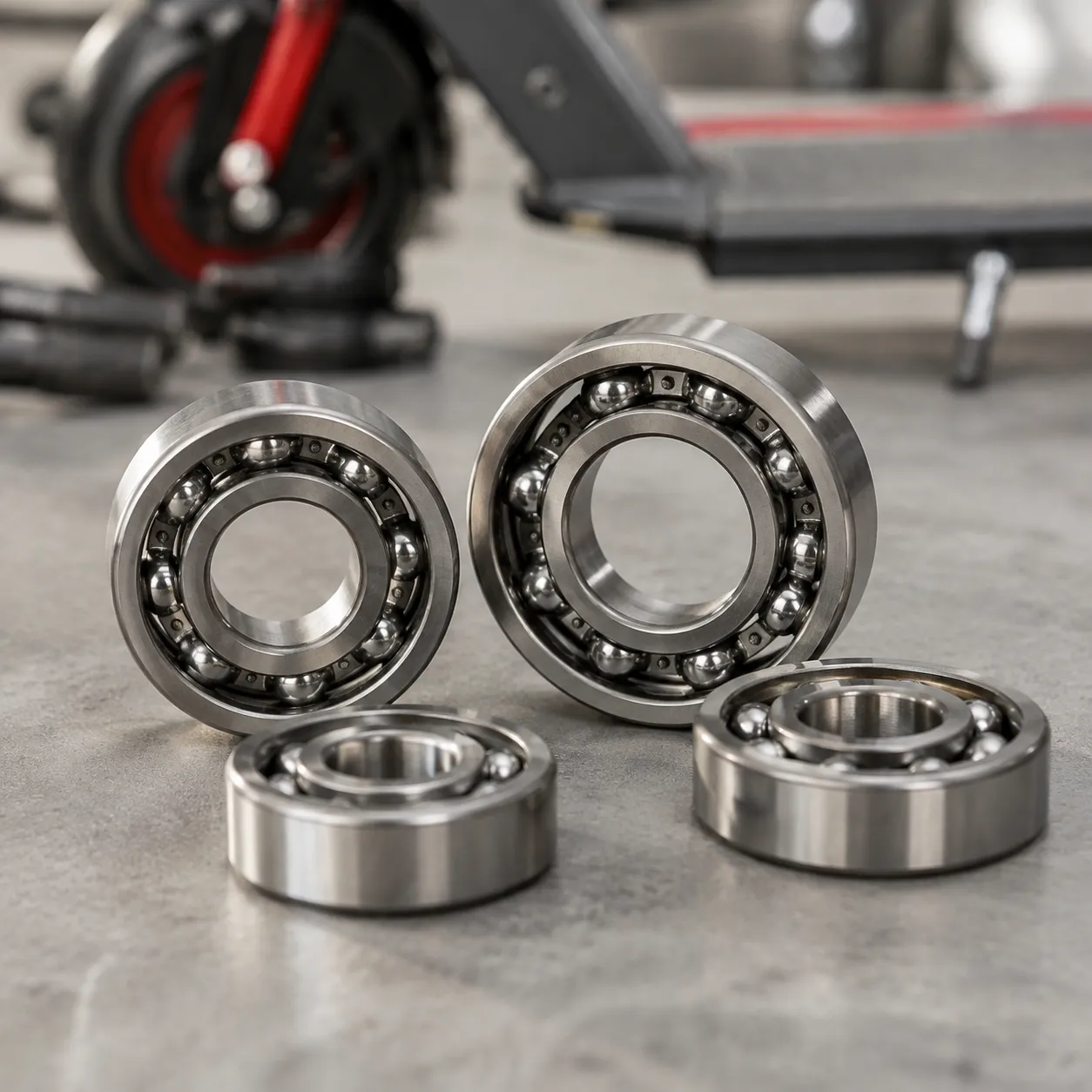
- Feel the Rotation: Remove the wheel, place your finger in the inner ring, and spin it manually. It should feel smooth without any catching.
- Inspect for Rust: Discoloration around the rubber seals means water breached the internal lubricant.
- Check for Pitting: A rough, notched feeling during rotation means the hardened steel race surface has pitted or grooved unevenly.
- Test Internal Play: Push and pull the inner race against the outer ring. Any noticeable wiggling means the bearing is worn out.
When to Clean and Lubricate vs. Replace
Deciding whether to service or swap your bearings comes down to structural integrity:
| Condition | Action Required |
|---|---|
| Minor dust buildup / Dry grease (No rust, no play) | Clean & Re-grease: Pop off the rubber seals (2RS), flush with solvent, and apply fresh synthetic grease or speed oil. |
| Visible rust, pitting, or side play | Replace Immediately: Damaged races cannot be repaired. Swapping in fresh chrome steel or ceramic hybrid bearings guarantees safety and restores peak efficiency. |
How to Choose Scooter Deep Groove Ball Bearings for Wheel & Motor Hubs
Match seal type, load rating, and material to your hub and riding style.
Matching Load Capacity and RPM Limits
Electric scooter motor hubs endure severe radial load forces from rider weight, acceleration, and sudden pavement hits. Standard skate bearings fail quickly under these conditions.
- Check Load Capacity: Choose heavy-duty chrome steel bearings with deep raceways to absorb vertical impacts without pitting the steel balls.
- Verify RPM Capability: Standard 608 2RS and 6000zz ball bearings handle up to 10,000+ RPM. E-scooter motors rarely exceed 2,000 RPM, giving you massive safety headroom.
- Account for Heat Expansion: High-wattage hub motors generate heat. Look for C3 clearance options to keep bearings rolling smoothly without binding when temperatures rise.
Daily Commuting vs. Performance Riding Setups
Different riding styles require different setups. Use this quick breakdown to find your ideal match:
| Feature | Daily Commuting | High-Speed & Performance |
|---|---|---|
| Bearing Material | Heavy-duty chrome steel | Ceramic hybrid scooter bearings |
| Seal Type | Dual rubber seals (2RS) | Metal shields (ZZ) or non-contact seals |
| Protection Level | Waterproof & dirt-resistant | High-speed, low friction |
| Best Used For | Rain, wet roads, city pavement | Dry track riding, tricks, max top speed |
Grease vs. Speed Oil: Picking the Right Lubricant
The right lubricant determines how long your electric scooter bearing replacement lasts.
- Pre lubricated synthetic grease: Ideal for daily street use. Grease stays trapped inside rubber sealed ball bearings, resists water washout, and requires zero ongoing maintenance.
- Speed Oil: Perfect for performance riders seeking ultra-low rolling resistance. Oil lets the wheel spin faster and longer, but it requires regular cleaning and offers minimal protection against moisture.
Share wheel size (608/6000/6200), seal suffix (2RS or ZZ), ABEC grade, and annual volume for itemized scooter deep groove ball bearings pricing—Contact JN Bearings with hub photos or axle dimensions for OEM/ODM quotes.
Scooter Deep Groove Ball Bearing Installation & Maintenance Guide
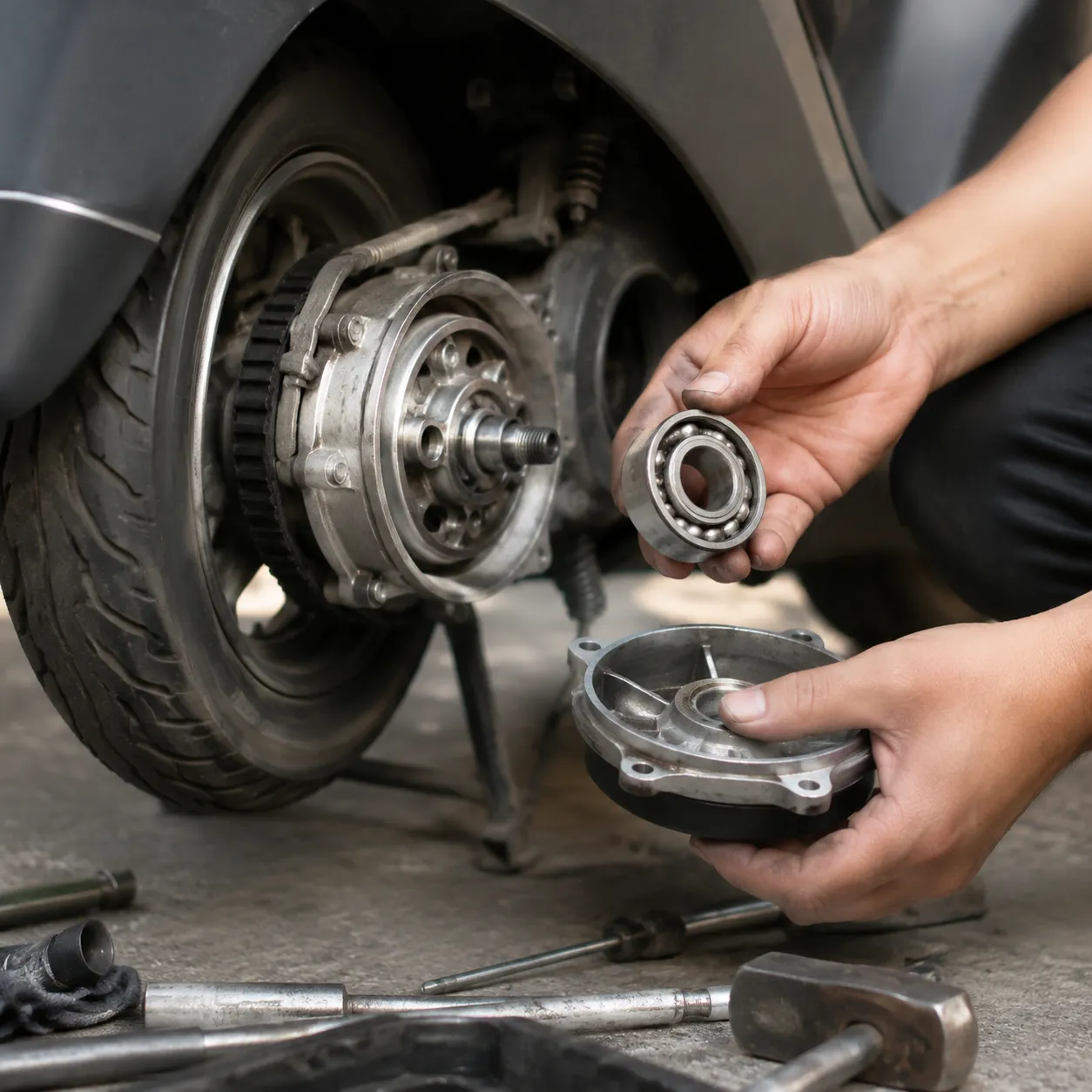
Replacing scooter deep groove ball bearings is straightforward with the right tools. Clean prep and outer-ring-only pressing protect hub bores and pre lubricated seals.
Essential Tools for Scooter Bearing Replacement
Before starting, gather the right equipment to protect your scooter wheel bearings and hub cavities:
- Bearing Puller or Drift Punch: Easily pops old bearings out without marring the hub cavity.
- Bearing Press or Socket Set: A socket matching the outer ring size prevents inner race damage during installation.
- Hex Keys / Allen Wrenches: Needed for removing wheel axles and motor housing covers.
- Isopropyl Alcohol & Rag: Cleans out grit and old grease inside the hub bore.
- Heat Gun or Hairdryer (Optional): Warms the wheel hub to expand metal slightly for effortless removal.
Removing Worn Bearings Without Damaging the Hub
Rushing this step can warp the hub or destroy scooter motor hub bearings beyond repair. Follow this method to extract worn parts safely:
- Remove the Axle: Unbolt the wheel axle and pull the wheel or motor assembly free from the scooter frame.
- Warm the Housing: Apply light heat around the outer hub ring for 30–60 seconds to loosen the press-fit grip.
- Extract the Bearing: Insert your bearing puller or catch the inner edge with a punch, tapping gently in a cross pattern around the perimeter until it pops free.
- Clean the Cavity: Wipe away all old grease, rust, and road grime from the hub seat using isopropyl alcohol.
Pressing New Deep Groove Bearings Into Place
Proper alignment guarantees your pre lubricated bearings roll with minimal friction and maximum radial load capacity.
- Align the Bearing: Position the fresh scooter deep groove ball bearing perfectly flat over the hub bore.
- Apply Force to the Outer Ring ONLY: Place a socket that touches only the outer edge of the bearing face. Never press on the center seal or inner race, as this ruins the internal steel balls instantly.
- Press Evenly: Gently tap the socket or crank your press until the bearing sits completely flush against the inner shoulder.
- Reassemble and Test: Slide the wheel axle back through, torque all hardware securely, and give the wheel a spin to confirm quiet, butter-smooth rotation.
Scooter Deep Groove Ball Bearings FAQ
Can You Use Skateboard Bearings on an Electric Scooter?
Standard kick scooters and light e-scooters often use 608 size bearings, which share physical dimensions with skateboard bearings. However, heavy electric scooter hub motors and fast commuters need higher radial load capacities than skate bearings provide. For motorized rides, datasheets recommend dedicated 608 2rs deep groove ball bearing units built specifically for higher speeds and heavier loads.
How Long Do Scooter Deep Groove Bearings Last?
Under normal commuting conditions on paved roads, quality scooter deep groove ball bearings typically last between 1,000 and 3,000 miles. Total lifespan depends on three main factors:
Rider Weight & Load: Heavier combined loads accelerate race wear.
Terrain: Potholes and rough pavement increase impact stress.
Moisture: Riding through rain or puddles can wash out standard lube.
Upgrading to premium chrome steel or ceramic hybrid scooter bearings significantly extends service life.
Are 2RS Rubber Sealed Bearings Better for Wet Weather?
Yes. Rubber sealed ball bearings (2RS) use dual rubber contact seals that snap firmly into the outer ring. They create a tight physical barrier against water, road salt, and mud, keeping the internal raceways clean and pre-lubricated. While metal shields (ZZ) offer slightly lower friction, 2RS rubber seals are far superior for daily wet-weather commuting.
How to Clean and Re-Grease Scooter Bearings
To extend the life of your bearings, follow this straightforward maintenance process:
- Remove Seals: Carefully pry off the rubber seals using a thin pick or utility blade.
- Flush Clean: Soak the bearing in isopropyl alcohol or a citrus degreaser to remove dirty grease.
- Dry & Inspect: Let the bearing dry completely, then spin it to check for pitting or roughness.
- Relubricate: Add 2–3 drops of high-speed oil for low resistance, or a dab of waterproof grease for longevity.
- Re-Seal: Snap the rubber seals back into place before re-installing the bearing onto your wheel axle.
Send bearing part numbers or hub drawings to Contact JN Bearings for 608/6000 fitment review within 24 hours.