Overview
Flange Deep Groove Ball Bearings — Product Overview
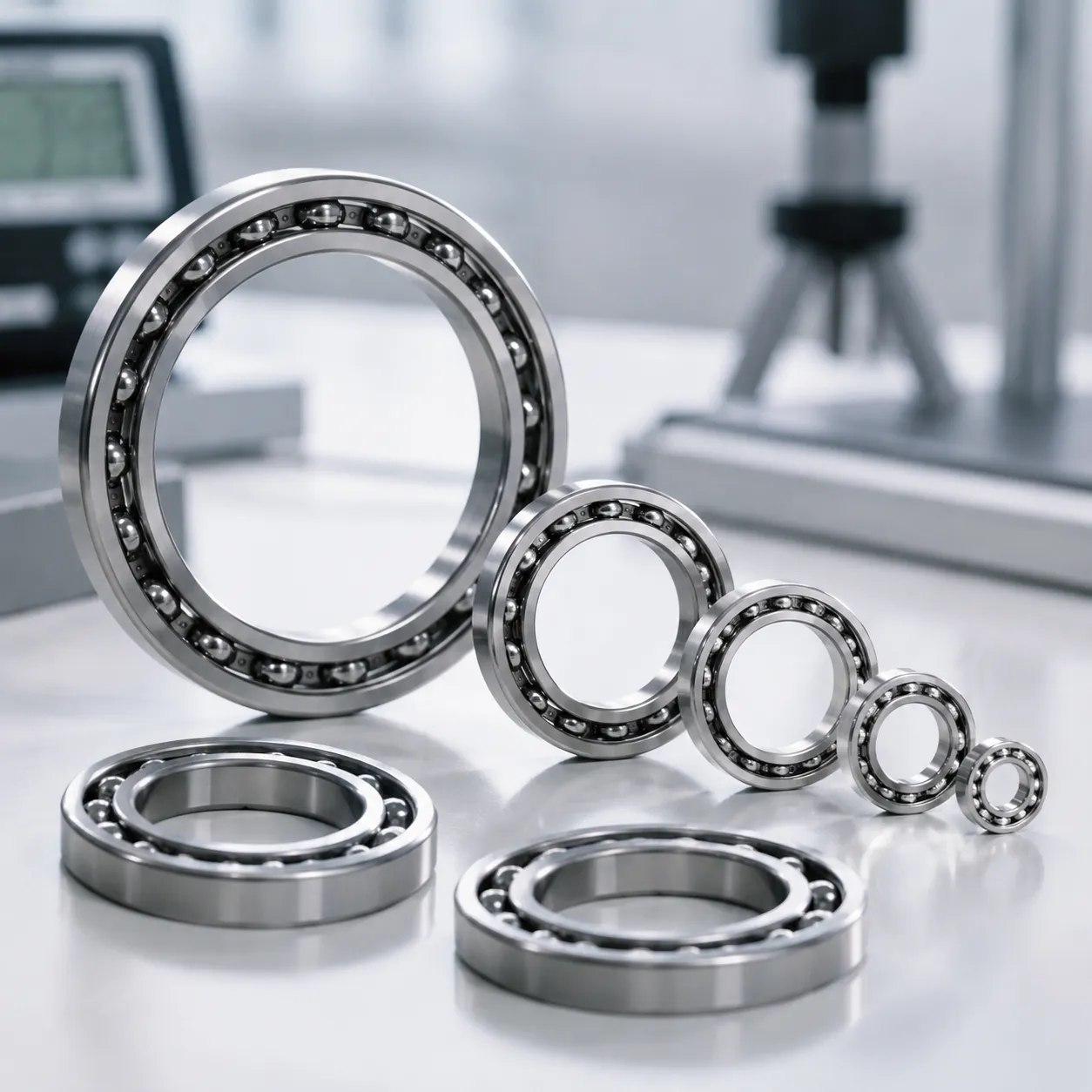
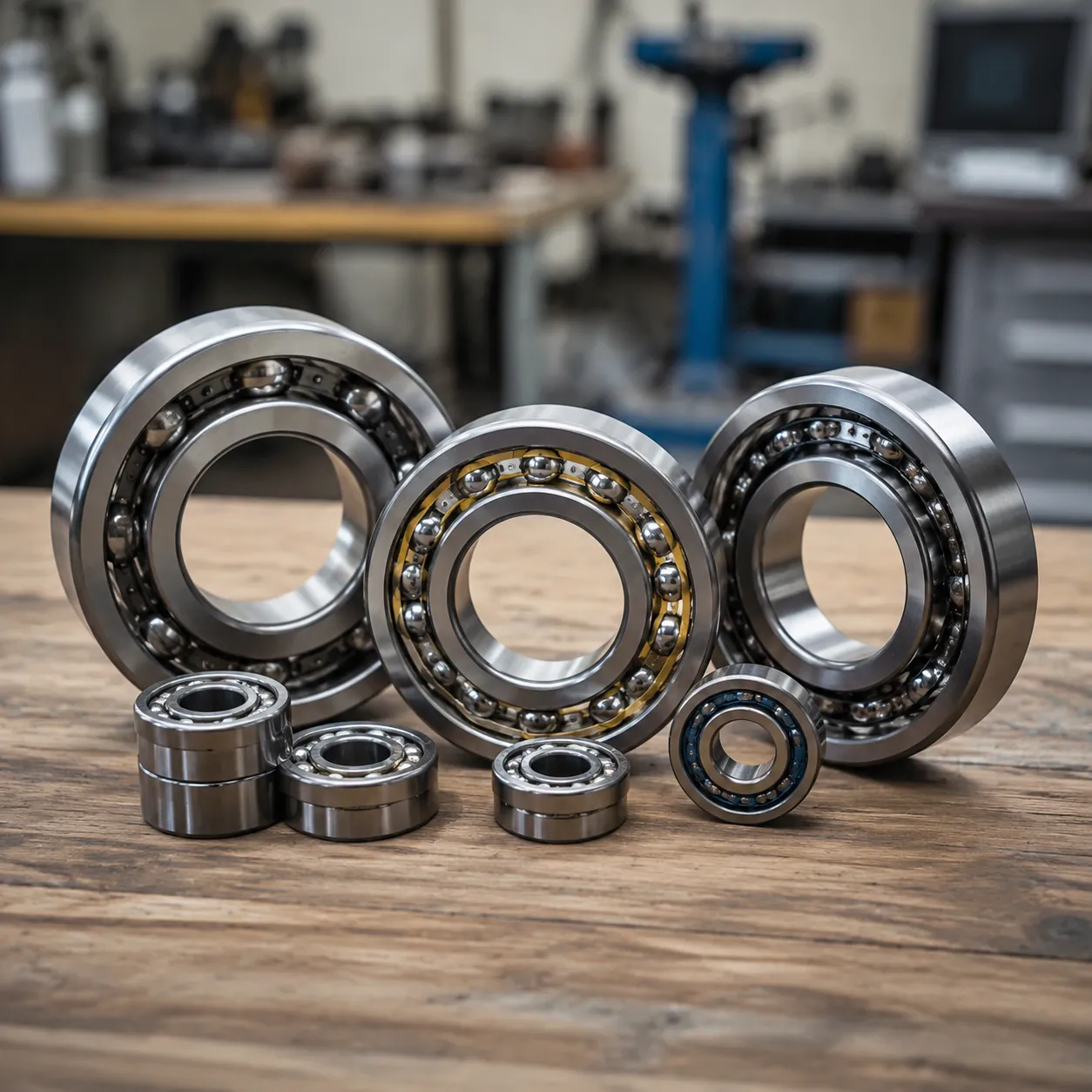
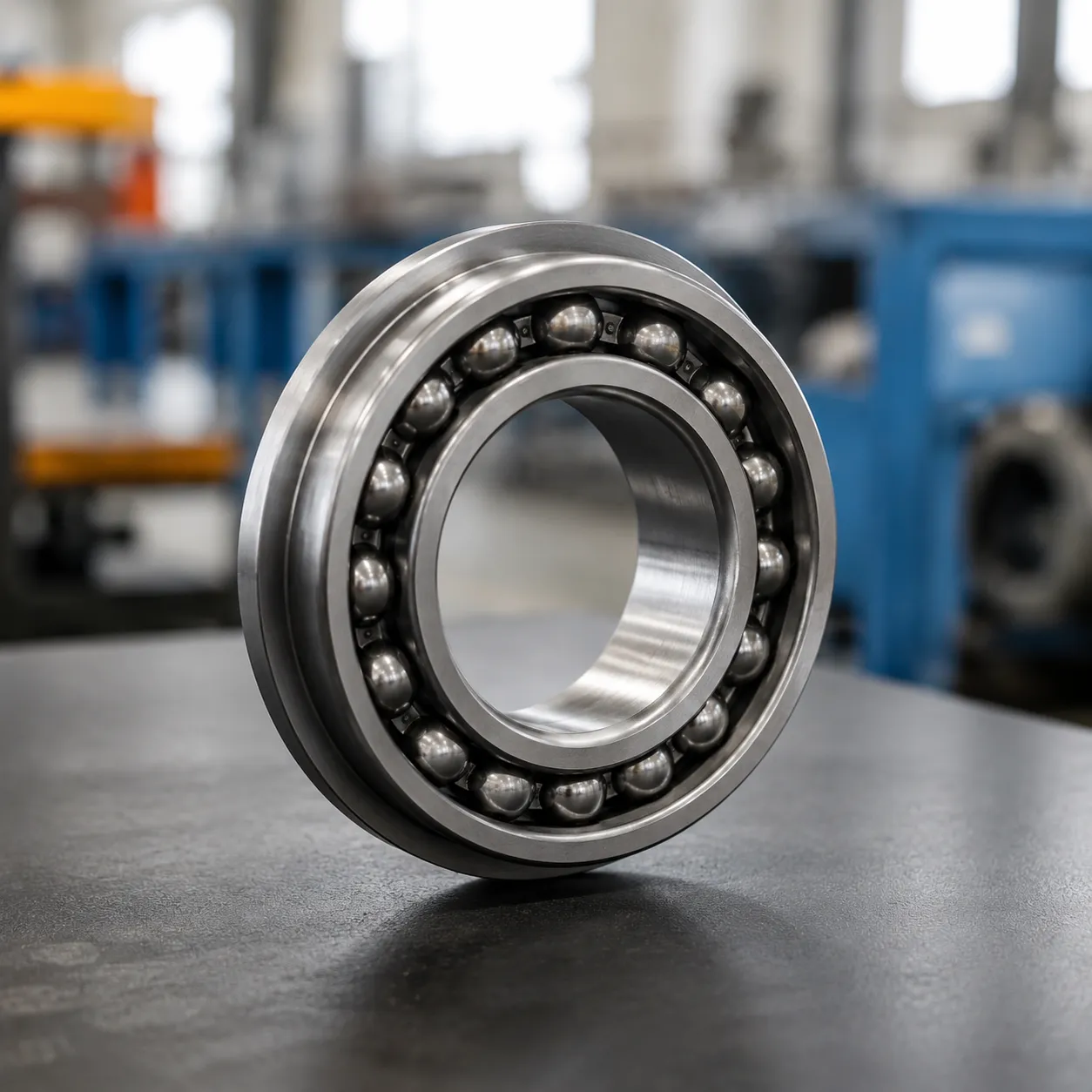
Flange deep groove ball bearings are rolling bearings with an integrated flange on the outer ring for simplified locating bores, low friction, and low noise in imperial and metric sizes. F-prefix flanged ZZ/2RS lines cover bore 3 mm–50 mm and inch equivalents; OEM from 500 pcs. No housing step on the inner bore is required—the flange locks axial position against the housing wall.
Flanged radial deep groove ball bearings simplify axial positioning during installation. The solid lip—or flange—on the outer ring eliminates complex housing shoulders or snap rings, allowing the bearing to lock securely against a housing wall.
Flanged Outer Ring vs. Standard Bearings
While standard deep groove ball bearings require precisely machined inner shoulders within the housing to prevent shifting, flanged radial deep groove ball bearings solve this layout challenge instantly.
- Standard Bearings: Rely completely on housing depth and tight friction fits to stay in place.
- Flanged Bearings: The flanged outer ring acts as a mechanical stop, ensuring flawless bearing housing alignment and preventing any unwanted axial movement under heavy vibrations.
Key Components Explained
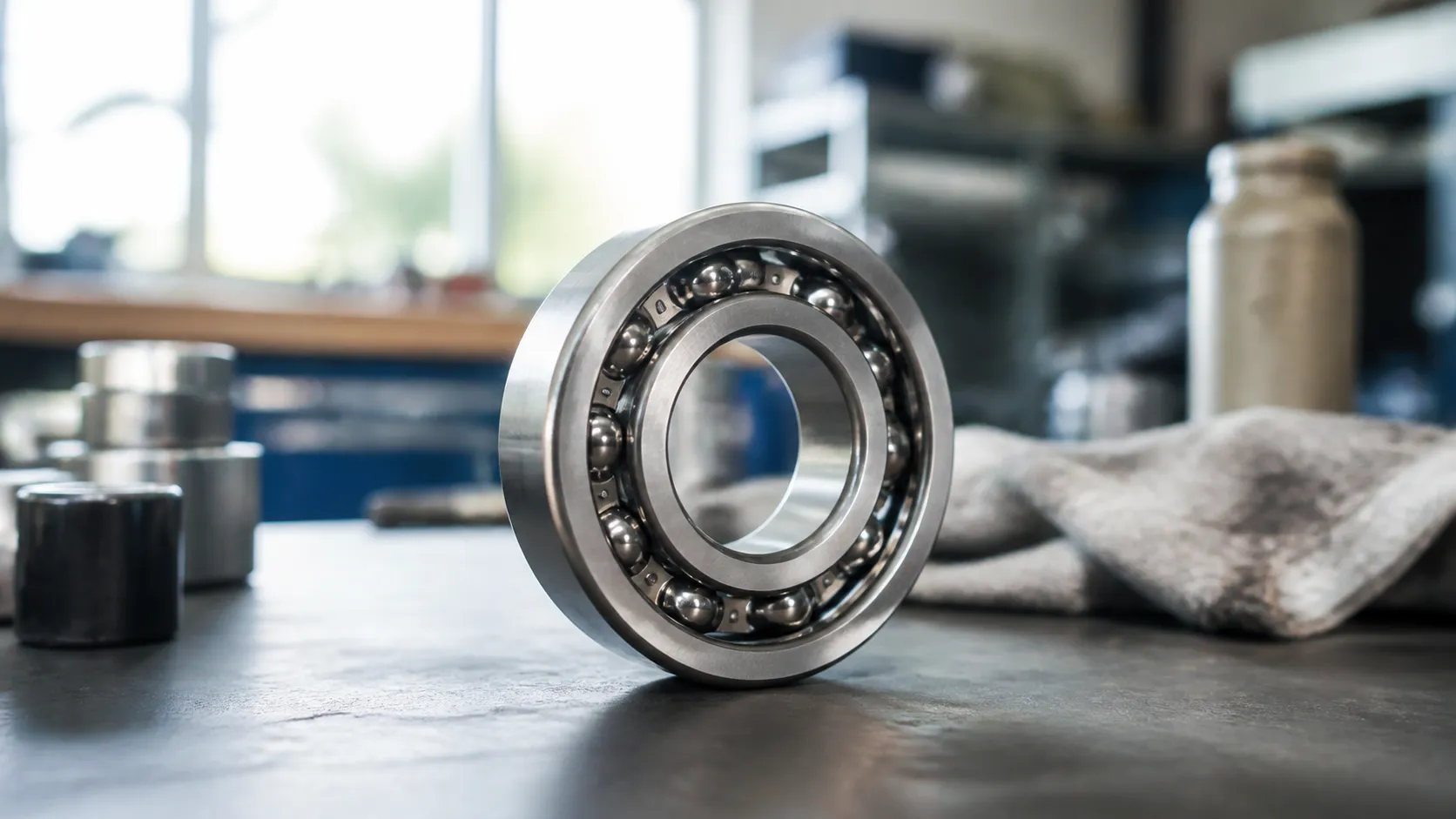
Every high-performance flanged deep groove ball bearing relies on four precision-engineered components to achieve low friction, low noise, and maximum durability:
| Component | Function & Material |
|---|---|
| Outer Ring | Features the integrated flange for simplified locating bores and easy mounting. |
| Inner Ring | Houses the high-precision inner bore that securely grips the rotating shaft. |
| Rolling Elements | Premium steel balls that minimize rotational resistance and handle radial loads. |
| The Cage | Separates and guides the balls evenly to prevent friction and wear during high-speed operation. |
Key Benefits of Using Flange Deep Groove Ball Bearings
The flanged outer ring design offers distinct mechanical advantages over standard deep groove ball bearings, directly solving common housing and alignment issues in compact machinery and high-vibration equipment.
Simplified Mounting and Axial Positioning
The integrated flange acts as a built-in mechanical stop. Instead of relying on external snap rings, retaining collars, or complex step designs inside the bearing housing, the flange rests flush against the housing wall. This design ensures instant, precise axial positioning during installation, eliminating the risk of pushing the bearing too far into the bore.
Preventing Axial Movement Under Heavy Vibrations
In high-speed applications like robotics and conveyor systems, heavy vibrations can cause standard rolling bearings to drift or back out of their housings. Flanged radial deep groove ball bearings lock securely into place. The flanged lip mechanically blocks any unwanted axial movement, maintaining perfect bearing housing alignment and component calibration even under continuous shock loads.
Cost-Effectiveness in Housing Design and Machining
Standard bearings require high-precision machining for internal shoulders or snap ring grooves inside the housing to handle thrust loads. By switching to flange deep groove ball bearings, you can utilize simplified locating bores (straight-through holes). This significantly lowers manufacturing costs by reducing machining time, lowering scrap rates, and easing tolerances for production teams.
At-a-Glance Value Comparison
| Design Challenge | Standard Ball Bearings | Flange Deep Groove Ball Bearings |
|---|---|---|
| Housing Machining | Complex (Requires internal steps or grooves) | Simple (Straight-through bored holes) |
| Axial Positioning | Requires manual measurement or extra parts | Automatic (Flange provides built-in alignment) |
| Vibration Resistance | Risk of axial drift over time | High (Flanged outer ring prevents displacement) |
| Component Count | Higher (Needs snap rings or spacers) | Lower (Self-retaining design) |
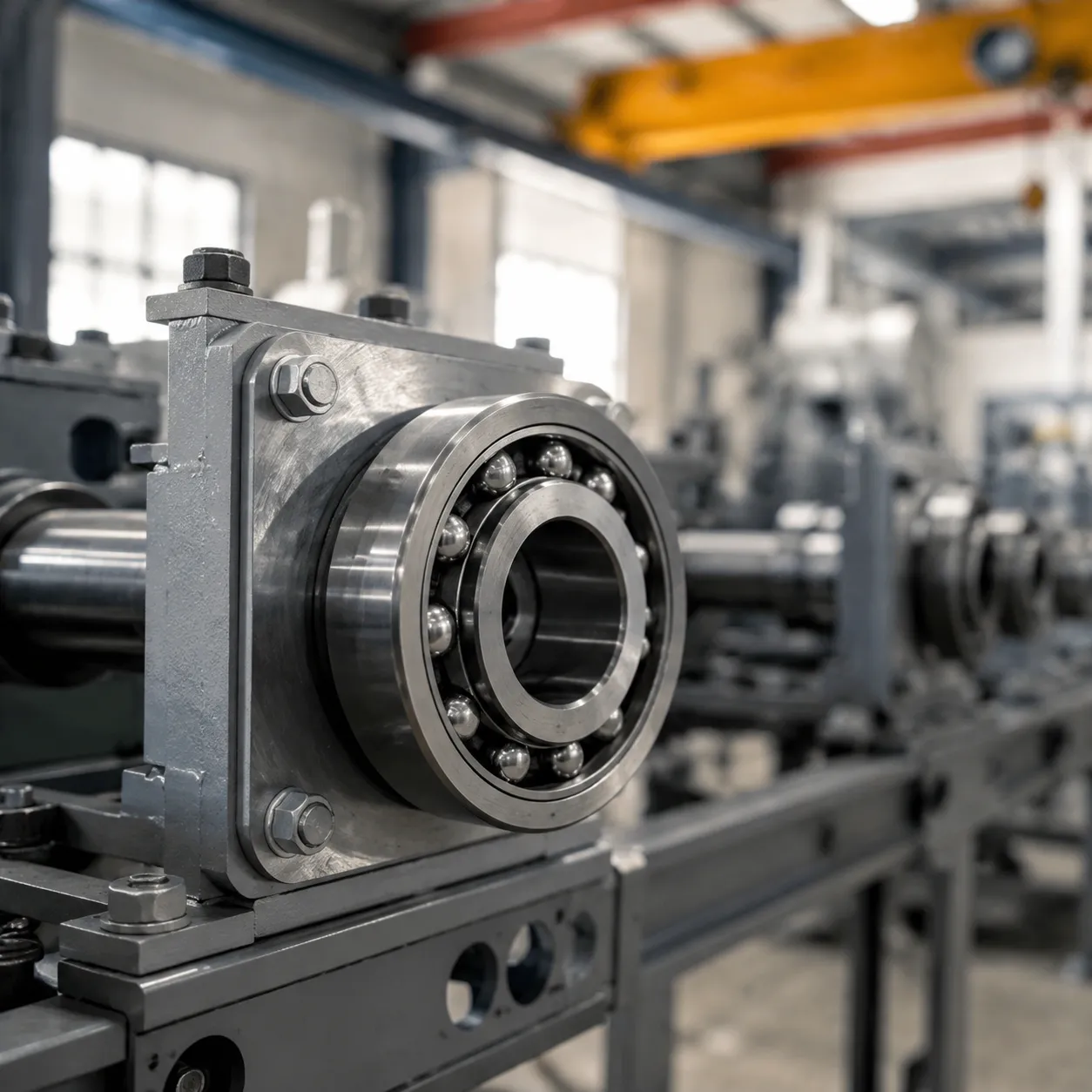
Flanged options deliver low friction, low noise, and long-term durability with the versatility demanded by US industrial and commercial applications. By eliminating extra hardware, you save on both component costs and assembly labor.
Common Applications for Flanged Deep Groove Ball Bearings
In small-scale machinery and high-precision setups, keeping parts perfectly aligned is a constant challenge. Standard bearings often require complex custom housings to stay in place. Flanged deep groove ball bearings solve this problem across US industries by eliminating axial movement in tight spaces.
Here is where these components make the biggest impact:
Robotics and Automation Machinery
- Robotic Arms: Provides high radial load capacity and exact axial positioning during rapid, multi-axis movements.
- Automated Guide Vehicles (AGVs): Keeps wheels and drive shafts aligned under constant vibration.
Electric Motors and Small Rotary Devices
- Power Tools: Manages high-speed rotation with low friction and low noise.
- Micro-Motors: Simplifies the mounting process inside compact consumer electronics and appliances.
Precision Instruments and Medical Equipment
- Diagnostic Devices: Delivers smooth, predictable rotation for imaging hardware.
- Lab Automation: Fits into simplified locating bores to save space while maintaining extreme accuracy.
Conveyor Systems, Farming, and Office Equipment
- Material Handling: Keeps rollers tracking straight on conveyor systems without shifting under uneven loads.
- Farming Machinery: Handles dust and vibration in field equipment with dustproof ZZ or 2RS enclosures.
- Office Hardware: Powers 3D printers, large-format scanners, and copiers where precise paper feeding relies on zero shaft play.
Material Options for Flange Deep Groove Ball Bearings
Choosing the right material for your flange deep groove ball bearings directly impacts lifespan, load capacity, and performance. High-grade options cover standard industrial, corrosive, and high-speed duty.
| Material Option | Key Feature | Best For |
|---|---|---|
| Chrome Steel (GCr15) | High load capacity & durability | Standard industrial use, electric motors, high-load setups |
| Stainless Steel (AISI 440C/304) | Excellent corrosion resistance | Food processing, medical gear, washdown environments |
| Ceramic & Hybrid | Low friction & high-speed capability | High-RPM applications, robotics, aerospace |
| Plastic (POM/PEEK) | Lightweight & chemical resistant | Marine environments, office equipment, light-duty machinery |
Chrome Steel (GCr15)
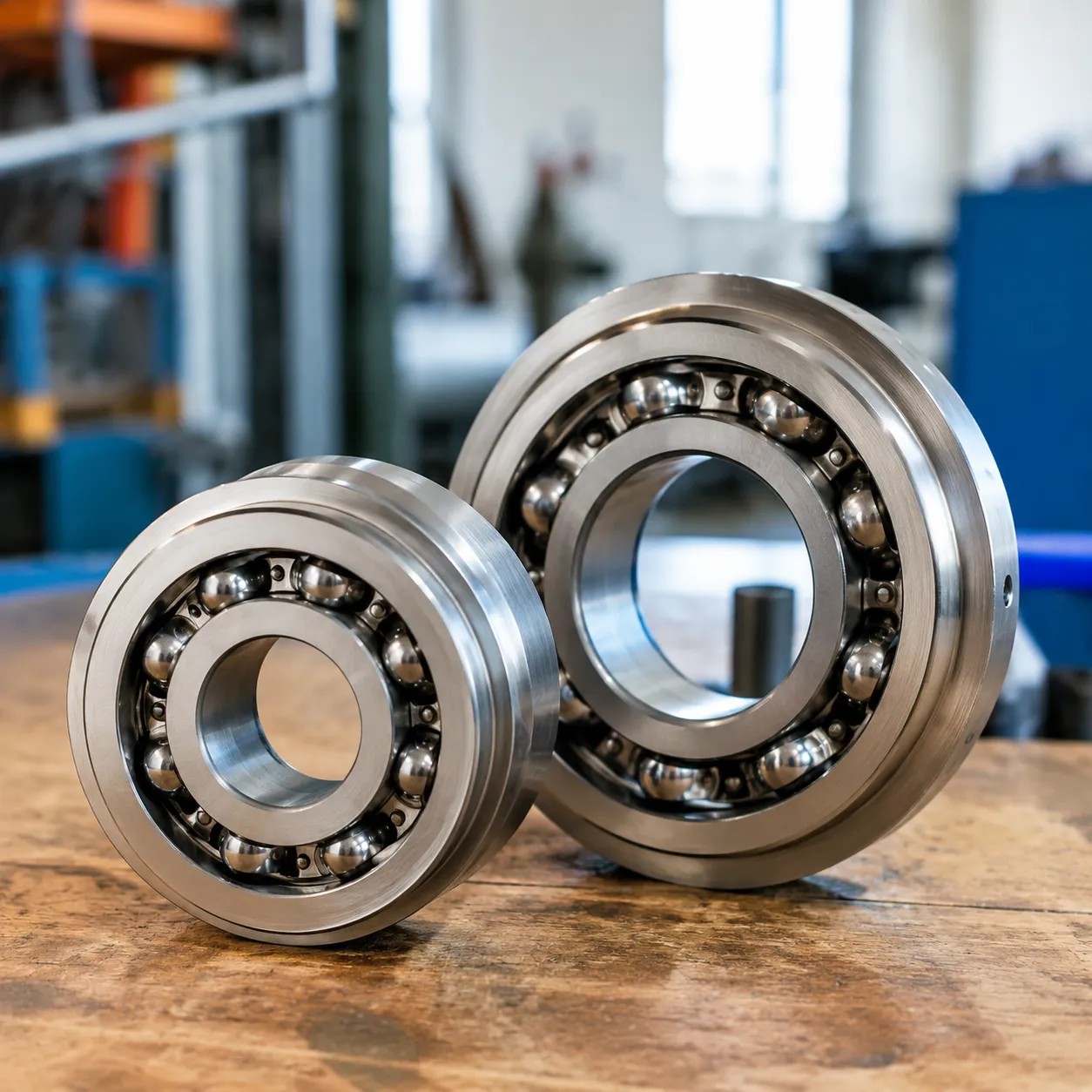
This is the industry workhorse. If your application demands high radial load capacity and long-term durability under heavy use, chrome steel is the go-to choice. It offers excellent rock-well hardness, though it requires proper lubrication to prevent rust.
Stainless Steel (AISI 440C/304)
For environments prone to moisture, chemical exposure, or strict hygiene rules, stainless steel flange bearing options deliver. AISI 440C provides high strength and wear resistance, while AISI 304 is ideal for extreme moisture protection with lighter loads.
Ceramic and Hybrid Options
Hybrid bearings pair ceramic balls with steel rings to deliver ultra-low friction and high-speed performance. They run cooler, require less maintenance, and handle high-RPM rotation in demanding robotics duty.
Plastic Flanged Bearings
When weight reduction and moisture resistance trump high load capacity, plastic options fit perfectly. They run smoothly without grease, making them ideal for cleanrooms, specific outdoor applications, and lightweight consumer electronics.
Shielded vs. Sealed Flange Deep Groove Ball Bearings
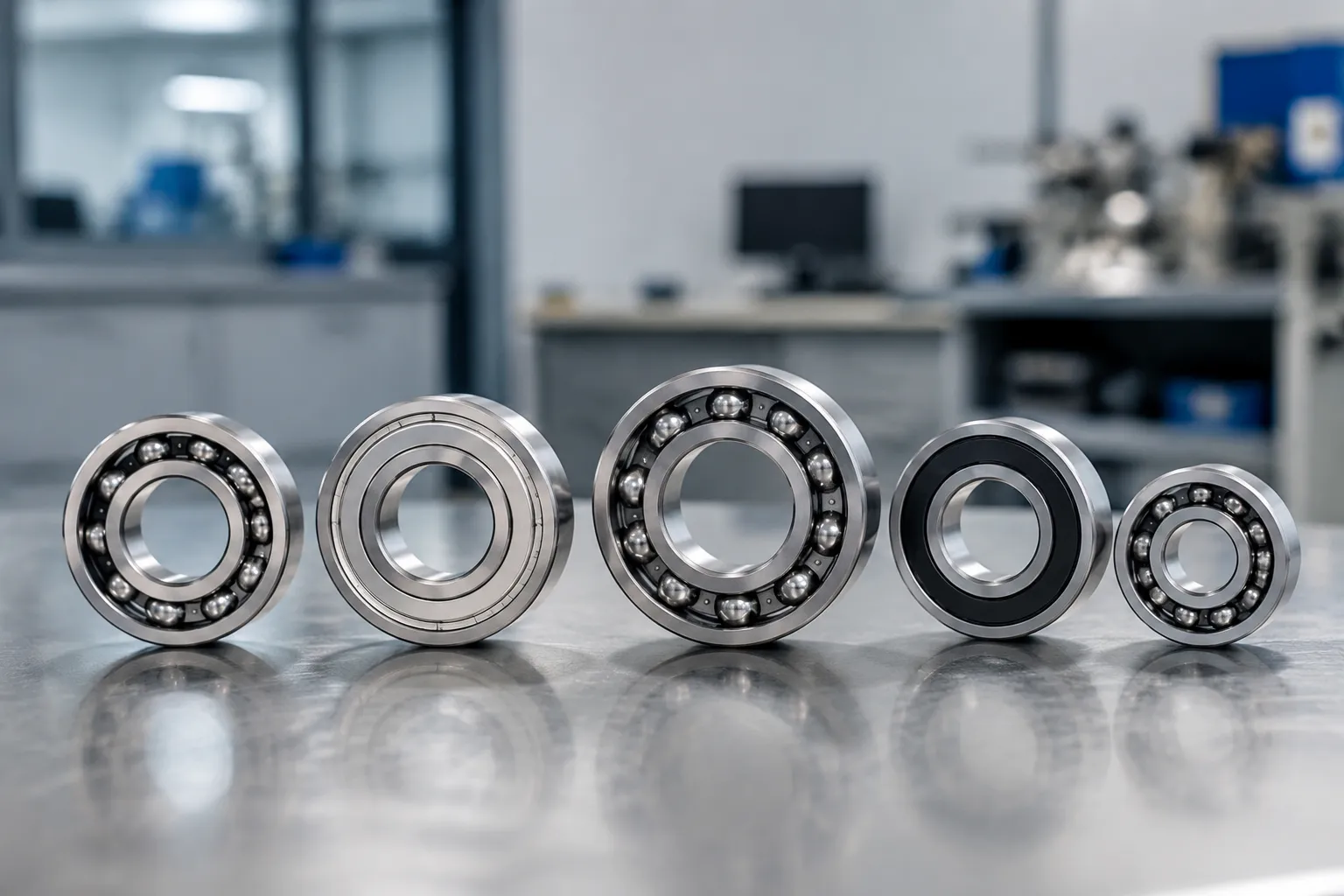
Choosing the right closure for your flanged radial deep groove ball bearings directly impacts lifespan and performance. Three primary configurations match specific operating environments.
ZZ Metal Shields: Low Friction and High Speeds
- Design: Non-contact double metal shields (ZZ).
- Best For: High-speed applications requiring low friction and low noise, such as electric motors and precision instruments.
- Protection: Prevents larger debris from entering while keeping the factory grease inside. Because the shields do not touch the inner ring, they offer zero drag.
2RS Rubber Seals: Maximum Dustproof Protection
- Design: Contact rubber seals (2RS).
- Best For: Harsh environments like conveyor systems, robotics, and farming machinery.
- Protection: Offers a tight, physical seal against fine dust, dirt, and moisture. These permanently lubricated bearings provide maximum durability against contaminants, though they introduce slightly more drag than shielded options.
Open Type Bearings: Clean Oil-Bath Systems
- Design: No shields or seals on either side.
- Best For: Enclosed gearboxes and specialized oil-bath lubrication systems.
- Protection: Rely entirely on external bearing housing alignment and clean oil circulation to stay lubricated and free of debris.
| Bearing Type | Friction Level | Dust Protection | Max Speed Capability | Ideal Use Case |
|---|---|---|---|---|
| Open | Extremely Low | None (Requires Housing) | Highest | Oil-bath systems |
| ZZ Shielded | Low Friction | Moderate (Dustproof) | High | High-speed motors |
| 2RS Sealed | Moderate | Maximum (Moisture/Dust) | Medium | Conveyors & Robotics |
Choosing the Right Flange Deep Groove Ball Bearings
Picking the correct size and specification keeps equipment running smoothly and prevents premature failure. For double-shielded flanged miniature lines, compare small deep groove ball bearings double shielded with flanged; for full flanged series context, see flanged ball bearings.
Metric vs. Inch Dimensions
Both imperial and metric flanged lines cover standard machinery platforms.
Metric sizes: Standard for most modern robotics, electronics, and global machinery.
Inch sizes: Common in US legacy equipment, specific power tools, and certain automotive applications.
Deciphering Part Numbers
Part numbers tell you the exact design of the bearing at a glance. The prefix "F" stands for the flanged outer ring.
| Part Number | Type | Key Dimensions (Bore x OD x Width) | Common Application |
|---|---|---|---|
| F608ZZ | Metric Shielded | 8mm x 22mm x 7mm | Skateboards, 3D printers, small motors |
| F623-2RS | Metric Sealed | 3mm x 10mm x 4mm | Miniature flanged bearings for RC cars, drones |
Load Ratings: Dynamic vs. Static
Your bearing must handle the forces applied to it without deforming.
Dynamic Load Rating ($C$): The maximum load a bearing can endure while rotating before showing signs of fatigue. Focus on this for continuous-motion equipment like conveyor systems.
Static Load Rating ($C_0$): The maximum weight the bearing can handle when stationary or moving at extremely slow speeds. Crucial for heavy-load positioning.
Speed Limits and ABEC Precision Ratings
The ABEC precision rating system (ABEC-1 to ABEC-9) dictates the manufacturing tolerances and speed capabilities.
- ABEC-1 to ABEC-3: Standard precision. Ideal for general farming equipment, heavy machinery, and everyday tools where low cost matters more than high speed.
- ABEC-5 to ABEC-7: High precision. Delivers low friction, low noise, and higher speed limits. Perfect for electric motors and precision instruments.
- ABEC-9: Ultra-precision. Reserved for extreme high-speed aerospace and medical technology requiring minimal runout.
Flange Deep Groove Ball Bearings — Specification Summary
| Parameter | Typical Range / Options | Notes |
|---|---|---|
| Design | F-prefix flanged outer ring | No step on the inner bore of housing required |
| Bore (metric) | 3 mm – 50 mm | F608ZZ · F623-2RS and equivalents |
| Bore (inch) | Imperial and metric cross-reference available | FR series inch flanged lines |
| Enclosure | ZZ · 2RS · Open | 2RS permanently lubricated · ZZ dustproof high speed |
| Load types | Primary radial · light axial | See axial load vs radial load in deep groove ball bearings for paired duty |
| Applications | Conveyor systems · robotics · farming | Versatility across industrial and commercial duty |
OEM Customization, MOQ & Lead Times
OEM programs for flange deep groove ball bearings cover custom bore/OD/width, flange OD, ZZ/2RS enclosure, ABEC class, and branded packaging for distributors sourcing flanged radial deep groove ball bearings.
- MOQ: Standard F-series catalog lines typically from 500 pcs; fully custom tooled flanged programs from 3,000–5,000 pcs depending on size.
- Sampling: Prototype batches usually ship within 7–15 business days after drawing approval.
- Volume production: 4–6 weeks for custom imperial and metric programs; repeat OEM SKUs can enter stock programs.
- Materials: GCr15 chrome steel standard; 440C stainless or hybrid ceramic for specialized robotics or washdown duty.
Flange Deep Groove Ball Bearings — Installation & Maintenance
Getting the most out of your flange deep groove ball bearings comes down to correct installation and a solid upkeep routine. Premature failures are often avoidable with proper press-fit and lubrication discipline.
Proper Press-Fitting Techniques
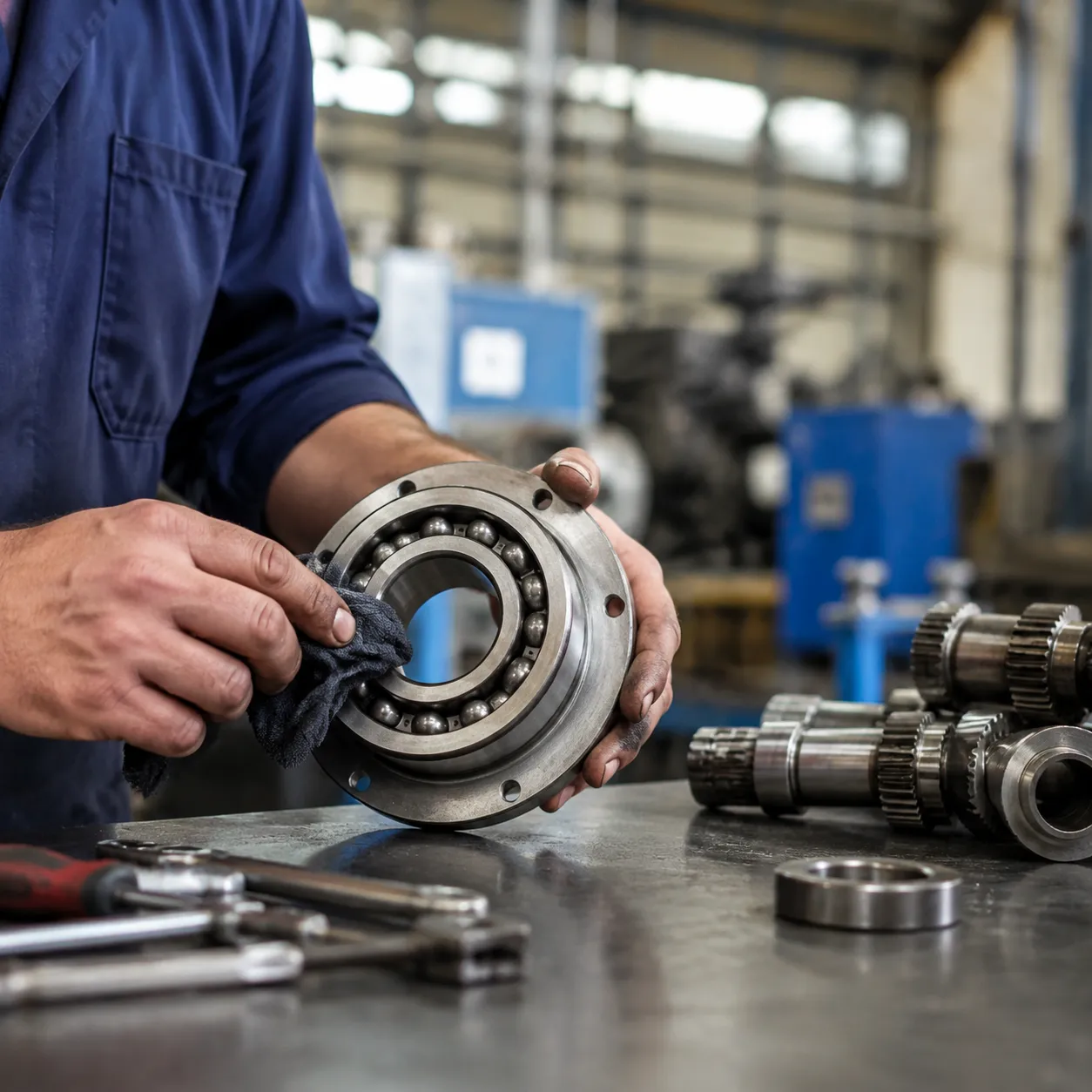
Installing these components requires the right mechanical pressure. Never hammer a bearing directly, as this causes denting on the raceways.
- Press on the right ring: When pressing onto a shaft, apply force only to the inner ring. If you are mounting into a housing, apply force to the outer ring.
- Align perfectly: Ensure the flanged outer ring sits perfectly square against the housing surface to avoid misalignment.
- Use the correct tools: Utilize a press tube or an installation tool that matches the diameter of the ring being fitted.
Lubrication Selection: Grease vs. Oil
Choosing how to lubricate your rolling bearings impacts both performance and operating life.
| Lubrication Type | Longevity & Maintenance | Best Used For |
|---|---|---|
| Grease | High longevity. Often permanently lubricated and sealed, requiring zero ongoing maintenance. | Standard speeds, dustproof protection, and general machinery. |
| Oil | Lower longevity. Requires a continuous delivery system or regular oil changes. | Extreme high-speed uses and oil-bath systems. |
Signs of Bearing Failure
Catching wear early prevents costly equipment downtime. Replace your flanged deep groove ball bearings immediately if you notice any of these warning signs:
- Excessive Noise: A grinding, squeaking, or clicking sound indicates raceway damage or lack of lubrication.
- Increased Heat: If the housing feels abnormally hot to the touch, friction is building up inside the unit.
- Play or Vibration: Visible axial movement or loose radial play means the balls or cages are heavily worn.
FAQs About Flange Deep Groove Ball Bearings
Why use a flanged bearing instead of a standard one?
Flanged deep groove ball bearings solve a major manufacturing headache: complex housing machining. A standard bearing requires a precise internal shoulder inside the housing bore to stop it from slipping. The flanged outer ring acts as a built-in mechanical stop. This allows for simplified locating bores, reducing machining costs while ensuring perfect bearing housing alignment—without providing a step on the inner bore of the housing.
Can flanged bearings handle axial loads?
Yes. While flanged radial deep groove ball bearings primarily handle radial loads, they manage light to moderate axial loads (thrust loads) in both directions. The flanged outer ring specifically prevents axial movement under heavy vibrations, keeping the rolling bearings securely locked in place.
How do I identify a flanged bearing part number?
Most manufacturers use a standardized numbering system. For metric flanged bearings, the prefix F indicates a flange, followed by the standard bearing code and enclosure type.
| Part Number | Component Breakdown | Meaning |
|---|---|---|
| F | Prefix | Flanged outer ring |
| 608 | Base Code | Miniature flanged bearings size (8mm bore) |
| ZZ | Suffix | Shielded ball bearing ZZ (Double metal shields) |
| 2RS | Suffix | Rubber sealed 2RS (Double rubber seals) |
What is the difference between F and FR prefixes?
The prefix tells you the exact shape of the flange relative to the inner ring step.
- F Prefix: Standard flanged deep groove ball bearings. The outer ring features a solid, flat-edged flange extending outward.
- FR Prefix: Flanged and flanged-ribbed. These variants include a specific step or relief rib on the flange, often used in specialized robotics or conveyor systems to allow clearance for adjacent components.
What MOQ Applies to Flange Deep Groove Ball Bearings?
Standard flange deep groove ball bearings in common F608ZZ/F623-2RS metric sizes with ZZ or 2RS enclosure typically start from 500 pcs. Fully custom flange OD or ABEC-7+ programs usually require 3,000–5,000 pcs depending on tooling. Sample orders of 10–50 pcs are available for OEM validation before volume release.
Request a Quote
Send bore, OD, width, flange OD, enclosure type (ZZ/2RS/Open), ABEC class, and annual volume to receive pricing and lead time for flange deep groove ball bearings in imperial and metric sizes with permanently lubricated or dustproof options. Submit drawings or target part numbers through the contact page.