Overview
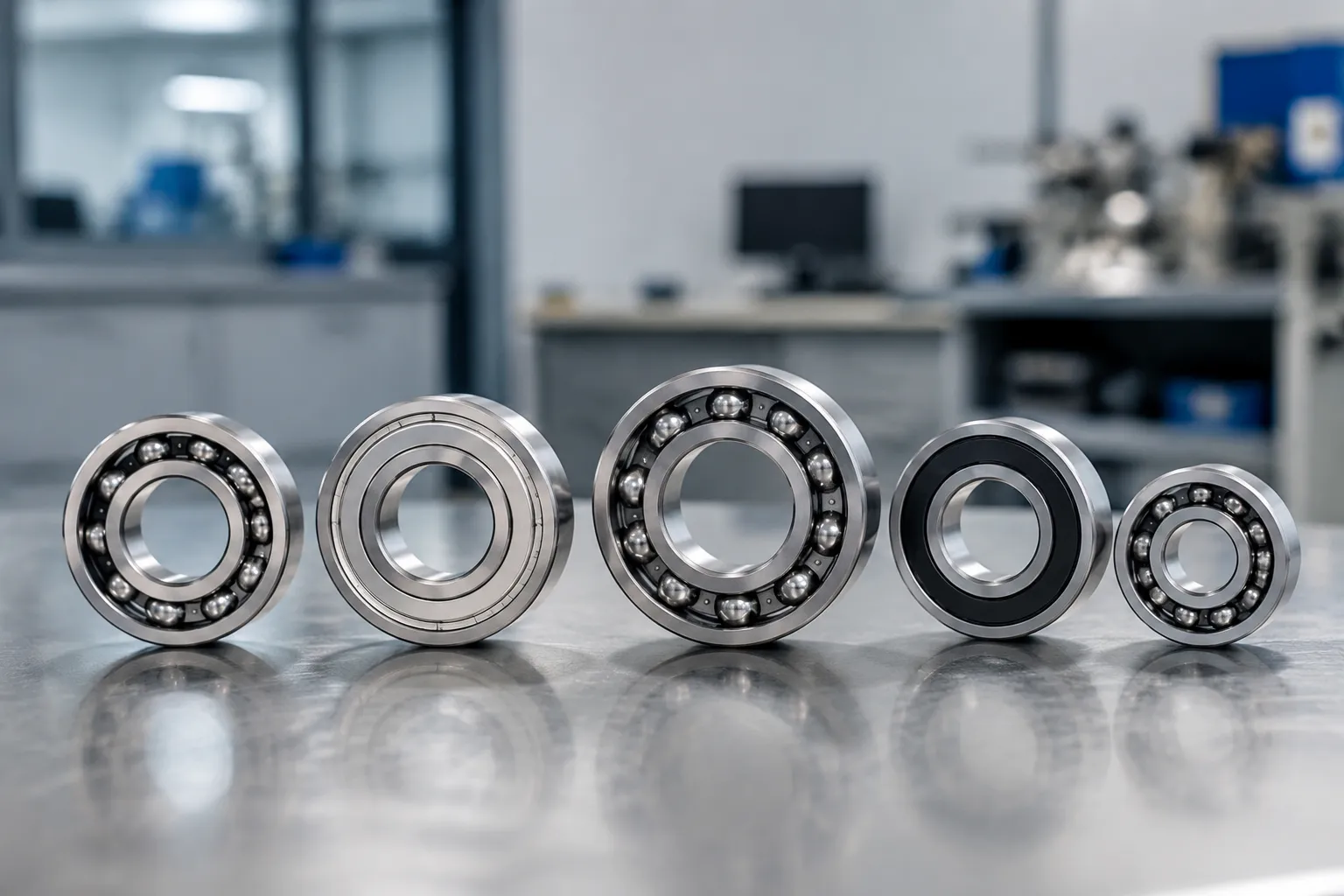
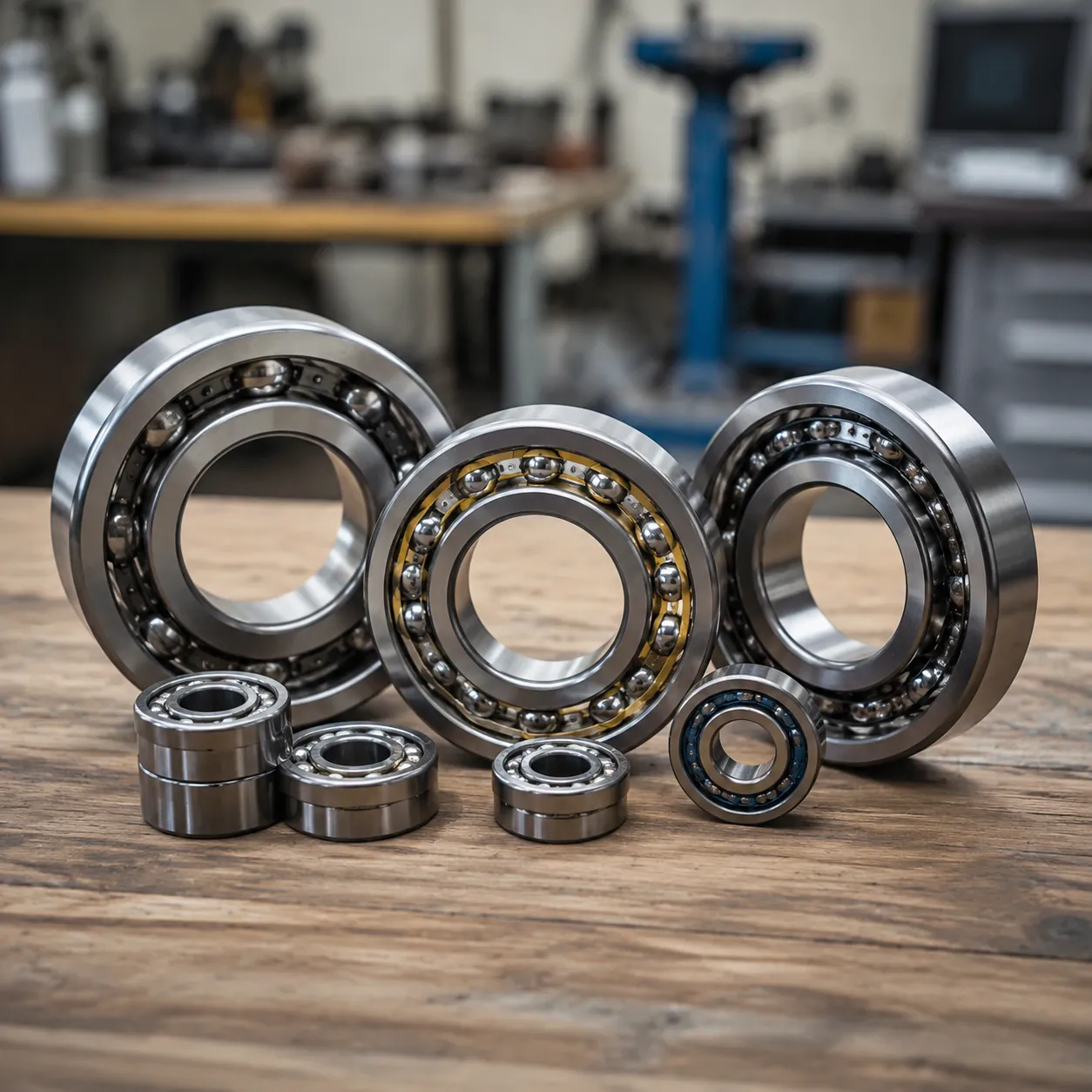
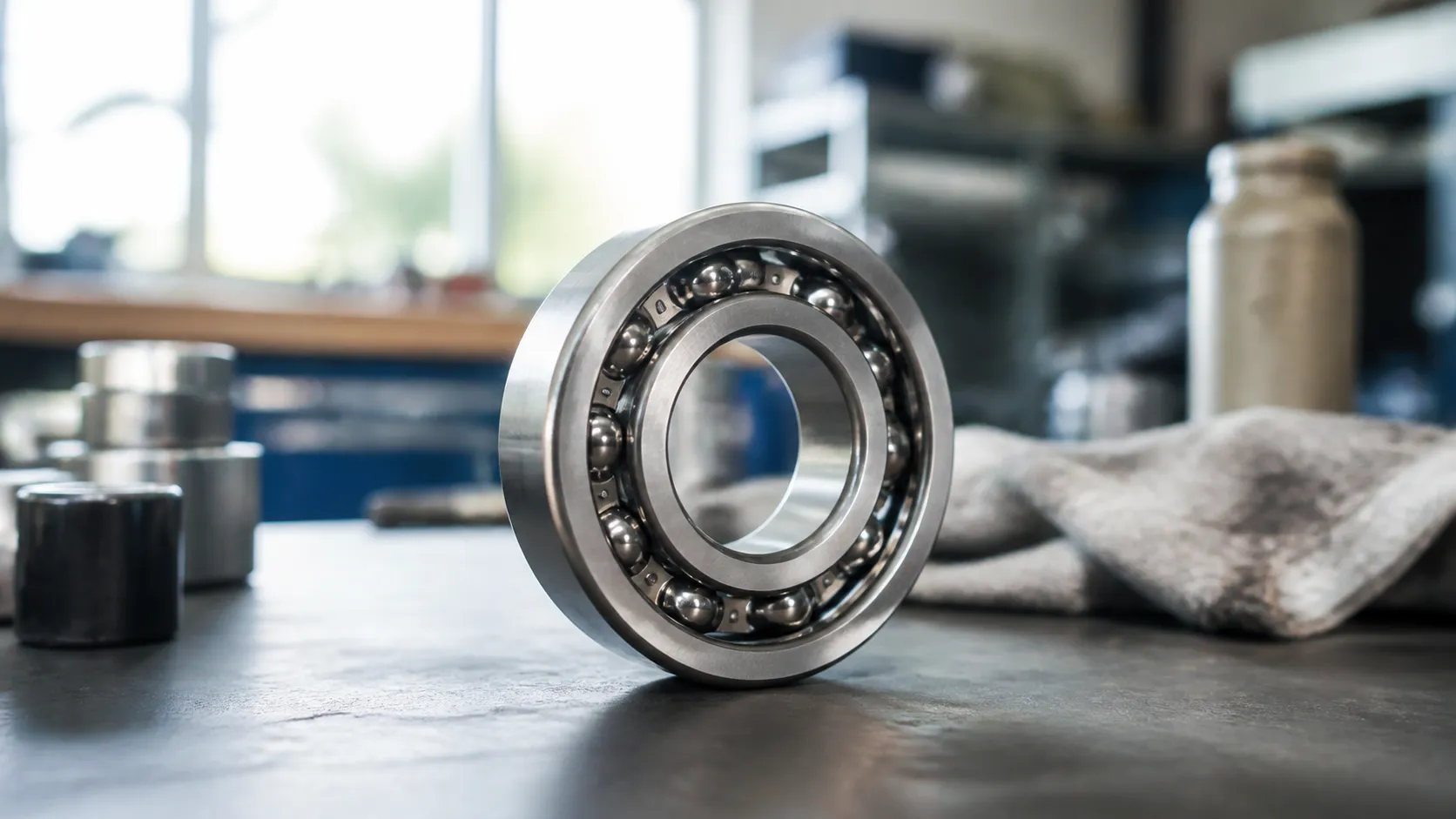
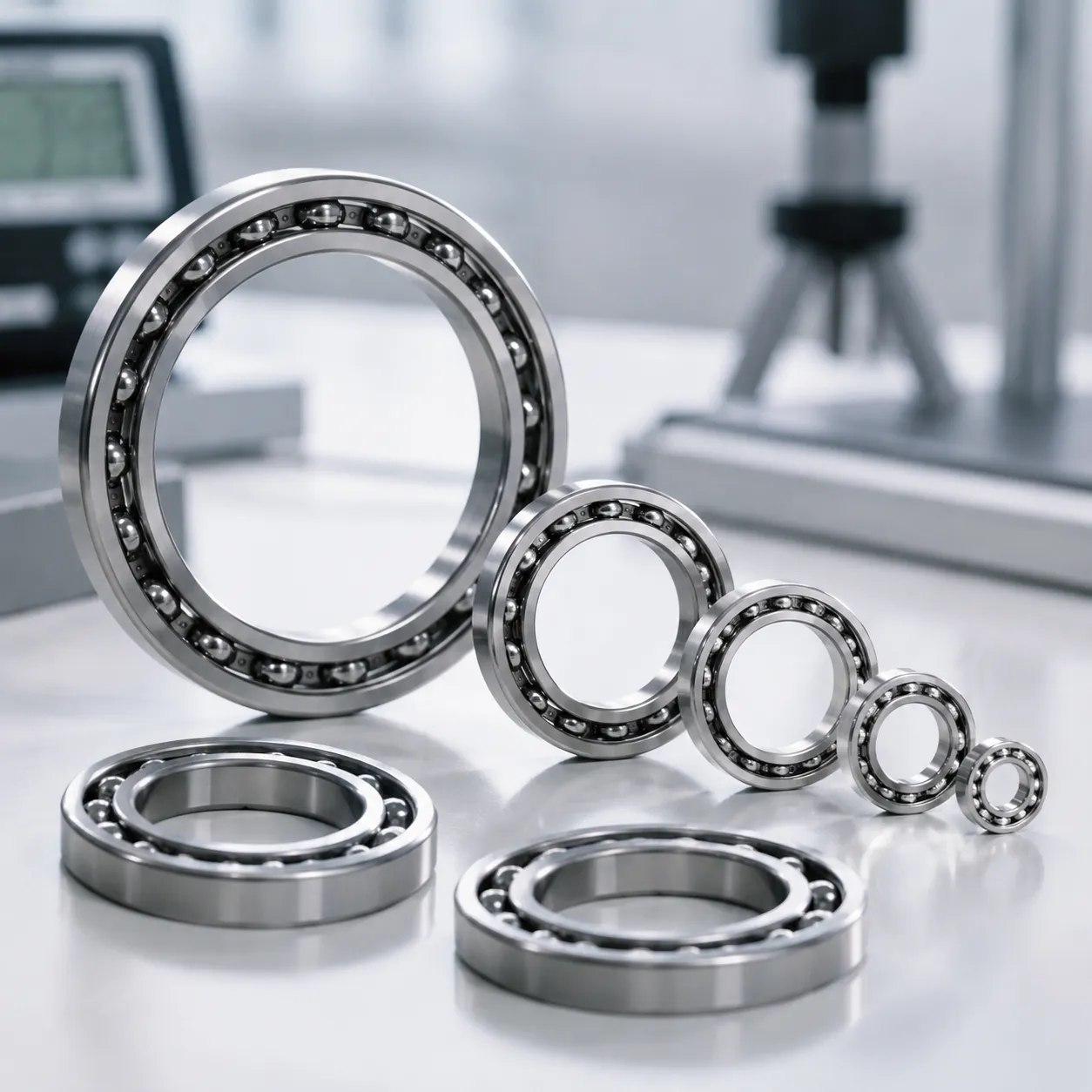
thin section deep groove ball bearings for compact space design: series 68 / series 69 and 6700 profiles; low friction raceways with high radial load capacity; open type bearings, ZZ, or double sealed 2RS; ABEC-3 tolerance through higher grades for precision engineering.
Key Features of Thin Section Deep Groove Ball Bearings
| Key Feature | Specification / Options | Performance Advantage |
|---|---|---|
| Compact Cross-Section | Ultra-thin, constant cross-section profile | Supports lightweight design and a smaller overall footprint |
| Low Friction Torque | Optimized raceway geometry & high precision | Delivers high-speed capability with minimal starting torque |
| Material Options | Chrome Steel (52100), Stainless Steel (440C), Ceramic Hybrids | Customizable for strength, corrosion resistance, or electrical insulation |
| Sealing Configurations | Open, Shielded (ZZ), Rubber Sealed (2RS) | Versatile protection options balancing torque and contamination control |
High-performance thin section deep groove ball bearings designed to deliver maximum operational efficiency in compact space designs. By maintaining a constant, extremely thin cross-section regardless of bore diameter, these precision thin bearings minimize weight and save valuable envelope space without sacrificing radial load capacity or rotational precision.
High-Speed Performance with Low Friction Torque
- Space-Saving Architecture: Integrates into tight assemblies, making them ideal low profile bearings for space-constrained precision engineering machinery.
- Low Torque Operation: Smooth rolling surfaces drastically lower running temperature and power consumption in high-RPM uses.
Material & Sealing Variations
- Chrome Steel (52100): Standard high-durability material engineered for high fatigue strength and long service life.
- Stainless Steel (440C): Provides superior resistance to moisture, chemicals, and harsh operating environments.
- Ceramic Hybrids: Non-conductive ceramic balls for reduced friction, higher speeds, and extended lube life - see hybrid deep groove ball bearings.
- Open Type Bearings: Maximum speed potential with zero seal drag in clean, lubricated housings.
- Shielded (ZZ): Metal shields provide reliable dust protection without adding drag torque.
- Sealed (2RS): Dual contact rubber seals create a double sealed enclosure against dirt, dust, and moisture ingress - see sealed deep groove ball bearings.
Thin Section Deep Groove Ball Bearings: 6700 / 6800 / 6900 Series
Three main series of thin section deep groove ball bearings engineered to solve space limitations without compromising precision or operational life.
6700 Series Ultra-Thin Profile Ball Bearings
- Profile: Slimmest cross-section design available in standard deep groove geometry.
- Performance: Minimal friction torque, ideal for extremely low-torque, low-weight assemblies.
- Applications: Small robotic joints, optical positioning drives, and lightweight UAV gimbals.
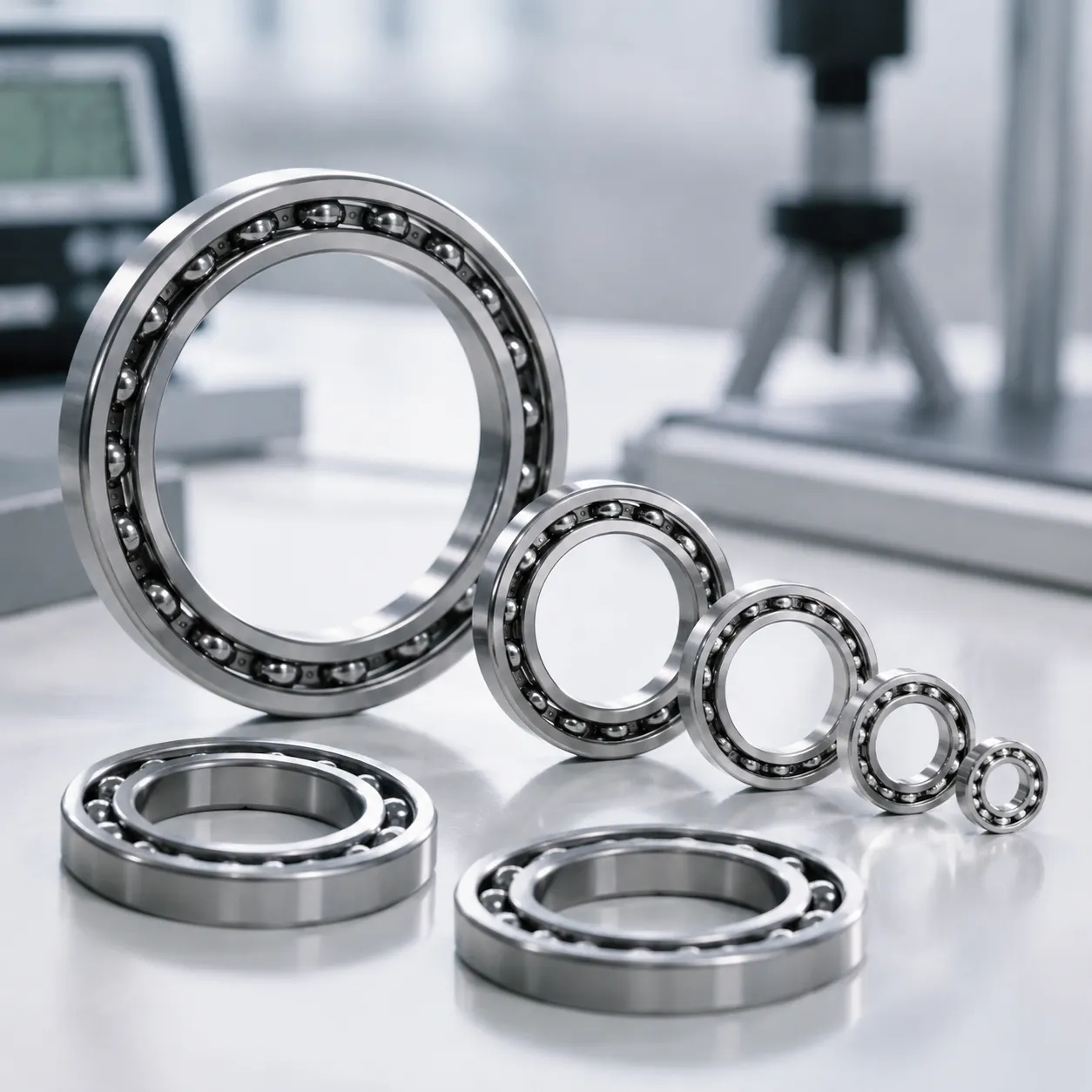
6800 Series (series 68) Thin Bearings for Light Loads
- Profile: Slightly larger ring section than the 6700 series for higher structural rigidity.
- Performance: Balances a compact bearing cross section with consistent high radial load capacity in large bore bearings envelopes.
- Applications: Medical diagnostic tools, high-speed encoders, and automated lab devices.
6900 Series (series 69) Ball Bearings for Heavy-Duty Compact Drives
- Profile: Maximum wall thickness within the thin-section classification.
- Performance: High load carrying ability with deep raceway grooves that manage combination loads.
- Applications: Semiconductor wafer handlers, industrial automation, and compact speed reducers.
Metric 6700/6800/6900 lines map to ISO thin-section deep groove geometry; imperial C-type bearings follow the same radial contact ball bearings raceway idea with a constant section.
Catalog companions in slim ISO envelopes: slim series deep groove ball bearings.
Metric vs Imperial Thin Section Dimensions
| Dimension Standard | Sizing Structure | Cross-Section Behavior | Typical Application |
|---|---|---|---|
| Metric Series (6700 / 6800 / 6900) | Bearing bore diameter rated in millimeters | Cross-section grows incrementally with bore size | Precision robotics, electronics, global industrial machinery |
| Imperial Series (Inch-Based) | Sized in fractional or decimal inches | Constant cross-section width regardless of bore size | Aerospace, defense equipment, custom optics hardware |
Target Applications for Thin Section Deep Groove Ball Bearings
When space is tight and accuracy is critical, thin section deep groove ball bearings offer the ultimate performance balance. These precision thin bearings serve industries that require a compact space design, lightweight design, and exceptionally low-torque execution.
Robotics and Automated Joint Articulation
Modern robotic arms, humanoids, and cobots rely on tight rotational tolerances inside compact joint housings. Thin section ball bearings optimize joint articulation by keeping overall arm weight low while maintaining steady rigidity and smooth motion control.
Medical Diagnostic Equipment and Surgical Tools
Precision and reliability are essential in clinical settings. Customized bearing solutions support CT scanners, surgical robotics, and handheld medical devices that require ultra-quiet operation, minimal friction, and exact positioning.
- Surgical Robotics: Smooth, micro-step joint motion
- Diagnostic Imaging: Low vibration and noise performance
- Handheld Instruments: Ultra-compact profiles to maximize surgeon comfort
Aerospace Instruments and Optical Positioning
Space-constrained aerospace systems cannot afford excess bulk. Low profile bearings deliver minimal friction torque in critical installations such as:
- Satellite gimbal systems
- Optical target tracking mechanisms
- Airborne sensor payloads
Semiconductor Wafer Handling Machinery
Wafer processing demands immaculate precision in cleanroom conditions. Specialty thin bearings minimize particulate generation while delivering smooth motion for wafer transfer arms, positioning stages, and vacuum handling systems.
Selection Guide for Thin Section Deep Groove Ball Bearings
Matching Bore Size, Outer Diameter, and Cross-Section Width
Thin section deep groove ball bearings use a fixed cross-section design that stays constant even as bore size increases. Matching core dimensions accurately optimizes machine footprint without sacrificing shaft rigidity.
- Bearing Bore Diameter: Match shaft dimension precisely to maintain correct shaft clearance and press-fit requirements.
- Outer Diameter (OD): Measure housing cavity limits to fit these low profile bearings into compact spaces.
- Cross-Section Width: Fixed width profiles allow you to step up in shaft diameter while keeping housing thickness minimal.
Calculating Radial and Moderate Axial Load Requirements
Evaluating force vectors ensures maximum service life under real-world operating conditions. Thin section deep groove bearings offer high radial load capacity while safely absorbing moderate thrust forces in both directions.
| Load Type | Capacity Profile | Typical Application Impact |
|---|---|---|
| Radial Load Capacity | High capability relative to the compact cross-section | Shaft rotation support and high-speed drives |
| Axial (Thrust) Load | Moderate bidirectional thrust handling via deep raceways | Actuator drives and positioning support |
| Combined Loads | Handles simultaneous radial and thrust force combinations | Robotic arm joints and gimbal assemblies |
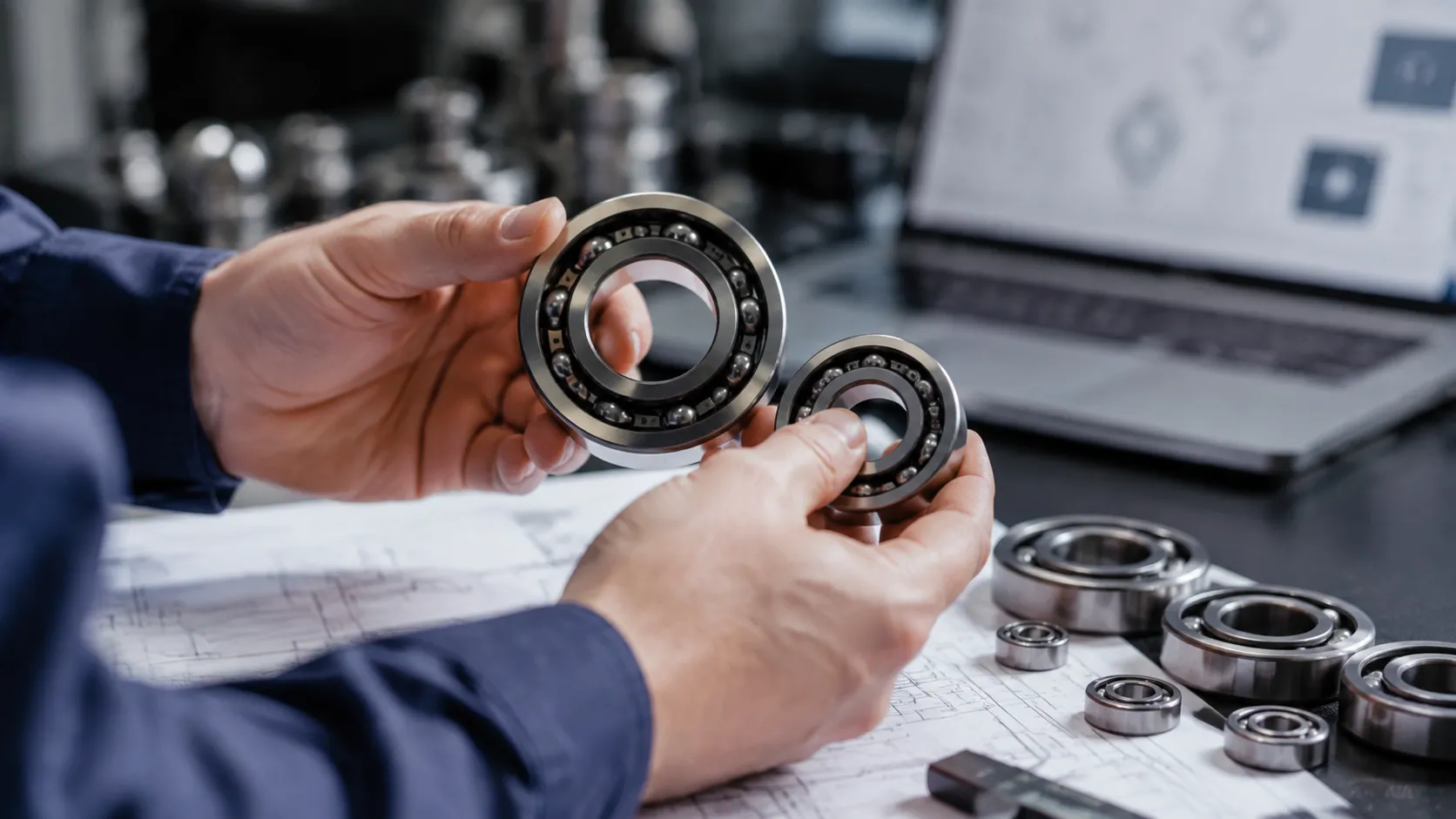
Selecting ABEC Precision Rating Grades
Choosing the proper ABEC precision grades balances manufacturing tolerances, operational smooth performance, and cost limits.
| ABEC Grade | Tolerance Level | Best Suited Applications |
|---|---|---|
| ABEC-1 / ABEC-3 | Standard Precision (ABEC-3 tolerance typical) | General industrial automation, commercial drives |
| ABEC-5 | High Precision | Precision robotics, joint articulation, medical machinery |
| ABEC-7 / ABEC-9 | Super Precision | Semiconductor processing, optical positioning platforms |
Choosing Grease vs Oil Lubrication for Operational Speeds
Selecting the correct lubricant drives thermal management, low torque ball bearing performance, and service intervals.
- Grease Lubrication: Best for standard speeds and maintenance-free setups. Keeps contaminants out, retains placement easily, and pairs with double sealed or shielded options.
- Oil Lubrication: Recommended for high-speed capability and extreme low friction torque requirements. Flushes heat away effectively in high-duty optical and aerospace instruments.
Thin Section Deep Groove Ball Bearings Installation & Maintenance
Proper handling ensures thin section deep groove ball bearings maintain tight alignment, low friction torque, and long service life. Because of their compact bearing cross section, these thin-walled components require careful mounting to avoid structural distortion.
Correct Mounting Procedures to Avoid Ring Distortion
- Apply Direct Uniform Force: Press directly and evenly against the specific ring being fitted (the inner ring for shaft fits, or the outer ring for housing fits).
- Never Load Through Balls: Avoid transmitting press forces through the rolling elements during installation to prevent raceway brinelling.
- Use Thermal Assistance: Gently heat the bearing or cool the shaft for tight interference fits rather than forcing components together mechanically.
- Verify Seat Precision: Ensure shafts and housing bores are perfectly round. Any unevenness in the mounting surface translates directly into the thin race, causing binding.
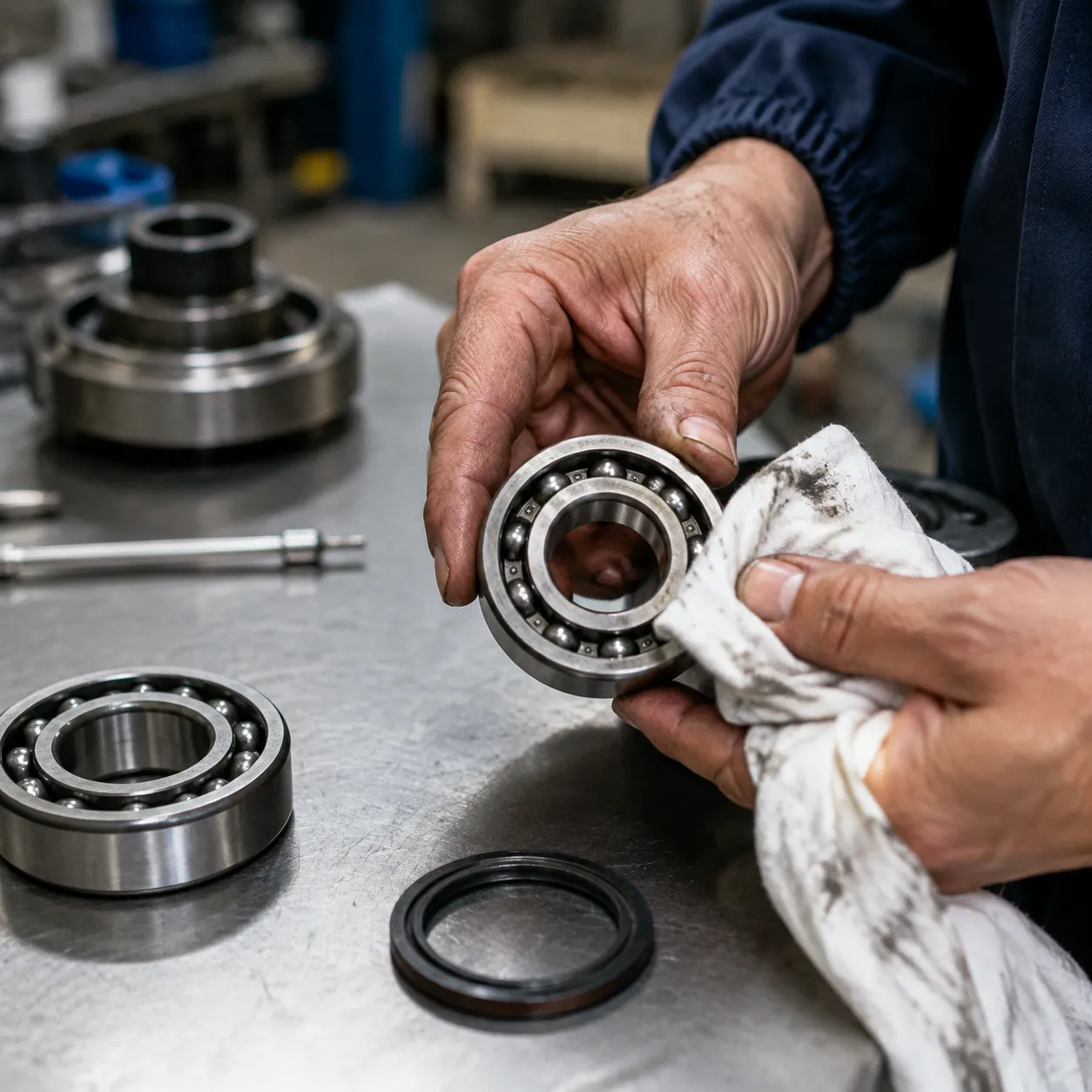
Handling Techniques for Delicate Thin-Walled Components
- Keep Packaging Sealed: Unpack precision thin bearings only when ready for immediate installation to block ambient contaminants.
- Wear Clean Powder-Free Gloves: Natural skin acids trigger localized rust on exposed steel surfaces.
- Avoid Hard Clamping: Use soft-jawed fixtures or distributed clamping pressure during sub-assembly to prevent ring pinching.
Inspection Routines and Relubrication Intervals
| Service Task | Recommended Frequency | Key Actions |
|---|---|---|
| Acoustic & Vibration Monitoring | Monthly | Listen for abnormal noise or increased torque that indicates contamination or grease breakdown. |
| Relubrication Schedule | Every 2,000 to 4,000 Hours | Apply fresh lubricant at 30%-50% cavity capacity to maintain low torque ball bearings performance without seal blow-out. |
| Seal & Shield Check | Quarterly | Inspect seals for fatigue, hardening, or lubricant leakage. |
Share bore × OD × section width, seal code (open / ZZ / 2RS), ABEC grade, and quantity for thin section deep groove ball bearings pricing - Contact JN Bearings with duty RPM, load band, and housing envelope.
Frequently Asked Questions: Thin Section Deep Groove Ball Bearings
What Defines a Thin Section Deep Groove Ball Bearing?
A thin section deep groove ball bearing is defined by its ultra-compact cross-section relative to its inner bore diameter. Unlike standard radial bearings where the wall thickness scales up as the inner diameter grows, these bearings maintain a surprisingly thin, uniform cross-section. These precision components slash weight and conserve space without sacrificing essential radial load capacity.
Can Thin Section Deep Groove Bearings Handle Thrust Loads?
Yes, they carry moderate bidirectional thrust (axial) loads in addition to high radial loads. The deep groove raceway geometry keeps the balls securely positioned under axial forces. However, for applications facing severe thrust or high moment loads, evaluate angular contact options alongside pure radial contact ball bearings and C-type bearings.
When Should You Choose Stainless Steel Over Chrome Steel?
Select stainless steel thin section bearings when rust, chemical exposure, or strict washdown protocols are primary concerns.
| Material Option | Core Advantage | Primary Applications |
|---|---|---|
| Chrome Steel (52100) | Higher load rating, maximum hardness | Standard industrial, high-speed robotics |
| Stainless Steel (440C) | Excellent corrosion resistance, cleanroom ready | Medical tools, marine gear, food processing |
How Do Rubber Seals Impact Torque in Thin Bearings?
Rubber contact seals (2RS) create a physical barrier against dust and moisture, but this direct contact introduces friction torque. If low-torque operation is critical for your high-speed drive systems, non-contact solutions offer significant performance advantages.
- Open type bearings: Zero seal friction, absolute minimum starting torque, best for clean, lubricated enclosures.
- Metal Shielded (ZZ): Non-contact protection keeping friction extremely low while blocking large particulate contaminants.
- Rubber Sealed (2RS): Full contact seals providing maximum ingress defense, with a minor increase in rotational drag.
Need 6700/6800/6900 cross-checks or C-type radial contact guidance? Contact JN Bearings with shaft size, moment load notes, and seal preference.