Overview
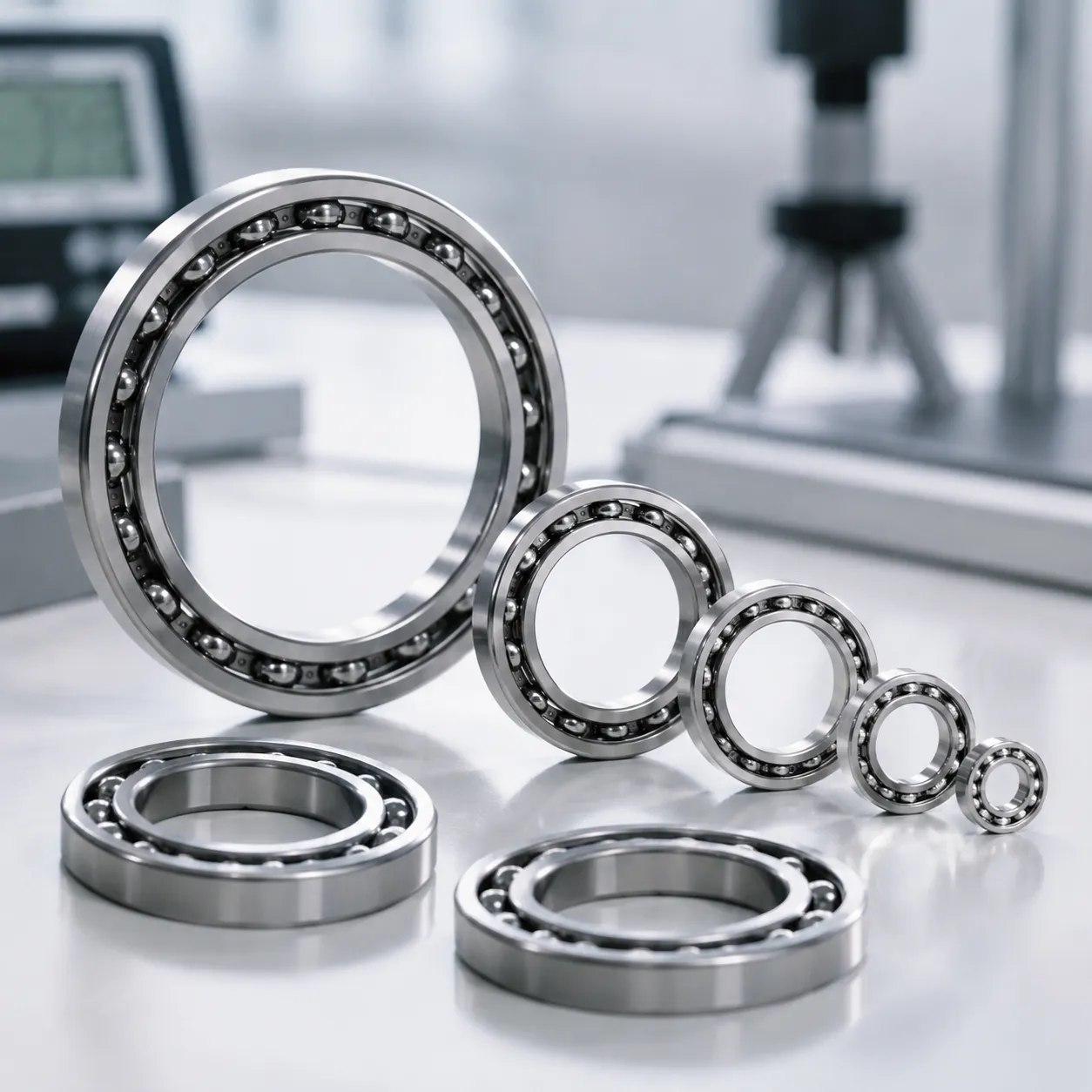
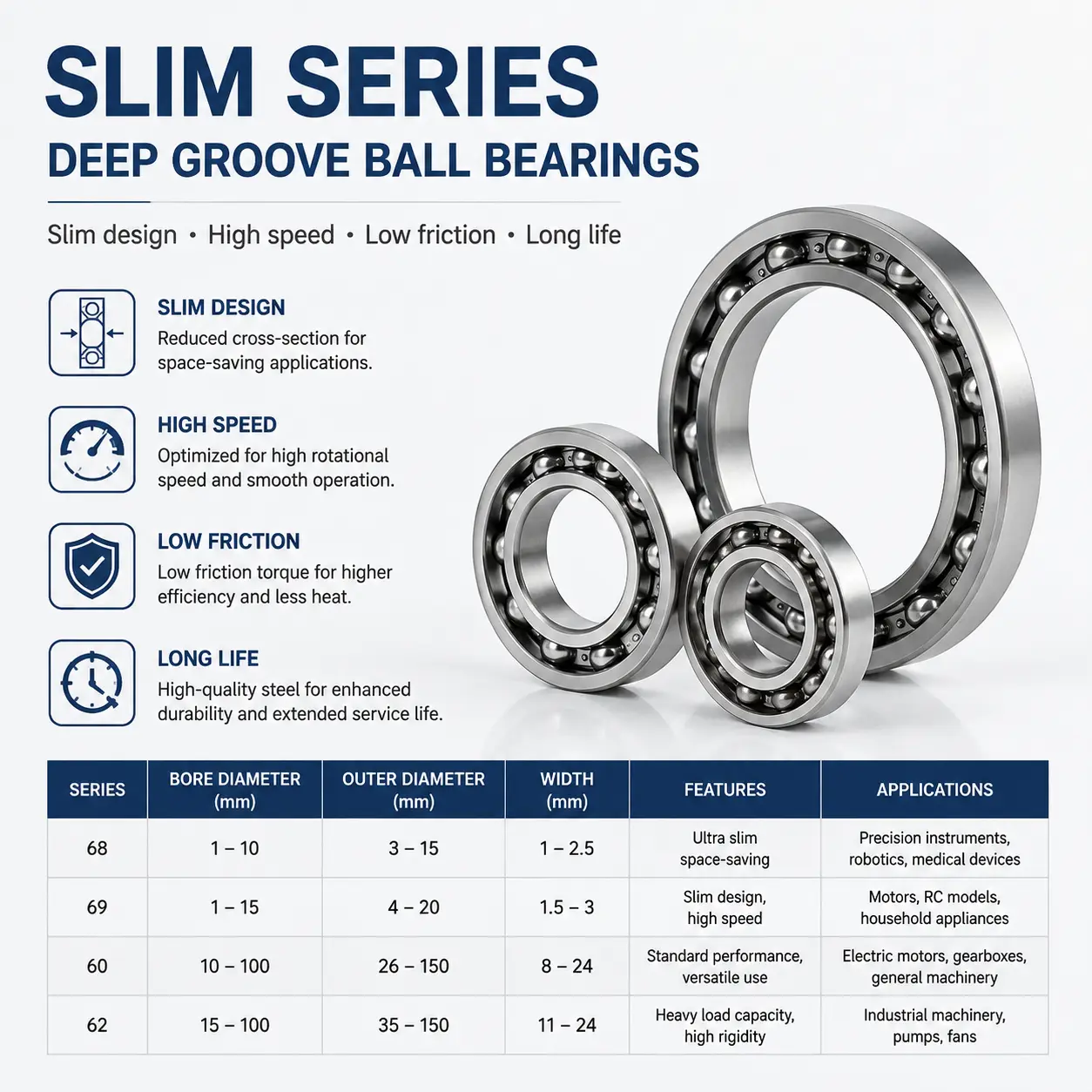
Slim series deep groove ball bearings trade wall thickness for envelope space—match 6700/6800/6900 series, seal code, and steel grade before locking shaft and housing fits.
- Envelope: Thin section bearings hold constant cross-section for equipment downsizing in space constrained applications.
- Load path: Deep raceways carry radial loads with light bi-directional axial loads; cap thrust or duplex paired single row sets when needed.
- Speed & seal: Low friction geometry and pre lubricated 2RS builds target high rotational speeds at low torque.
Lock bore series and seal code first—then align load ratings, duty environment, and press-fit practice to your housing envelope.
6700–6900 Slim Series Deep Groove Ball Bearings — Size & Material Specs
Finding the right slim series deep groove ball bearings comes down to matching your envelope space with load requirements. Builds use three primary ISO dimension series to fit tight design footprints without sacrificing performance.
6700, 6800, and 6900 Series Dimensions
The key difference across these 6700 6800 6900 series bearings is the cross-section thickness relative to the bore size. As you step up from 6700 to 6900, the wall thickness and ball diameter increase slightly to handle higher radial loads.
| Series | Cross-Section Profile | Load Capacity | Best For |
|---|---|---|---|
| 6700 Series | Ultra-thin / Minimal width | Light | Extreme space constrained applications |
| 6800 Series | Very thin / Balanced ratio | Moderate | Precision bearing instruments and optical gear |
| 6900 Series | Thin / Reinforced profile | Moderate to High | Small motors and automated arm joints |
Material Options
Available in thin section deep groove ball bearings in three core material builds based on operating conditions:
- Chrome Steel (52100): Standard option offering high load capacity, excellent hardness, and long wear life.
- Stainless Steel (440C): Essential for applications requiring corrosion resistance and moisture protection.
- Ceramic (Hybrid): Ceramic balls with steel rings for ultra-high high rotational speeds, low friction, and lighter weight—see hybrid deep groove ball bearings for matched hybrid catalog builds.
Sealing Types
Proper closure selection keeps your cross section ball bearings running smoothly:
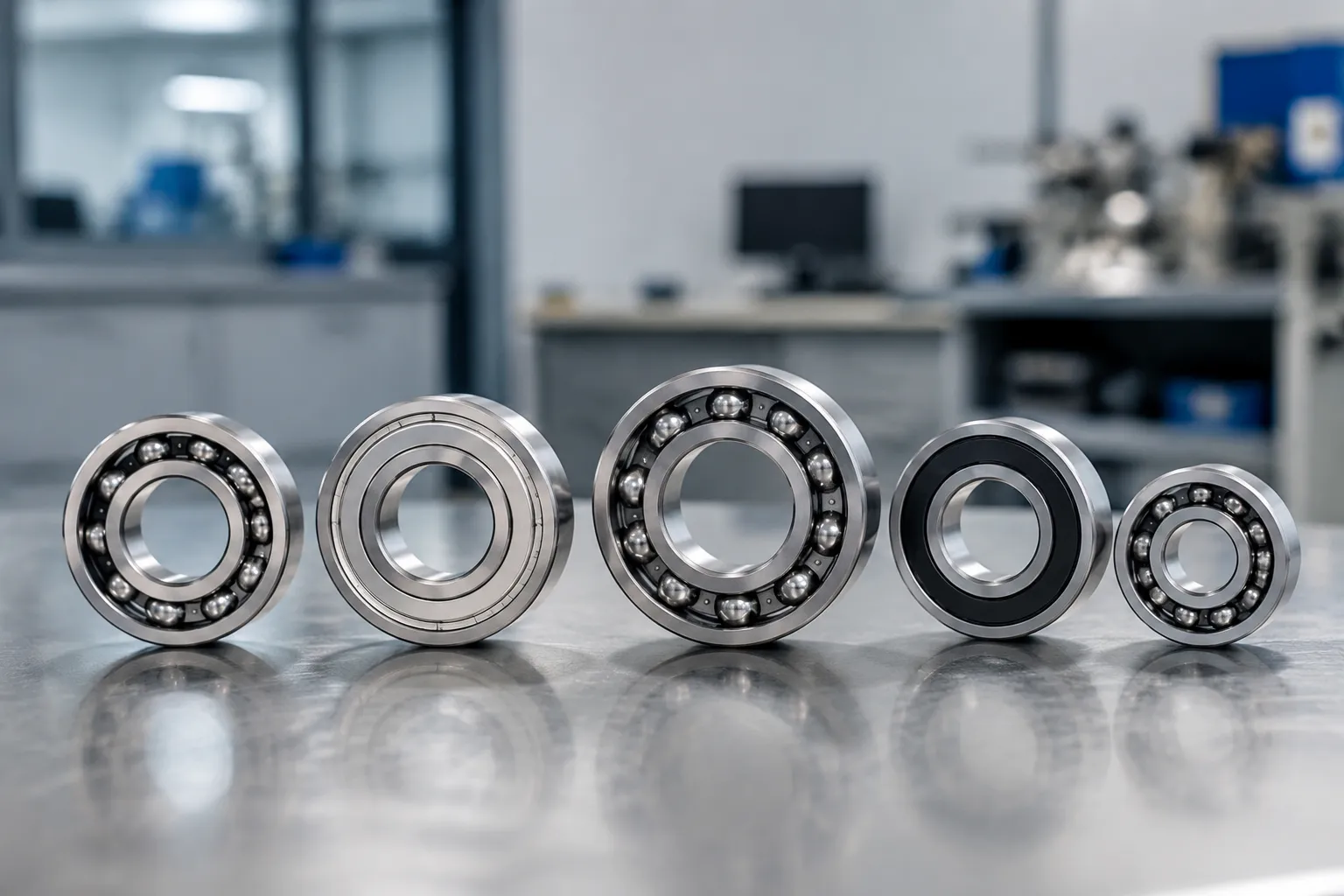
- Open: Zero contact friction for maximum rotational speed and low torque. Requires a clean environment.
- Rubber Sealed (2RS): Contact rubber seals block contamination and moisture while retaining factory grease—see sealed deep groove ball bearings for full 2RS catalog options.
- Metal Shielded (ZZ): Non-contact metal shields guard against larger debris with less rotational drag than rubber options.
6700–6900 boundary dimensions and seal codes set the mechanical envelope; thin-section geometry and raceway depth define how slim series deep groove ball bearings balance load density with rotational drag.
Thin Section Deep Groove Ball Bearings — Key Features
Engineering tight machinery often means choosing between spatial limits and performance. Builds use slim series deep groove ball bearings to eliminate this trade-off, delivering high precision and load capacity within extremely compact footprints.
Thin Section Design for Maximum Space Savings
- Equipment Downsizing: Reduces overall housing dimensions and cuts total system weight.
- Standardized Dimensions: Simplifies shaft and housing design across different size series.
High Radial Load Capacity in Compact Housings
- Deep Groove Geometry: Deeply crowned raceways handle substantial radial loads alongside light bi-directional thrust loads.
- High Power Density: Maximizes load distribution without demanding larger mechanical envelopes.
Low Friction Torque for Smooth High-Speed Rotation
- Energy Efficiency: Prevents excessive heat buildup and minimizes mechanical friction loss.
- High-Speed Operation: Ensures whisper-quiet, ultra-smooth motion at high rotational speeds.
| Key Feature | Engineering Impact | Primary Benefit |
|---|---|---|
| Thin-Section Profile | Uniformly small cross-section | Maximum space and weight savings |
| Deep Groove Raceways | Balanced stress distribution | Reliable radial load capability |
| Low Friction Design | Minimal rolling resistance | High speed and reduced power consumption |
Thin-profile benefits and seal options understood, peak radial loads, thrust limits, and lube grade drive the final part number.
How to Choose Slim Series Deep Groove Ball Bearings
Picking the right slim series deep groove ball bearings comes down to load directions, boundary dimensions, and environmental demands. Because thin-section designs feature reduced cross-sections to support equipment downsizing, precise selection prevents raceway damage and premature wear.
Matching Dynamic Load Ratings
- Calculate radial loads: Ensure peak operational forces stay strictly within the bearing's dynamic radial capacity.
- Factor in duty cycles: Continuous high rotational speeds require a higher safety margin than intermittent movement.
- Mitigate shock loads: Thin-wall rings are sensitive to sudden impacts that can dent raceways.
Managing Axial Load Limits
While slim series bearings excel with radial forces, their reduced wall thickness limits thrust capacity.
- Cap axial loads: Keep thrust under 20% of radial capacity (see axial load vs radial load in deep groove ball bearings).
- Ensure shaft alignment: Rigid housing alignment prevents unintended axial binding.
- Consider duplex sets: Pair two single row bearings back-to-back or review angular contact bearings and four point contact bearings when thrust exceeds slim-raceway limits.
Lubrication Selection Guide
| Lubrication Type | Speed Capability | Temperature Range | Primary Advantage |
|---|---|---|---|
| Pre-Lubricated Grease | Moderate to High | -20°C to +120°C | Maintenance-free, long-term seal protection |
| Low-Torque Synthetic Oil | High to Very High | -40°C to +150°C | Minimal rotational drag, maximum heat dissipation |
| Solid Film / Dry Lube | Low to Moderate | Up to +250°C | Ideal for vacuum or high-cleanroom environments |
Available in pre-lubricated options calibrated for low friction torque across standard US industrial operating conditions.
Load and lubrication limits fixed, typical robotics, aerospace, and medical duty cycles show where slim builds outperform standard ISO sections.
Slim Series Deep Groove Ball Bearings for Space-Constrained Applications
When your design runs out of physical room, standard bearings simply won't fit. Built for slim series deep groove ball bearings specifically for tight setups where equipment downsizing and weight reduction are critical. Here is where common deployments include these space-saving components to keep their equipment running smoothly.
Robotic Arm Bearings
Modern automation demands minimal weight to reduce rotational inertia and energy consumption. Our compact radial ball bearings fit seamlessly into robotic arm joints, wrist pitch systems, and automated end-effectors, delivering precision bearing guidance and smooth articulation.
Aerospace and Drone Navigation
In flight hardware, every gram matters. Available in lightweight deep groove bearings for drone camera gimbals, satellite tracking units, and flight control actuators. They offer low friction torque and stable performance inside ultra-compact housings.
Medical Equipment and Precision Surgical Tools
Surgical tools and imaging equipment require silent, smooth operation in tiny packages. Our thin wall ball bearings provide precise radial guidance and low torque for surgical robotics, dialysis pumps, and hospital diagnostic equipment.
Optical Instruments and Camera Gimbals
Optical tracking systems and pan-tilt units require precise alignment with zero slip. Slim series deep groove ball bearings keep optical lenses and camera payloads steady while maintaining an exceptionally small footprint.
Application duty clarified, thin-wall rings demand controlled press fits to protect raceways during assembly.
Slim Series Deep Groove Ball Bearings — Installation & Mounting
Installing slim series deep groove ball bearings requires careful handling. Because thin-section rings lack the structural bulk of standard bearings, improper mounting easily deforms raceways, leading to premature wear, noise, and early failure.
Preventing Ring Distortion
Thin wall ball bearings warp quickly if force is applied unevenly. Follow strict mounting practices to protect ring geometry:
- Use 360-degree press sleeves: Always apply mounting pressure evenly across the full face of the ring.
- Thermal mounting: Warm inner rings slightly (or chill housings) for smooth slip fits without forcing components.
- Avoid direct impacts: Never strike rings directly with a hammer or punch.
- Check seating tolerances: Ensure shaft and housing seats are machined to exact roundness. Tight or uneven fits cause ring pinching.
Preventing Raceway Damage
Brinelling—denting the bearing raceway—occurs when installation force transfers through the rolling elements.
- Press the correct ring: Push directly on the inner ring for shaft fits, or the outer ring for housing fits. Never press across the balls.
- Handle with clean tools: Tiny dirt particles cause immediate pitting on thin-section raceways. Keep bearings in original packaging until ready to mount.
Grease Selection and Relubrication
Proper lubrication keeps low torque ball bearings running cool while minimizing friction loss.
| Lubrication Factor | Recommended Practice |
|---|---|
| Grease Type | Use light synthetic greases engineered for low friction torque and high rotational speeds. |
| Fill Volume | Maintain a 30% to 50% grease fill. Over-packing increases churning resistance and operating heat. |
| Sealed Units | Pre-lubricated bearings with rubber seals (2RS) offer maintenance-free operation for closed systems. |
| Relubrication Schedule | For open bearings, base re-greasing intervals on running temperatures, speed factors, and environmental dust levels. |
Request a Quote
Share 6700/6800/6900 part number, bore × OD × width, seal code (open / ZZ / 2RS), and material (
chrome steel 52100, stainless, or hybrid ceramic) for slim series deep groove ball bearings pricing.
Contact JN Bearings with quantity, target duty (
space constrained applications, robotics, optics), and pre lubricated vs oil-lube preference.
Mounting and relubrication practices covered, the FAQ compares slim versus standard sections, thrust capacity, ceramic balls, and seal drag on precision bearing lines.
Slim Series Deep Groove Ball Bearings FAQs
Slim Series vs. Standard Deep Groove Bearings
The biggest difference is cross-section size and total weight. Standard ISO bearings grow thicker and heavier as shaft size increases. Slim series deep groove ball bearings maintain an ultra-thin cross-section across larger bores, making them ideal for equipment downsizing.
| Feature | Standard Bearings | Slim Series Bearings |
|---|---|---|
| Cross-Section | Thicker as bore increases | Ultra-thin and compact |
| Space Savings | Standard footprint | Up to 80% space reduction |
| Weight | Heavier | Lightweight design |
| Primary Focus | Heavy radial load capacity | Space constrained applications |
Thrust Loads on Thin Wall Ball Bearings
Yes, our thin wall ball bearings handle light-to-moderate axial loads (thrust) in both directions alongside radial loads. Their deep raceway grooves keep balls locked in place under combination loads, though heavy thrust demands should use four point contact bearings or angular contact bearings rather than slim single row builds alone.
Steel vs Ceramic Balls in Compact Bearings
Select ceramic balls over standard chrome steel 52100 when you need:
- Higher Rotational Speeds: 40% lighter balls cut centrifugal force at high RPMs.
- Lower Torque: Reduces friction loss for smoother performance.
- Longer Service Life: Prevents metal-on-metal galling and resists harsh chemicals.
Seal Options and Friction Loss
The closure style directly affects low torque performance in high precision thin section bearings:
- Open Type: Zero seal drag for absolute low friction and maximum speed.
- Metal Shields (ZZ): Non-contact dynamic protection with minimal rotational resistance.
- Rubber Seals (2RS): Full contact seals for pre lubricated protection against dirt and moisture with slight drag torque.