
High-Speed Precision Solutions
High-Performance Angular Contact Ball Bearings
Precision-engineered to support extreme high-speed rotation and simultaneous combined loads (radial and axial) for demanding industrial applications.
JN Bearings provides specialized angular contact ball bearing solutions with uncompromising precision, perfectly suited for CNC machine tool spindles and heavy-duty equipment. Explore our industrial machinery solutions for more application-specific support.
Angular Contact Ball Bearings: Core Principles & Capabilities
Engineered to manage simultaneous radial load and axial load, our high-speed bearings deliver the uncompromising rigidity, precision, and longevity required by modern industrial spindle and machinery applications.
What Are Angular Contact Ball Bearings?
Angular contact ball bearings are highly specialized precision rolling elements designed with asymmetrical inner and outer ring raceways. These raceways are displaced relative to each other along the bearing axis, establishing a specific contact angle. This precise geometry enables the bearing to efficiently transmit and support significant combined loads—simultaneous radial and unidirectional axial loads.
While traditional deep groove bearings primarily support radial forces, angular contact variants are fundamentally built for complex multi-directional stress. Because their axial load capacity directly increases with the contact angle, they are universally adopted as spindle bearings in machine tools, high-speed rotation motors, and precision pumps where robust thrust support and minimal deflection are paramount.
As a dedicated ball bearing manufacturer, JN Bearings strictly controls the contact angle precision and internal geometries of every unit we produce. Our rigorous manufacturing standards guarantee consistent dynamic load capacities and thermal stability across all operating environments. For compact assemblies and tight installation spaces, explore our miniature precision bearings.
- Combined Load Mastery: Seamlessly accommodates heavy radial and axial forces within a single compact footprint.
- Exceptional Rigidity: Specialized preload configurations eliminate end-play and minimize shaft deflection.
- ABEC/ISO Precision Grades: Manufactured in tolerances from ABEC-1 (P0) up to ultra-precision ABEC-7 (P4).
- Premium Metallurgy: Forged from highly refined chromium steel for exceptional fatigue life and wear resistance.
- Universal Matching: Ground for universal pairing in duplex arrangements (Back-to-Back, Face-to-Face, Tandem).
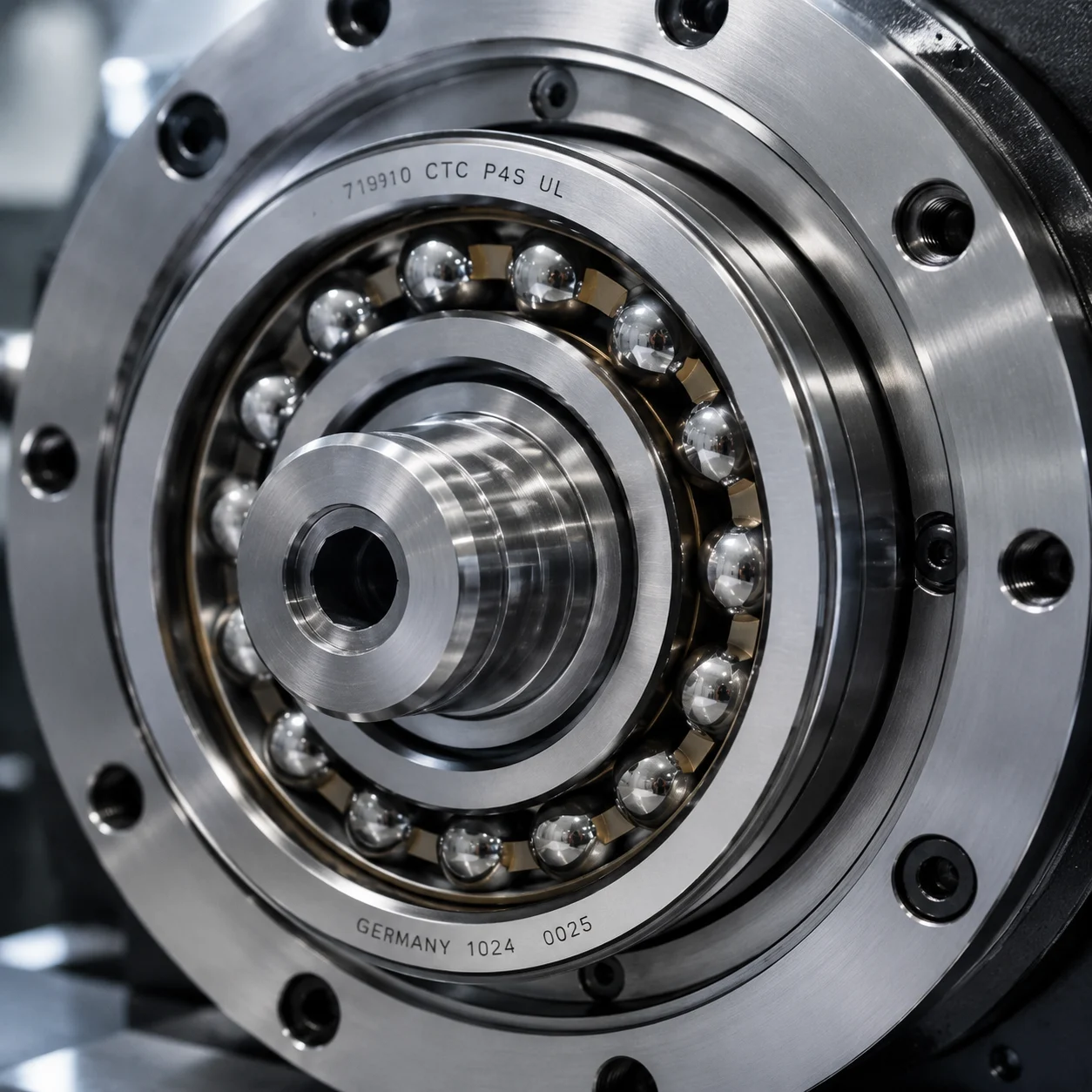
The Crucial Role of Contact Angles
The contact angle is the defining characteristic of an angular contact ball bearing. Measured between the radial plane and the line connecting the raceway contact points, this angle dictates the bearing's balance between load capacity and maximum speed. JN Bearings provides three distinct standard contact angle designations:
A smaller angle reduces centrifugal ball loads, facilitating stable high-speed rotation. Conversely, a larger angle shifts the load-bearing vector to heavily favor axial load capacity. Selecting the proper angle ensures your machinery achieves optimal thermal stability and operational lifespan.
| Contact Angle | Designation | Performance Focus | Ideal Applications |
|---|---|---|---|
| 15° | C | Ultra-high speed rotation, lower thrust | CNC high-speed spindles, grinding machinery |
| 25° | AC | Balanced radial and axial load support | General industrial motors, centrifugal pumps |
| 40° | B | Maximum axial load carrying capacity | Heavy gearboxes, compressors, ball screw drives |
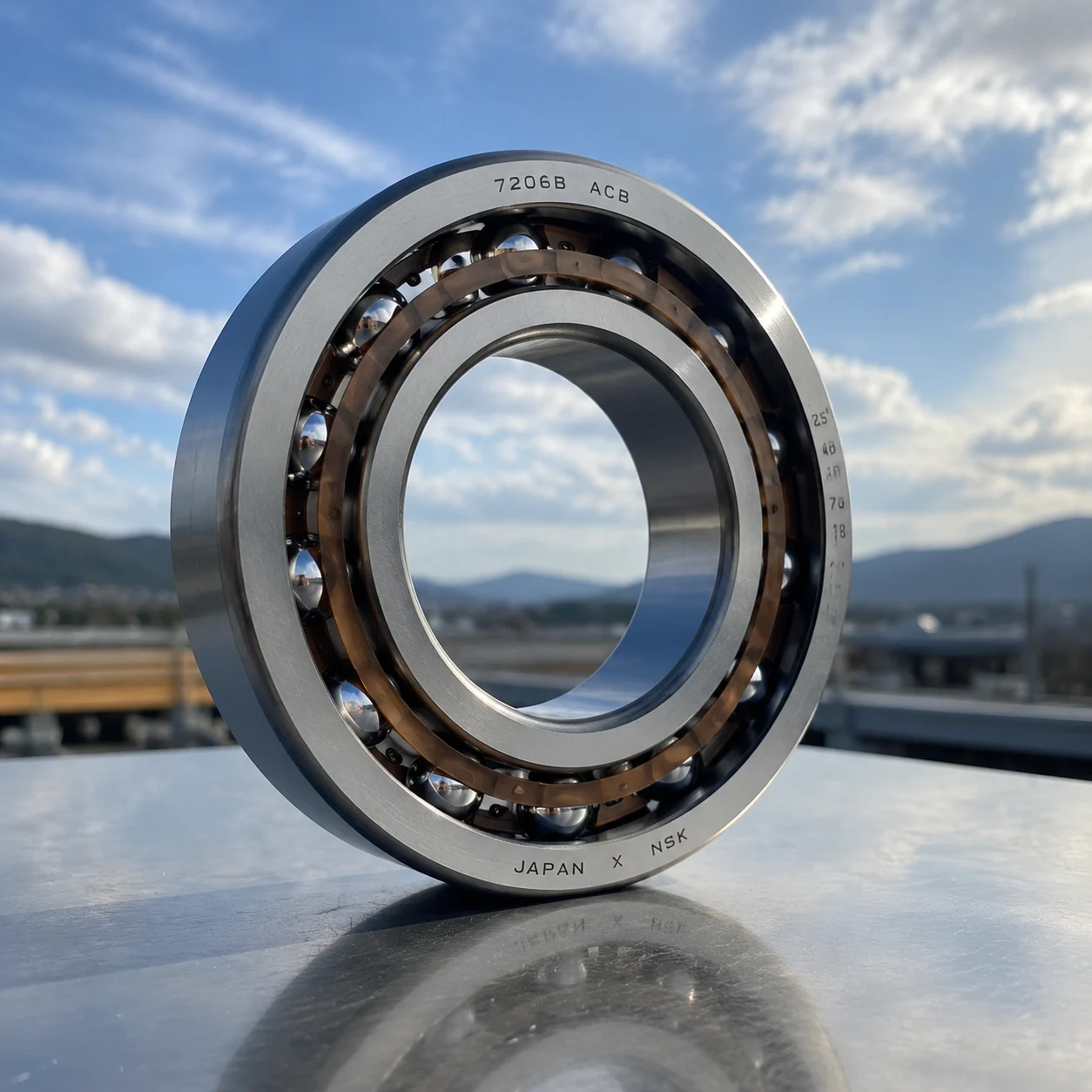
Application Note
Transitioning from a 15° to a 40° contact angle can elevate the bearing's axial load capability by over 50%, though it correspondingly lowers the maximum rotational velocity. Proper pairing is critical for engineering success.
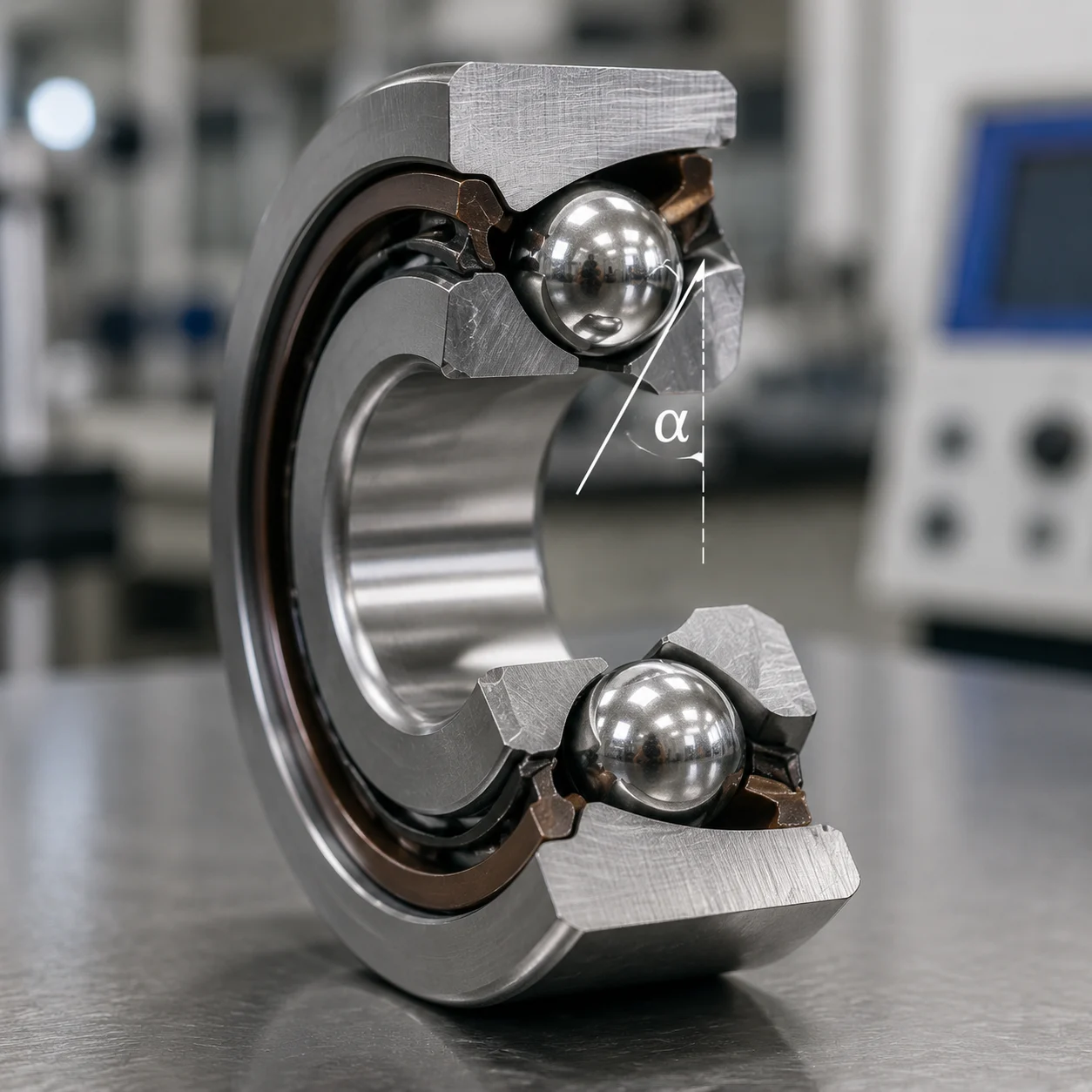
Material Excellence & Cage Configurations
At JN Bearings, we strictly utilize ultra-clean, high-carbon chromium bearing steel (GCr15 / 52100) for our rings and rolling elements. This advanced metallurgy ensures exceptional hardness (HRC 60–66), mitigating surface fatigue and ensuring enduring dimensional stability under extreme mechanical stress.
Cage material is customized to handle different speed limits, lubrication conditions, and operating temperatures:
- ▸Machined Brass Cage: Delivers superior strength and thermal dissipation; perfect for heavy combined loads and harsh industrial environments.
- ▸Polyamide/Nylon Cage: Exceptionally lightweight and self-lubricating, ideal for minimizing friction in high-speed spindle bearings.
- ▸Pressed Steel Cage: A cost-effective, high-strength solution highly suitable for standard pump and motor applications.
By meticulously controlling heat treatment and surface finishes, we guarantee components that easily surpass standard ISO dynamic load ratings.
Internal Clearance and Preload Optimization
Preload intentionally removes internal clearance, putting the balls under a constant slight axial stress. This dramatically enhances bearing rigidity, reduces shaft runout, and prevents ball skidding during rapid acceleration, making it an essential factor for high-precision CNC spindle setups.
Light Preload (GA)
Engineered for ultra-high-speed rotation. Minimizes friction and heat generation, safeguarding the spindle at extreme RPMs while retaining baseline system rigidity.
Medium Preload (GB)
The industry standard for general machine tools. Provides an optimal equilibrium between shaft stiffness and limiting speeds for versatile milling operations.
Heavy Preload (GC)
Specified for heavy-cutting and low-speed applications. Delivers maximum rigidity to counter vibration, shock loads, and tool chatter during aggressive machining.
Dimensional Scope & ABEC Precision
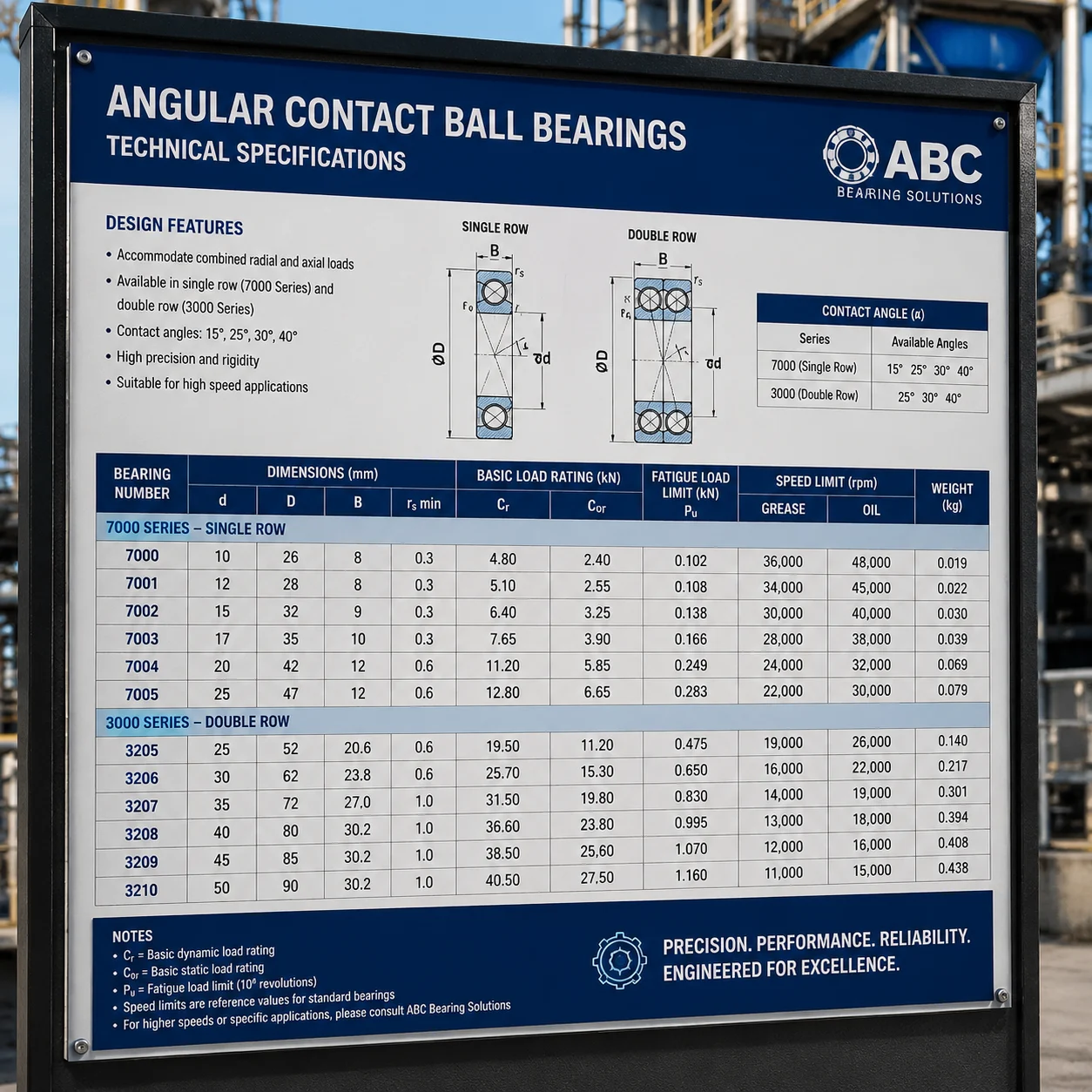
JN Bearings manufactures angular contact ball bearings across an extensive dimensional range, accommodating inner bore sizes from 10 mm up to 320 mm. This vast scope allows us to supply both miniature high-frequency motors and massive industrial gearboxes. We offer accuracy classifications from standard ABEC-1 (P0) to ultra-precision ABEC-7 (P4) requirements.
To ensure reliable, long-term performance under combined loads, our quality control protocols govern crucial micro-geometries, including:
- Raceway micro-finish and roundness — strictly measured to eliminate vibration and audible noise at peak speeds.
- Ball diameter variation — controlled to micrometers to guarantee uniform axial load distribution.
- Radial and axial runout limits — adhering to stringent ISO tolerances to ensure flawless spindle rotation.
- Strict contact angle verification — ensuring matched bearing pairs function seamlessly in universal configurations.
Whether your project demands a resilient, standard-clearance unit for a fluid pump or a customized ABEC-7 matched set for a CNC machining center, JN Bearings provides factory-direct solutions engineered for uncompromising quality.
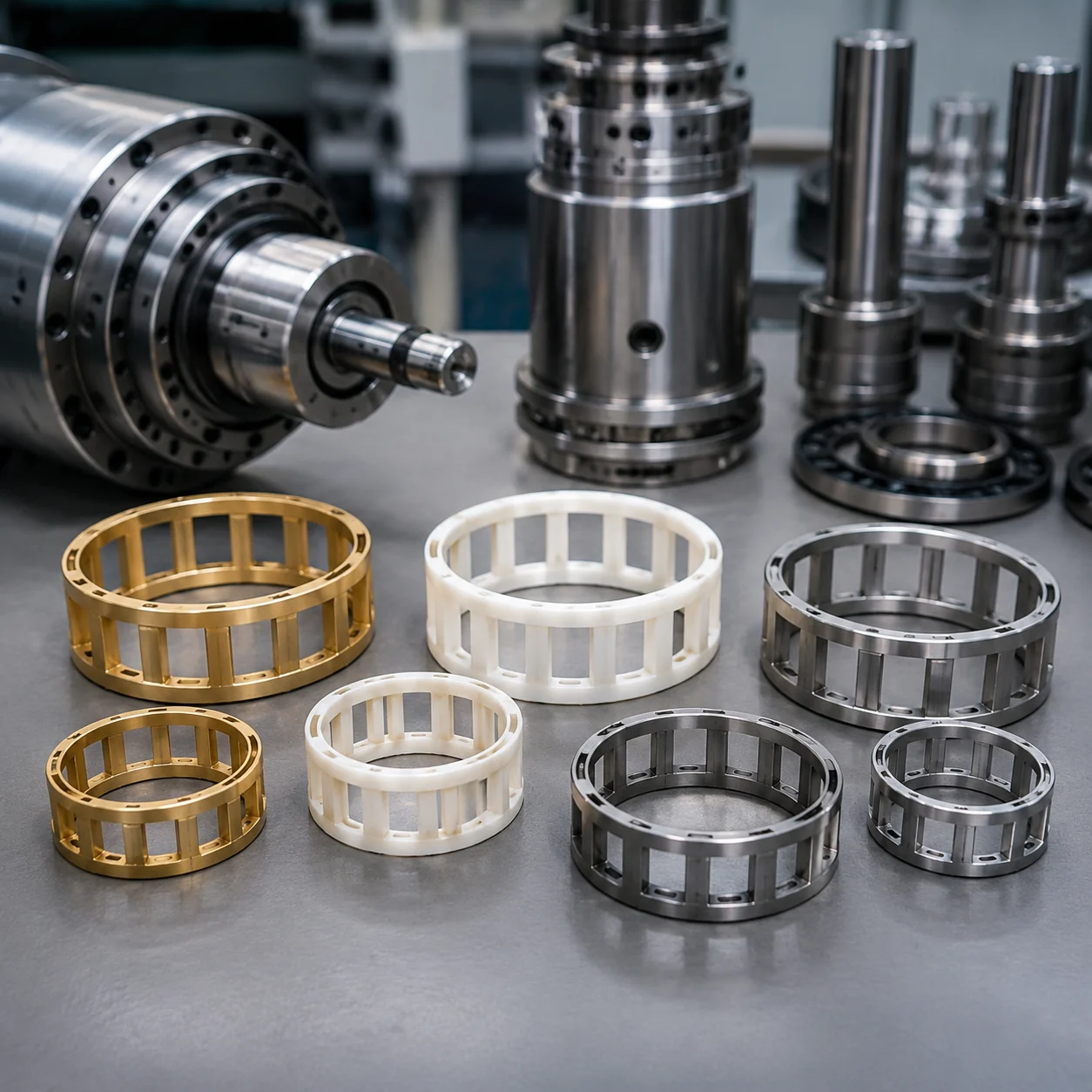
ABEC-7
Max Precision Level
40°
Max Contact Angle
10–320
Bore Range (mm)
3 Cages
Brass · Nylon · Steel
"Every angular contact bearing we deliver undergoes extensive dynamic load testing and precision dimensional verification to guarantee consistent, high-speed performance."
— JN Bearings Engineering Team
Angular Contact Ball Bearing Series & Types
JN Bearings offers a comprehensive range of single row, double row, and four-point contact designs to meet diverse engineering demands—from high-speed CNC spindles to heavy-duty industrial gearboxes.
Comprehensive Solutions for High-Speed and Combined Loads
Selecting the right angular contact ball bearing is critical for managing specific load directions, accommodating high-speed rotation, and ensuring overall machine rigidity. Engineers rely on these precision bearings when standard deep groove options cannot sustain heavy axial thrust combined with radial forces. The three primary configurations—single row angular contact bearings, double row angular contact bearings, and four-point contact bearings—each provide distinct mechanical advantages tailored to specific industrial environments.
Understanding these structural variations enables procurement teams and design engineers to optimize their equipment at the component level, reducing maintenance downtime and preventing premature failure. JN Bearings manufactures each series in strict compliance with international ISO and ABEC precision standards. We provide customizable bore dimensions, tailored contact angles, and specific cage materials to ensure exact alignment with your application's requirements.
Explore the categories below to understand how single row, double row, and four-point contact variations differ in performance, where they are typically deployed, and what technical parameters define their success in high-load scenarios.
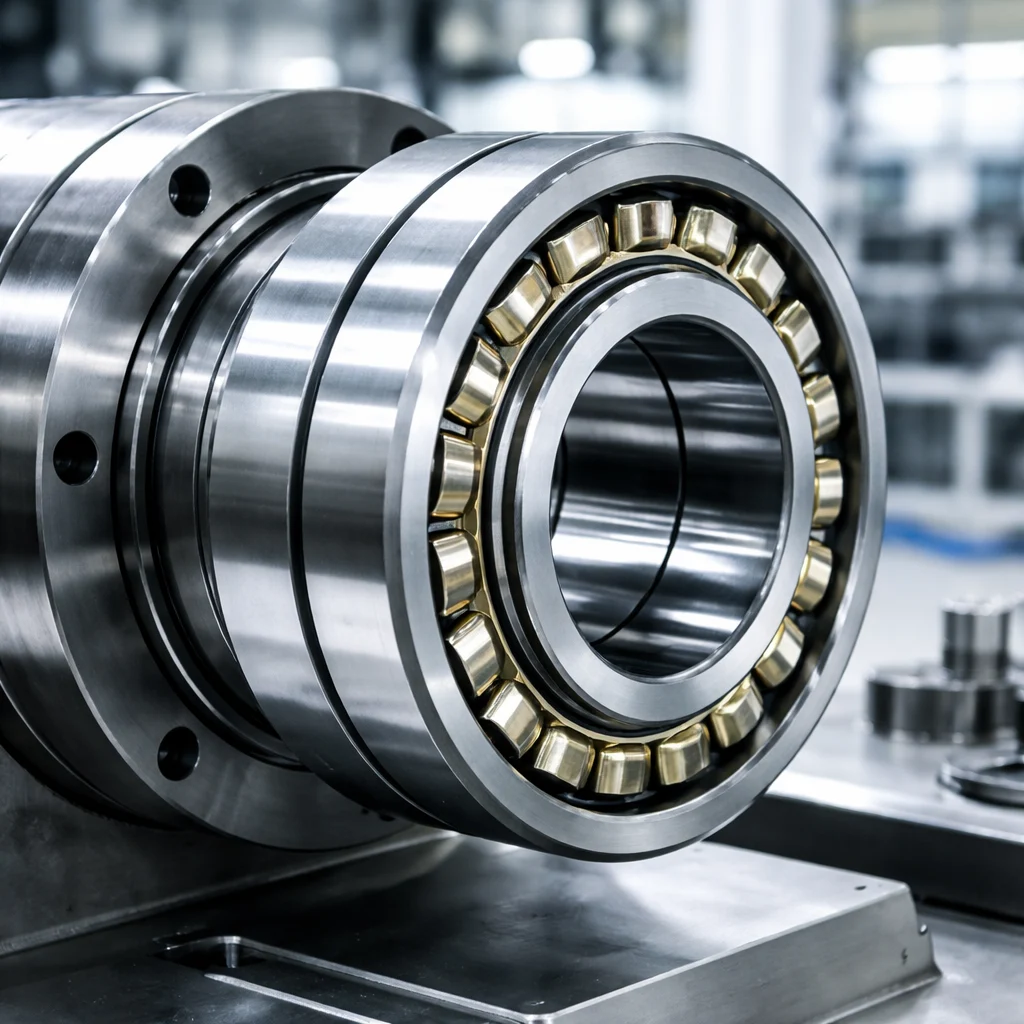
Single Row Angular Contact Ball Bearings
Engineered for high-speed precision, single row angular contact bearings carry combined radial and unidirectional axial loads. Because their axial capacity acts in only one direction, these are predominantly used in matched pair bearings. Whether arranged back-to-back, face-to-face, or in tandem, paired configurations lock in rigidity and effectively handle bidirectional thrust forces.
Technical Capabilities
- Standard Contact Angles: 15° (C), 25° (AC), 40° (B)
- Optimized for high-speed rotation and low friction
- Precision Tolerances: ABEC-1 to ABEC-7 (P0 - P4)
- Cage Materials: Brass, Polyamide (Nylon), Steel
- Broad Bore Range for various shaft sizes
Common Micro-Scenarios
- CNC machine tool spindles (super precision)
- High-frequency electric motors
- Centrifugal pumps and fluid compressors
- Industrial centrifuge equipment
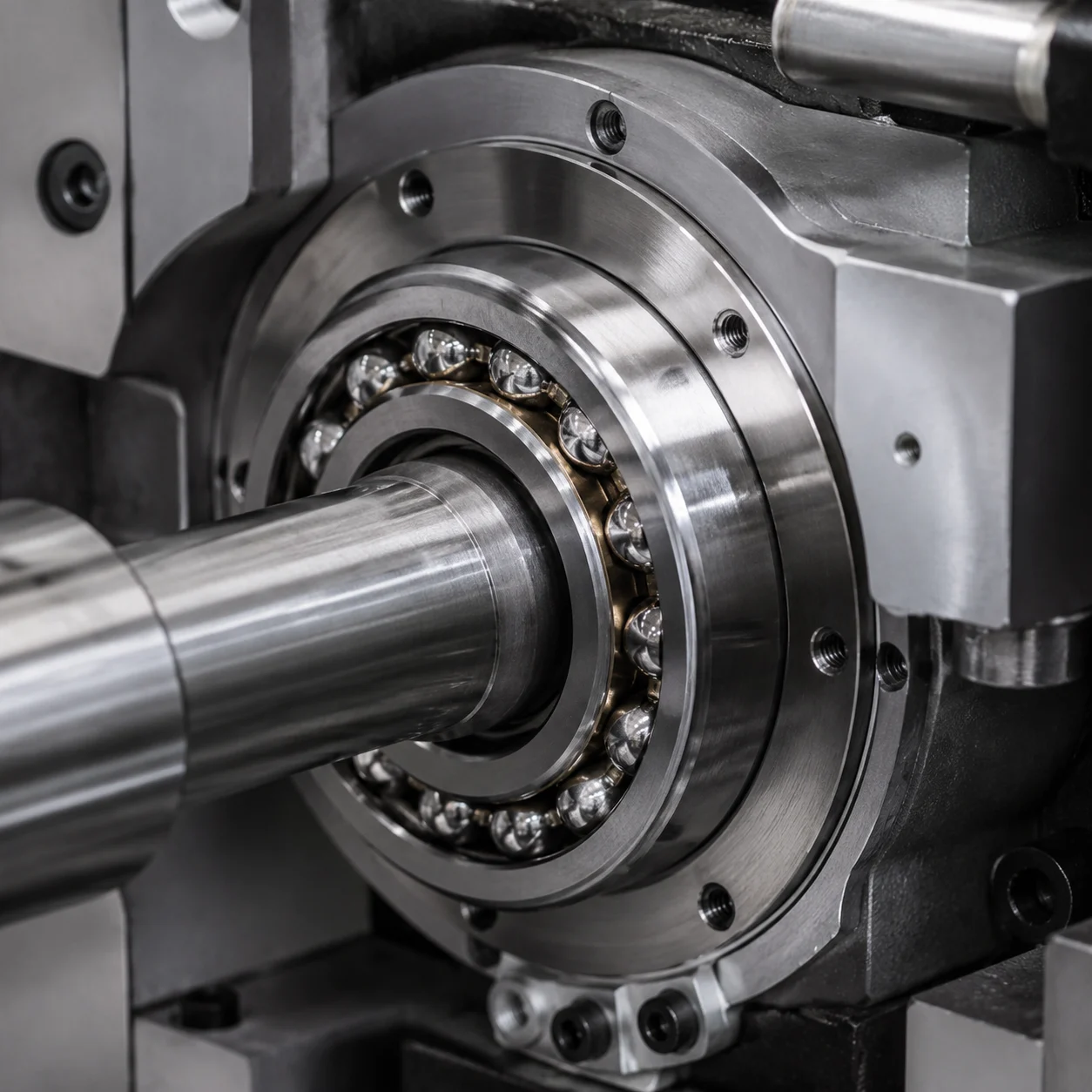
Double Row Angular Contact Ball Bearings
Constructed to function like two back-to-back single row bearings, the double row angular contact bearing is a space-saving powerhouse. It accommodates heavy bidirectional axial loads alongside substantial radial forces. This design simplifies shaft mounting, removes the need for precision shimming between two separate bearings, and provides excellent rigidity in confined housing spaces.
Technical Capabilities
- Supports bidirectional axial thrust inherently
- Increased radial load rating in a narrow profile
- Reduces required axial mounting space
- Standard Contact Angles: 25° or 30°
- Supplied open or with custom sealing (2RS/ZZ)
Common Micro-Scenarios
- Heavy-duty gearboxes and reduction drives
- Agricultural equipment and material handling
- High-velocity industrial blowers and fans
- Automotive and commercial wheel hubs
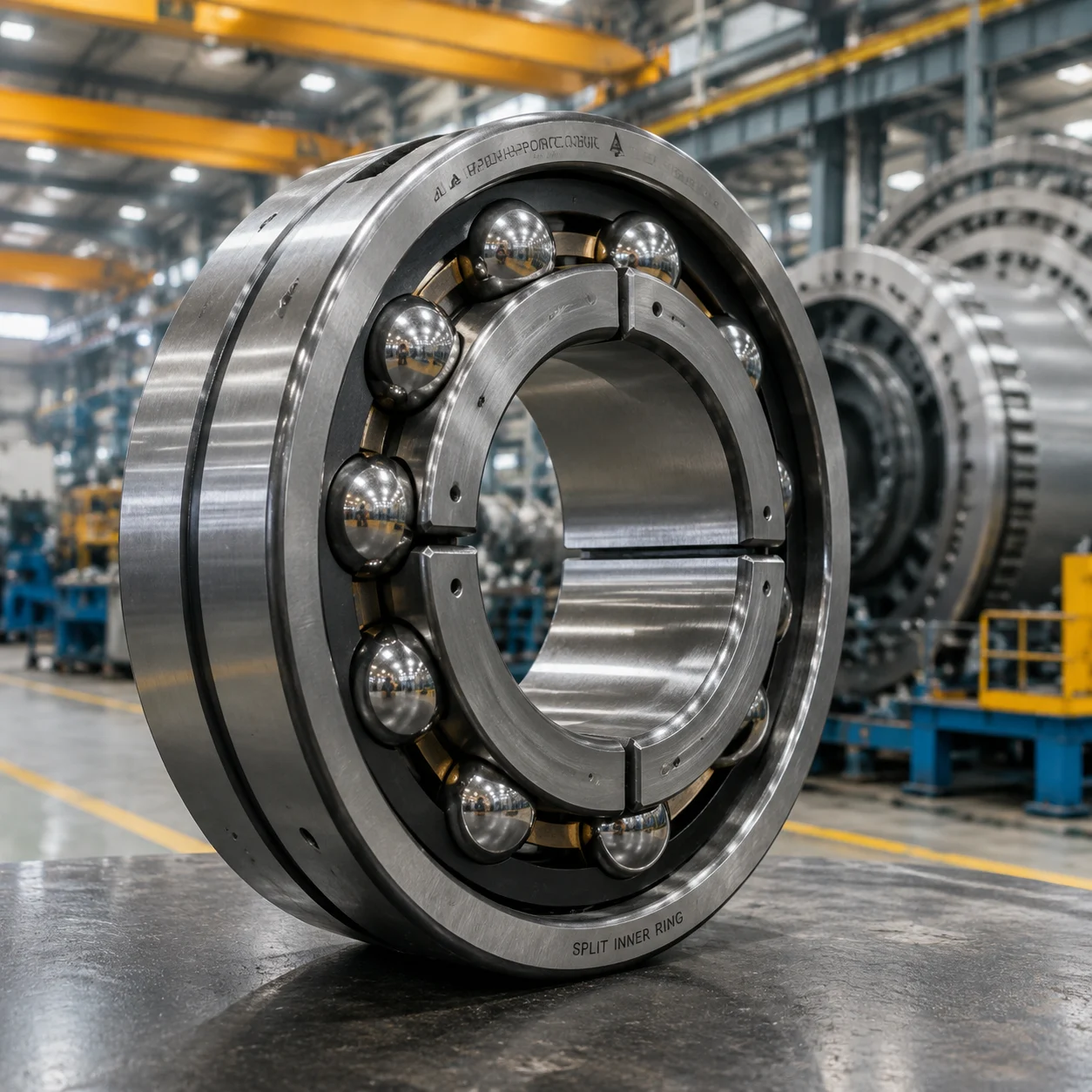
Four-Point Contact Ball Bearings
Featuring a highly specialized split inner ring design, four-point contact bearings establish four distinct contact points between the balls and raceways. This unique geometry allows a single bearing to absorb dominant bidirectional axial loads while maintaining an extremely compact axial footprint. The separable inner halves simplify mounting protocols, especially in complex, large-diameter assemblies where maintenance accessibility is critical.
Technical Capabilities
- Dominant bidirectional axial load capability
- Split inner ring for easy separation and mounting
- Replaces back-to-back setups to conserve space
- Standard Contact Angle: Typically 35°
- Ideal for large bore and slewing ring applications
Common Micro-Scenarios
- Industrial turntables and slewing drives
- Heavy crane hooks and hoisting machinery
- Precision medical rotary tables
- Oil and gas exploration equipment
Mastering Matched Pair Bearings and Mounting Arrangements
To achieve optimal rigidity and load distribution in high-speed applications, single row angular contact ball bearings must be configured in matched pairs. Because a single bearing only counters axial force from one direction, pairing them ensures stability against reversing loads. JN Bearings supplies universally ground sets that provide precise internal preload without the need for manual adjustment or specialized shims during assembly.
Selecting the correct mounting orientation directly impacts moment load resistance and shaft alignment tolerance:
Back-to-Back (DB Arrangement)
The internal contact lines diverge toward the shaft axis. This setup maximizes moment rigidity and resistance to overturning forces, making it the industry standard for CNC machine tool spindles and precision rotary stages.
Face-to-Face (DF Arrangement)
The internal contact lines converge. This arrangement offers better tolerance for shaft misalignment and bending, making it advantageous in long-span drives, vibrating screens, and agricultural machinery.
Tandem (DT Arrangement)
Both bearings face the same direction, sharing massive unidirectional thrust loads equally. Tandem arrangements are vital for extreme axial load environments, such as high-pressure centrifugal pumps and large compressors.
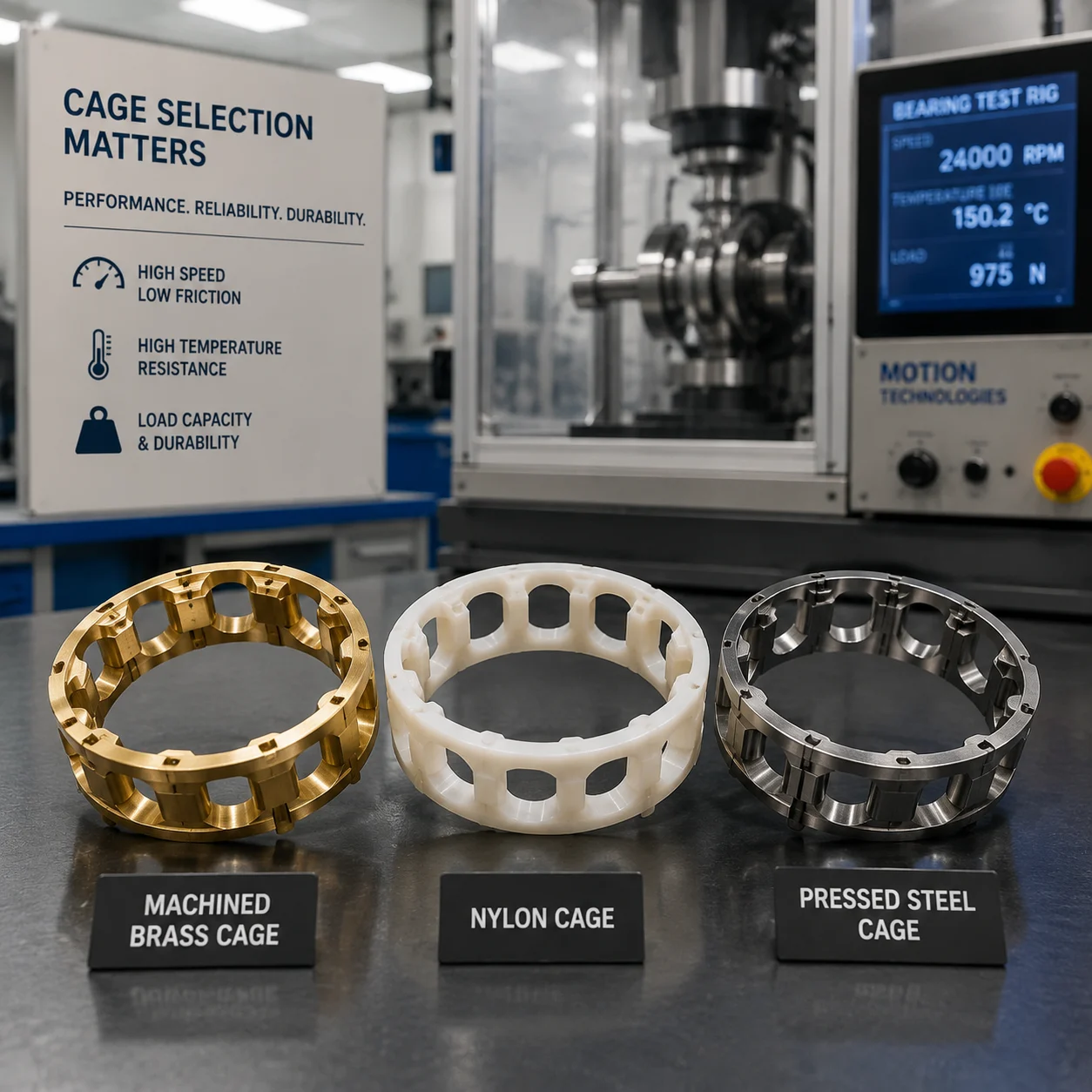
Optimizing Performance with the Right Bearing Cage
The bearing cage (or retainer) plays a decisive role in speed limits, operating temperatures, and lubrication efficiency. By preventing the rolling elements from rubbing against each other, the right cage material ensures smooth operation and extends the life of your angular contact ball bearings. JN Bearings provides three distinct cage options tailored for various industrial environments.
Machined Brass Cage (M/MA)
Renowned for durability, machined brass cages withstand intense vibrations and shock loads. They excel in high-temperature environments and integrate perfectly with oil-based lubrication systems, making them ideal for heavy-duty industrial pumps and large gearboxes.
- Max Continuous Temp: Up to 200°C
- Strengths: High shock tolerance, oil compatible
- Common in: Compressors, heavy machinery
Polyamide / Nylon Cage (TN9/P)
Lightweight and self-lubricating, polyamide cages dramatically reduce internal friction. This makes them the definitive choice for ultra-high-speed rotation. They are the standard for precision spindle bearings and high-frequency motors where limiting RPM is the priority.
- Max Continuous Temp: Up to 120°C
- Strengths: Low noise, minimal friction, high RPM
- Common in: CNC Spindles, high-speed motors
Pressed Steel Cage (J)
The versatile, cost-effective standard for general-purpose applications. Pressed steel cages deliver reliable, balanced performance across moderate speeds and loads. They are widely specified for agricultural setups, standard gear drives, and bulk industrial manufacturing.
- Max Continuous Temp: Up to 150°C
- Strengths: Excellent value, robust standard
- Common in: Agricultural hubs, general gearboxes
Technical Comparison: Angular Contact Variations at a Glance
Utilize this comparison table to quickly assess which angular contact ball bearing configuration aligns with your load parameters and speed requirements. If your project demands custom ABEC precision grades, specialized internal clearance, or specific bearing lubricants, JN Bearings engineering team is ready to assist.
| Technical Dimension | Single Row Series | Double Row Series | Four-Point Contact Series |
|---|---|---|---|
| Axial Load Capability | Unidirectional (Requires pairing for bidirectional) | Robust Bidirectional Thrust | Dominant Bidirectional Thrust |
| Radial Load Profile | Moderate to High Capacity | High Capacity (due to two rows) | Moderate Capacity |
| Rotational Speed Limit | Exceptional / Ultra-High (Spindle Grade) | High (General Industrial) | Low to Moderate (Not for high RPM) |
| Axial Footprint | Minimal per unit (increases if paired) | Moderate (Compact vs. two singles) | Minimal (One narrow unit handles both directions) |
| Common Contact Angles | 15° (C), 25° (AC), 40° (B) | 25°, 30° | 35° |
| Standard Precision | ABEC-1 to ABEC-7 (P0 to P4) | ABEC-1 to ABEC-5 (P0 to P5) | ABEC-1 to ABEC-3 (P0 to P6) |
| Core Industrial Applications | CNC Spindles, Pumps, High-Speed Motors | Heavy Gearboxes, Blowers, Wheel Hubs | Slewing Rings, Cranes, Turntables |
| Separable Assembly | Non-separable | Non-separable | Yes (Split inner ring simplifies mounting) |
Partner with a Dedicated Angular Contact Ball Bearings Supplier
As a specialized bearing manufacturer, JN Bearings strictly controls contact angle accuracy, raceway grinding, and pairing precision for every unit we ship. We supply high-performance single row, double row, and four-point contact bearings directly to OEMs, machinery manufacturers, and global wholesalers. Rely on our stringent ISO/ABEC standards to eliminate vibration, reduce downtime, and drive your equipment forward.
- Wholesale Factory Pricing — Direct access to volume manufacturing without intermediary markup.
- Custom Engineering Solutions — Tailored preload, clearance, contact angles, and proprietary greases.
- Reliable Global Delivery — Consistent lead times ensuring your production lines never stop.
- Expert Technical Support — Free application review and specification matching from our engineers.
Key Metrics & Engineering Parameters
Our engineering team at JN Bearings ensures all specifications strictly adhere to international ISO/ABEC standards. Every high-speed angular contact ball bearing is manufactured to deliver uncompromising performance across critical dimensional, material, and precision benchmarks.
ABEC Precision Grades and ISO Tolerances
Precision is the defining factor in high-speed bearing applications. Our product line encompasses a full spectrum of ABEC precision grades, which correlate directly with the strict dimensional and running accuracy tolerances defined by ISO 492. This ensures seamless integration into both standard machinery and ultra-precise industrial equipment.
| ABEC Grade | ISO Rating | Target Application |
|---|---|---|
| ABEC-1 | ISO P0 | General industrial transmissions |
| ABEC-3 | ISO P6 | Centrifugal pumps and standard motors |
| ABEC-5 | ISO P5 | Precision gearing and heavy robotics |
| ABEC-7 | ISO P4 | CNC spindles and high-frequency drives |
Advancing to higher ABEC levels guarantees significantly tighter tolerances on radial runout, bore diameter, and width. For high-speed CNC spindle bearings, ABEC-7 (ISO P4) operates as our standard technical baseline, effectively minimizing vibration and operational noise at extreme RPMs.
Through advanced metrology equipment, JN Bearings strictly validates all precision parameters prior to dispatch. This rigorous internal QC guarantees absolute traceability and dimensional consistency for every bearing shipped to our global partners.
Optimizing Your Precision Selection
Choosing the right ABEC grade dictates your system's maximum operating speed, thermal stability, and lifespan. While ABEC-1 provides exceptional cost-efficiency for basic machinery, demanding spindle systems rely on the exacting runout control of ABEC-7.
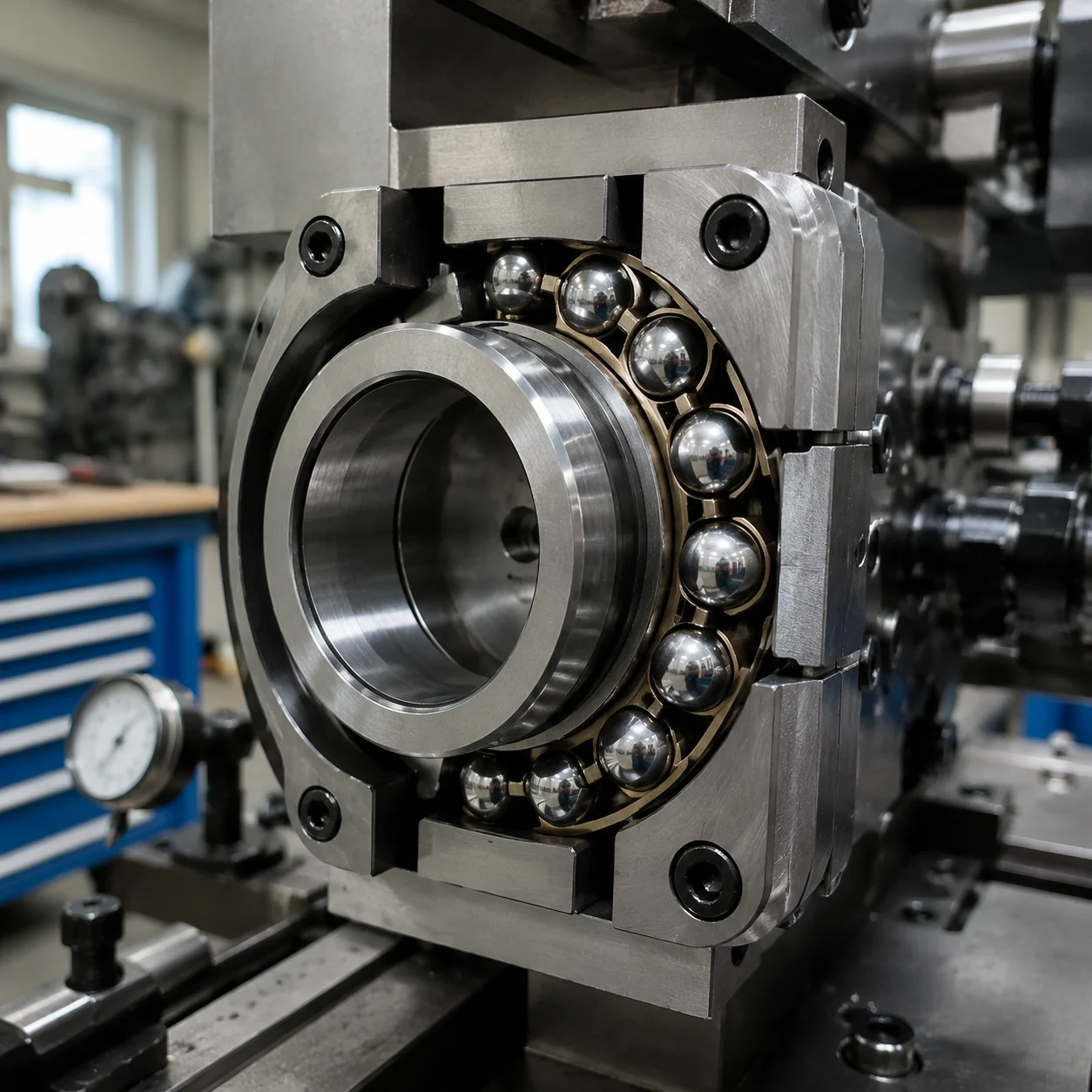
Contact Angle Variants: C, AC, and B Series
The contact angle dictates how external loads are transferred through the bearing's raceways. By shifting the internal geometry, we manipulate the equilibrium between heavy axial load capability and high-speed efficiency. JN Bearings provides three distinct contact angle variants tailored to specialized industrial environments:
- ✓Engineered for maximum rotational velocity
- ✓Handles predominantly radial forces with light axial thrust
- ✓The standard for high-frequency electric motors
- ✓Significantly reduced frictional heat generation
- ✓Provides optimized radial and axial support
- ✓Ideal for industrial compressors and gearboxes
- ✓Highly versatile and globally standardized configuration
- ✓Reliable stability across variable operating speeds
- ✓Delivers peak unidirectional axial load capacity
- ✓Exceptional axial rigidity preventing shaft deflection
- ✓Highly specified for vertical pump bearings
- ✓Lower speed rating than 15° and 25° alternatives
The guiding principle remains clear: smaller angles favor extreme rpm capabilities, while larger angles excel at supporting heavy axial loads. JN Bearings maintains a robust inventory of all standard contact angle variants and possesses the manufacturing agility to develop custom angular designs for highly specialized OEM projects.
Cage Material Capabilities
The retainer dictates the dynamic spacing of the rolling elements, directly influencing permissible operating temperatures, lubrication retention, and rotational vibration. To address diverse operating conditions, JN Bearings provides three primary cage configurations:
Machined Brass Cage
- ✓Superior stability in high-temperature environments
- ✓Exceptional mechanical integrity under shock loads
- ✓High compatibility with aggressive synthetic lubricants
- ✓Specifying a brass cage bearing ensures longevity
Polyamide / Nylon Cage
- ✓Ultra-lightweight to reduce centrifugal forces
- ✓Inherent self-lubricating properties improve grease life
- ✓Dampens noise and vibration in high-speed precision bearings
- ✓Continuous operating limit typically capped at 120°C
Stamped Steel Cage
- ✓Highly cost-effective for general industrial usage
- ✓Excellent strength-to-weight profile
- ✓Performs reliably across moderate speed thresholds
- ✓Standardized globally for rapid procurement
Machine tool spindles overwhelmingly rely on polyamide cages for rapid acceleration and minimal inertia. Conversely, in heavy equipment running continuously at elevated temperatures, the brass cage bearing remains the undisputed standard. Our technical team is available to validate your cage selection against your operational parameters.
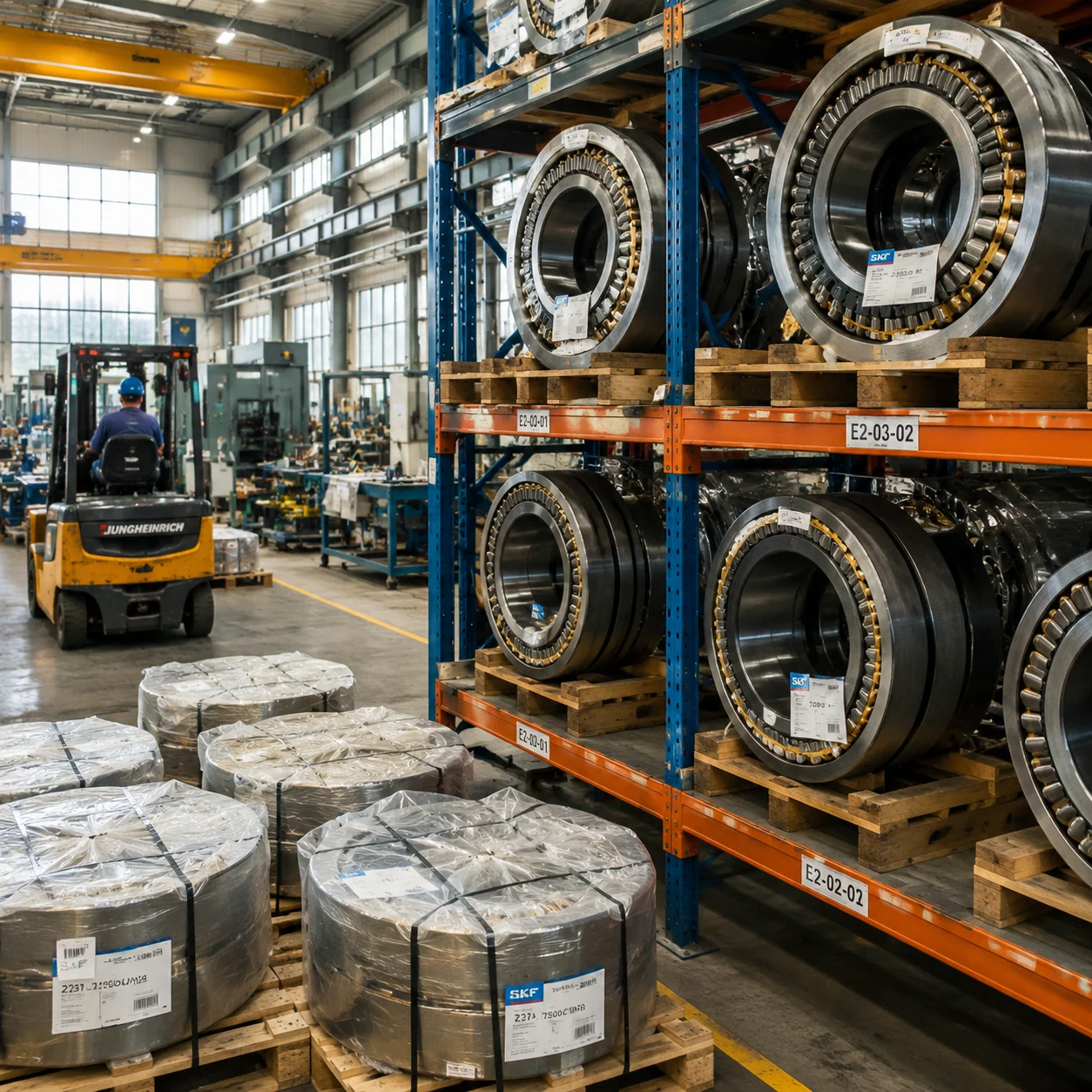
Dimensional Coverage and Bore Size Ranges
We support a vast array of machine architectures by manufacturing our angular contact bearings across industry-standard dimensional series, guaranteeing seamless drop-in replacements for procurement teams and OEM designers.
- ✓Bore Diameters:Covering standard inner diameters from 10 mm up to 320 mm.
- ✓Dimensional Widths:Available in narrow, normal, and wide profiles to accommodate compact housings.
- ✓ISO Diameter Series:Compliant with Series 7, 8, 9, 0, 1, 2, 3, and 4 in accordance with ISO 15.
- ✓Matched Configurations:Engineered with precise bore tolerances for Duplex Back-to-Back (DB) or Face-to-Face (DF) setups.
- ✓Global Interchangeability:Strictly follows ISO 15 / DIN 628 / JIS B 1512 for universal integration.
Whether scaling up to large bore sizes for heavy gearbox drives or specifying miniature profiles for high-speed rotors, JN Bearings preserves exact radial and axial clearance control across our complete manufacturing footprint. For compact systems, our precision miniature-precision-bearings line is engineered to maintain the same dimensional discipline at smaller scales.
Verified ISO and ABEC Quality Certifications
Dependable machinery requires traceable bearing quality. Our quality management framework ensures each manufactured batch meets recognized global standards, reducing engineering risk and streamlining procurement workflows. Critical frameworks utilized by JN Bearings include:
Every unit undergoes comprehensive laboratory validation for raceway geometry, acoustic vibration limits, surface roughness, and automated grease dispensing volumes. We provide detailed Certificates of Conformance (CoC) and material composition reports for wholesale and specialized OEM purchasing programs.
By partnering with an ISO-compliant bearing manufacturer, purchasing engineers ensure product interoperability, minimize premature failures, and optimize life-cycle costs. JN Bearings is dedicated to translating these stringent engineering protocols into tangible reliability for your end-user equipment.
Ready to Verify Your Technical Specs?
Download the complete JN Bearings catalog covering all ABEC grades and contact angle variants, or reach out to our engineering team for personalized application support.
Applications and Industries for Angular Contact Ball Bearings
From ultra-fast CNC spindle bearings to heavy-duty gearbox ball bearings, angular contact configurations provide the essential rigidity and combined load capacity required by demanding industrial environments. Discover how JN Bearings supports peak performance across critical sectors.
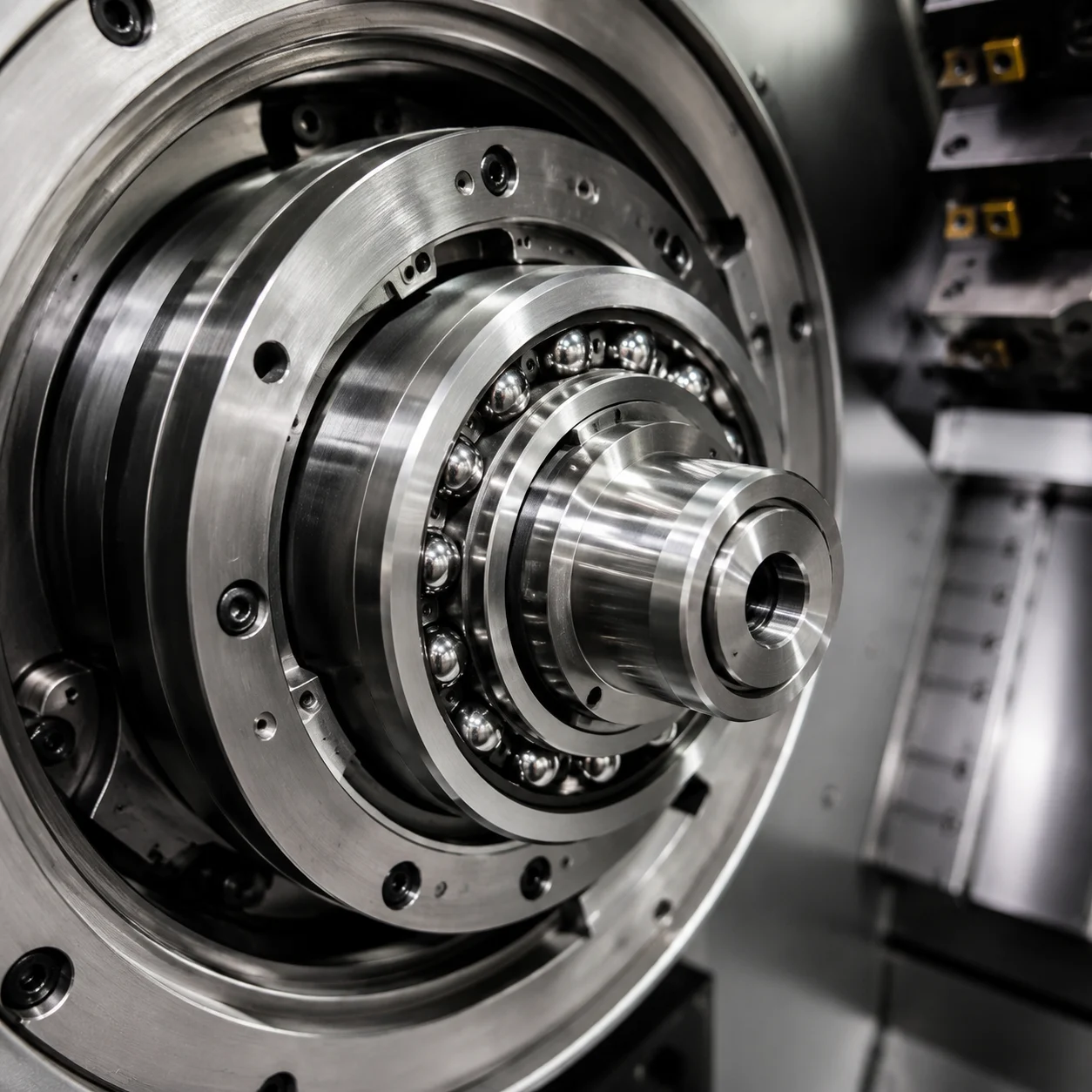
CNC Spindle Bearings for High-Speed Machining
Machine tool spindles demand extreme precision to ensure accurate cutting, milling, and grinding. CNC spindle bearings operate at exceptionally high speeds while sustaining both radial cutting forces and axial thrust loads. Angular contact ball bearings are the definitive choice for these applications, typically installed in matched sets to deliver maximum rigidity.
By precisely controlling preload in face-to-face or back-to-back setups, these bearings eliminate axial play and drastically lower spindle vibration. For superior surface finish and machining accuracy, JN Bearings manufactures ABEC-7 (P4) precision grade spindle bearings tailored for uninterrupted high-speed rotation.
- Key Advantage: Reduces spindle runout and thermal expansion at elevated RPMs.
- Optimal Contact Angle: 15° for maximum speed; 25° for enhanced load capacity.
- Configuration: Matched pair bearings (DB, DF, DT) for precise preload control.
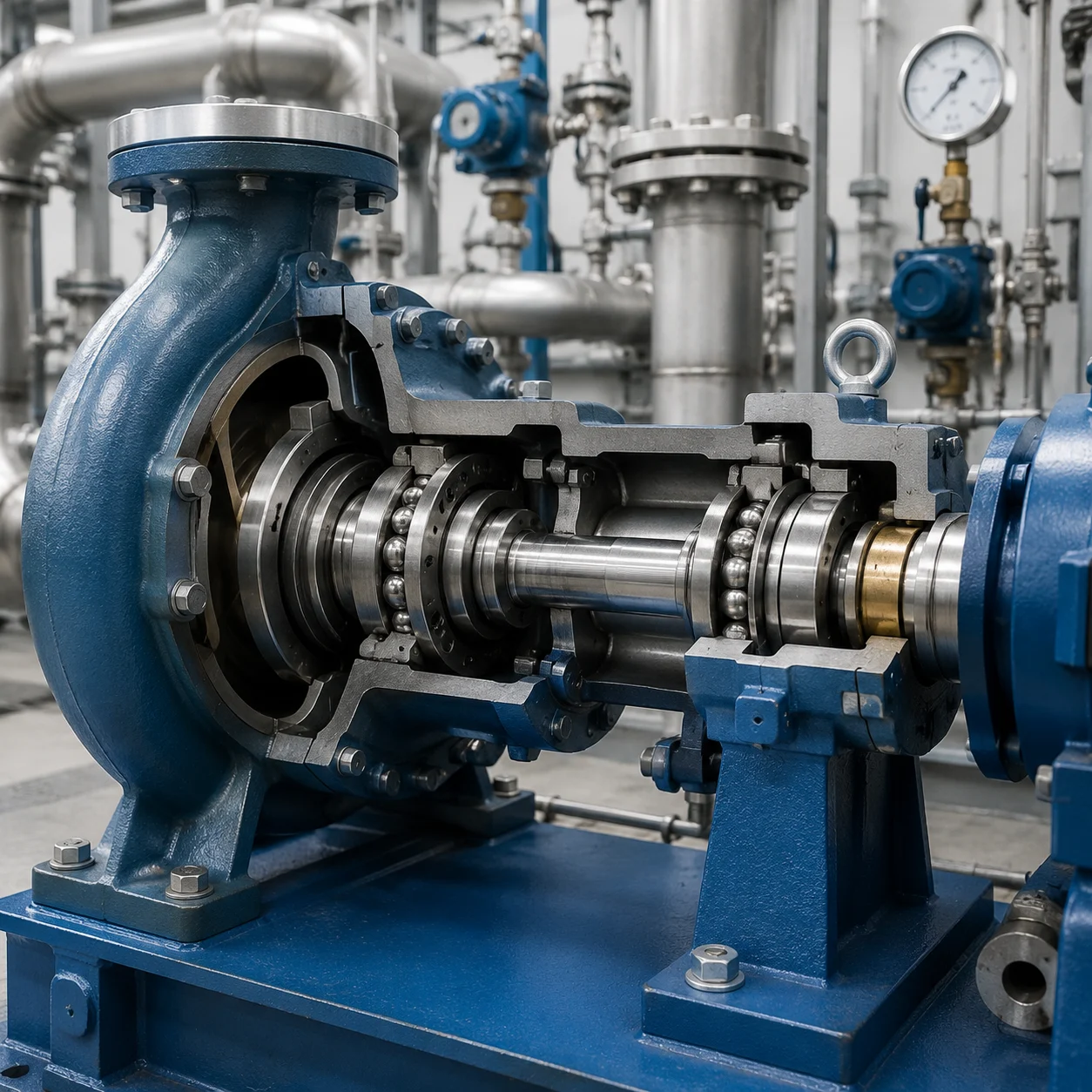
Pump Bearings Designed for Axial Thrust
Centrifugal pumps, industrial blowers, and multi-stage compressors continuously generate strong axial thrust during fluid transfer. Standard radial bearings cannot sustain these forces effectively, leading to premature wear. Double row angular contact ball bearings and paired single row configurations are engineered specifically to absorb bidirectional axial loads while maintaining fluid operational speeds.
Selecting the right pump bearings significantly extends equipment lifespan and minimizes seal degradation caused by shaft deflection. For fluid machinery focused heavily on thrust resistance, a 40° contact angle provides the necessary axial load rating to prevent unexpected maintenance downtime.
- Key Advantage: Extends pump service life and protects critical mechanical seals.
- Common Type: Double row angular contact bearings for space-saving thrust control.
- Optimal Contact Angle: 40° (B series) for maximum axial load distribution.
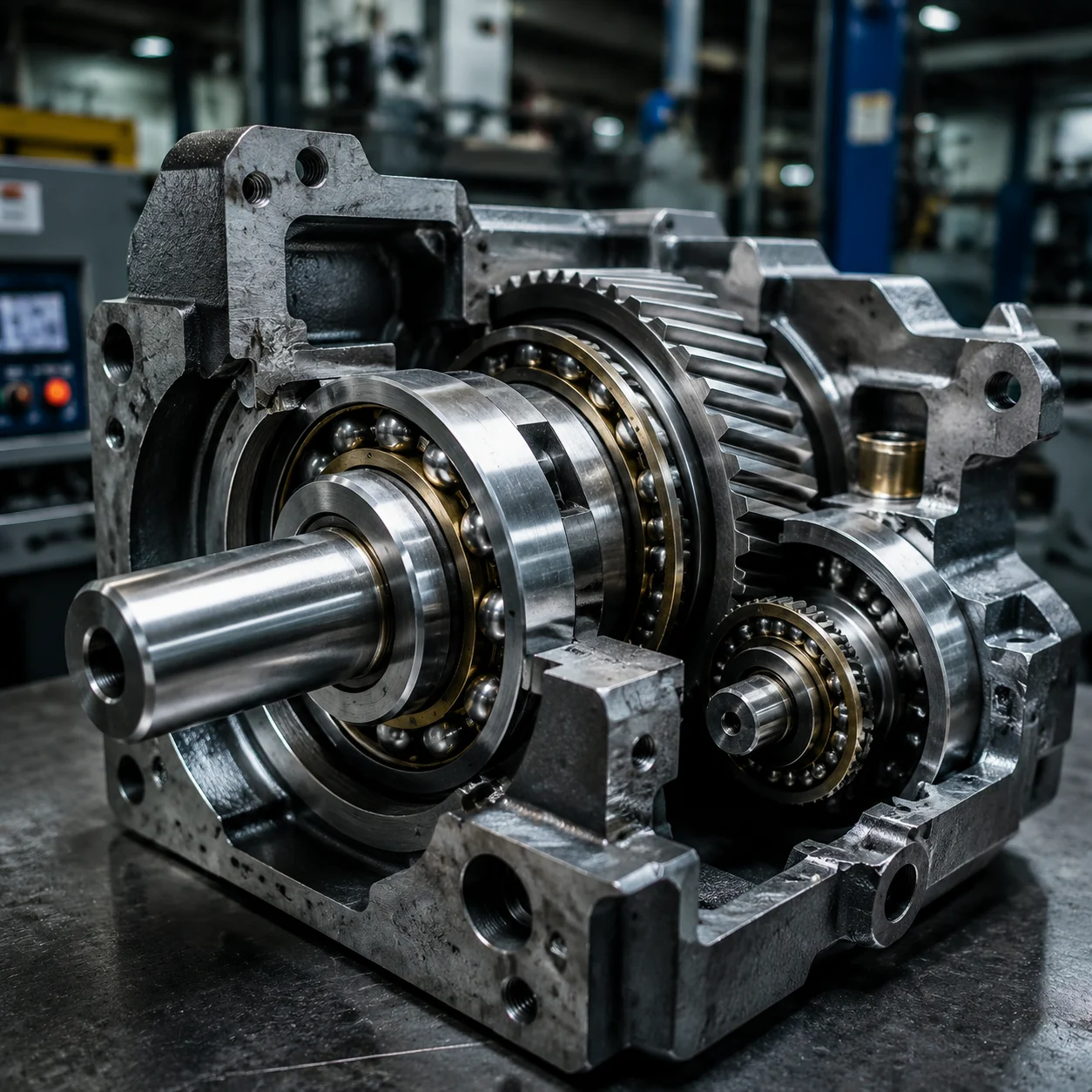
Gearbox Ball Bearings for Complex Combined Loads
Industrial gearboxes, planetary drives, and speed reducers face severe combined loading environments. Helical and bevel gears create intense axial forces that occur simultaneously with radial meshing loads. Implementing angular contact ball bearings in back-to-back arrangements provides the high structural rigidity needed to control these forces, ensuring precise gear alignment and reducing drivetrain noise.
For robotics, automation joints, and servo gearboxes, the stiffness delivered by these precision bearings enhances positioning accuracy. JN Bearings supplies robust gearbox solutions featuring durable brass or steel cages, optimized for heavy load transfers and challenging lubrication conditions.
- Key Advantage: Maintains accurate gear meshing to lower wear and transmission noise.
- Common Configuration: Back-to-back (DB) setups for superior resistance to moment loads.
- Cage Options: Machined brass or stamped steel for demanding oil-lubricated environments.
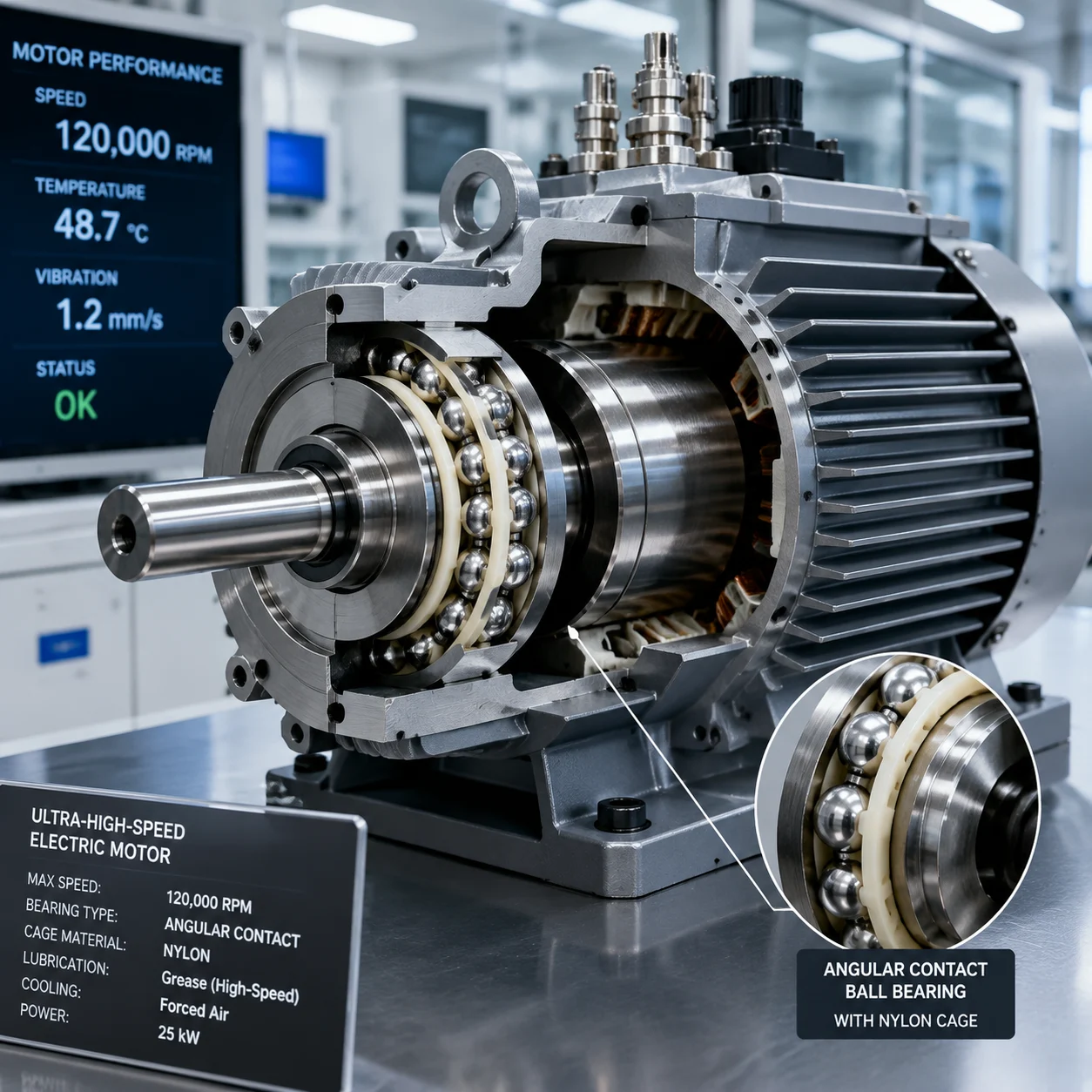
Ultra-High-Speed Bearings for Electric Motors
High-frequency motors used in precision instruments, dental drills, and high-speed routing equipment often operate at speeds well above 50,000 RPM. In these extreme conditions, selecting the right bearing dictates motor performance and thermal stability. Angular contact ball bearings with a 15° contact angle are critical here; the smaller angle reduces friction and centrifugal forces on the balls, enabling cooler operation at peak speeds.
To further optimize high-speed performance, these bearings frequently utilize polyamide (nylon) cages. These cages are lightweight, generate less friction, and exhibit excellent self-lubricating characteristics. JN Bearings manufactures ABEC precision grades specifically engineered for high-frequency motor applications.
- Key Advantage: Sustains extreme RPMs while managing thermal output efficiently.
- Optimal Contact Angle: 15° (C design) specifically for ultra-high-speed rotation.
- Cage Material: Polyamide/Nylon cages for low inertia and reduced centrifugal stress.
Global Manufacturing Sectors Relying on JN Bearings
As a dedicated ball bearing manufacturer, JN Bearings supplies precision angular contact ball bearings to industrial partners across the globe. Our high-performance bearings keep critical equipment running smoothly across these key industries:
CNC & Machine Tool Spindles
Industrial Pumps & Compressors
Gearboxes & Reducers
High-Frequency Motors
Robotics & Automation
Aerospace Equipment
Precision Medical Devices
Global OEM Manufacturing
Trusted by global machine manufacturers, JN Bearings supports critical equipment with reliable rotational performance. Whether you are sourcing standard matched pairs or require custom contact angles and clearances, our engineering team ensures your specifications are met with precision and factory-direct pricing.
Angular Contact Ball Bearings vs Other Bearing Types
Choosing the right bearing type directly affects equipment performance, service life, and total cost of ownership. This detailed guide compares angular contact ball bearings against deep groove and thrust ball bearings, helping engineers and procurement teams confidently evaluate load capacities, speed limits, and application suitability.
Why Bearing Type Selection Matters
Not every ball bearing is engineered for the same environment. High-speed bearings operating under complex combined loads demand a fundamentally different internal geometry than standard radial counterparts. Specifying the wrong category often leads to excessive heat generation, premature wear, and costly unplanned downtime.
Angular contact ball bearings hold a unique performance advantage in precision mechanical design. Their asymmetric raceway geometry establishes a precise contact angle—typically 15°, 25°, or 40°—that inherently accommodates significant axial loads simultaneously with heavy radial loads. No other standard bearing type replicates this unique balance of rigid support and high rotational speed.
Understanding where these specialized bearings excel ensures that engineers can select the optimal solution for their high-stress industrial applications.
- Combined load capacity — efficiently handles both radial and axial forces simultaneously.
- High rigidity — the preferred standard for precision machine tool spindles.
- Speed capability — smaller contact angles (like 15°) facilitate extreme RPMs.
- Preload control — matched pairing eliminates axial play and dramatically cuts vibration.
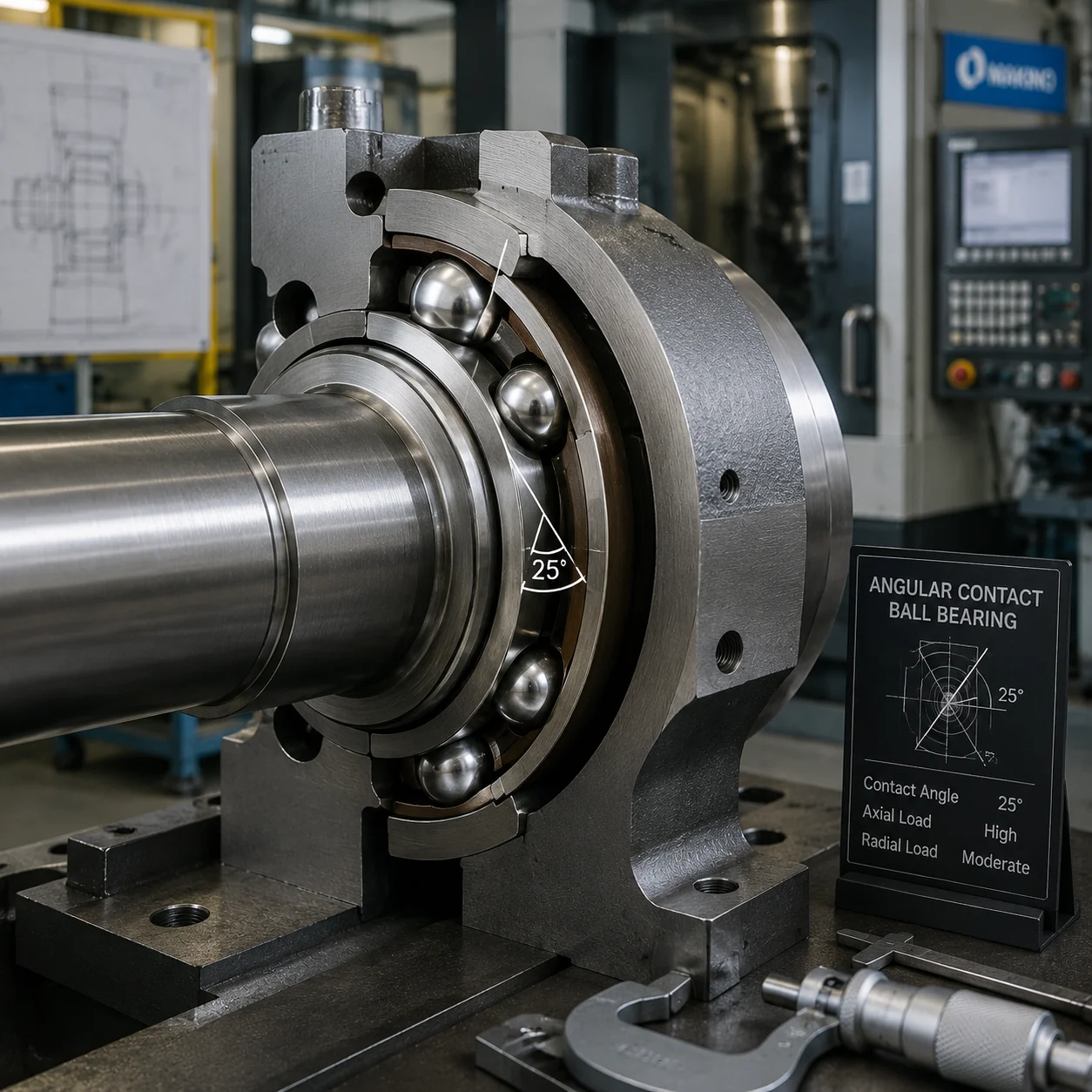
Angular Contact vs Deep Groove Ball Bearings
Deep groove ball bearings remain the most universally applied bearing design. Their symmetrical inner and outer raceways make them highly effective at supporting pure radial loads, while still accommodating limited axial loads in both directions. This makes them a highly economical choice for electric motors, household appliances, and light conveyor systems.
However, standard deep groove models are not designed to manage sustained axial loads that exceed roughly 30% to 50% of their radial rating. When axial thrust becomes a primary operating condition—such as in high-speed CNC spindles or heavy-duty centrifugal pumps—a deep-groove ball bearing will experience structural deflection, friction spikes, and rapid fatigue.
By shifting the load path, angular contact ball bearings solve this limitation. The inclined line of contact safely channels heavy axial thrust through the bearing structure without sacrificing radial stability. When installed as matched pairs (back-to-back or face-to-face), they deliver superior bidirectional rigidity that a single deep groove unit simply cannot match under comparable stresses.
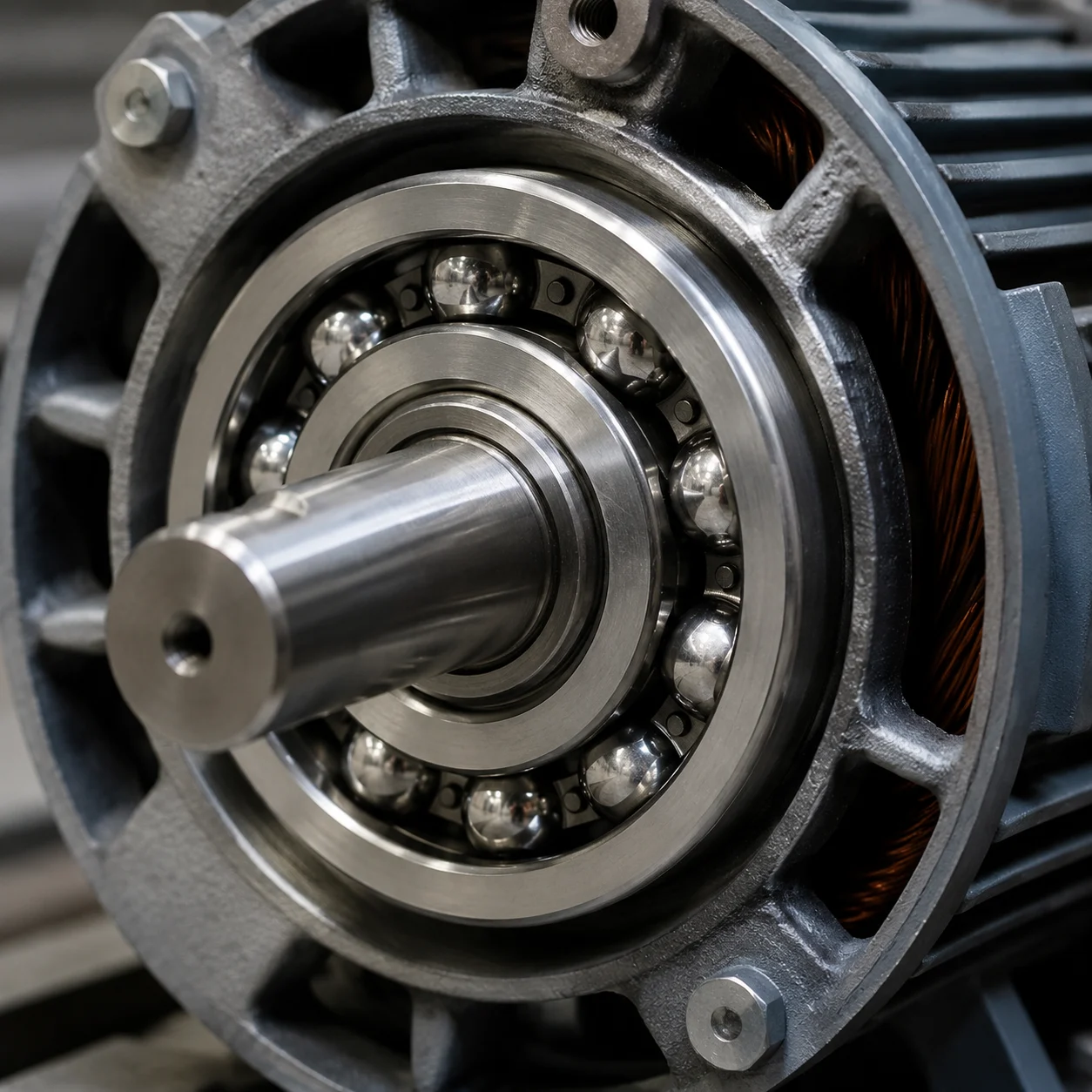
Key takeaway: Specify deep groove ball bearings for cost-sensitive, radial-dominant applications. Choose angular contact ball bearings when axial loads are prominent, structural rigidity is mandatory, or the system demands precise positioning under combined dynamic loads.
Angular Contact vs Thrust Ball Bearings
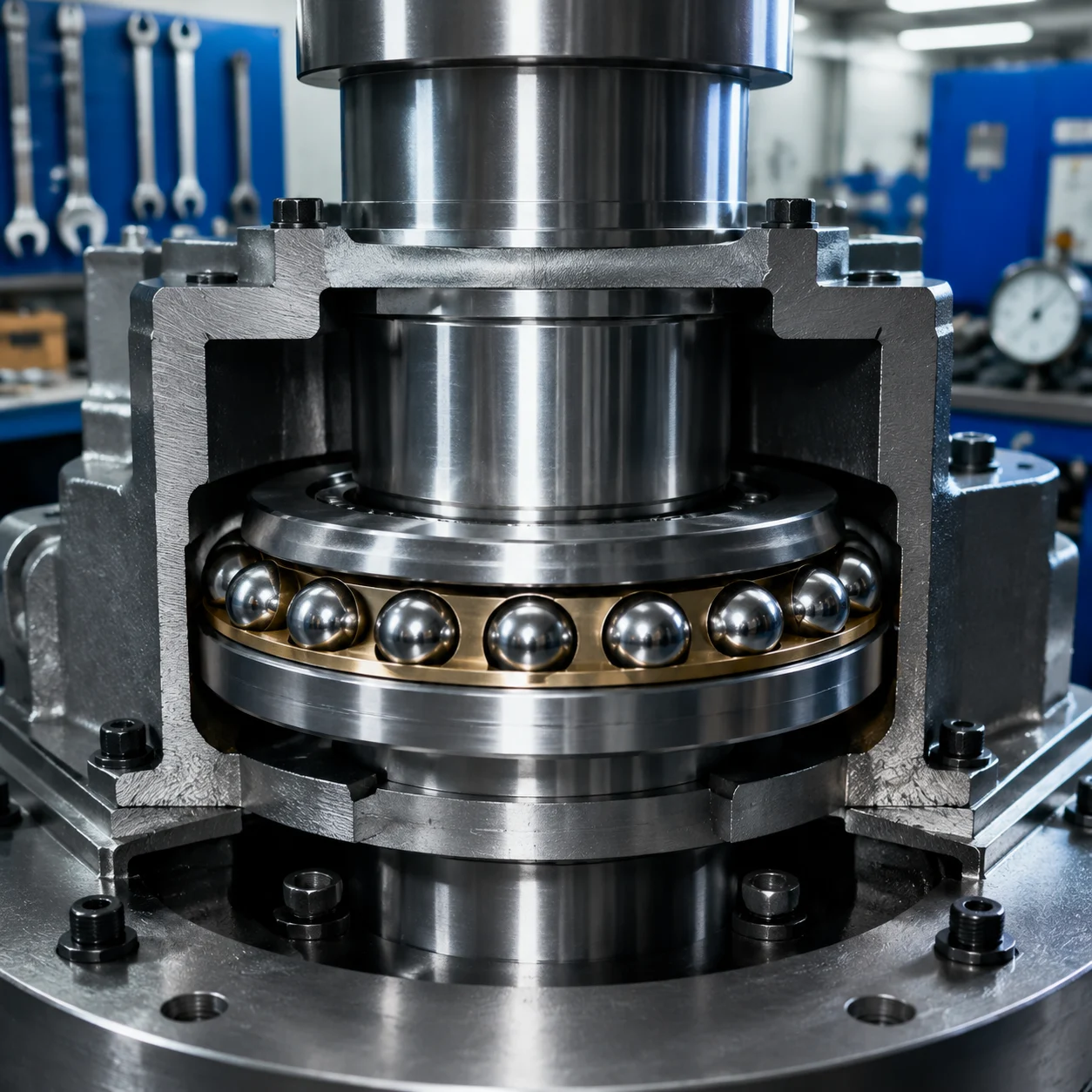
Thrust ball bearings are strictly engineered for heavy, pure axial forces applied parallel to the shaft. Featuring a flat raceway orientation and a 90° contact angle, they excel at delivering tremendous axial capacity within a compact longitudinal footprint—ideal for automotive steering mechanisms, crane hooks, and heavy-duty screw jacks.
The distinct drawback of thrust ball bearings is their complete inability to withstand radial loads. They must always be coupled with a companion radial bearing if shaft deflection or side-loading occurs. Additionally, the kinematics of a 90° contact angle create extreme friction at higher RPMs, making standard thrust bearings unsuited for high-speed rotating machinery.
Angular contact bearings provide the perfect engineering bridge. A steep 40° contact angle variant approaches the robust axial capabilities of a thrust bearing, yet seamlessly absorbs radial shocks and operates at substantially higher speeds. For pump impellers and industrial gearboxes, this multi-directional load capacity eliminates the need to specify and mount separate radial and thrust units.
Key takeaway: Reserve thrust ball bearings for low-speed environments dealing with exclusive axial pressure. Deploy high-rigidity angular contact bearings when both radial and axial forces are present, or when rotational speeds exceed the physical limits of standard thrust geometries.
Bearing Load Comparison & Performance Table
| Performance Dimension | Angular Contact Ball Bearings | Deep Groove Ball Bearings | Thrust Ball Bearings |
|---|---|---|---|
| Primary Load Capacity | Combined radial & axial | Radial (with limited axial) | Pure axial only |
| Maximum Axial Load | High (dependent on angle) | Low to moderate | Very high (one direction) |
| Maximum Radial Load | High | High | None |
| Speed Capability | Very high (optimal at 15°) | High | Low to moderate |
| System Rigidity | Very high (with proper preload) | Moderate | High (axial axis only) |
| Bidirectional Support | Yes (via matched pairs/double row) | Limited inherently | No (requires double direction type) |
| Tolerance / Precision | P0 to P4 (ABEC-1 to ABEC-7) | P0 to P5 (ABEC-1 to ABEC-5) | Standard P0 variants |
| Typical Industry Use | CNC machinery, industrial pumps, gearboxes | Electric motors, fans, basic automation | Crane hooks, lifting equipment, jacks |
| ROI & Value | High efficiency for demanding conditions | Lowest unit cost for general uses | Specialized; often needs extra radial bearing |
When to Choose Angular Contact Ball Bearings
High-Speed Precision Rotation
Essential when operating RPMs exceed the thermal thresholds of thrust variants. Specifying a 15° contact angle optimizes internal geometry for minimum friction at extreme rotational velocities.
Heavy Combined Load Operations
The standard choice whenever substantial radial and axial forces are active simultaneously, common in helical gear configurations, industrial impellers, and heavy-duty spindle motors.
Maximum Rigidity & Accuracy
Available in precise ABEC-7 tolerance grades, these bearings allow engineers to apply predefined preloads. This securely limits shaft runout, ensuring micron-level machining accuracy.
Managing Strong Axial Thrust
Fluid management systems like centrifugal pumps and heavy compressors inherently create thrust. Angular contact formats easily absorb this force without necessitating secondary thrust bearings.
Space-Constrained Assemblies
Where axial housing space is extremely limited, double-row variants or specialized matched pairs provide complete bi-directional support inside a single functional footprint.
Global Industry Compliance
As an established ball bearings manufacturer, JN Bearings engineers angular contact models that consistently exceed stringent ISO and ABEC tolerances for international industrial markets.
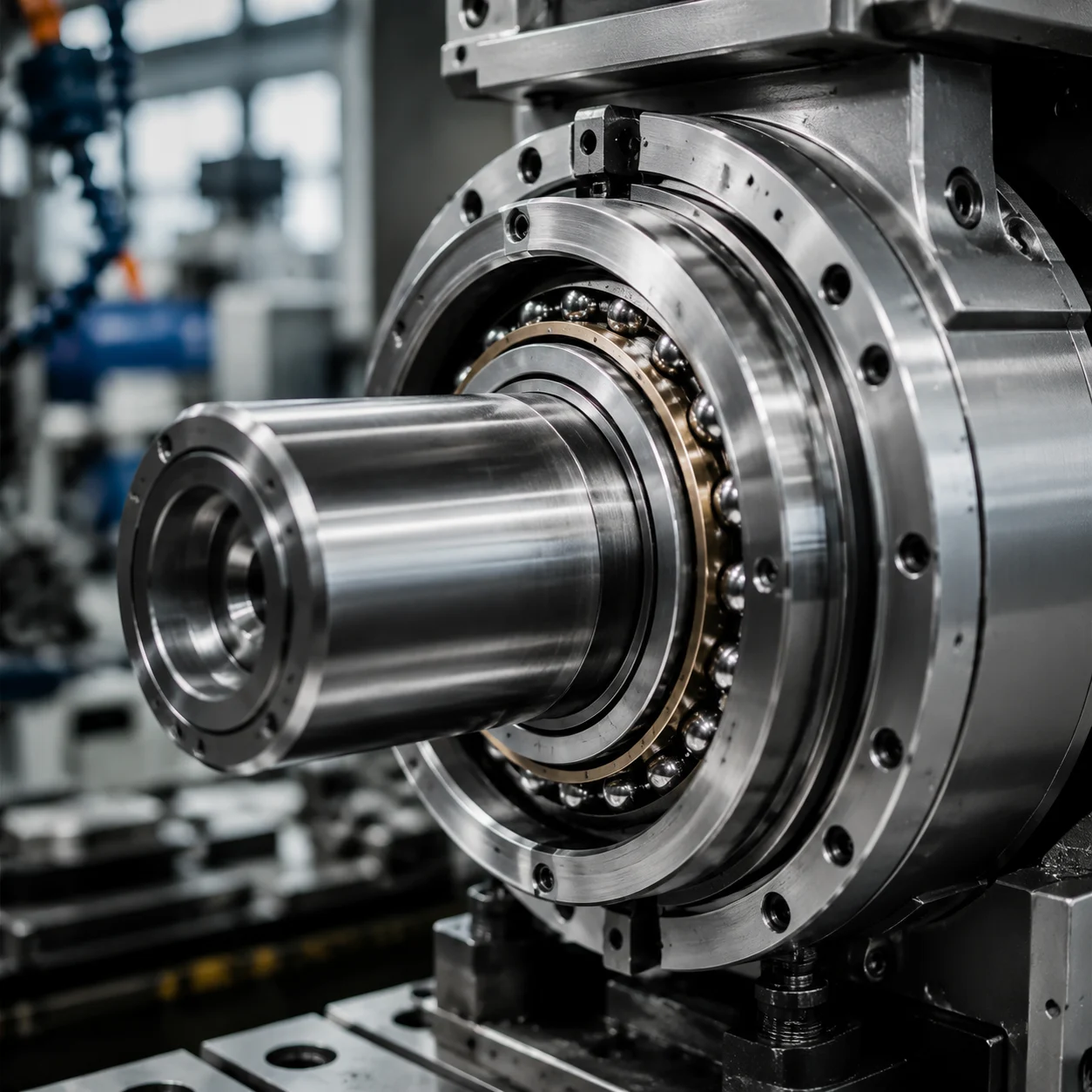
Understanding Load Capacity and Speed Limits in Practice
In demanding mechanical applications, load capacity and speed limits are intrinsically linked. An angular contact bearing engineered with a steep contact angle will support heavy axial thrust but faces lower RPM ceilings compared to a shallow-angle variant of the identical bore size. Navigating this engineering trade-off is critical for successful equipment design.
Consider a 40° contact angle bearing: it is perfectly optimized for an industrial fluid pump constantly fighting high axial back-pressure at standard motor speeds. Conversely, the same bearing size configured with a 15° contact angle becomes the ideal component for a high-frequency machine tool spindle, where achieving maximum RPM and extreme radial stiffness takes precedence over raw axial load.
Standard deep groove models fail to provide this flexibility. Their fixed, symmetric raceways distribute stress unevenly as axial forces fluctuate, ultimately accelerating metal fatigue in demanding combined-load cycles.
At JN Bearings, we produce precision angular contact ball bearings across all standard contact angle variations. Our engineering team provides specialized cage options—including robust machined brass, lightweight polyamide, and durable steel—tailoring heat dissipation and speed ratings precisely to your project's technical requirements.
Not Sure Which Ball Bearing to Choose?
Because JN Bearings focuses exclusively on precision ball bearing manufacturing, our experts can guide you directly to the correct category without the guesswork. Share your application's load data, intended shaft speed, and operational environment, and receive a customized technical recommendation at no cost.
Frequently Asked Questions & Technical Insights
Find detailed answers regarding how to install angular contact bearings, contact angle selection, custom spindle bearings, and global procurement policies. Our engineering team stands ready to assist with your specific mechanical requirements. For more FAQ guidance, explore the answers below.
Can angular contact ball bearings be
reverse-mounted or handle bidirectional loads?
+
Single row angular contact ball bearings are engineered to support axial loads in only one direction. A standalone unit cannot manage bidirectional thrust forces. When applications demand bidirectional support, engineers must specify matched pair bearings in one of these standard configurations:
- Face-to-Face (DF): The outer ring narrow faces meet. This setup handles bidirectional axial loads and offers better tolerance for housing misalignment, though with lower moment rigidity.
- Back-to-Back (DB): The outer ring wide faces meet. This is the optimal configuration for high moment rigidity and stiffness, making it the industry standard for CNC spindle bearings.
- Tandem (DT): Bearings are mounted facing the same direction, effectively doubling the axial load capacity in a single direction for heavy-duty thrust requirements.
The chosen pairing method heavily influences system stiffness and internal preload. JN Bearings supplies factory-matched bearing sets to ensure precise load distribution and reliable operation out of the box.
How do I choose the correct contact
angle (15° vs 25° vs 40°)?
+
The contact angle dictates a bearing's balance between radial speed limits and axial load capabilities. Selecting the right angle is crucial for optimizing equipment longevity. Here is how they compare:
| Contact Angle | Designation | Axial Load Capability | Speed Profile | Primary Applications |
|---|---|---|---|---|
| 15° | C | Low-Moderate | Ultra-High Speed | High-speed spindles, precision motors |
| 25° | AC | Moderate | High Speed | General machine tools, fluid pumps |
| 40° | B | Very High | Moderate Speed | Gearbox ball bearings, compressors |
Essentially, a smaller contact angle (15°) minimizes friction for extreme RPMs, while a larger angle (40°) maximizes thrust capacity. If you need help with contact angle selection based on dynamic load ratings, JN Bearings provides free technical evaluations.
Does JN Bearings provide custom preload
classes and specialty lubrication?
+
Absolutely. As a dedicated manufacturer, JN Bearings offers extensive customization, particularly for custom spindle bearings requiring exacting internal clearances and factory-applied lubrication for OEM assembly lines.
Available Preload Classes:
- Light Preload (C): Reduces operating temperatures for prolonged high-speed rotation.
- Medium Preload (B): The optimal balance of stiffness and speed for standard machining centers.
- Heavy Preload (A): Delivers maximum rigidity, ideal for heavy-cut milling applications.
Lubrication Flexibility:
- Grease Packed: Sealed models pre-filled with high-grade lithium or polyurea greases for maintenance-free operation.
- Oil-Air Compatibility: Open configurations ready for centralized lubrication systems in high-speed applications.
- Specialty Formulations: High-temp, low-noise, or food-grade lubricants applied upon request.
We ensure all preload dimensions and grease fill volumes strictly adhere to your engineering drawings and operational demands.
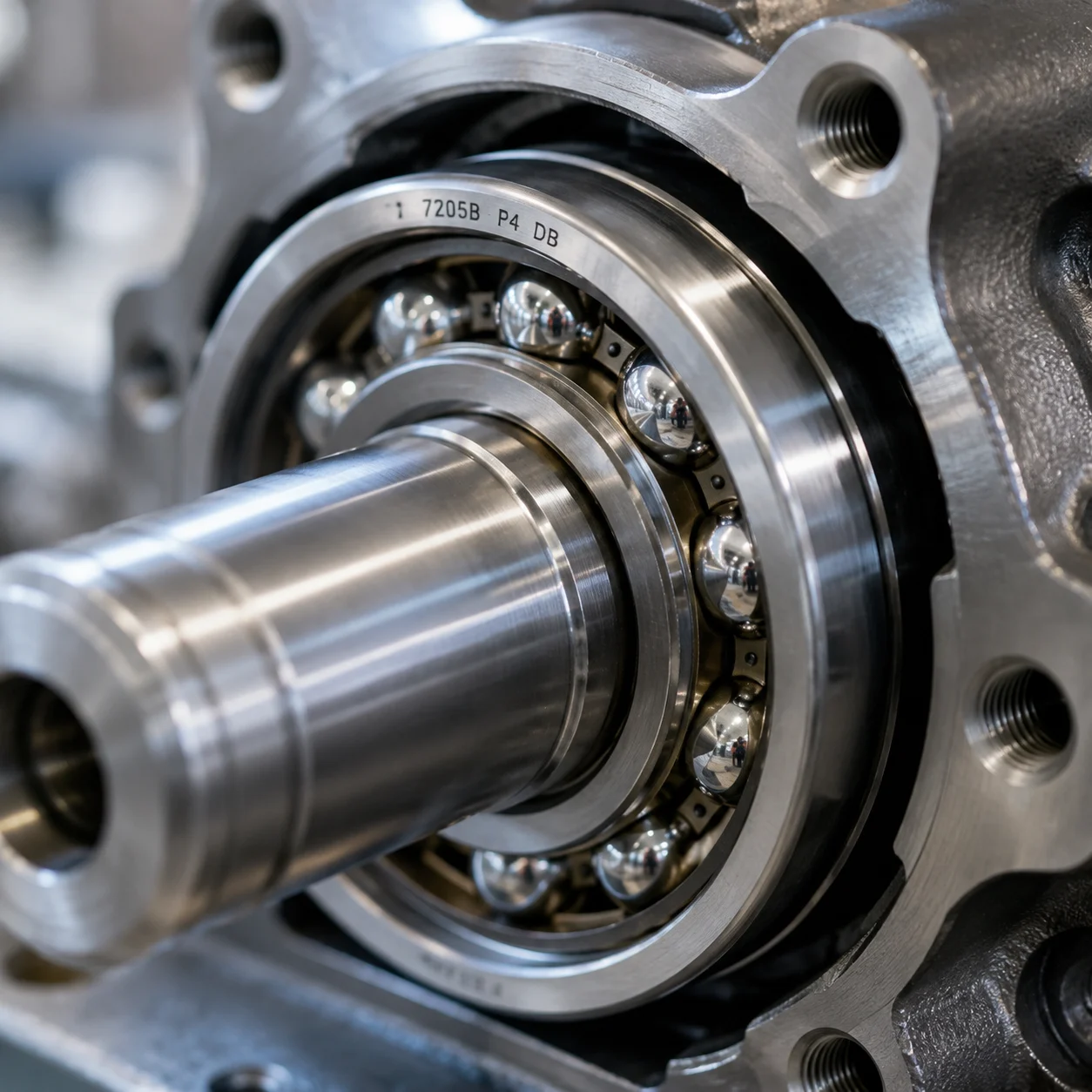
What are your MOQ policies and wholesale
lead times?
+
To support both global distributors and OEM production schedules, JN Bearings maintains highly flexible manufacturing policies for wholesale angular contact bearings.
- Standard MOQ: Ranges from 50 to 200 units depending on the bearing series and dimensions. Smaller batches are available for initial prototyping.
- Custom Orders: Specialized preload, non-standard cages, or custom seal designs generally require an MOQ starting at 100 units.
- In-Stock Lead Times: Standard inventory models ship within 7 to 15 business days.
- Production Lead Times: High-volume wholesale orders and custom runs typically complete within 20 to 35 business days.
We offer reliable global logistics options, shipping directly from our facility to North America, Europe, and Asia. JN Bearings ensures rapid turnaround without compromising ISO-certified quality control.
How to install angular contact bearings
correctly?
+
Understanding how to install angular contact bearings is fundamental to maximizing their service life, especially in high-speed environments where precision is critical.
- Verify Mounting Direction: Ensure the bearing faces are oriented correctly (Back-to-Back or Face-to-Face) to support the intended axial thrust.
- Apply Uniform Force: Utilize a bearing heater or a mechanical press. Never apply impact force directly to the rolling elements or the un-supported ring.
- Maintain Absolute Cleanliness: Unpack bearings only at the moment of installation in a clean environment to prevent particulate contamination.
- Check Tolerances: Confirm that shaft and housing tolerances align with the specified ABEC precision grade fits to prevent ring distortion.
- Secure Preload: For paired arrangements, tighten locknuts to the specified torque to engage the factory-set preload correctly.
Detailed installation guides are included with our shipments. If you require advice on complex spindle assemblies, our engineers are ready to review your mounting strategy.
What precision standards and quality
certifications do you follow?
+
JN Bearings is committed to rigorous quality assurance, ensuring every angular contact ball bearing performs reliably under demanding industrial conditions.
- ABEC Precision Grades: Manufactured to ABEC-1 (P0) through ABEC-7 (P4) standards, ensuring minimal runout for high-speed spindles.
- Material Integrity: Forged from premium GCr15 (52100) high-carbon chromium steel for superior fatigue resistance.
- ISO Compliance: Produced under an ISO 9001-certified quality management system with full compliance to ISO 492 and DIN 628 geometric standards.
Every production lot undergoes stringent dimensional, noise, and vibration testing. We supply complete inspection reports and material certifications, simplifying your incoming quality control processes.
How can I contact the JN Bearings
engineering team?
+
Our technical support team collaborates closely with procurement managers and design engineers to guarantee the right bearing selection for complex, high-speed machinery.
- Consultation on contact angle, preload, and cage materials
- Load rating and expected lifecycle calculations
- Custom bore sizing and tolerance recommendations
- Troubleshooting for existing bearing failures
To initiate a technical review or request a quotation, please contact us by email at sales@jnbearings.com or message us on WhatsApp/WeChat (+86 13954091520). Please include application specifics such as operating RPM, load profiles, and volume requirements.
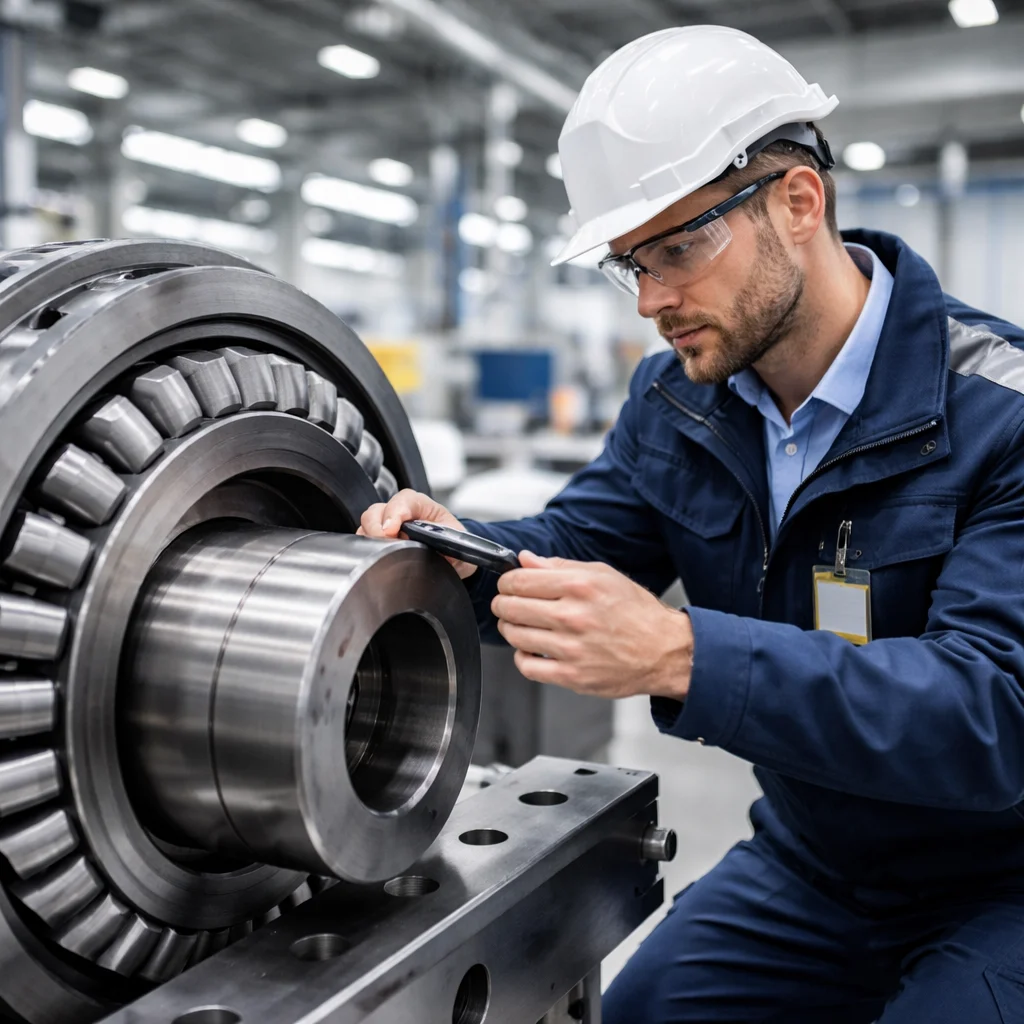
Need Expert Bearing Selection Advice?
The engineering specialists at JN Bearings provide complimentary design reviews. Share your spindle speeds, load configurations, or blueprints, and we will tailor the perfect bearing solution. Learn more about our custom about-us capabilities and manufacturing support.
- ✉sales@jnbearings.com
- ☎WhatsApp / WeChat: +86 13954091520
Source
Premium Bearings
for Your Application
JN Bearings delivers precision-engineered bearing solutions to industrial buyers worldwide. Request a free quote or download our full product catalog now.
- Fast response within 24 hours
- Custom specifications and bulk orders welcome
- ISO-certified quality with global shipping
- Dedicated technical support team
Contact JN Bearings
Email Us
sales@jnbearings.com
Call Us
+86 13954091520
Headquarters
Factory Building A5, Lixia District Industrial Park, Jinan City, Shandong Province
Business Hours
Mon–Fri, 8:00 AM – 6:00 PM CST
10K+
SKUs Available
50+
Countries Served
15+
Years Experience